Abciximab: Classification, History, Mechanism of Action, Safety and Pharmacovigilance
- Abciximab: Classification, History, Mechanism of Action, Safety and Pharmacovigilance
- Multidimensional classification
- Platelet aggregation and glycoprotein IIb/IIIa
- Molecular design and mechanism of action
- Development and historical regulatory context
- Historical clinical use and procedural context
- Major safety domains
- Thrombosis-versus-bleeding benefit-risk reasoning
- Laboratory and procedural data as safety evidence
- Pharmacovigilance case assessment
- Signal detection and aggregate review
- Benefit-risk evaluation in a discontinued product
- Risk-management lessons
- Potential failure modes
- Inspection and governance perspective
- Practical checklist
- Key Takeaways
- References
- Regulatory Note
Abciximab occupies an unusual place in monoclonal-antibody history. It is not a full IgG molecule and it was not developed for cancer or immune-mediated inflammatory disease. It is the Fab fragment of the chimeric monoclonal antibody 7E3, designed to block the platelet glycoprotein IIb/IIIa receptor and thereby inhibit platelet aggregation during high-risk coronary intervention.
The article is necessarily historical. FDA's current Purple Book lists the U.S. product as discontinued, and the CDER discontinued-biologic list records 15 August 2019 as the date it was added to that list. Nevertheless, abciximab remains scientifically important because it illustrates several enduring pharmacovigilance principles: target occupancy can persist after plasma concentrations fall, profound pharmacodynamic effects can emerge from a short exposure, and efficacy against thrombosis must be evaluated together with bleeding and thrombocytopenia.
Multidimensional classification
| Classification axis | Abciximab classification | Scientific or PV significance |
|---|---|---|
| Molecular class | Chimeric monoclonal-antibody Fab fragment | Lacks the Fc region of a full IgG and has a distinct PK/PD relationship |
| Principal platelet target | Glycoprotein IIb/IIIa (integrin alphaIIb beta3) | Blocks the final common receptor pathway of platelet aggregation |
| Functional class | Potent intravenous antiplatelet biological | Rapid pharmacodynamic action during coronary intervention |
| Historical clinical setting | Percutaneous coronary intervention and high-risk coronary revascularisation | Short procedural exposure with acute ischemic and bleeding endpoints |
| Administration | Intravenous bolus followed historically by infusion in standard regimens | Exact bolus/infusion and heparin context are essential safety variables |
| PV-critical domains | Major bleeding, thrombocytopenia, acute profound thrombocytopenia, hypersensitivity/immunogenicity and procedural complications | Benefit-risk is tightly linked to concomitant antithrombotic treatment |
| Current status | U.S. product listed as discontinued | Article serves as historical/reference pharmacovigilance rather than current prescribing guidance |
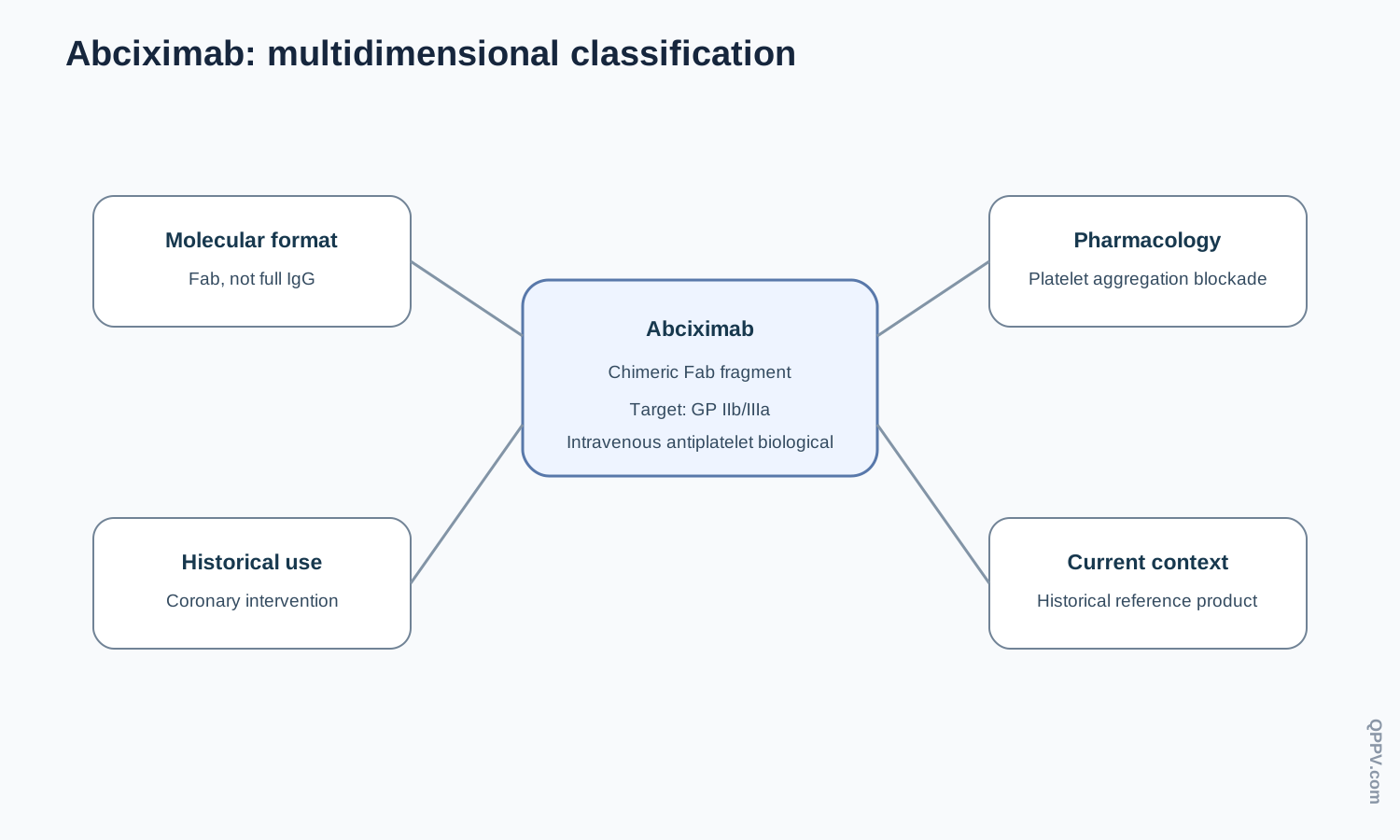
Figure 1. Abciximab is a chimeric Fab antiplatelet biological rather than a conventional full-length therapeutic IgG. Its safety profile is inseparable from procedural context and concomitant anticoagulant/antiplatelet therapy.
Platelet aggregation and glycoprotein IIb/IIIa
Platelet activation can begin through several pathways, including thrombin, collagen, thromboxane and ADP signalling. Those pathways converge on activation of glycoprotein IIb/IIIa on the platelet surface. Activated IIb/IIIa binds fibrinogen and related adhesive ligands, allowing fibrinogen to bridge neighbouring platelets and form an aggregate.
Blocking this receptor therefore interrupts a final common step in platelet aggregation even when upstream activation signals differ. That position in the pathway explains both the potency of abciximab and its bleeding liability.
Molecular design and mechanism of action
Abciximab is derived from the chimeric 7E3 antibody and consists of the antigen-binding Fab fragment. It binds the platelet glycoprotein IIb/IIIa receptor and inhibits platelet aggregation. Historical regulatory material also describes binding to the vitronectin receptor, but the clinically defining antiplatelet effect is blockade of platelet IIb/IIIa.
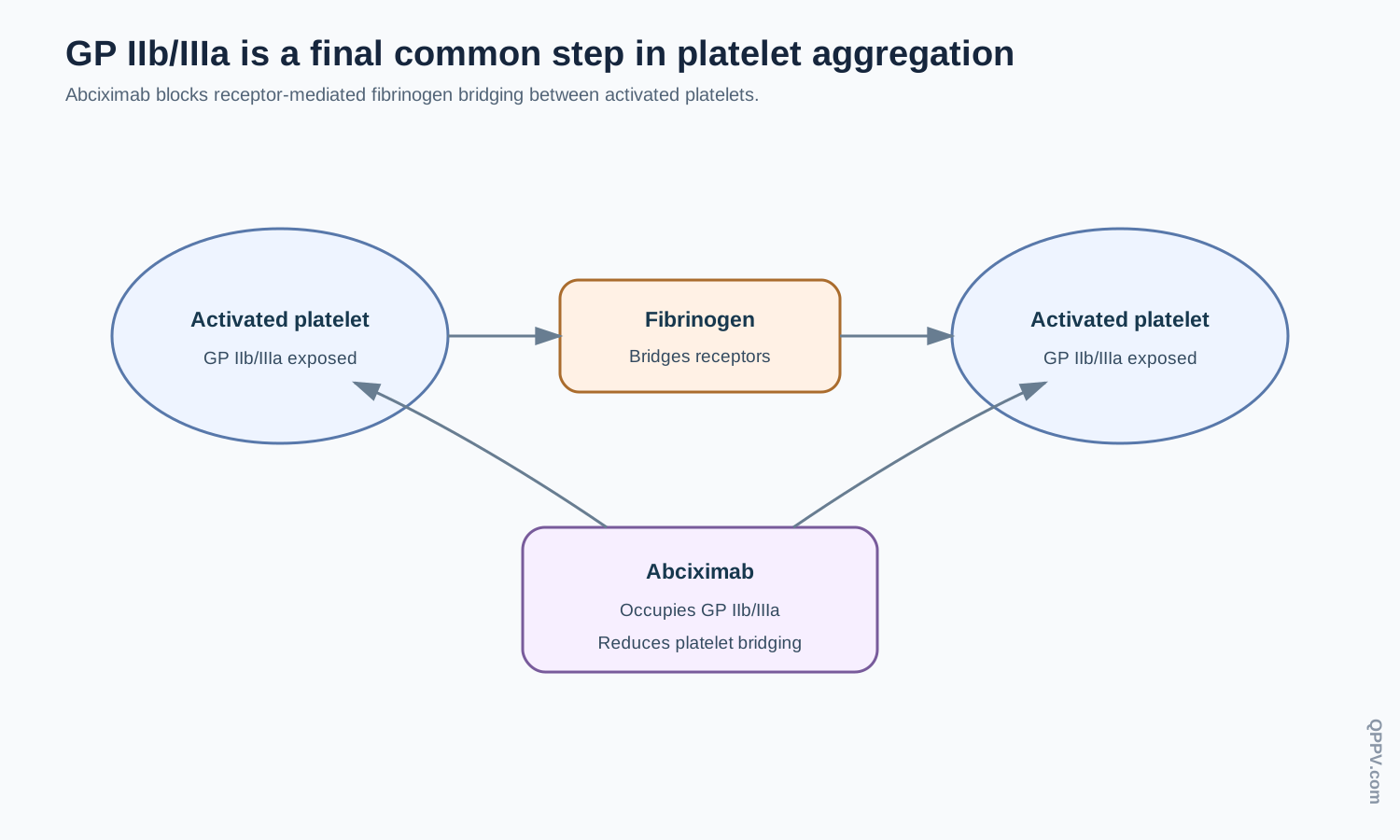
Figure 2. Multiple platelet-activation pathways converge on activated glycoprotein IIb/IIIa. Fibrinogen normally bridges activated receptors on adjacent platelets. Abciximab occupies the receptor and disrupts that final aggregation step.
Plasma pharmacokinetics and receptor pharmacodynamics are different
One of the key teaching points is that plasma concentration does not fully describe duration of biological effect. Abciximab rapidly associates with platelet receptors; receptor-bound drug and platelet-function effects can persist beyond the rapid decline of unbound plasma drug.
This matters for bleeding, urgent surgery and thrombocytopenia assessment. The clinically relevant exposure is not simply “time since infusion stopped” but residual platelet-receptor occupancy and functional platelet inhibition.
Development and historical regulatory context
The early 1990s were a period of rapid development in percutaneous coronary intervention. Acute vessel closure and periprocedural myocardial infarction were major complications, and platelet aggregation was recognised as a therapeutic target.
The EPIC programme showed that glycoprotein IIb/IIIa blockade could reduce ischemic complications in selected high-risk patients undergoing coronary intervention, while also making bleeding risk highly visible. Subsequent studies such as EPILOG refined anticoagulation strategies and showed that the relationship between antiplatelet efficacy and haemorrhage depended partly on the surrounding heparin regimen and vascular-access practice.
Abciximab received U.S. approval in December 1994. It later became less prominent as coronary-intervention technology and antiplatelet pharmacotherapy evolved. Current FDA sources list the product as discontinued in the United States. Historical status should therefore be stated explicitly whenever older abciximab safety literature is interpreted in a modern context.
Historical clinical use and procedural context
Abciximab was administered in the setting of percutaneous coronary intervention, where benefit and harm could occur within hours. The treated patient was usually also receiving aspirin, heparin and other antithrombotic therapy, and undergoing arterial catheterisation. Bleeding therefore arose from the interaction of drug pharmacology, vascular access, anticoagulant intensity and patient factors rather than from antibody exposure in isolation.
This is a useful pharmacovigilance lesson beyond abciximab: when a medicine is embedded in a complex procedure, the treatment system is the exposure context.
Major safety domains
Bleeding
Bleeding was the dominant safety trade-off in clinical development. Risk depended on anticoagulant dose, vascular-access management, patient characteristics and the need for urgent surgery or repeat intervention. Bleeding reports should therefore distinguish access-site bleeding, gastrointestinal bleeding, intracranial bleeding, retroperitoneal haemorrhage and surgical bleeding rather than using a single undifferentiated event term.
Haemoglobin fall, transfusion, haemodynamic compromise, intervention and outcome determine clinical severity. Concomitant heparin and other antiplatelet agents are essential parts of causality assessment.
Thrombocytopenia
Abciximab can cause thrombocytopenia, including abrupt and profound platelet-count reductions. Timing is particularly important because immune-mediated platelet destruction can occur rapidly and may be especially striking after previous exposure.
A suspected case should include baseline platelet count, post-treatment serial counts, peripheral-smear confirmation if available, exclusion of pseudothrombocytopenia, heparin exposure and evaluation for heparin-induced thrombocytopenia. The clinical distinction between drug-associated immune thrombocytopenia and consumptive or procedural causes materially changes interpretation.
Repeat exposure and immunogenicity
As a chimeric antibody fragment, abciximab can induce human anti-chimeric antibodies. Repeat exposure therefore raises additional questions about hypersensitivity and acute thrombocytopenia. Historical case assessment should document previous abciximab treatment even if it occurred years earlier.
This principle remains relevant for modern biologicals: prior exposure may matter even when the immediate treatment course is short.
Hypersensitivity
Acute hypersensitivity can occur with biological therapy. In the catheterisation laboratory, however, patients may be exposed simultaneously to contrast media, heparin and other drugs. A reaction during PCI should therefore be reconstructed across all plausible exposures rather than attributed automatically to the antibody fragment.
Urgent surgery
Urgent coronary artery bypass grafting after abciximab exposure created a practical haemostasis problem because platelet inhibition could persist while immediate surgical revascularisation was needed. Historical trial experience showed that surgery could be performed, but blood-product use and bleeding management required careful attention.
The PV lesson is that the clinical consequence of a pharmacodynamic effect depends on what happens next. Potent antiplatelet activity may be beneficial during PCI and hazardous when unplanned surgery follows.
Thrombosis-versus-bleeding benefit-risk reasoning
Abciximab cannot be evaluated by asking whether it caused bleeding without also considering the ischemic complications it was designed to prevent. Trials such as EPILOG demonstrated that glycoprotein IIb/IIIa blockade reduced ischemic complications, while protocol changes such as lower-dose, weight-adjusted heparin helped reduce haemorrhagic burden.
This is an early example of risk minimisation through treatment-system redesign rather than through changing the active molecule. Adjusting concomitant anticoagulation, sheath management and patient selection changed the observed safety profile.
Laboratory and procedural data as safety evidence
For an acute antiplatelet biological, platelet count, haemoglobin, activated clotting-time or anticoagulation information, vascular-access site and procedural timing can be more informative than narrative symptoms. Historical case review should therefore prioritise objective procedural data.
The absence of modern structured electronic data in older cases can limit retrospective signal analysis. That limitation should be acknowledged rather than filled with assumptions.
Pharmacovigilance case assessment
Historical abciximab cases should be reconstructed around procedure, antithrombotic co-therapy, platelet-count chronology and bleeding site. Without those elements, causality assessment is weak because the intervention itself and concomitant medicines materially influence outcome.
Event-specific follow-up priorities
| Event or issue | High-value follow-up information |
|---|---|
| Major bleeding | Site, onset, haemoglobin change, transfusion, vascular access, surgery/intervention, heparin/other antiplatelets |
| Thrombocytopenia | Baseline and serial platelet counts, timing, smear confirmation, prior abciximab exposure, heparin exposure, bleeding |
| Suspected HIT differential | Platelet timing, thrombosis, heparin chronology, HIT testing, alternative causes |
| Hypersensitivity | All procedural drugs/contrast, onset, phenotype, treatment, previous abciximab exposure |
| Urgent CABG | Time since bolus/infusion, platelet count/function, transfusions, surgical blood loss, outcome |
| Ischemic event despite treatment | PCI indication, lesion/procedure details, timing, stent/angioplasty context, concomitant therapy |
| Stroke | Haemorrhagic vs ischaemic phenotype, imaging, anticoagulants, blood pressure, timing |
Signal detection and aggregate review
Abciximab provides an example of why safety signals must be analysed against a changing standard of care. Bleeding rates observed in early trials were influenced by heparin dosing, sheath management and interventional practice. Later protocols reduced anticoagulation intensity and altered procedural management, changing the benefit-risk balance without changing the antibody itself.
Historical aggregate analyses should therefore preserve trial era and treatment protocol. Combining all studies without recognising those changes can produce misleading comparisons.
Benefit-risk evaluation in a discontinued product
For a discontinued biological, pharmacovigilance shifts from active routine surveillance toward historical evidence preservation, literature interpretation and accurate response to legacy safety questions. The product's discontinued status does not make its safety science irrelevant; it changes the purpose of the review.
The enduring questions are mechanistic and methodological: how receptor occupancy related to clinical effect, how bleeding and thrombocytopenia were detected, how concomitant anticoagulation modified harm, and how acute procedural data were integrated with spontaneous reports and trials.
Risk-management lessons
Several historical controls remain instructive:
- weight-adjusted anticoagulant dosing can materially influence bleeding risk when therapies interact pharmacodynamically;
- early and repeat platelet counts can identify abrupt thrombocytopenia;
- vascular-access management is part of bleeding prevention;
- prior biological exposure can alter immune-mediated risk on re-exposure;
- urgent surgery requires knowledge of persistent pharmacodynamic effect, not only plasma clearance.
These are lessons from the historical treatment system, not current prescribing recommendations.
Potential failure modes
The following are illustrative scenarios, not published inspection findings:
- A major haemorrhage is attributed to abciximab without documenting heparin dose or vascular-access complications.
- Severe thrombocytopenia is labelled heparin-induced thrombocytopenia without considering abciximab timing or prior exposure.
- A reaction in the catheterisation laboratory is assigned to abciximab despite simultaneous contrast and other drugs.
- Plasma drug disappearance is assumed to mean immediate recovery of platelet function.
- Historical bleeding rates are compared across trials without accounting for changes in heparin and PCI practice.
- The product is described as currently marketed despite current FDA sources listing it as discontinued.
Inspection and governance perspective
If an organisation retains legacy safety responsibility or historical records, an inspector could examine whether archived cases preserve enough procedural and laboratory data to explain important historical signals, whether current responses accurately describe discontinued status, and whether old product information is clearly separated from current clinical guidance.
The effectiveness question is whether historical pharmacovigilance remains traceable and interpretable without being presented as current treatment advice.
Practical checklist
For historical abciximab safety review, confirm:
- PCI indication and procedure type;
- bolus and infusion chronology;
- concomitant aspirin, heparin and other antiplatelet therapy;
- vascular-access site and procedural complications;
- baseline and serial platelet counts;
- prior abciximab exposure;
- haemoglobin change, transfusion and bleeding site;
- urgent surgery timing and blood-product use;
- imaging for stroke or other major vascular events;
- regulatory/marketing status at the time being discussed.
Key Takeaways
Abciximab is a chimeric monoclonal-antibody Fab fragment that blocks platelet glycoprotein IIb/IIIa and thereby interrupts the final common receptor step of platelet aggregation. Its development showed that an antibody fragment could exert rapid, powerful cardiovascular pharmacology even though therapeutic antibodies were then associated mainly with other clinical fields.
Its pharmacovigilance legacy is the tight coupling of benefit and harm: suppression of periprocedural ischemic events was accompanied by bleeding and thrombocytopenia risk, and those risks were strongly influenced by the surrounding anticoagulation and procedural system. Current U.S. sources list the product as discontinued, so the article is historical rather than prescribing guidance.
References
- U.S. Food and Drug Administration. Abciximab (ReoPro) historical prescribing information. https://www.accessdata.fda.gov/drugsatfda_docs/label/1997/abcicen110597-lab.pdf
- U.S. Food and Drug Administration. Purple Book: abciximab product details. Current marketing status: discontinued. https://purplebooksearch.fda.gov/index.cfm?blaNo=103575&event=productdetails
- U.S. Food and Drug Administration. CDER Discontinued Biologic Product List. Abciximab added to discontinued list 15 August 2019. https://www.fda.gov/media/180625/download
- EPILOG Investigators. Platelet glycoprotein IIb/IIIa receptor blockade and low-dose heparin during percutaneous coronary revascularization. N Engl J Med. 1997;336:1689-1696. doi:10.1056/NEJM199706123362401.
- EPISTENT Investigators. Randomised placebo-controlled and balloon-angioplasty-controlled trial to assess safety of coronary stenting with use of platelet glycoprotein-IIb/IIIa blockade. Lancet. 1998;352:87-92. doi:10.1016/S0140-6736(98)06113-3.
Regulatory Note
Abciximab is presented here as a historical biological and pharmacovigilance case study. FDA's current Purple Book lists the U.S. product as discontinued. Historical indications, doses and safety-management strategies should not be interpreted as current treatment recommendations. Regulatory status was checked against FDA material current in September 2026.