Acalabrutinib: Discovery, Development, Safety and Pharmacovigilance
Acalabrutinib is an oral, covalent inhibitor of Bruton tyrosine kinase (BTK) used in selected B-cell malignancies. It was developed to inhibit a signalling dependency of malignant B cells while limiting inhibition of some other kinases affected by earlier BTK inhibitors. That medicinal-chemistry aim became clinically meaningful only after randomised trials examined disease control and adverse effects. It must not be simplified into a claim that the drug is free of bleeding, infection, arrhythmia or other class-associated risks. [1–5]
This reference follows the single international nonproprietary name acalabrutinib, rather than treating Calquence formulations, combinations or regional indications as separate molecules. It distinguishes chronic lymphocytic leukaemia/small lymphocytic lymphoma (CLL/SLL) from mantle cell lymphoma (MCL), continuous BTK inhibition from fixed-duration combination treatment, and adverse reactions attributable to the acalabrutinib-containing regimen from events caused or influenced by its companion medicines. Acalabrutinib entered the value-led A034 editorial queue as a candidate associated with commercial oncology use; that queue position is not an audited global sales ranking and no combination revenue is assigned to the ingredient. [4–7]
Two regulatory details make a formulation-specific approach essential. The US Calquence 100-mg tablet label revised February 2026 and the EU Calquence 100-mg hard-capsule SmPC updated 7 October 2026 are not interchangeable product documents. The US label includes acalabrutinib with venetoclax for previously untreated CLL/SLL but does not establish the three-drug acalabrutinib–venetoclax–obinutuzumab regimen; the assessed EU SmPC includes venetoclax with or without obinutuzumab for previously untreated CLL. Differences in CYP3A interaction instructions and gastric acid suppression also require attention to the actual formulation and label, not a casual US-versus-Europe generalisation. [4,5,7]
- Acalabrutinib: Discovery, Development, Safety and Pharmacovigilance
- Discovery: why a more selective BTK inhibitor was pursued
- Mechanism, exposure and formulation
- Clinical development: what each trial established
- ELEVATE-TN: first-line CLL, continuous treatment
- ASCEND: relapsed CLL versus investigator's choice
- ELEVATE-RR: noninferior efficacy is not superior efficacy
- ECHO: adding acalabrutinib to bendamustine–rituximab in MCL
- AMPLIFY: fixed-duration treatment and a regulatory asymmetry
- Negative development: CALAVI and the limits of mechanistic plausibility
- Interpreting benefit and harm across trials
- Safety: mechanism, patient factors and competing explanations
- Product-specific listedness: US prescribing information versus EU SmPC
- Practical pharmacovigilance: reconstructing a regimen, not just a drug name
- Key Takeaways
- References
- Regulatory Note
Discovery: why a more selective BTK inhibitor was pursued
From B-cell signalling to a drug target
B-cell antigen receptor signalling integrates antigen recognition with pathways that influence survival, migration, proliferation and the interaction of B cells with their tissue microenvironment. BTK is a key cytoplasmic kinase in that network. In CLL, the malignant clone may depend on signals from lymphoid tissues as well as cell-intrinsic abnormalities. Blocking BTK can disrupt those survival and trafficking cues; this explains why lymph nodes may shrink while circulating lymphocytes initially increase as cells redistribute into blood. Such treatment-related lymphocytosis must be interpreted alongside clinical response criteria rather than automatically coded as progressive disease. [3–5]
The first widely used covalent BTK inhibitor, ibrutinib, established the therapeutic principle. Its activity at additional kinase targets also motivated attempts to develop inhibitors with a narrower biochemical profile. Acalabrutinib, originally known as ACP-196, was designed as a more selective irreversible inhibitor. The phase I–II report described reduced biochemical activity against several off-target kinases compared with ibrutinib; these laboratory comparisons were a rationale for testing, not clinical proof of superior overall survival or absence of cardiovascular toxicity. [3]
Acerta, early development and acquisition
Acalabrutinib originated in the development programme of Acerta Pharma, with operations in the Netherlands and United States. The first clinical programme examined pharmacokinetics, pharmacodynamics, tolerability and response in relapsed CLL, moving from dose escalation to a twice-daily expansion regimen. In the initial uncontrolled cohort of 61 patients reported by Byrd and colleagues, the response rate was promising, but the small sample, limited follow-up and lack of a comparator meant that long-term comparative benefit–risk remained unknown. An early absence of a particular adverse event is especially weak evidence that the event cannot occur with broader exposure. [3]
In December 2015 AstraZeneca announced an agreement to obtain a majority equity stake in Acerta, and in February 2016 reported completion of the transaction. The contemporaneous terms described an initial 55% stake, $2.5 billion paid upfront and a further $1.5 billion contingent on a specified approval or date trigger. These figures describe a corporate transaction, not acalabrutinib sales or an independent valuation of each future indication. The acquisition provided resources and an oncology development platform for larger comparative studies; Acerta's scientific origin should remain distinct from AstraZeneca's later sponsorship and marketing role. [1,2]
Approval sequence and changing therapeutic scope
US accelerated approval in 2017 established acalabrutinib for previously treated MCL on the basis of evidence available at that time. US CLL/SLL approval followed in 2019, while the EU granted the initial Calquence marketing authorisation in November 2020. In January 2025 the FDA granted traditional approval for previously treated MCL and approved acalabrutinib with bendamustine and rituximab for untreated, transplant-ineligible MCL following the randomised ECHO study. In February 2026 the FDA approved acalabrutinib with venetoclax for previously untreated CLL/SLL on AMPLIFY evidence. [4–7,13]
The EU product information current in October 2026 encompasses several CLL and MCL settings, including previously untreated CLL with venetoclax with or without obinutuzumab and previously untreated transplant-ineligible MCL with bendamustine and rituximab. Its relapsed/refractory MCL monotherapy indication is restricted to patients not previously treated with a BTK inhibitor, whereas the assessed US MCL monotherapy indication specifies at least one prior therapy without that identical wording. These distinctions affect the population to which trial outcomes and labelled safety information can reasonably be applied. [4,5,13]
Mechanism, exposure and formulation
Covalent inhibition and the active metabolite
Acalabrutinib binds covalently to a cysteine residue in the BTK active site. Its active metabolite ACP-5862 also inhibits BTK. Inhibition of B-cell receptor and cytokine-receptor signalling alters malignant B-cell trafficking and survival; it is not a general cytotoxic mechanism equivalent to bendamustine or a direct BCL-2 blockade equivalent to venetoclax. A regimen combining these agents engages different biological mechanisms, which can improve disease control but also creates a different toxicity profile from acalabrutinib alone. [3–5]
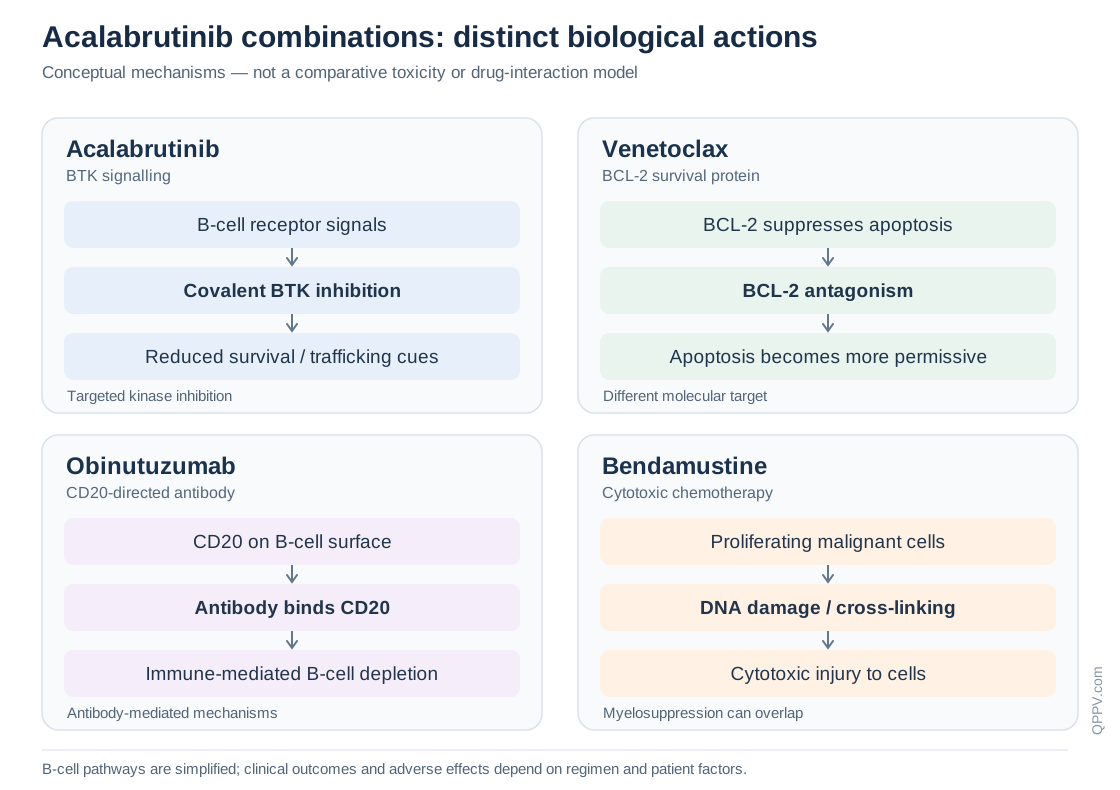
Figure 1. Distinct treatment mechanisms and monitoring domains. The figure depicts mechanistic relationships, not a validated causal allocation of every adverse event to one medicine.
A short plasma half-life does not mean brief target inhibition
The parent compound is absorbed relatively rapidly and has a short plasma elimination half-life, while covalent BTK occupancy can outlast measurable parent-drug exposure. Twice-daily dosing was developed to maintain target coverage over the dosing interval; the active metabolite also contributes to activity. A pharmacokinetic interaction that changes exposure may alter both efficacy and toxicity even when a patient reports taking the correct tablet or capsule count. Pharmacodynamic persistence does not justify unplanned dose omissions or arbitrary perioperative interruption schedules. [3–5]
Acalabrutinib is primarily metabolised through CYP3A pathways. Strong CYP3A inhibitors can increase exposure and strong inducers can reduce it. Because anti-infective drugs, anticonvulsants and other treatments may be introduced during cancer therapy, medication reconciliation is a continuing safety activity rather than a single baseline checklist. The exact action—avoidance, temporary interruption, dose modification or monitoring—must follow the authorised formulation-specific label and the clinical context. [4,5]
Why capsule and tablet instructions must not be conflated
The assessed EU product information describes a hard capsule with pH-dependent absorption. It advises avoiding proton-pump inhibitors, separating antacids and timing H2-receptor antagonists. The assessed US 2026 document is for a tablet and does not reproduce that capsule-specific acid-reduction restriction in its highlighted interaction instructions. A case involving reduced response after omeprazole exposure cannot be assessed without confirming which formulation was dispensed, its authorised instructions and the timing of both medicines. [4,5]
Likewise, a patient switched between markets, packs or care settings may accurately report the same brand name while receiving a different formulation. Product verification should include dosage form, strength, package, country, dates of supply and co-medications. Do not extrapolate the absence of a restriction in one document to a different formulation merely because both contain acalabrutinib. [4,5]
Clinical development: what each trial established
ELEVATE-TN: first-line CLL, continuous treatment
ELEVATE-TN was a randomised, open-label phase III trial in previously untreated CLL, comparing acalabrutinib plus obinutuzumab, acalabrutinib monotherapy and chlorambucil plus obinutuzumab. The pivotal analysis involved 535 patients. Both acalabrutinib-containing strategies improved progression-free survival (PFS) relative to the chlorambucil–obinutuzumab comparator; the trial also supplied a safety basis for understanding how addition of an anti-CD20 antibody changes neutropenia, infusion-related effects and infection risk. [4,5,8]
The appropriate interpretation is regimen-specific. The study does not show that every CLL patient needs obinutuzumab, that continuous acalabrutinib is always preferable to a finite-duration approach, or that the observed PFS difference necessarily implies an established overall-survival advantage. The chlorambucil comparator reflected a particular treatment era and patient population; a current clinician comparing options must account for changing alternatives, genetic risk, comorbidity and treatment goals. The additional antibody is not merely an efficacy modifier: it changes exposure, clinic visits and attribution of cytopenias and infections. [4,5,8]
An early rise in lymphocyte count after BTK inhibition can accompany redistribution rather than progression. Conversely, persistent or increasing lymphadenopathy, constitutional symptoms, worsening cytopenias or transformation concerns demand clinical assessment. The investigator should document which response criteria were applied and whether a laboratory change represents disease, treatment pharmacology or an adverse event. A safety database that captures only the isolated laboratory term can misrepresent the clinical story. [3,8]
ASCEND: relapsed CLL versus investigator's choice
ASCEND randomised 310 patients with relapsed or refractory CLL to acalabrutinib or investigator's choice of idelalisib plus rituximab or bendamustine plus rituximab. The original independent-review analysis reported markedly longer PFS with acalabrutinib: median not reached versus 16.5 months at approximately 16 months' median follow-up, with a hazard ratio of 0.31 (95% CI 0.20–0.49). Longer follow-up supported sustained disease control, but different comparator regimens carried different toxicity and discontinuation patterns. [9]
The composite comparator is a practical limitation. It is wrong to treat a pooled idelalisib–rituximab/bendamustine–rituximab comparison as if it were a direct randomised comparison against every available modern targeted agent. Open-label treatment can influence reporting, clinical management and some patient-reported outcomes even when progression is independently reviewed. The trial helps establish benefit–risk in previously treated CLL; it cannot determine the optimal sequence after every subsequent BTK or BCL-2 inhibitor exposure. [9]
ELEVATE-RR: noninferior efficacy is not superior efficacy
ELEVATE-RR directly compared acalabrutinib with ibrutinib in previously treated CLL enriched for high-risk cytogenetics. At a median follow-up of about 41 months, median PFS was 38.4 months in each arm and the prespecified noninferiority criterion was met. All-grade atrial fibrillation/flutter occurred in 9.4% with acalabrutinib and 16.0% with ibrutinib; hypertension and some other adverse events were also less frequent in the acalabrutinib arm. [10]
This is clinically relevant comparative safety evidence, but it does not justify describing acalabrutinib as cardiovascular-risk-free. Atrial fibrillation, ventricular arrhythmias and hypertension can still occur, and the trial's eligibility criteria and ascertainment methods limit direct application to patients with severe pre-existing cardiac disease or a different disease setting. The result also does not prove superior PFS or overall survival. Differences in adverse-event discontinuation may influence treatment persistence, yet observational continuation rates in practice require separate investigation. [4,5,10]
For a patient who develops palpitations or syncope, the practical question is not whether the drug is statistically safer than ibrutinib. It is whether the event needs urgent evaluation, what rhythm was documented, whether concurrent infection or electrolyte disturbance contributed, whether anticoagulation is required, and how the competing risks of thrombosis and haemorrhage affect continuation of BTK inhibition. [4,5,10]
ECHO: adding acalabrutinib to bendamustine–rituximab in MCL
ECHO randomised 598 patients aged at least 65 years with previously untreated MCL, not intended for autologous transplantation, to acalabrutinib plus bendamustine–rituximab or placebo plus bendamustine–rituximab. The independent-review PFS result favoured acalabrutinib: 66.4 versus 49.6 months, hazard ratio 0.73 (95% CI 0.57–0.94). Overall survival was not significantly improved in the reported primary analysis; crossover and subsequent therapies complicate interpretation. [6,12]
The addition of a targeted agent to cytotoxic chemotherapy and anti-CD20 treatment creates substantial overlapping infection and haematological risks. In the FDA approval summary, serious adverse reactions occurred in 69% of the acalabrutinib combination group and fatal adverse reactions in 12%; these are observed outcomes in that regimen and population, not monotherapy rates. The trial supports the indicated first-line MCL regimen but not a blanket claim that adding acalabrutinib to any chemotherapy backbone is beneficial. [6,12]
The earlier single-arm relapsed MCL programme supported the 2017 accelerated approval. Its response data were clinically useful but less conclusive than randomised PFS evidence. The 2025 US regulatory action converted previously treated MCL to traditional approval and added the first-line combination indication. An adverse-event case should identify whether the patient received monotherapy after prior therapy or combination treatment in the untreated setting; those exposures have different expected co-toxicities and clinical trajectories. [4,6]
AMPLIFY: fixed-duration treatment and a regulatory asymmetry
AMPLIFY enrolled 867 previously untreated CLL patients without del(17p) or TP53 mutation into three regimens: acalabrutinib–venetoclax (AV), acalabrutinib–venetoclax–obinutuzumab (AVO), and investigator-selected chemoimmunotherapy. The FDA's February 2026 review reported an independent-review PFS hazard ratio of 0.65 (95% CI 0.49–0.87) for AV versus chemotherapy, with median PFS not estimable in the AV arm at the reported follow-up. The study's exclusion of the highest-risk TP53-defined subgroup is central to interpreting applicability. [7,11]
The regimen is deliberately finite: acalabrutinib begins in cycle 1 for up to 14 28-day cycles, while venetoclax starts in cycle 3 and is escalated before continuing for up to 12 cycles. That design changes the pattern of exposure, the timing of tumour lysis risk and the burden of monitoring compared with indefinite BTK monotherapy. A patient who stops after the protocol-defined course has not necessarily discontinued for toxicity; reason for stopping must be documented explicitly. [4,5,7]
Regulatory boundaries differ. The February 2026 US Calquence tablet label includes AV for previously untreated CLL/SLL and states that AVO was an unapproved regimen in that assessed label; the October 2026 EU capsule SmPC includes acalabrutinib with venetoclax with or without obinutuzumab for previously untreated CLL. The presence of AVO data in a US label does not itself make the three-drug regimen US-authorised. Nor should a European indication be silently projected onto a US product or vice versa. The venetoclax label, particularly its tumour-lysis precautions and ramp-up instructions, remains indispensable. [4,5,7,11]
Negative development: CALAVI and the limits of mechanistic plausibility
The CALAVI phase II programme tested whether BTK inhibition could improve outcomes in hospitalised patients with COVID-19 respiratory illness. AstraZeneca reported in November 2020 that the randomised studies did not meet the primary endpoint of increasing survival free of respiratory failure when acalabrutinib was added to best supportive care. That negative result did not negate its efficacy in B-cell malignancies; it showed that a plausible immunological mechanism and early observations were insufficient to establish benefit in a different disease. [14]
The distinction matters for pharmacovigilance and scientific communication. An investigator must not convert a mechanistic rationale into an authorised indication, or interpret a negative trial as proof that the drug has no pharmacological effects in the studied pathway. Similarly, absence of a new safety signal in a limited COVID-19 programme cannot replace the long-term oncology safety database. Negative evidence belongs in the product lifecycle, not in a footnote omitted from promotional summaries. [14]
Interpreting benefit and harm across trials
| Evidence | Population and comparator | Supported conclusion | Important boundary |
|---|---|---|---|
| ELEVATE-TN | Untreated CLL; chlorambucil–obinutuzumab | Better PFS with acalabrutinib-containing arms | Historical comparator; continuous therapy |
| ASCEND | Relapsed CLL; investigator's choice IdR/BR | Better PFS versus pooled comparator | Not a direct comparison with all modern agents |
| ELEVATE-RR | Previously treated high-risk CLL; ibrutinib | Noninferior PFS; less atrial fibrillation/flutter | Not superior efficacy or zero cardiac risk |
| ECHO | Older, transplant-ineligible untreated MCL; BR | Improved PFS with added acalabrutinib | No significant OS improvement in primary analysis |
| AMPLIFY | Untreated CLL without del(17p)/TP53 mutation; FCR/BR | Finite-duration AV improved PFS | US AV approval differs from EU AVO scope |
| CALAVI | Hospitalised COVID-19; supportive care | Primary endpoint not met | Not an oncology efficacy test |
These are different estimands, populations, follow-up periods and comparator strategies. Cross-trial comparisons of raw infection, atrial-fibrillation or mortality percentages are especially misleading because baseline risk, prior treatment, concomitant medicines and duration of observation differ. Where a regimen appears more tolerable, ask whether that conclusion comes from a head-to-head randomised comparison, a pooled label safety table or a spontaneous-reporting dataset. [4–12,14]
Safety: mechanism, patient factors and competing explanations
Infection and immune dysfunction
CLL and MCL themselves impair immune function, while prior therapies, corticosteroids, anti-CD20 antibodies and cytotoxic chemotherapy can add immunosuppression. Acalabrutinib-containing regimens have been associated with serious bacterial, viral and fungal infections, including opportunistic infections. The US February 2026 tablet label reports serious or Grade 3 or higher infections in 29% of a pooled 2,055-patient exposure population, and explicitly discusses hepatitis B reactivation, fungal pneumonia, Pneumocystis infection, cytomegalovirus and progressive multifocal leukoencephalopathy (PML). This pooled percentage is not the risk for a particular newly diagnosed patient or a specific regimen. [4]
The EU October 2026 capsule SmPC separately lists hepatitis B reactivation and aspergillus infections in its section 4.8 monotherapy table and gives instructions for establishing HBV status before treatment. It also addresses PML in the context of prior or concomitant immunosuppression. These are clinically consequential, product-specific entries, not a claim that every patient requires identical antimicrobial prophylaxis. Infection prevention should be tailored to disease, co-treatment, immunoglobulin status, neutropenia, local epidemiology and applicable protocols. [5]
An infection occurring during acalabrutinib treatment can be multifactorial. Document baseline infection susceptibility, vaccination and HBV history, absolute neutrophil count, concomitant anti-CD20 or cytotoxic exposure, antimicrobial prophylaxis, microbiology, imaging and response to treatment. If a patient has neurological deterioration, PML belongs in the differential where clinically appropriate; it is not diagnosed from a nonspecific symptom code alone. A case narrative should preserve diagnostic uncertainty until supported by testing. [4,5]
Haemorrhage, antithrombotics and procedures
BTK inhibition can be associated with bruising and bleeding, ranging from superficial ecchymoses to serious gastrointestinal or intracranial haemorrhage. The US tablet label reports major haemorrhage in 4.7% of the pooled 2,055 patients and warns that concurrent antithrombotics may increase risk. Its perioperative advice is to consider withholding acalabrutinib 3–7 days before and after surgery, depending on procedure and bleeding risk. These are label-specific recommendations to be applied with the treating team; an automated system should not turn them into a universal fixed hold. [4]
The EU capsule SmPC advises caution with antithrombotic medicines, states that warfarin and other vitamin K antagonists should not be co-administered, and suggests considering withholding Calquence for at least three days before and after surgery. The exact difference in wording matters for cross-jurisdiction review. An apparent difference in observed bleeding proportions between treatment groups does not by itself establish that anticoagulation is protective or harmless; patient selection and exposure patterns may differ. [5]
For a reported bleed, record site, severity, transfusion or intervention, platelet count, coagulation studies, antithrombotic agent and dose, renal and hepatic function, trauma, procedure timing, concomitant medicines and underlying disease. Determine whether the event meets seriousness criteria independently of a CTCAE grade. Rechallenge may be clinically inappropriate after a life-threatening event even when a simple algorithm suggests dose reduction for some lesser toxicities. [4,5]
Cytopenias and second primary malignancies
Neutropenia, anaemia and thrombocytopenia occur in both monotherapy and combination settings, but rates and mechanisms vary. Bendamustine and anti-CD20 treatment may produce substantial marrow suppression; venetoclax adds its own neutropenia risk. In a case of febrile neutropenia after an acalabrutinib–bendamustine–rituximab cycle, the fact that all medicines were administered does not establish equal causality. Capture baseline marrow involvement, cycle day, nadir, growth-factor use, dose delays, infections and other myelotoxic medicines. [4–6]
Second primary malignancies, particularly non-melanoma skin cancer, are addressed in both labels. The US pooled clinical-trial warning reports second primary malignancies in 16% of exposed patients, but this figure combines patients with haematological cancers, varying follow-up and background cancer risk. It should not be used as a causal excess-risk estimate. Photoprotection and skin examination are practical controls; suspected cancers require pathology, exposure history and assessment of other risk factors. [4,5]
Arrhythmias, hypertension and hepatic injury
Acalabrutinib may have a more favourable comparative atrial-fibrillation profile than ibrutinib in ELEVATE-RR, yet the US label warns of atrial and ventricular arrhythmias, including serious and fatal cases. The EU monotherapy adverse-reaction table lists atrial fibrillation/flutter as common and hypertension as very common. Baseline cardiac history, acute infection, electrolyte abnormalities and concomitant drugs can influence individual risk. A new syncopal episode should be medically assessed rather than managed solely by changing an adverse-event code. [4,5,10]
The February 2026 US label also identifies hepatotoxicity, including drug-induced liver injury (DILI), in sections 5.6 and 6.2; it recommends baseline and ongoing liver testing and discontinuation if DILI is confirmed. The EU capsule SmPC reviewed here contains relevant laboratory and safety information but does not present the identical named DILI postmarketing entry in its section 4.8 table. That textual difference is not proof of absence of hepatic risk in Europe. Evaluate alternative causes such as viral hepatitis, sepsis, biliary obstruction, other hepatotoxic medicines and disease involvement, and document the timing of dechallenge and any rechallenge. [4,5]
Pregnancy, lactation and special populations
Human pregnancy experience is limited. The US tablet label warns of possible fetal harm and dystocia based on nonclinical evidence and advises against breastfeeding during treatment and for the specified post-treatment interval. The EU capsule SmPC also advises avoiding pregnancy unless treatment is clinically required and advises against breastfeeding during treatment and for two days after the last dose. These recommendations should be checked in the exact local label and not substituted with generic oncology counselling. [4,5]
Severe hepatic impairment raises exposure concerns; the US label advises avoiding Calquence, and the EU SmPC does not recommend it in severe impairment. The EU SmPC has limited data for severe renal impairment or dialysis and recommends individual benefit–risk assessment with close monitoring. Older age alone does not determine suitability: frailty, anticoagulant use, infections, cardiovascular disease and the choice of combination regimen can be more clinically decisive. [4,5]
Product-specific listedness: US prescribing information versus EU SmPC
Sources and assessment boundary
This public-label assessment was performed on 30 October 2026 against: (a) Calquence 100-mg tablets, United States, FDA prescribing information revised February 2026, particularly sections 4, 5, 6 and 7; and (b) Calquence 100-mg hard capsules, European Union, EMA SmPC updated 7 October 2026, particularly sections 4.3–4.8. The formulations and indication scopes differ. This is not a comparison of two otherwise identical presentations, nor a claim to have reviewed every US capsule or national European product version. [4,5,13]
| Safety topic | US Calquence tablet, February 2026 | EU Calquence capsule, October 2026 | Interpretation |
|---|---|---|---|
| Contraindications | Section 4 states none | Section 4.3 lists hypersensitivity to active substance or excipients | A real wording difference; absence of a formal US contraindication does not make hypersensitivity clinically irrelevant |
| Common reactions | Section 6.1 pooled data include upper respiratory infection, diarrhoea, headache and musculoskeletal pain | Section 4.8 monotherapy table includes these and explicit frequency categories | Different denominators and presentation; percentages are not head-to-head |
| HBV reactivation and PML | Named in section 5.1 warnings on opportunistic infection | HBV reactivation and PML appear in section 4.8 tables for relevant populations; sections 4.4–4.5 provide precautions | A warning mention and an adverse-reaction table entry are distinct documentary locations |
| Bleeding | Section 5.2 warning; trial adverse-reaction data in section 6.1 | Haemorrhage, bruising, GI and intracranial haemorrhage in section 4.8 | Both recognise bleeding, but term grouping and perioperative advice differ |
| Atrial fibrillation | Section 5.5 warning and trial safety data | Section 4.8 lists atrial fibrillation/flutter as common | Both recognise the event; compare specific definitions and populations |
| Ventricular arrhythmia | Named in sections 5.5 and 6.2 | Not identified as an identically named entry in the assessed section 4.8 monotherapy table | Do not infer absent risk or unlistedness against an unreviewed RSI |
| DILI | Explicit sections 5.6 and 6.2 | No identically named DILI entry found in the assessed section 4.8 table | Public-label textual difference; not a company-core listedness conclusion |
| Tumour lysis syndrome | Combination-specific toxicity management, especially with venetoclax | Section 4.8 lists TLS and section 4.4 discusses risk | Attribution requires disease burden and partner medicines |
| CYP3A and acid reduction | US tablet: moderate CYP3A inhibitor dose reduction; no capsule-specific PPI restriction in highlighted interaction instructions | EU capsule: monitor with moderate CYP3A inhibitor; avoid PPIs and time acid reducers | Formulation and regional instructions must be kept separate |
| Indication | US AV approved; AVO described as unapproved in the assessed label | EU AV and AVO included for previously untreated CLL | Safety tables for studied regimens do not confer authorisation in every region |
What listedness means in an actual case
A reaction can be mentioned in a warning, included in a clinical-trial table, listed as a postmarketing adverse reaction, or present in several of these locations. The location matters. For example, the US DILI statement is explicitly in sections 5.6 and 6.2, whereas the EU SmPC section 4.8 reviewed above does not contain an identically named DILI entry. An assessor should record the document, revision, section, term, formulation and jurisdiction, rather than simply checking a global “listed” box. [4,5]
This comparison cannot decide whether an individual case is expected under the company's applicable reference safety information (RSI), whether the case is caused by acalabrutinib, or whether it is reportable within a particular legal timeframe. Those decisions depend on the authorised reference document, study or marketed-product context, local rules and the case facts. A missing public-label term is not proof that the event is absent from all company safety documents, and an EU-listed term cannot automatically be used as the US reference. [4,5]
Practical pharmacovigilance: reconstructing a regimen, not just a drug name
A minimum clinically useful exposure record
An acalabrutinib report may arrive as “Calquence and bleeding,” “CLL progression,” “febrile neutropenia after cycle three” or “arrhythmia during antibiotic treatment.” Each description is incomplete until the actual regimen and chronology are established. A useful case record captures the INN and brand, country, capsule versus tablet, strength, start and stop dates, prescribed and administered frequency, interruptions, missed doses, batch when relevant, and whether acalabrutinib was combined with obinutuzumab, venetoclax, bendamustine or rituximab. Record prior BTK inhibitor exposure, line of therapy, disease stage and baseline risk factors. [4,5]
For combinations, capture each component's dates and dose changes separately. Venetoclax ramp-up and TLS prophylaxis, obinutuzumab infusions and bendamustine cycles are not interchangeable exposures. If an adverse event began after a new antifungal, the CYP3A interaction may be as important as the cancer treatment start date. If a patient has worsening CLL after a formulation switch, check dispensing and acid-suppressing medicines before assuming molecular resistance. These steps are recommended clinical/PV practice; they do not replace minimum valid ICSR elements or statutory submission rules. [4,5,7]
Four illustrative case pathways
Illustration 1: bleeding around a procedure. A patient with CLL undergoes a dental or surgical procedure while receiving acalabrutinib and an antithrombotic. The case assessor establishes the exact procedure, last acalabrutinib dose, whether and why treatment was withheld, antithrombotic indication, platelet count, haemostasis measures and clinical outcome. The US and EU perioperative language should be recorded from the appropriate product information. An unplanned hold can have consequences for disease control, so a simplistic universal “stop for three days” rule is not an adequate quality control. [4,5]
Illustration 2: hepatitis B reactivation. A patient with past HBV exposure develops hepatitis after acalabrutinib and an anti-CD20 antibody. Obtain baseline HBsAg, anti-HBc and other relevant virology, prophylaxis, HBV DNA trend, ALT, bilirubin, treatment dates and concurrent causes. The EU label explicitly advises establishing HBV status before treatment. The analysis must not automatically assign the reaction solely to acalabrutinib or solely to the antibody. Document both the clinical management and whether screening/prophylaxis processes operated as intended. [4,5]
Illustration 3: cytopenia during ECHO-like treatment. After a cycle of acalabrutinib–bendamustine–rituximab, a patient develops neutropenic pneumonia. Establish the cycle day, neutrophil nadir, marrow involvement, prior chemotherapy, growth-factor use, cultures, antimicrobials, dose modifications and outcome. The combination's trial safety frequency is the appropriate descriptive context; the monotherapy table cannot be used as a patient-specific expected incidence. For signal analysis, stratify by regimen and prior treatment rather than pool all neutropenic events under the INN alone. [4–6]
Illustration 4: palpitations and a new CYP3A inhibitor. A patient receiving a 100-mg twice-daily product develops palpitations after starting an azole antifungal. Record ECG, rhythm, blood pressure, electrolytes, infection severity, prior cardiac history, drug administration, the actual inhibitor, and any dose interruption. The interaction may increase acalabrutinib exposure, but temporal association does not establish the arrhythmia's cause. Check the exact local label and involve the treating clinician promptly where clinically indicated. [4,5,10]
Case quality, signal detection and escalation
Minimum report validity, seriousness, causality, listedness and reportability are different questions. A patient can have a medically serious event that is listed in the EU SmPC, while causality remains uncertain because of concomitant therapy. Conversely, a seemingly mild but repeated formulation-related dosing error may warrant a medication-safety intervention even without a serious adverse reaction. A defensible case narrative preserves the reporter's original terms, clinical evidence, follow-up requests, alternative explanations, action taken and outcome. [4,5]
For aggregate signal assessment, consider stratification by indication (CLL/SLL versus MCL), treatment line, formulation, continuous versus fixed-duration regimen, combination partners, age, cardiac history, baseline immunosuppression, HBV serostatus, concomitant antithrombotics and CYP3A modifiers. Duplicate detection matters because one hospitalisation can appear in spontaneous, literature and trial-derived reports. Exposure-adjusted rates, where valid, may help compare time-at-risk, but spontaneous-report counts alone do not supply a denominator or incidence. [4–12]
Signal governance should link the clinical case series to trial evidence, current regional labels, pharmacology, literature, quality complaints, the decision to investigate further, any regulatory communication and a defined review date. In an illustrative internal audit, a team may have coded every event correctly yet failed to record whether the patient took the capsule or tablet. That missing distinction could obscure a clinically relevant acid-suppression interaction. The corrective action would be to add formulation-specific follow-up and check whether the new data field improves case completeness; the example is hypothetical, not a reported inspection finding. [4,5]
Risk-minimisation controls and effectiveness
The most useful controls address known failure modes: accurate medicine reconciliation, explicit combination-regimen calendars, infection/HBV assessment, complete blood counts, evaluation of bleeding and cardiac symptoms, appropriate liver monitoring, CYP3A interaction review, and venetoclax-specific TLS prevention where applicable. Patient education should explain which symptoms require prompt medical contact, how missed doses are handled under the relevant product label, and why new over-the-counter or prescription medicines must be checked for interactions. [4,5,7]
Effectiveness is not demonstrated by the mere existence of a checklist. Audit whether HBV status was actually established before treatment, whether interacting anti-infectives triggered review, whether perioperative plans were documented, whether tablet/capsule changes were recognised, and whether serious events were followed through to clinical outcome. Measure preventable errors and process completion with suitable denominators; do not claim that fewer spontaneous reports alone prove a reduction in harm. [4,5]
Key Takeaways
Acalabrutinib's story begins with Acerta's attempt to improve BTK selectivity and extends through AstraZeneca's development programme, CLL and MCL trials, formulation changes and 2026 combination approvals. ELEVATE-RR established noninferior PFS to ibrutinib with less atrial fibrillation/flutter, not an absence of cardiac risk. ECHO improved PFS when acalabrutinib was added to bendamustine–rituximab in older untreated MCL, without a significant overall-survival benefit in the reported primary analysis. AMPLIFY supported finite-duration acalabrutinib–venetoclax, while the EU and US assessed labels differ on the three-drug AVO regimen. [4–12]
For pharmacovigilance, the decisive unit is the actual product and regimen at a defined time, not the INN in isolation. Serious infections, haemorrhage, cytopenias, arrhythmias, second cancers and hepatic injury require active attention. The US February 2026 tablet label and EU October 2026 capsule SmPC differ in formulation, interaction instructions, contraindication wording and some explicitly named reactions. Their public-label comparison informs but does not replace case-specific causality, RSI expectedness or regulatory reportability. [4,5]
References
- AstraZeneca. AstraZeneca enhances long-term growth through Oncology investment in Acerta Pharma. 17 December 2015. Accessed 30 October 2026. https://www.astrazeneca.com/media-centre/press-releases/2015/AstraZeneca-enhances-long-term-growth-through-Oncology-investment-in-Acerta-Pharma.html
- AstraZeneca. AstraZeneca completes transaction for majority equity stake investment in Acerta Pharma. 2 February 2016. Accessed 30 October 2026. https://www.astrazeneca.com/media-centre/press-releases/2016/astrazeneca-completes-transaction-for-majority-equity-stake-investment-in-acerta-pharma-01022016.html
- Byrd JC, et al. Acalabrutinib (ACP-196) in relapsed chronic lymphocytic leukemia. N Engl J Med. 2016;374:323–332. doi:10.1056/NEJMoa1509981. https://www.nejm.org/doi/10.1056/NEJMoa1509981
- US Food and Drug Administration. Calquence (acalabrutinib) tablets, 100 mg, full prescribing information, revised February 2026, NDA 216387, supplement 006; especially sections 1–8 and 12–14. Accessed 30 October 2026. https://www.accessdata.fda.gov/drugsatfda_docs/label/2026/216387s006lbl.pdf
- European Medicines Agency. Calquence 100 mg hard capsules, EU Summary of Product Characteristics, Annex I, EPAR product information last updated 7 October 2026; especially sections 4.1–4.8. Accessed 30 October 2026. https://www.ema.europa.eu/en/documents/product-information/calquence-epar-product-information_en.pdf
- US Food and Drug Administration. FDA approves acalabrutinib with bendamustine and rituximab for previously untreated mantle cell lymphoma. 16 January 2025. Accessed 30 October 2026. https://www.fda.gov/drugs/resources-information-approved-drugs/fda-approves-acalabrutinib-bendamustine-and-rituximab-previously-untreated-mantle-cell-lymphoma
- US Food and Drug Administration. FDA approves acalabrutinib with venetoclax for CLL/SLL. 19 February 2026. Accessed 30 October 2026. https://www.fda.gov/drugs/resources-information-approved-drugs/fda-approves-acalabrutinib-venetoclax-chronic-lymphocytic-leukemia-or-small-lymphocytic-lymphoma
- Sharman JP, et al. Acalabrutinib with or without obinutuzumab versus chlorambucil and obinutuzumab for treatment-naive CLL (ELEVATE-TN). Lancet. 2020;395:1278–1291. doi:10.1016/S0140-6736(20)30262-2. https://pubmed.ncbi.nlm.nih.gov/32305093/
- Ghia P, et al. ASCEND: phase III randomised trial of acalabrutinib versus investigator's choice in relapsed/refractory CLL. J Clin Oncol. 2020. doi:10.1200/JCO.19.03355. https://pubmed.ncbi.nlm.nih.gov/32459600/
- Byrd JC, et al. Acalabrutinib versus ibrutinib in previously treated CLL: ELEVATE-RR. J Clin Oncol. 2021. https://pubmed.ncbi.nlm.nih.gov/34310172/
- Brown JR, et al. Fixed-duration acalabrutinib combinations in untreated CLL (AMPLIFY). N Engl J Med. 2025. doi:10.1056/NEJMoa2409804. https://doi.org/10.1056/NEJMoa2409804
- Wang M, et al. Acalabrutinib plus bendamustine–rituximab in untreated MCL (ECHO). J Clin Oncol. 2025;43:2276–2284. doi:10.1200/JCO-25-00690. https://pubmed.ncbi.nlm.nih.gov/40311141/
- European Medicines Agency. Calquence EPAR, overview, authorisation history, indications and product information, updated October 2026. Accessed 30 October 2026. https://www.ema.europa.eu/en/medicines/human/EPAR/calquence
- AstraZeneca. Update on CALAVI phase II trials for Calquence in patients hospitalised with respiratory symptoms of COVID-19. 12 November 2020. Accessed 30 October 2026. https://www.astrazeneca.com/media-centre/press-releases/2020/update-on-calavi-phase-ii-trials-for-calquence-in-patients-hospitalised-with-respiratory-symptoms-of-covid-19.html
Regulatory Note
This article describes the evidence and product information available on 30 October 2026. It is a scientific and pharmacovigilance reference, not an individual treatment recommendation or a substitute for the currently applicable local prescribing information. Trial findings, US authorisations, EU authorisations, safety warnings, SmPC section-4.8 listedness, company-core listedness, RSI expectedness, causality and legal reporting requirements are distinct. Product information may change; verify the precise formulation, indication, region and revision at the time of clinical or regulatory use.