Aflibercept is an engineered soluble receptor fusion protein that binds vascular endothelial growth factor (VEGF) ligands before they can activate cell-surface VEGF receptors. In ophthalmology, this “VEGF trap” strategy reduces pathological vascular permeability and neovascularisation in diseases such as neovascular age-related macular degeneration (AMD), diabetic macular oedema (DME) and retinal-vein-occlusion-associated macular oedema.
This article focuses on Pavblu, an aflibercept biosimilar developed and marketed by Amgen. Understanding it requires two layers of reasoning. The first is the pharmacology of aflibercept itself: how VEGF contributes to retinal leakage and abnormal vessel growth, and why intravitreal VEGF inhibition can preserve or improve vision. The second is biosimilar science: how a new biological product can be demonstrated to be highly similar to a reference product without repeating the entire original development programme indication by indication.
The product is authorised in both the United States and European Union, but the approved indications are not identical. That jurisdictional difference is important for product pharmacovigilance because “aflibercept exposure” is not enough information; brand, country, indication, presentation and batch may all matter.
Table of Contents
- Product identity and classification
- Molecular classification
- Why a biosimilar is not a generic
- Development history
- Retinal vascular biology
- The retina and macula
- VEGF, leakage and neovascularisation
- How the major indications differ
- Aflibercept structure and mechanism
- A soluble VEGF-receptor fusion protein
- Ligand trapping rather than receptor blockade
- Biosimilarity and extrapolation
- The totality-of-evidence concept
- Why one comparative clinical programme can support several indications
- Clinical positioning and regulatory scope
- European Union
- United States
- Safety profile and mechanism-informed interpretation
- Endophthalmitis and retinal detachment
- Retinal vasculitis and intraocular inflammation
- Intraocular pressure
- Arterial thromboembolic events
- Hypersensitivity
- Product pharmacovigilance
- Case assessment
- Biosimilar traceability
- Administration and product-quality errors
- Switching and attribution
- Aggregate and signal interpretation
- Practical assessment framework
- Key Takeaways
- References
- Regulatory Note
Product identity and classification
Pavblu contains aflibercept. In the United States, the proper name is aflibercept-ayyh; the four-letter suffix is used within the US nonproprietary-naming system for biological products. The medicine is given by intravitreal injection.
Molecular classification
| Dimension | Classification | Why it matters |
|---|---|---|
| Modality | Recombinant fusion protein | It is not a monoclonal antibody |
| Structure | VEGFR1/VEGFR2 extracellular domains fused to human IgG1 Fc | Explains high-affinity ligand trapping and biological manufacture |
| Target class | VEGF-family ligands | Mechanism centres on soluble ligand neutralisation |
| Route | Intravitreal injection | Ocular procedure-related risks are central to safety |
| Regulatory category | Biosimilar biological medicine | Requires product-specific traceability despite reference-product similarity |
| Therapeutic area | Retinal vascular disease | Background visual and vascular events vary by indication |
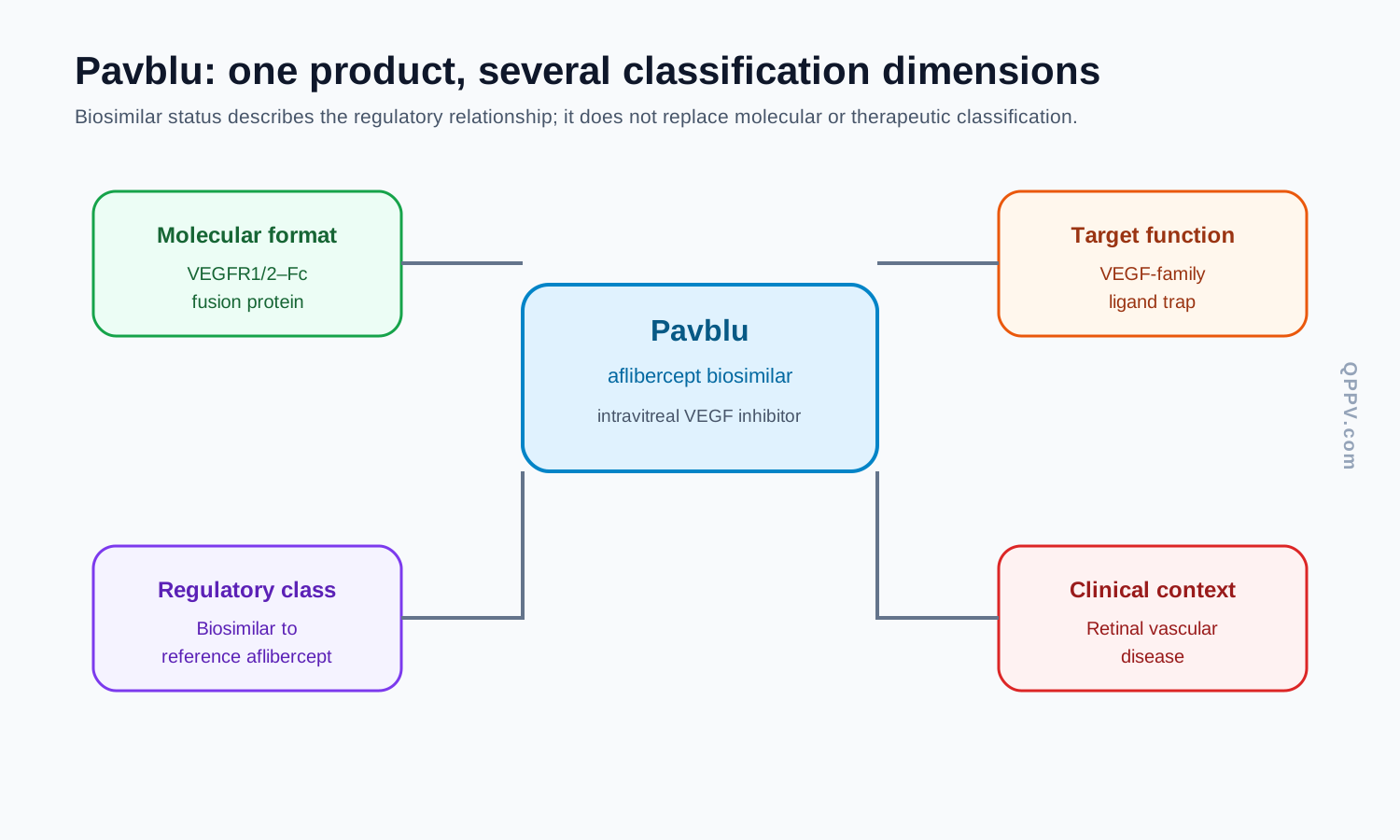
Figure 1. Pavblu is an aflibercept biosimilar: a recombinant VEGF-receptor fusion protein delivered intravitreally for retinal vascular disease. Molecular format, route, regulatory category and therapeutic role are independent dimensions.
Why a biosimilar is not a generic
A small-molecule generic can usually be shown to contain the same chemically defined active molecule as its reference product. Biological medicines are larger, structurally complex products manufactured in living systems. Even the reference product contains controlled microheterogeneity in attributes such as glycosylation.
A biosimilar is therefore not required to be molecularly identical in every measurable feature. It must be highly similar to the reference product, with no clinically meaningful differences in safety, purity and potency. Regulators evaluate analytical structure and function, pharmacokinetics where relevant, immunogenicity and comparative clinical evidence using a totality-of-evidence approach.
For PV, this means two statements are simultaneously true: the biosimilar is expected to have the same clinically meaningful effects as the reference medicine in authorised uses, and reports must still identify the actual brand and batch rather than collapsing exposure into the generic term “aflibercept”.
Development history
Aflibercept was designed as a soluble decoy receptor combining selected extracellular domains of VEGF receptors 1 and 2 with an IgG1 Fc region. The reference ophthalmic product, Eylea, established aflibercept as an intravitreal anti-VEGF treatment across several retinal vascular diseases.
Pavblu was developed through the biosimilar pathway. Instead of reproducing every original efficacy trial, development focused on demonstrating high similarity to reference aflibercept across analytical, functional, pharmacokinetic and clinical dimensions. The US FDA approved Pavblu in 2024. In the European Union, the CHMP adopted a positive opinion in January 2025 and the European Commission granted a marketing authorisation on 4 April 2025.
The EMA identifies Eylea as the reference medicine and concluded that Pavblu has highly similar structure, purity and biological activity, with comparative clinical evidence supporting equivalent safety and efficacy in the studied wet-AMD setting. The EU product remains under additional monitoring, which supports rapid accumulation and evaluation of safety information for a relatively newly authorised biological product.
Post-authorisation product information continues to evolve. In 2026, for example, the US label added scleritis to postmarketing experience to align with updated reference-product information. Biosimilar pharmacovigilance therefore includes not only spontaneous-case surveillance but continuous alignment with the evolving reference-product safety knowledge base where scientifically and regulatorily appropriate.
Retinal vascular biology
The retina and macula
The retina is neural tissue lining the back of the eye. Photoreceptors convert light into neural signals, and the macula is the central retinal region responsible for high-resolution central vision. Because retinal architecture is thin and highly organised, fluid leakage, haemorrhage or abnormal vessel growth can substantially impair vision even when the affected area is small.
The eye also has specialised vascular barriers that normally restrict movement of fluid and macromolecules. Breakdown of these barriers contributes to macular oedema.
VEGF, leakage and neovascularisation
VEGF-A is a potent endothelial growth and permeability signal. Hypoxia, retinal ischaemia and other disease stimuli can increase VEGF production. VEGF promotes endothelial survival, vascular permeability and new-vessel formation. In the retina and choroid, excessive VEGF signalling can therefore produce two major pathological outputs: leakage, causing oedema, and neovascularisation, creating fragile abnormal vessels.
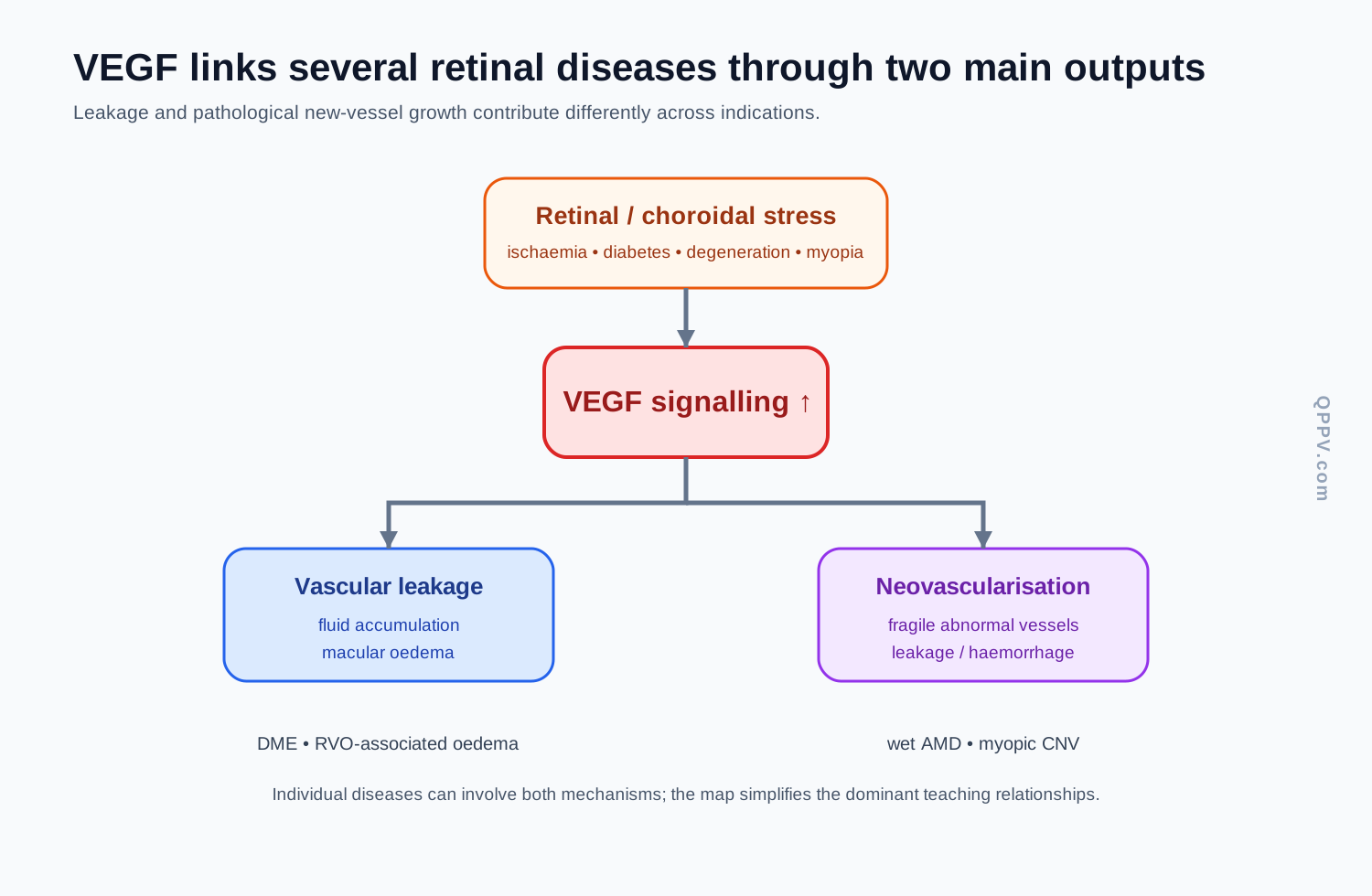
Figure 2. Retinal or choroidal stress can increase VEGF signalling, which promotes vascular leakage and pathological neovascularisation. These mechanisms contribute differently across wet AMD, DME, retinal vein occlusion and myopic choroidal neovascularisation.
How the major indications differ
The conditions treated with intravitreal aflibercept are not interchangeable labels for the same disease.
- In neovascular AMD, abnormal choroidal vessels grow beneath or into the macular region and leak fluid or blood.
- In DME, diabetic microvascular injury disrupts the blood-retinal barrier, producing macular fluid accumulation.
- In retinal vein occlusion, impaired venous drainage increases hydrostatic and ischaemic stress, driving oedema and VEGF production.
- In myopic choroidal neovascularisation, pathological new vessels develop in the context of high myopia and structural changes in the posterior eye.
- In the United States, Pavblu also carries an indication for diabetic retinopathy, where VEGF inhibition can modify clinically important retinal vascular pathology even when the treatment goal is not framed solely as macular oedema.
These distinctions matter in PV because background rates of haemorrhage, visual fluctuation, vascular occlusion, diabetes-related events and repeated-procedure exposure differ across populations.
Aflibercept structure and mechanism
A soluble VEGF-receptor fusion protein
Aflibercept contains ligand-binding portions of human VEGF receptor 1 and VEGF receptor 2 fused to the Fc portion of human IgG1. The molecule behaves as a soluble decoy receptor. Instead of waiting for VEGF to reach endothelial cell-surface receptors, aflibercept binds selected VEGF-family ligands in the extracellular space.
This architecture distinguishes aflibercept from anti-VEGF monoclonal antibodies. The pharmacological objective is similar—reduce pathogenic VEGF signalling—but the molecular format is a receptor–Fc fusion protein rather than an antibody raised against VEGF.
Ligand trapping rather than receptor blockade
Aflibercept binds VEGF-A and placental growth factor (PlGF), thereby reducing their availability to activate endothelial VEGF receptors. In the eye, the clinically useful consequence is reduced vascular permeability and neovascular growth. Fluid can recede, retinal architecture can improve, and visual function may stabilise or improve depending on disease and baseline damage.
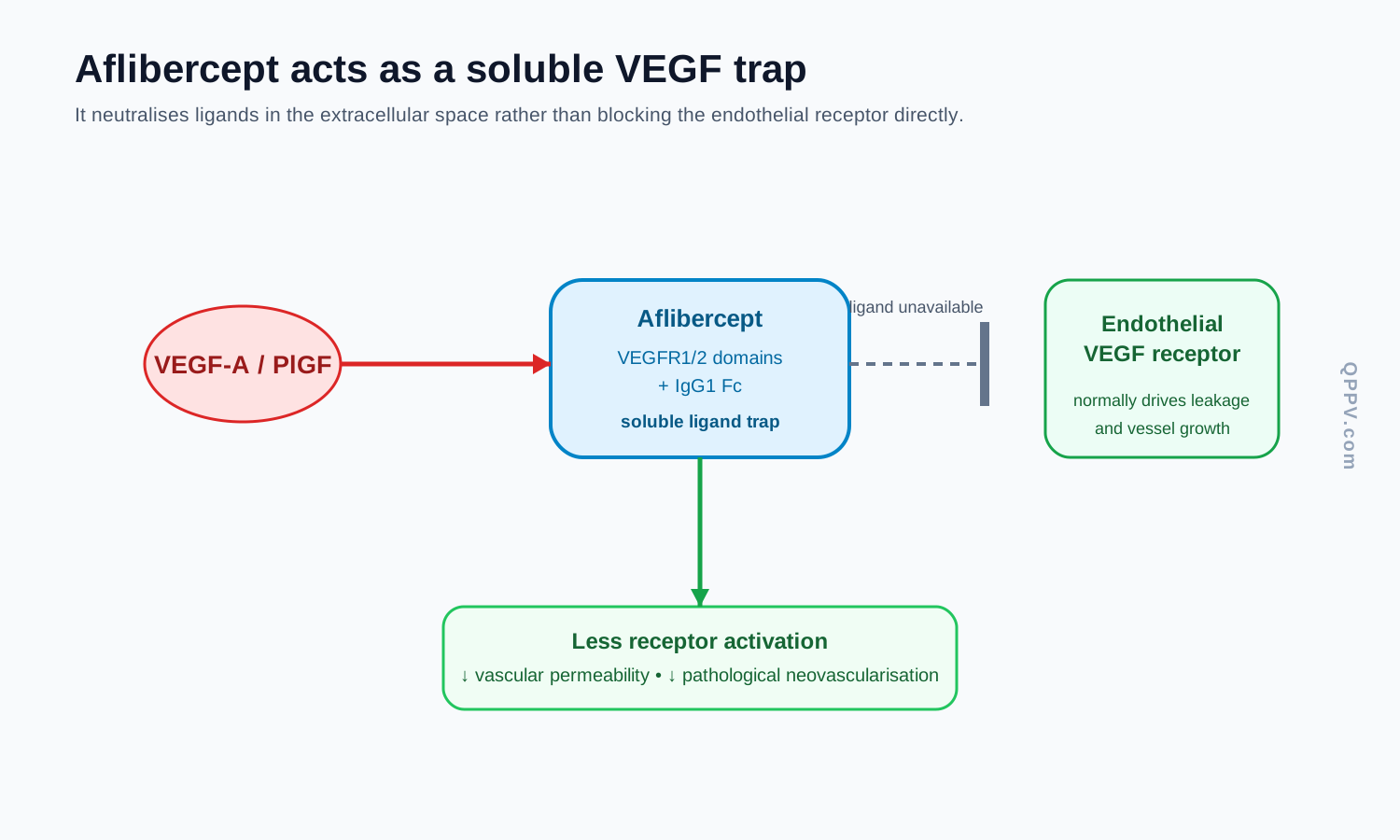
Figure 3. Aflibercept is a soluble receptor fusion protein that binds VEGF-family ligands before they reach endothelial receptors. The mechanism is ligand trapping, not direct blockade of a cell-surface receptor.
The mechanism also explains the main systemic theoretical concern. VEGF has normal vascular functions, so systemic exposure to VEGF inhibitors raises concern about arterial thromboembolic events. Intravitreal dosing produces far lower systemic exposure than systemic anti-VEGF oncology therapy, but the class signal remains part of product information and pharmacovigilance.
Biosimilarity and extrapolation
The totality-of-evidence concept
Biosimilar development reverses the emphasis of a conventional new-drug programme. For a new active substance, the central question is whether the drug is safe and effective. For a biosimilar, the reference product has already established the clinical mechanism and benefit-risk profile. The central question becomes whether the candidate is sufficiently similar that clinically meaningful differences are not expected.
The evidence therefore begins with extensive analytical comparison: primary and higher-order structure, purity, charge variants, glycosylation, aggregation, binding and functional assays. Comparative pharmacokinetic and immunogenicity data are added where relevant, followed by a clinical comparison designed to be sensitive to potential differences.
The goal is not to prove the medicine works from zero. It is to reduce residual uncertainty about similarity.
Why one comparative clinical programme can support several indications
Once biosimilarity has been established, regulators may authorise indications of the reference medicine without requiring a separate efficacy trial in each disease. This is called extrapolation. It is a scientific and regulatory judgement based on the totality of evidence, including mechanism of action, receptor/ligand biology, product characteristics, pharmacokinetics, immunogenicity and experience with the reference product.
Extrapolation does not mean evidence was omitted casually. It means the analytical and mechanistic evidence is considered sufficiently strong that repeating large trials in every indication would add little scientifically while exposing patients unnecessarily to duplicative research.
This distinction should be explained carefully in pharmacovigilance communication. A spontaneous report should not be dismissed as “less relevant because that indication was extrapolated,” nor should an extrapolated indication be described as untested or speculative.
Clinical positioning and regulatory scope
European Union
Pavblu received EU-wide marketing authorisation on 4 April 2025 and is a biosimilar to Eylea. As of the current EMA product information, adult indications include:
- neovascular (wet) AMD;
- visual impairment due to macular oedema secondary to branch or central retinal vein occlusion;
- visual impairment due to diabetic macular oedema; and
- visual impairment due to myopic choroidal neovascularisation.
The medicine is administered by qualified clinicians experienced in intravitreal injection. The dosing interval depends on indication and response. Pavblu is under additional monitoring in the EU.
United States
The current US label includes treatment of neovascular AMD, macular oedema following retinal vein occlusion, diabetic macular oedema and diabetic retinopathy. The US proper name is aflibercept-ayyh.
The US and EU indication sets therefore should not be merged. A case should capture where treatment occurred and why the product was used. This matters especially when evaluating apparent off-label exposure or comparing event patterns by indication.
Safety profile and mechanism-informed interpretation
Intravitreal aflibercept safety can be divided conceptually into procedure-related ocular risks, drug/immune-related ocular risks and systemic class concerns. Keeping these categories separate improves causality assessment.
Endophthalmitis and retinal detachment
Every intravitreal injection creates a route through the ocular surface into the vitreous. This procedure can rarely introduce microorganisms or produce mechanical complications. Endophthalmitis is therefore primarily an injection-associated infectious risk, although product sterility and handling are directly relevant. Retinal detachment can also occur after intravitreal procedures.
A high-quality report should capture injection date and eye, symptom onset, pain, visual loss, hypopyon or inflammatory findings, culture/PCR results, treatment, surgical intervention, product batch and whether multiple cases were linked to the same clinic, session or lot. A cluster could indicate an aseptic-technique problem, compounding/handling issue or product-quality concern and should not be assessed as a series of unrelated individual infections.
Retinal vasculitis and intraocular inflammation
Retinal vasculitis with or without occlusion is included in current US warnings for aflibercept products. Intraocular inflammation may also occur in hypersensitivity or immune-mediated contexts. These syndromes differ from infectious endophthalmitis but can initially present with overlapping symptoms such as pain, redness and visual decline.
PV follow-up should seek ophthalmic examination, imaging, culture results, steroid or antimicrobial treatment and final diagnosis. Correct syndrome classification is essential because the aggregate meaning of sterile inflammation differs substantially from infection.
Intraocular pressure
Intraocular pressure (IOP) can rise acutely after injection because additional volume is introduced into the closed globe. Sustained increases have also been reported after repeated intravitreal VEGF-inhibitor dosing. The optic nerve is vulnerable to elevated pressure, particularly in patients with glaucoma or compromised outflow.
Reports should capture pre- and post-injection IOP, glaucoma history, number of prior injections, treatment required and whether the event was transient or persistent. An immediate pressure spike has a different causal model from chronic progressive ocular hypertension.
Arterial thromboembolic events
VEGF contributes to vascular homeostasis, creating a biologically plausible class concern for arterial thromboembolic events such as nonfatal stroke, nonfatal myocardial infarction and vascular death. Current US product information states that a potential risk exists following intravitreal VEGF inhibition.
The treated population often already has substantial vascular risk: advanced age in AMD, diabetes in DME/DR and hypertension or atherosclerotic disease. A stroke or myocardial infarction therefore cannot be attributed solely from temporal association. Case assessment should capture baseline cardiovascular risk, previous events, antithrombotic therapy, timing relative to injection, bilateral treatment and other VEGF-inhibitor exposure.
Hypersensitivity
Pavblu is contraindicated in patients with known hypersensitivity to aflibercept or excipients. Hypersensitivity can include systemic allergic features or severe intraocular inflammation. Reports should distinguish immediate systemic reactions from delayed ocular inflammatory syndromes and document previous aflibercept exposure, including reference or other biosimilar products.
Product pharmacovigilance
Aflibercept biosimilar pharmacovigilance must preserve both class knowledge and product identity. Much of the expected safety profile is shared with reference aflibercept because biosimilarity predicts the same clinically meaningful effects. Yet brand, batch, presentation, switching history and handling remain product-specific data that may be crucial when a safety signal or quality problem is investigated.
Case assessment
| Domain | High-value information |
|---|---|
| Product identity | Brand, proper/nonproprietary name, batch/lot, presentation |
| Eye and indication | Right/left/bilateral, AMD/RVO/DME/DR/myopic CNV, baseline visual status |
| Injection | Date, dose, clinic, injector, aseptic technique concerns, prior injections |
| Switching history | Reference aflibercept or another biosimilar used previously; date of switch |
| Event phenotype | Infection, sterile inflammation, retinal vasculitis, detachment, IOP rise, vascular event |
| Ophthalmic evidence | Slit-lamp/fundus findings, OCT, angiography, cultures, IOP measurements |
| Systemic context | Cardiovascular disease, diabetes, antithrombotics, recent stroke/MI |
| Outcome | Treatment, surgery, visual outcome, rechallenge, fellow-eye exposure |
For ocular events, the treated eye is not a trivial data field. A report of inflammation in the untreated fellow eye suggests a different causal model from inflammation confined to the injected eye.
Biosimilar traceability
EU pharmacovigilance rules for biological medicines emphasise clear identification of the product name and batch number where possible. This is particularly important in biosimilar markets because several products may share the INN aflibercept.
A case coded only as “aflibercept” can become difficult to assign if the patient has switched products, if procurement changes occurred at the clinic, or if a potential batch-specific cluster emerges. Follow-up should therefore seek the actual administered brand and lot from clinical records, pharmacy logs or injection labels when available.
Traceability is not a statement that biosimilars are less safe. It is a surveillance requirement that enables regulators and manufacturers to detect whether an event is a class effect, a product-specific issue, a batch problem or unrelated background disease.
Administration and product-quality errors
Intravitreal therapy is sensitive to preparation and administration. Potential reports include wrong eye, incorrect dose or volume, contaminated field, damaged syringe or vial, visible particles, storage excursion, needle-related injury or incomplete injection.
These categories should not be conflated. A wrong-eye injection is a medication/procedure error; visible particles may represent a product-quality complaint; endophthalmitis may be a clinical adverse event associated with aseptic failure; and a cluster after one lot could raise a product-quality hypothesis. All may coexist in one case and should be linked without forcing them into a single label.
Switching and attribution
Switching between reference aflibercept and a biosimilar is increasingly common. A temporal association between switching and an event deserves documentation but does not establish a causal “switch effect”. Disease activity can fluctuate, repeated injections carry cumulative procedural risk, and patients may notice changes because of increased attention around a switch.
High-value switching data include the exact products before and after the change, number of prior doses, interval from switch to event, objective retinal imaging, visual acuity, anti-drug antibody data if exceptionally available and outcome after subsequent injections.
Nocebo effects are relevant for subjective symptoms but should never be invoked to dismiss objective inflammation, visual loss or other medically important findings.
Aggregate and signal interpretation
Aggregate review should stratify by event phenotype and product identity. Endophthalmitis, sterile intraocular inflammation and retinal vasculitis should not be pooled as a generic “eye inflammation” signal because they have different mechanisms and control measures.
For a newly marketed biosimilar, useful questions include:
- Are event types and frequencies broadly consistent with the known aflibercept class profile?
- Are there disproportionate clusters by lot, clinic, presentation or administration setting?
- Do events occur preferentially after switching, and is there objective evidence beyond reporting awareness?
- Are product-quality complaints temporally linked to clinical events?
- Are systemic vascular events distributed as expected for the highly comorbid treated populations?
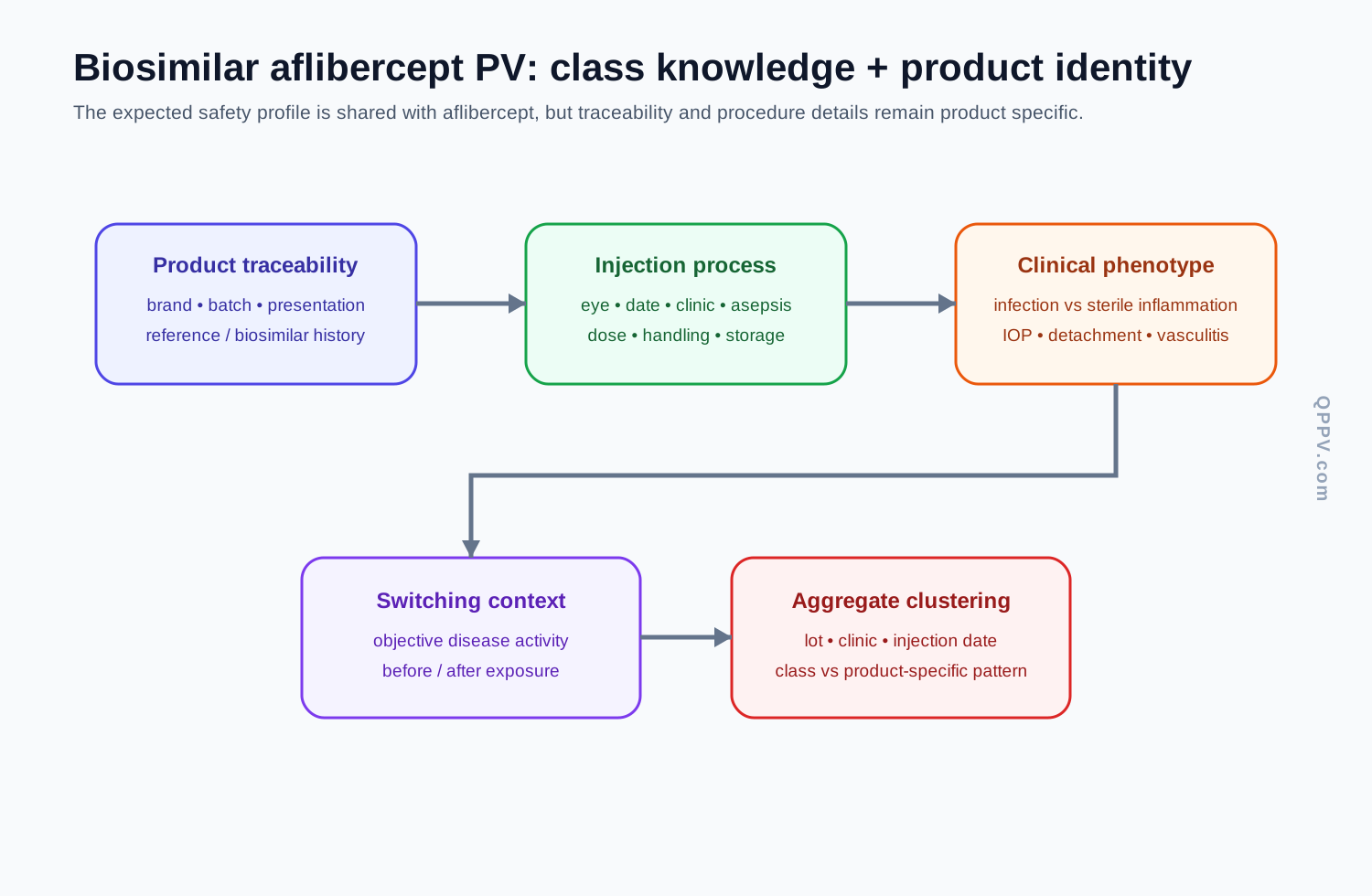
Figure 4. Biosimilar aflibercept PV combines established class safety knowledge with product-level traceability, injection-process surveillance, switching history and batch/clinic clustering. Product identity remains essential even when clinically meaningful similarity is expected.
Practical assessment framework
- Identify the exact aflibercept product. Do not stop at the INN when brand or batch can be obtained.
- Confirm the injected eye and indication. Disease background and visual-risk context differ.
- Classify the event clinically. Distinguish infectious endophthalmitis, sterile inflammation, retinal vasculitis, retinal detachment, IOP rise and systemic vascular events.
- Reconstruct the procedure. Timing, aseptic technique, clinic, injector and product handling can be decisive.
- Retrieve objective ophthalmic evidence. OCT, fundus examination, angiography, cultures and IOP measurements often determine the diagnosis.
- Capture switching history. The previous brand and exposure sequence are important for attribution and aggregate analysis.
- Assess systemic alternatives. Particularly for stroke, myocardial infarction and death.
- Look for clustering. Same batch, clinic, injection date or preparation process can change the signal hypothesis.
- Preserve outcome and re-exposure information. Fellow-eye or subsequent-dose exposure may add causal information.
Illustrative scenario: inflammation after a biosimilar switch
A patient with wet AMD receives reference aflibercept for two years and is switched to Pavblu. Four days after the first Pavblu injection, the treated eye becomes painful and vision deteriorates. The initial report states “biosimilar reaction”.
A useful assessment does not assume either equivalence or causality. It obtains the injected eye, lot, examination findings, vitreous cells, retinal vasculitis status, cultures, treatment and visual outcome. If cultures are negative and the ophthalmologist diagnoses sterile intraocular inflammation, the case belongs in a different aggregate category from endophthalmitis. If several cases share the same lot or clinic session, the investigation broadens further.
Illustrative scenario: post-injection visual loss with high IOP
A patient reports profound visual blurring immediately after injection. IOP is measured at 48 mmHg and falls after treatment. This chronology supports an acute volume-related pressure mechanism rather than delayed retinal toxicity. Baseline glaucoma, axial length, prior pressure spikes and injection volume become the discriminating follow-up data.
Key Takeaways
- Pavblu is a biosimilar aflibercept fusion protein, not a monoclonal antibody and not a small-molecule generic.
- Aflibercept traps VEGF-family ligands before they activate endothelial receptors, reducing pathological leakage and neovascularisation.
- Biosimilarity is established through a totality of analytical, functional, pharmacokinetic, immunogenicity and comparative clinical evidence; authorised indication extrapolation is a scientific regulatory process.
- EU and US Pavblu indications are not identical and should be captured by jurisdiction.
- Intravitreal safety includes procedure-related infection and retinal detachment, ocular inflammation/vasculitis, acute or sustained IOP elevation and a potential systemic arterial thromboembolic class risk.
- Brand and batch traceability remain essential because multiple aflibercept products can coexist in clinical practice.
- Switching history is useful evidence but a temporal association after switching does not by itself establish a biosimilar-specific causal effect.
References
- European Medicines Agency. Pavblu (aflibercept): EPAR and product information. EU marketing authorisation granted 4 April 2025; product information updated in 2026. https://www.ema.europa.eu/en/medicines/human/EPAR/pavblu
- European Medicines Agency. CHMP Summary of Positive Opinion for Pavblu. EMA/CHMP/15089/2025, 30 January 2025. https://www.ema.europa.eu/en/documents/smop-initial/chmp-summary-positive-opinion-pavblu_en.pdf
- U.S. National Library of Medicine. DailyMed: PAVBLU (aflibercept-ayyh) injection. Current US prescribing information. https://dailymed.nlm.nih.gov/dailymed/drugInfo.cfm?setid=c61062f3-80ec-4a20-8c28-46e468592a06
- U.S. Food and Drug Administration. PAVBLU (aflibercept-ayyh), BLA 761298/S-005 supplement approval. 2026; addition of scleritis to postmarketing experience. https://www.accessdata.fda.gov/drugsatfda_docs/appletter/2026/761298Orig1s005ltr.pdf
- European Medicines Agency. Guideline on similar biological medicinal products. CHMP/437/04 Rev 1.
Regulatory Note
This article is an educational pharmacovigilance reference and does not replace the current Pavblu SmPC, US Prescribing Information, educational materials, ophthalmology guidelines or individual clinical judgement. Biosimilar indications, presentations and reference-product alignment may differ by jurisdiction and change after publication. Product-level PV should preserve the exact administered brand and batch where available. For patient care and regulatory decisions, use current local product information.