Amivantamab: Classification, History, Mechanism of Action, Safety and Pharmacovigilance
- Amivantamab: Classification, History, Mechanism of Action, Safety and Pharmacovigilance
- Multidimensional classification
- EGFR and MET biology
- Molecular design and mechanism of action
- Development and regulatory history
- Clinical use and regimen context
- Major safety domains
- Product identification, route and traceability
- Pharmacovigilance case assessment
- Signal detection and aggregate review
- Periodic benefit-risk evaluation
- Risk management and operational controls
- Potential failure modes
- Inspection and governance perspective
- Practical checklist
- Key Takeaways
- References
- Regulatory Note
Amivantamab is a bispecific monoclonal antibody directed against two cell-surface receptor tyrosine kinases: epidermal growth factor receptor (EGFR) and mesenchymal-epithelial transition factor (MET). It was developed for molecularly defined non-small-cell lung cancer (NSCLC), where abnormal EGFR signalling can act as a dominant oncogenic driver and MET signalling can contribute to tumour growth or resistance.
The term bispecific is important but incomplete. Amivantamab does not merely carry two independent binding arms. By engaging extracellular EGFR and MET, it can block ligand-driven signalling, promote receptor downmodulation and recruit Fc-dependent immune-effector mechanisms. Its mechanism therefore differs fundamentally from small-molecule EGFR tyrosine-kinase inhibitors, which act inside the cell at the kinase domain.
That distinction shapes pharmacovigilance. EGFR is physiologically important in skin and epithelial tissues, so rash, paronychia and related toxicities have a direct target-biology context. At the same time, lung-cancer patients may develop dyspnoea from infection, tumour progression, pulmonary embolism or interstitial lung disease. Amivantamab is also used in several combination regimens and in both intravenous and subcutaneous presentations, so a clinically useful safety case must preserve mutation subtype, regimen, route and treatment chronology.
Multidimensional classification
| Classification axis | Amivantamab classification | Scientific or PV significance |
|---|---|---|
| Molecular class | Fully human IgG1-based bispecific antibody | One molecule engages two receptor targets and retains Fc-mediated functions |
| Targets | EGFR and MET | Connects two signalling systems relevant to NSCLC growth and resistance |
| Functional class | Receptor-targeting antineoplastic antibody | Acts extracellularly through ligand blockade, receptor downmodulation and immune-effector mechanisms |
| Disease context | Molecularly selected advanced NSCLC | Exact EGFR alteration and prior therapy define authorised treatment setting |
| Treatment context | Monotherapy or combinations depending on indication | Combination partners materially affect toxicity attribution |
| Administration | Intravenous and subcutaneous formulations in current EU product information | Route changes administration-reaction patterns and product-use controls |
| PV priorities | Administration reactions, skin/nail toxicity, ILD/pneumonitis, ocular toxicity, VTE in relevant combinations, hepatotoxicity and cytopenias | Several important risks are regimen- or route-dependent rather than universal |
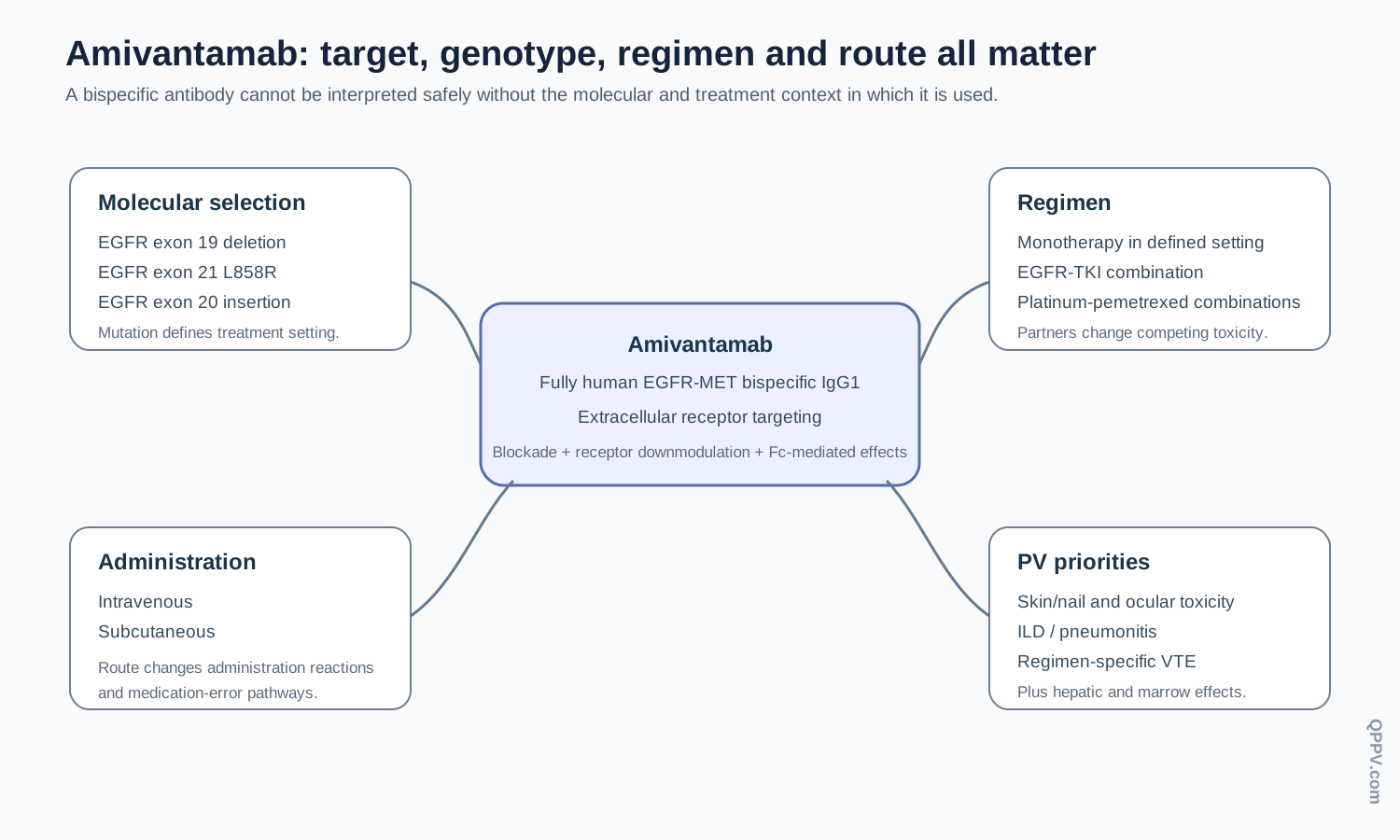
Figure 1. Amivantamab is simultaneously a dual-receptor antibody, a molecularly selected lung-cancer therapy and a product used through different routes and regimens. Those dimensions must remain visible in pharmacovigilance data.
EGFR and MET biology
EGFR is a receptor tyrosine kinase that transmits proliferative and survival signals after ligand binding and receptor activation. In a subset of NSCLC, activating EGFR mutations make tumour growth unusually dependent on this pathway. Common sensitising alterations include exon 19 deletions and the exon 21 L858R substitution, while exon 20 insertion mutations create a distinct structural and therapeutic problem.
MET is another receptor tyrosine kinase. Its ligand is hepatocyte growth factor. MET signalling can promote proliferation, survival, motility and invasive behaviour, and increased MET signalling can provide a bypass route when tumours are exposed to EGFR-directed therapy. EGFR and MET are therefore biologically distinct receptors whose pathways can converge on overlapping downstream survival networks.
Molecular selection is part of the exposure definition
For a targeted oncology medicine, the tumour genotype is not merely background history. It determines why the medicine was prescribed and which authorised regimen applies. A safety database that records "NSCLC" but omits the relevant EGFR alteration loses information needed to interpret treatment setting, prior therapy and expected combination partners.
Molecular design and mechanism of action
Amivantamab is an IgG1-based bispecific antibody with one binding specificity for EGFR and another for MET. The Fc region is engineered to enhance interaction with Fc-receptor-bearing immune cells. This architecture creates several complementary mechanisms.
First, extracellular binding can interfere with ligand-driven EGFR and MET signalling. Second, antibody engagement promotes reduction of receptor abundance at the cell surface through receptor internalisation and downmodulation. Third, Fc-receptor-bearing cells can participate in removal or killing of antibody-coated tumour cells; experimental work has described monocyte/macrophage-dependent processes including trogocytosis. These mechanisms are not separate clinical products: their relative importance depends on receptor expression, tumour genotype and microenvironment.
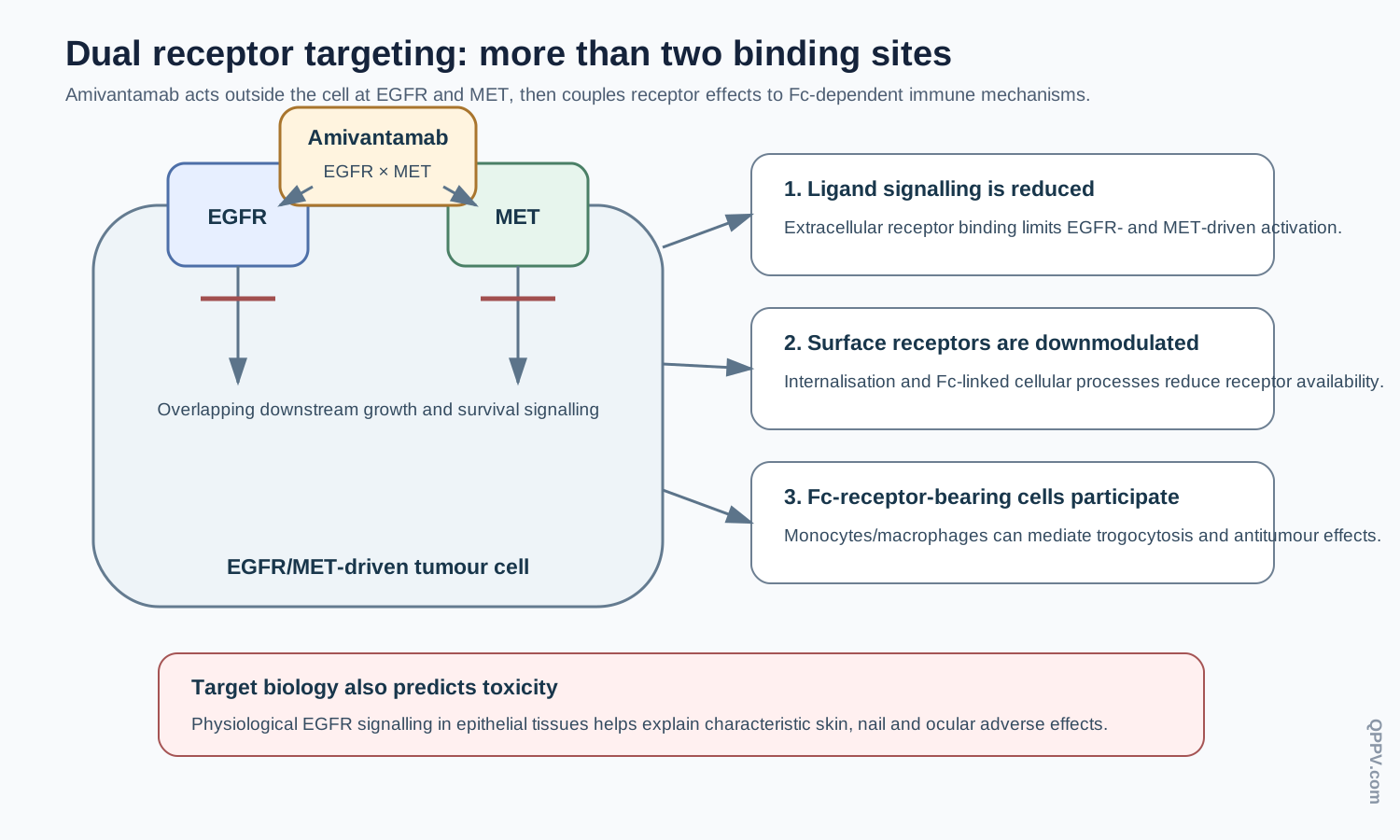
Figure 2. Amivantamab binds extracellular EGFR and MET, reducing receptor signalling and surface availability while also recruiting Fc-receptor-bearing immune cells. This differs from intracellular kinase inhibition and helps explain both tumour targeting and epithelial adverse effects.
Development and regulatory history
Amivantamab was initially developed for EGFR exon 20 insertion-positive NSCLC, a setting in which conventional EGFR tyrosine-kinase inhibitors historically had limited activity. The EU granted a conditional marketing authorisation in December 2021 after evidence of clinically meaningful activity in previously treated disease. The authorisation was converted to standard status in June 2024 as additional evidence matured.
The authorised use subsequently broadened. Current EU indications include first-line amivantamab with lazertinib for advanced NSCLC with EGFR exon 19 deletion or exon 21 L858R, combination with carboplatin and pemetrexed after failure of prior EGFR-TKI therapy in that molecular group, first-line combination chemotherapy for exon 20 insertion disease, and monotherapy for exon 20 insertion disease after platinum failure.
The formulation history has also evolved. Current EU product information includes intravenous and subcutaneous administration options. This changes the practical safety landscape because infusion-related reactions, injection-site reactions, administration times and switching procedures are route-dependent. Historical safety data should therefore not be pooled across formulations without identifying how the medicine was given.
Clinical use and regimen context
Amivantamab pharmacovigilance is unusually dependent on regimen. Monotherapy after platinum treatment, chemotherapy combinations and treatment with an EGFR tyrosine-kinase inhibitor expose patients to different competing toxicities. A report should therefore identify every antineoplastic medicine, the EGFR alteration, line of therapy and dose chronology.
Route is equally important. Intravenous exposure creates an infusion-reaction context, whereas subcutaneous administration introduces injection-site events and a different administration workflow. Current product information also permits switching from intravenous to subcutaneous treatment in defined circumstances. An aggregate analysis should therefore distinguish route rather than treating all administrations as interchangeable.
Major safety domains
Administration-related reactions
Administration-related reactions are a characteristic issue, particularly with intravenous dosing. Symptoms can include fever, chills, dyspnoea, flushing, nausea and blood-pressure changes. The timing relative to administration, dose number, route, premedication, interruption or rate modification, treatment and recurrence are central to assessment.
Respiratory symptoms require special care in lung cancer. Dyspnoea or hypoxia occurring during an infusion can fit an administration reaction, but delayed or persistent symptoms raise other possibilities such as infection, pulmonary embolism, interstitial lung disease or tumour progression.
Subcutaneous administration has its own local injection-site reactions. These should be characterised separately from systemic administration reactions because mechanism, prevention and operational controls differ.
Skin and nail toxicity
EGFR signalling is physiologically important in epidermis, hair follicles and periungual tissues. Rash, acneiform dermatitis, xerosis, pruritus and paronychia therefore have a plausible on-target basis. These events can become clinically important through pain, secondary infection, dose interruption or reduced adherence even when they are not life-threatening.
Useful follow-up includes morphology, body distribution, nail involvement, infection, severity, dermatologic treatment and dose modification. Coding every event simply as "rash" loses mechanistic and management information.
Interstitial lung disease and pneumonitis
Interstitial lung disease or pneumonitis is an important potentially serious toxicity. In advanced NSCLC, however, new pulmonary symptoms have many competing explanations. A high-quality case should include imaging pattern, oxygen requirement, infectious investigations, tumour status, radiation history, prior or concomitant EGFR-targeted therapy, corticosteroid treatment and outcome.
Temporal association alone is insufficient. The PV task is to distinguish a drug-related inflammatory lung injury from pneumonia, pulmonary embolism, malignant progression and other causes while recognising that urgent clinical management may need to precede definitive causality classification.
Venous thromboembolism in the lazertinib combination
Current EU product information identifies venous thromboembolic events as an important risk when amivantamab is used with lazertinib and includes prophylactic-anticoagulation recommendations for the early treatment period unless contraindicated. This should be treated as a regimen-specific safety issue, not automatically projected onto every amivantamab exposure.
A suspected event should record whether the patient was receiving lazertinib, prophylaxis status, thrombosis phenotype and location, timing from treatment initiation, cancer-associated risk factors, immobility, prior thrombosis, anticoagulant management and outcome.
Ocular effects
EGFR-pathway inhibition can affect ocular surface tissues. Current product information includes ophthalmic adverse reactions and management precautions. Eye pain, redness, visual symptoms, keratitis-like presentations or other ocular events require examination-level information when available rather than symptom coding alone.
Hepatic laboratory abnormalities
Liver-test abnormalities can occur, particularly in multidrug regimens. Assessment should include baseline and serial transaminases, bilirubin, alkaline phosphatase, concomitant medicines, liver metastases, viral or metabolic disease where relevant and response to treatment modification. Attribution should not default to the antibody when a combination partner or progressive hepatic disease provides a competing cause.
Cytopenias in chemotherapy-containing regimens
Anaemia, neutropenia and thrombocytopenia are particularly relevant when amivantamab is combined with platinum-pemetrexed chemotherapy. The combination context must remain visible because chemotherapy is intrinsically myelosuppressive. Baseline counts, nadir, febrile complications, transfusions or growth-factor use and temporal relationship to each regimen component help distinguish expected regimen toxicity from an emerging signal.
Hypoalbuminaemia and oedema
Hypoalbuminaemia and peripheral oedema occur in amivantamab-treated populations. MET biology, advanced cancer, nutritional state, renal or hepatic dysfunction and combination therapy can all influence these observations. Aggregate review should therefore avoid interpreting isolated low albumin values without clinical context.
Product identification, route and traceability
The coexistence of intravenous and subcutaneous formulations makes exact presentation and route part of the core exposure record. For subcutaneous use, the formulation includes recombinant human hyaluronidase to facilitate dispersion in subcutaneous tissue. Medication-error surveillance should distinguish wrong route, wrong presentation, incorrect switching, incomplete administration and injection-site problems.
As for other biological medicinal products, batch traceability remains important, especially for clusters of administration reactions, hypersensitivity or product-quality complaints.
Pharmacovigilance case assessment
Amivantamab cases should be reconstructed around four variables before causality is considered: the tumour’s EGFR alteration, the complete regimen, the administration route and the treatment chronology. Those variables determine why the medicine was used and which competing toxicities are plausible.
Event-specific follow-up priorities
| Event or issue | High-value follow-up information |
|---|---|
| Administration reaction | IV or SC route, dose number, onset, signs/vitals, premedication, interruption, treatment, recurrence |
| Dermatologic toxicity | Morphology, extent, nail/periungual involvement, secondary infection, dermatologic treatment, dose modification |
| ILD/pneumonitis | CT pattern, oxygenation, infection work-up, pulmonary embolism assessment, prior radiation/EGFR therapy, steroids, outcome |
| VTE | Lazertinib exposure, prophylaxis, thrombosis site, timing, prior VTE, cancer burden, anticoagulant treatment |
| Ocular event | Symptoms, slit-lamp/ophthalmic diagnosis where available, onset, treatment and outcome |
| Hepatic abnormality | Baseline/peak ALT-AST, bilirubin, alkaline phosphatase, liver metastases, concomitant drugs, dechallenge |
| Cytopenia | Chemotherapy regimen, baseline count, nadir, timing by cycle, infection/bleeding, supportive therapy |
| Medication error | Formulation, route, intended/actual dose, switching history, clinical consequence and product complaint details |
Signal detection and aggregate review
Aggregate analysis should preserve mutation subtype, regimen and route. Pooling an exon 20 insertion monotherapy population with first-line EGFR exon 19 deletion or L858R combination treatment can obscure both exposure and toxicity patterns. The same applies to intravenous versus subcutaneous administration.
VTE analyses should explicitly identify lazertinib-containing regimens and prophylactic-anticoagulation exposure. Pulmonary event analyses should use medically coherent case series separating inflammatory lung injury, infection, thromboembolism and cancer progression. Dermatologic analyses should retain phenotype rather than relying only on broad rash terms.
Periodic benefit-risk evaluation
Periodic review should integrate tumour-control benefit with administration reactions, epithelial toxicities, ILD/pneumonitis, route-specific experience, regimen-specific VTE, hepatic abnormalities, cytopenias and medication errors. The changing treatment landscape matters: use in earlier-line disease and new formulations alter both exposure duration and the clinical tolerance for preventable toxicity.
Risk management and operational controls
Current product information governs molecular selection, authorised combinations, administration, prophylaxis, dose modification and monitoring. Useful PV controls include mandatory capture of EGFR mutation and regimen, clear separation of IV and SC presentations, targeted follow-up for ILD and VTE, dermatologic and ocular characterisation, and reliable batch traceability.
The shift between routes deserves explicit medication-safety oversight. A system should be able to detect wrong-presentation selection, incorrect route, incomplete SC administration, inappropriate switching and confusion between regimen-specific schedules.
Potential failure modes
The following are illustrative scenarios, not published inspection findings:
- A pulmonary event is coded as pneumonitis without imaging or evaluation for infection and embolism.
- VTE reports are pooled across all use without identifying lazertinib combination therapy or prophylaxis.
- Rash and paronychia are collapsed into one nonspecific dermatologic term, hiding clinically useful phenotype.
- Cytopenias in a platinum-pemetrexed regimen are attributed to the antibody without cycle-level chronology.
- IV and SC administration reactions are analysed together without route or presentation.
- A safety case records NSCLC but omits the EGFR alteration that defines the treatment setting.
Inspection and governance perspective
An inspector assessing amivantamab pharmacovigilance could examine whether molecular selection remains traceable in the safety database, whether combination-partner exposure is complete, whether serious pulmonary and thromboembolic events receive targeted medical review, and whether the organisation can distinguish IV from SC safety experience. The effectiveness question is whether a complex targeted regimen can be reconstructed from the safety record well enough to support meaningful signal evaluation.
Practical checklist
For an amivantamab case or aggregate analysis, confirm:
- EGFR alteration and NSCLC treatment setting;
- line of therapy and complete antineoplastic regimen;
- IV or SC formulation and administration dates;
- dose number and premedication for administration reactions;
- objective dermatologic, pulmonary, thrombotic or ocular findings;
- lazertinib exposure and thromboprophylaxis for VTE cases;
- chemotherapy chronology for cytopenias;
- product, presentation and batch for medication or quality issues.
Key Takeaways
Amivantamab is a fully human EGFR-MET bispecific IgG1 antibody. It acts outside the cell through dual receptor binding, receptor downmodulation and Fc-dependent immune mechanisms, making it mechanistically distinct from intracellular EGFR kinase inhibitors.
Its pharmacovigilance is highly contextual. EGFR biology explains much of the characteristic epithelial toxicity, but serious pulmonary events require broad differential diagnosis, VTE is particularly relevant to the lazertinib combination, and IV versus SC formulations create different administration risks. Mutation, regimen and route are therefore part of the exposure definition rather than optional case details.
References
- European Medicines Agency. Amivantamab: EPAR and current product information. Product information updated 16 July 2026. https://www.ema.europa.eu/en/medicines/human/EPAR/rybrevant
- Neijssen J, Cardoso RMF, Chevalier KM, et al. Discovery of amivantamab, a bispecific antibody targeting EGFR and MET. J Biol Chem. 2021;296:100641. doi:10.1016/j.jbc.2021.100641.
- Vijayaraghavan S, Lipfert L, Chevalier K, et al. Amivantamab, an EGFR-MET bispecific antibody, induces receptor downmodulation and antitumor activity by monocyte/macrophage trogocytosis. Mol Cancer Ther. 2020;19:2044-2056. doi:10.1158/1535-7163.MCT-20-0071.
- European Medicines Agency. Amivantamab product information. Current warnings, authorised regimens and IV/SC administration requirements. https://www.ema.europa.eu/en/documents/product-information/rybrevant-epar-product-information_en.pdf
Regulatory Note
Authorised EGFR-mutation settings, combination regimens, formulations, prophylactic measures, warnings and dose-modification requirements can change. This article explains the scientific and pharmacovigilance framework and does not replace current molecular-testing standards, regional product information or specialist oncology guidance. Regulatory information was checked against EMA material current in September 2026.