Anifrolumab: Classification, History, Mechanism of Action, Safety and Pharmacovigilance
Anifrolumab is a monoclonal antibody against type I interferon receptor subunit 1 (IFNAR1) used as add-on therapy for adults with moderate to severe, active autoantibody-positive systemic lupus erythematosus (SLE) despite standard therapy. Its target is not one interferon molecule. It blocks a shared receptor used by multiple type I interferons, allowing one antibody to suppress a broader cytokine-signalling programme.
This is especially relevant in SLE because many patients show persistent activation of type I interferon-responsive genes. The pathway contributes to dendritic-cell activation, B-cell and T-cell abnormalities, autoantibody production and inflammatory tissue injury. Pharmacovigilance must therefore distinguish the intended reduction of interferon-driven inflammation from infection, herpes zoster, hypersensitivity, lupus flare and toxicity from background immunosuppression.
- Anifrolumab: Classification, History, Mechanism of Action, Safety and Pharmacovigilance
- Multidimensional classification
- Type I interferon biology in SLE
- Mechanism of action
- Development and regulatory history
- Why route matters without changing the target
- Clinical safety framework
- SLE flare versus adverse reaction
- Background therapy and attribution
- Route- and device-specific safety
- Immunogenicity
- Special situations
- Product traceability
- Pharmacovigilance case assessment
- Signal detection and aggregate review
- Benefit-risk evaluation
- Risk management and operational controls
- Potential failure modes
- Inspection and governance perspective
- Practical checklist
- Key Takeaways
- References
- Regulatory Note
Multidimensional classification
| Classification axis | Anifrolumab classification | Scientific or PV significance |
|---|---|---|
| Molecular format | Human IgG1 kappa monoclonal antibody | Systemic biological therapy with repeated exposure |
| Target | IFNAR1 | Shared receptor subunit for type I interferon signalling |
| Functional class | Type I interferon receptor blocker | Suppresses signalling from several type I interferon ligands rather than neutralising one cytokine |
| Disease setting | Moderate to severe active autoantibody-positive SLE | Underlying disease itself causes infection risk and multisystem symptoms |
| EU routes | Intravenous infusion and subcutaneous injection presentations | Route changes administration reactions, self-injection and device-error context |
| Major PV domains | Infection, herpes zoster, hypersensitivity and administration reactions | Mechanistically linked to immune modulation and parenteral exposure |
| Important analytical challenge | Lupus flare versus treatment-related event | Fever, rash, fatigue and organ symptoms may have competing explanations |
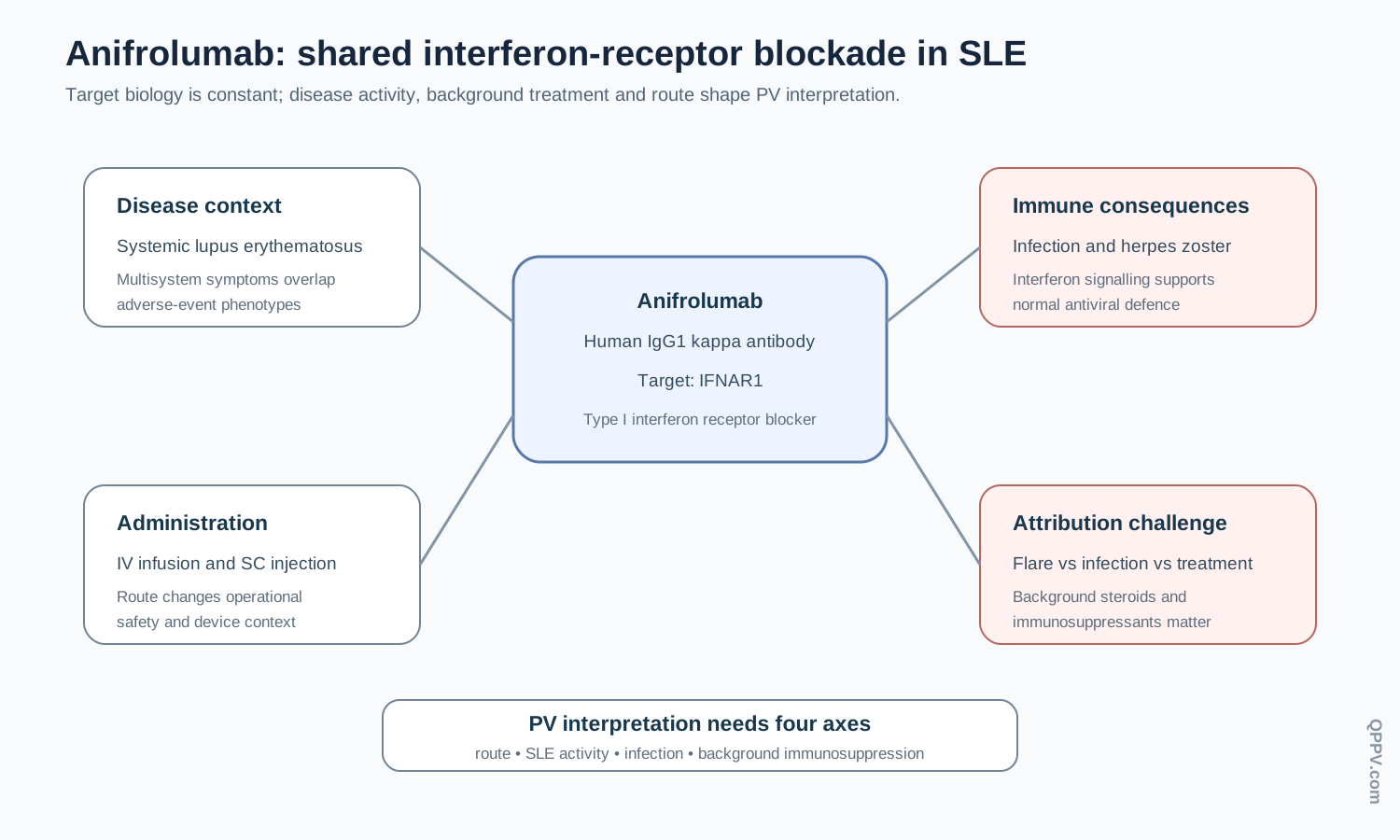
Figure 1. Anifrolumab blocks a shared type I interferon receptor pathway in SLE. Pharmacovigilance interpretation depends on disease activity, background immunosuppression and route of administration.
Type I interferon biology in SLE
Type I interferons are cytokines involved in antiviral defence and immune regulation. The family includes interferon-alpha subtypes and other type I interferons that signal through the same heterodimeric receptor containing IFNAR1 and IFNAR2.
In healthy antiviral responses, this pathway helps cells detect and control viral infection. In SLE, however, persistent type I interferon activity can become part of a self-sustaining autoimmune network. Interferon signalling promotes expression of interferon-stimulated genes, activation of antigen-presenting cells and downstream adaptive immune responses that can amplify autoimmunity.
The important conceptual point is that the pathway has physiological and pathological roles at the same time. Blocking it may reduce autoimmune inflammation while also modifying host defence against infection.
Mechanism of action
Anifrolumab binds IFNAR1 and inhibits signalling through the type I interferon receptor. Because multiple type I interferons use the same receptor complex, receptor blockade reduces a broad range of interferon-dependent cellular responses.
The downstream effect includes suppression of type I interferon-responsive gene expression and reduced activation of immune pathways that contribute to SLE activity. Clinical benefit is therefore expected at the level of overall disease activity rather than through immediate disappearance of one laboratory abnormality.
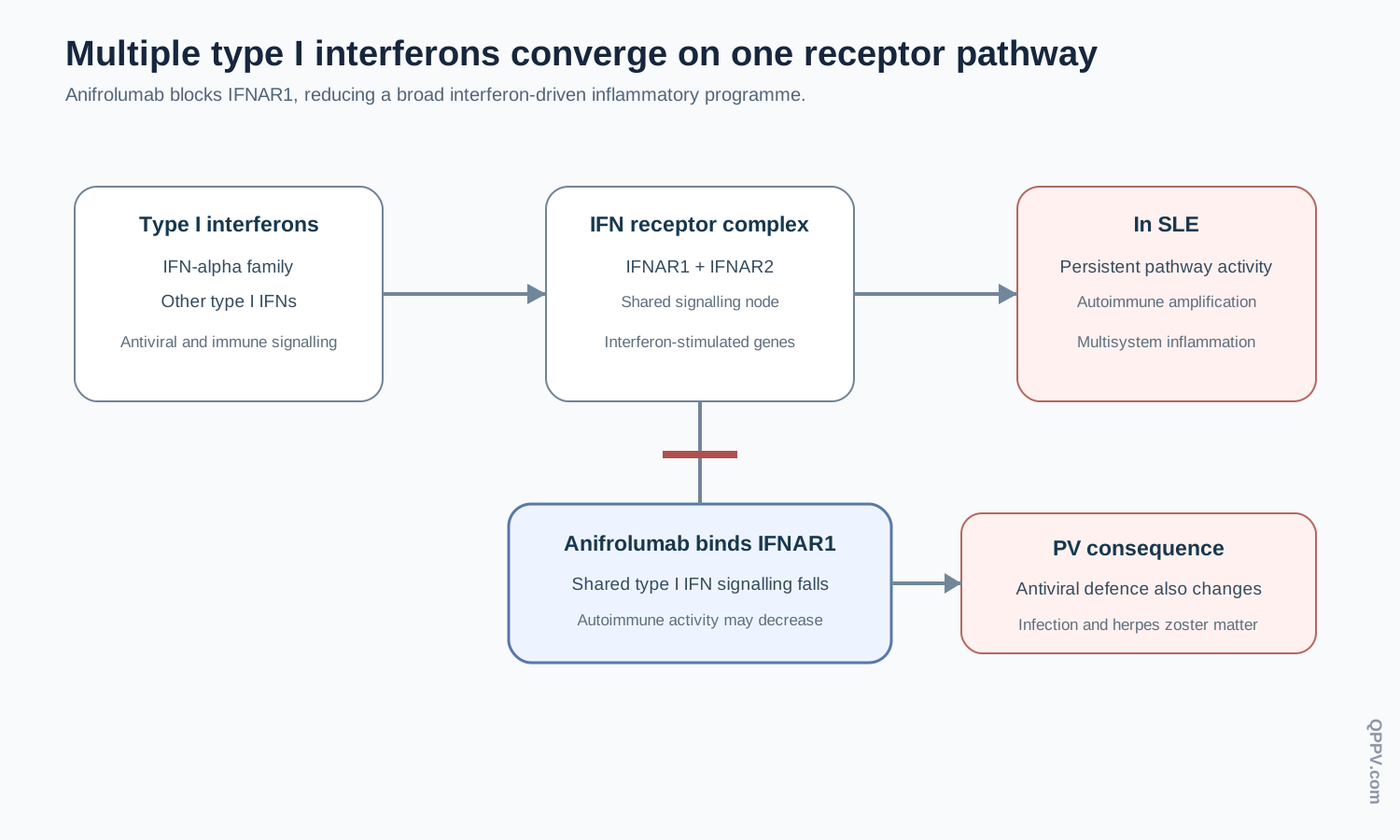
Figure 2. Multiple type I interferons converge on IFNAR1-containing receptors. Anifrolumab blocks this shared signalling node, reducing interferon-driven autoimmune activity while also modifying antiviral immune responses.
Development and regulatory history
The European Union authorised anifrolumab in February 2022 as add-on therapy for adults with moderate to severe active autoantibody-positive SLE despite standard treatment. The pivotal development programme included the TULIP studies. TULIP-2 demonstrated improvement using the BILAG-based Composite Lupus Assessment (BICLA), while the broader programme also highlighted an important lesson in endpoint selection: complex multisystem diseases can produce different conclusions depending on the clinical composite used.
The original EU presentation was intravenous. The marketing authorisation was later extended to include subcutaneous 120 mg presentations in pre-filled syringe and pre-filled pen, while the intravenous 300 mg presentation remains authorised. Current EU product information therefore encompasses both intravenous and subcutaneous use.
This formulation evolution has direct PV consequences. A medicine once administered entirely in an infusion setting can now generate self-administration errors, device complaints, injection-site events and missed-dose patterns that were less relevant to the original lifecycle.
Why route matters without changing the target
The molecule still blocks IFNAR1 whether administered intravenously or subcutaneously, but the exposure pattern and operational risks differ. Infusion administration concentrates acute reactions around a healthcare-supervised event. Subcutaneous treatment distributes administration across repeated self- or caregiver-injections and introduces device technique and local injection reactions.
Signal analyses should therefore preserve route and presentation rather than pooling all anifrolumab exposure indiscriminately.
Clinical safety framework
Anifrolumab pharmacovigilance is best understood as an interaction between interferon-pathway suppression, baseline SLE immune dysfunction, concomitant immunosuppression and route-specific administration risks.
Infection
Patients with SLE already have elevated infection risk because of immune dysregulation, organ disease and therapies such as corticosteroids or other immunosuppressants. Anifrolumab adds inhibition of a pathway involved in antiviral defence. Respiratory infections are among the common adverse reactions reported with treatment.
A serious infection case should therefore retain the organism or syndrome, site, severity, hospitalisation, concomitant immunosuppression, corticosteroid dose, lymphocyte or immunoglobulin abnormalities where relevant, disease activity and temporal relation to anifrolumab.
The causality question is rarely answered by timing alone. The useful analysis asks how much each component of the patient's immune state contributed.
Herpes zoster
Herpes zoster is one of the most distinctive recognised safety issues. Reactivation of varicella-zoster virus can produce localised shingles but may also become disseminated, particularly in immunosuppressed patients.
High-value follow-up includes dermatome distribution, dissemination, neurological or ophthalmic involvement, antiviral treatment, hospitalisation, vaccination history where available, background immunosuppressants and outcome.
Aggregate analyses should preserve severity and dissemination rather than counting every herpes-zoster term as clinically equivalent.
Hypersensitivity and anaphylaxis
Serious hypersensitivity reactions, including anaphylaxis, can occur. Intravenous cases should document relation to the infusion, infusion interruption and acute treatment. Subcutaneous cases should include injection timing, local versus systemic symptoms, device/presentation and whether the reaction followed self-administration.
The same biological reaction can therefore enter the safety system through different operational pathways after route expansion.
SLE flare versus adverse reaction
SLE is a multisystem disease. Fever, rash, arthralgia, fatigue, cytopenias, renal abnormalities and neurological symptoms can all be manifestations of disease activity, infection, concomitant treatment or an adverse reaction.
The pharmacovigilance task is not to choose one explanation prematurely. A useful case reconstructs:
- baseline organ involvement and disease activity;
- recent corticosteroid or immunosuppressant changes;
- objective infection testing;
- complement and anti-dsDNA trends where clinically available;
- organ-specific investigations;
- treatment interruption and response;
- and specialist assessment.
Lupus nephritis and severe neuropsychiatric disease
Patients with severe active lupus nephritis or severe active central nervous system lupus have historically been underrepresented or excluded from some pivotal programmes. Cases in these settings require careful description of baseline disease and concomitant therapy rather than extrapolating evidence from the broader SLE population without qualification.
Background therapy and attribution
Anifrolumab is add-on therapy. Many patients receive corticosteroids, antimalarials and/or immunosuppressive medicines. These treatments can independently cause infection, cytopenias, liver abnormalities, metabolic complications and other adverse effects.
Signal analyses should therefore preserve background regimen and major dose changes. A safety database that stores only anifrolumab plus event term loses much of the causal context.
Route- and device-specific safety
Intravenous administration
Infusion reactions are time-linked to administration and may include systemic symptoms. Dose number, latency, infusion rate, premedication, interruption and rechallenge are useful variables.
Subcutaneous administration
Subcutaneous use introduces local injection-site reactions, self-injection technique, missed doses, device malfunction and storage/handling errors. These events should be distinguished from systemic hypersensitivity and from pharmacological lack of effect.
A failed injection can create apparent loss of efficacy without representing biological resistance.
Immunogenicity
Anti-drug antibodies are relevant when there is unexplained loss of exposure, altered pharmacokinetics, hypersensitivity or loss of clinical effect. Formal immunogenicity results are uncommon in spontaneous reports, but they should be linked to treatment chronology and route when available.
Special situations
Pregnancy
As an IgG antibody, anifrolumab can cross the placenta, especially later in gestation. Pregnancy exposure should capture trimester, maternal lupus activity, corticosteroids and other immunosuppressants, obstetric complications and neonatal outcomes. Distinguishing disease-related pregnancy risk from medicine-related risk is essential because active SLE itself is associated with adverse pregnancy outcomes.
Vaccination and infection prevention
Because anifrolumab alters antiviral immune signalling, vaccination history and timing can become relevant in infection cases. Any operational recommendations should follow current regional product information and immunisation guidance rather than being inferred solely from mechanism.
Product traceability
For biologicals, exact product and batch should be retained where possible. With the addition of pre-filled devices, presentation and device identifiers are also relevant in administration complaints, incomplete dosing, quality defects and hypersensitivity clusters.
Pharmacovigilance case assessment
An anifrolumab case is most useful when reconstructed around route, infection status, SLE activity and background immunosuppression.
Event-specific follow-up priorities
| Event or issue | High-value follow-up information |
|---|---|
| Herpes zoster | Localised/disseminated pattern, dermatome, antiviral treatment, hospitalisation, vaccination history and immunosuppressants |
| Serious respiratory infection | Organism, imaging, oxygenation, corticosteroid dose, other immunosuppression and lupus activity |
| Hypersensitivity/anaphylaxis | Route, dose number, onset, systemic features, acute treatment, device/infusion information and rechallenge |
| Suspected lupus flare | Baseline organs, disease scores where available, complement/anti-dsDNA, infection exclusion and treatment changes |
| Cytopenia | Baseline lupus haematology, concomitant drugs, infection, marrow evaluation where performed and disease activity |
| Injection-site/device event | Presentation, technique, device function, delivered dose, local findings and clinical consequence |
| Lack of efficacy | Route, adherence, missed doses, background therapy, organ activity, steroid changes and immunogenicity if available |
| Pregnancy exposure | Trimester, disease activity, concomitant medicines, obstetric course and neonatal outcome |
Signal detection and aggregate review
Infection analyses should stratify by herpes zoster versus other infections and by background immunosuppression. A patient receiving substantial corticosteroid therapy is not biologically equivalent to one receiving minimal additional immunosuppression.
Route should become an explicit stratification variable after introduction of subcutaneous treatment. Injection-site and device events are expected to cluster in the subcutaneous population, while infusion reactions are specific to intravenous administration.
Lupus-flare retrieval should be medically reviewed because many individual event terms overlap common adverse reactions. Fever plus rash plus arthralgia may represent flare, infection, hypersensitivity or another inflammatory syndrome.
Benefit-risk evaluation
Anifrolumab's benefit is reduction of clinically important SLE activity in patients whose disease remains active despite standard therapy. The benefit cannot be represented by a single laboratory marker because SLE is multisystem and heterogeneous.
The risk side likewise requires context. Increased susceptibility to respiratory infection or herpes zoster must be interpreted against baseline SLE risk and concomitant immunosuppression. Route expansion adds convenience and autonomy but also creates new operational risks that should be incorporated into lifecycle evaluation.
Risk management and operational controls
Current regional product information governs infection precautions, hypersensitivity management, route-specific administration and use with other immunomodulatory treatment. Useful operational PV controls include structured infection follow-up, route/presentation capture, device-event coding and explicit documentation of background corticosteroid and immunosuppressant exposure.
These are recommended system controls; they should not be presented as separate legal requirements unless included in a specific regulatory commitment.
Potential failure modes
The following are illustrative scenarios, not published inspection findings:
- Herpes zoster is counted without distinguishing localised from disseminated disease.
- Fever and rash are labelled lupus flare without investigating infection or hypersensitivity.
- A failed self-injection is recorded only as lack of efficacy and the incomplete dose is missed.
- Intravenous and subcutaneous administration reactions are pooled despite different operational mechanisms.
- Infection signals are compared without accounting for high-dose corticosteroid exposure.
- Pregnancy outcome is attributed to treatment without documenting maternal lupus activity.
Inspection and governance perspective
An inspector or quality reviewer could examine whether the system preserves route and presentation after lifecycle expansion, whether serious infection and zoster cases capture concomitant immunosuppression, and whether flare assessment includes objective evidence and competing causes.
The effectiveness question is whether the pharmacovigilance process can distinguish immune modulation from the background biology of SLE while adapting to a changing formulation and administration model.
Practical checklist
For an anifrolumab case or aggregate analysis, confirm:
- SLE activity and major organ involvement;
- intravenous versus subcutaneous route;
- exact presentation and device where applicable;
- dose number and administration date;
- corticosteroid and other immunosuppressive treatment;
- infection phenotype and microbiology where available;
- herpes-zoster severity/dissemination;
- hypersensitivity timing and treatment;
- missed/failed doses and device issues;
- pregnancy timing when relevant;
- product and batch traceability.
Key Takeaways
Anifrolumab blocks IFNAR1, a shared receptor subunit for type I interferons, thereby reducing a broad interferon-driven inflammatory programme in SLE. The mechanism is broader than neutralisation of one cytokine and explains both therapeutic activity and infection-related safety considerations.
Its pharmacovigilance depends on separating infection, herpes zoster and hypersensitivity from lupus flare and background immunosuppression. The addition of subcutaneous administration further demonstrates that product lifecycle changes can introduce new operational safety questions without changing the molecular target.
References
- European Medicines Agency. Anifrolumab: EPAR. EU marketing authorisation issued 14 February 2022; product information updated September 2026. https://www.ema.europa.eu/en/medicines/human/EPAR/saphnelo
- European Commission. Union Register: anifrolumab. Current centralised marketing-authorisation record. https://ec.europa.eu/health/documents/community-register/html/h1623.htm
- European Medicines Agency. Anifrolumab authorised presentations. Current EU presentations include intravenous concentrate and subcutaneous pre-filled syringe and pen. https://www.ema.europa.eu/en/documents/all-authorised-presentations/saphnelo-epar-all-authorised-presentations_en.pdf
- Morand EF, Furie R, Tanaka Y, et al. Trial of anifrolumab in active systemic lupus erythematosus. N Engl J Med. 2020;382:211-221. doi:10.1056/NEJMoa1912196.
- Tanaka Y, Tummala R. Anifrolumab, a monoclonal antibody to the type I interferon receptor subunit 1, for the treatment of systemic lupus erythematosus: an overview from clinical trials. Mod Rheumatol. 2021;31:1-12. doi:10.1080/14397595.2020.1812201.
Regulatory Note
Authorised route, presentation, dosing, infection precautions and concomitant-treatment recommendations can differ by jurisdiction and change over time. This article explains the scientific and pharmacovigilance framework and does not replace current regional product information or specialist rheumatology guidance. EU regulatory information was checked against EMA and European Commission material current in September 2026.