Ansuvimab: Classification, Mechanism and Pharmacovigilance
Ansuvimab is a pathogen-targeting antibody used in a high-acuity infectious disease. During Ebola treatment, disease manifestations and medicine-related reactions can overlap, making careful chronology and clinical evidence essential.
1. Product identity and clinical context
Ansuvimab-zykl is the active substance in Ebanga in the United States. The FDA indication is treatment of infection caused by Orthoebolavirus zairense, previously called Zaire ebolavirus, in adults and paediatric patients, including certain neonates born to a mother with a positive molecular test. The label says that efficacy has not been established for other Orthoebolavirus or Orthomarburgvirus species and advises consideration of susceptibility of circulating strains.[1]
The U.S. regimen is a single intravenous dose of 50 mg/kg over 60 minutes. Treatment occurs alongside outbreak-response and supportive care; the antibody is not a substitute for isolation, fluid and organ support, infection-control procedures or public-health measures. Treatment decisions depend on the infecting species, available susceptibility information and current local guidance.[1,2]
Ansuvimab is also known by its earlier research name mAb114. It was isolated from a survivor of the 1995 Ebola outbreak. This origin helps explain its fully human sequence and development pathway, but it does not remove the need to monitor hypersensitivity, infusion-associated events or clinical outcome.[3]
2. Classification and mechanism
Ansuvimab is a human IgG1 monoclonal antibody directed against the Ebola virus surface glycoprotein. Viral glycoprotein mediates attachment and entry into host cells. By binding it, ansuvimab blocks interaction with the cellular receptor and prevents viral entry. It acts on the virion; it does not directly reverse organ injury or replace supportive care.
Its target is virus-specific. The label limits established efficacy to Orthoebolavirus zairense, and viral glycoprotein can vary. Neutralisation of a tested variant or laboratory isolate does not establish clinical effectiveness against every circulating strain.[1]
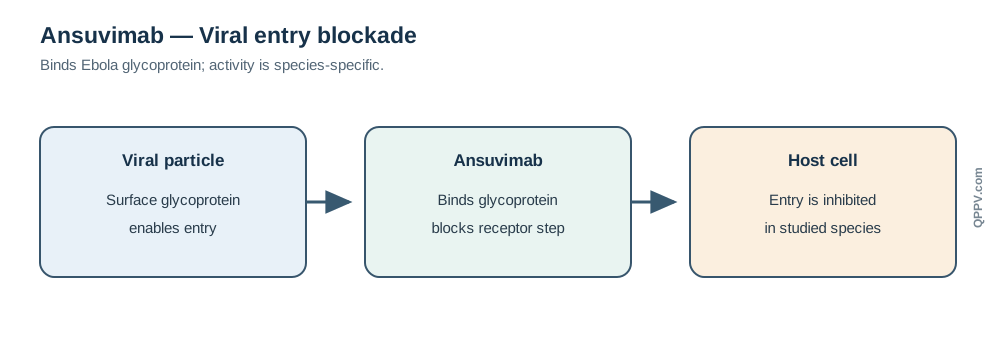
Figure 1. Ansuvimab binds viral glycoprotein and blocks an entry step. This does not show direct reversal of established tissue injury or efficacy for other viral species.
3. Clinical evidence and treatment context
The PALM trial was a randomised controlled study conducted during an Ebola outbreak in the Democratic Republic of the Congo. It compared mAb114 (ansuvimab) and the three-antibody product REGN-EB3 with remdesivir and ZMapp, alongside standard care. Interim results led the monitoring board to stop assignment to the less successful arms and continue the two antibody regimens. This trial supports the use of ansuvimab for the studied species and outbreak context; it does not establish a general class effect for all Ebola viruses.[3]
Outbreak treatment differs from routine outpatient pharmacovigilance. Patients may have severe fever, vomiting, diarrhoea, tachycardia, hypotension and organ dysfunction before the antibody is administered. Some of these findings also appear among events observed during treatment. Baseline status, timing, laboratory data, disease severity and response to supportive care are therefore crucial for distinguishing infection manifestations from a suspected medicine reaction.
The FDA approved ansuvimab in December 2020. Subsequent FDA labelling updates include information on neutralisation activity against glycoprotein variants identified from clinical samples. The appropriate strain-level interpretation remains part of the current label and outbreak guidance.[1,2]
4. Safety and infusion monitoring
The U.S. label warns about hypersensitivity reactions, including infusion-associated events. If these occur, the infusion may need to be slowed or stopped and emergency treatment provided. The clinical-trial safety dataset includes participants with severe Ebola disease; adverse events must be interpreted in light of the infection itself, not only the temporal relation to infusion.[1]
For a suspected infusion event, record pre-infusion condition, dose, infusion start and stop times, symptom onset, vital signs, laboratory findings, interventions, restart or discontinuation and outcome. Include concurrent therapies and whether the event was also consistent with disease progression or complication.
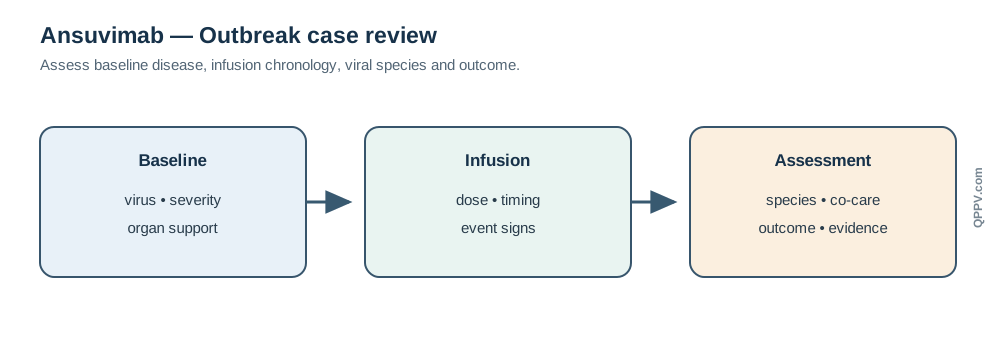
Figure 2. An outbreak safety report needs pre-infusion baseline, infusion timing, viral diagnosis, supportive care, event evidence and outcome.
5. Pharmacovigilance in outbreak conditions
A useful case narrative separates the patient’s condition before treatment from changes during and after infusion. Capture the diagnostic test, viral species or strain information if available, symptom onset, disease severity, organ support, co-administered medicines, dose and infusion details. Use the local outbreak case definition and reporting pathway.
For suspected hypersensitivity, document the clinical pattern and timing rather than relying on nonspecific fever or hypotension alone. For death or lack of response, include disease severity, treatment delay, viral susceptibility information if known, other therapies and the clinical team’s assessment. In an outbreak, incomplete records and rapidly changing care are common; state what is unknown instead of inferring causality.
The World Health Organization recommends monoclonal-antibody treatment with mAb114 (ansuvimab) or REGN-EB3 for Ebola virus disease caused by Zaire ebolavirus; the two treatments should not be given together. Current outbreak guidance and available product information take precedence over a historical guideline if they differ.[4]
6. Regulatory status and practical safeguards
Ansuvimab is FDA-authorised for infection caused by Orthoebolavirus zairense. The cited U.S. label does not establish efficacy for other viral species. The 2026 FDA supplement updated the label based on neutralisation activity against glycoprotein variants from clinical samples. These facts support a jurisdiction- and strain-specific approach to reports; they do not justify extrapolation to other species or to every viral variant.[1,5]
Key takeaways
- Ansuvimab is a human IgG1 antibody against Ebola viral glycoprotein.
- It blocks viral entry and is used with intensive supportive and outbreak care.
- Disease symptoms overlap with potential infusion events, so baseline and infusion chronology are vital.
- Use is species-specific; assess circulating strain susceptibility and current guidance.
References
- U.S. Food and Drug Administration. Ebanga U.S. prescribing information. Revised December 2024.
- U.S. Food and Drug Administration. FDA approval letter and February 2026 labelling supplement. The supplement updates clinical pharmacology and neutralisation information for glycoprotein variants.
- Mulangu S, et al. A randomised, controlled trial of Ebola virus disease therapeutics. New England Journal of Medicine. 2019.
- World Health Organization. Therapeutics for Ebola virus disease. 2022.
- U.S. Food and Drug Administration. FDA approves treatment for Ebola virus. 21 December 2020.
Regulatory Note
This educational article is based on the cited U.S. FDA indication and WHO guidance. Ebola treatment requires specialised public-health and clinical management. Use current local product information, outbreak guidance and applicable reporting requirements.