Equine Anti-Thymocyte Globulin: Polyclonal T-Cell Immunosuppression and Pharmacovigilance
Equine anti-thymocyte globulin (ATG) differs fundamentally from a monoclonal antibody. A monoclonal antibody is designed around one defined binding specificity; equine ATG is a polyclonal immunoglobulin mixture containing antibodies against multiple lymphocyte-surface proteins and other cellular antigens.
That molecular heterogeneity is central to both efficacy and safety. Broad binding can produce profound T-cell depletion and immunomodulation, but it also creates infusion reactions, cytokine release, serum sickness and off-target haematological effects that cannot be understood as a single receptor-blocking mechanism.
- Equine Anti-Thymocyte Globulin: Polyclonal T-Cell Immunosuppression and Pharmacovigilance
- Classification and Production
- Mechanism of Immunosuppression
- Regulatory and Clinical Context
- Anaphylaxis and Immediate Infusion Reactions
- Serum Sickness and Delayed Immune Reactions
- Infection and Vaccination
- Cytopenias and Organ Function
- Product and Lot Traceability
- Practical Pharmacovigilance Assessment
- Illustrative Failure Modes
- Inspection and Governance Considerations
- Key Takeaways
- References
- Regulatory Note
Classification and Production
The product is purified equine gamma globulin, predominantly IgG, derived from hyperimmune serum of horses immunised with human thymus lymphocytes. The resulting antibody population recognises multiple proteins on human lymphocytes. FDA describes binding also to granulocytes, platelets, bone-marrow cells and other cell types.
This breadth is the opposite of monoclonal precision. It can be thought of as an antibody population directed at a cellular phenotype rather than one molecular switch.
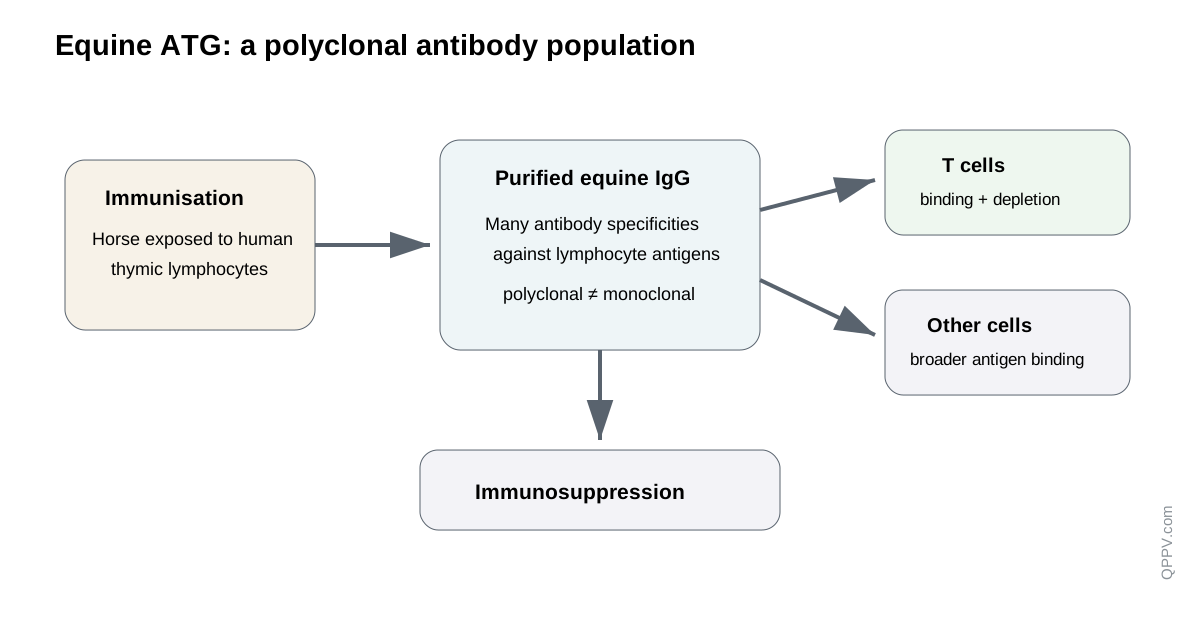
Figure 1. Equine anti-thymocyte globulin contains many antibody specificities generated against human thymic lymphocytes, producing broad lymphocyte binding rather than one monoclonal target interaction.
Mechanism of Immunosuppression
The exact mechanism is not reducible to one pathway. Published and regulatory descriptions identify depletion of circulating lymphocytes, particularly T cells, as a major effect. Complement-dependent lysis, activation-induced apoptosis, partial activation and induction of T-cell anergy may contribute.
The mechanistic consequence is a rapid reduction and functional alteration of immune cells. That can suppress renal allograft rejection or reduce immune-mediated marrow destruction in aplastic anaemia, but it also lowers host defence and changes responses to vaccination and latent infection.
Regulatory and Clinical Context
In the United States, equine ATG is indicated for renal allograft rejection and for moderate-to-severe aplastic anaemia in patients unsuitable for bone-marrow transplantation, with limitations of use specified in the prescribing information.
The medicine is administered intravenously in monitored settings. The clinical environment is part of its safety architecture because severe immediate immune reactions can require rapid intervention.
Anaphylaxis and Immediate Infusion Reactions
Anaphylaxis is the most clinically urgent product-specific risk. Current U.S. prescribing information carries a boxed warning and strongly recommends skin testing before treatment to identify patients at greatest risk. Skin testing reduces uncertainty but does not make subsequent severe reactions impossible, so monitored administration remains necessary.
A serious report should capture prior exposure to equine proteins or ATG, skin-test procedure and result where performed, premedication, infusion rate, exact latency, airway or cardiovascular involvement, epinephrine or other treatment and outcome.
Cytokine-release syndrome
Cytokine-release syndrome (CRS) can follow broad immune-cell engagement and activation. Fever, chills, hypotension, respiratory symptoms and systemic inflammation can overlap with infection or anaphylaxis. Timing, tryptase where relevant, cultures, inflammatory markers, haemodynamic course and response to interruption or treatment help differentiate these syndromes.
Serum Sickness and Delayed Immune Reactions
Serum sickness is a delayed immune-complex-mediated reaction that may include fever, rash, arthralgia, lymphadenopathy and other systemic manifestations. It differs from immediate anaphylaxis in both mechanism and latency.
This distinction matters operationally: a safety database that groups all hypersensitivity under one broad term loses the temporal and mechanistic pattern needed for aggregate evaluation. Prior course exposure and re-exposure are especially important because immune sensitisation can alter later risk.
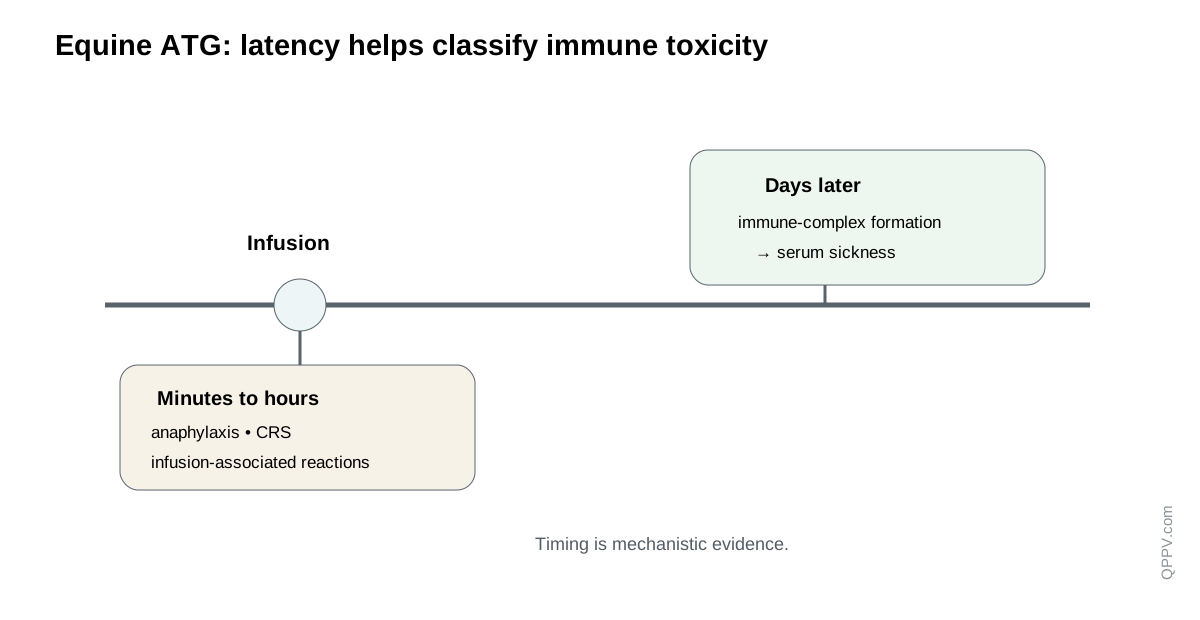
Figure 2. Equine ATG can produce immediate infusion-related syndromes such as anaphylaxis or CRS and delayed immune-complex disease such as serum sickness; latency is therefore a core PV variable.
Infection and Vaccination
T-cell depletion and concomitant immunosuppressive treatment increase susceptibility to infection and viral reactivation. Infection cases require organism, site, diagnostic evidence, baseline immune status, concomitant immunosuppressants, prophylaxis, timing from ATG, treatment and outcome.
Current U.S. prescribing information advises against live vaccines in patients about to receive, receiving or after treatment because uncontrolled replication may occur in an immunosuppressed host. This is a pharmacodynamic interaction with immune competence rather than a conventional drug–drug interaction.
Cytopenias and Organ Function
Thrombocytopenia and neutropenia may occur and can be difficult to attribute in patients with aplastic anaemia, transplantation, infection or concomitant marrow-suppressive treatment. Serial counts before, during and after treatment are more informative than a single nadir.
Abnormal hepatic and renal tests also require baseline values and competing causes. In transplant recipients, graft function, rejection, infection and concomitant nephrotoxic medicines can all confound assessment.
Product and Lot Traceability
Polyclonal biologicals are manufactured as complex populations of immunoglobulins. Lot identification is therefore particularly valuable when investigating unusual reaction clusters, potency questions or product-quality complaints. The product should not be reduced in safety records to a generic term such as "ATG" because rabbit-derived and equine preparations are biologically distinct products.
Practical Pharmacovigilance Assessment
A useful case reconstructs the treatment course: indication, dose, course day, cumulative exposure, prior ATG or equine-protein exposure, skin-test status where applicable, premedication, infusion rate and concomitant immunosuppression. The event is then interpreted against its latency and clinical phenotype.
For infections and cytopenias, longitudinal data are essential. Baseline and serial lymphocyte, neutrophil and platelet counts, microbiology, organ-function tests and immunosuppressive co-medication often determine whether a report is interpretable.
Illustrative Failure Modes
These scenarios are illustrative, not reported inspection findings.
| Failure mode | Why it matters | Control |
|---|---|---|
| Product recorded only as "ATG" | Equine and rabbit products can be confused | Capture full biological identity |
| Fever/hypotension coded as CRS without infection work-up | Competing serious diagnosis may be missed | Reconstruct syndrome and diagnostics |
| Serum sickness coded as immediate allergy | Mechanism and latency are lost | Preserve onset and clinical constellation |
| Prior equine exposure omitted | Re-exposure risk cannot be assessed | Capture previous courses and reactions |
| Infection report omits concomitant immunosuppression | Attribution becomes misleading | Record total immunosuppressive burden |
Inspection and Governance Considerations
An inspector could assess whether serious infusion reactions receive targeted follow-up, whether product dictionaries distinguish equine from other ATG preparations, and whether infection cases contain enough immunosuppression context for meaningful assessment.
Quality and PV interfaces should also preserve lot information and potential product complaints. Because the medicine is a biological mixture rather than one molecular species, manufacturing and potency controls are part of the wider evidence system even though individual case reports do not establish lot causality.
Key Takeaways
Equine ATG is a polyclonal IgG biological produced by immunising horses with human thymic lymphocytes. Its broad target repertoire produces T-cell depletion and immunomodulation rather than single-target blockade.
Its characteristic PV architecture spans immediate anaphylaxis and CRS, delayed serum sickness, infection and viral reactivation, cytopenias and organ-function abnormalities. Exact product identity, course timing, prior exposure and concomitant immunosuppression are indispensable case variables.
References
- U.S. Food and Drug Administration. Lymphocyte immune globulin, anti-thymocyte globulin (equine): licensed product page and current prescribing information.
- U.S. Food and Drug Administration. Package Insert: lymphocyte immune globulin, anti-thymocyte globulin (equine). Revised 2023.
- U.S. Food and Drug Administration. Clinical Review Memorandum supporting 2023 post-marketing safety labelling revisions.
- U.S. Food and Drug Administration. Clinical Pharmacology Review: equine anti-thymocyte globulin, 2023.
- Young NS. Aplastic anemia. N Engl J Med. 2018;379:1643-1656.
Regulatory Note
Indications, dosing and risk-minimisation instructions vary by product and jurisdiction. Equine ATG should not be assumed interchangeable with rabbit-derived anti-thymocyte globulin. Current local prescribing information must be used for clinical and regulatory decisions.