Antibody–Drug Conjugates: Targeted Cytotoxic Delivery, Mechanisms of Toxicity and Pharmacovigilance
Antibody–drug conjugates (ADCs) are engineered medicines in which an antibody is chemically linked to a pharmacologically active payload. Most established ADCs have been developed for cancer treatment, where the antibody provides molecular recognition and the payload provides potent cytotoxic activity. The concept appears simple—use an antibody to carry a drug preferentially to cells expressing a selected antigen—but the resulting medicine is pharmacologically more complex than either component considered alone.
An ADC is not simply a monoclonal antibody with an attached chemotherapy drug. Its behaviour emerges from the interaction of several design variables: the biological distribution and internalisation characteristics of the target antigen; the specificity, affinity and Fc properties of the antibody; the stability and cleavage characteristics of the linker; the potency and physicochemical properties of the payload; the number and distribution of payload molecules attached to each antibody; and the disposition of intact conjugate, unconjugated antibody, released payload and payload-containing catabolites.
This systems view is central to pharmacovigilance. Two ADCs directed against the same antigen can have substantially different safety profiles because their linker–payload systems differ. Conversely, ADCs directed against different antigens may share adverse effects when they deliver related payloads. A clinically observed toxicity may therefore arise from target biology, payload pharmacology, unintended tissue exposure, premature payload release, the antibody component, treatment context, or an interaction among these mechanisms.
From Monoclonal Antibody to Drug-Delivery System
Conventional monoclonal antibodies can produce therapeutic effects by neutralising soluble ligands, blocking or activating receptors, altering cell signalling, or recruiting immune effector mechanisms. An ADC adds another functional layer: the antibody becomes a carrier for a linked drug.
The antibody still matters pharmacologically. It determines which antigen is recognised, influences tissue distribution and may retain biological activity of its own. However, successful antigen binding is only the beginning of the classical ADC delivery pathway. For many ADCs, the antigen–ADC complex must internalise, traffic through intracellular compartments and undergo processing that permits release of an active payload or active payload-containing catabolite. The released drug must then reach its intracellular target at a sufficient concentration to cause the intended effect.
The architecture can therefore be understood as four interacting elements:
| Element | Principal function | Key safety question |
|---|---|---|
| Targeting antibody | Recognises the selected cell-surface antigen and influences distribution | Where is the antigen expressed, and does the antibody itself have pharmacological effects? |
| Linker | Connects antibody and payload and controls stability/release | Is the payload retained during circulation and released in the intended biological setting? |
| Payload | Produces the principal cytotoxic or other pharmacological effect | What tissues are intrinsically vulnerable to this mechanism if exposed? |
| Conjugation architecture | Determines payload loading and molecular heterogeneity | How do drug-to-antibody ratio, attachment sites and stability affect exposure and disposition? |
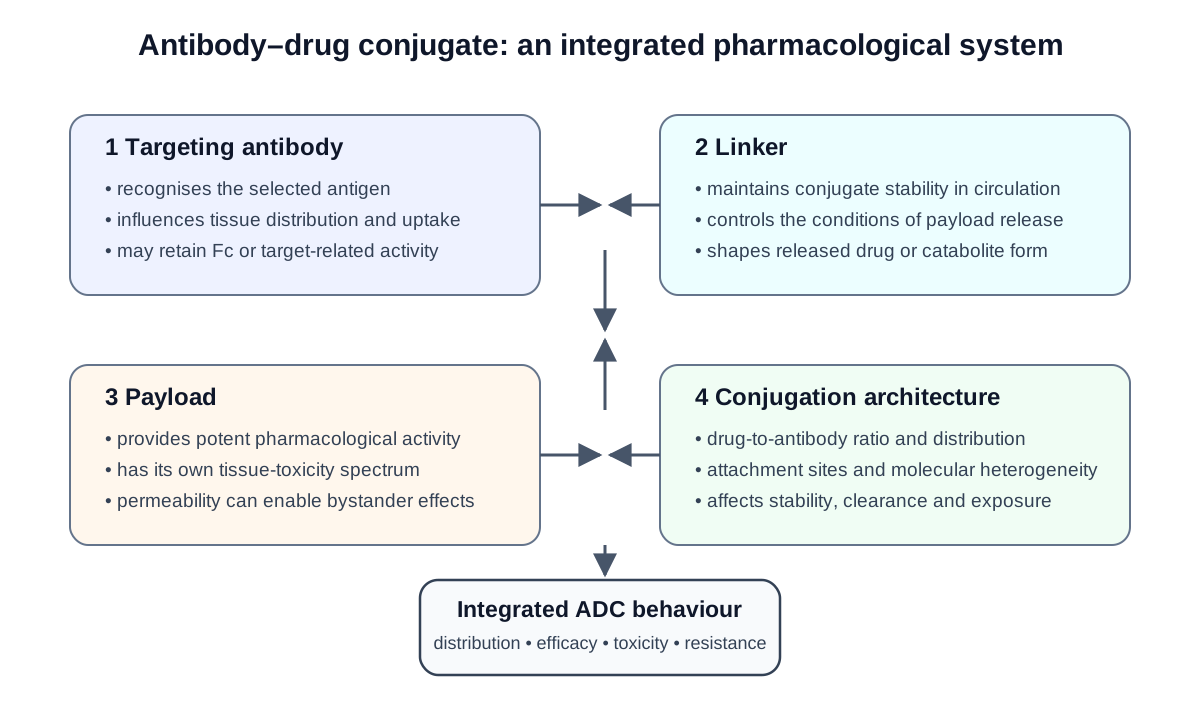
Figure 1. An ADC is an integrated delivery system. Antibody targeting, linker behaviour, payload pharmacology and conjugation architecture jointly determine exposure, efficacy and toxicity; none should be interpreted in isolation.
The target is a distribution determinant, not a guarantee of selectivity
An attractive ADC target is generally accessible on the cell surface and sufficiently enriched on the intended target cells to support useful delivery. For internalising ADCs, antigen binding must also be followed by trafficking compatible with payload release. Yet expression is rarely an absolute tumour-versus-normal binary. Low-level target expression in normal tissue can matter when the attached payload is highly potent. Target expression may also vary between patients, between tumour sites and among cells within the same tumour.
Affinity adds another layer. Strong antigen binding can improve cellular capture, but delivery through a solid tumour is not determined by affinity alone. Large antibody molecules must leave the vascular compartment, move through tissue and encounter antigen. Rapid binding near vessels can limit deeper penetration in some settings—the so-called binding-site barrier. Consequently, the spatial distribution of target, vascular access, antigen density, internalisation and payload diffusion can all influence which cells are actually exposed.
For pharmacovigilance, the practical implication is that the phrase targeted therapy should never be interpreted as target-restricted exposure. Targeting changes the probability and location of drug delivery; it does not eliminate systemic pharmacology.
Linkers: Controlling When the Payload Becomes Available
The linker is the chemical bridge between antibody and payload. Its central design problem is apparently contradictory: it should be sufficiently stable during systemic circulation to avoid inappropriate payload release, yet permit biologically effective payload liberation at the intended site.
Linkers are commonly discussed as cleavable or non-cleavable, although real products differ considerably within those broad groups.
Cleavable linkers are designed to release payload following exposure to a biochemical condition or process associated with the target-cell or tumour environment, such as proteolytic processing or particular intracellular chemical conditions. Non-cleavable linkers depend more heavily on degradation of the antibody component after internalisation, leaving an active payload-containing catabolite.
This distinction influences both efficacy and safety. A linker that is insufficiently stable in circulation may increase systemic exposure to active payload. A linker that is excessively resistant to productive processing may reduce delivery of active drug. The chemical form of the released payload or catabolite also influences membrane permeability and therefore whether it can leave the initially targeted cell.
The linker should therefore be viewed as a pharmacokinetic and pharmacological control element rather than an inert tether. In safety assessment, questions about linker stability, payload release and circulating metabolites can be as important as questions about antibody binding.
How an ADC Delivers Its Payload
The classical internalising ADC pathway is sequential. Each stage can alter both therapeutic delivery and the pattern of unintended exposure.
First, circulating ADC reaches a tissue and the antibody binds its cell-surface antigen. The complex is then internalised, commonly through endocytic processes, and trafficked through intracellular compartments. Processing of the conjugate—through linker cleavage, antibody degradation, or both—generates an active payload or payload-containing catabolite. The active species then reaches its molecular target. Depending on the ADC, this may disrupt microtubules, inhibit topoisomerase activity, damage DNA or act through another highly potent mechanism, ultimately producing cell injury or death.
This apparently linear pathway has several branches. Some antigen–ADC complexes may recycle rather than proceed efficiently to degradative compartments. Some payload may be released outside the target cell. Some released payload species can cross cell membranes and enter neighbouring cells. Intact conjugate and released species can also be distributed to non-target tissues through mechanisms unrelated to intended tumour-antigen binding.
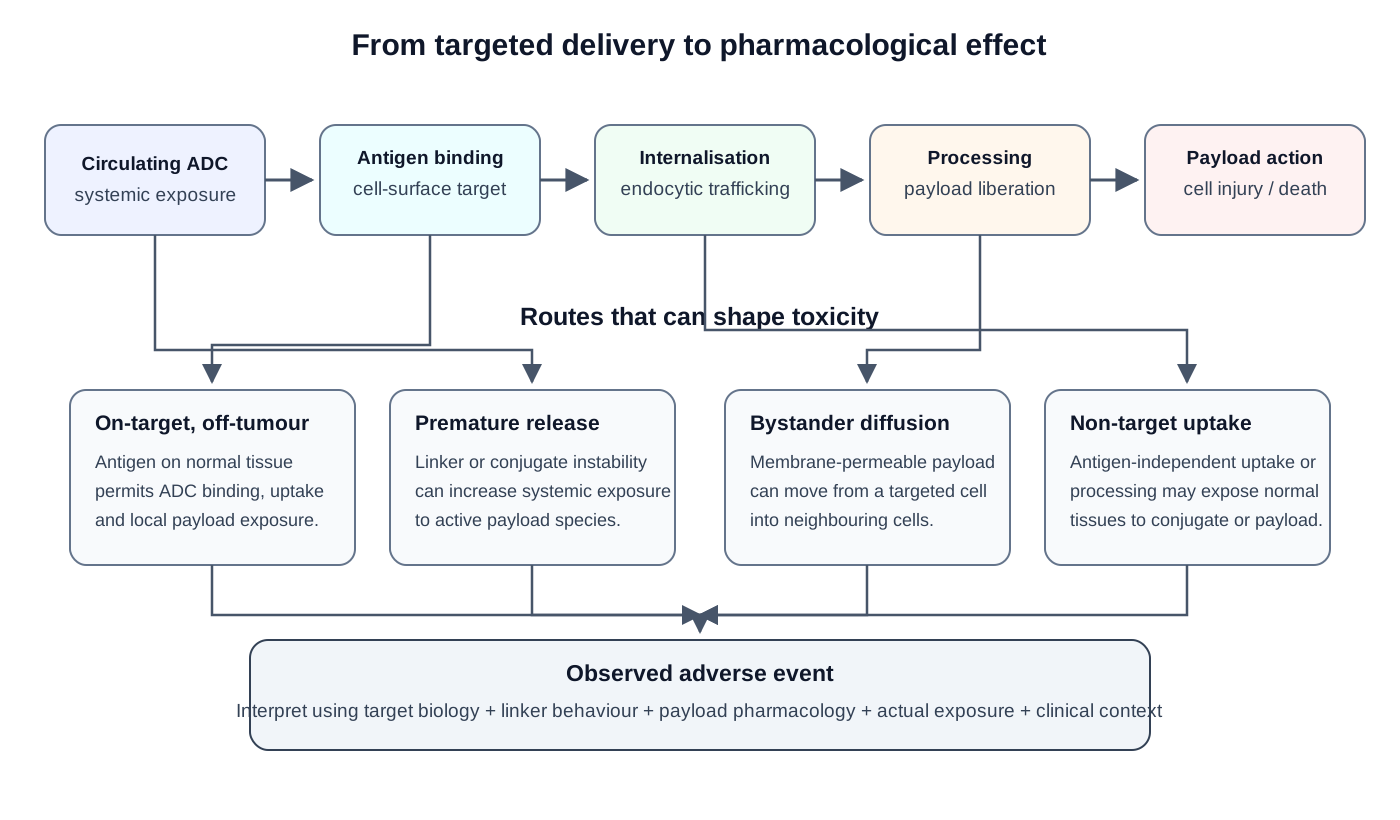
Figure 2. The classical internalising ADC pathway runs from systemic exposure through antigen binding, internalisation and intracellular processing to payload action. Safety can also be shaped by target expression in normal tissue, premature or extracellular payload release, bystander diffusion and non-target uptake.
Internalisation and intracellular processing
For many clinically established ADCs, internalisation is a major determinant of productive payload delivery. The rate and route of internalisation depend on the antigen, antibody and cellular context. Binding alone therefore does not establish that an antigen is an effective ADC target.
After internalisation, intracellular trafficking determines whether the conjugate reaches compartments capable of productive processing. Cleavable linkers may respond to intracellular conditions or enzymatic activity, whereas ADCs with non-cleavable linkers generally require degradation of the antibody to generate an active drug-containing catabolite. These mechanisms are not interchangeable: they produce different active species with different physicochemical properties.
Bystander killing
A released payload that can cross cellular membranes may leave the initially targeted cell and enter neighbouring cells. This is termed the bystander effect. It can be therapeutically useful in tumours with heterogeneous antigen expression because an antigen-positive cell can act as a local source of payload that also affects nearby antigen-low or antigen-negative tumour cells.
The same principle illustrates why ADC selectivity is probabilistic rather than absolute. A membrane-permeable payload does not recognise whether the neighbouring cell is malignant. The location and magnitude of bystander exposure therefore depend on where payload is released, its concentration, stability, membrane permeability and local tissue architecture.
Bystander activity should not be treated as a universal property of cleavable ADCs. It depends on the chemical nature of the released active species as well as linker processing. Non-cleavable systems commonly generate charged or otherwise poorly membrane-permeable catabolites and therefore tend to have less bystander diffusion, although ADC behaviour should be assessed product by product rather than inferred solely from a broad linker label.
Drug-to-antibody ratio and molecular heterogeneity
The drug-to-antibody ratio (DAR) describes the average number of payload molecules attached to an antibody population. It is a useful design and analytical concept, but an average DAR does not by itself describe the complete molecular distribution. Depending on the conjugation technology, a preparation may contain species carrying different numbers of payload molecules or payloads attached at different sites.
Increasing payload loading can increase the amount of drug carried by each antibody, but more is not automatically better. Conjugation can change hydrophobicity, aggregation tendency, stability, clearance and tissue exposure. Modern site-specific and controlled conjugation strategies seek to reduce unwanted heterogeneity and tune these properties.
For safety interpretation, this means that the ADC should be treated as a defined molecular product rather than as a generic combination of antibody plus drug. Manufacturing and conjugation characteristics can influence clinically relevant disposition even when the nominal antibody target and payload class are unchanged.
Where ADC Toxicity Comes From
The most useful pharmacovigilance model is not to ask whether an adverse event is an “ADC class effect”. Instead, ask which exposure pathway and pharmacological component could plausibly produce it.
On-target, off-tumour effects
If the target antigen is present on normal cells, the ADC may bind and be processed in those tissues. This is on-target, off-tumour exposure: molecular recognition is working as designed, but the antigen is not exclusive to malignant tissue. The clinical consequence depends on antigen abundance, accessibility, internalisation, tissue regenerative capacity and payload sensitivity.
This mechanism is conceptually distinct from toxicity caused by free or systemically distributed payload. Establishing the distinction may be difficult clinically, but it matters because the risk-mitigation strategy differs. Target-mediated toxicity may require understanding tissue expression and pharmacology, whereas premature payload release focuses attention on conjugate stability and systemic payload exposure.
Payload-related toxicity
ADC payloads are deliberately potent. Once active payload reaches a susceptible normal cell, its molecular target remains the same as in the malignant cell. Toxicity can therefore reflect the pharmacology of the payload or payload class.
Microtubule-disrupting payloads, for example, can produce patterns that include peripheral neuropathy or haematological toxicity in particular products. Topoisomerase-I-inhibitor ADCs have their own safety profiles, with interstitial lung disease/pneumonitis being an important identified risk for trastuzumab deruxtecan. Such examples are useful mechanistic anchors, but they should not be converted into universal class rules: exposure, linker behaviour, dose, target, payload chemistry and product-specific clinical evidence remain decisive.
Non-target uptake and processing
Cells may encounter ADCs through pathways that do not depend on the intended tumour antigen. Fc-receptor interactions, pinocytosis, uptake of aggregates, extracellular processing and other disposition pathways can contribute to tissue exposure. The relevance of each pathway varies by molecule and tissue and should not be presumed without supporting evidence.
This is particularly important when a toxicity occurs in tissue with little obvious expression of the intended target. Absence of a straightforward target-expression explanation does not establish that an event is unrelated to the ADC; it changes the mechanistic questions that need to be investigated.
Product-Specific Toxicity: Why the Whole Construct Matters
Clinical examples demonstrate why an ADC safety profile cannot be predicted from a single component.
Trastuzumab emtansine combines HER2-directed trastuzumab with the microtubule-inhibitory maytansinoid DM1 through a non-cleavable linker. Its EU product information includes clinically important risks such as thrombocytopenia, haemorrhage, hepatotoxicity, cardiac dysfunction and pulmonary toxicity. Some aspects overlap with known trastuzumab biology, while others require consideration of the conjugated cytotoxic component and the behaviour of the complete molecule.
Trastuzumab deruxtecan also targets HER2, but its linker–payload system differs fundamentally: it carries a topoisomerase-I-inhibitor payload using a cleavable linker and has a different drug-loading and payload-release architecture. Interstitial lung disease (ILD)/pneumonitis is a particularly important identified risk, reflected in EU risk-minimisation measures including healthcare-professional educational material and a patient card. The contrast with trastuzumab emtansine is instructive. A shared antibody target does not imply a shared toxicity profile.
Brentuximab vedotin targets CD30 and carries the microtubule-disrupting payload monomethyl auristatin E. Peripheral sensory and motor neuropathy are prominent recognised adverse reactions. Again, the clinically observed pattern has to be interpreted through the complete construct and exposure context rather than through CD30 biology alone.
These examples are not intended as a catalogue of ADC toxicities. Their teaching value is architectural: safety follows the product, while mechanistic analysis decomposes the product into interacting contributors.
A Pharmacovigilance Framework for ADC Safety
Routine case processing for an ADC follows the same pharmacovigilance principles that apply to other medicinal products, but scientifically useful assessment requires more granular product identification and mechanistic thinking.
1. Identify the exact medicinal product and treatment context
Record the exact ADC, indication, dose, schedule, treatment cycle, administration dates and concomitant antineoplastic or supportive therapies. Where available and relevant, capture batch information in accordance with normal biological-medicinal-product traceability processes.
Confusing an ADC with another product sharing the same antibody component can have direct safety implications. EMA risk-minimisation material for trastuzumab deruxtecan specifically addresses the potential for medication error between trastuzumab-containing medicines and states that these products should not be used interchangeably.
2. Characterise the event clinically before assigning mechanism
Mechanistic plausibility is useful only after the clinical phenotype is adequately described. For a suspected ILD event, for example, the case should be characterised using onset, symptoms, imaging and relevant investigations where available, severity, treatment, dechallenge/rechallenge information and competing causes. For neuropathy, distribution, sensory versus motor features, grade/severity, cumulative exposure and alternative neurotoxic treatment matter.
The principle is general: first define what happened; then ask why it may have happened.
3. Map the event against plausible exposure pathways
A structured assessment can consider five non-exclusive questions:
| Mechanistic question | Evidence to examine |
|---|---|
| Could intended target biology explain the event? | Target expression in affected tissue, known target physiology, effects of unconjugated antibody or related target-directed agents |
| Could the payload explain the event? | Payload mechanism, known toxicology, related payload-containing ADCs or small molecules, exposure–toxicity relationship |
| Could linker/conjugate behaviour contribute? | Stability, circulating payload or catabolites, timing, non-clinical and clinical pharmacokinetic data |
| Could non-target uptake or local processing contribute? | Tissue biology, Fc or other uptake pathways, preclinical distribution and mechanistic evidence |
| Could treatment context better explain or modify the event? | Disease, prior therapy, concomitant drugs, radiotherapy, infection, organ dysfunction and baseline risk |
These are hypothesis-generating domains, not a causality algorithm. More than one may operate simultaneously.
4. Examine time and cumulative exposure appropriately
Some ADC adverse effects may emerge soon after administration, while others reflect repeated exposure, cumulative injury or delayed biological consequences. Time-to-onset analysis should therefore be adapted to the event and mechanism rather than applying a single generic risk window.
Dose interruptions, reductions and treatment discontinuations can provide useful information, but dechallenge may be difficult to interpret because ADCs and their biological effects do not disappear immediately after dosing stops. Similarly, rechallenge evidence may be unavailable or clinically inappropriate for serious toxicities.
5. Aggregate by more than one dimension
Signal detection can be weakened if data are grouped only by brand or only by target. Useful aggregate views may include:
- the individual ADC;
- ADCs sharing a target;
- ADCs sharing a payload or payload class;
- ADCs sharing related linker or release characteristics;
- clinical phenotype across the broader ADC modality.
These groupings answer different questions. A target-level cluster supports a different hypothesis from a payload-class cluster. Neither establishes causality by itself.
Signal Assessment: From Association to Mechanistic Hypothesis
When a new safety signal emerges, the ADC architecture provides a framework for evidence integration.
A disproportionate reporting pattern or accumulation of serious cases may justify investigation, but spontaneous-reporting data alone usually cannot identify the biological route responsible. The assessment should integrate clinical cases with trial data, exposure estimates where available, non-clinical toxicology, target-expression evidence, pharmacokinetic and bioanalytical information, published literature and experience with related products.
Mechanistic comparison should be deliberately structured. If the same event occurs with several ADCs carrying related payloads but targeting different antigens, payload pharmacology becomes a stronger hypothesis. If it occurs across different modalities acting on the same target, target biology deserves greater attention. If the event appears specific to one construct despite shared target and payload class, linker, conjugation, dose, disposition or other product-specific factors may be relevant.
These patterns are evidential clues, not proofs. Differences in indication, population, background risk, dose, follow-up and reporting can create apparent mechanistic patterns. A good signal assessment therefore uses mechanism to organise evidence without allowing mechanism to substitute for evidence.
Special Situations
Combination therapy
ADCs are frequently used with other antineoplastic medicines. Combination treatment can alter both event frequency and causal interpretability. Overlapping marrow toxicity, neuropathy, pulmonary toxicity, hepatic injury or other effects may be additive or interactive. The assessment should consider the complete regimen and treatment sequence rather than assigning events automatically to the ADC.
Prior exposure to related agents
Patients may have received prior target-directed antibodies, chemotherapy, radiotherapy or another ADC. Previous treatment can change organ reserve and baseline risk. It can also complicate mechanistic comparison: an event appearing during an ADC may reflect cumulative injury or a susceptibility established by earlier therapy.
Antigen heterogeneity and changing disease biology
Target expression can differ across tumour sites and change under treatment pressure. This primarily affects efficacy and resistance, but it also changes the relationship between administered dose and productive tumour payload delivery. Loss of tumour antigen does not necessarily eliminate systemic exposure to intact conjugate or released payload.
Medication errors and product confusion
ADC names may contain the name of the antibody component, creating a risk that products are mistaken for the corresponding unconjugated antibody or another conjugate using the same targeting antibody. Product-specific preparation, dosing and handling requirements make precise identification essential. Medication-error reports should therefore be evaluated both as individual safety cases where applicable and as potential evidence of a system-level risk requiring preventive action.
Quality, Traceability and Cross-Functional Oversight
ADCs sit at the interface of biological and small-molecule pharmacology. Their safety surveillance therefore benefits from close integration between pharmacovigilance, clinical medicine, toxicology, clinical pharmacology, bioanalytics, quality and manufacturing functions.
This does not mean that every adverse event should trigger a manufacturing investigation. Rather, the architecture of the product should determine which expertise and data become relevant to a particular question. A cluster suggesting unexpectedly high systemic payload exposure, for example, raises different questions from a cluster strongly associated with target expression in normal tissue.
Product-quality information can become relevant when there is a scientifically plausible relationship between a quality attribute and safety—for example, conjugate stability, aggregation, payload loading or other characteristics capable of altering exposure. Pharmacovigilance systems should therefore have an effective interface for escalating safety observations that may have a quality dimension and for incorporating quality-investigation outcomes back into aggregate safety assessment.
Traceability remains particularly important for biological medicinal products. Accurate product naming and, where available and required in the applicable process, batch information support investigation of product-specific or batch-related hypotheses. Missing batch information should not prevent normal case assessment, but persistent inability to retrieve traceability data may itself reveal a process weakness.
Potential Failure Modes in ADC Pharmacovigilance
The following are illustrative failure modes rather than reported inspection findings.
Treating all ADCs as one homogeneous class. This can conceal payload-, target- or construct-specific patterns and encourage inappropriate extrapolation of risk.
Grouping only by antibody target. Two HER2-directed ADCs can have substantially different linker–payload architectures and safety profiles. Target-based aggregation is useful, but it is only one analytical view.
Ignoring the payload because the medicine is classified as a biological. The linked small-molecule drug can be a major determinant of toxicity. Safety assessment should preserve the distinction between intact ADC, antibody-related pharmacology and payload-related pharmacology.
Assuming every toxicity is caused by free payload. Target expression in normal tissue, antigen-independent uptake, Fc biology, the antibody itself and disease or combination therapy may also contribute.
Using mechanism as proof of causality. A plausible pathway strengthens or weakens hypotheses but does not replace clinical and epidemiological evidence.
Failing to identify the exact product. Confusion between an ADC and an unconjugated antibody—or between two conjugates sharing an antibody component—can distort both individual case assessment and aggregate analysis.
Analysing only preferred terms without phenotype review. Clinically related manifestations may be distributed across several coded terms. Medically coherent case-series review remains important for serious or mechanistically complex signals.
Inspection and Governance Considerations
An inspector assessing ADC pharmacovigilance would not need the company to prove a molecular mechanism for every adverse reaction. The more relevant question is whether the pharmacovigilance system can recognise, investigate, integrate and act on safety information appropriate to the complexity of the product.
Evidence of an effective system may include accurate product identification; appropriate biological-product traceability; medically meaningful case characterisation; documented signal-detection strategies; access to product-specific scientific expertise; integration of clinical, non-clinical, pharmacokinetic and quality information when relevant; traceable benefit–risk decisions; and evidence that risk-minimisation measures are implemented and evaluated where required.
Potential inspection questions could include:
- How does the organisation distinguish target-related, payload-related and construct-specific hypotheses during signal assessment?
- Can it retrieve cases and aggregate data by exact ADC, target and payload class where scientifically appropriate?
- How are important missing clinical details followed up for serious toxicities such as ILD/pneumonitis or neuropathy?
- What is the interface between pharmacovigilance and quality when a safety observation could plausibly relate to a product-quality attribute?
- How are medication errors involving similarly named antibody-containing products detected and evaluated?
- How are changes to product information, additional risk-minimisation measures and emerging scientific knowledge incorporated into surveillance activities?
The expected evidence depends on the authorised product, its risk-management plan and the applicable pharmacovigilance system. These questions illustrate how system effectiveness may be examined; they are not a universal regulatory checklist.
Practical Checklist for ADC Safety Assessment
When evaluating an ADC safety issue, confirm that the assessment can answer the following:
- Product: Which exact ADC was administered, at what dose and schedule, and with what concomitant treatment?
- Target: Where is the antigen expressed and what physiological role does it have?
- Antibody: Does the antibody component have independent target or Fc-mediated pharmacology?
- Linker: Is it cleavable or non-cleavable, and what is known about stability and processing?
- Payload: What is its mechanism, potency, membrane permeability and established toxicity profile?
- Conjugation: What features of payload loading and attachment could influence disposition?
- Delivery: Does productive activity depend on internalisation, and can bystander exposure occur?
- Phenotype: Is the adverse event clinically well characterised rather than represented only by a coded term?
- Alternatives: What disease-, treatment- and patient-related explanations or modifiers exist?
- Pattern: Does the event cluster by product, target, payload class, linker/release architecture or treatment context?
- Evidence: Are case data integrated with trials, non-clinical findings, pharmacokinetics, literature and quality information where relevant?
- Action: Is the resulting decision—continued monitoring, further investigation, risk minimisation or regulatory action—documented and proportionate to the evidence?
Key Takeaways
Antibody–drug conjugates are integrated drug-delivery systems rather than simple combinations of an antibody and a cytotoxic drug. Their pharmacology emerges from the target, antibody, linker, payload and conjugation architecture acting together.
The classical ADC pathway involves antigen binding, internalisation, intracellular processing and payload action, but clinically relevant exposure can also arise through normal-tissue target expression, premature or extracellular payload release, bystander diffusion and antigen-independent uptake.
For pharmacovigilance, the most important analytical principle is to preserve several levels of comparison at once. Safety should be assessed at the level of the exact product while also testing target-related, payload-related and modality-level hypotheses. Shared target does not guarantee shared toxicity, and shared toxicity does not necessarily imply a target-mediated mechanism.
Mechanistic reasoning is most useful when it structures evidence rather than replacing it. High-quality ADC safety assessment combines precise product identification, clinical phenotyping, exposure and treatment context, mechanistic knowledge, aggregate patterns and multidisciplinary evidence into a traceable benefit–risk judgement.
References
- European Medicines Agency. Enhertu (trastuzumab deruxtecan): EPAR and product information. Updated 2026. https://www.ema.europa.eu/en/medicines/human/EPAR/enhertu
- European Medicines Agency. Kadcyla (trastuzumab emtansine): EPAR product information. https://www.ema.europa.eu/en/medicines/human/EPAR/kadcyla
- European Medicines Agency. Adcetris (brentuximab vedotin): EPAR and product information. Updated 2026. https://www.ema.europa.eu/en/medicines/human/EPAR/adcetris
- Fu Z, Li S, Han S, Shi C, Zhang Y. Antibody drug conjugate: the “biological missile” for targeted cancer therapy. Signal Transduction and Targeted Therapy. 2022;7:93. https://doi.org/10.1038/s41392-022-00947-7
- Drago JZ, Modi S, Chandarlapaty S. Unlocking the potential of antibody–drug conjugates for cancer therapy. Nature Reviews Clinical Oncology. 2021;18:327–344. https://doi.org/10.1038/s41571-021-00470-8
- Tsuchikama K, An Z. Antibody-drug conjugates: recent advances in conjugation and linker chemistries. Protein & Cell. 2018;9:33–46. https://doi.org/10.1007/s13238-016-0323-0
- Staudacher AH, Brown MP. Antibody drug conjugates and bystander killing: is antigen-dependent internalisation required? British Journal of Cancer. 2017;117:1736–1742. https://doi.org/10.1038/bjc.2017.367
- European Medicines Agency. Guideline on good pharmacovigilance practices (GVP) Module IX – Signal management. Current version available from EMA Good Pharmacovigilance Practices. https://www.ema.europa.eu/en/human-regulatory-overview/pharmacovigilance/good-pharmacovigilance-practices
- European Medicines Agency. Guideline on good pharmacovigilance practices (GVP) Module V – Risk management systems. Current version available from EMA Good Pharmacovigilance Practices. https://www.ema.europa.eu/en/human-regulatory-overview/pharmacovigilance/good-pharmacovigilance-practices
Regulatory Note
This article explains scientific and pharmacovigilance principles relevant to antibody–drug conjugates. Product-specific contraindications, warnings, monitoring, dose modifications and risk-minimisation measures are defined in the current authorised product information and, where applicable, the risk-management arrangements for the individual medicinal product. Examples such as trastuzumab deruxtecan, trastuzumab emtansine and brentuximab vedotin illustrate mechanistic and pharmacovigilance concepts and should not be used to infer that all ADCs share the same risks. Regulatory requirements and product information can change; current EMA and applicable national information should be consulted for operational decisions.