Apitegromab: Classification, Mechanism, Evidence and Pharmacovigilance
Apitegromab is a fully human monoclonal antibody developed to increase skeletal-muscle functional capacity by selectively inhibiting activation of myostatin, a negative regulator of muscle growth. The U.S. Food and Drug Administration approved apitegromab-mstn on 11 September 2026 for spinal muscular atrophy (SMA) in adults and children aged 2 years and older who are currently receiving an SMN2-targeted treatment. The authorised use is therefore adjunctive: it does not replace the disease-modifying treatment directed at the SMN pathway. [1,2]
- Apitegromab: Classification, Mechanism, Evidence and Pharmacovigilance
Classification and therapeutic concept
SMA is caused by insufficient survival motor neuron (SMN) protein, most commonly because of pathogenic variants affecting SMN1. SMN2-targeted medicines increase production of functional SMN protein and address the motor-neuron component of the disease. Apitegromab approaches the residual disability problem from a different direction. It inhibits activation of myostatin in skeletal muscle, aiming to reduce a physiological brake on muscle growth and function. [1,3]
This distinction matters clinically and for pharmacovigilance. An event occurring during combination treatment cannot automatically be assigned to apitegromab, and loss of function cannot be interpreted without considering progression of SMA, intercurrent illness, rehabilitation, contractures, nutritional status and the background SMN2-targeted medicine. At the same time, a muscle-directed biological therapy creates product-specific questions that would not arise from SMN-directed treatment alone.
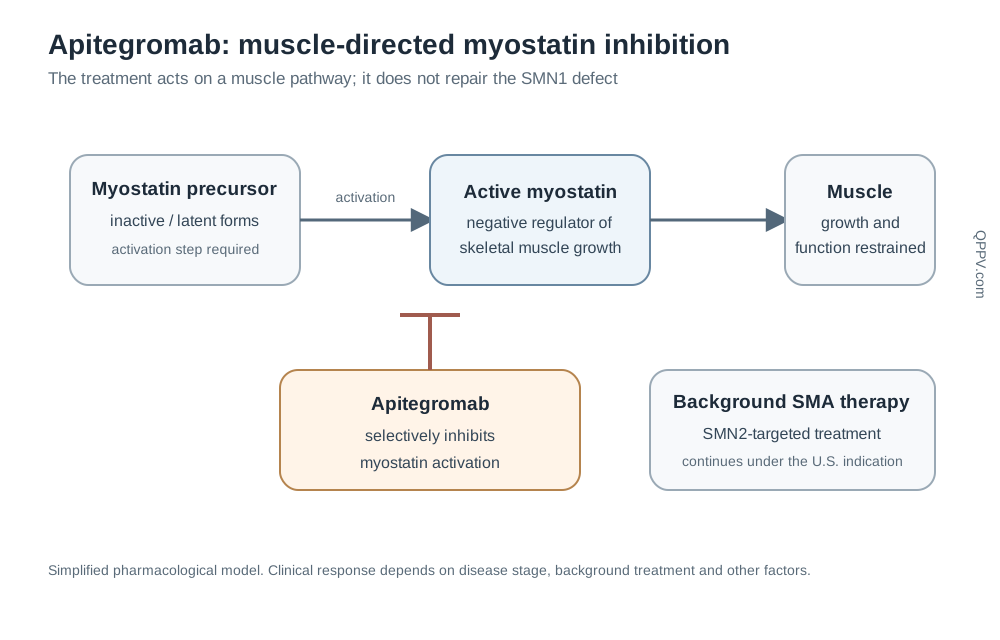
Figure 1. Apitegromab acts upstream of active myostatin, reducing myostatin signalling rather than altering the underlying SMN gene defect. The diagram is a simplified pharmacological model.
U.S. regulatory scope
FDA approval is limited to patients aged at least 2 years who are already receiving an SMN2-targeted treatment. The pivotal programme enrolled nonambulatory patients with type 2 or type 3 SMA who had established background treatment with nusinersen or risdiplam. The authorised population should therefore not be expanded by inference to untreated SMA or to clinical situations not represented in the current label. [1,3]
The FDA public approval summary describes intravenous administration every four weeks and identifies 10 mg/kg as the dose that produced the significant dose-specific comparison highlighted in the regulatory summary. SAPPHIRE also studied 20 mg/kg, so trial results should not be quoted without identifying the dose and analysis population. [1,3]
Clinical evidence
SAPPHIRE was a phase 3, double-blind, randomised, placebo-controlled study in 188 nonambulatory participants aged 2 to 21 years with type 2 or type 3 SMA who were receiving nusinersen or risdiplam. Participants aged 2 to 12 years were randomised to apitegromab 10 mg/kg, 20 mg/kg or placebo every four weeks; participants aged 13 to 21 years were randomised to 20 mg/kg or placebo. The primary analysis was conducted in the younger population using change in the Hammersmith Functional Motor Scale–Expanded (HFMSE) at 12 months. [1,3]
In the published analysis, the combined apitegromab dose groups in participants aged 2 to 12 years had a least-squares mean difference of 1.8 HFMSE points versus placebo (95% CI 0.30–3.32; p=0.019). The prespecified 20 mg/kg versus placebo comparison was not statistically significant. FDA’s approval communication separately highlights that patients receiving 10 mg/kg were more than twice as likely as placebo recipients to achieve a clinically meaningful motor-function improvement, 34.2% versus 13.5%. These are related but not interchangeable analyses. [1,3]
The trial shows an incremental motor-function effect on top of established SMN2-targeted therapy. It does not show that apitegromab restores normal muscle function, reverses motor-neuron loss or can substitute for the background SMA treatment.
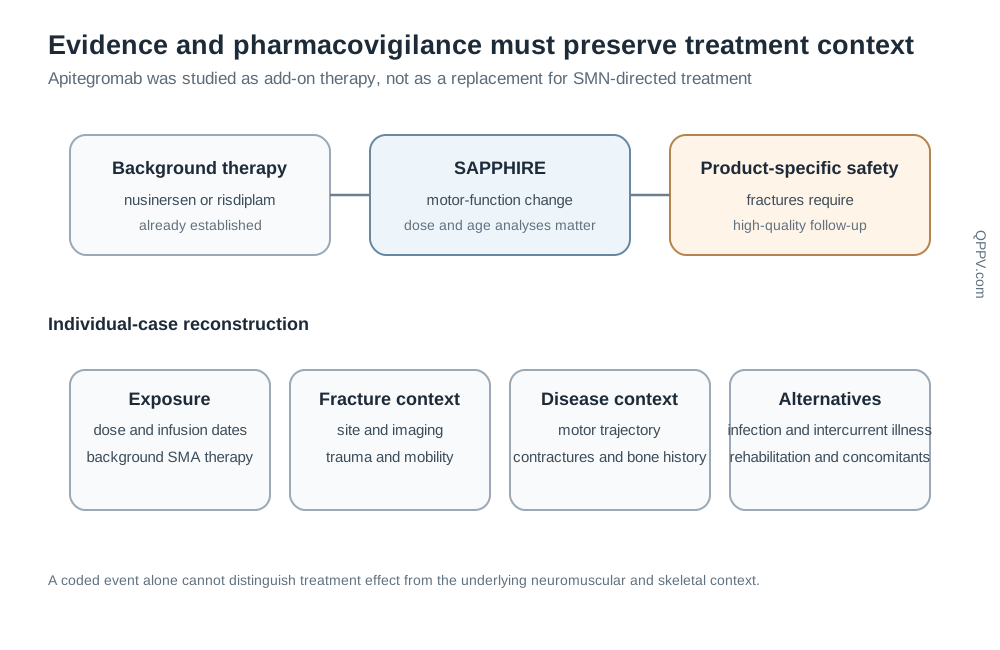
Figure 2. SAPPHIRE evaluated apitegromab as add-on therapy. Pharmacovigilance assessment should preserve the background SMN2 treatment, motor-function trajectory and product-specific safety findings.
Safety profile and the fracture signal
FDA identifies upper respiratory tract infection, vomiting, cough, other viral infections, headache, gastroenteritis and pharyngitis among the most common adverse reactions. These events occur commonly in paediatric and neuromuscular populations and therefore require ordinary case-level differential assessment rather than automatic attribution. [1]
More distinctive is the observed increase in fractures, including serious fractures, in patients treated with apitegromab. FDA also warns that the medicine may cause fetal harm and may affect reproductive function. [1] The fracture observation should be treated as a product-specific safety concern requiring high-quality follow-up, not as proof of a simple direct bone-toxic mechanism.
Assessing a fracture report
A useful fracture case reconstructs the clinical setting before assigning causality. Capture the exact apitegromab dose and date, fracture site and mechanism, imaging findings, trauma history, mobility and weight-bearing status, scoliosis, contractures, previous fractures, bone-health investigations, nutritional factors, corticosteroid exposure and concomitant SMA therapies. Record whether the event followed a fall, transfer, physiotherapy manoeuvre or occurred with minimal trauma.
SMA itself can be associated with reduced mobility and skeletal vulnerability. These competing factors do not exclude a treatment contribution, but they materially affect interpretation. Aggregate review should therefore examine fracture phenotype, trauma intensity, anatomical distribution, age, duration of exposure and recurrence rather than relying only on a coded term count.
Other case-assessment domains
For respiratory infections, document baseline respiratory support, swallowing dysfunction, aspiration risk, microbiology, severity and outcome. For vomiting or gastroenteritis, assess hydration, feeding support and temporal relation to infusion. If a motor-function decline is reported as treatment failure, capture serial functional scores where available and distinguish true deterioration from intercurrent illness, missed background therapy, rehabilitation changes or measurement variability.
Pharmacovigilance implementation and governance
Apitegromab is given in a population in which disease manifestations, supportive care and concomitant disease-modifying therapy strongly influence observed outcomes. The safety system should therefore preserve the treatment context rather than reducing a case to “apitegromab + event.” At minimum, exposure records should identify dose, infusion date, background SMN2-targeted therapy and the reason for any interruption.
Motor-function outcomes are also unusually sensitive to baseline disease severity and assessment method. A spontaneous report of “worsening SMA” should trigger follow-up for the specific functional change, its timing, objective assessment if available, intercurrent illness and treatment adherence. Conversely, improvement after treatment should not be used to dismiss a simultaneous adverse event.
Aggregate review
Signal review should separate common childhood infections and gastrointestinal events from more product-specific questions such as fractures. For fractures, meaningful stratification includes age, skeletal site, trauma mechanism, mobility, prior fracture history and exposure duration. For potential reproductive effects, the current label should govern pregnancy-prevention and counselling requirements; pharmacovigilance follow-up should document exposure timing and pregnancy outcome without inferring an effect from nonclinical concern alone. [1]
An inspection-ready process would be able to show how serious fracture reports were followed up, how background SMA risk factors were captured, how duplicate reports were reconciled and how aggregate review distinguished an apparent treatment pattern from disease-related skeletal morbidity.
Practical checklist
- Confirm age and that an SMN2-targeted treatment was being received.
- Record apitegromab dose, infusion dates and background SMA therapy.
- For fractures, obtain site, imaging, trauma mechanism, mobility and previous bone history.
- For infections, capture respiratory support, aspiration risk, pathogen testing and outcome.
- For apparent loss of effect, preserve serial motor-function evidence and competing explanations.
- Use the current U.S. prescribing information for dosing, reproductive precautions and treatment decisions.
Key takeaways
- Apitegromab is a muscle-directed monoclonal antibody that inhibits myostatin activation.
- The U.S. indication is adjunctive to ongoing SMN2-targeted treatment in patients aged 2 years and older.
- SAPPHIRE demonstrated an incremental motor-function effect, but dose-specific and pooled analyses should not be conflated.
- Fractures are a prominent product-specific pharmacovigilance issue and require detailed contextual follow-up.
- Disease progression, skeletal fragility, infection and background treatment remain important alternative explanations in case assessment.
References
- U.S. Food and Drug Administration. FDA Approves First Therapy to Target Muscle Loss in Spinal Muscular Atrophy. 11 September 2026. https://www.fda.gov/drugs/news-events-human-drugs/fda-approves-first-therapy-target-muscle-loss-spinal-muscular-atrophy
- U.S. Food and Drug Administration. Orphan Drug Designations and Approvals: apitegromab-mstn. https://www.accessdata.fda.gov/scripts/opdlisting/oopd/detailedIndex.cfm?cfgridkey=629218
- Crawford TO, Servais L, Mercuri E, et al. Safety and efficacy of apitegromab in nonambulatory type 2 or type 3 spinal muscular atrophy (SAPPHIRE): a phase 3, double-blind, randomised, placebo-controlled trial. Lancet Neurol. 2025;24:727-739. PMID: 40818473. https://pubmed.ncbi.nlm.nih.gov/40818473/
Regulatory Note
Regulatory status was checked on 1 October 2026. This article describes the current U.S. authorisation and the evidence supporting it; authorisation, indication wording, dosing and safety information may differ in other jurisdictions or change after regulatory variation. The article is educational and does not replace current prescribing information.