Atezolizumab–Hyaluronidase Subcutaneous Formulation: Safety and Pharmacovigilance
- Atezolizumab–Hyaluronidase Subcutaneous Formulation: Safety and Pharmacovigilance
- Formulation and dosing architecture
- Why hyaluronidase is included
- Switching from intravenous to subcutaneous treatment
- Safety interpretation by layer
- Combination therapy still matters
- Product and formulation traceability
- Medication-error scenarios
- Pharmacovigilance case assessment
- Signal detection and aggregate review
- Risk management and operational controls
- Illustrative failure modes
- Inspection and governance perspective
- Key Takeaways
- References
- Regulatory Note
Subcutaneous atezolizumab changes how the PD-L1 inhibitor is delivered without changing its therapeutic target. The active antibody still blocks PD-L1 interactions that suppress antitumour T-cell activity. Recombinant human hyaluronidase enables dispersion of the relatively large subcutaneous injection volume through the extracellular matrix.
The pharmacovigilance implication is a two-layer model. Immune-mediated hepatitis, pneumonitis, colitis, endocrinopathies, nephritis and other checkpoint-inhibitor toxicities remain properties of atezolizumab pharmacology. Injection-site reactions, route errors, preparation issues and switching questions belong to the formulation and administration layer.
Formulation and dosing architecture
In the European Economic Area, the subcutaneous formulation is administered as a fixed 1,875 mg dose every three weeks. The 15 mL injection is administered subcutaneously in the thigh over approximately seven minutes according to current product information. It is not intended for intravenous administration.
| Dimension | Intravenous atezolizumab | Subcutaneous atezolizumab |
|---|---|---|
| Route | Intravenous infusion | Subcutaneous injection |
| Dose architecture | Several authorised IV schedules | Fixed 1,875 mg every three weeks in the EEA |
| Hyaluronidase | No | Recombinant human hyaluronidase |
| Administration reactions | Infusion-related | Injection/administration-related, including local reactions |
| Key medication-error concern | Infusion dose/schedule | Wrong formulation, wrong route, residual-volume or site/technique errors |
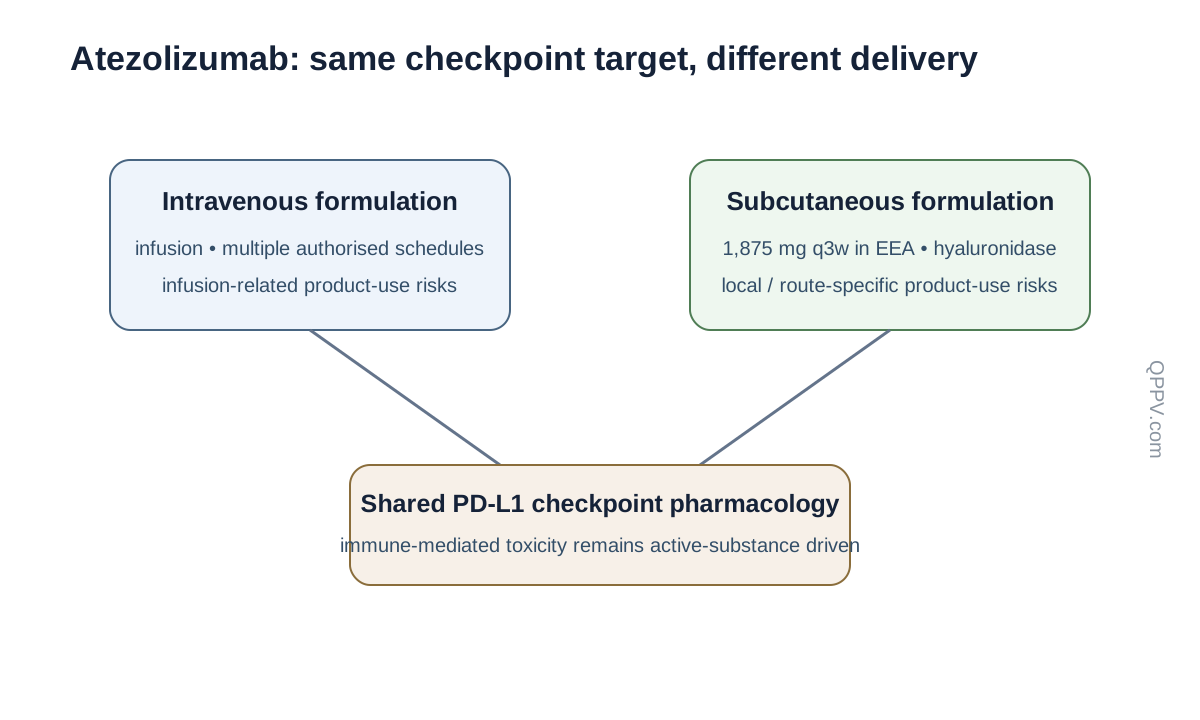
Figure 1. The antibody target and immune pharmacology are shared across routes, while formulation, dose architecture and administration risks differ.
Why hyaluronidase is included
Subcutaneous tissue restricts movement of large fluid volumes partly because hyaluronan contributes to extracellular-matrix viscosity and resistance. Recombinant human hyaluronidase transiently increases local tissue permeability, allowing a large-volume protein formulation to disperse and enter the systemic circulation.
Hyaluronidase is therefore a delivery facilitator rather than an additional anticancer target. A new immune-mediated endocrine event should not be reinterpreted as a hyaluronidase effect merely because it followed subcutaneous treatment.
Switching from intravenous to subcutaneous treatment
Switching route creates a practical attribution boundary. Immune-mediated adverse reactions may emerge after a route change even though their pathogenesis reflects cumulative checkpoint inhibition rather than the new formulation itself. Conversely, local erythema, pain or swelling after the first subcutaneous administration is route-specific evidence.
The safety record should therefore retain the last intravenous dose, first subcutaneous dose, prior cumulative exposure and exact onset of the event. A binary “after switch” label is not enough to establish formulation causality.
Safety interpretation by layer
Immune-mediated adverse reactions
The major immune-mediated risks remain those of atezolizumab itself. Pneumonitis, hepatitis, colitis, thyroid dysfunction, hypophysitis, adrenal insufficiency, diabetes, nephritis, severe skin reactions and less common neurologic or cardiac immune toxicities can occur independently of route. Their assessment should follow the same organ-specific differential diagnosis used for intravenous checkpoint inhibition.
A route change should therefore not fragment longitudinal assessment. If a patient received months of intravenous therapy and develops hepatitis after the first subcutaneous dose, cumulative exposure, concomitant medicines, viral hepatitis and disease-related causes still matter.
Injection-site reactions
Local pain, erythema, swelling or induration are formulation/route-specific events. Their assessment should preserve injection site, laterality, onset, duration, severity, recurrence, technique and whether other subcutaneous medicines were administered nearby.
Systemic symptoms after injection require distinction between a local administration reaction, hypersensitivity and an immune-mediated event. Timing alone is insufficient; phenotype and organ involvement are decisive.
Preparation and administration controls
Current EU product information specifies subcutaneous administration in the thigh and recommends alternating sides. It also distinguishes the solution for injection from intravenous infusion presentations. These differences create practical error modes: wrong route, wrong presentation, inappropriate site, mishandling of residual volume and confusion during switching.
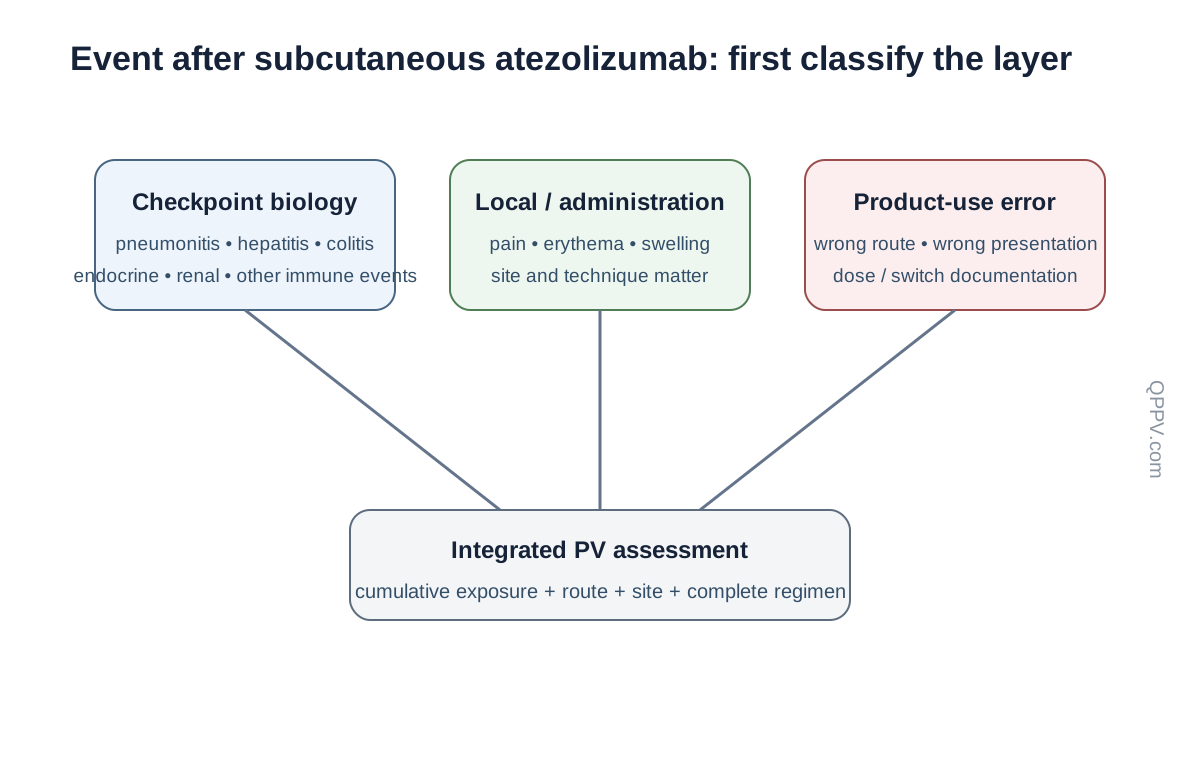
Figure 2. Events after subcutaneous atezolizumab should first be separated into checkpoint-inhibitor biology, local/administration effects and medication/product-use errors before causality is assigned.
Combination therapy still matters
Subcutaneous atezolizumab can be used in authorised treatment combinations as well as monotherapy. Cytopenias, infection, neuropathy, hypertension or organ toxicity may reflect chemotherapy or other combination partners rather than checkpoint blockade. The change in route does not remove the need to reconstruct the full regimen.
Product and formulation traceability
Safety systems should preserve not only the active substance but the presentation and route. A case entered simply as “atezolizumab” may be adequate for an immune-mediated hepatitis signal but inadequate for evaluating injection-site reactions, administration errors or a formulation-specific quality complaint.
Useful fields include formulation, route, injection site, batch, prior IV exposure, treatment combination and whether the event occurred during or after a formulation switch.
Medication-error scenarios
Potential errors include:
- selecting an intravenous presentation for intended subcutaneous use or vice versa;
- documenting the subcutaneous product as an IV infusion;
- using the wrong dose schedule because IV schedules are carried forward into the subcutaneous regimen;
- administering the injection at an unintended site or too close to a previous injection;
- misclassifying a local injection reaction as a systemic immune-mediated event.
These are product-use questions and should be trended separately from intrinsic immune-mediated toxicity.
Pharmacovigilance case assessment
A route-specific case should preserve both the immune-toxicity variables from atezolizumab and the administration variables created by the subcutaneous presentation.
| Event type | High-value follow-up |
|---|---|
| Immune-mediated organ toxicity | Prior cumulative atezolizumab exposure, organ-specific work-up, competing causes, corticosteroid/immunosuppressive treatment, recovery |
| Injection-site reaction | Exact site, onset, local phenotype, size/severity, recurrence, technique, nearby injections |
| Systemic reaction after injection | Timing, vital signs, respiratory/cutaneous features, treatment, hypersensitivity work-up |
| Medication error | Intended formulation, actual formulation, route, dose, site, preparation details, clinical consequence |
| Product-quality complaint | Presentation, batch, storage, preparation, syringe/tubing handling |
| Event after route switch | Last IV dose, first SC dose, cumulative exposure, onset, prior related toxicity |
Signal detection and aggregate review
Immune-mediated safety signals should remain connected to the broader atezolizumab dataset, but route-specific analyses are needed for injection-site reactions, administration errors and formulation quality. Otherwise a local tolerability issue can disappear into a global adverse-event pool dominated by intrinsic checkpoint-inhibitor toxicity.
A useful aggregate strategy therefore has two levels: active-substance surveillance across all formulations, and formulation-specific surveillance for route-dependent events.
Risk management and operational controls
Current product information governs dose, route, administration time, site selection and handling. Recommended PV controls include explicit formulation and route fields, switch-history capture, dedicated medication-error categories, and case-processing guidance that prevents local injection reactions from being conflated with immune-mediated systemic events.
Illustrative failure modes
The following are hypothetical examples, not published inspection findings:
- An immune-mediated hepatitis case is attributed to the subcutaneous formulation solely because it began after a route switch.
- A severe local injection reaction is entered only as “atezolizumab adverse reaction,” making formulation-specific trending impossible.
- An IV dose schedule is carried into subcutaneous treatment documentation, creating an apparent overdose or underdose.
- The product dictionary has one undifferentiated atezolizumab entry and cannot identify wrong-route errors.
- A quality complaint lacks batch and preparation details even though a cluster is suspected.
Inspection and governance perspective
An inspector could test whether the safety system can reconstruct the exact formulation, route and switch chronology while retaining longitudinal checkpoint-inhibitor exposure. Evidence may include product dictionaries, medication-error procedures, case forms, signal stratification and periodic safety analyses by route.
Key Takeaways
Subcutaneous atezolizumab does not create a new checkpoint target; it creates a new delivery system for the same PD-L1 inhibitor. Immune-mediated toxicities therefore remain active-substance risks, whereas local injection reactions, route errors, preparation issues and switching questions are formulation-specific.
Good PV preserves both layers simultaneously: cumulative atezolizumab biology and exact product-use context.
References
- European Medicines Agency. Atezolizumab (Tecentriq): EPAR and current product information. Product information updated 21 July 2026. https://www.ema.europa.eu/en/medicines/human/EPAR/tecentriq
- European Medicines Agency. Atezolizumab EU Risk Management Plan. Current EEA dosing information includes subcutaneous atezolizumab 1,875 mg every three weeks.
- Burotto M, et al. Subcutaneous versus intravenous atezolizumab pharmacokinetic and safety evaluation in solid tumours. Published clinical development literature on the subcutaneous formulation.
Regulatory Note
Authorised indications, formulation availability, administration instructions and switching practice vary by jurisdiction and may change. Regulatory statements were checked against current EMA information available in September 2026. Operational recommendations are pharmacovigilance practice unless explicitly identified as regulatory requirements.