Atorvastatin: Discovery, Cardiovascular Development, Safety and Pharmacovigilance
Atorvastatin is an oral, synthetic inhibitor of 3-hydroxy-3-methylglutaryl-coenzyme A reductase, usually abbreviated HMG-CoA reductase. Its history illustrates the progression from a pharmacological effect on low-density lipoprotein cholesterol (LDL-C) to evidence about cardiovascular events, and from pre-authorisation tolerability to long-term surveillance across diverse populations.
For pharmacovigilance, the central task is to preserve distinctions. Lowering LDL-C is not the same endpoint as preventing a myocardial infarction; muscle pain is not synonymous with rhabdomyolysis; and a class-level safety conclusion is not automatically an atorvastatin-specific incidence estimate. Product identity and local authorisation conditions remain relevant even when the medicine is prescribed by its international nonproprietary name (INN).
This reference follows that sequence from discovery to current practice. Regulatory documents were checked on 17 October 2026. Historical sources explain development and earlier decisions; current national product information governs present product-specific advice.
- Atorvastatin: Discovery, Cardiovascular Development, Safety and Pharmacovigilance
- Scientific identity and mechanism
- Discovery and early clinical development
- Commercial development and regulatory history
- From lipid response to cardiovascular outcomes
- Understanding muscle-related safety
- Exposure, interactions and preventable risk
- Liver, glycaemic and cerebrovascular safety
- Reproductive exposure and special populations
- Practical pharmacovigilance and case reconstruction
- Quality, oversight and inspection considerations
- Key Takeaways
- References
- Regulatory Note
Scientific identity and mechanism
Atorvastatin is a small molecule rather than a biological medicinal product. Its selective, competitive inhibition of HMG-CoA reductase reduces hepatic cholesterol synthesis. Increased hepatic LDL-receptor expression then promotes clearance of circulating LDL particles. The enzyme target belongs to the mevalonate pathway; the clinical effect cannot be reduced to a direct chemical removal of cholesterol from an atherosclerotic plaque. [8]
| Dimension | Atorvastatin classification | Clinical or PV relevance |
|---|---|---|
| Modality | Synthetic small molecule | Different development and manufacturing framework from monoclonal antibodies |
| Pharmacological class | Statin; HMG-CoA reductase inhibitor | Provides a mechanistic basis for LDL-C reduction |
| Principal therapeutic site | Liver | Hepatic uptake, metabolism and interactions matter |
| Pharmaceutical identity | Commonly supplied as the calcium salt | The labelled strength identifies the atorvastatin dose, not the gross salt weight |
| Administration | Oral, usually once daily | Actual dose, adherence and interacting medicines must be reconstructed |
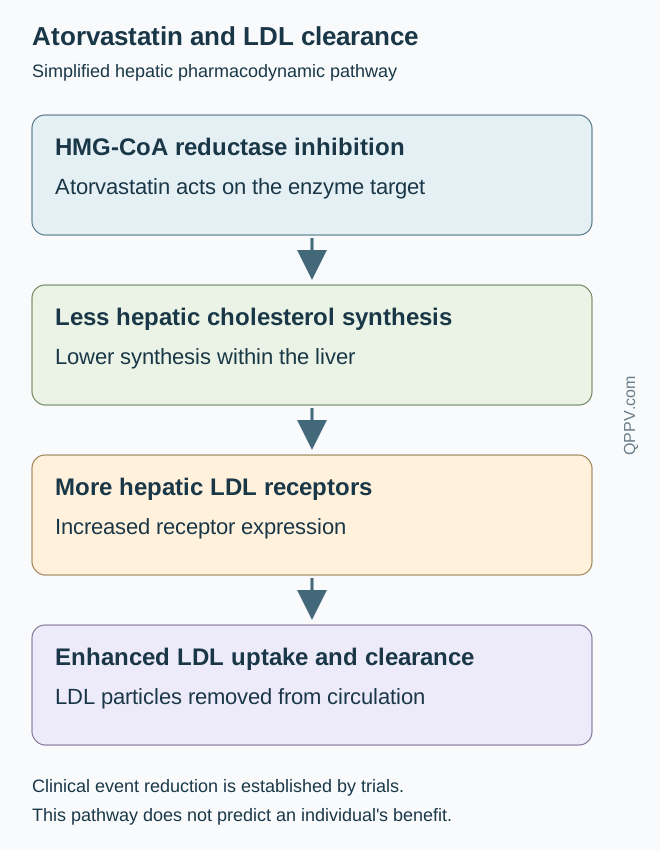
Figure 1. Simplified pharmacodynamic sequence from HMG-CoA reductase inhibition to enhanced hepatic LDL clearance. Arrows show mechanistic relationships, not the magnitude of an individual response. Evidence for fewer clinical events comes from outcome trials rather than this pathway alone.
The practical consequence is that response and toxicity require different information. LDL-C response helps assess pharmacodynamic effect, while a suspected adverse reaction also requires a chronology, phenotype, co-medications and competing causes. A satisfactory lipid response neither proves tolerability nor establishes that a new symptom was caused by treatment.
Discovery and early clinical development
Bruce Roth's account describes the medicinal-chemistry programme that produced atorvastatin, including structure–activity relationships and the synthetic chemistry needed to obtain increasingly potent compounds. The Society of Chemical Industry identifies its first synthesis in 1985 and places Roth within Parke-Davis, then part of Warner-Lambert. Discovery was therefore a programme of molecular design and chemical development, not simply the recognition that a marketed statin lowered cholesterol. [1,2]
Early human studies needed to establish whether enzyme inhibition translated into a usable dose response. In the 1995 trial reported by Nawrocki and colleagues, 81 patients with primary hypercholesterolaemia underwent a dietary baseline phase and were randomised to placebo or several daily atorvastatin doses for six weeks. LDL-C reductions ranged from approximately 25% to 61% across the studied dose range. This supported pharmacological potency and further development; a small, short study could not establish long-term event prevention or exclude uncommon toxicity. [3]
The distinction between these questions shaped the subsequent lifecycle. A lipid-lowering indication can be supported by changes in lipid measurements, whereas a claim about preventing cardiovascular disease requires outcome evidence in an appropriately defined population. Later trials expanded both the possible benefits and the populations in which safety needed to be interpreted.
Commercial development and regulatory history
Warner-Lambert entered a co-marketing agreement with Pfizer in 1996 for the originator product, Lipitor. The US prescribing information records initial approval in 1996; Pfizer's historical account describes introduction in 1997 and completion of its acquisition of Warner-Lambert in June 2000. These are different milestones: regulatory approval, commercial introduction and transfer of corporate ownership should not be collapsed into a single date. [4,8]
Generic entry subsequently changed the product landscape. FDA announced approval of the first generic atorvastatin in November 2011. The later Upjohn–Mylan transaction, completed in November 2020 to form Viatris, belongs to the business history of the established-medicines portfolio that included the originator brand. These corporate facts explain changes in commercial stewardship; they do not identify the manufacturer or authorisation holder of every current atorvastatin presentation. [5,6]
In the EU, an Article 30 referral addressed differences in the originator's nationally authorised prescribing information, with a European Commission decision in December 2010. This was a harmonisation procedure, not the first centralised approval of atorvastatin. The historical referral annex should not be used as though it were a continuously updated universal label for all present products. [7]
Current documents illustrate why local checking remains necessary. The reviewed Irish SmPC describes lipid indications and cardiovascular prevention in specified populations, with paediatric use for defined hypercholesterolaemia settings. The reviewed US information includes its own cardiovascular and lipid indications and paediatric distinctions. Age, diagnosis, strength and formulation should be checked against the actual product information rather than inferred from the INN alone. [8,9]
From lipid response to cardiovascular outcomes
Evidence supporting broader preventive use
The major trials answered different clinical questions. Their findings should be interpreted with their population, comparator, dose and endpoint intact.
| Trial | Question | Main contribution |
|---|---|---|
| ASCOT-LLA | Atorvastatin 10 mg versus placebo in hypertensive adults with additional cardiovascular risk factors | Supported primary prevention in a population not selected solely for very high cholesterol [11] |
| CARDS | Atorvastatin 10 mg versus placebo in type 2 diabetes without established cardiovascular disease | Supported prevention of first major cardiovascular events in the studied diabetes population [12] |
| TNT | Atorvastatin 80 mg versus 10 mg in stable coronary disease | Demonstrated incremental benefit from more intensive treatment, while also informing dose-related tolerability [13] |
| SPARCL | Atorvastatin 80 mg versus placebo after recent stroke or transient ischaemic attack, without known coronary disease | Demonstrated overall stroke reduction alongside a haemorrhagic-stroke concern requiring separate interpretation [14] |
ASCOT-LLA reported 100 primary events with atorvastatin and 154 with placebo, with a hazard ratio of 0.64. The endpoint combined non-fatal myocardial infarction and fatal coronary disease. CARDS likewise demonstrated fewer major cardiovascular events in its defined diabetes population. These trials support event prevention in those settings; neither supplies a universal absolute benefit for every person with an elevated LDL-C. [11,12]
TNT directly compared two atorvastatin regimens. Primary events occurred in 8.7% of participants allocated 80 mg and 10.9% allocated 10 mg, an absolute difference of 2.2 percentage points over the trial follow-up. Persistent aminotransferase elevations were more frequent with the higher dose. The study therefore connects benefit and tolerability within a dose comparison rather than presenting “more intensive” as an unqualified property of the molecule. [13]
Negative evidence and population boundaries
The 4D trial tested atorvastatin 20 mg against placebo in 1,255 people with type 2 diabetes receiving maintenance haemodialysis. It did not demonstrate a significant reduction in its primary composite of cardiac death, non-fatal myocardial infarction and stroke: the reported relative risk was 0.92, with a 95% confidence interval of 0.77–1.10. [15]
This negative result is part of the development story. It limits extrapolation from other diabetes and cardiovascular trials into established dialysis populations. It should not be rewritten as proof that atorvastatin has no biological effect in kidney disease, nor used to negate benefits demonstrated in different populations. A credible lifecycle account retains both positive trials and settings where the principal clinical hypothesis was not confirmed.
Understanding muscle-related safety
Muscle complaints require clinical differentiation before causality is assigned. The useful questions are whether the complaint is pain, objective weakness, a biochemical abnormality or a defined neuromuscular disease, and how each relates to actual exposure.
Common symptoms and the meaning of a temporal association
The Cholesterol Treatment Trialists' Collaboration analysed individual participant data from large blinded trials in 2022. It found a small excess of muscle pain or weakness caused by statin therapy, while most muscle symptoms reported by participants receiving statins were not attributable to the statin. This is class-level randomised evidence, not an estimate that can be assigned unchanged to every atorvastatin dose or clinical setting. [16]
Atorvastatin-specific blinded evidence also helps. StatinWISE enrolled people who had stopped or were considering stopping statins because of muscle symptoms and compared atorvastatin 20 mg with placebo in repeated treatment periods. It found no overall difference in symptom scores between statin and placebo periods. That result concerns the study's selected participants and regimen; it does not establish that serious statin muscle injury is imaginary or impossible. [17]
For PV practice, symptoms should be taken seriously without allowing timing alone to settle attribution. Recommended follow-up includes the onset and distribution of pain, functional weakness, exercise, intercurrent illness, thyroid disease, earlier similar symptoms, medicine changes and any relevant laboratory results. Background musculoskeletal disease and genuine drug toxicity can coexist.
Myopathy, rhabdomyolysis and persistent autoimmune disease
The current US information identifies myopathy and rhabdomyolysis, with risk affected by factors including dose, certain interactions, renal impairment, uncontrolled hypothyroidism and older age. Rhabdomyolysis can cause renal injury. The reviewed product information also recognises immune-mediated necrotising myopathy (IMNM). A single broad coding term such as “muscle symptoms” can obscure clinically different syndromes. [8]
| Phenotype | Information that distinguishes it | Recommended review focus |
|---|---|---|
| Myalgia or other muscle symptoms | Pain and symptom pattern; CK may not establish muscle injury | Chronology, function and alternatives |
| Myopathy | Objective weakness or muscle injury in the relevant clinical context | CK course, examination, exposure and contributing factors |
| Rhabdomyolysis | Substantial muscle breakdown with potential systemic consequences | Renal function, urine findings, electrolytes, complications and acute management |
| Suspected IMNM | Persistent proximal weakness and elevated CK despite withdrawal | Specialist assessment, relevant antibodies and other diagnostic evidence |
| Myasthenia or ocular myasthenia | Fatigable weakness, ocular or bulbar features | Neuromuscular diagnosis and urgent implications of swallowing or respiratory symptoms |
These rows are a practical comparison, not a progression through fixed stages of severity. In particular, IMNM and myasthenia are different disease processes rather than more severe names for ordinary myalgia.
The anti-HMGCR work by Mammen and colleagues identified HMG-CoA reductase as an autoantibody target in a subset of statin-associated autoimmune myopathy. Persistent disease after withdrawal is therefore not necessarily evidence against a drug-associated immune process. The original referral-clinic study cannot establish the prevalence of that condition among all atorvastatin users, and anti-HMGCR testing should not be portrayed as a routine test for every transient muscle ache. [18]
Myasthenia as a distinct post-marketing concern
The MHRA's September 2023 communication describes very infrequent reports of new or aggravated myasthenia gravis with statins, including reports involving atorvastatin. The clinical features may include ocular, bulbar or limb symptoms. Its small spontaneous-report series is not an incidence study and does not show that every case of weakness during statin treatment is myasthenia. [19]
The distinction matters for follow-up. A report of double vision and swallowing difficulty should not be treated as equivalent to exercise-associated muscle soreness. Capture the diagnosis, specialist investigations, prior myasthenia, co-medication and course after treatment changes. New or worsening respiratory or swallowing difficulty requires clinical attention; PV documentation should preserve that seriousness rather than delay it behind a routine causality questionnaire.
Exposure, interactions and preventable risk
Atorvastatin's interaction profile includes CYP3A4 and transporter-mediated effects. The reviewed Irish information describes increased exposure and muscle risk with several inhibitors, while the UK SmPC includes product-specific restrictions and dose limits. Interaction management is therefore drug- and jurisdiction-specific. One rule copied from another statin cannot safely stand in for the atorvastatin label. [9,10]
For a recommended medication review, distinguish a pharmacokinetic interaction from additional muscle toxicity or an unrelated co-exposure. A newly prescribed antimicrobial may be more informative than a long list of unchanged medicines. Document when it began, its dose and course, the atorvastatin regimen and the onset of symptoms.
The Irish SmPC contains specific advice concerning systemic fusidic acid and atorvastatin interruption. This should not be generalised to every topical preparation or every antibiotic. Where product information specifies avoidance, interruption or a dose ceiling, the applicable instruction must be checked directly rather than reconstructed from memory. [9]
Medication errors can also change exposure without any formal interaction. Recommended follow-up should establish whether two dispensed products both contained atorvastatin, whether a fixed combination was added without stopping an existing tablet, or whether the intended strength differed from the administered strength. These are possible failure modes, not claims about their observed frequency.
Liver, glycaemic and cerebrovascular safety
Liver-test abnormalities and clinically important injury
The UK SmPC describes baseline and periodic liver-function testing and action for persistent abnormalities. The US label uses baseline testing and testing when clinically indicated, and its current liver contraindication wording differs from the reviewed UK document. These are genuine product-information distinctions; a global article should not convert one local schedule into an international legal requirement. [8,10]
In recommended case review, distinguish an isolated aminotransferase rise from clinical hepatitis, jaundice, impaired synthetic function or another defined liver syndrome. The time course, bilirubin, alkaline phosphatase, symptoms, competing medicines, alcohol history and investigations may change interpretation. A causality assessment should state which findings are documented and which are unavailable.
TNT provides a useful reminder that laboratory effects can vary by regimen. Its difference in persistent aminotransferase elevations informs the benefit-risk discussion but is not a general incidence estimate for drug-induced liver failure in routine practice. [13]
Glycaemia and incident diabetes
The 2024 individual participant data meta-analysis from the Cholesterol Treatment Trialists' Collaboration supports a dose-dependent increase in new diabetes diagnoses and a small worsening of glycaemia with statin treatment. Much of the excess diagnosis occurred among participants already close to the diagnostic threshold. The evidence is class-level and depends on treatment intensity, baseline risk and ascertainment; it should not be presented as a single atorvastatin-specific probability. [20]
This is compatible with cardiovascular benefit in appropriately selected patients with diabetes. In PV assessment, record prior glucose and HbA1c measurements, risk factors, concurrent medicines and the diagnostic basis. “Diabetes reported after initiation” and “diabetes caused by atorvastatin” are different statements. Neither dismissing the report nor automatically attributing it to treatment represents a complete assessment.
Stroke subtype and benefit-risk interpretation
SPARCL demonstrated fewer overall strokes with atorvastatin 80 mg after recent stroke or transient ischaemic attack, but more haemorrhagic strokes occurred in the atorvastatin group. The reviewed national information retains qualifications about prior haemorrhagic stroke and relevant subgroup interpretation. Overall benefit and a specific adverse outcome can coexist. [9,14]
A useful safety report therefore identifies stroke subtype, previous cerebrovascular events, blood pressure, antithrombotic exposure, diagnostic imaging and outcome. An undifferentiated term such as “stroke” loses the distinction central to interpreting the evidence. Subgroup findings should inform qualified assessment rather than support a claim that every person with a prior stroke has the same benefit-risk balance.
Reproductive exposure and special populations
In July 2021, FDA requested removal of the absolute class contraindication against statin use during pregnancy, while continuing to advise discontinuation in most pregnant patients. It recognised that a small group with very high cardiovascular risk may require individual consideration. The decision was not a general recommendation to continue atorvastatin throughout pregnancy, and reassurance about inadvertent early exposure is not proof of absence of all fetal risk. [21]
The reviewed Irish and UK product information continues to contraindicate use during pregnancy and breastfeeding and specifies precautions for women of childbearing potential. These regional positions should be retained explicitly. A US safety communication does not silently amend an EU national authorisation. [9,10]
For recommended pregnancy follow-up, reconstruct gestational dating, actual exposure, indication, maternal vascular disease, diabetes, other medicines and the subsequent pregnancy outcome. Missing exposure dates should be documented as missing. An adverse outcome must not be attributed merely because treatment occurred during pregnancy.
Special-population assessment also requires precision outside reproduction. Paediatric use concerns specific lipid disorders and product-specific age and dose conditions. Renal impairment can be relevant to muscle-toxicity assessment even when a particular product does not require a routine renal dose adjustment. Neither statement justifies treating every patient with renal impairment as a dialysis-trial participant. [8,9]
Practical pharmacovigilance and case reconstruction
Atorvastatin is one active substance supplied by multiple authorisation holders and through different presentations. INN-based searches help identify relevant literature and class evidence, while individual records should retain the actual product, strength and dispensing details where available. A change of supplier may be temporally relevant without proving a formulation defect or pharmacological non-equivalence.
For a reported reaction, a recommended sequence is to define the clinical event, reconstruct exposure, investigate plausible alternatives, then explain the assessment. Chronology should include medicine initiation and dose changes, introduction of interacting treatment, symptom onset, investigations, treatment changes and outcome. See How to Write an ICSR Case Narrative for the general method.
| Illustrative scenario | What the PV assessment needs to resolve |
|---|---|
| New muscle pain after a strength increase | Actual dose, function, exercise, other causes and relevant investigations |
| Weakness and renal injury after a new antimicrobial | The exact antimicrobial, timing, possible interaction, CK and clinical course |
| Persistent proximal weakness after withdrawal | Whether an autoimmune myopathy or another neuromuscular diagnosis has been investigated |
| Diplopia with swallowing difficulty | Whether the phenotype suggests myasthenia rather than a nonspecific muscle complaint |
| Elevated aminotransferases on a routine test | Baseline values, persistence, associated findings and competing causes |
| Stroke during intensive treatment | Subtype, prior events, risk factors, imaging and appropriate clinical context |
These are hypothetical teaching scenarios, not invented patient cases or published inspection findings. The listed questions support medical review; they are not a substitute for clinical assessment or a universal mandatory follow-up checklist.
Causality, expectedness and re-exposure
Improvement after withdrawal may strengthen a temporal association, but symptoms can fluctuate for other reasons. Conversely, persistence does not automatically exclude an immune-mediated process. Re-exposure information should be recorded when it exists, without encouraging a potentially unsafe deliberate rechallenge solely to establish causality.
Expectedness is a separate question. It depends on the governing reference safety information and the event's nature and specificity, not simply whether “muscle pain” appears somewhere in a label. The diagnosis of an immune-mediated disease, renal complications of rhabdomyolysis and a nonspecific ache should not be collapsed into a single judgement. The framework is explained in Listedness, Expectedness and Reference Safety Information.
The overall benefit-risk assessment also differs from individual causality. Evidence that atorvastatin prevents events in a defined population does not negate a serious suspected reaction in a particular patient. Equally, an individual report does not by itself overturn the population-level trial evidence.
Aggregate surveillance in an established generic medicine
A mature product still needs surveillance. Recommended aggregate review can examine dose, age, indication, renal or thyroid disease, co-medication, product identity and diagnostic phenotype when the data permit. It should distinguish emerging patterns from changes in exposure or reporting attention.
Spontaneous-report counts do not supply incidence without reliable exposure and ascertainment information. Prescription counts also require interpretation: repeated prescriptions are not distinct patients, dispensing does not prove ingestion, and outpatient estimates do not describe every care setting. Atorvastatin leads ClinCalc's 2024 US prescription ranking, which explains its selection for this series; that ranking is neither a global exposure denominator nor a measure of safety risk. [22]
Existing QPPV articles discuss statins and tendon rupture as a separate signal-evaluation topic. Product-specific surveillance should retain such distinctions between a labelled reaction, a class signal under evaluation and a causal conclusion. A mention in another article cannot substitute for checking the current local reference document.
Quality, oversight and inspection considerations
Atorvastatin does not create a separate pharmacovigilance legal regime. Authorisation holders must apply the relevant framework and product-specific conditions. The operational examples below are recommended controls, not newly invented statutory duties.
An illustrative inspection review could trace a safety change from its regulatory source through impact assessment, reference-document updates, staff communication and implementation. It could also test whether literature screening uses the INN and relevant synonyms while case records retain presentation and authorisation-holder attribution. The review concerns evidence that the process works, not merely the existence of a procedure.
Useful questions include:
- Can a serious muscle report be distinguished from a nonspecific pain report using the recorded evidence?
- Are interactions and actual administered dose reconstructed when they could affect interpretation?
- Are persistent weakness, ocular or bulbar symptoms escalated for appropriate medical review?
- Can pregnancy and liver-monitoring advice be traced to the correct jurisdiction and document version?
- Are case-level uncertainty and the limitations of aggregate evidence stated consistently?
- Are quality complaints and adverse events coordinated without assuming that one proves the other?
The governing clinical advice, the reporting assessment and the company's internal workflow should remain distinguishable. A reviewer should be able to follow how each conclusion was reached and identify any evidence gap that remains unresolved.
Key Takeaways
Atorvastatin's development progressed from synthetic medicinal chemistry and short-term LDL-C lowering to multiple cardiovascular outcome trials. The history includes evidence supporting prevention and intensive treatment, as well as the negative primary result in the 4D dialysis population. Its commercial evolution also requires product-specific attribution within a widely used generic medicine.
The principal PV lesson is diagnostic and evidentiary precision. Common symptoms, rhabdomyolysis, autoimmune myopathy and myasthenia require different information. Liver, glycaemic, reproductive and stroke-related questions must be interpreted with dose, population, regional product information and the strength of the evidence intact.
References
- Roth BD. The discovery and development of atorvastatin, a potent novel hypolipidemic agent. Progress in Medicinal Chemistry. 2002;40:1–22. PubMed PMID 12516521.
- Society of Chemical Industry. Perkin Medal for Bruce Roth, inventor of atorvastatin. Historical institutional account, 2013.
- Nawrocki JW, Weiss SR, Davidson MH, et al. Reduction of LDL cholesterol by 25% to 60% in patients with primary hypercholesterolemia by atorvastatin, a new HMG-CoA reductase inhibitor. Arteriosclerosis, Thrombosis, and Vascular Biology. 1995;15:678–682. doi:10.1161/01.atv.15.5.678.
- Pfizer. Warner-Lambert corporate history. Used for historical co-marketing, introduction and acquisition milestones, not current market-rank claims.
- FDA. Approval of the first generic atorvastatin. FDA-authored announcement distributed through PR Newswire, 30 November 2011.
- Pfizer. Upjohn portfolio and planned Mylan combination, 2019; completion of the transaction forming Viatris, 16 November 2020.
- EMA. Atorvastatin originator Article 30 referral. Historical harmonisation procedure; Commission decision 13 December 2010.
- DailyMed. Atorvastatin calcium tablets, US prescribing information revised April 2026. Reviewed 17 October 2026.
- HPRA. Atorvastatin Teva Pharma 20 mg SmPC, dated 22 December 2025. Accessed through the current Irish product record; reviewed 17 October 2026.
- Electronic Medicines Compendium. Atorvastatin 20 mg film-coated tablets, UK SmPC. Updated 8 September 2026; reviewed 17 October 2026.
- Sever PS, Dahlöf B, Poulter NR, et al. Prevention of coronary and stroke events with atorvastatin in hypertensive patients in ASCOT-LLA. Lancet. 2003;361:1149–1158. doi:10.1016/S0140-6736(03)12948-0.
- Colhoun HM, Betteridge DJ, Durrington PN, et al. Primary prevention of cardiovascular disease with atorvastatin in type 2 diabetes in CARDS. Lancet. 2004;364:685–696. PubMed PMID 15325833.
- LaRosa JC, Grundy SM, Waters DD, et al. Intensive lipid lowering with atorvastatin in patients with stable coronary disease. New England Journal of Medicine. 2005;352:1425–1435. doi:10.1056/NEJMoa050461.
- Amarenco P, Bogousslavsky J, Callahan A, et al. High-dose atorvastatin after stroke or transient ischemic attack. New England Journal of Medicine. 2006;355:549–559. doi:10.1056/NEJMoa061894.
- Wanner C, Krane V, März W, et al. Atorvastatin in patients with type 2 diabetes mellitus undergoing hemodialysis. New England Journal of Medicine. 2005;353:238–248. doi:10.1056/NEJMoa043545.
- Cholesterol Treatment Trialists' Collaboration. Effect of statin therapy on muscle symptoms: an individual participant data meta-analysis of large-scale, randomised, double-blind trials. Lancet. 2022;400:832–845. doi:10.1016/S0140-6736(22)01545-8.
- StatinWISE investigators. Statin treatment and muscle symptoms: series of randomised, placebo controlled n-of-1 trials. BMJ. 2021;372:n135. doi:10.1136/bmj.n135.
- Mammen AL, Chung T, Christopher-Stine L, et al. Autoantibodies against HMG-CoA reductase in patients with statin-associated autoimmune myopathy. Arthritis & Rheumatism. 2011;63:713–721. doi:10.1002/art.30156.
- MHRA. Statins: very infrequent reports of myasthenia gravis. 26 September 2023.
- Cholesterol Treatment Trialists' Collaboration. Effects of statin therapy on diagnoses of new-onset diabetes and worsening glycaemia in large-scale randomised blinded statin trials. Lancet Diabetes & Endocrinology. 2024;12:306–319. doi:10.1016/S2213-8587(24)00040-8.
- FDA. Removal of the strongest pregnancy warning for statins, while advising most pregnant patients to stop treatment. 20 July 2021.
- ClinCalc DrugStats. Top 300 drugs of 2024. Used only for the geographically limited article-selection rationale.
Regulatory Note
This is an educational product-lifecycle and pharmacovigilance reference, not an individual treatment recommendation. Historical trial results, class evidence, current product-specific information and recommended operational practice are distinguished. Consult the current authorised document for the relevant country, presentation and date; national authorisation conditions and reporting requirements can differ.