Basiliximab: Classification, History, Mechanism of Action, Safety and Pharmacovigilance
Basiliximab is a chimeric monoclonal antibody against CD25, the alpha chain of the high-affinity interleukin-2 receptor expressed on activated T lymphocytes. It is used as induction immunosuppression around kidney transplantation to reduce the risk of acute cellular rejection while the longer-term maintenance regimen becomes established.
Its pharmacovigilance cannot be understood by reading the adverse-event list in isolation. Kidney-transplant recipients simultaneously receive other immunosuppressive medicines and have undergone major surgery, vascular anastomosis, anaesthesia and abrupt changes in renal physiology. Infection, malignancy, hypertension, cytopenias, electrolyte disturbances and graft dysfunction can therefore arise from the combined transplant context, not necessarily from basiliximab itself.
- Basiliximab: Classification, History, Mechanism of Action, Safety and Pharmacovigilance
- Multidimensional classification
- IL-2 receptor biology
- Mechanism of action
- Development and regulatory history
- Clinical use and transplant context
- Major safety domains
- Drug interactions and regimen effects
- Product quality and administration
- Pharmacovigilance case assessment
- Signal detection and aggregate review
- Periodic benefit-risk evaluation
- Risk management and operational controls
- Potential failure modes
- Inspection and governance perspective
- Practical checklist
- Key Takeaways
- References
- Regulatory Note
Multidimensional classification
| Classification axis | Basiliximab classification | Scientific or PV significance |
|---|---|---|
| Molecular class | Chimeric monoclonal antibody | Contains human and non-human antibody components and can provoke hypersensitivity |
| Target | CD25 / IL-2 receptor alpha chain | Selectively targets activated T lymphocytes expressing the high-affinity IL-2 receptor |
| Functional class | Non-depleting receptor-blocking immunosuppressive antibody | Reduces IL-2-driven T-cell proliferation without broad lymphocyte destruction |
| Therapeutic setting | Induction immunosuppression in de-novo kidney transplantation | Short exposure occurs within a complex multi-drug transplant regimen |
| Current EU population | Adult and paediatric renal-transplant recipients from 1 year of age within the authorised regimen | Paediatric dosing and transplant context require dedicated case interpretation |
| Route | Intravenous injection/infusion | Acute hypersensitivity and administration chronology are important |
| Principal PV themes | Hypersensitivity, re-exposure, infection, lymphoproliferative disorders, graft context and concomitant immunosuppression | Attribution requires careful separation of product and regimen effects |
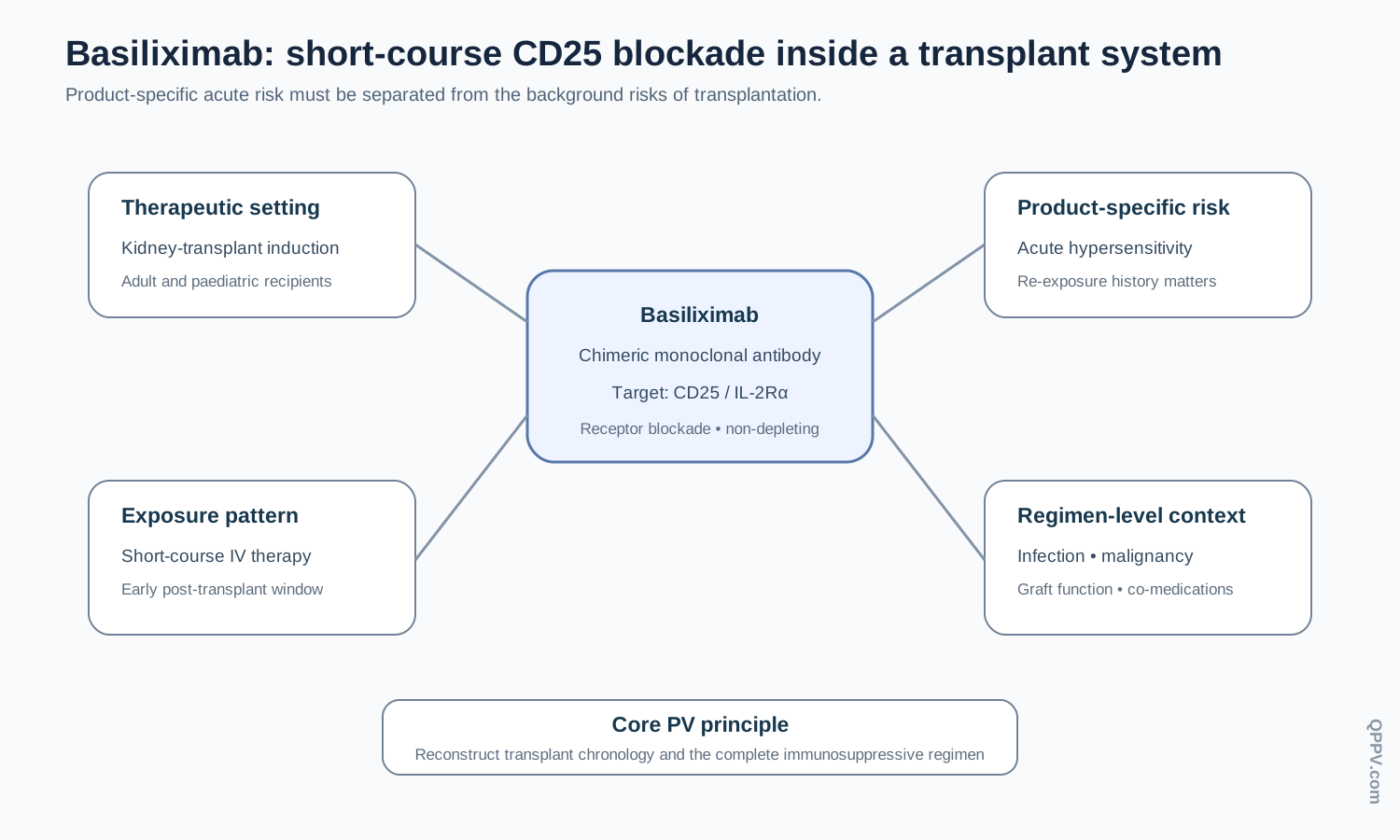
Figure 1. Basiliximab is a short-course CD25-blocking induction antibody used inside a much broader kidney-transplant immunosuppressive system. Pharmacovigilance therefore has to distinguish product-specific reactions from regimen and transplant complications.
IL-2 receptor biology
Interleukin-2 (IL-2) is a central growth and survival signal for activated T lymphocytes. Resting T cells do not continuously express the full high-affinity IL-2 receptor. After activation, expression of CD25 increases and combines with other receptor chains to form a high-affinity receptor capable of responding strongly to IL-2.
That biology makes CD25 a strategically useful transplant target. T cells activated by alloantigen from a newly transplanted kidney are among the cells upregulating CD25 and entering IL-2-dependent proliferation. Blocking CD25 interferes with this expansion during the early period when acute cellular rejection risk is substantial.
Why CD25 blockade differs from T-cell depletion
Basiliximab does not work primarily by destroying all T lymphocytes. It binds CD25 and prevents IL-2 from engaging the high-affinity receptor on activated cells. The therapeutic effect is therefore functional blockade of activation and proliferation, not broad cytolytic depletion.
This distinction helps explain why the safety profile differs from more profoundly lymphocyte-depleting induction therapies. However, basiliximab is administered together with other immunosuppressants, so the overall patient may still be substantially immunocompromised.
Mechanism of action
Basiliximab binds CD25 on activated T lymphocytes with high affinity and blocks IL-2 signalling through the high-affinity receptor. Reduced IL-2-driven proliferation limits expansion of alloreactive T-cell clones and lowers the probability of early acute cellular rejection.
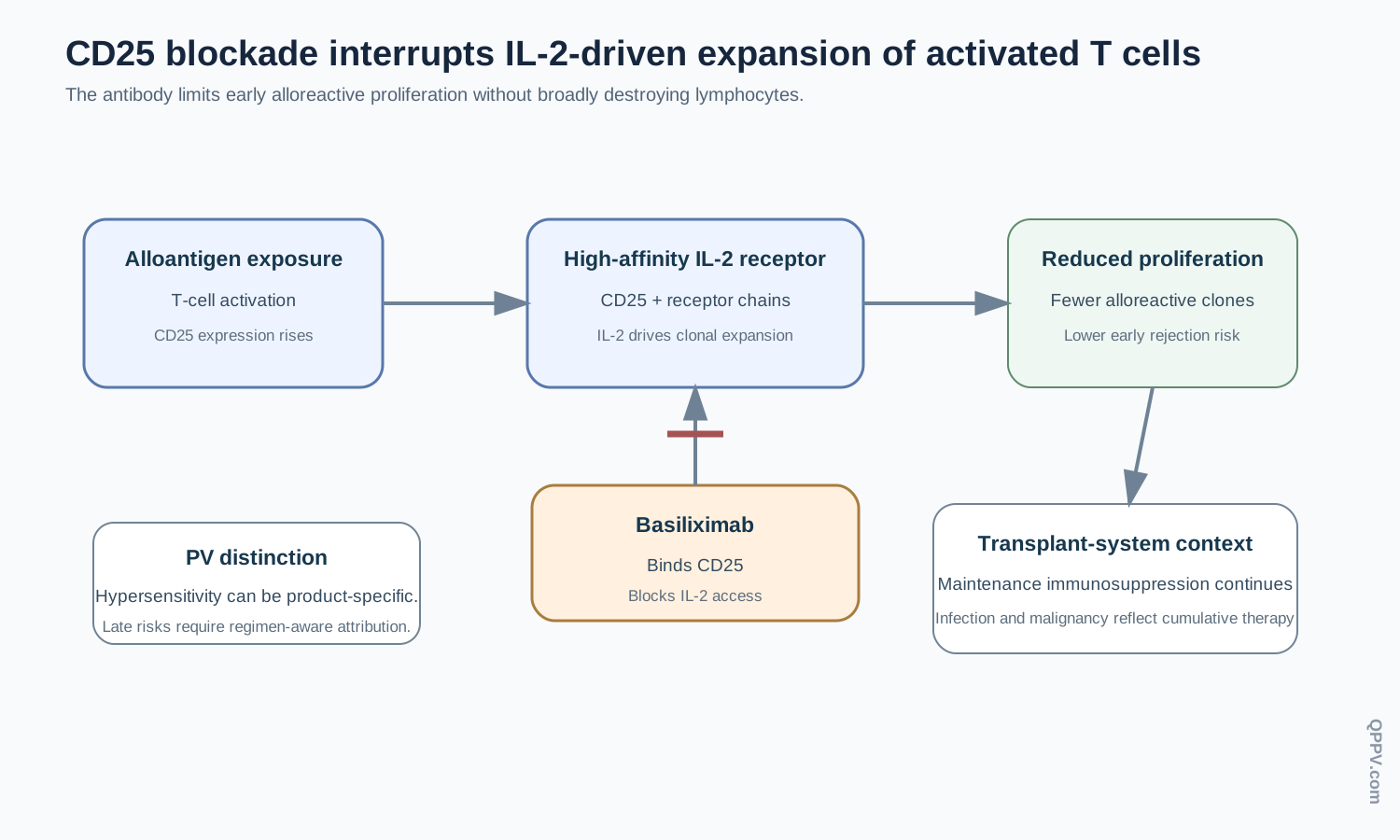
Figure 2. Alloantigen activates T cells, which upregulate CD25 and become responsive to IL-2. Basiliximab blocks CD25, reducing IL-2-driven clonal expansion while maintenance immunosuppression acts through additional pathways.
Development and regulatory history
The European Union authorised basiliximab in October 1998 for prophylaxis of acute organ rejection in de-novo allogeneic renal transplantation. Current EU product information includes adults and paediatric patients aged 1 to 17 years under the authorised immunosuppressive combinations.
The medicine is administered as a short induction course rather than continuous long-term therapy. That exposure pattern is central to causality assessment: an acute reaction during or shortly after infusion is biologically different from an opportunistic infection occurring months later during ongoing maintenance immunosuppression.
The post-authorisation history also reinforced the importance of hypersensitivity on re-exposure. Product information warns that severe acute reactions have occurred both on first exposure and when patients received a later course, including after an earlier transplant attempt was abandoned or lost and basiliximab was subsequently used again.
Clinical use and transplant context
Basiliximab is used at the beginning of kidney-transplant immunosuppression, while maintenance medicines such as calcineurin inhibitors, corticosteroids, antimetabolites and other agents establish longer-term rejection control. This makes causality attribution unusually complex. The drug is given over a short period, but the patient’s immune status reflects the entire regimen and the physiological stress of transplantation.
A case should therefore reconstruct not only basiliximab administration but also transplant date, graft function, concomitant immunosuppressants, changes to those medicines, infections, rejection episodes and any previous exposure to basiliximab.
Major safety domains
Acute hypersensitivity
Severe acute hypersensitivity reactions have been reported both on first exposure and on re-exposure. Reported manifestations include rash, urticaria, pruritus, wheezing, hypotension, tachycardia, dyspnoea, bronchospasm, pulmonary oedema, cardiac or respiratory failure and capillary leak syndrome.
A serious reaction requires dose-specific chronology: whether it followed the first or second dose in the current transplant, whether the patient had received basiliximab during an earlier transplant attempt, the time from administration to onset, organ systems involved, treatment and outcome.
The re-exposure history is particularly important. Product information notes that some severe reactions occurred when patients previously treated with basiliximab received it again after premature discontinuation of the accompanying immunosuppressive regimen because transplantation had been abandoned or the graft had been lost early.
Cytokine-release-type reactions
Basiliximab is not primarily a T-cell-activating antibody, but cytokine-release syndrome has been incorporated into the product’s post-authorisation safety information. A suspected cytokine-release event should be clinically differentiated from anaphylaxis, sepsis, fluid overload and other causes of hypotension or respiratory compromise around transplantation.
The timing relative to infusion, fever pattern, cutaneous findings, bronchospasm, inflammatory markers, cultures, haemodynamics and response to therapy may help distinguish these possibilities.
Infection
Kidney-transplant recipients are intrinsically at increased risk of bacterial, viral, fungal and opportunistic infection because of cumulative immunosuppression. Clinical trials did not show a clear excess of opportunistic infection attributable specifically to adding basiliximab to the studied regimens, but infection remains a major safety outcome in the treated population.
PV assessment should therefore resist simplistic product attribution. A CMV infection, BK-virus nephropathy or bacterial sepsis months after induction needs reconstruction of maintenance immunosuppression, rejection treatment, graft function, antimicrobial prophylaxis and other host factors.
Lymphoproliferative disorders and malignancy
Transplant recipients receiving immunosuppressive regimens have an increased risk of lymphoproliferative disorders and other malignancies. Long-term data described in EU product information did not show a clear difference in malignancy or lymphoproliferative-disorder incidence between studied regimens with and without basiliximab.
A post-transplant lymphoproliferative disorder should therefore be evaluated in the context of cumulative immunosuppression, EBV status where available, transplant type, rejection treatment and latency. Temporal association with a two-dose induction antibody is not enough to establish causal primacy.
Graft dysfunction and rejection
Basiliximab is given to prevent acute rejection, yet rejection can still occur. Apparent lack of efficacy should not be evaluated without biopsy or clinical rejection diagnosis, immunosuppressant exposure, adherence, donor/recipient immunological risk and drug concentrations for relevant concomitant medicines.
Likewise, rising creatinine is not synonymous with rejection. Acute tubular injury, vascular complications, obstruction, infection, calcineurin-inhibitor toxicity and dehydration are among competing explanations.
Pregnancy and lactation
Current EU product information contraindicates basiliximab during pregnancy and lactation and advises effective contraception during treatment and for a period after treatment. The biological rationale is the potential for immunosuppressive effects in the developing fetus or breastfed infant.
Pregnancy-exposure cases should document maternal dose dates, gestational timing, transplant status, other immunosuppressive medicines, pregnancy outcome, congenital findings and neonatal infection or immune information where available.
Paediatric transplantation
Paediatric kidney-transplant recipients differ from adults in size, pharmacokinetics, infection exposure, vaccination status and underlying renal disease. A paediatric case should preserve age, weight, dose, transplant chronology, concomitant regimen and whether adult or paediatric dosing criteria were followed.
Drug interactions and regimen effects
Basiliximab pharmacokinetics can be altered by concomitant immunosuppressive medicines. More importantly for PV, the surrounding regimen changes both efficacy and background safety. Cytopenia, infection, nephrotoxicity and metabolic adverse effects may be driven primarily by maintenance agents rather than basiliximab.
The safest analytical approach is therefore regimen-aware attribution: identify what is mechanistically plausible for basiliximab, what is plausible for concomitant therapy, and what may arise from surgery or graft dysfunction.
Product quality and administration
As an injectable biological, product preparation and administration can contribute to medication errors or quality complaints. Reports should include strength, reconstitution details, diluent, dose administered, infusion/injection method, batch and whether the entire intended dose was delivered.
A historical EU direct healthcare professional communication in 2023 concerned a quality defect involving co-packed water-for-injection ampoules. Such communications illustrate why product-quality events should be kept distinct from intrinsic pharmacological adverse reactions while still being linked to the affected exposure.
Pharmacovigilance case assessment
Basiliximab cases should be reconstructed around transplant chronology, dose sequence, prior exposure and the full immunosuppressive regimen. Those variables determine whether a reported event is plausibly related to basiliximab, to another medicine, to surgery or to the transplanted organ itself.
Event-specific follow-up priorities
| Event or issue | High-value follow-up information |
|---|---|
| Acute hypersensitivity | Dose number, prior basiliximab exposure, onset, organ systems involved, treatment, recurrence and outcome |
| Suspected cytokine-release syndrome | Timing, fever, hypotension, hypoxia, inflammatory markers, cultures, fluid status and competing causes |
| Serious infection | Organism, site, transplant timing, maintenance immunosuppression, prophylaxis, rejection therapy and outcome |
| Lymphoproliferative disorder | EBV status where available, pathology, latency, cumulative immunosuppression and rejection-treatment history |
| Graft dysfunction | Creatinine trend, biopsy, vascular/urinary imaging, infection, drug levels and rejection diagnosis |
| Lack of efficacy/rejection | Biopsy or diagnostic evidence, immunological risk, concomitant regimen, adherence and treatment chronology |
| Pregnancy exposure | Gestational timing, all immunosuppressive drugs, pregnancy outcome and neonatal follow-up |
| Product-quality/administration issue | Strength, batch, reconstitution, diluent, dose delivery, device/ampoule findings and clinical consequence |
Signal detection and aggregate review
Acute hypersensitivity should be analysed with prior-exposure status preserved. Pooling first-exposure and re-exposure reactions can conceal a clinically important pattern. Cases following a previous abandoned transplant or early graft loss deserve particular attention because the first basiliximab exposure may have occurred despite abbreviated concomitant immunosuppression.
Infection and malignancy analyses should be regimen-aware. A transplant database that attributes all events to the induction antibody without considering cumulative maintenance immunosuppression will produce misleading conclusions. Conversely, the existence of background immunosuppression should not be used to dismiss a reproducible product-specific acute reaction.
Graft events require diagnostic precision. “Renal failure” after transplantation may represent rejection, vascular thrombosis, urinary obstruction, acute tubular injury, infection, recurrent disease or drug toxicity. Aggregate analyses should preserve the clinical diagnosis where available.
Periodic benefit-risk evaluation
Periodic review should integrate prevention of acute rejection with acute hypersensitivity, infection, lymphoproliferative disorders, paediatric exposure, pregnancy, product-quality events and outcomes under contemporary immunosuppressive regimens.
Because basiliximab exposure is short, late events should be interpreted in relation to the entire post-transplant treatment course. The timing of exposure does not make later events irrelevant, but it changes the strength and mechanism of possible causal attribution.
Risk management and operational controls
Current product information governs contraindications, dosing, re-exposure precautions and management of severe hypersensitivity. Recommended operational practice can include explicit prior-exposure fields, transplant-regimen capture, product/batch traceability and targeted follow-up of severe acute reactions.
Product-quality communications should feed into pharmacovigilance when they affect actual or potential patient exposure, while quality investigations remain distinguishable from safety-signal assessment.
Potential failure modes
The following are illustrative scenarios, not published inspection findings:
- An anaphylactoid reaction is analysed without checking whether the patient received basiliximab during an earlier transplant attempt.
- Post-transplant sepsis is attributed to basiliximab without reconstructing maintenance immunosuppression or rejection treatment.
- Rising creatinine is coded as rejection without biopsy or competing-cause assessment.
- A post-transplant lymphoproliferative disorder is linked to the induction antibody without considering cumulative immunosuppression and EBV.
- A product-quality complaint is mixed with intrinsic adverse reactions without documenting whether defective material was administered.
- A paediatric case lacks weight or dosing information.
Inspection and governance perspective
An inspector assessing basiliximab pharmacovigilance could examine whether prior exposure is captured for severe hypersensitivity, whether acute infusion reactions are medically distinguished from sepsis and fluid overload, whether infection and malignancy analyses include the full immunosuppressive regimen, and whether graft dysfunction is clinically characterised rather than represented only by laboratory terms.
The effectiveness question is whether the organisation can separate product-specific acute risk from transplant-system background risk while preserving enough evidence to recognise either when it changes.
Practical checklist
For a basiliximab case or aggregate review, confirm:
- transplant type and date;
- first or subsequent basiliximab exposure;
- exact dose number and administration time;
- previous transplant attempts or early graft loss;
- complete concomitant immunosuppressive regimen;
- rejection episodes and anti-rejection treatment;
- microbiology for serious infection;
- EBV and pathology information for lymphoproliferative disease where available;
- biopsy/imaging for graft dysfunction;
- age, weight and dose in paediatric patients;
- pregnancy timing where relevant;
- product strength, batch, reconstitution and dose-delivery details.
Key Takeaways
Basiliximab is a chimeric anti-CD25 monoclonal antibody used as short-course induction therapy in kidney transplantation. It blocks IL-2-driven proliferation of activated T cells rather than broadly depleting lymphocytes.
Its pharmacovigilance is defined by contextual attribution. Severe hypersensitivity—especially on re-exposure—is product-specific and clinically important, while infection, malignancy, graft dysfunction and many metabolic or haematological events must be interpreted within the broader transplant immunosuppressive regimen.
References
- European Medicines Agency. Basiliximab: EPAR and current product information. EU marketing authorisation issued October 1998; product information updated December 2025. https://www.ema.europa.eu/en/medicines/human/EPAR/simulect
- European Medicines Agency. Basiliximab product information. Warnings include severe acute hypersensitivity on first exposure and re-exposure, infection and lymphoproliferative-disorder context, pregnancy/lactation restrictions and paediatric use. https://www.ema.europa.eu/en/documents/product-information/simulect-epar-product-information_en.pdf
- European Medicines Agency. Basiliximab post-authorisation procedural history. Historical safety variation strengthened warnings for hypersensitivity on re-exposure and added cytokine-release syndrome to product information. https://www.ema.europa.eu/en/documents/procedural-steps-after/simulect-epar-procedural-steps-taken-scientific-information-after-authorisation-archive_en.pdf
- European Medicines Agency. Direct healthcare professional communication: basiliximab quality defect involving co-packed water-for-injection ampoules. 2023. https://www.ema.europa.eu/en/medicines/dhpc/simulect
Regulatory Note
Authorised transplant regimens, paediatric dosing, contraindications and product-quality instructions can change and differ between regions. This article explains the scientific and pharmacovigilance framework and does not replace current regional product information or transplant-specialist guidance. Regulatory information was checked against EMA material current in September 2026.