Belantamab mafodotin: Mechanism, Clinical Safety and Pharmacovigilance
Belantamab mafodotin is a B-cell maturation antigen (BCMA)-directed antibody–drug conjugate (ADC) used with other medicines for relapsed or refractory multiple myeloma. Its pharmacovigilance profile is shaped by the antibody–payload construct, substantial ocular toxicity, thrombocytopenia, the background risks of myeloma, and the distinct schedules and co-treatments used in the two EU-authorised regimens.
A useful safety record should preserve the complete regimen, prior treatment history, dose and cycle, eye examination findings, visual acuity, platelet and blood-count trends, infections, and any treatment delay or reduction. These data allow an assessor to distinguish an individual event from the wider clinical course without treating biological plausibility as proof of causality.
- Belantamab mafodotin: Mechanism, Clinical Safety and Pharmacovigilance
- 1. Classification, EU authorisation and treatment context
- 2. Target biology and ADC mechanism
- 3. Mechanism-informed safety interpretation
- 4. Risk minimisation and routine safety management
- 5. Individual case assessment
- 6. Aggregate safety review and signal evaluation
- 7. Roles, records and inspection readiness
- 8. Practical case example
- 9. Operational checklist
- 10. Key takeaways
- References
- Regulatory Note
1. Classification, EU authorisation and treatment context
1.1 Molecular design
Belantamab mafodotin is an afucosylated humanised IgG1 kappa monoclonal antibody specific for BCMA, conjugated through a linker to monomethyl auristatin F (MMAF). BCMA is expressed on plasma cells and is commonly present on malignant plasma cells in multiple myeloma. Following target binding and internalisation, the conjugate delivers its cytotoxic payload to the target cell. The antibody can also recruit immune effector functions. These design features explain the therapeutic rationale; they do not establish that any particular reported event was caused by the medicine.[1,2]
1.2 EU indication and authorisation lifecycle
The current EU indication is for adults with relapsed or refractory multiple myeloma in either of two combinations: with bortezomib and dexamethasone (BVd) after at least one prior therapy; or with pomalidomide and dexamethasone (BPd) after at least one prior therapy that included lenalidomide.[1,2]
The current marketing authorisation was granted on 23 July 2025. This followed a distinct earlier EU authorisation: a conditional authorisation for late-line monotherapy in 2020 was not renewed after confirmatory evidence did not verify the required benefit, and that authorisation ended in 2024.[3,4] The 2025 authorisation followed new clinical evidence and a new combination-based benefit–risk assessment. PV records and historical trend reviews must therefore retain authorisation period, indication, line of therapy and regimen; the earlier and current treatment contexts are not interchangeable.
1.3 Administration schedules and exposure reconstruction
Under the current EU label, belantamab mafodotin is administered by intravenous infusion. In BVd, the starting schedule is 2.5 mg/kg every three weeks. In BPd, it is 2.5 mg/kg once in cycle 1, followed by 1.9 mg/kg every four weeks from cycle 2. The product information provides toxicity-based dose modification schedules; the applicable combination label governs the partner medicines.[2]
For each report, record the regimen and component-level start and stop dates, cycle, actual administered dose, infusion date, dose delays or reductions, and the reason for each change. An event after a treatment hold may still be temporally relevant, while the continuing or changing exposure to bortezomib, pomalidomide, dexamethasone and other medicines should be reconstructed separately.
2. Target biology and ADC mechanism
2.1 BCMA and plasma-cell disease
BCMA is a member of the tumour necrosis factor receptor superfamily found on mature B-lineage cells, particularly plasma cells. In multiple myeloma, malignant plasma cells expand in marrow and can produce monoclonal immunoglobulin or light chains. Surface BCMA offers a target through which a cell-directed medicine can concentrate activity in this disease context. BCMA is not an absolute tumour-specific marker, and patients remain exposed to the clinical consequences of myeloma, prior therapy and immune impairment.
2.2 From target binding to payload delivery
After belantamab binds BCMA, the ADC can be internalised. Intracellular processing releases the MMAF payload, which disrupts microtubule function and cell division. The antibody component can also support antibody-dependent cellular cytotoxicity and phagocytosis. The clinical effect reflects the combined construct and host context; routine case reports do not quantify which mechanism drove an individual response or adverse event.
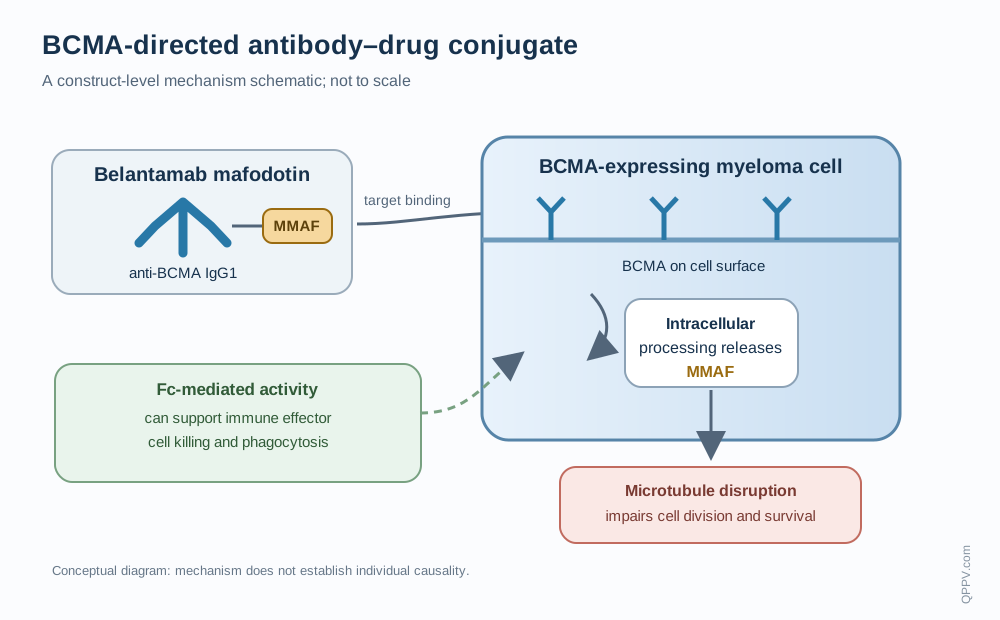
Figure 1. Belantamab mafodotin combines BCMA recognition with intracellular MMAF delivery and Fc-mediated immune effector activity. The schematic explains the treatment concept; it does not establish the cause of an individual adverse event.
3. Mechanism-informed safety interpretation
3.1 Corneal and visual events
Ocular toxicity is a defining safety issue. The current product information describes corneal examination findings, including keratopathy and microcyst-like epithelial changes, with or without changes in best-corrected visual acuity (BCVA) or symptoms. Blurred vision, dry eye, photophobia, eye irritation, foreign-body sensation and eye pain are also reported. Corneal ulceration, including ulcerative or infective keratitis, has been observed.[2]
The findings may be present without corresponding symptoms or visual-acuity change. Conversely, a symptom report alone does not establish the degree of corneal change. For suspected ocular events, capture the baseline and follow-up eye assessments, slit-lamp findings, BCVA, laterality, symptoms, onset and course, eye-care assessment, any ulcer or infection work-up, artificial-tear use, and the relationship to each dose.
3.2 Cytopenias, infection and other events
Thrombocytopenia is clinically important because it can lead to serious bleeding, including gastrointestinal or intracranial haemorrhage. The label calls for frequent complete blood counts with differential and platelet counts during treatment; it notes that more frequent monitoring may be needed for severe thrombocytopenia or concomitant anticoagulant use.[2] Record platelet trends, marrow involvement, bleeding, transfusions, anticoagulants, infection and concurrent myeloma therapies.
Other reported reactions include neutropenia, anaemia, diarrhoea, neuropathies and infusion-related reactions. Infection and fever require careful clinical evaluation in a population with malignancy, prior therapies and concomitant immunomodulating medicines. Avoid attributing a fever or cytopenia to one component solely because it followed the combination infusion.
3.3 Why regimen and prior treatment matter
BVd and BPd differ in partner medicines, cycle length and dosing sequence. Prior treatment, including lenalidomide exposure for the BPd population, further changes the clinical context. Disease progression, marrow disease, infection, concomitant anticoagulation and previous or ongoing toxicities may compete with medicine-related explanations.
The case narrative should therefore state which regimen was administered rather than using “belantamab combination” as a substitute for product-level exposure. Combination attribution should be assessed for each component while recognising that concurrent treatments and disease can jointly contribute to the clinical event.
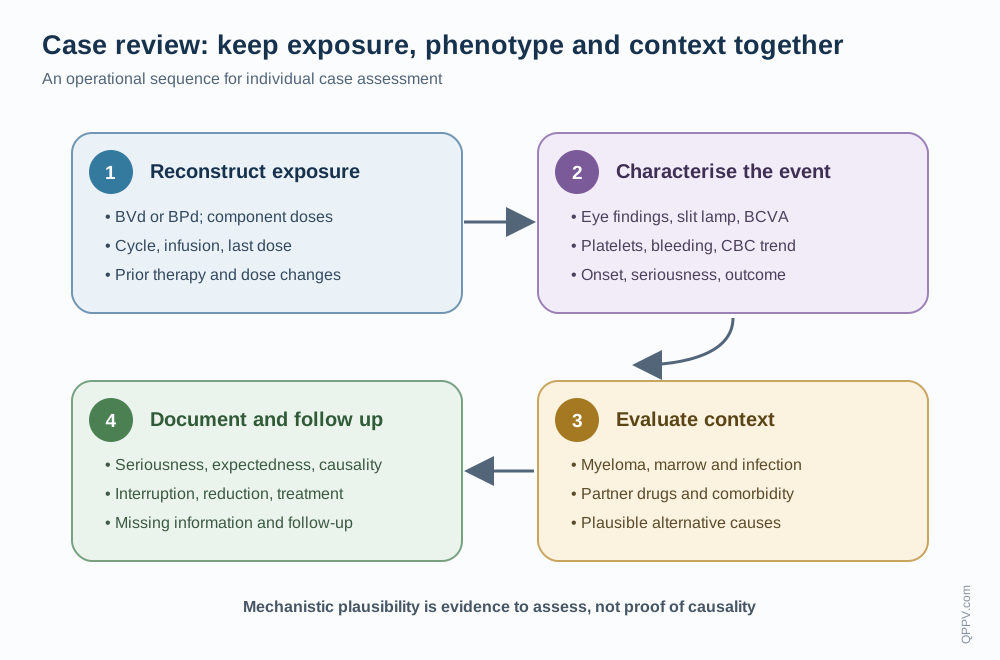
Figure 2. An individual case assessment joins exposure chronology, ophthalmic or haematologic phenotype, combination partners and alternative causes. The sequence is an operational framework, not an automatic causality algorithm.
4. Risk minimisation and routine safety management
4.1 Ophthalmic assessment and dose decisions
Before each of the first four doses, an eye-care professional is to perform an ophthalmic examination that includes visual acuity and slit-lamp examination; further examination is performed as clinically indicated. The treating physician reviews the eye findings before determining the dose. Preservative-free artificial tears are part of the label’s supportive-care advice, and patients receive ocular risk education and a patient card.[2]
The label’s dose-modification table links ocular examination severity and BCVA change to treatment continuation, withholding, resumption at a reduced dose or discontinuation. Corneal ulcers require interruption until healing. Pharmacovigilance must preserve the actual clinical assessment and the dose decision; recording only “blurred vision” or a broad coded term loses information needed to understand the event and the management response.
Operationally, the oncology service, ophthalmology/eye-care professional, infusion unit and safety team should be able to reconcile examination timing with dose administration. A missed or delayed examination is a process issue to document and assess separately from any resulting clinical harm. The approved product information and local clinical arrangements govern care.
4.2 Blood counts, bleeding and infusion reactions
The product information calls for frequent CBCs, including platelet counts, during treatment. Grade 3 or 4 thrombocytopenia and concomitant anticoagulant treatment may require more frequent monitoring and can lead to dose delay or reduction. Clinically significant bleeding should be characterised by site, severity, investigations, interventions and outcome, with contemporaneous platelet values and anticoagulant exposure.[2]
Infusion-related reactions are reported, usually grade 1 or 2 in the clinical data summarised in the label. If a reaction occurs during administration, record its onset relative to the infusion, symptoms, vital signs, infusion rate, interruption or restart, treatment, outcome and later tolerance. Do not label an event as an infusion reaction solely because it occurred on an infusion day.
4.3 Combination-treatment controls
The current indication requires use with a partner regimen. The two combinations have different cycles and belantamab dosing schedules. Medication systems and case intake should capture all components, including dose, cycle and last administration date. If the original source names only a regimen, follow-up should resolve the individual drugs and exposure chronology where feasible.
Expectedness is assessed against the applicable product information and relevant product-specific reference safety information; seriousness is assessed independently using regulatory criteria. A known event can still be serious and reportable. Conversely, temporal proximity or a plausible mechanism does not by itself establish individual causality. Apply the applicable EU reporting requirements and company procedures.
5. Individual case assessment
5.1 Minimum clinical narrative
A clinically useful report should identify the patient and reporter as required for a valid case, the suspected product, and the adverse event. For this ADC, product identification should include the administered product and, where available, brand, strength, batch/lot, dose, route and infusion date. Biological-product traceability is especially valuable where product identity could otherwise be ambiguous.[5]
The narrative should include:
- Multiple-myeloma status, treatment line and relevant history, including prior BCMA-directed treatment when known.
- BVd or BPd regimen, each component, dose, cycle, dates and changes.
- Event onset, symptoms, clinical findings, severity, seriousness criteria, investigations and outcome.
- For ocular events: baseline and serial slit-lamp findings, BCVA, laterality, symptoms, ophthalmic diagnosis and treatment.
- For thrombocytopenia or bleeding: platelet and blood-count trends, bleeding site, transfusions, anticoagulants and other plausible contributors.
- Concomitant medicines, infection status, relevant comorbidity, dose interruption/reduction, dechallenge and any rechallenge.
- Reporter and follow-up source, with unresolved information and attempts to obtain clinically important details.
5.2 Ocular-event follow-up
Follow-up should distinguish symptoms from examination findings. Ask whether an ophthalmic examination occurred, when it occurred relative to the last dose, what the slit-lamp examination showed, whether BCVA changed from baseline, and whether a corneal defect, ulcer, infection or alternative eye diagnosis was identified. Record the most severely affected eye and whether findings improved after a dose hold or other intervention.
Absence of a reported vision change does not exclude a corneal finding; a symptom description without examination data does not permit reliable grading under the product information. If the information is unavailable, retain that limitation rather than infer a grade from the reported symptom.
5.3 Combination attribution and clinical alternatives
Reviewers should evaluate belantamab mafodotin and each partner separately while considering combined immunosuppression, disease status, previous cytotoxic treatment, marrow involvement and intercurrent illness. For a bleeding event, for example, the review should preserve the platelet trajectory and anticoagulant exposure rather than relying on the event term alone. For infection, capture organism and site, cultures or other investigations, neutrophil count, treatment, outcome and timing of each regimen component.
The assessment should explain what supports or weakens each causal hypothesis. A structured case narrative is more useful than a single unqualified causality term.
6. Aggregate safety review and signal evaluation
Aggregate review should stratify or otherwise account for regimen (BVd or BPd), treatment line, prior exposure, dose schedule, cycle, dose intensity and relevant concomitant medicines. For ocular events, distinguish patient-reported symptoms, examination-defined corneal findings, changes in visual acuity, corneal ulceration and infective keratitis where the source data allow. For thrombocytopenia, examine platelet decline, grade, bleeding, transfusion, anticoagulation and treatment modifications.
Raw report counts cannot establish incidence because spontaneous reports are incomplete and lack a reliable exposure denominator. A reporting increase may reflect new exposure, changes in attention or reporting, clinical practice, stimulated reporting, or a genuine change in risk. Signal evaluation should combine case-level evidence with clinical-trial and other relevant data, assess alternative explanations and document uncertainty.
The medicine’s authorisation history also matters. Aggregate analyses should distinguish the former late-line monotherapy authorisation from the current BVd and BPd settings. Historical cases from a discontinued indication may inform the substance’s safety profile, but they should not be pooled without regard to regimen, dose, population and regulatory period.
7. Roles, records and inspection readiness
The MAH’s pharmacovigilance system should retain traceable intake, medical evaluation, coding, follow-up, submission and aggregate-review records under the applicable EU requirements. The QPPV should have access to relevant safety information and support oversight of the system; the QPPV does not replace the clinical treating team or determine individual treatment decisions.
Inspection-ready evidence can include case narratives, product and lot traceability, eye-assessment details, blood-count results, dose modification histories, follow-up requests, coding conventions, reconciliation records, signal evaluations and documented benefit–risk decisions. A reviewer should be able to reconstruct what was administered, which risks were assessed, what information was missing, how the case was processed, and whether new evidence changed the safety evaluation.
Common weaknesses include treating an ADC as a single undifferentiated “antibody,” omitting partner-drug dates, coding ocular symptoms without examination detail, losing laboratory trends, failing to record a dose hold or reduction, and interpreting historical monotherapy cases as if they arose under the current combination authorisation. These gaps weaken both individual assessment and aggregate conclusions.
8. Practical case example
An illustrative report describes reduced vision and eye discomfort during cycle 3 of BPd. The initial narrative names belantamab mafodotin but does not include the last dose date, ophthalmic findings or baseline visual acuity. The patient is also receiving pomalidomide and dexamethasone.
A proportionate follow-up would establish the sequence of all component doses, whether the required eye examination took place, slit-lamp findings and BCVA change, laterality, diagnosis, intervention, outcome and any dose modification. It would also recover platelet results and relevant clinical context if the report includes bleeding or cytopenia. The report should preserve uncertainty until these data are available; symptom timing alone cannot establish a specific corneal diagnosis or product causality.
9. Operational checklist
- Confirm product identity, brand, batch/lot when available, route, dose and infusion date.
- Record current combination regimen, cycle, partner drugs and prior myeloma therapies.
- Reconstruct onset, investigations, seriousness, treatment, outcome and dose changes.
- For ocular events, obtain baseline and follow-up eye findings, slit-lamp examination and BCVA where available.
- For platelet or bleeding events, preserve CBC trends, anticoagulants, transfusions and clinical consequences.
- Follow up clinically important missing information and document attempts and limitations.
- Assess seriousness, expectedness and causality as distinct questions.
- Evaluate each combination component and plausible disease or treatment alternatives.
- Stratify aggregate review by regimen, line, schedule and authorisation period.
- Maintain traceable case-processing, signal-evaluation and benefit–risk records.
10. Key takeaways
Belantamab mafodotin is a BCMA-targeted antibody–drug conjugate, and its central safety work includes structured ocular monitoring and clinically meaningful assessment of thrombocytopenia and bleeding. EU use is currently defined by two combination regimens with different cycle and dose schedules.
High-quality pharmacovigilance preserves the full treatment context: the administered product, each partner medicine, event chronology, eye examination or laboratory evidence, management and outcome. The 2020–2024 authorisation period and the new 2025 combination authorisation represent different regulatory and clinical contexts. Neither mechanistic plausibility nor spontaneous-report counts establish causality or incidence.
References
- European Medicines Agency. Blenrep: European Public Assessment Report. Current EU indication, mechanism, authorisation status and public assessment information. Accessed 23 September 2026.
- European Medicines Agency. Blenrep: EU Summary of Product Characteristics and product information. Current product information, including indication, schedules, ocular events, thrombocytopenia, infusion reactions and risk-minimisation materials. Accessed 23 September 2026.
- European Medicines Agency. Blenrep: historical EPAR for the earlier authorisation. Historical conditional authorisation and non-renewal record. Accessed 23 September 2026.
- European Medicines Agency. EMA confirms recommendation for non-renewal of authorisation of multiple myeloma medicine Blenrep. CHMP conclusion in 2023 concerning the earlier authorisation. Accessed 23 September 2026.
- European Medicines Agency. Guideline on good pharmacovigilance practices (GVP), Product- or Population-Specific Considerations II: Biological medicinal products. Product identification and traceability considerations for biological medicines. Accessed 23 September 2026.
- European Commission. Commission Implementing Regulation (EU) No 520/2012 on the performance of pharmacovigilance activities. Binding EU pharmacovigilance provisions, as amended.
- European Medicines Agency. Guideline on good pharmacovigilance practices (GVP), Module VI: Collection, management and submission of reports of suspected adverse reactions to medicinal products. Apply the current version and applicable addenda.
- European Medicines Agency. Guideline on good pharmacovigilance practices (GVP), Module IX: Signal management. Apply the current version and applicable addenda.
Regulatory Note
This article is an educational pharmacovigilance reference and does not replace the current EU Summary of Product Characteristics, applicable legislation, regulatory guidance, or clinical judgement. Product information and authorisation status can change. Confirm the latest EMA product information and applicable requirements when assessing a case or making a regulatory decision. The former 2020 authorisation and current 2025 authorisation are separate lifecycle periods and should be interpreted using the product information that applied at the relevant time.