Bispecific and Multispecific Antibodies: Biology, Clinical Development and Pharmacovigilance
Purpose and Scope
Bispecific antibodies are engineered proteins able to bind two different antigens or two distinct epitopes. Multispecific antibodies extend the same principle to three or more binding specificities. This apparently simple definition includes molecules with markedly different structures and biological purposes: an immunoglobulin G (IgG)-like antibody that blocks two soluble mediators, a small Fc-free fragment that brings a T cell into contact with a tumour cell, an asymmetric antibody that binds two tumour antigens, and a molecule that substitutes for a missing biological cofactor may all be described as bispecific.
The category is therefore an engineering class, not a single pharmacological or safety class. Molecular format affects valency, geometry, stability, tissue distribution, half-life and Fc function. The selected target pair determines where productive binding can occur. Affinity and avidity influence whether activity is concentrated in tissues expressing both targets or remains possible when only one is present. The resulting mechanism then determines the main safety hypotheses.
This article explains those relationships and how they change clinical development and pharmacovigilance. It covers antibody-derived therapeutic proteins with two or more designed binding specificities. It does not treat antibody–drug conjugates as bispecifics merely because they combine an antibody and a payload; those products have a separate pharmacological architecture and are addressed in the companion article on antibody–drug conjugates. Nor does this article attempt to provide current prescribing instructions for individual medicines. Product information, risk-management measures and treatment protocols must always be checked for the specific product and jurisdiction.
From Monospecific Recognition to Designed Biological Coordination
A conventional monoclonal antibody recognises one antigen, although its two Fab arms usually provide two binding sites for the same antigen. A bispecific antibody introduces a second recognition capability. This permits biological operations that a conventional monospecific antibody cannot perform in the same molecule: physically linking two cells, co-localising two proteins, blocking two pathways at once, requiring a particular combination of antigens for efficient binding, or recreating a functional protein–protein interaction.
The concept developed through several technological stages. Early bispecific preparations could be produced by chemically linking antibody fragments or by fusing two antibody-producing cell lines, but heterogeneous products and difficult purification limited these approaches. Recombinant engineering made it possible to control heavy- and light-chain pairing, build fragment-based constructs, adjust valency and affinity, retain or remove Fc functions, and design molecules with more than two specificities. The field now includes many proprietary platforms, but platform names should not obscure the underlying scientific variables.
The most useful first question is consequently not “Which platform is this?” but:
What does each binding site recognise, in what geometry and valency, and what biological event becomes possible when those engagements occur together?
That question connects structure to mechanism and provides the starting point for safety assessment.
A Multidimensional Classification
No single tree can classify bispecific and multispecific antibodies adequately. At least four dimensions need to be considered together.
| Dimension | Principal possibilities | Why it matters for pharmacology and safety |
|---|---|---|
| Molecular scaffold | IgG-like; appended IgG; fragment-based; single-chain or domain-based; multimeric | Influences molecular size, stability, distribution, half-life, Fc functions and manufacturing complexity |
| Specificity and valency | 1+1, 2+1, 2+2 or higher-order arrangements; two or more targets or epitopes | Changes avidity, target selectivity, receptor occupancy and the threshold for productive engagement |
| Functional logic | Cell redirection; dual blockade; receptor agonism or clustering; co-localisation; conditional targeting; cofactor mimicry | Determines the biological event and the main mechanism-based risks |
| Fc design | Fc retained, silenced, enhanced, modified for half-life, or absent | Affects Fc-receptor and complement activity, persistence and sometimes tissue distribution |
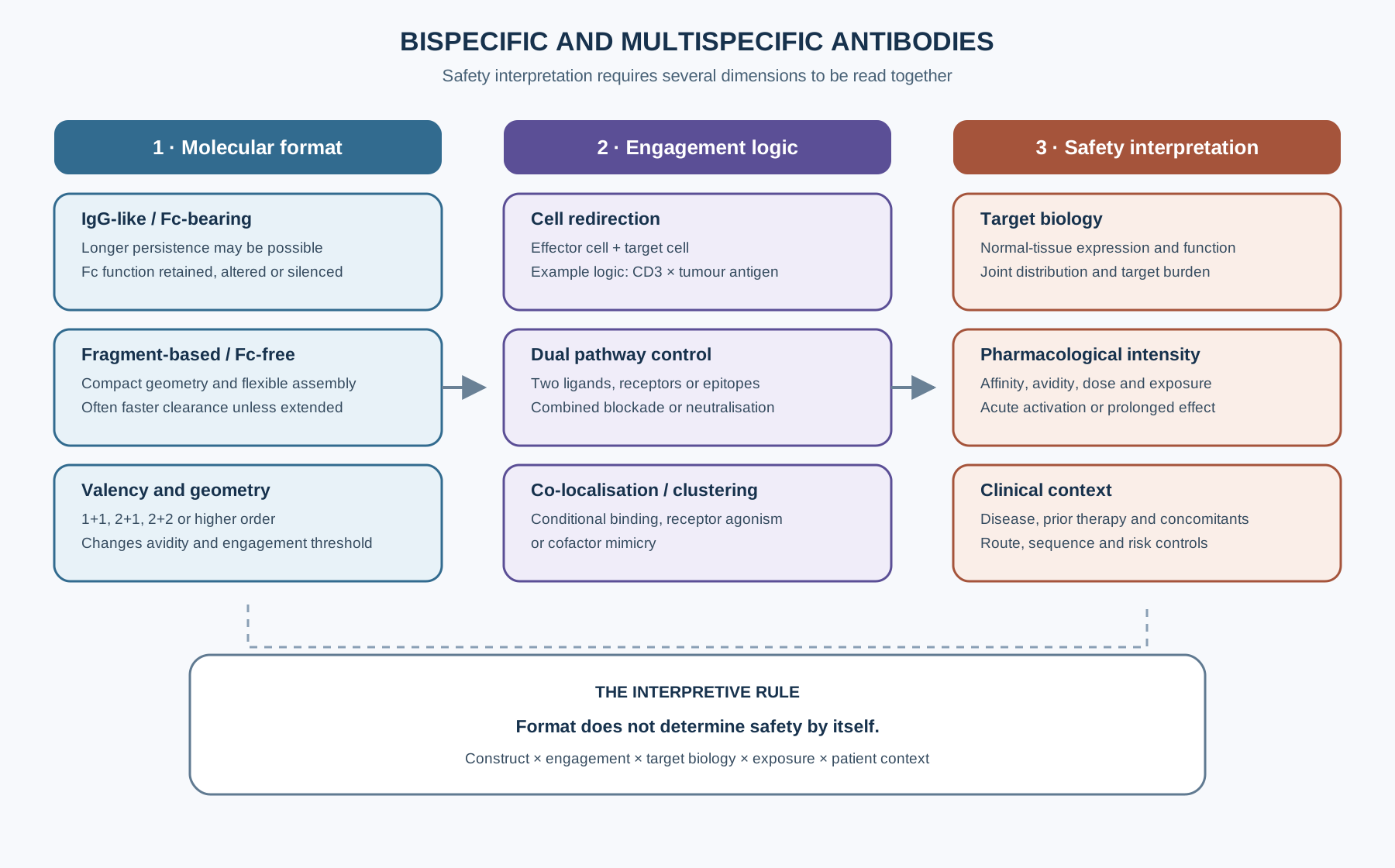
Figure 1. Bispecific and multispecific antibodies must be classified across several linked axes. Molecular format does not by itself determine mechanism or safety; the clinically relevant interpretation emerges from format, engagement logic, target biology and treatment context together.
IgG-like and Fc-bearing formats
IgG-like molecules preserve much of the conventional antibody architecture and can provide FcRn-mediated recycling and a relatively long systemic half-life. Their Fc region may retain, reduce or enhance interactions with Fc gamma receptors and complement. Pairing technologies are needed to ensure that the intended heavy and light chains assemble correctly. An Fc-bearing format can support intermittent dosing, but prolonged exposure may also lengthen the duration of both therapeutic and adverse pharmacology.
An Fc is not functionally neutral merely because the molecule is bispecific. Its effector function, Fc-receptor binding and half-life engineering should be evaluated as deliberate design variables. Conversely, an “Fc-silenced” design should be interpreted according to the evidence demonstrating what functions were reduced; the label does not establish complete biological inactivity under every condition.
Fragment-based and Fc-free formats
Smaller constructs can be assembled from single-chain variable fragments, Fab fragments, nanobody-like domains or other antibody-derived binding modules. Their compact size may improve access to some tissues and permits flexible geometry, but absence of FcRn recycling can result in more rapid clearance unless half-life-extension strategies are added. Continuous or frequent administration may therefore be required for some products.
Fragment-based constructs can still produce powerful systemic pharmacology. Small molecular size or short plasma half-life does not imply low risk when the construct catalytically brings immune cells and target cells together or when a brief exposure initiates a self-amplifying inflammatory response.
Functional Classes and Their Safety Logic
The same structural format can be used for different purposes, while different formats can produce a similar biological effect. Functional classification is therefore the most direct bridge to pharmacovigilance.
Immune-cell redirection
Many oncology bispecifics bind a tumour-associated antigen with one part of the molecule and CD3 on T cells with another. Simultaneous engagement brings the cells into close proximity, promotes formation of a cytolytic synapse and activates T-cell killing. The process can occur independently of the T cell's native antigen specificity.
This mechanism explains both efficacy and several characteristic hazards. Rapid immune activation can release cytokines and produce cytokine release syndrome (CRS). Neurological toxicity, including immune effector cell-associated neurotoxicity syndrome (ICANS), can occur with some immune-cell-engaging products. Destruction of a large tumour burden may contribute to tumour lysis syndrome. Targeting antigens also expressed on normal cells can cause predictable on-target effects: B-cell-directed therapies, for example, may contribute to cytopenias, hypogammaglobulinaemia and infection risk through effects on malignant and normal immune-cell compartments.
These risks are neither universal nor quantitatively interchangeable across T-cell engagers. Target density and distribution, binding affinity, valency, molecular geometry, dose, exposure profile, route of administration, tumour burden, circulating target cells, disease setting, previous therapy and concomitant treatment can all alter the probability, timing and severity of events.
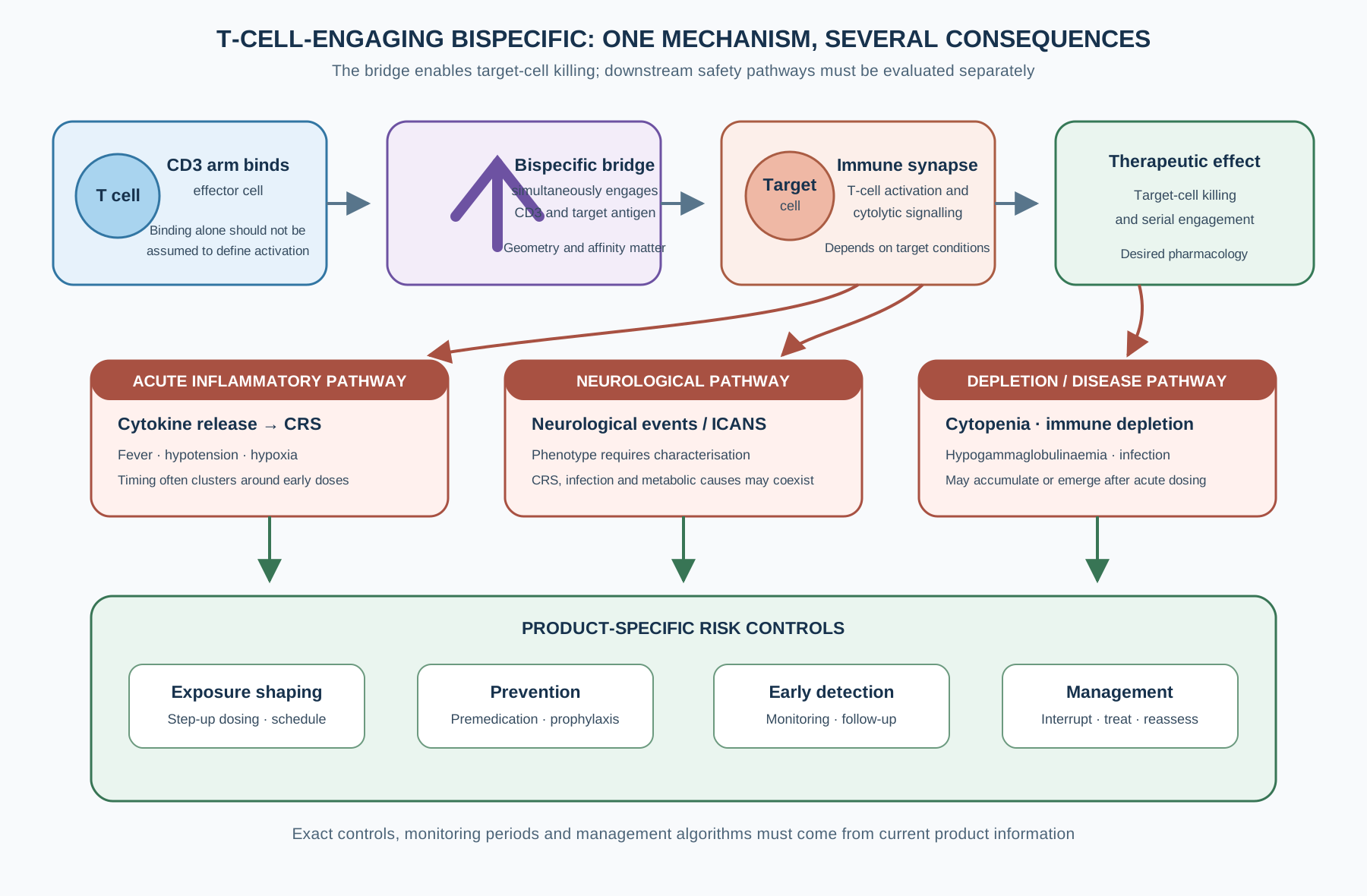
Figure 2. A T-cell-engaging bispecific creates a pharmacological bridge between an effector cell and a target cell. The therapeutic sequence and the pathways leading to CRS, neurological toxicity, target-cell depletion and infection are related but not identical. Step-up dosing, premedication, monitoring and treatment interruption are product-specific controls rather than properties of the class as a whole.
Dual pathway blockade or neutralisation
Other bispecifics bind two ligands, two receptors, or a ligand and a receptor. The intended advantage may be broader pathway suppression, prevention of compensatory signalling, or delivery of coordinated inhibition with one molecule. Safety interpretation begins with the known physiological roles of both targets, then considers whether simultaneous inhibition creates additive, synergistic or qualitatively new effects.
A list made by combining the adverse reactions of two monospecific antibodies is an incomplete model. The bispecific may have different affinities, tissue distribution, valency and exposure. Binding one target may concentrate the molecule where the second target is present. Conversely, lower affinity at one arm may make activity dependent on co-expression and reduce engagement elsewhere. The correct safety hypothesis must be based on the engineered molecule rather than assumed from its parental antibodies.
Receptor clustering, agonism and conditional activity
Some constructs are designed to cluster receptors or bring signalling proteins together. Others exploit avidity so that efficient binding occurs mainly where two antigens are co-expressed. These approaches can increase functional selectivity, but they create questions that conventional receptor-occupancy models may not answer. Activity can depend on receptor spacing, membrane mobility, expression density and the geometry imposed by the molecule.
Agonistic or clustering activity deserves particular caution in first-in-human development because modest differences between experimental systems and humans may change the strength of signalling. Conditionality should be demonstrated across relevant expression ranges; it should not be inferred solely from the design concept.
Cofactor mimicry and protein co-localisation
Emicizumab illustrates a non-oncology mechanism: it binds activated factor IX and factor X and brings them into the spatial relationship needed to restore part of the function normally supplied by activated factor VIII. Its pharmacology is not immune-cell redirection or dual blockade. The principal safety questions arise from haemostatic balance, interaction with bypassing agents and interference with certain coagulation assays.
This example is important because it prevents overgeneralisation from the expanding oncology literature. “Bispecific” describes how the molecule recognises targets; it does not identify the therapeutic purpose, expected adverse reactions or appropriate risk controls.
Target Pair, Geometry and Exposure as a Single System
Safety assessment becomes more reliable when the molecule is treated as a system rather than a list of parts.
Target distribution and co-expression
Each target should be mapped in diseased and normal tissues, but the joint distribution may be more informative than either target alone. For a dual-antigen tumour-targeting molecule, the relevant question may be where both targets are expressed at sufficient density to support avid binding. For a cell-bridging molecule, the distribution and accessibility of both cell populations matter.
Expression atlases provide hypotheses, not complete answers. Protein abundance, accessibility, cell state and spatial organisation can differ from messenger RNA measurements. Disease and previous treatment may alter expression. Soluble target, target shedding and antigen loss can change exposure and response over time.
Affinity, avidity and valency
High affinity is not automatically desirable at every binding arm. A lower-affinity CD3 arm may reduce indiscriminate T-cell activation while preserving activity when avidity is supplied by target-cell binding. A 2+1 format can increase avidity for a tumour antigen relative to a 1+1 arrangement. These design choices change the exposure–response relationship and may affect the therapeutic window.
For pharmacovigilance, the practical consequence is that products sharing the same target pair should not automatically be treated as clinically equivalent. Architecture and binding parameters can change where, when and how strongly the target pair is engaged.
Pharmacokinetics and target-mediated disposition
Bispecific antibodies may show conventional antibody-like disposition, rapid clearance of small fragments, or nonlinear target-mediated drug disposition. Binding to two targets creates additional routes by which distribution and clearance can change. Target abundance may vary with tumour burden, treatment response and depletion of normal cell populations. Anti-drug antibodies can alter exposure, efficacy or safety.
Pharmacokinetic interpretation should therefore be integrated with pharmacodynamic markers for both arms, disease burden, immunogenicity and the timing of adverse events. A plasma concentration alone may not describe the duration of cellular activation or recovery of a depleted compartment.
Manufacturing and Product Quality
Multichain assembly creates product-quality challenges beyond those of a conventional monospecific IgG. Incorrect heavy-chain or light-chain pairing, aggregates, fragments, charge variants and other product-related impurities must be controlled. The relevance of a quality attribute depends on its potential effect on binding, potency, pharmacokinetics, immunogenicity and unintended immune activation.
Manufacturing changes are assessed through comparability exercises. From a pharmacovigilance perspective, the essential principle is traceability: clinically meaningful shifts in safety or immunogenicity can be investigated only if the administered product, batch where available, manufacturing period and relevant change history can be linked. Absence of an obvious aggregate signal in routine spontaneous reports does not establish that product quality is unrelated; reporting and batch capture may be incomplete.
Non-Clinical and Early Clinical Development
General principles for biotechnology-derived pharmaceuticals are provided by ICH S6(R1), while the EMA first-in-human guideline emphasises identifying uncertainties and applying risk-mitigation strategies. Neither document supplies a single bispecific-specific development recipe. The programme must be justified from the molecule's target biology, format and mechanism.
Relevance of test systems
A toxicology species is informative only if the molecule engages both intended targets with sufficiently comparable affinity and functional consequences. One arm may cross-react while the other does not; receptor expression or immune-cell biology may differ; or the geometry required for productive bridging may not be reproduced. In such circumstances, a conventional animal study can provide misleading reassurance.
The evidence package may need a combination of relevant-species studies, homologous or surrogate molecules, human-cell assays, tissue-cross-reactivity studies, cytokine-release assays, pharmacological modelling and careful clinical risk controls. Each approach has limitations. A surrogate can test the biological concept but not every product-specific quality or binding feature. In-vitro systems can examine human cells but may not reproduce tissue distribution or systemic feedback. These limitations should remain visible in the integrated risk assessment.
Starting dose and escalation
For a potent immune agonist or cell engager, the starting-dose rationale should integrate pharmacology, non-clinical toxicology, predicted human exposure and the minimum anticipated biological effect level where appropriate. Escalation decisions should consider emerging pharmacokinetic, pharmacodynamic and safety data rather than dose alone.
Sentinel administration, staggered enrolment, defined observation periods, stopping rules and access to appropriate clinical expertise may be justified according to the anticipated risk. These are risk-based development measures, not universal legal requirements for every bispecific antibody.
Step-up dosing as mechanism-based risk management
Several authorised T-cell-engaging bispecifics use step-up doses before the first full treatment dose. The initial lower exposures can attenuate the intensity of early immune activation as target and effector-cell conditions change. Premedication and monitored administration may be used alongside step-up dosing. Exact schedules, observation requirements and management algorithms differ between products and must be taken from the current product information.
Step-up dosing also complicates safety data. A case report should identify the exact dose within the step-up sequence, time from dose to onset, premedication, previous CRS, treatment interruption and subsequent rechallenge. Recording only “cycle 1” or the nominal maintenance dose can obscure the exposure that preceded the event.
Clinical Safety Patterns
The clinically important risks of a bispecific antibody should be organised by mechanism and time course rather than memorised as one class list.
| Risk domain | Mechanistic questions | Information especially useful in case assessment |
|---|---|---|
| CRS | Was an immune-cell engager given? What were target burden and first/step-up dose conditions? | Exact dose and sequence, onset, grade criteria used, organ involvement, inflammatory markers, treatment and outcome |
| Neurological toxicity | Is there concurrent CRS, infection, metabolic disturbance or disease involvement? | Mental status, speech/writing change, consciousness, seizures, imaging/CSF where performed, temporal relationship |
| Infection | Are normal immune compartments depleted or dysfunctional? Is hypogammaglobulinaemia present? | Pathogen, site, severity, neutrophils/lymphocytes/immunoglobulins, prophylaxis, previous therapy and steroid exposure |
| Cytopenia | Is the effect target-mediated, disease-related, treatment-related or multifactorial? | Cell lineage, nadir, duration, marrow findings where available, concomitant therapy, recovery and dose actions |
| Tumour lysis | Was there rapid killing with high or sensitive disease burden? | Baseline burden, renal function, electrolytes, prophylaxis, timing and clinical consequences |
| On-target effects | Where are the targets expressed in normal tissue and what function is altered? | Target-specific examination, biomarkers, time course, reversibility and evidence from related products |
| Immunogenicity | Could anti-drug antibodies change exposure, activity or hypersensitivity? | ADA timing and titre, neutralising status, PK, efficacy change, infusion/injection reactions and batch information |
| Assay interference | Does the molecule alter the analyte or assay principle? | Assay method, sampling time, discordant results, clinical interpretation and resulting treatment decisions |
Cytokine release syndrome
CRS is a systemic inflammatory syndrome associated with immune-effector activation. Fever is often an early feature, while hypotension, hypoxia and organ dysfunction indicate greater severity. The event must be distinguished from sepsis, infusion or hypersensitivity reactions, tumour lysis and disease-related deterioration; more than one condition can coexist.
For aggregate analysis, the grading system and product-specific diagnostic rules matter. Changes in clinical practice, prophylaxis or inpatient monitoring can influence detection and recorded severity. Analyses should examine dose number, step-up stage, time to onset, recurrence, treatment, resolution and the relationship with tumour burden or other risk factors.
Neurological events
ICANS is a defined immune-effector-cell-associated neurological syndrome, but neurological adverse events reported with bispecific antibodies remain heterogeneous. Encephalopathy, confusion, aphasia, tremor, somnolence, seizures and other manifestations require clinical characterisation. Infection, metabolic abnormalities, concomitant medicines, CNS disease and preceding CRS are important alternative or contributing explanations.
Grouping all neurological terms as ICANS without confirming the syndrome can inflate or distort analyses. Conversely, relying only on the reported preferred term can miss clinically compatible cases. Case definitions and medical review criteria should therefore be prespecified for surveillance.
Infection, immune depletion and delayed risk
Targeted depletion or dysfunction of normal B-cell and plasma-cell compartments can produce prolonged immunological consequences. Infection risk may be shaped by hypogammaglobulinaemia, neutropenia or lymphopenia, prior lines of therapy, corticosteroids used to manage toxicity, disease-related immunosuppression and duration of exposure. Opportunistic and recurrent infections may emerge later than acute administration reactions.
This time course requires longitudinal surveillance. A safety system focused only on events within a short post-dose window will describe CRS better than it describes cumulative immune compromise.
Product- and target-specific risks
Dual specificity can create risks unrelated to immune-cell engagement. Emicizumab can interfere with intrinsic-pathway-based clotting assays and, particularly in the historical context of concomitant activated prothrombin complex concentrate use, has required attention to thrombotic microangiopathy and thrombotic events. A dual-pathway inhibitor may instead produce toxicities arising from combined pathway suppression. Every product therefore needs a mechanism-specific safety model layered on top of general therapeutic-protein considerations.
Pharmacovigilance System Design
Routine pharmacovigilance obligations apply to bispecific and multispecific antibodies as to other medicinal products. The specialised task is to configure collection, analysis and governance so that the distinctive causal variables are not lost.
Case collection and follow-up
Follow-up forms and medical review should be targeted to the important risks in the product's safety specification. Useful variables may include:
- molecular target pair and product identity;
- exact dose, step-up position, route and administration time;
- premedication, prophylaxis and monitored setting;
- disease burden and relevant baseline laboratory values;
- prior and concomitant anticancer or immunomodulatory treatment;
- timing and grading criteria for CRS or neurological events;
- cell counts, immunoglobulins, pathogen testing and infection prophylaxis;
- intervention, interruption, rechallenge and recurrence;
- assay methodology where laboratory interference is possible; and
- batch number when product quality or immunogenicity is relevant.
Not every variable is required for every report. Follow-up should be proportionate and medically purposeful, with priority given to information capable of changing case interpretation or aggregate assessment.
Signal detection and aggregate evaluation
Disproportionality methods can contribute to signal detection, but they are vulnerable to small exposure counts, stimulated reporting, evolving indications, intensive monitoring and rapidly changing use. Product names, target pairs and molecular formats should be normalised carefully. Pooling all bispecific antibodies can dilute a product-specific risk; analysing only one product can miss a target- or mechanism-related pattern.
A tiered approach is often more informative:
- evaluate the individual product;
- compare products sharing a target, target pair or mechanism;
- examine the relevant engineered-format or therapeutic class where biologically justified; and
- test alternative explanations from indication, prior therapy, concomitant treatment and monitoring intensity.
The grouping must be justified for the question being asked. “All bispecifics” is rarely an adequate biological comparator.
Aggregate review should combine spontaneous cases with clinical-trial data, exposure, literature, non-clinical findings, product complaints and quality information, registries or observational studies where available, and regulatory experience with related products. For cumulative risks such as infection, duration of treatment and person-time may be more informative than the number of treated patients alone, although the feasible denominator depends on available data.
Risk management and effectiveness
Risk-minimisation measures may include product-specific step-up dosing, premedication, monitoring, treatment-interruption rules, infection precautions, educational materials or controlled access arrangements. Their legal status and exact content differ by product and jurisdiction. The pharmacovigilance system should distinguish the authorised product information and agreed additional measures from locally recommended practice.
Effectiveness evaluation should test whether the measure changes the intended intermediate or clinical outcome. For example, distribution of educational material is a process measure; understanding of early symptoms, adherence to step-up dosing, timely intervention, and the frequency or severity of preventable outcomes address progressively stronger evidence of effectiveness. The feasible design must account for disease severity, rapid changes in clinical use and confounding by evolving treatment protocols.
Product traceability and class switching
Accurate brand, active substance and batch recording supports evaluation of product-specific and quality-related patterns. This is particularly important when several molecules share a target pair but differ in format, route, schedule and risk controls. A report that records only “bispecific antibody” is often analytically weak.
Treatment histories should also capture switching between related agents. Cumulative immune depletion, prior CRS, infection prophylaxis and residual pharmacological effects may influence events attributed to a later product. Temporal attribution should not erase the contribution of previous therapy.
Governance and QPPV Oversight
QPPV oversight should connect the scientific safety model with the operational system. The relevant question is not whether the organisation has a “bispecific procedure,” but whether existing processes preserve the information needed to identify and manage the product's risks.
Evidence of effective oversight may include:
- a documented safety specification linked to target biology, molecular format and clinical evidence;
- case-processing guidance that captures product-specific exposure and syndrome details;
- signal strategies with justified product, target and mechanism groupings;
- reconciliation between medical information, product complaints, clinical programmes and pharmacovigilance;
- cumulative review of infection, immune depletion and delayed outcomes;
- governance records showing how emerging evidence changes product information, the risk-management plan or risk minimisation; and
- traceability from regulatory commitments to implementation and effectiveness evaluation.
Potential failure modes include copying a conventional monoclonal-antibody safety model without considering dual engagement; treating CRS and infection as isolated listed reactions without analysing their time course and determinants; losing step-up-dose information during case entry; pooling structurally or mechanistically dissimilar products; and allowing educational distribution metrics to substitute for evaluation of clinical effectiveness. These are illustrative failure modes, not reported inspection findings.
Practical Framework for Safety Assessment
An experienced safety reviewer can organise an emerging issue through six connected questions:
- Construct: What is the scaffold, valency, geometry, Fc design and expected exposure profile?
- Engagement: Which targets or epitopes are bound, where are they expressed, and is co-engagement required?
- Mechanism: What biological event follows binding—blockade, clustering, cell redirection, depletion or cofactor mimicry?
- Clinical context: What dose sequence, disease burden, prior treatment and concomitant intervention shape the event?
- Observed pattern: What is the phenotype, latency, dose relationship, reversibility, recurrence and competing explanation?
- Control: What action could prevent, detect, attenuate or manage the risk, and how will its effectiveness be measured?
This framework prevents two opposite errors: assuming that every risk is unprecedented because the molecule is novel, and assuming that the safety profile is simply inherited from conventional antibodies or the component targets.
Key Takeaways
- Bispecificity is an architectural property, not a uniform mechanism or safety profile.
- Molecular format, valency, Fc design, affinity and target-pair biology must be interpreted together.
- Immune-cell engagers can cause CRS, neurological toxicity, cytopenias, infection and other mechanism-related effects, but magnitude and management are product-specific.
- Dual blockade, conditional targeting, receptor clustering and cofactor mimicry create different safety models.
- Non-clinical relevance depends on functional engagement of all necessary targets; no single model is sufficient in every programme.
- Step-up dosing and monitored administration are product-specific risk controls whose details must be preserved in case data.
- Pharmacovigilance must support both acute-event analysis and longitudinal evaluation of immune depletion, infection and other delayed outcomes.
- Signal groupings should follow a justified biological question—product, target, target pair, mechanism or format—rather than the broad “bispecific” label alone.
References
- European Medicines Agency. ICH S6(R1): Preclinical safety evaluation of biotechnology-derived pharmaceuticals. CPMP/ICH/302/95. Current effective version. https://www.ema.europa.eu/en/ich-s6-r1-preclinical-safety-evaluation-biotechnology-derived-pharmaceuticals-scientific-guideline
- European Medicines Agency. Guideline on strategies to identify and mitigate risks for first-in-human and early clinical trials with investigational medicinal products — Revision 1. EMEA/CHMP/SWP/28367/07 Rev. 1. Legal effective date 1 February 2018. https://www.ema.europa.eu/en/strategies-identify-mitigate-risks-first-human-early-clinical-trials-investigational-medicinal-products-scientific-guideline
- European Medicines Agency. Guideline on immunogenicity assessment of therapeutic proteins — Revision 1. EMEA/CHMP/BMWP/14327/2006 Rev. 1. Legal effective date 1 December 2017. https://www.ema.europa.eu/en/immunogenicity-assessment-biotechnology-derived-therapeutic-proteins-scientific-guideline
- European Medicines Agency. ICH Q5E: Comparability of biotechnological/biological products subject to changes in their manufacturing process. CPMP/ICH/5721/03. https://www.ema.europa.eu/en/ich-q5e-comparability-biotechnologicalbiological-products-scientific-guideline
- European Medicines Agency. Good pharmacovigilance practices: Module V — Risk management systems. https://www.ema.europa.eu/en/human-regulatory-overview/post-authorisation/pharmacovigilance-post-authorisation/good-pharmacovigilance-practices
- European Medicines Agency. Good pharmacovigilance practices: Module IX — Signal management. https://www.ema.europa.eu/en/human-regulatory-overview/post-authorisation/pharmacovigilance-post-authorisation/good-pharmacovigilance-practices
- European Medicines Agency. Tecvayli: EPAR and product information. https://www.ema.europa.eu/en/medicines/human/EPAR/tecvayli
- European Medicines Agency. Columvi: EPAR and product information. https://www.ema.europa.eu/en/medicines/human/EPAR/columvi
- European Medicines Agency. Hemlibra: EPAR and product information. https://www.ema.europa.eu/en/medicines/human/EPAR/hemlibra
- Labrijn AF, Janmaat ML, Reichert JM, Parren PWHI. Bispecific antibodies: a mechanistic review of the pipeline. Nature Reviews Drug Discovery. 2019;18:585–608. https://doi.org/10.1038/s41573-019-0028-1
- Klein C, Brinkmann U, Reichert JM, Kontermann RE. The present and future of bispecific antibodies for cancer therapy. Nature Reviews Drug Discovery. 2024;23:301–319. https://doi.org/10.1038/s41573-024-00896-6
- Goebeler M-E, Stuhler G, Bargou R. Bispecific and multispecific antibodies in oncology: opportunities and challenges. Nature Reviews Clinical Oncology. 2024;21:539–560. https://doi.org/10.1038/s41571-024-00905-y
- Spiess C, Zhai Q, Carter PJ. Alternative molecular formats and therapeutic applications for bispecific antibodies. Molecular Immunology. 2015;67(2 Pt A):95–106. https://doi.org/10.1016/j.molimm.2015.01.003
- Lee DW, Santomasso BD, Locke FL, et al. ASTCT consensus grading for cytokine release syndrome and neurologic toxicity associated with immune effector cells. Biology of Blood and Marrow Transplantation. 2019;25(4):625–638. https://doi.org/10.1016/j.bbmt.2018.12.758
Regulatory Note
This article is an educational scientific and pharmacovigilance reference. It does not replace the current summary of product characteristics, package leaflet, risk-management plan, clinical-trial protocol, national requirements or medical judgement. Bispecific and multispecific antibodies differ substantially in structure, targets, indications and risk controls. Product-specific regulatory documents should be checked before making clinical, development or pharmacovigilance decisions. Regulatory status and product information were reviewed on 3 September 2026.