Brentuximab Vedotin: Classification, Mechanism, Safety and Pharmacovigilance
Brentuximab vedotin is a CD30-directed antibody-drug conjugate (ADC) used across several CD30-positive lymphoid malignancies. It combines a monoclonal antibody recognising CD30 with a protease-cleavable linker and the microtubule-disrupting payload monomethyl auristatin E (MMAE).
- Brentuximab Vedotin: Classification, Mechanism, Safety and Pharmacovigilance
- Classification and disease context
- Mechanism of action
- Development and changing treatment position
- Major safety domains
- Regimen-level attribution
- Pharmacovigilance implementation
- Illustrative failure modes
- Inspection and governance considerations
- Practical checklist
- Key Takeaways
- References
- Regulatory Note
Classification and disease context
CD30 is a member of the tumour-necrosis-factor receptor family and is characteristically expressed in classical Hodgkin lymphoma and systemic anaplastic large-cell lymphoma, with clinically relevant expression in some cutaneous T-cell lymphomas and other lymphoid malignancies. The therapeutic logic is therefore not simply “lymphoma targeting”; it is biomarker-directed delivery of a cytotoxic payload to CD30-expressing cells.
Brentuximab vedotin belongs to the vedotin ADC family, but disease setting and regimen architecture matter greatly. Monotherapy after prior treatment, post-transplant use and combination therapy in previously untreated disease expose different populations to different background risks.
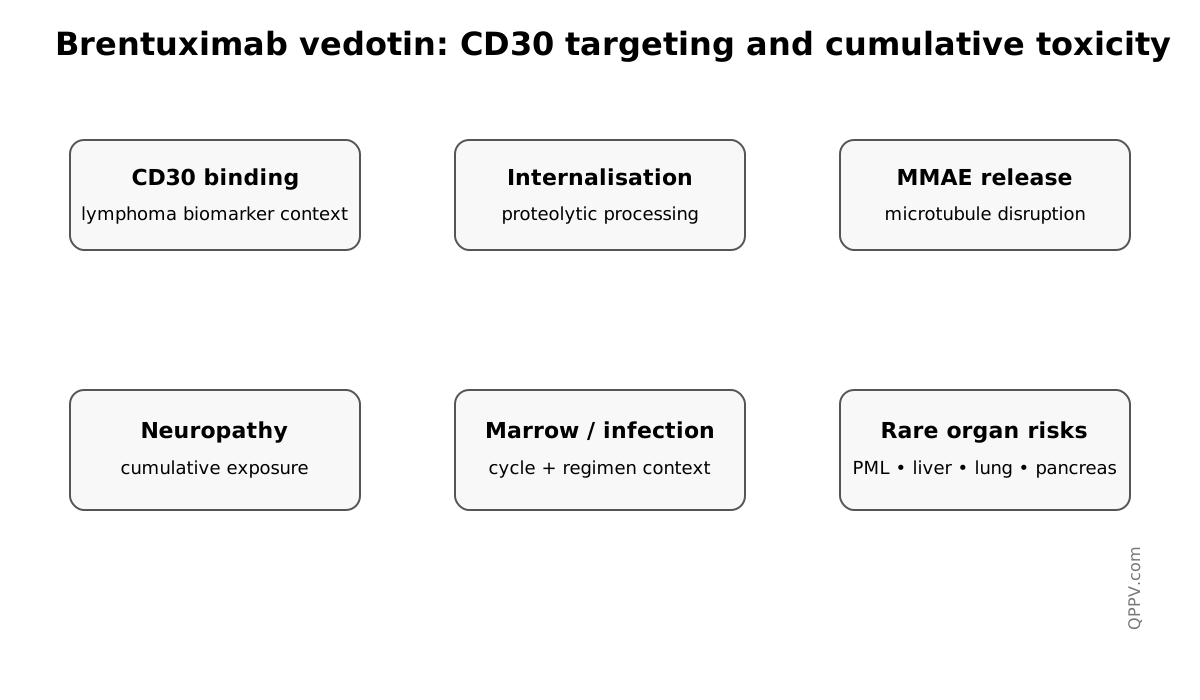
Figure 1. CD30 targeting, intracellular MMAE release, cumulative exposure and treatment regimen jointly determine the product's safety profile.
Mechanism of action
The antibody binds CD30 on the target cell, the ADC is internalised, and intracellular proteolysis releases MMAE. MMAE binds tubulin and disrupts the microtubule network, leading to cell-cycle arrest and cell death.
Microtubules are also essential for axonal transport, which provides a mechanistic basis for one of the product's most clinically important cumulative toxicities: peripheral neuropathy.
Development and changing treatment position
The product entered practice in relapsed or refractory CD30-positive lymphomas and later moved into earlier treatment settings and combinations. That development history changes pharmacovigilance interpretation because neutropenia, pulmonary events, infection and neuropathy may reflect the ADC, companion chemotherapy, prior treatment or their interaction.
For PV, the clinically useful historical distinction is therefore between single-agent cumulative toxicity and regimen-level toxicity in combination use.
Major safety domains
Peripheral neuropathy
Peripheral sensory and motor neuropathy are prominent recognised risks. Case assessment should include baseline neurological status, prior neurotoxic treatment, cumulative exposure, symptom distribution, motor involvement, functional impairment, dose interruption or reduction and reversibility. A simple severity grade without functional description is often insufficient.
Myelosuppression and infection
Neutropenia, febrile neutropenia and serious infection require interpretation in the context of disease, prior therapy and companion chemotherapy. Useful follow-up includes nadir counts, fever, microbiology, growth-factor support, concomitant immunosuppression and treatment cycle.
Progressive multifocal leukoencephalopathy
PML is rare but clinically important. New neurological deterioration should trigger a differential diagnosis that includes infection, CNS lymphoma, treatment-related neurotoxicity and PML. MRI findings, cerebrospinal-fluid testing and immune status are central to meaningful assessment.
Hepatic, pancreatic and pulmonary events
Hepatotoxicity, pancreatitis and pulmonary toxicity require laboratory values, imaging, concomitant medicines and competing causes. Pulmonary events are particularly difficult in combination regimens because companion agents may have independent lung toxicity.
Tumour lysis and infusion reactions
Tumour burden, baseline renal function, timing from treatment, prophylaxis and laboratory findings are needed for tumour-lysis assessment. Infusion reactions require timing within administration, signs and symptoms, premedication and rechallenge information.
Regimen-level attribution
In combination therapy, the most defensible unit of assessment is often the regimen. Neutropenia, infection, pulmonary toxicity and hepatic abnormalities may have several plausible contributors. Pharmacovigilance should preserve product-specific dose history while avoiding artificial certainty when attribution cannot be resolved.
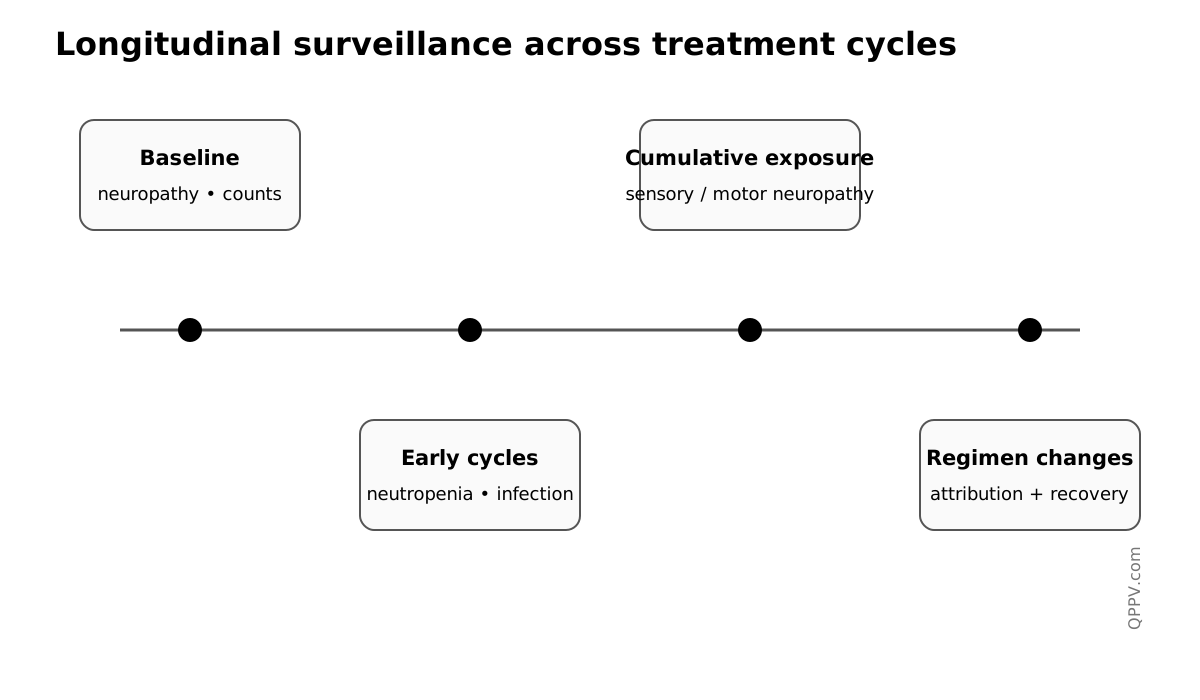
Figure 2. Surveillance should follow cumulative neuropathy, cycle-specific marrow effects, infectious complications and regimen changes across the treatment course.
Pharmacovigilance implementation
Case quality depends on treatment context. Capture the exact lymphoma, CD30 status where clinically relevant, monotherapy versus combination, dose and cycle, prior transplant, previous neurotoxic treatment, baseline counts, event onset, investigations, management and outcome. For neuropathy, cumulative exposure and function should be explicit.
Aggregate review should separate monotherapy from combination regimens and distinguish cumulative neurological events from cycle-linked marrow toxicity. PML, serious infection, pancreatitis, pulmonary toxicity and severe hepatotoxicity merit case-level medical review because simple frequency tables can obscure clinically heterogeneous patterns.
Illustrative failure modes
An illustrative failure mode is neuropathy documented only as “grade 2” without motor findings or functional impact. Another is febrile neutropenia assessed without identifying the companion chemotherapy and cycle. A third is a neurological syndrome attributed to neuropathy without evaluating CNS disease or infection.
These are educational examples, not reported inspection findings.
Inspection and governance considerations
An inspector could examine whether cumulative neuropathy is followed longitudinally, whether serious infection cases include contemporaneous neutrophil counts and regimen details, and whether rare neurological cases have targeted PML follow-up. Governance should also ensure that changes in indication or combination regimen trigger updates to follow-up forms, aggregate stratification and signal-review assumptions.
Practical checklist
- Identify disease setting and exact regimen.
- Capture cumulative ADC exposure and prior neurotoxic therapy.
- Describe sensory and motor neuropathy functionally.
- Link neutropenia and infection to treatment cycle and companion drugs.
- Escalate unexplained neurological deterioration for PML differential assessment.
- Characterise hepatic, pancreatic and pulmonary events with objective data.
- Preserve batch and product traceability where available.
Key Takeaways
Brentuximab vedotin pharmacovigilance is dominated by the interaction of CD30-directed delivery, MMAE toxicity and treatment context. Peripheral neuropathy is cumulative and mechanistically coherent; infection and marrow suppression are strongly regimen-dependent; and rare neurological or organ toxicities require targeted clinical follow-up rather than generic adverse-event coding.
References
- European Medicines Agency. Adcetris (brentuximab vedotin): EPAR and product information. Current EU regulatory information, accessed September 2026.
- European Medicines Agency. Adcetris: post-authorisation assessment history. Current through 2026.
- Younes A, et al. Brentuximab vedotin for relapsed or refractory Hodgkin lymphoma. Journal of Clinical Oncology. 2012.
- Horwitz S, et al. Brentuximab vedotin with chemotherapy for CD30-positive peripheral T-cell lymphomas. Lancet. 2019.
Regulatory Note
Indications, combinations, dosing and risk-management instructions vary by jurisdiction and treatment setting. Always use the current locally applicable product information for clinical and regulatory decisions.