Brodalumab: Classification, History, Mechanism of Action, Safety and Pharmacovigilance
Brodalumab is a recombinant fully human IgG2 monoclonal antibody directed against interleukin-17 receptor A (IL-17RA). It blocks IL-17RA and thereby inhibits signalling from several IL-17-family cytokines, including IL-17A, IL-17F and the IL-17A/F heterodimer. The intended pharmacological consequence is to reduce IL-17-driven inflammation and keratinocyte activation in plaque psoriasis. These features provide the scientific starting point for pharmacovigilance: they identify plausible event phenotypes, relevant competing explanations and the exposure details that must remain traceable.
The target alone is not a safety profile. The underlying disease, prior and concomitant treatment, route of administration, patient susceptibility and duration of biological effect can each alter the meaning of a reported event. A defensible assessment therefore starts with mechanism and then tests that hypothesis against chronology, phenotype, objective evidence and alternatives.
- Brodalumab: Classification, History, Mechanism of Action, Safety and Pharmacovigilance
- Purpose and Clinical Context
- Multidimensional Classification
- Molecular Mechanism and Safety Reasoning
- Development and Regulatory History
- Clinical Safety Architecture
- Safety Domains and Targeted Follow-up
- Case Reconstruction and Differential Diagnosis
- Signal Detection and Aggregate Review
- Benefit-Risk Interpretation
- Practical Pharmacovigilance Implementation
- Potential Failure Modes
- Inspection and Governance Perspective
- Practical QPPV Checklist
- Key Takeaways
- References
- Regulatory Note
Purpose and Clinical Context
The clinical context is moderate-to-severe plaque psoriasis in adults who are candidates for systemic therapy. IL-17 biology contributes to mucosal defence as well as psoriatic inflammation. Infection and bowel-event phenotyping are therefore more informative than broad adverse-event coding alone.
For pharmacovigilance, the active-substance name is only the first level of identification. The record should preserve the exact product and presentation, route, dose, administration date, treatment phase and batch where available. This permits clinically meaningful case reconstruction and, where relevant, links an adverse event to product-quality or administration information rather than treating every report as a purely pharmacological effect.
Multidimensional Classification
| Axis | Brodalumab | Pharmacovigilance significance |
|---|---|---|
| Molecular format | recombinant fully human IgG2 monoclonal antibody | Establishes a biological product with product-specific quality and immunogenicity considerations |
| Target | interleukin-17 receptor A (IL-17RA) | Provides the mechanistic anchor for event assessment |
| Functional action | blocks IL-17RA and thereby inhibits signalling from several IL-17-family cytokines, including IL-17A, IL-17F and the IL-17A/F heterodimer | Defines the biological perturbation created by treatment |
| Intended effect | reduce IL-17-driven inflammation and keratinocyte activation in plaque psoriasis | Connects mechanism with the expected clinical benefit |
| Route | subcutaneous injection with an induction phase followed by maintenance dosing | Determines administration chronology, handling and acute-reaction questions |
| Clinical context | moderate-to-severe plaque psoriasis in adults who are candidates for systemic therapy | Establishes background disease risk, co-treatment and the benefit population |
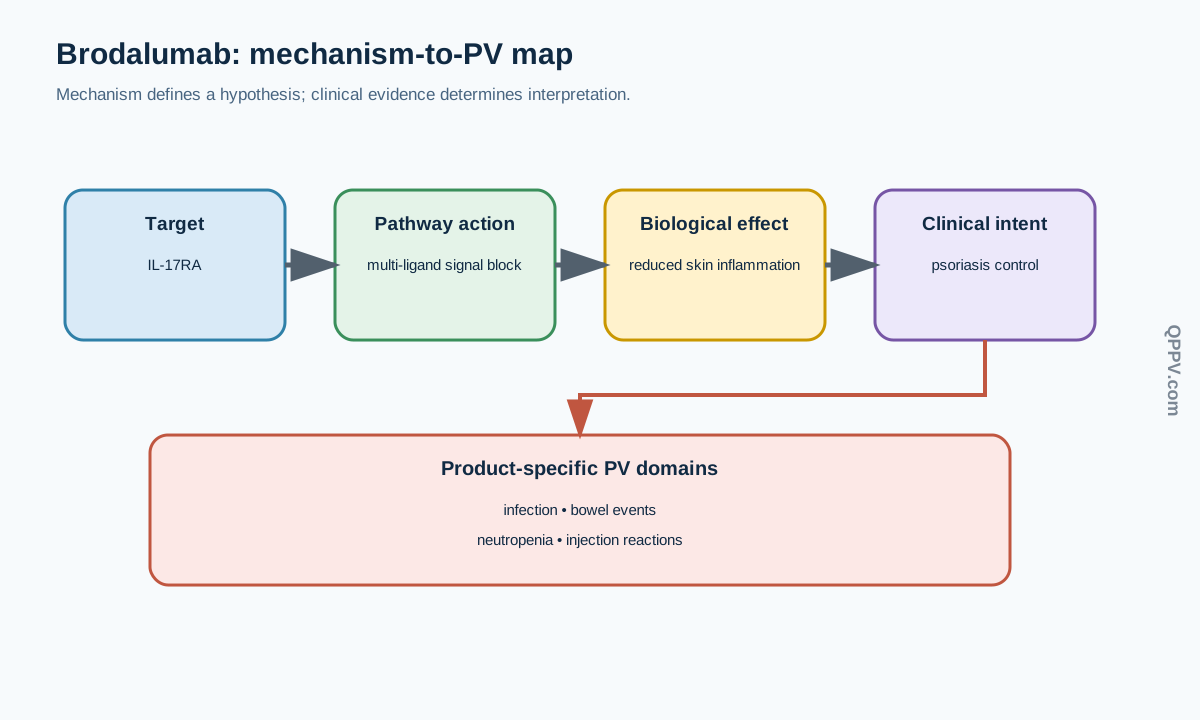
Figure 1. The target and pathway define a safety hypothesis; the patient, treatment context and observed phenotype determine whether that hypothesis is supported.
Molecular Mechanism and Safety Reasoning
Brodalumab blocks IL-17RA and thereby inhibits signalling from several IL-17-family cytokines, including IL-17A, IL-17F and the IL-17A/F heterodimer. Its intended effect is to reduce IL-17-driven inflammation and keratinocyte activation in plaque psoriasis. A mechanism-led assessment can therefore proceed in four steps: identify the biological function being changed; define the tissues or physiological processes that may be affected; specify event phenotypes that would support the hypothesis; and identify observations that would weaken it or favour another cause.
For Brodalumab, important surveillance domains include infections including mucocutaneous fungal infection, neutropenia, new or worsened inflammatory bowel disease, hypersensitivity and injection-site reactions; psychiatric symptoms also require clinically appropriate assessment, while EMA states that reports of suicidal behaviour have not established a causal relationship. These domains are not interchangeable. They require different follow-up questions, case definitions and aggregate analyses. Combining them under a broad label such as “immune-related” or “treatment-related” would obscure clinically useful distinctions.
Mechanistic plausibility should be recorded as a reasoned hypothesis rather than a causal shortcut. It strengthens an assessment when the chronology, phenotype and objective evidence fit. It should not override contradictory timing, absent confirmation or a stronger competing explanation.
Development and Regulatory History
Brodalumab received EU marketing authorisation in 2017. Its receptor-level mechanism differs from antibodies that neutralise a single IL-17 ligand because IL-17RA participates in signalling by several IL-17-family cytokines.
Regulatory history matters because authorised populations, warnings and risk-minimisation measures can change as evidence accumulates. Current case processing and benefit-risk evaluation should use applicable current regional product information. Historical product information remains relevant when reconstructing what was authorised or listed at the time of a past exposure, but it should not be treated as the current regulatory position.
EMA identifies brodalumab as a fully human IgG2 antibody to IL-17RA. Current product information includes infection, Candida, neutropenia and inflammatory-bowel-disease considerations.
Clinical Safety Architecture
Brodalumab safety is best understood through three interacting layers. The first is direct pharmacology arising from interleukin-17 receptor A (IL-17RA). The second is host susceptibility, including disease severity, organ reserve, infection history, immune status and relevant comorbidity. The third is the treatment environment: prior therapy, concomitant medicines, procedures, administration conditions and treatment phase.
This separation prevents a common attribution error. An event that occurs after exposure may be compatible with treatment, disease, co-therapy or an unrelated condition. Temporal association is one piece of evidence; it is not the conclusion.
Safety Domains and Targeted Follow-up
For Brodalumab, priority surveillance includes infections including mucocutaneous fungal infection, neutropenia, new or worsened inflammatory bowel disease, hypersensitivity and injection-site reactions; psychiatric symptoms also require clinically appropriate assessment, while EMA states that reports of suicidal behaviour have not established a causal relationship. Follow-up should obtain information capable of changing seriousness, causality, expectedness, traceability or signal interpretation rather than merely increasing the volume of case data.
| Clinical question | Information that can change assessment |
|---|---|
| Exposure and administration | Exact product, presentation, batch, dose, route, date, treatment phase, administration setting and interruptions |
| Mechanism-related event | Onset, phenotype, objective findings, severity, management, outcome and evidence linking the event to interleukin-17 receptor A (IL-17RA) biology |
| Host susceptibility | Baseline disease activity, comorbidity, organ function, infection or immune history and relevant prior therapy |
| Concomitant treatment | Complete regimen, recent changes, procedures and medicines capable of producing the same event |
| Product-quality question | Storage, preparation, device or infusion details, batch, complaint information and whether related cases exist |
| Product-specific follow-up | baseline infection and tuberculosis assessment, gastrointestinal history, Crohn's disease status, new abdominal or bowel symptoms, fungal-infection phenotype, blood counts where clinically relevant, injection timing, treatment response and psychiatric symptoms with appropriate clinical assessment |
A targeted questionnaire or structured follow-up workflow can improve consistency, but the tool is not the endpoint. The quality question is whether clinically important answers were obtained when feasible, medically reviewed and incorporated into the narrative and assessment.
Case Reconstruction and Differential Diagnosis
A strong assessment reconstructs the sequence from treatment intent to outcome. Establish why Brodalumab was used and the clinical state before treatment. Then document exposure chronology, event onset and evolution, objective findings, management and outcome. Only after that chronology is stable should causality be weighed.
Important alternatives include psoriasis-associated comorbidity, background infection, prior or concomitant immunomodulators, inflammatory bowel disease independent of treatment, medication changes and unrelated psychiatric illness. Their presence does not automatically exclude a treatment contribution. Conversely, the fact that an event is described in product information does not automatically establish causality in an individual case.
Dechallenge can be informative when improvement follows interruption, but its interpretation may be confounded by rescue treatment, co-medication changes or natural disease fluctuation. Rechallenge can add evidence when it occurs in routine care, but should not be manufactured as a pharmacovigilance experiment when clinically inappropriate.
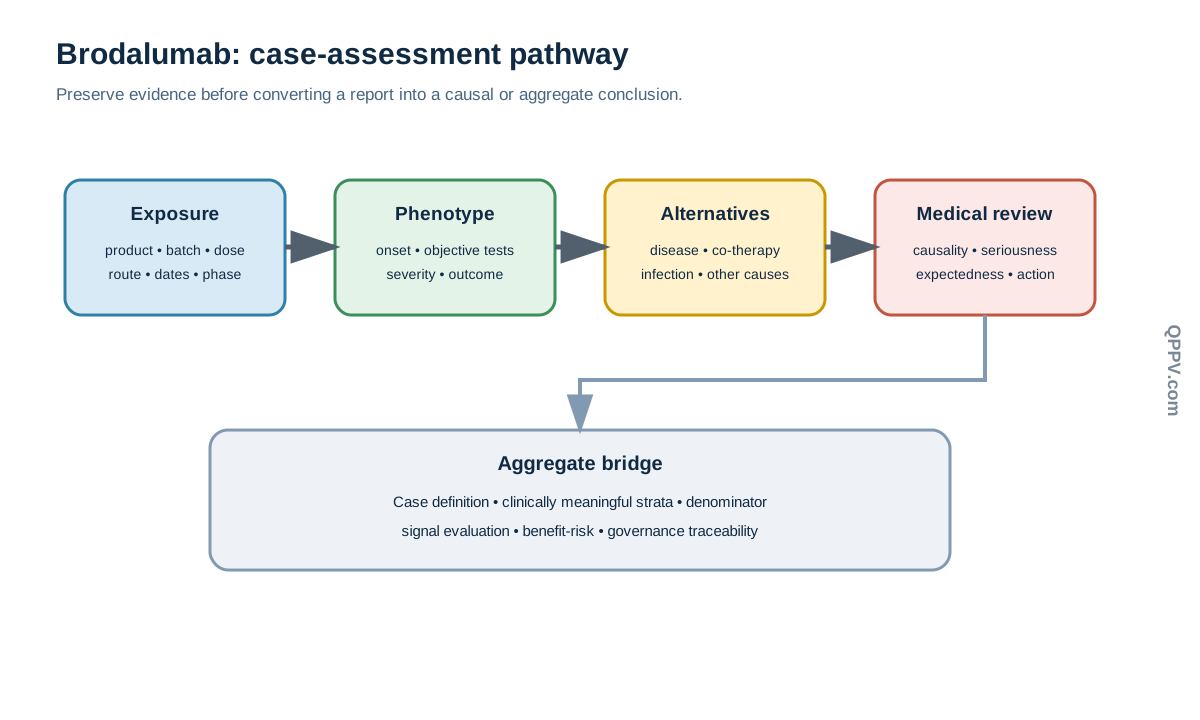
Figure 2. Exposure, phenotype and competing explanations are evaluated before a medical conclusion is carried into signal detection and aggregate benefit-risk review.
Signal Detection and Aggregate Review
Signal detection should preserve strata that can change event frequency or meaning. Depending on the product, useful dimensions include indication, biomarker-defined population, disease severity, treatment line, treatment phase, route, combination regimen, age, relevant comorbidity, prior therapy, region and product presentation.
Preferred-term counts are only a starting point. Several terms may describe one syndrome, while a single term may contain multiple mechanisms. For Brodalumab, medical review should therefore use clinically defensible event groupings and document the case definition applied.
A signal is a hypothesis requiring evaluation. Aggregate review should compare the observed pattern with background disease, known class effects, concomitant medicines, reporting stimulation, changes in clinical practice and product-quality information. Where exposure denominators are uncertain, the limitation should be stated rather than hidden behind a precise-looking rate.
Benefit-Risk Interpretation
Benefit-risk evaluation should preserve the population and treatment context in which the safety evidence arose. The relevant question is not whether adverse events exist, but whether the evolving pattern of benefit and risk remains acceptable for the authorised population under the applicable conditions of use.
For Brodalumab, periodic review should therefore connect event severity and preventability with treatment exposure, patient selection, disease burden, co-treatment and the effectiveness of applicable risk-minimisation measures. Changes in clinical practice can alter both the numerator of reports and the exposed population, so apparent trends require clinical interpretation.
Practical Pharmacovigilance Implementation
The operational system should make scientifically relevant information easy to capture, retrieve and analyse. For Brodalumab, this means preserving exact exposure details while ensuring that follow-up is driven by the event phenotype rather than by a generic biological-medicine checklist.
Recommended operational controls include structured capture of indication and treatment phase; exact product and batch where available; event-specific baseline and serial findings; documented competing causes; reconciliation with quality complaints and medical-information contacts; and aggregate outputs that retain clinically important subgroups. These are recommended system controls unless a specific legal, regulatory or procedural requirement makes a particular element mandatory.
Potential Failure Modes
The following are illustrative failure modes, not published inspection findings:
- A case is coded from a symptom without the objective findings needed to distinguish disease from treatment effect.
- The treatment regimen is collapsed into one exposure field, so co-treatment toxicity cannot be assessed.
- A known labelled event is accepted as causal without examining timing or competing explanations.
- Product presentation or batch information is omitted when a quality or administration issue is plausible.
- A treatment interruption is treated as complete dechallenge despite persistent biological activity.
- Aggregate review pools clinically different populations and masks a subgroup-specific pattern.
- Follow-up is sent but returned information is not incorporated into the medical assessment.
- Historical product information is used as though it represented the current regulatory position.
For Brodalumab, an additional product-specific weakness is failure to capture baseline infection and tuberculosis assessment, gastrointestinal history, Crohn's disease status, new abdominal or bowel symptoms, fungal-infection phenotype, blood counts where clinically relevant, injection timing, treatment response and psychiatric symptoms with appropriate clinical assessment. That omission can materially change causality, signal interpretation or evaluation of risk minimisation.
Inspection and Governance Perspective
An inspection of Brodalumab pharmacovigilance would not stop at whether procedures exist. The relevant evidence is whether the system consistently converts source information into usable case narratives, medically reasoned assessments, appropriate follow-up, signal evaluations and documented benefit-risk decisions.
Evidence can include case-processing guidance, targeted follow-up tools, medical-review criteria, signal-detection outputs, periodic reports, reconciliation records, product and batch dictionaries, quality-complaint interfaces and governance records. The effectiveness question is whether these controls work together, whether weaknesses become visible, and whether corrective actions address the underlying process rather than only the individual case.
Practical QPPV Checklist
- Confirm the active substance, authorised clinical context and applicable current product information.
- Preserve product, presentation, batch, dose, route, dates and treatment phase.
- Reconstruct the phenotype with objective findings, severity, management and outcome.
- Compare the event with the mechanism-led hypothesis and with psoriasis-associated comorbidity, background infection, prior or concomitant immunomodulators, inflammatory bowel disease independent of treatment, medication changes and unrelated psychiatric illness.
- Assess dechallenge and any real-world rechallenge without forcing a binary conclusion.
- Obtain targeted follow-up: baseline infection and tuberculosis assessment, gastrointestinal history, Crohn's disease status, new abdominal or bowel symptoms, fungal-infection phenotype, blood counts where clinically relevant, injection timing, treatment response and psychiatric symptoms with appropriate clinical assessment.
- Stratify aggregate review by variables that materially alter event meaning.
- Link safety cases with quality, medical-information and other relevant system interfaces.
- Record uncertainty explicitly and explain its effect on the medical conclusion.
- Maintain traceability from source information through assessment to regulatory action.
Key Takeaways
Brodalumab is a recombinant fully human IgG2 monoclonal antibody directed against interleukin-17 receptor A (IL-17RA). Its mechanism provides a scientific framework for pharmacovigilance, but not a shortcut to causality. Reliable assessment depends on exact exposure, clinically meaningful phenotype, objective evidence, alternatives, treatment context and product traceability.
The practical objective is to preserve the distinctions that matter from intake through follow-up, medical review, signal detection, periodic benefit-risk evaluation and governance. This does not eliminate uncertainty; it makes uncertainty traceable and scientifically interpretable.
References
- European Medicines Agency: Brodalumab EPAR and current product information.
- U.S. National Library of Medicine DailyMed: Brodalumab labelling search.
- European Medicines Agency: Good pharmacovigilance practices.
- ICH E2C(R2): Periodic benefit-risk evaluation report.
- ICH E2A: Clinical safety data management.
Regulatory Note
This article is an educational pharmacovigilance reference, not a substitute for current local product information, clinical judgment or applicable legislation. Authorised indications, contraindications, monitoring, reporting obligations and risk-minimisation measures can differ by jurisdiction and can change over time. Current regulator-approved product information and validated local procedures govern case handling.