Canakinumab: Classification, History, Mechanism of Action, Safety and Pharmacovigilance
Canakinumab is a fully human monoclonal antibody that selectively neutralises interleukin-1 beta (IL-1β). IL-1β is a potent pro-inflammatory cytokine produced after activation of innate immune pathways, including inflammasome-dependent processing of pro-IL-1β into its active form. Excessive IL-1β activity is central to several autoinflammatory diseases and contributes to the acute inflammatory response to urate crystals in gout.
The article therefore begins with a distinction that is fundamental to understanding canakinumab: autoinflammation is not identical to autoimmunity. Autoimmune disease is often organised around adaptive immune recognition, including pathogenic T- or B-cell responses. Autoinflammatory disease is driven more directly by dysregulated innate immune signalling. Canakinumab does not need to identify a disease-specific autoantibody or deplete a lymphocyte population; it neutralises a cytokine that sits downstream of several innate inflammatory triggers.
- Canakinumab: Classification, History, Mechanism of Action, Safety and Pharmacovigilance
- Multidimensional classification
- IL-1β biology
- Mechanism of action
- Development and regulatory history
- Clinical use and indication-specific context
- Major safety domains
- Immunogenicity and long-term response
- Pharmacovigilance case assessment
- Signal detection and aggregate review
- Periodic benefit-risk evaluation
- Risk management and operational controls
- Potential failure modes
- Inspection and governance perspective
- Practical checklist
- Key Takeaways
- References
- Regulatory Note
Multidimensional classification
| Classification axis | Canakinumab classification | Scientific or PV significance |
|---|---|---|
| Molecular class | Fully human monoclonal antibody | Long-acting therapeutic protein with potential immunogenicity |
| Target | IL-1β | Neutralises a soluble cytokine central to innate inflammation |
| Functional class | Ligand-neutralising immunomodulator | Does not directly deplete immune-cell populations |
| Disease model | Autoinflammatory and crystal-induced inflammation | The same cytokine can be pathogenic for different upstream reasons |
| Current EU settings | CAPS, TRAPS, HIDS/MKD, FMF, Still’s disease and gouty arthritis | Dosing pattern, age and background risks differ substantially by indication |
| Route | Subcutaneous injection | Repeated chronic treatment in most indications; on-demand single dosing in gout |
| Principal safety themes | Infection, neutropenia/leukopenia, hypersensitivity, liver-test changes, MAS and DRESS | Requires both laboratory and syndrome-level surveillance |
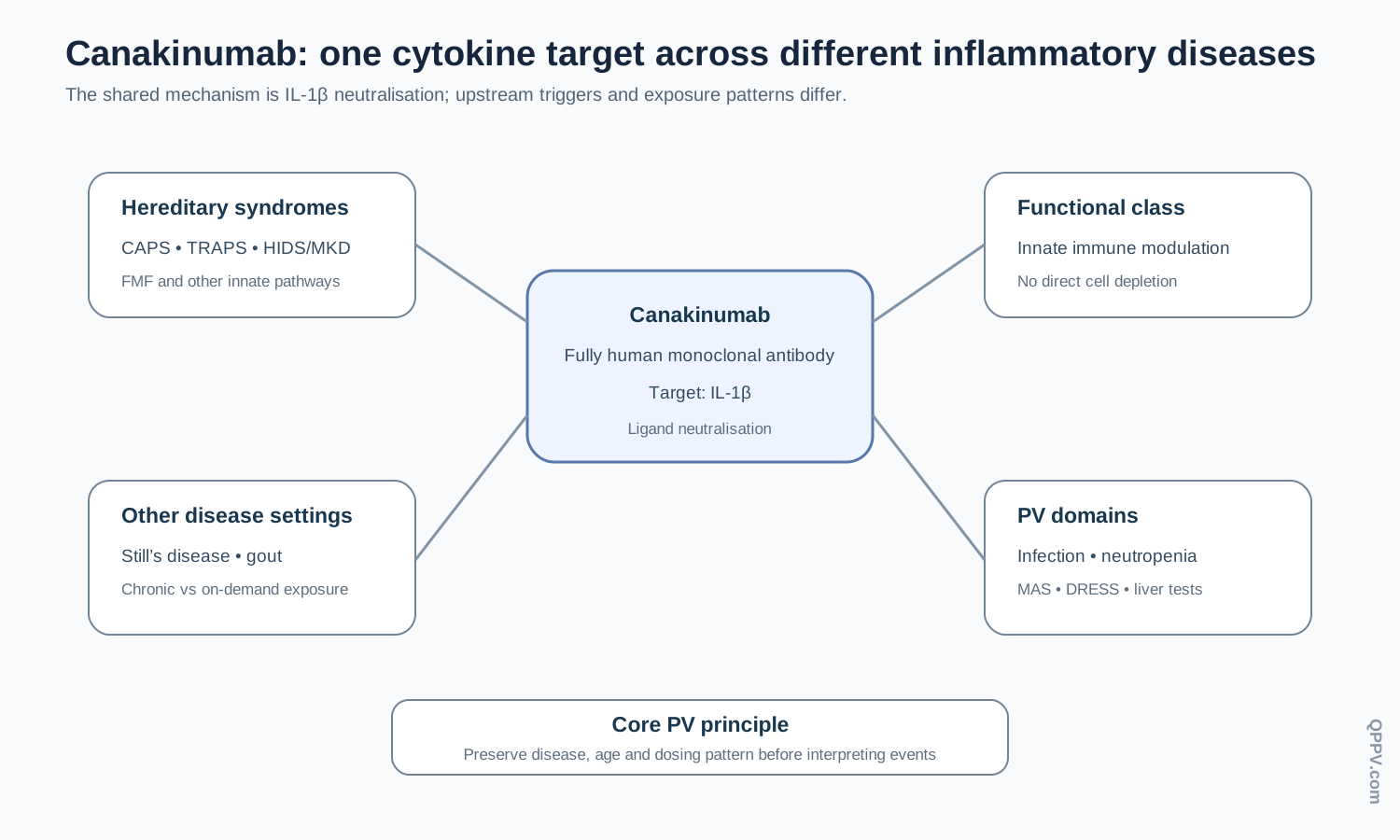
Figure 1. Canakinumab is one IL-1β-neutralising antibody used across diseases with different upstream inflammatory triggers. Pharmacovigilance must therefore preserve indication, age and dosing pattern.
IL-1β biology
IL-1β is synthesised as an inactive precursor and requires proteolytic processing before secretion in its active form. Inflammasomes, particularly the NLRP3 inflammasome, are among the molecular platforms that activate caspase-1 and permit maturation of IL-1β.
In cryopyrin-associated periodic syndromes (CAPS), abnormal NLRP3 activity can drive inappropriate inflammasome activation and excessive IL-1β production. In other hereditary fever syndromes, different genetic abnormalities converge on recurrent innate inflammatory activation. In gout, monosodium urate crystals activate innate pathways and promote IL-1β release despite the absence of a hereditary periodic-fever syndrome.
This convergence explains why one antibody can treat diseases that appear clinically unrelated. The target is not the initiating mutation, crystal or organ; it is the shared downstream cytokine.
Mechanism of action
Canakinumab binds human IL-1β and prevents the cytokine from interacting with IL-1 receptors. Downstream inflammatory signalling falls, reducing fever, acute-phase responses and tissue inflammation.
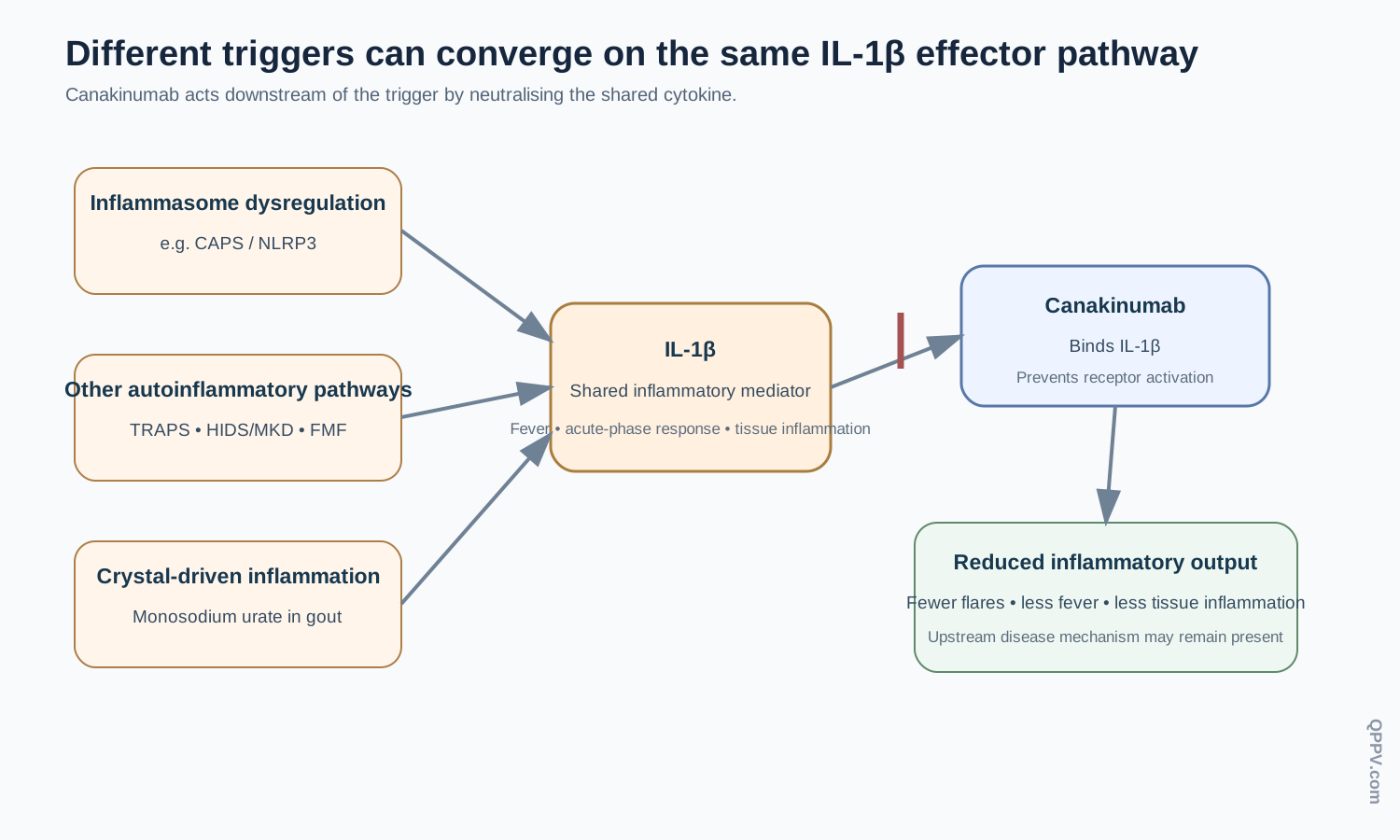
Figure 2. Genetic inflammasome dysregulation, other autoinflammatory pathways and urate crystals can converge on IL-1β. Canakinumab neutralises the shared cytokine rather than correcting each upstream trigger.
This mechanism does not remove the underlying genetic abnormality in hereditary fever syndromes or eliminate urate crystals in gout. It suppresses an inflammatory effector pathway. That distinction matters when evaluating recurrence, apparent loss of efficacy or continued need for disease-specific management.
Development and regulatory history
Canakinumab was authorised in the European Union in October 2009. Its initial development focused on cryopyrin-associated periodic syndromes, where IL-1 biology provided a particularly direct mechanistic rationale. The authorised spectrum subsequently broadened to other periodic fever syndromes, Still’s disease and gouty arthritis.
Current EU product information covers adults and children from 2 years of age in several chronic autoinflammatory indications. Treatment intervals differ: CAPS is generally treated every eight weeks, other periodic fever syndromes and Still’s disease every four weeks, while gouty arthritis uses an on-demand single injection under defined circumstances.
The regulatory history also illustrates the boundary between biological plausibility and authorised evidence. Applications to extend canakinumab into additional diseases have not always succeeded. For example, an EU application for Schnitzler syndrome was withdrawn in 2022, and an earlier cardiovascular-prevention application was also withdrawn after regulatory concerns about whether the observed benefit outweighed infection risk. These episodes should not be interpreted as evidence against authorised uses; they show that each indication requires its own benefit-risk demonstration.
Clinical use and indication-specific context
The authorised indication changes both exposure and background risk. A child with CAPS receiving long-term therapy every eight weeks is pharmacovigilance-wise different from an adult receiving a single dose for an acute gout flare. Still’s disease introduces another problem: fever, liver abnormalities, cytopenias and systemic inflammation can arise from the disease itself, infection or macrophage activation syndrome (MAS).
The treatment setting therefore has to be reconstructed before an adverse event can be interpreted. Age, genotype where relevant, disease activity, dosing interval, concomitant corticosteroids and recent infection are not optional contextual details.
Major safety domains
Infection
Serious infections have been observed during canakinumab therapy and infection is the dominant established safety concern. IL-1 participates in innate immune defence, so pathway inhibition can increase susceptibility to infection. Reports should preserve organism, site, microbiological evidence, severity, hospitalisation, concomitant immunosuppression and outcome.
Treatment should not be initiated or continued through clinically important active infection without reference to the authorised product framework. Opportunistic or unusual infections deserve targeted medical review rather than being pooled with common upper respiratory infections.
Tuberculosis and infection screening
Patients being considered for chronic cytokine inhibition may have prior or latent tuberculosis. A tuberculosis-related report should distinguish screening positivity from active disease. Useful data include baseline testing, exposure history, imaging, microbiology and prophylactic treatment.
A positive screening test alone should not be counted as drug-induced tuberculosis. The PV question is whether active infection emerged, reactivated or progressed in temporal relation to immunomodulation.
Neutropenia and leukopenia
Current EU product information warns that neutropenia and leukopenia can occur with IL-1 inhibition. Treatment is not to be initiated in patients with neutropenia or leukopenia, and white-cell counts including neutrophils are recommended before treatment, after one to two months and periodically during chronic or repeated therapy.
A laboratory signal becomes clinically interpretable only when baseline and nadir counts, infection status, concomitant medicines, recovery and treatment interruption are available. Pooling all low white-cell counts without severity or chronology can create misleading aggregate patterns.
Macrophage activation syndrome in Still’s disease
MAS is a life-threatening hyperinflammatory syndrome that can occur in Still’s disease independently of canakinumab. It may present with persistent fever, cytopenias, liver dysfunction, coagulopathy, hyperferritinaemia and multiorgan involvement.
This is a classic pharmacovigilance confounding problem. Infection and worsening Still’s disease can trigger MAS, while several manifestations of MAS overlap with serious adverse-event terms. Current product information states that clinical-trial experience does not suggest an increased incidence with canakinumab, but a definitive conclusion cannot be made.
Suspected MAS cases therefore require syndrome-level reconstruction: ferritin, blood counts, liver tests, coagulation, triglycerides, fibrinogen, infection investigations, disease activity, treatment and outcome. Coding only “fever” or “liver enzymes increased” can miss the clinically coherent syndrome.
Drug reaction with eosinophilia and systemic symptoms
DRESS has rarely been reported, particularly in patients with systemic juvenile idiopathic arthritis. Because DRESS can include fever, rash, eosinophilia, lymphadenopathy and internal-organ involvement, overlap with infection or systemic inflammatory disease is possible.
Follow-up should include latency, rash morphology, eosinophil count, organ involvement, concomitant medicines, infectious work-up, treatment and outcome. Causality assessment must account for other medicines that are well-established causes of DRESS.
Hypersensitivity
Hypersensitivity reactions have been reported. Most were mild in clinical development, but severe reactions cannot be excluded for an injectable protein. A report should distinguish local injection-site reaction from systemic hypersensitivity and document dose number, onset, organ involvement, treatment and recurrence.
Hepatic laboratory abnormalities
Transient, asymptomatic transaminase or bilirubin elevations have occurred. These findings should be assessed using baseline values, peak tests, bilirubin and alkaline phosphatase, symptoms, concomitant medicines and competing hepatic disease.
In Still’s disease, liver abnormalities may also occur as part of disease activity or MAS. The same laboratory term therefore has different causal possibilities depending on the clinical syndrome.
Vaccination
Live vaccines should not be given concurrently unless the benefit clearly outweighs the risk under the authorised framework. Current product information recommends that patients receive appropriate vaccinations, including pneumococcal and inactivated influenza vaccination, before treatment where appropriate.
A vaccine-related case should specify vaccine type and treatment timing. Apparent vaccine failure, vaccine adverse reaction and infection after vaccination are separate pharmacovigilance questions.
Immunogenicity and long-term response
Anti-drug antibodies are possible but have not dominated the safety profile. Apparent loss of response should be evaluated against disease phenotype, dosing interval, body weight where dosing is weight-based, adherence, disease progression and immunogenicity data when available.
In hereditary autoinflammatory disease, breakthrough inflammation does not necessarily mean the antibody has stopped binding IL-1β. Intercurrent infection, inadequate exposure, genotype-related disease severity or another inflammatory process may be responsible.
Pharmacovigilance case assessment
Canakinumab cases should be reconstructed around indication, age, dosing pattern, disease activity and inflammatory syndrome. That structure is especially important because several adverse-event terms—fever, cytopenia, liver dysfunction and rash—can arise from the treated disease, infection or a treatment-related event.
Event-specific follow-up priorities
| Event or issue | High-value follow-up information |
|---|---|
| Serious infection | Site, organism, microbiology, imaging, severity, concomitant immunosuppression, outcome |
| Neutropenia/leukopenia | Baseline and nadir counts, timing, infection status, concomitant medicines, recovery and treatment action |
| Suspected MAS | Ferritin, cytopenias, liver tests, coagulation, triglycerides/fibrinogen, infection work-up, disease activity and outcome |
| Suspected DRESS | Latency, rash, eosinophils, organ involvement, concomitant medicines, treatment and dechallenge |
| Hepatic abnormality | Baseline/peak ALT and AST, bilirubin, alkaline phosphatase, symptoms, disease activity and competing causes |
| Hypersensitivity | Dose number, onset, phenotype, treatment, recurrence and alternative triggers |
| Vaccination issue | Vaccine type, date, treatment interval and clinical or serological outcome |
| Loss of efficacy | Indication, genotype where relevant, disease measures, dosing interval, adherence and immunogenicity data if available |
Signal detection and aggregate review
Aggregate analyses should remain stratified by indication. A safety pattern in children with CAPS may not be comparable with on-demand gout exposure or adults with Still’s disease. Exposure duration, dose frequency and baseline inflammatory state differ too much for unqualified pooling.
MAS retrieval should be syndrome-based and should include relevant laboratory patterns rather than relying only on a single preferred term. The same applies to DRESS, where rash and hepatic terms may otherwise be dispersed across several coding categories.
Infection analyses should distinguish common respiratory infections from serious, opportunistic and microbiologically unusual infections. Neutropenia should be linked temporally to infection where possible rather than analysed as an isolated laboratory signal.
Periodic benefit-risk evaluation
Periodic review should integrate control of recurrent autoinflammation with serious infection, blood-count abnormalities, MAS, DRESS, hypersensitivity, hepatic findings, vaccination questions and long-term exposure in paediatric populations.
The changing indication mix matters. Chronic treatment of hereditary disease creates years of cumulative exposure, whereas gout treatment may be intermittent. Exposure denominators and event rates should therefore be interpreted using indication-specific use patterns.
Risk management and operational controls
Current product information governs infection precautions, blood-count monitoring, vaccination advice and management of suspected MAS or serious hypersensitivity. Recommended operational practice can include structured syndrome-specific follow-up for MAS and DRESS, age/indication stratification and longitudinal laboratory review.
The distinction between regulatory wording and operational enhancement should remain explicit. A company procedure may be sensible without being a legal requirement.
Potential failure modes
The following are illustrative scenarios, not published inspection findings:
- Persistent fever in Still’s disease is coded as infection without evaluating MAS or disease flare.
- A low neutrophil count is analysed without baseline values or concurrent infection.
- All canakinumab exposure is pooled despite major differences between chronic paediatric therapy and single-dose gout treatment.
- Rash and elevated liver enzymes are reviewed separately and a possible DRESS syndrome is missed.
- Apparent treatment failure in CAPS is assessed without confirming dosing interval or intercurrent infection.
- A withdrawn application for a non-authorised indication is incorrectly described as an approved use.
Inspection and governance perspective
An inspector assessing canakinumab pharmacovigilance could examine whether cases remain stratifiable by indication and age, whether MAS and DRESS receive syndrome-level medical review, whether laboratory abnormalities can be reconstructed longitudinally and whether infection cases contain adequate microbiological and concomitant-treatment information.
The effectiveness question is whether the system recognises that one cytokine target sits inside several different diseases. A database that loses the disease context can no longer distinguish treatment toxicity from the biology of autoinflammation.
Practical checklist
For a canakinumab case or aggregate review, confirm:
- authorised indication and age;
- chronic versus on-demand dosing pattern;
- exact dose and treatment interval;
- baseline disease activity and genotype where relevant;
- concomitant corticosteroids or immunomodulators;
- organism and site for serious infection;
- baseline and serial white-cell/neutrophil counts;
- ferritin and other MAS investigations when appropriate;
- eosinophils and organ involvement for suspected DRESS;
- objective liver tests and competing causes;
- vaccination type and timing;
- exact biological product and batch where available.
Key Takeaways
Canakinumab selectively neutralises IL-1β, a central cytokine in innate inflammatory signalling. Its therapeutic breadth reflects convergence of several upstream disease mechanisms on the same inflammatory mediator.
Its pharmacovigilance therefore depends on preserving disease context. Infection, neutropenia, MAS, DRESS and liver abnormalities cannot be interpreted correctly without knowing whether the patient has a hereditary periodic fever syndrome, Still’s disease or an acute gout indication and whether exposure is chronic or intermittent.
References
- European Medicines Agency. Canakinumab: EPAR and current product information. EU marketing authorisation issued October 2009; product information updated May 2026. https://www.ema.europa.eu/en/medicines/human/EPAR/ilaris
- European Medicines Agency. Canakinumab product information. Warnings include infection, neutropenia/leukopenia, MAS, DRESS, hypersensitivity and vaccination considerations. https://www.ema.europa.eu/en/documents/product-information/ilaris-epar-product-information_en.pdf
- European Medicines Agency. Withdrawal of application for use in Schnitzler syndrome. 2022. https://www.ema.europa.eu/en/medicines/human/variation/ilaris
- Lachmann HJ, Kone-Paut I, Kuemmerle-Deschner JB, et al. Use of canakinumab in the cryopyrin-associated periodic syndrome. N Engl J Med. 2009;360:2416-2425. doi:10.1056/NEJMoa0810787.
Regulatory Note
Authorised indications, paediatric age ranges, dosing intervals and safety recommendations can change and differ between regions. Withdrawn or unsuccessful applications for additional indications do not constitute authorised use. This article explains the scientific and pharmacovigilance framework and does not replace current regional product information or specialist rheumatology/autoinflammatory-disease guidance. Regulatory information was checked against EMA material current in September 2026.