Carvedilol: Discovery, Development, Safety and Pharmacovigilance
Carvedilol is an oral adrenergic antagonist with activity at beta-1, beta-2 and alpha-1 receptors. Its development helped change the treatment of chronic heart failure from an approach dominated by diuresis and short-term haemodynamic support to one that also modifies sustained sympathetic activation. That change is clinically important because the same medicine that improves outcomes in appropriately selected stable patients can precipitate symptomatic bradycardia, hypotension or fluid retention during initiation or dose escalation. Its benefit–risk profile is therefore inseparable from the indication, baseline haemodynamic stability, co-medication and titration schedule.
The distinction between chronic heart-failure benefit and acute decompensation is central to safe prescribing and pharmacovigilance. Carvedilol is not a rescue treatment for cardiogenic shock. A report of worsening heart failure after starting carvedilol requires assessment of the patient's trajectory before initiation, congestion, dose changes, adherence, interacting medicines and whether treatment was started during clinical instability. Conversely, a report of worsening disease after abrupt discontinuation should not automatically be attributed to direct drug toxicity. Both directions of exposure change can be clinically consequential.
- Carvedilol: Discovery, Development, Safety and Pharmacovigilance
- Discovery, development and commercial lifecycle
- Pharmacology and its clinical consequences
- Clinical evidence: interpretation before extrapolation
- The clinical evidence and its boundaries
- Product-specific listedness: United States and United Kingdom
- Safety in the real patient
- Pharmacovigilance case assessment and risk minimisation
- A practical review and governance workflow
- Key takeaways
- References
- Regulatory Note
Discovery, development and commercial lifecycle
Carvedilol was developed in the context of attempts to improve adrenergic blockade beyond older, predominantly beta-receptor antagonists. The original product became known commercially as Coreg in the United States and as Dilatrend or other names in several markets. US prescribing information identifies initial US approval in 1995. The subsequent clinical programme established evidence in chronic heart failure and in patients with left-ventricular dysfunction after myocardial infarction; these uses should be distinguished from uncomplicated hypertension, where the benefit–risk calculus and titration needs are different.
The original US regulatory application records carvedilol (Kredex) as in-licensed from Boehringer Mannheim, with SmithKline Beecham and Boehringer Mannheim collaborating on development in several markets. It documents earlier German approval for hypertension in October 1990 and launch in January 1991. These are historically documented commercial-development milestones, not proof of a single inventor or an unchanging worldwide ownership arrangement. [9] Brand ownership does not identify the discoverer of a molecule, and revenue associated with branded or combination products cannot be attributed automatically to the carvedilol INN. The genericisation of immediate-release carvedilol increased the importance of comparing a specific label, pack and manufacturer rather than treating the original brand's information as the only available source.
Immediate-release carvedilol is typically taken twice daily with food in the US labelling reviewed here. Modified- or extended-release formulations have different administration and dose-conversion instructions. An adverse-event investigation must record which formulation was actually supplied and whether a substitution, dispensing error or change in administration accompanied the event. The existence of a common active ingredient does not establish dose-for-dose interchangeability across formulations.
Pharmacology and its clinical consequences
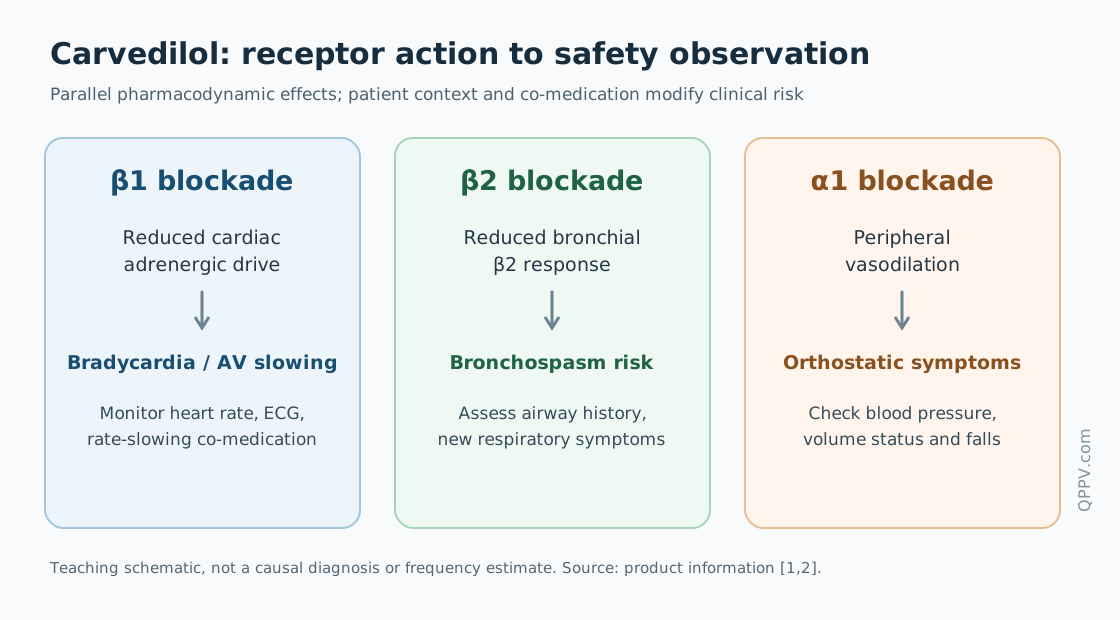
Figure 1. Receptor-level effects and corresponding observations to record during treatment. The pathways coexist; the schematic is not an incidence estimate.
Beta blockade, alpha blockade and compensatory physiology
Beta-1 blockade reduces heart rate and myocardial contractile stimulation and limits the effects of chronic sympathetic activation. Beta-2 blockade can interfere with bronchodilation and contribute to bronchospasm in susceptible patients. Alpha-1 blockade reduces peripheral vascular resistance, adding a vasodilating component that helps explain postural dizziness and hypotension, particularly after an initial dose or rapid escalation. These effects interact with underlying cardiac output, circulating volume, autonomic function and other blood-pressure-lowering medicines.
The heart-failure benefit of beta blockade is not simply an immediate improvement in cardiac output. Initial negative inotropy may be poorly tolerated in an unstable patient, while sustained therapy in appropriate patients can improve remodelling and clinical outcomes. For that reason, the sequence of stabilisation, initiation at a low dose, interval assessment and cautious escalation is a risk-minimisation intervention, not an administrative detail.
Carvedilol is administered as a racemate, with stereoselective pharmacological and metabolic characteristics. It undergoes substantial hepatic metabolism, including pathways involving CYP2D6 and CYP2C9, and is affected by interacting medicines. Genetic differences in metabolism do not translate directly into a universal dosing rule; clinical response and the product's approved dosing instructions remain decisive. Severe hepatic impairment is a contraindication in the US tablet information examined.
Administration and titration
The January 2026-revised US Zydus immediate-release carvedilol tablet label recommends starting chronic heart-failure treatment at 3.125 mg twice daily and considering escalation to 6.25 mg, 12.5 mg and 25 mg twice daily at intervals of at least two weeks, subject to tolerance. The same label provides a different starting and escalation schedule for clinically stable patients with left-ventricular dysfunction after myocardial infarction and for hypertension. These are labelled schedules for that US product, not instructions that override individual clinical assessment or another jurisdiction's SmPC.
Monitoring should evaluate heart rate, seated and standing blood pressure when appropriate, symptoms of dizziness or syncope, body weight, oedema, breathlessness and changes in concomitant diuretics or vasodilators. A patient who becomes more congested after initiation may need reassessment of fluid management and haemodynamic stability rather than an automatic permanent classification of carvedilol intolerance. Severe symptomatic bradycardia, conduction abnormalities or shock demand prompt clinical evaluation.
Interaction pathways that matter for case assessment
The US label identifies interactions with digoxin, amiodarone, verapamil- or diltiazem-type calcium-channel blockers, CYP2D6 inhibitors and rifampin. The mechanisms differ: some drugs increase exposure, while others add pharmacodynamic slowing of atrioventricular conduction or blood-pressure reduction. Cyclosporine concentrations can increase. Insulin and oral glucose-lowering medicines raise another problem: beta blockade can mask adrenergic warning symptoms of hypoglycaemia and alter glucose control.
A well-documented suspected interaction case includes start and stop dates, formulation, doses, heart-rate or blood-pressure measurements, ECG findings, renal and hepatic status where relevant, co-medication timing and the outcome of dechallenge or clinically justified dose adjustment. A database term such as “drug interaction” without the observed clinical event is not enough to establish causality or seriousness.
Clinical evidence: interpretation before extrapolation
The pivotal chronic heart-failure programme and later comparisons helped establish the role of beta blockade in stable systolic dysfunction. COPERNICUS studied patients with severe chronic heart failure; its findings should not be applied indiscriminately to acutely unstable patients requiring intravenous inotropic support. COMET compared carvedilol with metoprolol tartrate under a particular dosing protocol, and its results do not constitute a general proof of superiority over every formulation or dose of metoprolol. CAPRICORN examined patients after myocardial infarction with left-ventricular dysfunction; that population is not synonymous with every patient who has experienced an infarction.
For each trial, a complete appraisal must retain inclusion and exclusion criteria, the comparator and its formulation, achieved doses, background therapy, endpoints, absolute event rates, follow-up and uncertainty. Treatment discontinuations, bradycardia, hypotension and early clinical deterioration matter alongside mortality or hospitalisation outcomes. Changes in contemporary guideline-directed therapy also affect external validity. The evidence supports clinically selected use; it does not eliminate the need for individual titration and monitoring.
The following trial-by-trial appraisal retains the endpoints and comparator details that determine what can reasonably be concluded. Modern HFrEF guidelines distinguish carvedilol, bisoprolol and sustained-release metoprolol succinate from an unsupported beta-blocker class-wide survival claim. [10]
The clinical evidence and its boundaries
The original US heart-failure programme
The 1996 US Carvedilol Heart Failure Study Group publication pooled four protocols involving 1,094 people with chronic heart failure. Mortality was 3.2% among carvedilol recipients and 7.8% among placebo recipients, a reported relative reduction of 65% (95% confidence interval 39–80%). Cardiovascular hospitalisation was 14.1% versus 19.6%; death or hospitalisation was 15.8% versus 24.6%. The data-monitoring committee recommended early termination. These findings were historically important because clinicians had previously feared that reducing adrenergic stimulation in an already weakened ventricle would necessarily worsen long-term outcomes. They did not prove that starting beta blockade during acute haemodynamic instability was safe. [3]
The trial background included ACE inhibitors, diuretics and digitalis, rather than the complete contemporary heart-failure treatment regimen. Thus, its relative and absolute effects must be interpreted within the enrolled population and historical treatment setting. Stopping a study early for benefit can also affect the precision of estimated treatment effects.
COPERNICUS: severe disease does not mean shock
COPERNICUS enrolled 2,289 people with severe chronic heart failure, symptoms at rest or minimal exertion, and ejection fraction below 25%. Participants were clinically euvolaemic. Patients requiring intensive care, intravenous vasodilators or positive inotropes, or with marked fluid retention were excluded. During a mean 10.4 months, 130 of 1,156 carvedilol recipients died, compared with 190 of 1,133 placebo recipients. The reported mortality risk reduction was 35% (95% confidence interval 19–48%; adjusted P=0.0014). The combined death-or-hospitalisation outcome also favoured carvedilol. [4]
The practical lesson is not that carvedilol is safe in all severe heart failure. It is that stable patients with very impaired systolic function can benefit when treatment is introduced and escalated under appropriate monitoring. The initiation schedule was integral to the intervention. An episode of fluid retention during up-titration requires assessment of volume status, dose and concomitant treatment; it does not automatically prove permanent intolerance.
COMET: the exact comparator changes the inference
COMET compared carvedilol with immediate-release metoprolol tartrate in 3,029 people with chronic heart failure. Over a mean 58 months, all-cause deaths occurred in 512 of 1,511 carvedilol recipients (34%) and 600 of 1,518 metoprolol recipients (40%): hazard ratio 0.83 (95% CI 0.74–0.93; P=0.0017). However, the coprimary composite of death or all-cause admission occurred in 74% versus 76%, hazard ratio 0.94 (95% CI 0.86–1.02; P=0.122). [5]
This is not a trial of carvedilol against every beta blocker. Metoprolol tartrate, its dose schedule and the background therapy must be preserved in interpretation. In particular, it is inappropriate to generalise the result to metoprolol succinate extended-release without direct comparative evidence. The nonsignificant composite must be reported alongside the favourable mortality result.
CAPRICORN: prespecified endpoints matter
CAPRICORN studied clinically stable patients following myocardial infarction with left-ventricular systolic dysfunction. The primary composite of all-cause death or cardiovascular hospitalisation occurred in 340 (35%) carvedilol recipients and 367 (37%) placebo recipients: hazard ratio 0.92 (95% CI 0.80–1.07), not statistically significant. Death alone occurred in 116 (12%) versus 151 (15%), hazard ratio 0.77 (95% CI 0.60–0.98; nominal P=0.03). The revised coprimary testing allocation meant that this mortality result did not cross its allocated statistical threshold. [6,7]
This distinction is crucial for regulatory-quality writing. A clinically suggestive secondary or coprimary result does not retrospectively turn a neutral primary analysis into a positive one. Nevertheless, the US product label authorises use to reduce cardiovascular mortality in clinically stable survivors with ejection fraction at or below 40%; the authorisation and its supporting totality of evidence should be described separately from a simplified trial verdict. [1]
GEMINI and the metabolic question
GEMINI compared carvedilol with metoprolol tartrate in 1,235 people with type 2 diabetes and hypertension receiving renin–angiotensin system blockade. It evaluated metabolic endpoints rather than mortality. Its glycaemic findings help explain why the metabolic profile of individual beta blockers matters, but they do not eliminate carvedilol's labelled potential to mask hypoglycaemia symptoms or affect glucose control. [8,1]
Across these studies, treatment setting, achieved dose, follow-up and comparator explain more than a simple ranking of medicines. Trial adverse-event frequencies also reflect selected populations and surveillance protocols; they should not be converted into incidence estimates for spontaneous postmarketing reports.
Product-specific listedness: United States and United Kingdom
A public product label is a versioned source, not a timeless list of all effects ever reported with an active ingredient. The comparison below uses US Zydus Pharmaceuticals carvedilol immediate-release tablets, DailyMed set ID 32098c09-7580-4975-a3e1-31b619c04c69, published 7 July 2026, with prescribing-information revision January 2026, and UK Milpharm/Aurobindo carvedilol 6.25 mg film-coated tablets, product licence PL 16363/0352, SmPC text revised 2 July 2026, published on emc 7 July 2026. Both sources were accessed 1 November 2026. The US product covers 3.125, 6.25, 12.5 and 25 mg tablets; the named UK document is specifically the 6.25 mg product. Neither comparison should be silently transferred to a modified-release formulation. [1,2]
The US indication set comprises chronic heart failure, stable left-ventricular dysfunction following myocardial infarction and hypertension. The named UK SmPC section 4.1 specifies hypertension and adjunctive symptomatic congestive heart-failure treatment; its section 4.4 discusses post-infarction ventricular dysfunction, but that mention is not a third section-4.1 indication in this particular UK product. The difference illustrates why a clinical topic appearing in a label is not necessarily an authorised indication. [1,2]
Comparison of reaction listings, warnings and populations
| Clinical topic | US Zydus label | UK Milpharm SmPC | Interpretation |
|---|---|---|---|
| Dizziness, fatigue and hypotension | Clinical-study adverse-event section 6.1; hypotension also in warning 5.3 | Dizziness, asthenia and hypotension in section 4.8, with frequency categories | Listed in both, but trial percentages and UK frequency bands are not directly comparable |
| Bradycardia and AV conduction | Bradycardia in section 6.1 and warning 5.2; conduction concerns elsewhere | Bradycardia common and AV block uncommon in section 4.8 | A conduction event may be listed yet still require assessment of dose, co-medication and clinical seriousness |
| Heart failure, fluid retention and renal deterioration | Clinical-study events and warnings 5.4/5.8 | Heart failure, oedema and renal abnormalities in section 4.8; detailed section 4.4 precautions | Disease-related events and treatment-related deterioration must be distinguished |
| Bronchospasm/asthma | Asthma/bronchospasm in relevant safety material and contraindications | Asthma in predisposed patients in section 4.8; bronchospasm/asthma history contraindicated in section 4.3 | A contraindication is not automatically an adverse-reaction frequency estimate |
| Stevens–Johnson syndrome and toxic epidermal necrolysis | Explicitly named in postmarketing section 6.2 | Very rare severe cutaneous reactions in section 4.8 and discontinuation precaution in 4.4 | Listed in both public labels, with different evidence presentation |
| Urinary incontinence | Postmarketing section 6.2 | Very rare urinary incontinence in women in section 4.8 | Both list the event; the UK text additionally specifies sex and frequency category |
| Interstitial pneumonitis | Postmarketing section 6.2 | Not identified in the reviewed UK section-4.8 adverse-reaction table | A defined difference in the assessed sections, not proof that a UK holder has no knowledge of the event |
| Aplastic anaemia | Postmarketing section 6.2 | Not identified in the reviewed UK section-4.8 table | Do not infer a UK frequency or company-core expectedness from the US listing |
| Pregnancy and lactation | Population-specific risk discussion in sections 8.1/8.2 | Section 4.6 describes limited human pregnancy data and advises against breastfeeding | Population precaution is not equivalent to a listed maternal adverse reaction |
The UK SmPC gives categorical frequencies: for example, dizziness and headache are very common, bradycardia common, AV block uncommon, and severe cutaneous reactions very rare. The US label instead combines controlled-study percentages, less frequent events and voluntary postmarketing reports. A voluntary report category has no reliable denominator; its inclusion cannot be interpreted as a measured incidence. [1,2]
The boundaries of listedness
For an individual case, public-label listedness means whether the reported event is represented in the identified public product information at the specified date and location. It is not the same as expectedness assessed against the applicable reference safety information for a clinical trial, company-core safety information, causal attribution or legal reporting classification. A term present in section 5 as a precaution but absent from section 6 as an adverse reaction requires a more nuanced record than a single unqualified “listed” field.
The source label must be preserved with its revision date, formulation and market. Where a local product's label is unavailable, a US or UK label can support a provisional comparison but cannot be substituted for the local legally applicable reference without disclosure. Different wording and frequency categories may arise from product-specific datasets or regulatory history, but an analyst should not invent the reason for a discrepancy.
Safety in the real patient
Haemodynamic and conduction effects
Bradycardia, hypotension, orthostasis and syncope are predictable from receptor blockade. A case report should capture resting and standing blood pressure, heart rate, ECG rhythm and PR interval if available, dose, timing after administration, titration stage, dehydration, infection and concomitant rate-slowing drugs. Amiodarone, digoxin, verapamil and diltiazem deserve particular attention because their interaction may be pharmacodynamic, pharmacokinetic or both. A severe episode may be medically important even without admission; seriousness and intensity are separate attributes.
Fluid retention and renal function
A patient with reduced ejection fraction may develop oedema or dyspnoea from disease progression, under-diuresis, nonadherence or the early haemodynamic effects of beta blockade. The timing relative to carvedilol initiation, weight trajectory, renal function, natriuretic peptides where available, diuretic changes and objective congestion findings help distinguish possibilities. A dechallenge that coincides with aggressive diuresis is not a clean experiment. In people with low blood pressure, vascular disease or renal impairment, renal deterioration during escalation is specifically recognised in the labels. [1,2]
Skin, lung and metabolic reactions
Stevens–Johnson syndrome or toxic epidermal necrolysis requires urgent clinical management and careful capture of latency, morphology, mucosal involvement, alternative medicines and diagnostic confirmation. Interstitial pneumonitis in the US postmarketing section requires differential diagnosis against heart-failure pulmonary oedema, infection and other drugs. For diabetes, an apparently normal pulse response during hypoglycaemia may reflect beta blockade; documenting glucose values and concomitant hypoglycaemic therapy is essential. [1,2]
Special populations
Severe hepatic dysfunction is contraindicated in both selected labels, reflecting the importance of hepatic metabolism. Renal impairment does not uniformly mandate a fixed dose adjustment in the UK SmPC, but blood pressure and renal function still warrant monitoring in vulnerable heart-failure patients. Pregnancy requires balancing maternal cardiovascular risk and fetal/neonatal effects; the US label identifies potential neonatal bradycardia, hypotension, hypoglycaemia and respiratory depression after late exposure. Paediatric evidence is insufficient to extrapolate adult efficacy, and the US label describes a paediatric trial without significant clinical benefit. [1,2]
Pharmacovigilance case assessment and risk minimisation
A useful carvedilol case narrative reconstructs the clinical situation before the suspected event. The minimum information needed to assess a case is not the same as the information needed for a persuasive causal explanation. A valid individual case safety report generally needs an identifiable patient, identifiable reporter, suspect product and adverse event; further details establish chronology, alternative causes, seriousness and the appropriate reporting pathway. ICH E2D(R1), implemented in the EU from 18 March 2026 and finalised as FDA guidance in March 2026, addresses post-authorisation source classification and case-management standards. Regional legal reporting rules still govern obligations and timelines. [11]
Reconstructing a dose-escalation event
Consider a hypothetical patient with chronic systolic heart failure whose carvedilol is increased after two weeks of stable treatment. Three days later, the patient experiences dizziness, a heart rate of 43 beats per minute and near-syncope. The report should distinguish the event's onset from the date of the most recent dose, record the actual administered dose and formulation, document ECG findings, blood pressure, concurrent digoxin or amiodarone, dehydration, recent infections and changes in diuretic therapy. A low heart rate alone is not sufficient to attribute the event to carvedilol if another conduction-slowing medicine was also initiated.
A temporary interruption followed by recovery may support a temporal association but is not an unconfounded dechallenge when other medicines were also withheld or intravenous treatment was given. Rechallenge is rarely justified simply to strengthen causality in a serious bradyarrhythmic event. A clinician's decision to resume at a lower dose for therapeutic reasons is a different matter; the outcome should be recorded without implying that a formal experimental rechallenge occurred. This example is illustrative, not a documented safety case.
Worsening heart failure versus a treatment-related adverse reaction
In a second hypothetical case, oedema develops after dose escalation. Heart-failure progression, fluid intake, missed diuretics, renal deterioration and infection may be competing explanations. Objective weight change, physical signs, renal function and natriuretic peptides can clarify the course. It is possible for the disease being treated and a suspected adverse reaction to share the same clinical term. The UK section-4.8 table includes cardiac failure among adverse events, but this does not establish causality in every reported patient with cardiac failure. [2]
This distinction matters for aggregate review. Counting all post-initiation decompensations as carvedilol-induced would inflate a signal; dismissing all events as underlying disease would conceal a clinically important initiation risk. A defensible review stratifies events by initiation versus maintenance exposure, severity of baseline disease, dose changes, concomitant rate-limiting medicines and evidence of haemodynamic instability.
Medication error, interruption and formulation switch
An immediate-release twice-daily product can be confused with once-daily modified-release carvedilol. A safety report should identify the strength, release mechanism, manufacturer, actual timing, dispensing history and whether the patient swallowed the intended formulation. A dose conversion should follow the specific product information rather than an arithmetic assumption about total daily milligrams. The UK SmPC provides a particularly useful operational rule: after more than one week without treatment, resume at a lower dose; after more than two weeks, it specifies re-initiation at 3.125 mg twice daily before re-titration. [2]
Abrupt withdrawal can aggravate ischaemic symptoms or cause clinical deterioration in susceptible patients. The US and UK product information recommend avoiding abrupt cessation, particularly in people with coronary disease. A reported myocardial event after a treatment gap therefore needs assessment of the discontinuation itself as an exposure change, not only the last dose before symptoms. [1,2]
Severe skin reactions, respiratory effects and pregnancy exposure
A suspected severe cutaneous adverse reaction requires rapid clinical evaluation, accurate phenotyping and assessment of all plausible culprit medicines. The public US and UK documents both list Stevens–Johnson syndrome and toxic epidermal necrolysis; this does not imply a reliable incidence estimate from spontaneous reporting. A suspected pneumonitis case needs imaging, infection assessment, competing cardiogenic pulmonary oedema and co-medication chronology. For pregnancy exposure, capture gestational timing, maternal disease severity, delivery and neonatal findings without presuming that a class warning proves individual causation. [1,2]
A practical review and governance workflow
The first operational step is case intake: preserve the reporter's original terms, source, contactability, formulation and chronology. The second is medical review: code events at the appropriate MedDRA specificity, establish seriousness, assess clinical plausibility and identify missing information worth following up. The third is listedness and reporting assessment against the applicable dated local reference, with source and reasoning retained. The fourth is aggregate evaluation: compare similar cases for clustering after initiation, dose escalation, interaction or formulation switch, while considering exposure and disease background.
A potential signal of a new adverse reaction should not be declared merely because several spontaneous reports use the same term. The reviewer should evaluate duplicates, diagnostic certainty, dechallenge, biological plausibility, co-medication, temporal patterns, alternative explanations and whether the event is already characterised in product information. Conversely, absence of a calculated disproportionality signal does not exclude a clinically important rare event. The decision and its uncertainty should be documented, escalated through the organisation's safety governance and revisited as evidence develops.
An inspection-ready record would show the exact source label version, the case chronology, coding rationale, follow-up attempts, medical assessment, reporting decision and any subsequent aggregate or label-review action. This is recommended operational practice; it should not be mistaken for a claim that every item is independently prescribed by a single regulation.
Key takeaways
Carvedilol's benefit in appropriately stabilised systolic heart failure coexists with predictable initiation and titration hazards. The major mortality trials must be read with their comparator formulations and statistical testing plans intact: COMET did not show a significant benefit on its coprimary hospitalisation-or-death endpoint, and CAPRICORN's mortality result did not satisfy the revised multiplicity threshold. US and UK immediate-release product information overlap substantially on common haemodynamic events but differ in indication wording, frequency presentation and some postmarketing entries. For pharmacovigilance, formulation identity, timing, haemodynamic status and co-medication are often more informative than a generic suspect-drug field.
References
- Zydus Pharmaceuticals (USA). Carvedilol tablets, immediate-release: US prescribing information. DailyMed set ID 32098c09-7580-4975-a3e1-31b619c04c69. Label revised January 2026; DailyMed version published 7 July 2026. Sections 1–8, 14. Accessed 1 November 2026. https://dailymed.nlm.nih.gov/dailymed/lookup.cfm?setid=32098c09-7580-4975-a3e1-31b619c04c69
- Milpharm Ltd / Aurobindo Pharma. Carvedilol 6.25 mg film-coated tablets: UK Summary of Product Characteristics. PL 16363/0352. Text revised 2 July 2026; emc updated 7 July 2026. Sections 4.1–4.9, 5. Accessed 1 November 2026. https://www.medicines.org.uk/emc/product/3107/smpc
- Packer M, Bristow MR, Cohn JN, et al. The effect of carvedilol on morbidity and mortality in patients with chronic heart failure. N Engl J Med. 1996;334:1349–1355. https://doi.org/10.1056/NEJM199605233342101
- Packer M, Coats AJS, Fowler MB, et al. Effect of carvedilol on survival in severe chronic heart failure. N Engl J Med. 2001;344:1651–1658. https://doi.org/10.1056/NEJM200105313442201
- Poole-Wilson PA, Swedberg K, Cleland JGF, et al. Comparison of carvedilol and metoprolol on clinical outcomes in patients with chronic heart failure (COMET). Lancet. 2003;362:7–13. https://pubmed.ncbi.nlm.nih.gov/12853193/
- Dargie HJ. Effect of carvedilol on outcome after myocardial infarction in patients with left-ventricular dysfunction: the CAPRICORN randomised trial. Lancet. 2001;357:1385–1390. https://pubmed.ncbi.nlm.nih.gov/11356434/
- American College of Cardiology. CAPRICORN trial review, including revised coprimary alpha allocation and interpretation. https://www.acc.org/latest-in-cardiology/clinical-trials/2010/02/23/18/59/capricorn
- Bakris GL, Fonseca V, Katholi RE, et al. Metabolic effects of carvedilol vs metoprolol in patients with type 2 diabetes mellitus and hypertension: GEMINI. JAMA. 2004;292:2227–2236. https://jamanetwork.com/journals/jama/fullarticle/199763
- US Food and Drug Administration. Original Coreg (carvedilol) NDA 020297, including foreign marketing history and Boehringer Mannheim/SmithKline Beecham development arrangement. Historical regulatory record. https://www.accessdata.fda.gov/drugsatfda_docs/nda/pre96/020297Orig1s000rev.pdf
- Heidenreich PA, Bozkurt B, Aguilar D, et al. 2022 AHA/ACC/HFSA guideline for management of heart failure. Circulation. 2022;145:e895–e1032. https://doi.org/10.1161/CIR.0000000000001063
- International Council for Harmonisation. E2D(R1): Post-approval safety data—definitions and standards for management and reporting of individual case safety reports. EMA Step 5; EU effective 18 March 2026; FDA final guidance March 2026. https://www.ema.europa.eu/en/documents/scientific-guideline/ich-e2dr1-guideline-post-approval-safety-data-definitions-standards-management-reporting-individual-case-safety-reports-step-5_en.pdf
Regulatory Note
This article is an educational interpretation of dated product information and clinical evidence, not a substitute for the locally authorised current label, individual clinical assessment or applicable national pharmacovigilance law. The US and UK documents assessed are specific immediate-release tablet products; listedness, clinical indication and reporting obligations must be verified for the relevant product, jurisdiction, date and safety reference. Historical trial results and guidelines are not marketing authorisations.