Clesrovimab: Classification, Mechanism and Pharmacovigilance
Clesrovimab provides antibody-mediated protection against respiratory syncytial virus (RSV) for infants entering their first RSV season. It is a preventive antibody, not a vaccine or an antiviral treatment for established RSV disease.
1. Identity and classification
Clesrovimab is a fully human IgG1-kappa neutralising monoclonal antibody directed against the RSV fusion (F) protein. It is a long-acting antiviral antibody used for passive immunisation: the administered antibody supplies immediate, temporary protection without asking the infant’s immune system to make its own antibody response.[1,2]
The Fc region includes three amino-acid substitutions, described as YTE, which increase binding to the neonatal Fc receptor and extend serum half-life. Clesrovimab binds a conserved site on the F protein. These design features support a single dose for a season; they do not convert passive antibody protection into vaccine-induced immune memory.[2]
2. Target biology and mechanism
RSV uses its F protein to fuse with host-cell membranes and enter cells. Clesrovimab binds an epitope at antigenic site IV on the F protein and neutralises RSV A and B in vitro, reducing the opportunity for viral entry.[2] The clinical indication is prevention of RSV lower-respiratory-tract disease; it should not be interpreted as guaranteed prevention of every RSV infection or as treatment after infection has begun.
The mechanism supports a biologically plausible preventive effect but does not establish duration of protection in every individual. Age, timing before or during RSV circulation, prematurity and host vulnerability influence the context in which a breakthrough infection occurs.
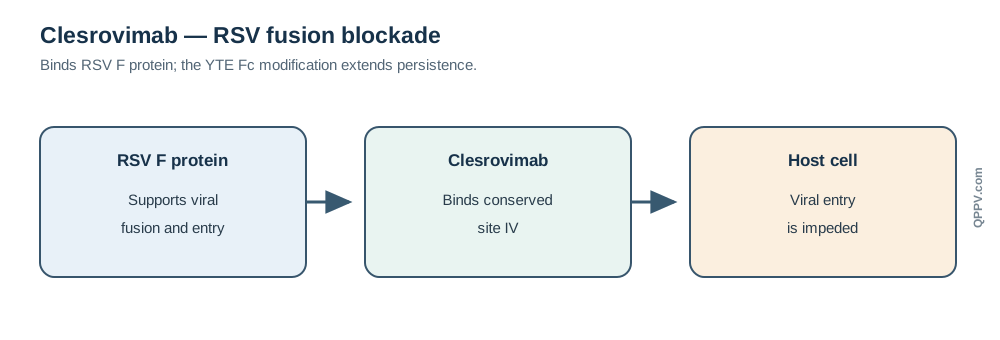
Figure 1. Clesrovimab binds RSV F protein to impede cell entry; its YTE Fc modification extends antibody persistence.
3. Indications and administration
In the United States, clesrovimab is indicated to prevent RSV lower-respiratory-tract disease in neonates and infants born during or entering their first RSV season. The EU indication covers neonates and infants during their first RSV season, with use according to official recommendations.[1,2] The EU marketing authorisation was granted on 15 April 2026.[3]
The recommended dose is 105 mg as a single intramuscular injection. Timing depends on whether the infant is born during the season or is entering the season later. The product information includes extrapolation for very low-weight infants, because clinical study evidence in the smallest weight range is limited.[2] Administration, storage, dosing and use alongside other preventive measures should follow the current local product information and public-health recommendations.
4. Clinical evidence and limitations
Study 004 was a randomised, double-blind, placebo-controlled phase 2b/3 study of healthy preterm and full-term infants entering their first RSV season. Participants received a 105-mg dose of clesrovimab or placebo; the primary endpoint was medically attended RSV-associated lower-respiratory-tract illness through 150 days after dosing.[2,4]
In the EMA product information, relative efficacy versus placebo was 60.4% for the primary lower-respiratory endpoint, 84.2% for RSV-associated hospitalisation and 91.7% for severe lower-respiratory illness. The hospitalisation and severe-illness results were secondary or exploratory outcomes and had fewer events than the primary endpoint.[2] These findings concern defined RSV-positive outcomes over a trial period; they do not mean that every infant is protected for an entire season or that a post-dose respiratory illness is necessarily RSV.
A separate study evaluated infants at increased risk of severe RSV disease, including infants born very preterm or with specified medical conditions. Study populations and endpoints differ, so efficacy or safety numbers from one study should not be casually pooled with another.
5. Safety and immunogenicity
The EU product information lists rash and injection-site pain, erythema and swelling among common adverse reactions; urticaria is uncommon. It warns about clinically significant hypersensitivity, including anaphylaxis.[2] In clinical studies, anti-drug antibodies were detected in some recipients through day 240. No impact on pharmacokinetics, neutralising activity or safety during the first season was identified in those data, while the effect on efficacy could not be established.[2]
Breakthrough RSV and suspected lack of effect need age, dose and date, gestational age, season timing, RSV testing, disease severity, hospitalisation and concurrent preventive measures. A respiratory illness without RSV confirmation is not automatically an RSV breakthrough. A rash or injection-site event should be described by onset, duration, treatment and outcome.
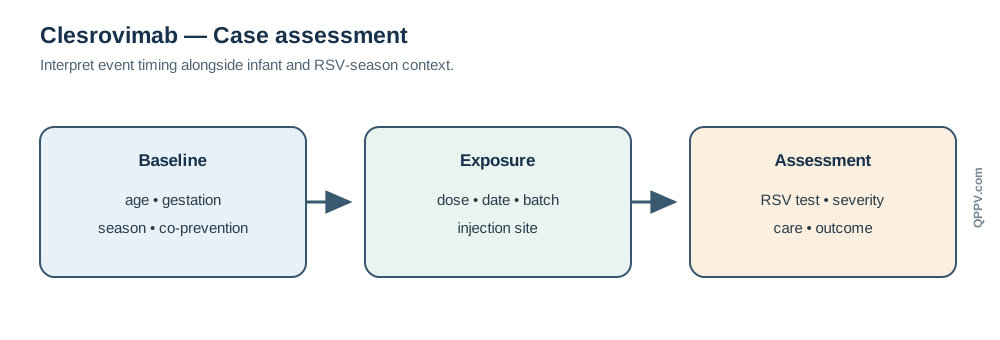
Figure 2. Interpret a suspected event against infant-specific baseline risk, dose timing, RSV evidence and seasonal context.
6. Pharmacovigilance case assessment
For a suspected adverse reaction, record product identity, dose, route, injection site, date and time, batch number, concomitant vaccines or medicines, event onset, treatment and outcome. The EU product information specifically highlights recording the product name and batch number to improve biological-product traceability.[2]
For a breakthrough infection, preserve the infant’s age and weight at dosing, gestational age, RSV season, time since injection, laboratory confirmation, site of care and severity. Record maternal vaccination or other relevant prevention context where available. These details help distinguish timing or exposure issues from a possible reduction in product activity.
The EMA product information describes F-protein substitutions identified in some RSV-positive trial samples, including substitutions at G446. Such observations support continued monitoring of sequence and neutralisation data; they do not by themselves establish clinically important resistance in routine use.[2] Anti-drug-antibody positivity similarly should not be treated as evidence of loss of protection when the clinical impact was not established in the reviewed studies.
7. Regulatory status and practical safeguards
The U.S. indication and EU authorisation both cover first-season infant prophylaxis, but operational recommendations, product information and implementation can vary by jurisdiction. The EU authorisation date is 15 April 2026.[1–3] Apply local guidance for product selection and timing; do not treat clesrovimab as an RSV vaccine or as post-exposure therapy.
The central pharmacovigilance question is whether the event reflects the antibody, the infant’s underlying vulnerability, the timing of prophylaxis, RSV disease itself or another cause. Clear product identification and laboratory-supported event description are especially important when several preventive interventions can be used during one season.
Key takeaways
- Clesrovimab is a long-acting, RSV F-protein-neutralising antibody for passive first-season protection.
- Its YTE Fc modification extends persistence; it does not create vaccine-like immune memory.
- Trial efficacy was measured against defined RSV-associated lower-respiratory outcomes over specified follow-up.
- For breakthrough disease or suspected reactions, capture infant age, gestational age, dose timing, RSV confirmation, batch and outcome.
References
- U.S. Food and Drug Administration. ENFLONSIA prescribing information. 2025.
- European Medicines Agency. ENFLONSIA product information.
- European Medicines Agency. Enflonsia EPAR. First EU authorisation: 15 April 2026.
- Zar HJ, et al. Clesrovimab for Prevention of RSV Disease in Healthy Infants. New England Journal of Medicine. 2025.
- U.S. Centers for Disease Control and Prevention. Use of Clesrovimab for Prevention of Severe Respiratory Syncytial Virus Disease in Infants. 2025.
Regulatory Note
This article describes U.S. and EU product information available on 25 September 2026. It is an educational reference, not a treatment recommendation or a substitute for current jurisdiction-specific product information, applicable law or clinical judgement.