Concizumab: Mechanism, Clinical Safety and Pharmacovigilance
Concizumab is a monoclonal antibody that binds tissue factor pathway inhibitor (TFPI), a natural inhibitor of tissue-factor-initiated coagulation. By reducing TFPI activity, it increases the capacity of the extrinsic pathway to generate factor Xa and thrombin. This can improve haemostasis in haemophilia, where factor VIII or IX activity is deficient or inhibited. The same mechanism creates a safety problem that has to be understood in both directions: too little haemostatic effect leaves bleeding insufficiently controlled, while excessive coagulation activity can contribute to thrombosis.
Pharmacovigilance for concizumab therefore cannot treat a report as a single-drug exposure. Continuous prophylaxis and episodic treatment for breakthrough bleeding may overlap. The intensity, timing and identity of both exposures can change how a bleed or thrombotic event should be interpreted. The first task is to reconstruct that combined treatment history.
- Concizumab: Mechanism, Clinical Safety and Pharmacovigilance
- Purpose and Clinical Context
- Molecular Mechanism and Its Pharmacovigilance Meaning
- Regulatory and Risk-Minimisation Context
- Clinical Safety Architecture
- Reconstructing a Case With Overlapping Exposures
- Signal Detection and Aggregate Review
- Practical Pharmacovigilance Implementation
- Potential Failure Modes
- Inspection and Governance Perspective
- Practical QPPV Checklist
- Key Takeaways
- References
- Regulatory Note
Purpose and Clinical Context
The EU indication covers routine bleeding prophylaxis in patients aged 12 years and older within specified haemophilia A and B populations, including patients with factor inhibitors and defined severe disease without inhibitors. The applicable population and conditions of use must be taken from the current regional product information because eligibility is not interchangeable across haemophilia subtypes or regulatory jurisdictions.[1,2]
Concizumab is not factor VIII or IX replacement. Its effect is independent of supplying the deficient factor itself and is intended to rebalance coagulation by removing one of its natural restraints. This is clinically useful where replacement is ineffective or unsuitable, but it also changes the information needed for case assessment. A spontaneous bleed during prophylaxis does not by itself demonstrate treatment failure; an apparent response after a rescue medicine does not identify which exposure produced the response; and a thrombotic event cannot be evaluated without the complete sequence of prophylaxis and haemostatic treatment.
For each safety report, the essential exposure record should include the product identity, dose, route, administration dates, treatment interruption or restart, batch where available, inhibitor status, and all factor or bypassing-agent treatment given for breakthrough bleeding. The patient’s baseline bleeding pattern and thrombotic risk also matter. These data support medical assessment and preserve traceability for later signal or quality review.
Molecular Mechanism and Its Pharmacovigilance Meaning
TFPI restrains tissue-factor-driven coagulation, including factor Xa activity. Concizumab binds TFPI and reduces this inhibition, allowing greater thrombin generation. It does not correct the underlying genetic deficiency or remove an inhibitor against factor VIII or IX; rather, it changes the balance of procoagulant and anticoagulant activity downstream of the missing or inhibited factor.
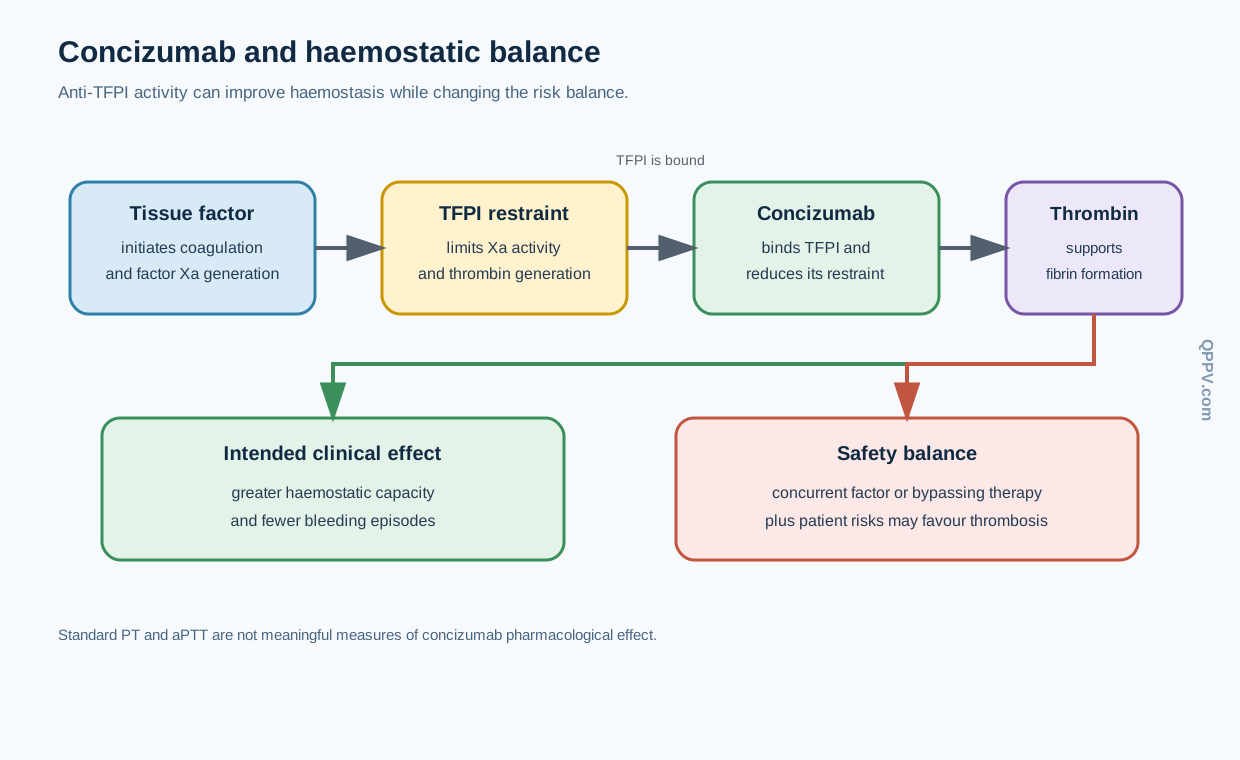
Figure 1. Concizumab reduces TFPI-mediated restraint of tissue-factor-initiated coagulation. The intended effect is improved haemostasis; overlapping procoagulant treatments and patient risk factors can shift the balance toward thrombosis.
This mechanism has two practical implications. First, the clinical outcome should be evaluated against the patient’s bleeding phenotype and actual haemostatic treatment, not against standard coagulation tests alone. The EU product information states that concizumab does not produce clinically meaningful changes in routine activated partial thromboplastin time or prothrombin time; these tests are therefore not reliable measures of its pharmacological effect.[2] A normal result should not be interpreted as absence of drug effect, and an abnormal result should be investigated on its own merits.
Second, the risk assessment must consider the haemostatic environment as a whole. Factor products and bypassing agents may be used for breakthrough bleeding. The product information identifies thromboembolic events and the potential for disseminated intravascular coagulation in relevant prothrombotic settings, and highlights the need for caution when patients have multiple thrombotic risk factors or receive high or frequent doses of breakthrough-bleed treatment.[2] These are product-specific safety concerns, not evidence that every bleed-treatment combination will cause thrombosis.
Regulatory and Risk-Minimisation Context
The current EU product information is the controlling source for authorised indications, warnings, interaction information and required precautions in the EU. EMA’s assessment and risk-management documents provide the regulatory context; they should be distinguished from local clinical protocols and company procedures. The product information also describes educational materials and a patient alert card addressing thromboembolic risk. Pharmacovigilance systems should be able to determine whether these materials are supplied and whether relevant safety information from cases is evaluated, while avoiding assumptions that possession of a card alone proves effective risk minimisation.[1,2]
A medicine’s additional-monitoring status, where applicable, is a regulatory signal to collect and review safety information particularly carefully. It does not change the criteria for case validity or replace clinical assessment. The PV system should use the applicable reporting rules and current product information, while explicitly recording uncertainty where a report lacks the exposure or clinical detail needed to reach a firm conclusion.
Clinical Safety Architecture
Concizumab safety is best assessed across three connected domains: bleeding control, excessive coagulation, and reactions to the antibody or its administration. Each domain needs its own case evidence. A single composite label such as “haemostatic event” would conceal clinically different outcomes and could make trends difficult to detect.
| Domain | Evidence needed for assessment |
|---|---|
| Breakthrough bleeding | Bleed site and phenotype, onset, severity, objective confirmation, inhibitor status, baseline bleed pattern, treatment and response |
| Rescue haemostatic treatment | Exact factor or bypassing agent, dose, timing, frequency, indication and whether dosing followed the current treatment plan |
| Thromboembolism or coagulation activation | Arterial or venous event, anatomical site, diagnostic evidence, onset, treatment, outcome and relevant risk factors |
| Hypersensitivity | Onset relative to dose, symptoms, severity, treatment, recurrence, discontinuation and relevant history |
| Product or administration issue | Presentation, batch, storage, preparation, injection details and any associated product-quality complaint |
The table is a follow-up framework, not a mandatory data set for every case. Follow-up should be proportionate to the event and should seek information that could change seriousness, causality, expectedness, traceability or signal interpretation. If essential information cannot be obtained, the assessment should say what remains unknown and how that limits the conclusion.
Reconstructing a Case With Overlapping Exposures
The first question is whether concizumab was being used as scheduled and whether a clinically meaningful interruption, missed dose or restart occurred. The second is what happened to the patient’s bleeding and how it was treated. Establish the dose and timing of each factor product or bypassing agent rather than recording only that “rescue therapy” was given. Then construct the event chronology: prophylaxis exposure, bleed onset, rescue treatment, any further haemostatic treatment, and the onset of the reported outcome.
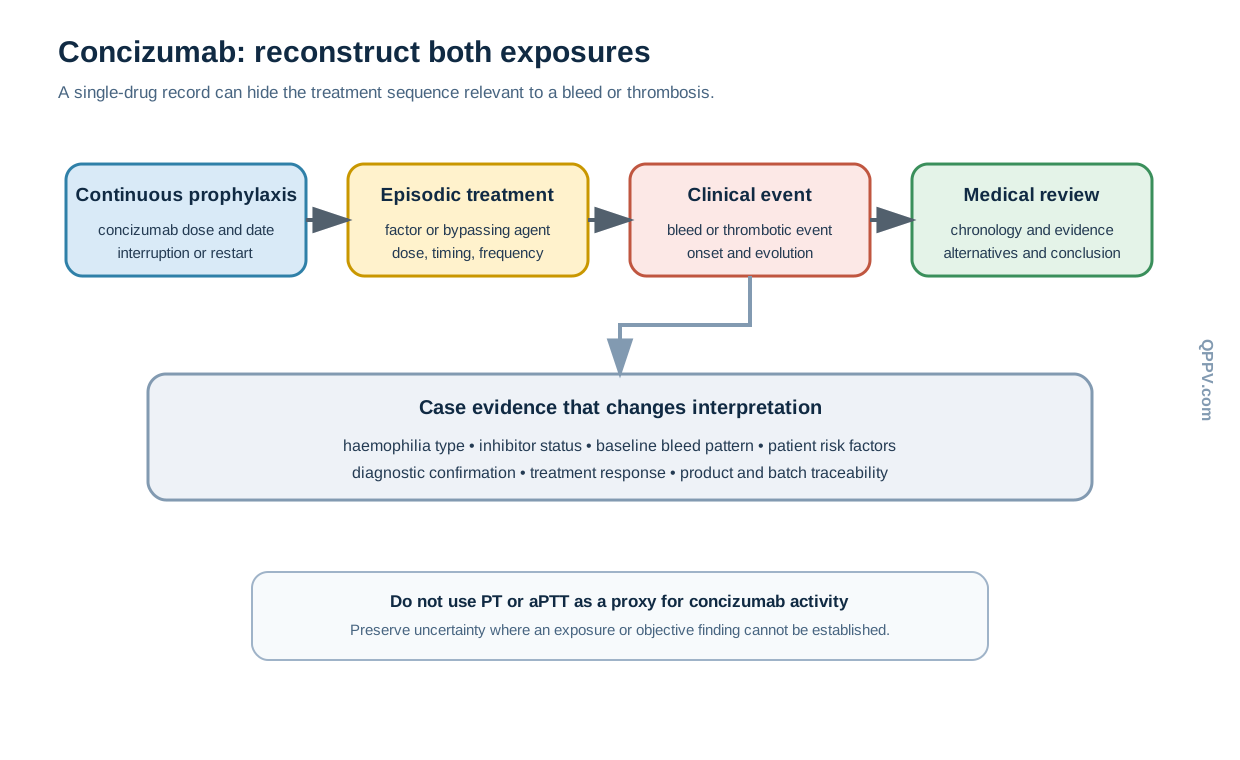
Figure 2. A case narrative should keep continuous prophylaxis and episodic haemostatic treatment as separate, time-linked exposures before assessing a bleed or thrombotic outcome.
For a bleeding report, assess the anatomical site, clinical course, haemoglobin or imaging evidence where relevant, and response to treatment. For suspected thrombosis, document confirmatory investigations, location, symptoms, treatment and outcome. Review age, prior thromboembolism, cardiovascular disease, immobility, surgery, malignancy, sepsis or other relevant circumstances. These factors do not automatically negate a drug contribution; they define the competing and potentially interacting explanations.
An event following a dose is temporally associated, but causality requires the chronology to fit the event, consideration of alternatives and a reasoned medical conclusion. Dechallenge may be difficult to interpret because concizumab’s pharmacological effect and concurrent haemostatic treatment may not stop or start at the same moment as administration. Rechallenge should be assessed only when it occurs in clinical care; it should never be encouraged solely to strengthen a PV conclusion.
Signal Detection and Aggregate Review
Aggregate review should keep bleeding and thrombotic outcomes distinct and preserve strata that can alter their meaning. Useful dimensions may include haemophilia type, inhibitor status, disease severity, age, prophylaxis exposure, interruption or restart, dose and frequency of rescue treatment, and relevant thrombotic risk factors. Product, presentation and batch information should remain available where quality or administration issues are plausible.
Raw counts and spontaneous reports do not provide an incidence rate unless the denominator and exposure definition are appropriate. Case duplication, stimulated reporting, changes in treatment practice and differential follow-up can all affect observed patterns. For concizumab, an aggregate review that records only the antibody and discards factor or bypassing-agent treatment would omit a potentially important part of the pharmacological context. Conversely, an event during combined exposure does not establish that the combination caused it. Medical review should test the pattern against the individual case narratives, available evidence and current regulatory information.
Signal conclusions should distinguish a confirmed labelled risk, a plausible hypothesis under evaluation, and a pattern that is not supported after review. The rationale, evidence and remaining uncertainty should be documented in a way that can be traced into periodic benefit-risk evaluation and any resulting regulatory action.[3,4]
Practical Pharmacovigilance Implementation
Operationally, concizumab should be represented as a continuous prophylactic exposure that may coexist with episodic haemostatic treatment. A case system that stores only the prophylactic antibody can lose the exposure that is most relevant to a bleed or thrombotic event. A practical data model should therefore capture each medicine separately with its own start and stop dates, dose, route and indication, while preserving their relationship in the case narrative.
Recommended controls include an event-specific follow-up aid; a medical-review prompt for concomitant factor or bypassing-agent exposure; access to haemophilia expertise for complex cases; reconciliation between safety cases and product-quality complaints; and aggregate outputs that retain inhibitor status and clinically relevant subgroups. These are recommended operational practices unless a specific legal or regulatory requirement applies. The aim is to preserve the information needed for a reliable assessment, not to make every possible data element mandatory in every report.
Potential Failure Modes
The following are illustrative failure modes, not published inspection findings:
- A bleed is treated as proof of prophylaxis failure without reconstructing inhibitor status, baseline bleeding and rescue treatment.
- Factor or bypassing-agent use is recorded without its dose and timing.
- A thrombotic event is assessed without reviewing concurrent haemostatic treatment or patient-specific risk factors.
- Routine PT or aPTT results are treated as a measure of concizumab activity.
- Product batch or presentation is missing despite a plausible quality or administration issue.
- A sent follow-up request is treated as completed even though returned information was not medically assessed.
- A signal review pools different haemophilia populations and treatment settings without explaining why the strata are comparable.
- A labelled risk is treated as proof of causality in every individual report.
The corrective action should address the underlying process, such as a missing exposure field or unclear follow-up ownership, rather than only the individual case. Any revised workflow should be checked against real case narratives to establish whether the missing information is now captured and used.
Inspection and Governance Perspective
An inspector could examine whether the system identifies this product’s specific interaction context and whether it works in practice. Relevant evidence may include case-processing instructions, medical review criteria, training, follow-up templates, case narratives, signal evaluations, periodic reports, quality-complaint reconciliation and governance records. The central question is whether source information is transformed into a medically coherent assessment and whether material uncertainty or recurring gaps are visible to the organisation.
Risk-minimisation effectiveness should be evaluated against a defined objective and suitable evidence. Distribution of an educational guide or alert card can demonstrate a process step; it cannot alone establish that the safety message was understood, that high-risk treatment was recognised, or that cases were managed as intended. Where the available evidence does not support an effectiveness conclusion, that limitation should be explicit.
Practical QPPV Checklist
- Confirm the current regional indication and product information.
- Preserve concizumab dose, route, dates, treatment interruption or restart, presentation and batch where available.
- Record haemophilia type, disease severity and inhibitor status.
- For bleeding, document site, onset, objective evidence, severity, treatment and outcome.
- Capture every factor or bypassing agent used for breakthrough bleeding, including dose, timing and frequency.
- For suspected thrombosis, obtain the diagnostic basis, anatomical site, treatment, outcome and relevant patient risk factors.
- Do not use PT or aPTT as a proxy for pharmacological effect.
- Evaluate competing causes and overlapping exposures without assuming either is exculpatory.
- Preserve clinically meaningful strata in aggregate review and state denominator limitations.
- Link safety assessment to product-quality and risk-minimisation information where relevant.
Key Takeaways
Concizumab reduces TFPI-mediated restraint of coagulation; it does not replace factor VIII or IX. That mechanism makes the full haemostatic treatment sequence central to PV. A defensible assessment connects the prophylactic dose, breakthrough-bleed treatment, patient context, event phenotype and objective evidence without treating temporal association as proof of causality. Standard PT and aPTT do not provide a clinically meaningful measure of concizumab effect.
The quality of surveillance depends on preserving each exposure and explaining how it affects the conclusion. This allows reports to inform case assessment, signal detection and benefit-risk governance while keeping uncertainty visible.
References
- European Medicines Agency: concizumab EPAR.
- European Medicines Agency: current concizumab product information.
- European Medicines Agency: Good pharmacovigilance practices.
- ICH E2C(R2): Periodic benefit-risk evaluation report guideline.
Regulatory Note
This article is an educational pharmacovigilance reference. It does not replace current regulator-approved product information, applicable legislation, local procedures or clinical judgment. Indications, warnings and risk-minimisation measures may differ across jurisdictions and can change over time. Use the product information applicable to the actual exposure date and market.