Cosibelimab: Classification, Mechanism and Pharmacovigilance
Cosibelimab is a PD-L1-blocking antibody used in a defined population with advanced cutaneous squamous-cell carcinoma. Its pharmacovigilance profile reflects both the tumour and the possibility that releasing immune inhibition can affect normal organs.
1. Identity and classification
Cosibelimab is a human IgG1-lambda monoclonal antibody that binds programmed death-ligand 1 (PD-L1). It belongs to the immune-checkpoint inhibitor class. The relevant classification is target- and mechanism-based: it interrupts a ligand–receptor interaction that restrains immune-cell activity, rather than directly targeting a tumour-specific mutation.[1]
In the United States, cosibelimab is indicated for adults with metastatic or locally advanced cutaneous squamous-cell carcinoma (CSCC) who are not candidates for curative surgery or curative radiation.[1,2] This is a disease- and treatment-context-specific indication. It should not be read as a general indication for other squamous carcinomas or for earlier CSCC that remains amenable to curative local treatment.
2. Target biology and mechanism
PD-L1 can be present on tumour cells and tumour-infiltrating immune cells. Binding of PD-L1 to PD-1 or B7.1 can suppress T-cell activity. Cosibelimab blocks those interactions and can therefore release an inhibitory signal in the tumour microenvironment.[1]
The U.S. label also reports antibody-dependent cell-mediated cytotoxicity in vitro. That laboratory observation is biologically relevant, but it does not establish how much ADCC contributes to patient outcomes in the approved indication. The clinical mechanism should not be reduced to one pathway or treated as proof that every tumour expressing PD-L1 will respond.
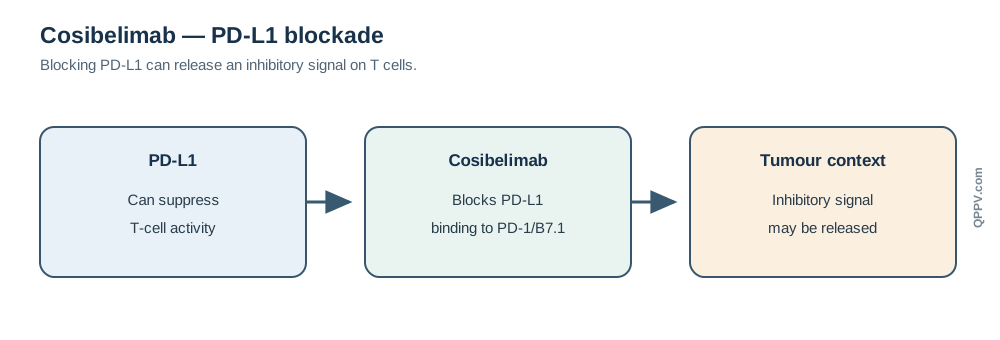
Figure 1. PD-L1 blockade can release inhibitory signalling; the in-vitro ADCC observation does not quantify its contribution in patients.
3. Clinical use and evidence
The FDA-approved regimen is 1,200 mg by intravenous infusion over 60 minutes every three weeks, continued until disease progression or unacceptable toxicity.[1,2] The product is an infusion, so report reconstruction should include dose, infusion start and stop, reaction timing, any interruption, premedication and the treatment given for a reaction.
Approval was based on CK-301-101, a multicentre, multicohort, open-label trial. The FDA efficacy analysis included 109 patients: 78 with metastatic CSCC and 31 with locally advanced disease. The objective response rate by independent review was 47% (95% CI 36–59) in metastatic disease and 48% (95% CI 30–67) in locally advanced disease. Median duration of response was not reached in the metastatic cohort and was 17.7 months in the locally advanced cohort at the analysis reported by FDA.[2] These are response data from a single-arm study; they do not provide a randomised comparison with another treatment.
The trial excluded several groups, including people with active or suspected autoimmune disease, recent allogeneic transplant, prior checkpoint inhibitor therapy, or ECOG performance status of 2 or higher.[2] Exclusion criteria limit direct generalisation to those populations. A case involving a patient unlike the study population should preserve that difference rather than assume equivalent evidence.
4. Safety profile
The label warns that severe or fatal immune-mediated adverse reactions may affect any organ system and can arise during treatment or after it has stopped. Examples include pneumonitis, colitis, hepatitis, endocrinopathies, nephritis and dermatologic reactions. It also warns about infusion reactions, embryo-fetal toxicity and serious complications around allogeneic haematopoietic stem-cell transplantation after PD-1/PD-L1 blockade.[1]
In the labelled CSCC safety dataset of 141 patients, serious adverse reactions occurred in 31%; the most common listed events were sepsis, pneumonia and pyrexia. The most common adverse reactions included fatigue, musculoskeletal pain, rash, diarrhoea and hypothyroidism.[1] These observations are not all immune-mediated and should be classified by clinical evidence, not by the product’s class alone.
A suspected immune-mediated event requires an organ-specific work-up. For example, diarrhoea may reflect colitis, infection, another medicine or the underlying condition. Labelling an event “immune-mediated” solely because exposure preceded it can obscure alternative causes; conversely, delayed onset after discontinuation does not exclude a checkpoint-related event.
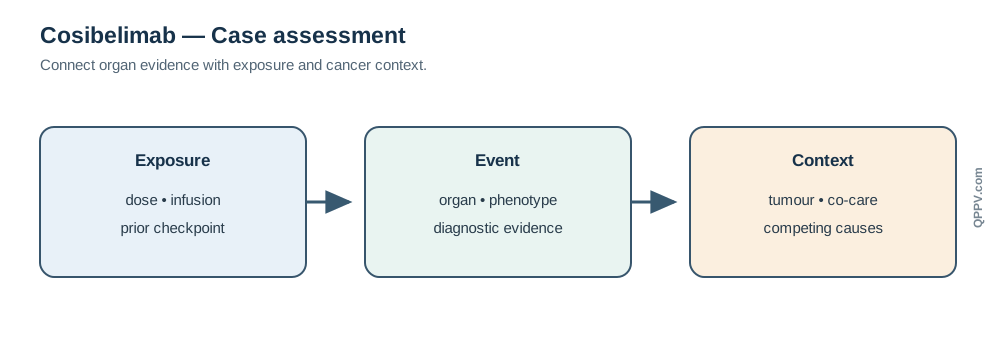
Figure 2. Review event phenotype and organ work-up against dose timing, tumour status, co-treatment and competing causes.
5. Pharmacovigilance case assessment
For each suspected event, construct a timeline that includes the last dose, infusion details, onset, evolution, interruption or discontinuation, immunosuppressive treatment and outcome. Record the organ system and objective evidence: for suspected pneumonitis, for example, include imaging, oxygen requirement, infection testing and pulmonary assessment; for suspected hepatitis, preserve liver-test trends, viral evaluation and other hepatotoxic exposures.
Capture tumour status and response separately from the adverse event. Disease progression, infection, prior radiotherapy, surgery, wound complications and other cancer treatments can create overlapping symptoms. Include previous checkpoint therapy and relevant autoimmune history, especially because the pivotal study excluded some such patients.[2]
Seriousness, expectedness and causality remain separate judgements. A labelled immune-mediated risk may inform expectedness, but it does not establish that a particular event was caused by cosibelimab. Preserve the reporter’s assessment, the clinical rationale and any uncertainty in the case narrative.
6. Regulatory status and practical safeguards
The cited U.S. prescribing information identifies the indication and dose for adults with locally advanced or metastatic CSCC who are not candidates for curative surgery or radiation. The pivotal study was open-label and lacked a concurrent comparator; use the evidence within that design limitation.[1,2] Apply the product information and reporting requirements of the jurisdiction where exposure occurred.
The most useful pharmacovigilance record connects exposure chronology, organ-specific diagnostic evidence, treatment of the event, tumour trajectory and concurrent care. It should make clear whether the event is considered immune-mediated, infectious, tumour-related or unresolved, and why.
Key takeaways
- Cosibelimab blocks PD-L1 and can release inhibitory signalling between PD-L1 and PD-1/B7.1.
- Its U.S. indication is limited to adults with locally advanced or metastatic CSCC who are not candidates for curative surgery or radiation.
- Evidence supporting approval came from an open-label, single-arm study; response rates are not comparative treatment effects.
- Immune-mediated reactions can involve any organ and can occur after treatment ends; case assessment needs organ-specific evidence and competing causes.
References
- U.S. Food and Drug Administration. UNLOXCYT prescribing information. Revised 2025.
- U.S. Food and Drug Administration. Approval summary for cosibelimab in advanced cutaneous squamous-cell carcinoma. 13 December 2024.
- Clingan P, et al. Efficacy and safety of cosibelimab, an anti-PD-L1 antibody, in patients with advanced cutaneous squamous cell carcinoma. Journal for ImmunoTherapy of Cancer. 2023.
Regulatory Note
This article describes the U.S. indication and prescribing information available on 25 September 2026. It is an educational reference, not a treatment recommendation or a substitute for current jurisdiction-specific product information, applicable law or clinical judgement.