COVID-19 mRNA Vaccines: Platform Biology, Variant Adaptation, Safety and Pharmacovigilance
An mRNA vaccine delivers a temporary genetic instruction rather than a preformed viral protein or an infectious virus. Host cells translate the messenger RNA into SARS-CoV-2 spike antigen, which is then presented to the immune system. The mRNA is subsequently degraded. This distinction is fundamental to understanding both mechanism and safety: the product is an instruction-delivery system, not a replicating pathogen.
The platform is also unusually adaptable. When circulating SARS-CoV-2 lineages change, the encoded spike sequence can be updated while much of the manufacturing and delivery platform remains conceptually stable. Pharmacovigilance therefore has to follow both the stable platform and the changing antigenic version.
- COVID-19 mRNA Vaccines: Platform Biology, Variant Adaptation, Safety and Pharmacovigilance
- Classification and Molecular Architecture
- Variant Adaptation as Lifecycle Management
- Immune Response and Expected Reactogenicity
- Myocarditis and Pericarditis
- Hypersensitivity and Anaphylaxis
- Administration and Product-Identification Errors
- Effectiveness, Breakthrough Infection and Variant Context
- Special Populations
- Practical Pharmacovigilance Assessment
- Illustrative Failure Modes
- Inspection and Governance Considerations
- Key Takeaways
- References
- Regulatory Note
Classification and Molecular Architecture
The vaccine is a nucleoside-modified messenger-RNA biological formulated in lipid nanoparticles. The lipid particles protect the RNA from rapid extracellular degradation and facilitate cellular uptake. Once inside the cytoplasm, ribosomes translate the RNA into spike antigen. The RNA does not need to enter the nucleus to function.
Why lipid nanoparticles matter
The mRNA and lipid components form one functional product. A case report that identifies only "mRNA vaccine" loses information about the exact formulation, presentation and antigenic version. Excipients and delivery-system components also matter when evaluating immediate hypersensitivity.
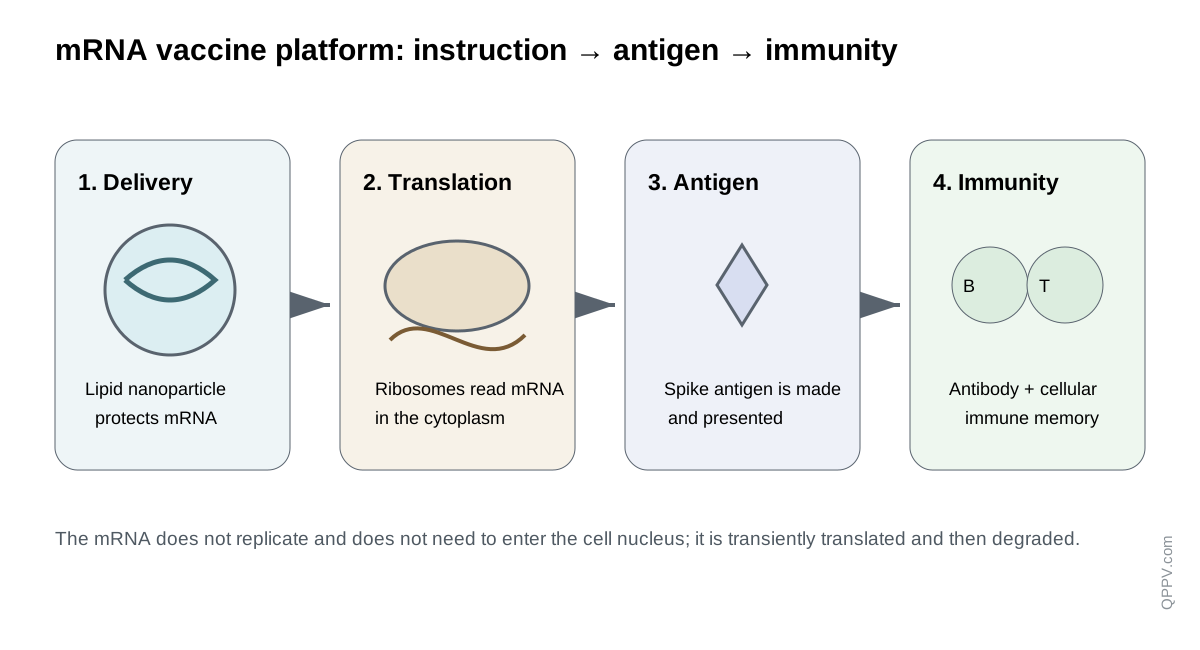
Figure 1. The mRNA vaccine platform delivers a transient spike-protein instruction through lipid nanoparticles, leading to antigen expression and adaptive immune priming without viral replication.
Variant Adaptation as Lifecycle Management
SARS-CoV-2 evolves antigenically. Updating the encoded spike sequence is therefore analogous to changing the target specification while retaining the same delivery architecture. This creates a recurring regulatory and PV task: identify exactly which adapted formulation was administered.
In the European Union, the centrally authorised mRNA vaccine platform has undergone repeated post-authorisation adaptations. EMA records show a further adapted formulation authorised in July 2026, with product information updated in August 2026.
For case processing and aggregate analysis, the exposure record should therefore include the vaccine presentation, antigenic/strain version where available, dose number, age group, route, date, batch or lot, and co-administered vaccines.
Immune Response and Expected Reactogenicity
Innate sensing of the vaccine and the subsequent adaptive response can produce transient local pain, fatigue, headache, myalgia, chills or fever. These reactions are biologically different from infection with SARS-CoV-2. They generally occur close to vaccination and reflect immune activation rather than viral replication.
The same temporal proximity that makes common reactogenicity easy to recognise also creates a signal-detection challenge: serious medical events occurring after vaccination are not automatically caused by vaccination. Evaluation requires background incidence, age, sex, timing, dose number, clinical verification and alternative causes.
Myocarditis and Pericarditis
Myocarditis is inflammation of heart muscle; pericarditis is inflammation of the sac surrounding the heart. Both can cause chest pain, dyspnoea, palpitations and biomarker or imaging abnormalities. Their importance in mRNA-vaccine pharmacovigilance comes from a reproducible post-vaccination association with a distribution that varies by age, sex and dose context.
FDA required updated myocarditis/pericarditis warnings in June 2025, incorporating additional incidence and cardiac-MRI information. The regulatory conclusion is therefore not merely a historical signal: it remains part of current labelled risk communication.
A useful PV case should capture age, sex, prior COVID-19 infection, prior vaccination history, exact dose and formulation, latency from vaccination, symptoms, troponin, ECG, echocardiography, cardiac MRI where performed, infectious investigations, treatment, hospitalisation and outcome. A coded term without objective cardiac evidence is materially weaker for aggregate assessment.
Hypersensitivity and Anaphylaxis
Immediate hypersensitivity requires precise timing. Anaphylaxis is a multisystem clinical syndrome rather than a synonym for any rash or fainting episode after vaccination. Case evaluation should distinguish urticaria, bronchospasm, hypotension and airway involvement from vasovagal syncope, anxiety-related symptoms or isolated local reactions.
The formulation and excipient history are relevant because the lipid-nanoparticle system contains excipients that are not part of conventional protein vaccines. Prior reactions to vaccine components, treatment with epinephrine, observation duration and clinical outcome should be captured.
Administration and Product-Identification Errors
The most preventable risks are often operational. Different age groups and seasonal formulations may use different presentations, strengths, preparation instructions or dosing volumes. Errors can include wrong age presentation, wrong dose, wrong interval, incorrect dilution where applicable, administration of an outdated formulation, incorrect storage, or failure to document the lot.
These events should not be collapsed into a single "medication error" category. The error mechanism determines whether the principal consequence is underdosing, overdosing, loss of expected effectiveness, avoidable reactogenicity or inability to trace a later safety signal.
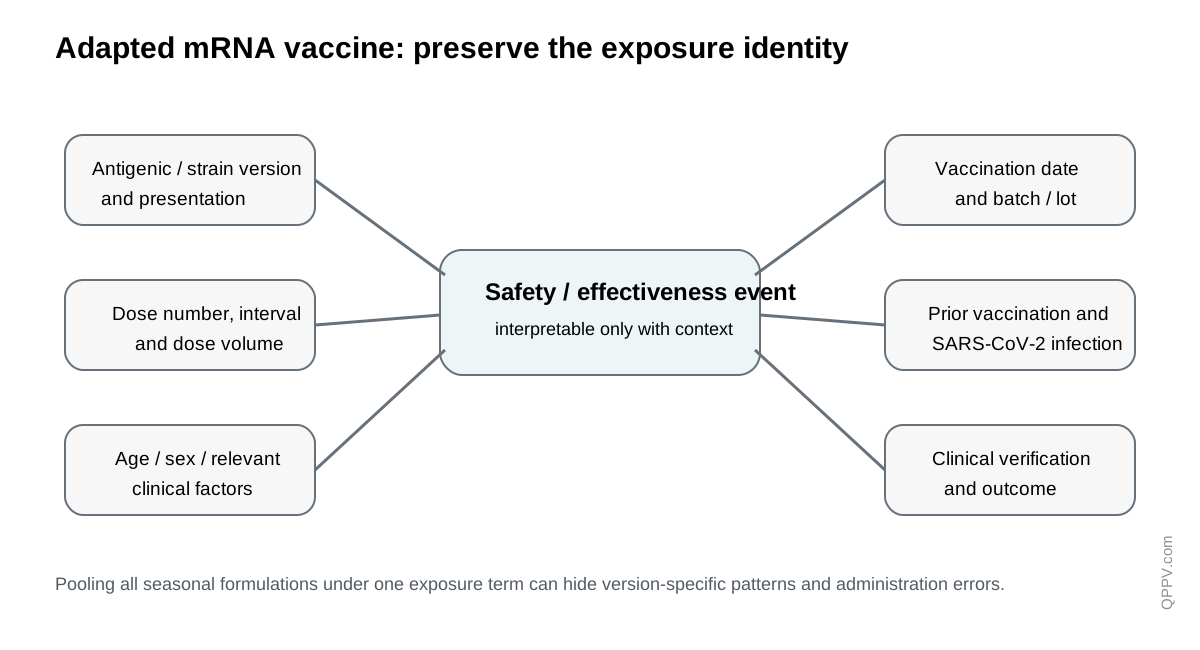
Figure 2. Useful mRNA-vaccine pharmacovigilance connects the recipient and event to the exact antigenic version, presentation, dose number, date and batch rather than treating all exposures as interchangeable.
Effectiveness, Breakthrough Infection and Variant Context
A SARS-CoV-2 infection after vaccination is not, by itself, evidence of a product defect. Vaccine effectiveness changes with immune history, time since vaccination, host factors and antigenic distance between the vaccine strain and circulating variants.
For a serious breakthrough case, PV and effectiveness teams benefit from vaccination dates, formulation version, previous infections, immune-compromising conditions, severity, hospitalisation, virological confirmation and circulating-variant context. Where sequencing is unavailable, the infecting variant should not be invented from calendar timing alone.
Special Populations
Age is integral to both benefit-risk and product presentation. Immunocompromised individuals may have reduced immune responses and different recommended schedules. Pregnancy cases require appropriate distinction between maternal adverse events, pregnancy outcomes and neonatal outcomes; temporal association alone does not establish causality.
Prior myocarditis, significant allergy history or complex immunosuppression can change clinical decision-making, but the applicable current product information and public-health recommendation should be used rather than a generic rule carried over from an older formulation.
Practical Pharmacovigilance Assessment
The minimum useful exposure description should identify the exact vaccine product or common name, adapted strain/formulation where available, strength or age presentation, dose number, vaccination date, route and batch or lot. For serious events, this should be linked to prior doses and prior SARS-CoV-2 infection rather than assessed as an isolated injection.
Signal assessment
Spontaneous reporting is particularly sensitive to stimulated reporting after intense public attention. Disproportionality can generate hypotheses, but observed-versus-expected analyses, active surveillance, electronic healthcare databases, clinical validation and epidemiological studies are often needed to interpret whether a reported pattern exceeds background occurrence.
Myocarditis illustrates the value of stratification: an aggregate analysis across all ages and sexes can dilute a risk concentrated in particular demographic and dose strata. Conversely, a cluster of temporally associated events is not sufficient evidence of causation without denominator and background-rate context.
Illustrative Failure Modes
These are illustrative scenarios rather than reported inspection findings.
| Failure mode | Why it matters | Appropriate control |
|---|---|---|
| Exposure recorded only as "COVID vaccine" | Prevents formulation, dose and batch analysis | Capture product, presentation and adapted version |
| Chest pain coded without cardiac work-up | Weakens myocarditis assessment | Obtain biomarkers, ECG/imaging and diagnosis |
| Breakthrough infection coded as lack of efficacy with no immune history | Confounds waning immunity and host factors | Capture prior doses, infections and immunocompromise |
| Wrong paediatric presentation not differentiated from overdose | Hides the error mechanism | Record intended and actual product/dose |
| Seasonal/adapted versions pooled indefinitely | Can obscure formulation-specific patterns | Preserve version in safety datasets |
Inspection and Governance Considerations
An inspector could reasonably examine whether product-version changes flow through safety databases, coding conventions, follow-up forms, aggregate reports and signal analyses. The relevant question is not whether every case contains perfect information, but whether the system actively preserves the attributes needed to interpret a changing vaccine platform.
Governance should also connect regulatory intelligence with PV operations. A new adapted formulation can alter product dictionaries, expected-use patterns and denominator data even when the core platform is unchanged.
Key Takeaways
SARS-CoV-2 mRNA vaccination is best understood as a stable delivery platform with an adaptable antigenic instruction. That architecture explains why lifecycle surveillance must preserve formulation and version information.
The major PV disciplines are precise exposure identification, mechanism-aware assessment of myocarditis/pericarditis and hypersensitivity, separation of expected reactogenicity from serious events, detailed administration-error analysis, and interpretation of breakthrough infection in immune and variant context.
References
- European Medicines Agency. Comirnaty: EPAR and current product information. Product information updated 6 August 2026.
- European Medicines Agency. COVID-19 medicines: adapted COVID-19 vaccine authorisation chronology, including the July 2026 adapted formulation.
- U.S. Food and Drug Administration. FDA Approves Required Updated Warning in Labeling of mRNA COVID-19 Vaccines Regarding Myocarditis and Pericarditis Following Vaccination. 25 June 2025.
- Polack FP, et al. Safety and efficacy of the BNT162b2 mRNA Covid-19 vaccine. N Engl J Med. 2020;383:2603-2615.
- Sahin U, et al. COVID-19 vaccine BNT162b1 elicits human antibody and TH1 T-cell responses. Nature. 2020;586:594-599.
Regulatory Note
Authorised indications, age groups, adapted strain composition, dosing schedules and recommendations change over time and differ by jurisdiction. The current locally applicable product information and public-health recommendations should therefore be checked before operational use. The scientific and PV principles in this article do not replace the current SmPC, package leaflet or prescribing information.