Crovalimab: Classification, History, Mechanism of Action, Safety and Pharmacovigilance
- Crovalimab: Classification, History, Mechanism of Action, Safety and Pharmacovigilance
- Multidimensional classification
- PNH and complement-mediated haemolysis
- Why C5 is an effective therapeutic target
- Recycling-antibody mechanism
- Development and regulatory history
- Major safety domains
- Administration and adherence
- Pharmacovigilance case assessment
- Signal detection and aggregate review
- Periodic benefit-risk evaluation
- Risk management and operational controls
- Potential failure modes
- Inspection and governance perspective
- Practical checklist
- Key Takeaways
- References
- Regulatory Note
Crovalimab is a monoclonal antibody directed against complement component C5. It is used to suppress terminal complement activation in paroxysmal nocturnal haemoglobinuria (PNH), a clonal haematopoietic disorder in which red blood cells lack key surface proteins that normally protect them from complement-mediated injury.
Crovalimab belongs to the same broad therapeutic concept as other C5 inhibitors, but its engineering is distinctive. It uses pH-dependent target binding so that C5 can dissociate from the antibody after internalisation into the acidic endosomal environment, allowing the antibody to be returned to the circulation through FcRn-mediated recycling. This is sometimes described as recycling-antibody technology. The intended consequence is efficient, sustained target suppression with a maintenance regimen compatible with subcutaneous administration.
That engineering also shapes pharmacovigilance. Cases must distinguish loss of complement control from disease fluctuation, infection from breakthrough haemolysis, and switching-related immune-complex phenomena from ordinary hypersensitivity. Because terminal complement is essential for defence against Neisseria and other encapsulated bacteria, serious infection risk is a direct mechanism-based consequence of effective treatment rather than an incidental toxicity.
Multidimensional classification
| Classification axis | Crovalimab classification | Scientific or PV significance |
|---|---|---|
| Molecular class | Humanised monoclonal antibody | Biological product requiring product and batch traceability |
| Target | Complement component C5 | Prevents generation of C5a and the membrane-attack-complex pathway initiated by C5b |
| Functional class | Terminal-complement inhibitor | Suppresses intravascular haemolysis in PNH |
| Engineering class | pH-dependent recycling antibody | Target dissociation in endosomes supports antibody reuse and sustained C5 suppression |
| Therapeutic context | PNH with active haemolysis/high disease activity or stable prior C5-inhibitor treatment in the authorised EU population | Baseline disease and switching status materially affect case interpretation |
| Route architecture | Initial loading followed by subcutaneous maintenance | Administration setting and adherence differ from infusion-only C5 inhibition |
| PV-critical risks | Meningococcal/encapsulated-bacterial infection, breakthrough haemolysis, switching immune-complex reactions, hypersensitivity | Closely linked to complement biology and treatment sequence |
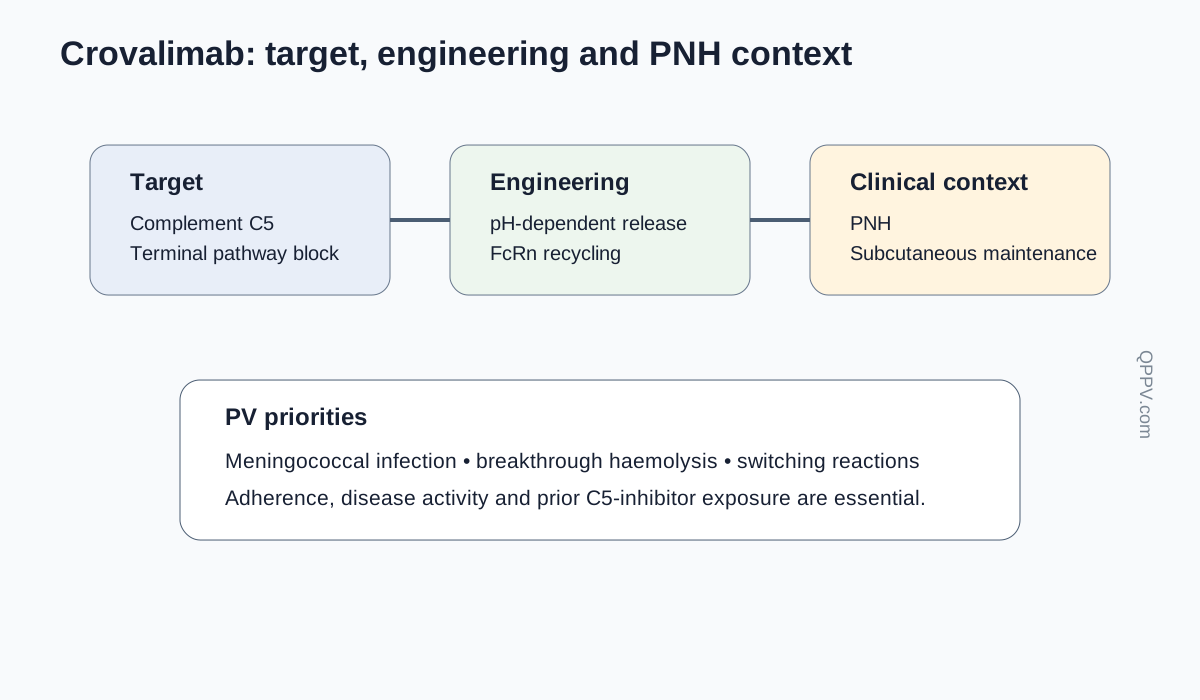
Figure 1. Crovalimab combines anti-C5 terminal-complement inhibition with pH-dependent recycling-antibody engineering and subcutaneous maintenance. Pharmacovigilance must preserve both disease activity and prior C5-inhibitor exposure.
PNH and complement-mediated haemolysis
PNH originates from an acquired mutation in a haematopoietic stem-cell clone that disrupts synthesis of the glycosylphosphatidylinositol anchor. Blood cells derived from that clone can therefore lack GPI-anchored complement-regulatory proteins, particularly CD55 and CD59.
CD55 normally accelerates decay of complement convertases, while CD59 restricts formation of the membrane attack complex. Their absence leaves PNH erythrocytes unusually vulnerable to complement. When terminal complement is activated, membrane attack complexes damage red cells and cause intravascular haemolysis. Consequences include anaemia, haemoglobinuria, nitric-oxide depletion, smooth-muscle symptoms, renal stress and increased thrombotic risk.
Why C5 is an effective therapeutic target
C5 sits at the branch point between upstream complement activation and the terminal pathway. Cleavage produces C5a, a potent inflammatory mediator, and C5b, which initiates assembly of C5b-9 membrane attack complex. Blocking C5 therefore prevents the terminal lytic event while leaving earlier complement components available for some upstream functions.
In PNH, this reduces intravascular haemolysis but does not remove the abnormal clone or restore missing CD55/CD59. Extravascular haemolysis, marrow failure, clonal evolution and other disease features may persist. A fall in haemoglobin during treatment is therefore not synonymous with loss of C5 blockade.
Recycling-antibody mechanism
A conventional antibody-target complex may be internalised and degraded together. Crovalimab is engineered so that C5 binding weakens in the acidic environment of the endosome. C5 is released and directed toward degradation, while FcRn salvages the antibody and returns it toward the circulation. The antibody can then bind another C5 molecule.
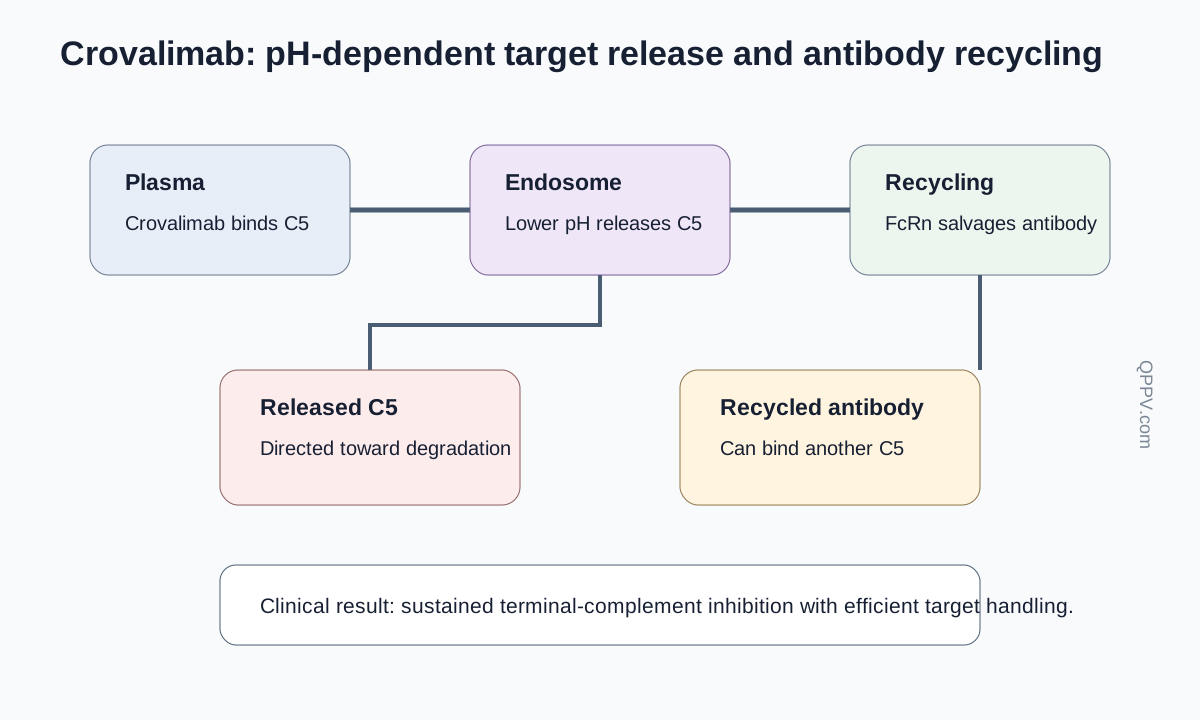
Figure 2. Crovalimab binds circulating C5, enters an endosomal compartment, releases C5 under acidic conditions and is recycled through FcRn. The figure illustrates target recycling; it does not imply that every antibody molecule follows an identical path on every binding cycle.
Development and regulatory history
Crovalimab was developed to provide sustained terminal-complement inhibition with a differentiated binding epitope and a maintenance strategy suitable for subcutaneous administration. Clinical development included both patients beginning complement inhibition and patients switching from established C5-inhibitor therapy.
The European Union authorised crovalimab in 2024 for adults and adolescents aged 12 years or older weighing at least 40 kg with PNH, including patients with haemolysis and symptoms indicating high disease activity and patients clinically stable after at least six months of treatment with another C5 inhibitor. It remains under additional monitoring.
Major safety domains
Meningococcal and other encapsulated-bacterial infection
Terminal complement is critical for defence against Neisseria meningitidis. Effective C5 inhibition therefore creates a predictable susceptibility to invasive meningococcal infection, including infection in vaccinated patients. Vaccination and other current risk-minimisation measures reduce risk but do not eliminate it.
For pharmacovigilance, a suspected meningococcal case requires rapid capture of symptom onset, vaccination history, antimicrobial prophylaxis where applicable, cultures or PCR, sepsis/meningitis phenotype, treatment and outcome. The timing of the most recent crovalimab dose is useful, but persistent pharmacodynamic blockade means risk cannot be judged only by plasma dosing interval.
Other serious encapsulated-bacterial infections should also be medically characterised because complement inhibition can alter host defence beyond a single organism.
Breakthrough intravascular haemolysis
Breakthrough haemolysis can result from insufficient terminal-complement inhibition, delayed/missed dosing or strong complement-amplifying conditions such as serious infection or surgery. The useful PV phenotype includes haemoglobin, lactate dehydrogenase, bilirubin, reticulocytes, haptoglobin, haemoglobinuria, symptoms and the relationship to dosing and intercurrent triggers.
A fall in haemoglobin without biochemical evidence of intravascular haemolysis should prompt consideration of marrow failure, bleeding, renal disease or extravascular haemolysis rather than being automatically labelled lack of efficacy.
Switching between C5 inhibitors and immune complexes
Switching to crovalimab from another C5 inhibitor creates a distinctive immunological situation. Residual prior antibody, C5 and newly administered crovalimab can coexist and form immune complexes. Clinical reactions associated with this transition may resemble hypersensitivity but should be evaluated in the specific switching context rather than assumed to be conventional IgE-mediated allergy.
High-value follow-up includes the previous C5 inhibitor, last dose date, crovalimab initiation date, latency, rash, arthralgia, fever, renal findings, complement laboratory results where available, treatment and outcome.
Hypersensitivity and injection reactions
As with other biologicals, systemic hypersensitivity can occur. Subcutaneous maintenance also introduces local injection reactions and home-administration variables. Exact phenotype, route, administration technique and rechallenge are important when recurrent reactions occur.
Thrombosis
PNH itself carries substantial thrombotic risk. Effective complement inhibition generally reduces haemolysis-related thrombotic risk, but thrombosis can still occur because disease biology is not erased. A thrombotic event should therefore trigger assessment of biochemical haemolysis, treatment adherence, infection, prior thrombosis, anticoagulation, clone/disease status and other risk factors rather than being reflexively attributed to the medicine.
Administration and adherence
Crovalimab uses a loading regimen followed by subcutaneous maintenance according to current product information. The transition from supervised loading to longer-term subcutaneous treatment changes the medication-error profile. Missed doses, wrong timing, incorrect weight-based loading or administration technique can potentially reduce complement control.
Case processing should retain prescribed and actual dose, route, body weight where relevant to dosing, date, administrator and whether the patient was switching from another C5 inhibitor.
Pharmacovigilance case assessment
A useful crovalimab case begins with the PNH state: active high-disease haemolysis versus stable prior C5 inhibition. The next layer is treatment sequence and adherence. Only then should infection, haemolysis, hypersensitivity or thrombosis be interpreted.
Event-specific follow-up priorities
| Event | High-value follow-up information |
|---|---|
| Meningococcal infection | Vaccination/prophylaxis, symptoms, culture/PCR, meningitis/sepsis phenotype, antimicrobials, ICU care, outcome |
| Breakthrough haemolysis | Hb, LDH, bilirubin, reticulocytes, haptoglobin, urine haemoglobin, dose timing, infection/surgery trigger |
| Switching reaction | Previous C5 inhibitor, last prior dose, first crovalimab dose, latency, rash/arthralgia/fever, renal findings, treatment |
| Thrombosis | Site/imaging, haemolysis status, adherence, infection, prior thrombosis, anticoagulation, outcome |
| Injection reaction | Site, technique, product/batch, timing, systemic symptoms, recurrence, rechallenge |
| Suspected lack of efficacy | Dose history, adherence, biochemical haemolysis, complement testing if available, alternative causes of anaemia |
Signal detection and aggregate review
Infection surveillance should separate meningococcal disease from other serious bacterial infection and preserve vaccination status where possible. Breakthrough haemolysis should be analysed by adherence, intercurrent complement-amplifying conditions and prior C5-inhibitor status.
Switching reactions merit a dedicated case series because their mechanism and timing differ from de novo hypersensitivity. Pooling them with all rash or infusion/injection reactions can obscure the underlying immune-complex pattern.
Periodic benefit-risk evaluation
Periodic review should integrate control of intravascular haemolysis, transfusion burden and disease symptoms with serious infection, breakthrough haemolysis, switching reactions, thrombosis, injection reactions and medication errors. Exposure should be stratified by treatment-naïve versus switch populations where feasible because the safety questions are not identical.
The benefit side also requires disease-specific interpretation. Stable haemoglobin does not prove complete disease control if haemolysis markers rise, while persistent anaemia does not necessarily mean terminal-complement blockade has failed if marrow failure or extravascular haemolysis predominates.
Risk management and operational controls
Current product information governs vaccination, infection precautions, initiation, switching and administration. Pharmacovigilance systems should support those requirements without turning locally preferred clinical practice into universal rules.
Useful operational controls include targeted meningococcal-infection follow-up, explicit previous-C5-inhibitor fields, switching-reaction medical review, haemolysis laboratory capture, adherence/administration checks and rapid escalation of invasive infection reports.
Potential failure modes
The following are illustrative scenarios, not published inspection findings:
- A meningococcal case is assessed without vaccination or antimicrobial-prophylaxis history.
- Anaemia is coded as loss of efficacy without LDH or other haemolysis markers.
- A switching immune-complex reaction is treated as ordinary injection-site hypersensitivity.
- A thrombotic event is attributed to crovalimab without reconstructing PNH disease activity or breakthrough haemolysis.
- A missed maintenance dose is not captured in a breakthrough-haemolysis case.
- Previous C5-inhibitor exposure is absent, preventing interpretation of a post-switch reaction.
Inspection and governance perspective
An inspector evaluating crovalimab pharmacovigilance could examine whether the system recognises terminal-complement inhibition as both the source of benefit and the source of serious infection susceptibility. Evidence may include targeted infection forms, vaccination and prophylaxis fields, switch-management conventions, haemolysis laboratory review, medication-error trending and product/batch traceability.
A particularly important governance test is whether the system can distinguish three superficially similar narratives: infection causing anaemia, breakthrough haemolysis causing anaemia, and non-haemolytic PNH-related or marrow-related anaemia. Those distinctions determine whether the case informs infection risk, efficacy, dosing or underlying disease.
Practical checklist
For a crovalimab case or aggregate analysis, confirm:
- PNH disease state before treatment;
- previous C5 inhibitor and last dose, if any;
- crovalimab loading and maintenance chronology;
- adherence and administration details;
- vaccination and prophylaxis status for serious infection;
- objective haemolysis laboratory data;
- infection, surgery or other complement-amplifying triggers;
- thrombosis phenotype and competing risk factors;
- switching-reaction features and latency;
- exact product and batch where relevant.
Key Takeaways
Crovalimab is a recycling anti-C5 antibody that suppresses terminal-complement-mediated intravascular haemolysis in PNH. Its pH-dependent target release and FcRn-mediated recycling distinguish its pharmacological design from conventional antibody-target handling, while its clinical benefit still rests on effective C5 blockade.
Pharmacovigilance therefore has two central tasks: protect against the predictable infection vulnerability created by terminal-complement inhibition, and determine whether apparent treatment failure truly represents breakthrough intravascular haemolysis. Prior C5-inhibitor exposure adds a third molecule-specific issue—switching-related immune-complex reactions that should not be collapsed into generic hypersensitivity.
References
- European Medicines Agency. Crovalimab (Piasky): EPAR and current product information. https://www.ema.europa.eu/en/medicines/human/EPAR/piasky
- Röth A, Nishimura JI, Nagy Z, et al. Crovalimab versus eculizumab in paroxysmal nocturnal haemoglobinuria. Phase III evidence from the COMMODORE programme. Lancet Haematol. 2024.
- Fukuzawa T, Sampei Z, Haraya K, et al. Long lasting neutralization of C5 by SKY59, a novel recycling antibody, is a potential therapy for complement-mediated diseases. Sci Rep. 2017;7:1080. doi:10.1038/s41598-017-01087-7.
Regulatory Note
Authorised age/weight criteria, loading and maintenance schedules, vaccination requirements, switching precautions and other risk-minimisation instructions may change. Current regional product information is the authoritative source for use. Regulatory information in this article was checked against EMA material available in September 2026; operational recommendations are pharmacovigilance practice unless explicitly identified as regulatory requirements.