Daclizumab Beta: Mechanism, EU Withdrawal and Pharmacovigilance
Daclizumab beta's EU history includes significant liver risk followed by serious immune-mediated brain and other-organ events.
- Daclizumab Beta: Mechanism, EU Withdrawal and Pharmacovigilance
1. Daclizumab beta and the EU lifecycle
Daclizumab beta is a humanised monoclonal antibody directed against CD25, the alpha subunit of the high-affinity interleukin-2 receptor. It was authorised in the EU in July 2016 as Zinbryta for adults with relapsing forms of multiple sclerosis, with restrictions later introduced because of serious liver injury.[1,2]
In February and March 2018, EMA initiated an urgent review after serious inflammatory brain disorders, including encephalitis and meningoencephalitis, were reported. PRAC concluded that daclizumab beta posed a risk of serious and potentially fatal immune reactions affecting the brain, liver and other organs. Suspension and recall were recommended during the review. The European Commission withdrew the marketing authorisation on 27 March 2018 at the holder's request.[1,3]
This is a historical safety case study, not current treatment advice. The exposure period, restrictions and follow-up instructions changed over time. Reports must be interpreted using the product information and safety communications applicable at the date of treatment.
2. Mechanism and immune-mediated safety
CD25 contributes to high-affinity IL-2 receptor signalling. Daclizumab beta binds CD25 and alters IL-2 pathway activity. That immunomodulation provides a treatment rationale in multiple sclerosis but also shows why immune-mediated effects may involve more than the intended target tissue. A mechanistic explanation does not predict which organ will be affected or establish individual causality.
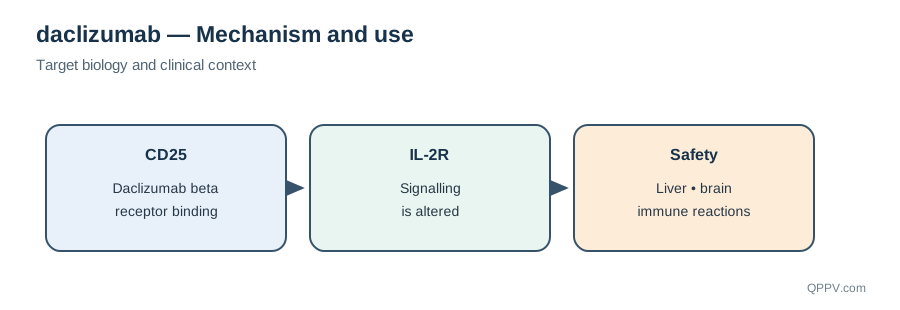
Figure 1. CD25 blockade alters IL-2 receptor signalling; the pathway diagram does not predict or diagnose an individual immune-mediated event.
2.1 The prolonged risk window
EMA's earlier safety measures required liver monitoring during treatment and for up to six months after stopping. Later reports of inflammatory brain disorders broadened the concern to serious immune reactions involving the central nervous system and other organs.[2,3] The period after the last dose therefore remains relevant when assessing a suspected delayed event.
3. Clinical events and case follow-up
3.1 Hepatic injury
Historical safety communications addressed serious and potentially fatal liver injury, including events that could arise during treatment or after cessation. For suspected hepatic events, preserve baseline and serial liver tests, symptoms, jaundice, coagulation findings, concomitant medicines, viral or autoimmune evaluation where available, treatment, dechallenge and outcome. Record the last daclizumab beta dose and dates of post-treatment monitoring.
3.2 Inflammatory brain and other immune disorders
Encephalitis, meningoencephalitis and other serious inflammatory brain disorders were central to the urgent 2018 review. Capture the neurological syndrome, onset relative to treatment and discontinuation, examination, imaging, cerebrospinal fluid and other investigations, infectious and autoimmune work-up, treatment and outcome. Avoid assuming that a temporal association alone distinguishes a drug-induced immune reaction from infection, multiple-sclerosis activity or another neurological cause.
Other organ-specific immune reactions should be described according to the clinical diagnosis and evidence. A general term such as “autoimmune event” is insufficient when the organ, investigations and course can be recovered.
4. Product-specific exposure and reporting
For historical reports, obtain where available:
- Zinbryta product, dose, route, batch/lot and each administration date.
- Start and stop dates, treatment duration, interruption and last dose.
- Multiple-sclerosis activity, previous disease-modifying treatments and relevant history.
- Liver-test trends during treatment and after discontinuation.
- For neurological events: clinical phenotype, investigations, treatment and outcome.
- Other organ involvement, concomitant medicines and alternative diagnoses.
- Date of first symptoms, diagnostic confirmation and post-treatment follow-up.
Because serious events could present after discontinuation, do not close the clinical chronology at the last injection. Follow applicable ICSR validity, seriousness and reporting requirements. Assess seriousness, expectedness and causality separately, and make missing information visible.
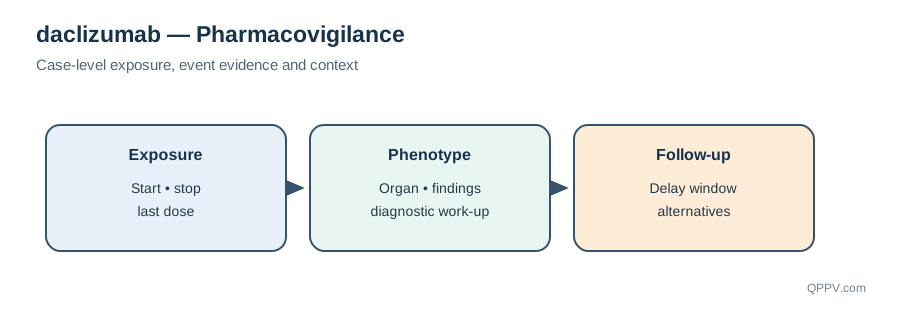
Figure 2. Delayed-event assessment connects treatment dates to organ-specific findings, investigations and competing diagnoses.
5. Safety governance and learning
The case history illustrates the need to integrate spontaneous reports, clinical-trial information, emerging case patterns, literature and regulatory review. PRAC's recommendation, Commission action, product recall and post-treatment monitoring communications are different regulatory steps and should be recorded distinctly.
For aggregate assessment, stratify by treatment period, restrictions, time since last dose, organ system, seriousness and diagnostic certainty. A report count alone does not establish incidence. Inspection-ready evidence should show how the MAH received reports, pursued follow-up, medically assessed events, submitted cases and incorporated regulatory actions into the safety system.
Common failures include ending follow-up at discontinuation, retaining only “liver disorder” without test trends, coding encephalitis without diagnostic context, and attributing all post-treatment events to the medicine without evaluating infection or disease activity.
6. Key takeaways
Daclizumab beta's EU authorisation was withdrawn in March 2018 after serious inflammatory brain disorders emerged against a prior background of significant liver risk. The safety history included immune reactions affecting multiple organs and a relevant post-treatment period. High-quality case assessment requires complete exposure dates, organ-specific evidence, investigations, alternative diagnoses and follow-up after the final dose.
References
- European Medicines Agency. Zinbryta: European Public Assessment Report. Authorisation history and withdrawal on 27 March 2018. Accessed 24 September 2026.
- European Medicines Agency. Zinbryta referral: review of serious liver and immune-mediated risks. Regulatory review and safety measures. Accessed 24 September 2026.
- European Medicines Agency. EMA review confirms risk of serious and potentially fatal immune reactions. Brain, liver and other-organ risks; suspension and recall recommendation.
- European Medicines Agency. GVP Module VI: Collection, management and submission of reports of suspected adverse reactions. Apply the current module and addenda.
- European Commission. Commission Implementing Regulation (EU) No 520/2012. EU pharmacovigilance requirements, as amended.
- European Medicines Agency. Zinbryta: historical EU product information. Historical SmPC and package leaflet. Accessed 24 September 2026.
Regulatory Note
This article is an educational account of daclizumab beta's historical EU-authorised use and withdrawal. It does not replace the historical product information, applicable legislation, current regulatory guidance or clinical judgement. No current EU marketing authorisation exists for daclizumab beta.