Daratumumab: Classification, History, Mechanism of Action, Safety and Pharmacovigilance
- Daratumumab: Classification, History, Mechanism of Action, Safety and Pharmacovigilance
- Multidimensional classification
- CD38 biology and why the target is useful
- Mechanism of action
- Development and regulatory history
- Clinical use and exposure context
- Major safety domains
- The transfusion-testing problem
- Interference with myeloma response assessment
- Immunogenicity and product traceability
- Pharmacovigilance case assessment
- Signal detection and aggregate review
- Periodic benefit-risk evaluation
- Risk management and operational controls
- Potential failure modes
- Inspection and governance perspective
- Practical checklist
- Key Takeaways
- References
- Regulatory Note
Daratumumab is a CD38-directed monoclonal antibody used across several plasma-cell disease settings. Its pharmacology is easiest to understand by starting with the target. CD38 is a transmembrane glycoprotein with receptor and ectoenzymatic functions. It is expressed at particularly high density on many malignant plasma cells, but it is not restricted to tumour cells: lower or variable expression occurs on several normal haematopoietic and non-haematopoietic cell populations. The therapeutic window therefore arises from relative target abundance, disease biology and immune-effector context rather than from absolute tumour specificity.
That distinction matters for pharmacovigilance. Daratumumab does not behave simply as a soluble-ligand neutralising antibody. Once bound to CD38 it can recruit complement and cellular effector mechanisms, alter CD38-associated signalling and immune-cell composition, and remove CD38-expressing cells. Its safety profile must therefore be interpreted across several layers: expected consequences of plasma-cell and marrow disease, immune effects of treatment, combination-partner toxicity, route-specific administration reactions, infection susceptibility and two unusual forms of laboratory interference that can directly affect patient management.
Multidimensional classification
| Classification axis | Daratumumab classification | Scientific or PV significance |
|---|---|---|
| Molecular class | Human monoclonal antibody, IgG1 kappa | Full-length antibody capable of Fc-mediated effector functions |
| Primary target | CD38 | Highly expressed on many malignant plasma cells but present on normal cells at lower or variable density |
| Functional class | Cell-directed antibody | Efficacy involves target-cell killing and immune modulation rather than only ligand neutralisation |
| Principal disease context | Plasma-cell disorders | Baseline cytopenias, immunoparesis, renal dysfunction and infection risk complicate attribution |
| Administration | Intravenous and subcutaneous presentations in authorised settings | Route changes the pattern and frequency of administration-related reactions and creates presentation-identification needs |
| PV-defining laboratory issue | Indirect antiglobulin-test interference | Can mask clinically important red-cell alloantibodies and affect transfusion workflows |
| Additional analytical issue | Serum electrophoresis/immunofixation interference | Therapeutic IgG kappa can be mistaken for endogenous monoclonal protein in some patients |
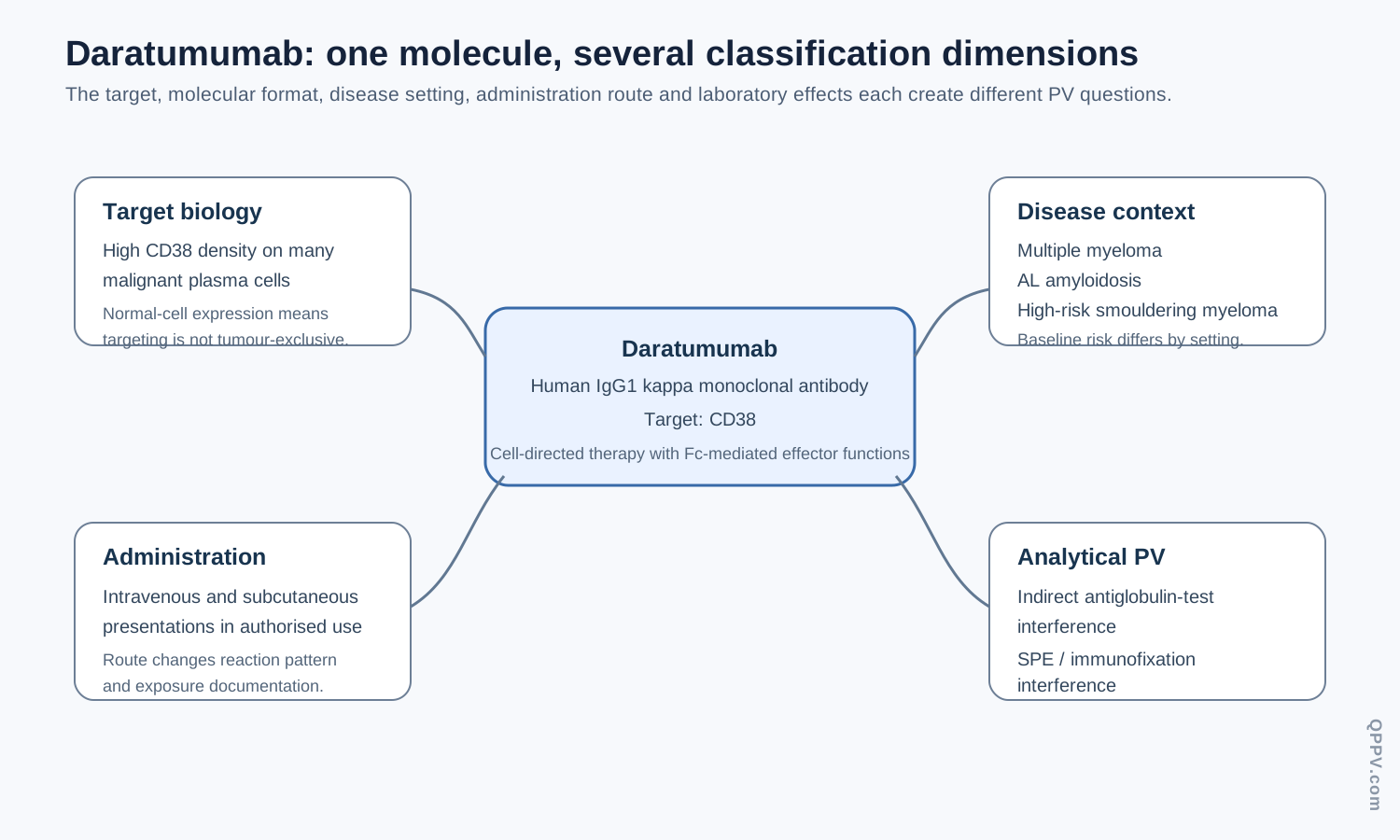
Figure 1. Daratumumab is best understood simultaneously as a CD38-directed cell-depleting antibody, an immune-modulating biological and a product with clinically important laboratory-test interference. These dimensions create different pharmacovigilance questions.
CD38 biology and why the target is useful
CD38 is expressed strongly on plasma cells, including many multiple-myeloma cells. Plasma cells are terminally differentiated B-lineage cells specialised for antibody secretion. In multiple myeloma, a malignant plasma-cell clone expands in bone marrow and produces a monoclonal immunoglobulin or light chain. High CD38 density provides an accessible cell-surface marker through which an antibody can identify and recruit immune effector mechanisms against the malignant clone.
CD38 is not merely a marker. Its ectoenzymatic activity participates in metabolism of extracellular nicotinamide adenine dinucleotide-related substrates and contributes to an immunoregulatory microenvironment. These functions help explain why CD38 targeting has effects beyond physical coating of tumour cells. However, the relative contribution of each proposed mechanism in an individual patient cannot be inferred from routine safety reports; pharmacovigilance should distinguish established product pharmacology from mechanistic hypotheses.
Mechanism of action
The established antitumour model includes several overlapping mechanisms. Daratumumab binding can initiate complement-dependent cytotoxicity, promote antibody-dependent cellular cytotoxicity through Fc-receptor-bearing effector cells, support antibody-dependent cellular phagocytosis by macrophages and contribute to direct or Fc-associated cell death under appropriate conditions. Treatment also changes immune-cell populations in ways that may alter antitumour immune responses.
These mechanisms are complementary rather than mutually exclusive. A patient does not receive one "ADCC dose" and another "complement dose"; the biological outcome depends on antigen density, effector-cell availability, complement activity, tumour microenvironment and concurrent treatment. The clinically relevant point is that a target-directed antibody can reshape both malignant-cell burden and immune context.
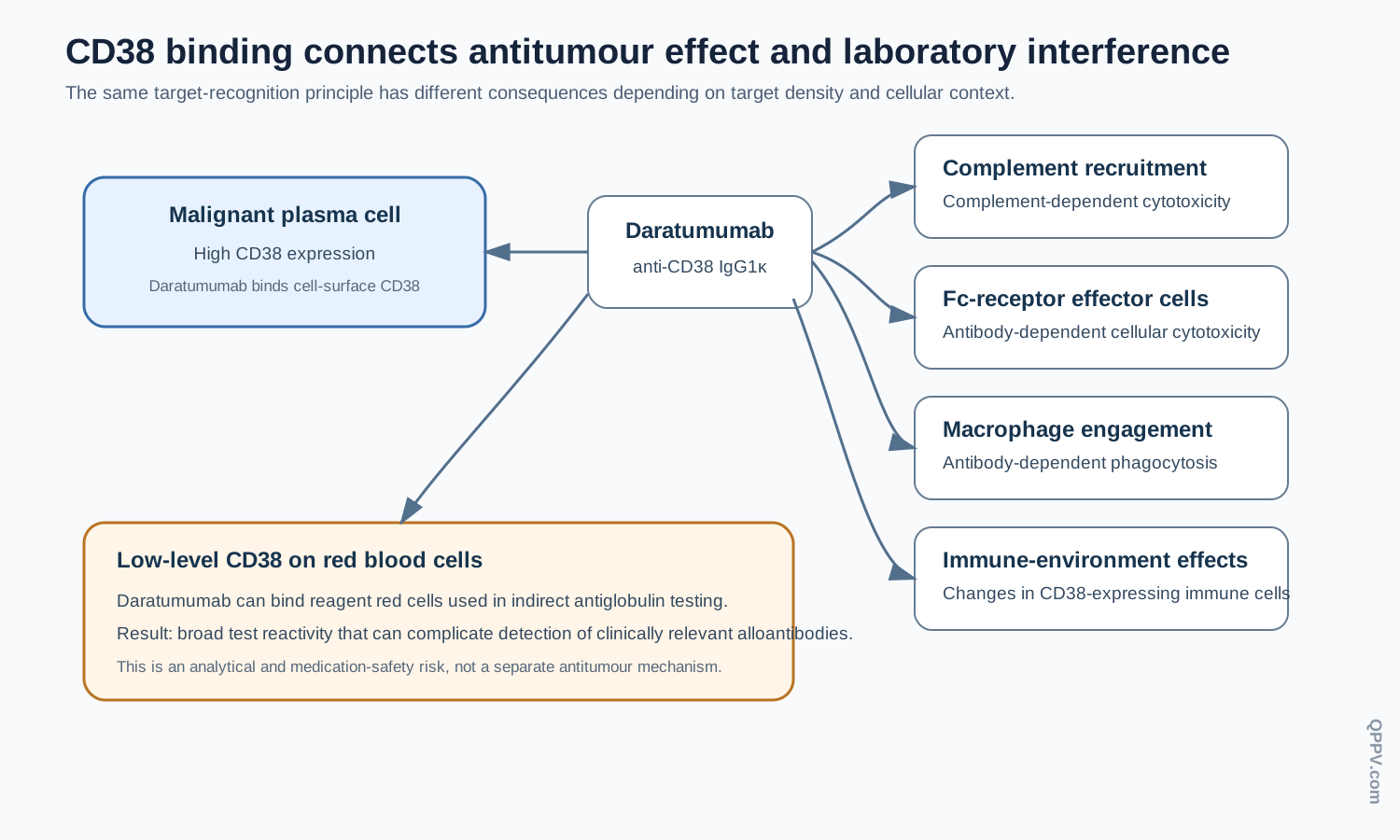
Figure 2. Binding to CD38 can recruit complement, Fc-receptor-bearing cells and phagocytes while changing the immune environment. The same CD38 recognition also explains binding to red cells at low target density and the resulting interference with indirect antiglobulin testing.
Development and regulatory history
Daratumumab entered clinical development after laboratory work showed that CD38 was both highly expressed on myeloma cells and accessible to antibody-mediated killing. Early clinical studies in heavily pretreated multiple myeloma demonstrated that CD38 targeting could produce responses even after failure of several established drug classes. This established CD38 as a clinically useful therapeutic target and was followed by progressively earlier use and multiple combination regimens.
The European Union first authorised daratumumab in 2016. The original conditional authorisation was converted to a standard marketing authorisation in 2017 after additional evidence became available. Subsequent extensions broadened use across multiple-myeloma treatment settings and AL amyloidosis, and current EU information also includes treatment of high-risk smouldering multiple myeloma. The product-information history is therefore important in aggregate review: an event reported in 2017 and an event reported in 2026 may arise from very different disease stages, combinations, routes and background risks.
Why indication history changes safety interpretation
Late-line multiple myeloma is characterised by cumulative marrow injury, prior immunosuppression and treatment-resistant disease. Newly diagnosed disease has a different competing-risk structure. AL amyloidosis introduces organ involvement—particularly cardiac, renal and neurologic disease—that can independently generate serious events. Smouldering myeloma differs again because patients may have fewer symptoms and less treatment-related morbidity at baseline. Pooling all daratumumab exposure without indication and regimen can therefore obscure clinically meaningful patterns.
Clinical use and exposure context
Daratumumab is frequently used as one component of a multidrug regimen. That fact is central to causality assessment. Cytopenias, peripheral neuropathy, infection, gastrointestinal symptoms and other events may reflect the antibody, a combination partner, the underlying plasma-cell disorder or their interaction. A safety case therefore needs the complete regimen and its chronology rather than a single-product exposure record.
Current EU information includes intravenous and subcutaneous presentations in authorised settings. The active antibody is the same, but route and formulation alter the practical pattern of administration reactions and product-use errors. Useful exposure data include formulation, route, dose date, premedication, concomitant therapy and whether the event followed an initial or later administration.
Major safety domains
Administration-related reactions
Administration-related reactions are particularly relevant around early exposures. Fever, chills, respiratory symptoms, nausea and blood-pressure changes can occur close to dosing, but similar symptoms can arise from infection or cardiopulmonary disease. Pharmacovigilance assessment should therefore preserve onset relative to dosing, objective clinical findings, treatment, recurrence and outcome.
Cytopenias and marrow reserve
Neutropenia, anaemia and thrombocytopenia are common in the treated population. Multiple myeloma can impair marrow function before therapy, while combination regimens add further marrow toxicity. Medically useful follow-up includes baseline counts, nadir, recovery, marrow status where known and the timing of other antimyeloma medicines.
Infection and immune impairment
Myeloma can suppress normal immunoglobulin production, and treatment can add cellular and humoral immune impairment. Pneumonia, respiratory infections, sepsis and viral infections therefore require more than temporal attribution. Infection site, microbiology, neutrophil count, immunoglobulin status where available, corticosteroid exposure, prior transplant and concurrent therapy can materially change interpretation.
Hepatitis B reactivation
Current EU product information describes hepatitis B virus reactivation as an established safety concern and includes screening and monitoring provisions. A suspected case should distinguish baseline HBV status from new virological evidence and document timing, liver findings, antiviral management and outcome. The important PV distinction is between reactivation of latent or controlled infection, newly acquired infection and unrelated liver injury.
Peripheral neuropathy and combination partners
Peripheral neuropathy is reported in daratumumab-containing treatment programmes, but some common combination partners also have well-characterised neuropathic toxicity. Attribution therefore depends on phenotype, baseline neuropathy, cumulative exposure, dose modifications and the course after alteration of each relevant treatment.
The transfusion-testing problem
One of the most distinctive daratumumab safety issues is laboratory interference rather than a conventional adverse reaction. Daratumumab can bind CD38 present at low levels on reagent red blood cells and cause persistent reactivity in indirect antiglobulin testing used during pre-transfusion antibody assessment.
The clinical significance is that this broad reactivity can complicate or delay identification of clinically relevant red-cell antibodies. Current product information therefore incorporates pre-treatment blood-group assessment and communication with transfusion services, and notes that interference may persist for months after the last dose. ABO and RhD typing are not affected in the same way.
This belongs within pharmacovigilance because it is a medication-safety interface between oncology, laboratory medicine and transfusion practice. Delayed compatibility testing, near misses, emergency-care communication failures and absence of prior-exposure information can all test whether the risk-minimisation system is functioning in practice.
Interference with myeloma response assessment
Daratumumab is an IgG kappa monoclonal antibody and can itself be detected by serum protein electrophoresis and immunofixation. In patients whose disease protein is also IgG kappa, therapeutic-antibody detection can complicate classification of complete response or progression.
An apparent residual monoclonal band should therefore be interpreted with the assay method, endogenous isotype, treatment status and any validated method used to distinguish therapeutic antibody from disease protein. Analytical interference is not equivalent to biological treatment failure.
Immunogenicity and product traceability
As for other biological medicines, product identity and batch should be retained in safety records. Anti-drug-antibody results can be informative in selected cases, but antibody positivity alone does not establish the cause of a reaction or loss of efficacy; phenotype, timing, exposure and assay characteristics remain essential.
Pharmacovigilance case assessment
Daratumumab cases become clinically interpretable when four elements are reconstructed together: the plasma-cell disease setting, the complete treatment regimen, the administration chronology and the objective laboratory or diagnostic evidence supporting the event. The same adverse-event term can mean something different in newly diagnosed myeloma, heavily pretreated relapsed disease, AL amyloidosis or high-risk smouldering myeloma.
Event-specific follow-up priorities
| Event or issue | High-value follow-up information |
|---|---|
| Administration reaction | Route, dose number, onset from administration, premedication, respiratory/circulatory findings, management, recurrence |
| Serious infection | Site, organism, cultures/PCR where available, neutrophils, immunoglobulins, corticosteroids, prior transplant, concurrent regimen |
| Cytopenia | Baseline count, nadir, marrow involvement, concomitant myelosuppressive medicines, recovery and supportive treatment |
| HBV reactivation | Baseline serology, virological evidence, liver tests, timing, antiviral treatment and outcome |
| Neuropathy | Baseline status, sensory/motor/autonomic phenotype, cumulative exposure to neuropathic partners, dose changes, outcome |
| Transfusion-test interference | Prior daratumumab exposure, blood-bank awareness, test pattern, transfusion delay or near miss, outcome |
| Response-assay interference | Endogenous M-protein isotype, SPE/IFE method, timing of treatment, confirmatory method if used |
| Suspected loss of efficacy | Disease markers, regimen adherence, dosing history, disease biology, assay interference and progression criteria |
Signal detection and aggregate review
Aggregate analyses should stratify by indication, line of therapy, route and important combination regimen. A simple pooled count can be misleading when the exposed population changes over time. For example, infection patterns in heavily pretreated myeloma cannot be assumed to represent the risk profile of patients treated earlier in disease or in a premalignant setting.
Laboratory-interference events need dedicated retrieval strategies because they may be coded as transfusion problems, laboratory abnormalities, delayed procedures or medication errors rather than as conventional adverse reactions. Likewise, response-assay interference may appear in narratives describing apparent disease persistence rather than under a single safety term.
Periodic benefit-risk evaluation
Periodic evaluation should integrate disease control with serious infections, cytopenias, administration reactions, immune effects, HBV reactivation, route-specific experience and the continuing effectiveness of laboratory-interference risk minimisation. Changes in treatment setting are particularly important: expansion into earlier disease changes baseline morbidity, expected survival and tolerance for treatment burden.
Risk management and operational controls
The current product information governs authorised use, route, warnings and management. From an operational PV perspective, useful controls include reliable recording of formulation and route, structured follow-up for serious infections and cytopenias, retention of HBV baseline status when relevant, and systems that make prior daratumumab exposure visible to transfusion laboratories.
The transfusion issue illustrates why risk minimisation should be evaluated rather than merely distributed. Evidence of effectiveness can include whether patients retain alert information, whether blood banks receive exposure history, whether urgent compatibility testing is delayed and whether local laboratory methods can distinguish drug interference from clinically important alloantibodies.
Potential failure modes
The following are illustrative scenarios, not published inspection findings:
- A serious infection is reviewed without reconstructing corticosteroid exposure, neutropenia or the full combination regimen.
- A cytopenia is attributed to daratumumab without baseline marrow status or concomitant treatment.
- A transfusion delay is coded only as a laboratory abnormality and never linked to prior CD38-antibody exposure.
- A persistent IgG kappa band is interpreted as treatment failure without considering therapeutic-antibody interference.
- Intravenous and subcutaneous exposure are pooled despite different administration-reaction contexts.
- Safety data from late-line myeloma are applied uncritically to earlier disease populations.
Inspection and governance perspective
An inspector assessing daratumumab pharmacovigilance could examine whether combination-regimen information is retained, whether serious infection and cytopenia cases are medically characterised, whether biological-product and batch traceability is available, and whether the transfusion-testing risk can be managed across organisational boundaries. The effectiveness question is not merely whether a warning exists in product information, but whether a patient presenting to a transfusion service can be recognised as having received a CD38-directed antibody before compatibility problems cause avoidable delay.
Practical checklist
For a daratumumab case or aggregate review, confirm:
- disease setting and line of therapy;
- complete antimyeloma regimen and treatment dates;
- intravenous or subcutaneous presentation;
- baseline marrow, renal and immune status where relevant;
- objective infection, cytopenia or neurologic findings;
- HBV baseline and follow-up information for suspected reactivation;
- transfusion-service communication for compatibility-testing problems;
- M-protein assay context when response is uncertain;
- product and batch traceability.
Key Takeaways
Daratumumab is a CD38-directed human IgG1 kappa monoclonal antibody whose antitumour activity combines cell-surface recognition with complement, Fc-dependent cellular mechanisms and immune modulation. Its safety profile is inseparable from the disease setting and the other medicines with which it is administered.
Two analytical effects make the product unusually instructive for pharmacovigilance. CD38 binding can interfere with indirect antiglobulin testing used by transfusion services, while the therapeutic IgG kappa molecule can interfere with electrophoretic assessment of myeloma response. Both are examples of risks that can harm care without presenting first as a conventional adverse drug reaction.
References
- European Medicines Agency. Daratumumab: EPAR and current product information. Product information updated 21 July 2026. https://www.ema.europa.eu/en/medicines/human/EPAR/darzalex
- Lokhorst HM, Plesner T, Laubach JP, et al. Targeting CD38 with daratumumab monotherapy in multiple myeloma. N Engl J Med. 2015;373:1207-1219. doi:10.1056/NEJMoa1506348.
- van de Donk NWCJ, Janmaat ML, Mutis T, et al. Monoclonal antibodies targeting CD38 in hematological malignancies and beyond. Immunol Rev. 2016;270:95-112. doi:10.1111/imr.12389.
- European Medicines Agency. Daratumumab variation assessment report: interference with blood compatibility testing and risk-minimisation measures. https://www.ema.europa.eu/en/documents/variation-report/darzalex-h-c-004077-ii-0077-epar-assessment-report-variation_en.pdf
Regulatory Note
Authorised indications, combinations, presentations, warnings and risk-minimisation measures can change. This article explains the scientific and pharmacovigilance framework and does not replace current regional product information, transfusion-service procedures or specialist treatment guidance. Regulatory information was checked against EMA material current in September 2026.