Datopotamab Deruxtecan: Classification, History, Mechanism of Action, Safety and Pharmacovigilance
Datopotamab deruxtecan is a TROP2-directed antibody-drug conjugate (ADC). It links a humanised antibody directed against trophoblast cell-surface antigen 2 (TROP2) to the topoisomerase-I inhibitor payload deruxtecan (DXd) through a cleavable linker. The product therefore uses a cell-surface antigen as a delivery address for cytotoxic therapy.
The molecular logic resembles other DXd-platform ADCs but the target changes both patient selection and tissue context. TROP2 is expressed by many epithelial cancers and is also present in normal epithelial tissues. After antibody binding and internalisation, intracellular processing releases DXd, which inhibits topoisomerase I and damages DNA. The membrane-permeable payload can also contribute to local bystander killing.
Its pharmacovigilance is distinguished by three adverse-effect domains that require active clinical characterisation: stomatitis, ocular adverse reactions and interstitial lung disease/pneumonitis. These sit alongside nausea, cytopenias and other systemic toxicities expected from a potent ADC. The safety programme therefore cannot be reduced to a generic “chemotherapy-like” profile.
- Datopotamab Deruxtecan: Classification, History, Mechanism of Action, Safety and Pharmacovigilance
- Multidimensional classification
- TROP2 biology
- Mechanism of action
- Development and regulatory history
- Safety architecture
- Why oral and ocular prophylaxis matter to PV interpretation
- Indication-specific context
- Dose, schedule and administration
- Special situations
- Pharmacovigilance case assessment
- Signal detection and aggregate review
- Periodic benefit-risk evaluation
- Risk management and operational controls
- Potential failure modes
- Inspection and governance perspective
- Practical checklist
- Key Takeaways
- References
- Regulatory Note
Multidimensional classification
| Classification axis | Datopotamab deruxtecan classification | Scientific or PV significance |
|---|---|---|
| Modality | Antibody-drug conjugate | Targeting, linker and payload jointly determine exposure |
| Antibody target | TROP2 | Provides tumour-directed binding and internalisation |
| Antibody format | Humanised IgG1 anti-TROP2 monoclonal antibody | Product identity remains biologically traceable |
| Linker | Cleavable tetrapeptide-based linker | Enables intracellular payload release |
| Payload | DXd topoisomerase-I inhibitor | Produces DNA damage and systemic cytotoxic effects |
| Drug-to-antibody ratio | Approximately 4 | Distinguishes payload loading from other DXd ADCs |
| Current 2026 breast-cancer settings | HR-positive/HER2-negative advanced breast cancer after endocrine therapy and chemotherapy; first-line unresectable/metastatic TNBC when PD-1/PD-L1 therapy is not suitable in newly authorised regional settings | Indication and treatment line are essential efficacy/safety context |
| Key PV domains | Stomatitis, ocular toxicity, ILD/pneumonitis | Require targeted follow-up beyond general adverse-event coding |
| Regulatory status | Additional monitoring in the EU | Supports intensified capture of emerging safety information |
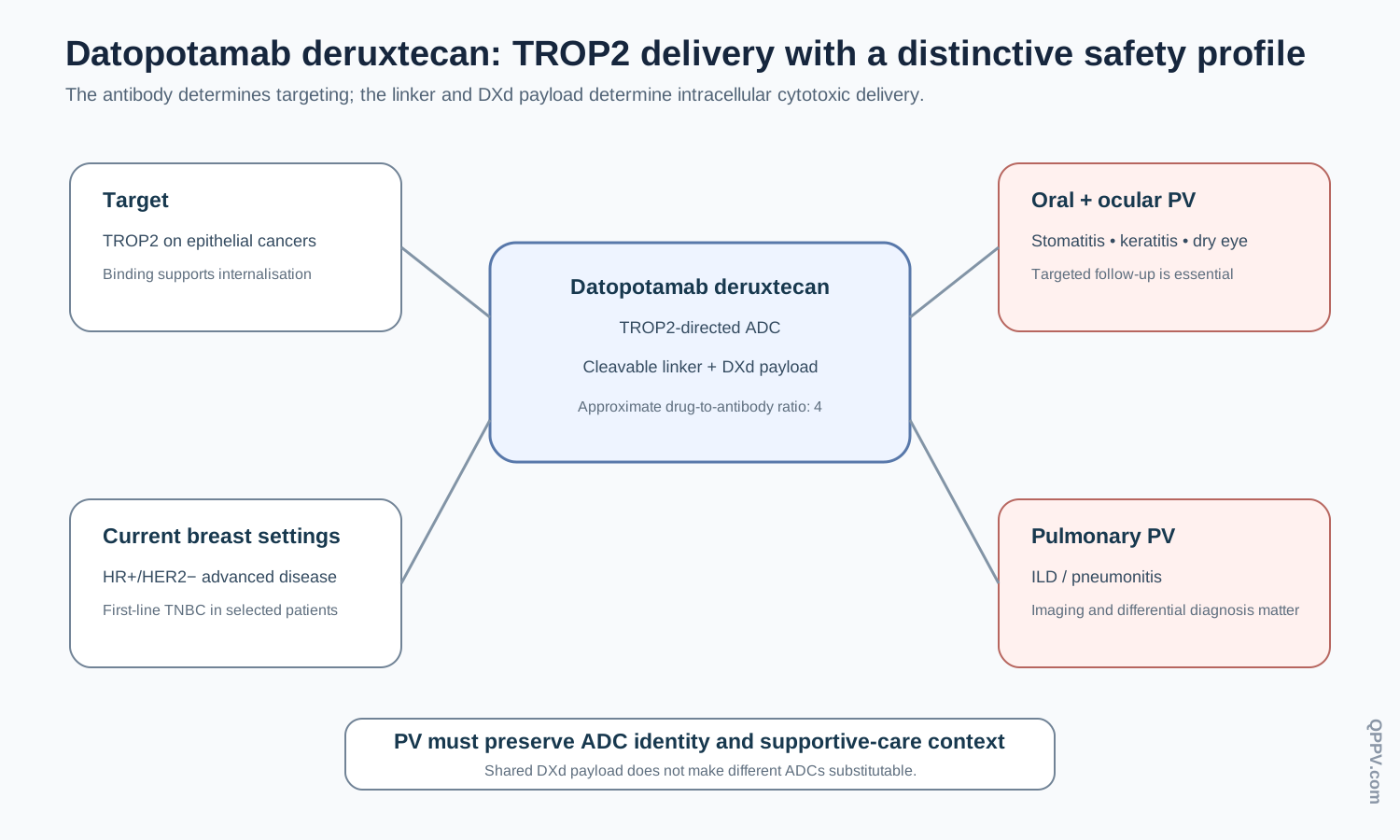
Figure 1. Datopotamab deruxtecan is defined by TROP2 targeting, an approximately four-payload ADC architecture and three especially important safety domains: oral, ocular and pulmonary toxicity.
TROP2 biology
TROP2 is a transmembrane glycoprotein encoded by TACSTD2 and expressed in a range of epithelial tissues and carcinomas. High expression in many tumours makes it useful as an ADC target, but expression alone should not be interpreted as proof that every tumour is biologically dependent on TROP2 signalling.
For an ADC, the target has two roles. First, it helps concentrate the conjugate on cells displaying the antigen. Second, internalisation transports the conjugate into a compartment where the linker can be cleaved and the cytotoxic payload released. Target abundance, internalisation efficiency, tumour architecture and payload sensitivity therefore all influence treatment effect.
This distinction matters when evaluating lack of efficacy. A progressing tumour does not necessarily demonstrate absence of TROP2 expression, and TROP2 expression does not guarantee sufficient intracellular drug delivery or sensitivity to topoisomerase-I inhibition.
Mechanism of action
Datopotamab deruxtecan binds TROP2 on the cell surface, is internalised, and undergoes intracellular linker cleavage. Released DXd inhibits topoisomerase I, an enzyme required to manage DNA torsional stress during replication. Stabilisation of the topoisomerase-I-DNA cleavage complex produces DNA damage and tumour-cell death.
Because DXd is membrane permeable, some released payload can diffuse into neighbouring cells. This bystander effect may be advantageous in heterogeneous tumours but also reinforces why systemic and local tissue toxicity cannot be inferred solely from the antibody target.
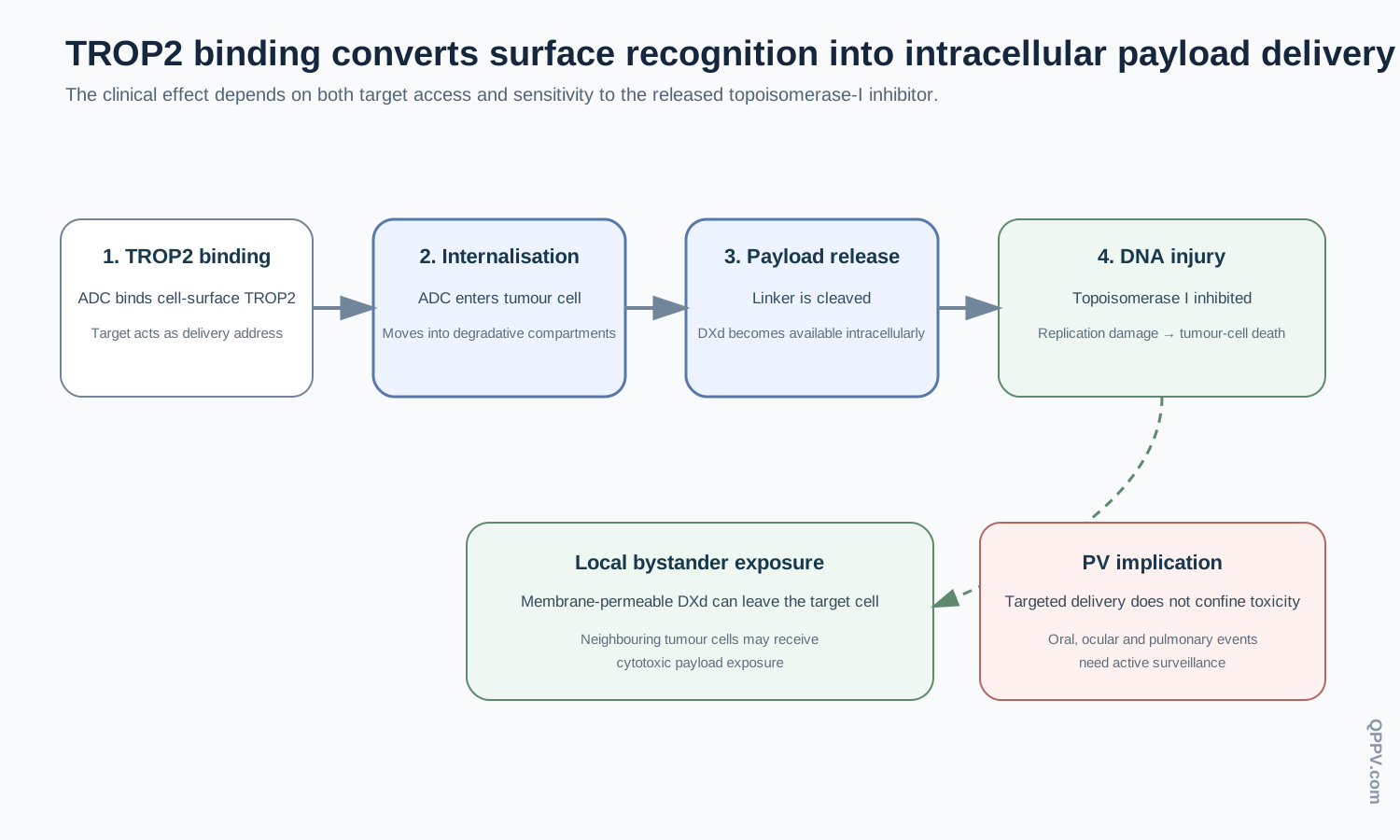
Figure 2. TROP2 binding directs the ADC into the cell; linker cleavage releases DXd, which inhibits topoisomerase I and can diffuse locally to neighbouring cells.
Development and regulatory history
Clinical development initially focused on advanced solid tumours with substantial TROP2 expression, including breast and lung cancer. The phase III TROPION-Breast01 programme established benefit in previously treated HR-positive/HER2-negative advanced breast cancer, supporting regulatory authorisation in 2025.
The EU granted marketing authorisation in April 2025 for unresectable or metastatic HR-positive/HER2-negative breast cancer after endocrine therapy and at least one line of chemotherapy in the advanced setting. In 2026, the evidence base expanded further. FDA authorised first-line treatment of unresectable or metastatic triple-negative breast cancer (TNBC) in adults not considered candidates for PD-1/PD-L1 inhibitor therapy in May 2026, and a corresponding EU indication was approved in July 2026 after positive CHMP review.
This evolution matters for PV because treatment line and background therapy change. A heavily pretreated HR-positive population and a first-line TNBC population differ in marrow reserve, prior mucosal toxicity, comorbidity, prognosis and exposure to other anticancer medicines. Aggregate analyses should not assume one uniform denominator simply because the same ADC is used.
Safety architecture
Datopotamab deruxtecan toxicity should be interpreted as the output of an integrated ADC rather than assigned reflexively to TROP2 or the DXd payload alone. Oral and ocular events are unusually prominent and therefore deserve dedicated surveillance alongside pulmonary and haematological toxicity.
Stomatitis and oral mucosal injury
Stomatitis includes oral mucositis, ulcers and inflammatory mouth symptoms. Most events are low grade, but persistent oral pain can impair nutrition, hydration and treatment adherence. Product information includes preventive and therapeutic oral-care measures, making the presence or absence of prophylaxis an important contextual variable when a case occurs.
Follow-up should document onset from the first dose, anatomical sites, ulceration, ability to eat or drink, infection, weight change, oral-care measures, dose interruption/reduction and resolution. Grouping severe ulcerative mucositis with mild mouth discomfort can obscure clinically important patterns.
Ocular adverse reactions
Ocular events include dry eye, keratitis, blepharitis, lacrimation abnormalities, conjunctival symptoms and blurred vision. Keratitis is particularly important because corneal injury can progress beyond nonspecific discomfort.
A useful ocular case therefore captures visual symptoms, laterality, contact-lens use, baseline ocular disease, slit-lamp findings, fluorescein staining, visual acuity, intraocular pressure where performed, ophthalmology diagnosis, supportive treatment and dose modification. “Eye irritation” alone is rarely sufficient for signal interpretation.
Interstitial lung disease and pneumonitis
ILD/pneumonitis is an important ADC-class and DXd-platform concern, but its frequency and clinical pattern must remain product-specific. New cough, dyspnoea, fever or imaging abnormalities should trigger evaluation for drug-related ILD alongside infection, pulmonary embolism, tumour progression, prior radiation and other pneumotoxic therapy.
For medically meaningful assessment, record CT findings, grade, oxygen requirement, infectious investigations, corticosteroid treatment, treatment interruption/discontinuation and outcome. Broad respiratory coding without diagnostic follow-up can delay recognition of a serious pulmonary pattern.
Haematological and systemic toxicity
Anaemia, neutropenia and other cytopenias can occur. Their interpretation requires prior therapy, marrow involvement, laboratory chronology and concomitant treatment. Nausea, fatigue and alopecia are also common but should not automatically be treated as low-value data: severe or persistent nausea can lead to dehydration, weight loss and dose modification.
Why oral and ocular prophylaxis matter to PV interpretation
Supportive-care measures can change observed event frequency and severity. The safety system should therefore capture whether recommended mouthwash, cryotherapy or lubricating-eye measures were used where applicable. This is not to assign blame for an adverse event; it helps distinguish intrinsic susceptibility from modifiable implementation factors and evaluates whether risk-minimisation instructions are functioning in practice.
The same principle applies to treatment after an event. A patient whose stomatitis resolves after interruption and intensified oral care presents a different pattern from recurrent mucositis despite dose reduction and preventive measures.
Indication-specific context
HR-positive/HER2-negative breast cancer
Patients entering this setting have already received endocrine therapy and chemotherapy for advanced disease. Prior capecitabine or other cytotoxic exposure can complicate attribution of mucosal, haematological and gastrointestinal symptoms. Documentation of previous treatment and washout is therefore useful.
Triple-negative breast cancer
In first-line TNBC patients who are not candidates for PD-1/PD-L1 therapy, the comparator and prior-treatment landscape differ. Baseline autoimmune disease or immunosuppression may influence why immunotherapy was considered unsuitable. These factors can also modify infection, pulmonary and healing risks and should be retained in case narratives when relevant.
Dose, schedule and administration
Datopotamab deruxtecan is administered by intravenous infusion on a repeating schedule. Pharmacovigilance should capture the exact dose, dose number, infusion date and any dose reduction or delay. For infusion reactions, onset relative to infusion, signs, vital signs, interruption, treatment and re-exposure outcome are important.
Medication errors can include incorrect dose calculation, wrong interval, omission of supportive prophylaxis or confusion with another deruxtecan-containing ADC. The shared “deruxtecan” suffix is not evidence that products are substitutable. TROP2-directed datopotamab deruxtecan and HER2-directed trastuzumab deruxtecan have different antibodies, payload loading, indications and risk-management details.
Special situations
Pre-existing eye disease
Baseline dry-eye disease, corneal pathology, contact-lens use and prior ocular surgery can change both event susceptibility and differential diagnosis. Such information should be captured rather than treating all ocular toxicity as a single drug effect.
Pre-existing pulmonary disease
Prior ILD, radiation changes, chronic lung disease and pulmonary metastases are clinically important when respiratory symptoms emerge. A baseline CT can be valuable in later adjudication, but operational requirements should follow the applicable label and local practice rather than being represented as universal legal obligations.
Pregnancy
As a cytotoxic ADC, datopotamab deruxtecan has biologically plausible embryo-fetal risk. Pregnancy reports require gestational timing, dose dates, co-exposures, maternal cancer status and fetal/neonatal outcome. Contraception and pregnancy-prevention instructions should be interpreted from current regional product information.
Pharmacovigilance case assessment
A useful datopotamab deruxtecan case reconstruction combines ADC exposure, tumour setting, oral/ocular/pulmonary phenotype, supportive care and competing causes. These dimensions are necessary because the same symptom can have very different regulatory meaning depending on its clinical characterisation.
Event-specific follow-up priorities
| Event or issue | High-value follow-up information |
|---|---|
| Stomatitis/oral mucositis | Onset, grade, ulceration, oral intake, infection, weight, preventive mouthwash/cryotherapy, treatment, dose modification, recovery |
| Ocular toxicity | Symptoms, laterality, visual acuity, slit-lamp/fluorescein findings, corneal diagnosis, baseline eye disease/contact lenses, ophthalmic treatment, outcome |
| ILD/pneumonitis | Symptoms, CT, grade, oxygenation, infection work-up, prior lung disease/radiation, corticosteroids, interruption/discontinuation, outcome |
| Cytopenia | Serial counts, nadir, fever/infection, marrow disease, prior/concomitant chemotherapy, growth factors, recovery |
| Infusion reaction | Dose number, latency, symptoms/vitals, interruption, supportive treatment and re-exposure |
| Lack of efficacy | Breast-cancer subtype, treatment line, prior therapy, dose intensity, imaging and progression timing |
Signal detection and aggregate review
Stomatitis and ocular events should each have dedicated case-series review rather than being lost within broad gastrointestinal or eye-disorder summaries. Severity, recurrence and treatment consequence are more informative than raw event counts alone.
ILD/pneumonitis requires medically reviewed retrieval because nonspecific respiratory terms may conceal serious cases. Aggregate review should stratify by tumour type, prior pulmonary disease and treatment line where exposure permits.
As indications expand, the safety database should preserve the distinction between HR-positive/HER2-negative and TNBC populations. A shift in event frequency after an indication expansion may reflect changing patient characteristics or supportive-care practice rather than a change in the intrinsic product profile.
Periodic benefit-risk evaluation
Periodic evaluation should integrate progression control and survival evidence with stomatitis, ocular adverse reactions, ILD/pneumonitis, cytopenias, gastrointestinal toxicity, infusion reactions, medication errors, pregnancy outcomes and emerging immunogenicity information.
Benefit assessment is also indication-specific. The evidence supporting use after endocrine therapy and chemotherapy in HR-positive disease is not interchangeable with evidence supporting first-line TNBC use in patients who are not candidates for checkpoint inhibition.
Risk management and operational controls
Current regional product information governs oral prophylaxis, ocular precautions, pulmonary monitoring and dose modification. Recommended operational controls include structured oral and ocular follow-up, rapid medical review of suspected ILD, capture of supportive-care adherence, exact indication/treatment line and product/batch traceability.
These practices support effective pharmacovigilance; they should not be presented as separate legal requirements unless specifically mandated.
Potential failure modes
The following are illustrative scenarios, not published inspection findings:
- Severe oral ulcers are coded as “stomatitis” without documenting whether the patient could eat or whether infection was present.
- Keratitis is reduced to a nonspecific eye-irritation term and the ophthalmology findings are not obtained.
- A respiratory event is coded as pneumonia without retrieving CT findings or the treating physician’s ILD assessment.
- A case is assigned to the wrong deruxtecan-containing ADC because the shared payload suffix is mistaken for product equivalence.
- Supportive mouthwash and ocular prophylaxis are omitted from follow-up, preventing evaluation of risk-minimisation implementation.
- Safety data from HR-positive disease and first-line TNBC are pooled without treatment-line context.
Inspection and governance perspective
An inspector could ask whether oral, ocular and pulmonary events trigger targeted follow-up; whether the safety database preserves the correct ADC identity; whether newly authorised indications are reflected in signal stratification; and whether risk-minimisation instructions can be linked to real-world case information.
The effectiveness test is whether the system turns common symptoms—mouth pain, dry eye or cough—into clinically interpretable phenotypes when they could represent known important product risks.
Practical checklist
For a datopotamab deruxtecan case or aggregate analysis, confirm:
- breast-cancer subtype and treatment line;
- prior endocrine, cytotoxic and immunotherapy exposure;
- exact dose, interval and dose number;
- oral prophylaxis and detailed mucosal phenotype;
- ocular prophylaxis, baseline eye disease and ophthalmology findings;
- CT/imaging and infectious work-up for respiratory cases;
- blood-count chronology for cytopenias;
- dose interruption/reduction/discontinuation;
- pregnancy status where relevant;
- exact biological product and batch.
Key Takeaways
Datopotamab deruxtecan is a TROP2-directed ADC that couples targeted internalisation to release of the DXd topoisomerase-I inhibitor. The target, linker and payload must be interpreted as one integrated medicinal product.
Its pharmacovigilance is particularly defined by stomatitis, ocular adverse reactions and ILD/pneumonitis. These events require phenotype-specific follow-up, while changing indications and treatment lines require stratified aggregate analysis.
References
- European Medicines Agency. Datroway (datopotamab deruxtecan): EPAR. EU marketing authorisation issued 4 April 2025; additional monitoring applies. https://www.ema.europa.eu/en/medicines/human/EPAR/datroway
- European Medicines Agency. Datroway product information. Includes stomatitis, ocular adverse reactions and ILD/pneumonitis. https://www.ema.europa.eu/en/documents/product-information/datroway-epar-product-information_en.pdf
- European Medicines Agency. Datroway: CHMP post-authorisation opinion for first-line unresectable/metastatic TNBC in patients not candidates for PD-1/PD-L1 therapy. June 2026. https://www.ema.europa.eu/en/medicines/human/variation/datroway
- U.S. Food and Drug Administration. FDA approves datopotamab deruxtecan-dlnk for unresectable or metastatic triple-negative breast cancer. 22 May 2026. https://www.fda.gov/drugs/resources-information-approved-drugs/fda-approves-datopotamab-deruxtecan-dlnk-unresectable-or-metastatic-triple-negative-breast-cancer
- Bardia A, Jhaveri K, Im S-A, et al. Datopotamab deruxtecan versus chemotherapy in previously treated inoperable/metastatic HR-positive, HER2-negative breast cancer: primary results from TROPION-Breast01. J Clin Oncol. 2025;43:285-296. doi:10.1200/JCO.24.00920.
Regulatory Note
Datopotamab deruxtecan indications and supportive-care instructions are evolving and may differ by jurisdiction. This article explains the scientific and pharmacovigilance framework and does not replace current regional product information or oncology guidance. Regulatory information was checked against EMA and FDA sources current in September 2026.