Denecimig (Frehemgo): From Bispecific FVIII Mimic to Next-Generation Haemophilia A Pharmacovigilance
Denecimig, marketed in Europe as Frehemgo following a positive opinion from the European Medicines Agency in September 2026, is a fully human modified immunoglobulin G4 bispecific antibody designed to mimic activated factor VIII (FVIIIa). Rather than replacing missing FVIII, denecimig bridges activated factor IX (FIXa) and factor X (FX) on activated platelet surfaces, facilitating generation of activated FX and thereby restoring an important part of the coagulation process.[1]
The distinction between replacement and mimicry is central to understanding the pharmacovigilance profile. Conventional FVIII replacement supplies the deficient coagulation factor. A bispecific FVIIIa mimetic instead introduces an antibody-mediated bridge into the coagulation cascade. This creates the possibility of prophylaxis without the same dependence on infused FVIII and allows treatment of patients who have developed FVIII inhibitors, but it also means that laboratory monitoring, interactions with bypassing agents and assessment of excessive coagulation require a different clinical framework.
Denecimig is being developed for routine prophylaxis in haemophilia A across patients with and without FVIII inhibitors and across age groups. The FRONTIER development programme has evaluated weekly and monthly dosing, later extending the evidence base to every-two-week dosing and long-term follow-up. EMA's 17 September 2026 positive opinion recommends authorisation for patients of all ages with haemophilia A and includes patients with FVIII inhibitors as well as patients without inhibitors who have severe disease or moderate disease requiring prophylaxis.[1,2]
At the time of the European positive opinion, denecimig had not yet received U.S. approval. Novo Nordisk reported on 2 October 2026 that FDA's BLA review remained ongoing because of remediation activities at a manufacturing facility; the company stated that FDA had not identified deficiencies in the submitted clinical efficacy or safety data.[3] This distinction is important: a delayed regulatory decision caused by manufacturing remediation is not evidence of a clinical safety signal.
This article follows denecimig from its scientific rationale and antibody design through the FRONTIER programme, regulatory development, the safety evidence available in 2026, and the practical pharmacovigilance questions that arise when a long-acting coagulation-modifying antibody is used in patients with very different haemostatic histories.
- Denecimig (Frehemgo): From Bispecific FVIII Mimic to Next-Generation Haemophilia A Pharmacovigilance
- Haemophilia A and the Therapeutic Role of Factor VIII
- From FVIII Replacement to Bispecific Mimicry
- Antibody Design and Development Rationale
- Discovery, Development and Ownership
- Early Clinical Development
- The FRONTIER Clinical Programme
- Pivotal Evidence and the 2026 European Positive Opinion
- The U.S. Regulatory Position
- Safety Architecture: Haemostasis Rather Than Conventional Organ Toxicity
- Thrombosis and Excessive Coagulation
- Breakthrough Bleeding and Loss of Effect
- Immunogenicity and Loss of Therapeutic Effect
- Switching From Other Non-Factor Therapy
- Dosing Flexibility and the Safety Denominator
- Laboratory Monitoring and Interpretation
- Paediatric and Long-Term Surveillance
- Signal Detection and Benefit-Risk Evaluation
- Product Quality, Device and Administration Events
- Inspection Perspective
- Common Failure Modes and Their Interpretation
- QPPV Oversight and Governance
- Practical Pharmacovigilance Framework
- Why Denecimig Is a Distinctive Pharmacovigilance Case
- Key Takeaways
- References
- Regulatory Note
Haemophilia A and the Therapeutic Role of Factor VIII
Haemophilia A is an inherited bleeding disorder caused by deficient or defective coagulation factor VIII. FVIII normally acts as a cofactor within the intrinsic tenase complex, working with activated factor IX to support efficient activation of factor X on phospholipid surfaces.
When FVIII activity is markedly reduced, thrombin generation is impaired and patients can experience recurrent bleeding, particularly into joints and muscles. Repeated joint bleeding can produce chronic arthropathy, while severe bleeding can be life-threatening. Prophylaxis therefore aims not simply to treat individual bleeding episodes but to maintain haemostatic protection over time.
Traditional prophylaxis has relied on replacement of FVIII, including recombinant products with different half-lives and dosing schedules. A major complication is the development of neutralising FVIII inhibitors. Inhibitors can prevent replacement FVIII from providing adequate haemostatic effect and may require bypassing therapies or alternative prophylactic approaches.
This therapeutic problem created a rationale for non-factor therapies. Instead of supplying the missing protein, a non-factor approach can attempt to restore sufficient thrombin generation by acting elsewhere in the coagulation pathway.
From FVIII Replacement to Bispecific Mimicry
The conceptual basis of denecimig is to reproduce the cofactor function of activated FVIII without using the FVIII molecule itself. Denecimig is a bispecific antibody: one binding arm engages FIXa and the other engages FX. By bringing these proteins together on the surface of activated platelets, the antibody facilitates FX activation in a manner intended to mimic the functional role of FVIIIa.[1]
This mechanism differs from FVIII replacement and from agents that reduce natural anticoagulant pathways. It also explains why denecimig can be used in patients with FVIII inhibitors: the therapeutic antibody does not depend on endogenous or infused FVIII remaining functionally available.
The mechanism creates a distinctive pharmacovigilance balance. Too little effective activity results in breakthrough bleeding; excessive coagulation activity could produce thrombosis. The relevant safety question is therefore not simply whether the product causes a particular organ toxicity. It is whether the treatment maintains haemostasis within an appropriate therapeutic range over prolonged exposure and across changing clinical circumstances.
Antibody Design and Development Rationale
Denecimig, previously known as Mim8, is a fully human modified IgG4 antibody. Its design is intended to provide the desired FIXa/FX bridging function while supporting subcutaneous administration and prolonged prophylactic dosing intervals.[1,4]
The development programme was built around reducing treatment burden as well as preventing bleeding. Weekly and monthly regimens were evaluated in the pivotal programme, with subsequent studies examining every-two-week administration and longer-term exposure. The possibility of monthly prophylaxis is clinically relevant because adherence is an important determinant of prophylaxis effectiveness.
The formulation and administration system are therefore part of the safety story. A pre-filled pen can change the practical conditions under which treatment is delivered, particularly for patients or caregivers who previously relied on intravenous factor administration or other injection systems. Device performance, dosing errors, administration technique and treatment persistence can all influence observed safety and effectiveness.
Discovery, Development and Ownership
Denecimig was developed by Novo Nordisk as part of its haemophilia research programme. The molecule has also been described by its development names NN-7769, NNC0365-3769 and Mim8.[5]
The programme progressed from early clinical studies into the FRONTIER series of phase 3 trials. Unlike a product developed for a single narrow population, the programme deliberately incorporated patients with and without FVIII inhibitors and included children as well as adolescents and adults. This broad development strategy means that the eventual post-authorisation safety database can be interpreted against a relatively diverse set of baseline haemostatic conditions.
For pharmacovigilance governance, the continuity of the development sponsor is useful because the same organisation carried the programme from development into regulatory submission. Nevertheless, the safety system must remain capable of integrating information from clinical trials, haemophilia treatment centres, patients, caregivers, spontaneous reporting and other sources after launch.
Early Clinical Development
The early denecimig programme established proof of concept for an activated-FVIII-mimetic bispecific antibody administered subcutaneously. Subsequent phase 3 studies were designed not only to establish bleeding prevention but to determine whether clinically useful protection could be maintained at substantially less frequent dosing than conventional factor replacement.
The central efficacy measure in haemophilia prophylaxis is the annualised bleeding rate (ABR), but interpretation requires attention to how bleeds are defined, treated and adjudicated. A reduction in treated bleeds can be clinically meaningful, yet the full benefit-risk assessment also needs to consider spontaneous bleeds, joint outcomes, breakthrough treatment, patient-reported outcomes and long-term joint health.
For PV, the same detail matters because a report of a breakthrough bleed is not automatically evidence of treatment failure or an adverse reaction. The case needs the treatment schedule, adherence, timing relative to the last dose, bleeding site, severity, treatment used to control the bleed and relevant inhibitor status.
The FRONTIER Clinical Programme
The FRONTIER programme provided the main clinical evidence for denecimig. FRONTIER2 enrolled adolescents and adults aged 12 years and older with haemophilia A, with or without FVIII inhibitors, and evaluated once-weekly and once-monthly subcutaneous denecimig. Patients previously receiving on-demand treatment were randomised to continue on-demand treatment or receive denecimig, while those previously receiving clotting-factor prophylaxis were randomised to weekly or monthly denecimig.[6]
The published 26-week results showed substantial reductions in treated bleeding compared with the relevant prior-treatment groups. The subsequent 52-week extension provided longer-term information across the weekly and monthly regimens. In the published extension analysis, no thromboembolic events, hypersensitivity reactions or clinical evidence of neutralising anti-denecimig antibodies were observed, while injection-site reactions were reported in a small proportion of participants.[6]
These findings are reassuring but should not be interpreted as proof that thrombosis or immunogenicity cannot occur. The absence of an event in a clinical development population provides evidence about the observed risk, not a guarantee about future post-authorisation experience.
FRONTIER3 extended the programme into children aged 1 to 11 years. This is an important pharmacovigilance population because haemostatic physiology, dosing, caregiver administration and exposure duration differ from those of adults.[7] Longitudinal surveillance must therefore preserve age at exposure and developmental context rather than treating paediatric and adult cases as interchangeable.
FRONTIER4 provided longer-term follow-up and investigated dosing flexibility, including every-two-week administration. Novo Nordisk reported interim 2026 data covering once-weekly, every-two-week and once-monthly dosing across children, adolescents and adults.[8] Such extensions are particularly important for identifying events that require longer exposure or larger cumulative denominators.
Pivotal Evidence and the 2026 European Positive Opinion
EMA's CHMP adopted a positive opinion for Frehemgo on 17 September 2026. The recommended indication covers routine prophylaxis of bleeding episodes in patients with haemophilia A across all age groups, including patients with FVIII inhibitors and patients without inhibitors who have severe haemophilia or moderate disease requiring prophylaxis.[1,2]
The recommended presentations are 1.6 mg, 4 mg, 9 mg, 20 mg and 46 mg solution for injection in pre-filled pens. The positive-opinion summary identifies injection-site reactions, increased prothrombin fragment 1.2 and increased D-dimer as among the most common side effects.[1]
The European regulatory status should be described precisely. A CHMP positive opinion is not itself the European Commission marketing-authorisation decision. EMA explicitly states that the opinion is issued without prejudice to the Commission decision, which normally follows within the applicable decision period.[1] Accordingly, at the time covered by this article, Frehemgo should be described as recommended for EU authorisation rather than as an already Commission-authorised medicine.
The Saudi Food and Drug Authority separately approved Frehemgo on 14 September 2026 and described itself as the first regulatory authority globally to approve the product.[9] This creates an important distinction between a national marketing authorisation already granted and the EU procedure at the stage of CHMP positive opinion.
The U.S. Regulatory Position
Novo Nordisk submitted the denecimig BLA to FDA in 2025 for routine prophylaxis in adults and children with haemophilia A, with or without inhibitors.[5] By October 2026, the U.S. review remained ongoing.
On 2 October 2026, Novo Nordisk reported that FDA had extended the review because of remediation activities at the manufacturing facility. The company stated that FDA had not communicated a new regulatory-action timeline and had not identified deficiencies related to the clinical efficacy or safety data in the BLA.[3]
This distinction is directly relevant to regulatory pharmacovigilance writing. A manufacturing remediation issue concerns product quality and manufacturing controls; it should not be converted into an unsupported statement about clinical safety. Conversely, the absence of a reported clinical deficiency should not be described as FDA endorsement of the full clinical benefit-risk profile before the regulatory review is complete.
Safety Architecture: Haemostasis Rather Than Conventional Organ Toxicity
Denecimig's safety architecture is unusual because its primary pharmacological activity directly modifies coagulation. The principal concern is therefore maintenance of haemostatic balance.
The clinical programme provides evidence about several domains: injection-site reactions, laboratory markers of coagulation activation, thromboembolic events, hypersensitivity, immunogenicity and breakthrough bleeding. These domains are interconnected. A treatment that reduces bleeding too little may be ineffective; a treatment that produces excessive coagulation could cause thrombosis; an immune response that reduces drug activity could result in loss of protection.
This creates a pharmacovigilance system in which laboratory information may be particularly important. Prothrombin fragment 1.2 and D-dimer are not interchangeable with clinical thrombotic events, and an abnormal laboratory value should not automatically be classified as a thromboembolic adverse reaction. Conversely, a clinical event needs to be evaluated alongside relevant coagulation markers where available.
The correct interpretation therefore requires separation of clinical outcomes, laboratory findings, pharmacological effects and suspected adverse reactions.
Thrombosis and Excessive Coagulation
Thrombosis is the safety outcome that requires especially careful surveillance for a treatment intended to increase thrombin generation. The available 52-week FRONTIER2 extension reported no thromboembolic events, and FRONTIER5 reported no excessive clotting in the study population.[6,10]
These observations are encouraging but cannot establish the lifetime frequency of rare thrombotic events. A post-authorisation database will eventually include patients with broader comorbidity profiles, surgery, immobilisation, pregnancy, acute inflammation and other factors that may alter thrombosis risk.
A serious suspected thrombotic event should therefore be captured with enough detail to distinguish arterial and venous thrombosis, document anatomical site and diagnostic evidence, record timing relative to denecimig administration, identify other prothrombotic factors and describe treatment and outcome.
The pharmacovigilance question is not simply "did thrombosis occur?" It is whether the event is compatible with the product's mechanism, whether the observed frequency is unexpected relative to the treated population, whether particular circumstances increase risk and whether the risk can be mitigated without compromising bleeding control.
Breakthrough Bleeding and Loss of Effect
The opposite clinical failure is breakthrough bleeding. In a prophylaxis product, recurrent treated bleeds can represent inadequate exposure, adherence problems, incorrect administration, altered pharmacokinetics, immunogenicity or disease-related factors.
A case of breakthrough bleeding should therefore preserve the dose and schedule, the date and time of the last administration, missed or delayed doses, injection technique, weight or relevant dose determinants, inhibitor status and any recent treatment switch.
This is particularly important because denecimig is intended for infrequent administration. A monthly or every-two-week schedule can reduce treatment burden, but a missed dose may create a longer interval without effective prophylactic exposure than a missed dose in a daily regimen.
PV and medical-information teams should therefore be able to distinguish true lack of efficacy from preventable administration or adherence problems.
Immunogenicity and Loss of Therapeutic Effect
Denecimig is a therapeutic protein and therefore requires immunogenicity surveillance even though it was engineered as a fully human antibody. The clinical programme reported no clinical evidence of neutralising anti-denecimig antibodies in the published 52-week FRONTIER2 extension.[6]
A negative clinical finding does not remove the need for continued surveillance. Anti-drug antibodies may affect exposure, pharmacological activity or clinical response, and their relevance depends on assay sensitivity, persistence, titre, neutralising capacity and relationship to clinical outcomes.
For pharmacovigilance, suspected immunogenicity should be connected to both laboratory evidence and clinical phenotype. Loss of bleeding protection, changes in exposure or unexpected breakthrough bleeds may provide the clinical signal that prompts investigation. Conversely, detection of an antibody without a clinically meaningful effect should not automatically be interpreted as treatment failure.
The PV system should preserve the temporal relationship between antibody testing, denecimig administration, bleeding events and other relevant treatments. This is particularly important when patients transition between haemophilia therapies.
Switching From Other Non-Factor Therapy
FRONTIER5 examined direct switching from emicizumab to denecimig in adolescents and adults with haemophilia A, with or without FVIII inhibitors. The study evaluated a switch without a washout period or denecimig loading dose and reported no unforeseen safety concerns during the 26-week observation period.[10,11]
Treatment switching is pharmacovigilance-relevant because two long-acting non-factor antibodies can create overlapping pharmacological histories. The case record needs to identify the previous product, last dose, interval between treatments and reason for switching.
A switch may occur because of efficacy, convenience, tolerability, access, patient preference or other reasons. These factors influence interpretation of subsequent adverse events and breakthrough bleeds. A report occurring shortly after switching should therefore not be assessed without reconstructing both treatment histories.
The switch programme also illustrates an important regulatory-science principle: evidence generated in a controlled transition study can reduce uncertainty around a practical real-world scenario, but it does not necessarily eliminate all uncertainty for broader populations.
Dosing Flexibility and the Safety Denominator
One distinctive feature of denecimig is the development of multiple prophylactic intervals. Weekly, every-two-week and monthly regimens can all change the practical exposure pattern even if overall pharmacological intent is the same.
From a PV perspective, dose frequency should be treated as a meaningful exposure variable. An adverse event should be linked to the regimen actually received rather than simply recorded under the product name.
The same applies to age and disease severity. A one-year-old child, an adolescent transitioning to self-administration and an adult with long-standing arthropathy may all receive denecimig, but their clinical context and risk factors differ.
A useful post-authorisation dataset should therefore preserve at least:
| Dimension | Why it matters |
|---|---|
| Age and weight | Dose context, development and exposure |
| Inhibitor status | Baseline haemostatic context and treatment options |
| Disease severity | Baseline bleeding risk |
| Dosing interval | Exposure pattern and missed-dose consequences |
| Previous therapy | Switching, residual effects and treatment history |
| Last dose and adherence | Interpretation of bleeding or other events |
| Laboratory findings | Context for coagulation and immunogenicity |
| Surgery or trauma | Alternative explanation for bleeding/thrombosis |
| Concomitant haemostatic therapy | Potential interaction with coagulation control |
| Outcome | Clinical significance and benefit-risk assessment |
Laboratory Monitoring and Interpretation
The mechanism of denecimig means that conventional FVIII assays may not always provide a straightforward representation of clinical drug activity. Haemophilia laboratories therefore need validated, product-appropriate approaches for measuring coagulation status and interpreting results.
For pharmacovigilance, the important principle is to capture the actual laboratory method and clinical context rather than assuming that every FVIII activity value has the same meaning during non-factor therapy.
This is particularly important when a patient undergoes surgery or presents with acute bleeding. The treating team may need specialised haemostatic testing and treatment decisions that differ from those used for a patient receiving FVIII replacement.
PV case processing should preserve laboratory values when they materially explain the event, but should avoid converting a laboratory result into a diagnosis that was not clinically made.
Paediatric and Long-Term Surveillance
Denecimig is intended for use across age groups. FRONTIER3 and subsequent follow-up therefore contribute evidence that cannot be replaced by adult data alone.[7]
Children may remain on prophylaxis for many years, creating a longer cumulative exposure horizon than the initial registration programme can provide. Growth, changing body weight, developmental transitions and changes in administration responsibility may all influence exposure and adherence.
Long-term surveillance should consequently monitor not only classical adverse reactions but also treatment persistence, immunogenicity, breakthrough bleeding, joint outcomes and the practical performance of the administration system.
The absence of an early safety signal in children should not be interpreted as evidence that very long-latency risks have been excluded. Conversely, long-term monitoring should remain evidence-driven rather than assuming that every theoretical risk will materialise.
Signal Detection and Benefit-Risk Evaluation
Signal detection for denecimig should integrate individual cases, clinical-trial data, literature, laboratory findings and relevant regulatory information. Because the medicine is new and the target population relatively specialised, case-series review may be particularly informative for rare thrombotic events, hypersensitivity, immunogenicity and loss of efficacy.
Exposure-adjusted interpretation is essential. The number of reports will increase as more patients use the product and as additional countries authorise it. An increase in report count therefore cannot by itself establish an increased incidence.
Similarly, an apparent cluster of thrombosis may reflect a concentration of high-risk patients, surgery or other transient factors. Conversely, a rare product-related risk could be missed if all events are attributed to the underlying haemophilia population or common background risk factors.
Benefit-risk evaluation should therefore integrate both sides of the therapeutic equation. Bleeding prevention is the intended benefit, while excessive coagulation, immunogenicity and other adverse effects represent potential harms. The appropriate question is whether the total evidence continues to support the balance in the population actually being treated.
Product Quality, Device and Administration Events
Denecimig's pre-filled pen introduces a product-use dimension to pharmacovigilance. Device malfunction, administration errors, incorrect dosing, storage problems or injection-site events may affect exposure without representing intrinsic pharmacological toxicity.
The safety system should therefore maintain an effective interface between pharmacovigilance and product-quality processes. A complaint that initially appears to concern the pen may become a safety report if the problem results in underdosing or a clinical event such as breakthrough bleeding.
Conversely, a true product defect should not be reduced to an ICSR alone if quality investigation, batch assessment or corrective action is required.
This interface is particularly important for a long-acting prophylactic medicine because a single administration problem can create a period of reduced haemostatic protection.
Inspection Perspective
An inspection or audit could reasonably test whether the organisation can demonstrate that the PV system understands denecimig's mechanism and the specific clinical contexts in which safety information becomes meaningful. The following are illustrative questions, not reported inspection findings.
| Inspection question | Evidence of effective control |
|---|---|
| Can the organisation distinguish bleeding from inadequate exposure from an adverse reaction? | Case chronology, dose history and medical assessment |
| Are inhibitor status and previous therapy captured? | Structured fields and source documentation |
| How are suspected thromboses medically reviewed? | Diagnostic evidence, risk factors and outcomes |
| Are laboratory findings interpreted in context? | Medical review and laboratory-method documentation |
| How are immunogenicity cases linked to clinical outcomes? | Antibody results, exposure and breakthrough-bleed records |
| Are treatment switches reconstructed accurately? | Last dose, previous product and switch reason |
| Are device complaints connected to safety cases when appropriate? | Reconciliation and escalation records |
| Does surveillance distinguish paediatric from adult exposure? | Stratified analyses |
| Are dosing regimens analysed separately where clinically justified? | Aggregate analyses and signal assessments |
| How does the QPPV oversee rare-event detection? | Governance records, escalation criteria and benefit-risk review |
The strongest evidence would be traceability from source information through case processing, cumulative evaluation, escalation and any resulting change in risk control.
Common Failure Modes and Their Interpretation
One failure mode would be to treat every breakthrough bleed as an adverse drug reaction without first reconstructing dosing and administration. In prophylaxis, an apparent loss of efficacy can arise from missed doses, incorrect administration, treatment switching, inadequate exposure or disease-related circumstances.
The opposite failure would be to dismiss breakthrough bleeding as expected background disease and thereby miss genuine loss of effect or immunogenicity.
A second failure is to interpret elevated D-dimer or prothrombin fragment 1.2 as equivalent to clinical thrombosis. Laboratory markers and clinical thrombotic events are different evidence types and need separate assessment.
A third is to assume that a fully human antibody has no immunogenicity risk. Human sequence does not eliminate the possibility of anti-drug antibodies or clinically meaningful immune responses.
A fourth is inadequate documentation during treatment switching. Without the previous product, last dose and timing of the switch, the relationship between denecimig exposure and a subsequent event may be impossible to reconstruct.
A fifth is failure to connect product-quality complaints with pharmacovigilance. An administration-device problem that causes underdosing can become clinically relevant even though its origin lies in a quality process.
Finally, a new non-factor therapy may be assessed using the monitoring framework of FVIII replacement. That can produce misleading case interpretation because the pharmacology, laboratory assessment and treatment options are different.
QPPV Oversight and Governance
The QPPV should ensure that denecimig's safety system is designed around its actual mechanism and use rather than adapted mechanically from conventional factor-replacement products.
Governance should provide visibility of bleeding events, suspected thrombosis, immunogenicity, hypersensitivity, administration problems, device complaints and relevant laboratory findings. It should also preserve the treatment context needed to interpret each domain: inhibitor status, age, disease severity, dosing interval, prior therapy, adherence and concomitant haemostatic treatment.
Because the product is intended for long-term prophylaxis, the QPPV should consider whether surveillance remains adequate as cumulative exposure grows. A rare event may become detectable only after a substantially larger patient-years denominator is available.
The regulatory environment also requires jurisdiction-specific awareness. The September 2026 European CHMP positive opinion represents a recommendation, not yet the European Commission decision. Saudi Arabia had already granted a national approval, while the U.S. BLA review remained ongoing in October 2026 because of manufacturing remediation. These statuses should be maintained separately in controlled regulatory information.
Practical Pharmacovigilance Framework
A product-level framework for denecimig can be organised around six linked controls.
1. Establish exposure context. Record indication, age, inhibitor status, disease severity, dosing interval, dose, administration date, adherence and previous haemostatic treatment.
2. Reconstruct clinical chronology. For bleeding, thrombosis, hypersensitivity or other serious events, establish the relationship to denecimig administration and relevant concomitant treatment.
3. Separate clinical and laboratory evidence. Record coagulation markers and immunogenicity findings without automatically equating them with clinical diagnoses.
4. Manage treatment transitions explicitly. Capture the previous product, last dose, reason for switching and interval between therapies.
5. Connect PV with quality and clinical systems. Reconcile device complaints, product defects, medical-information contacts, clinical-trial information and spontaneous cases where relevant.
6. Reassess benefit-risk as exposure grows. Combine individual cases, aggregate analyses, trial extensions, literature and regulatory evidence to determine whether the safety profile remains adequately characterised.
This is recommended operational practice. It should not be read as a statement that each element is independently mandated by a specific legal provision.
Why Denecimig Is a Distinctive Pharmacovigilance Case
Denecimig illustrates a transition in haemophilia pharmacology from replacement toward targeted non-factor therapy. Its bispecific design reconstructs a specific coagulation function rather than supplying FVIII, allowing the same general therapeutic concept to be applied to patients with and without FVIII inhibitors.
That advantage changes the safety questions. The principal concern is not simply conventional organ toxicity but whether the antibody produces an appropriate haemostatic balance over prolonged exposure. Bleeding and thrombosis therefore sit at opposite ends of the same pharmacological system.
The development programme also creates unusually broad exposure dimensions. Patients range from young children to adults, with and without inhibitors, and may receive weekly, every-two-week or monthly prophylaxis. Patients can also switch from other non-factor therapies. Each dimension can alter the interpretation of a safety event.
The product's 2026 regulatory status reinforces the need for precise language. EMA's CHMP positive opinion is a major regulatory milestone but is distinct from a European Commission marketing authorisation. Saudi Arabia had already approved Frehemgo, while the U.S. BLA review remained ongoing. Regulatory status should therefore always be stated by jurisdiction and date.
Key Takeaways
Denecimig is a fully human modified IgG4 bispecific antibody that mimics activated FVIII by bridging FIXa and FX. Its mechanism allows prophylaxis without supplying FVIII itself and provides a therapeutic option for patients with FVIII inhibitors.[1]
The FRONTIER programme established evidence across adolescents and adults, children, patients with and without inhibitors, and different dosing intervals. The published 52-week FRONTIER2 extension reported low treated-bleed rates and no observed thromboembolic events or clinical evidence of neutralising anti-denecimig antibodies in that study population.[6]
The principal pharmacovigilance challenge is maintaining haemostatic balance. Breakthrough bleeding may reflect inadequate exposure, adherence, switching or immunogenicity, whereas thrombosis represents the opposite potential failure of excessive coagulation. These outcomes need clinical interpretation rather than mechanical coding.
Denecimig also illustrates the importance of product-specific PV architecture. Laboratory markers, specialised coagulation testing, treatment switches and pre-filled-pen administration can materially affect the meaning of a safety report. Quality and pharmacovigilance processes therefore need effective interfaces.
Finally, regulatory status must remain precise. EMA's CHMP recommended EU authorisation in September 2026; Saudi Arabia had already approved the product; and the U.S. review remained ongoing in October 2026 because of manufacturing remediation. These are different regulatory states and should not be collapsed into a single global approval status.[1,3,9]
References
- European Medicines Agency. Frehemgo (denecimig): CHMP summary of positive opinion. 17 September 2026.
- European Medicines Agency. Frehemgo (denecimig): medicine overview. Updated September 2026.
- Novo Nordisk. Novo provides update on the denecimig Biologics License Application (BLA) in the US. 2 October 2026.
- Novo Nordisk. Denecimig (Mim8): development and mechanism information. 2026.
- Novo Nordisk. Denecimig BLA submission and development programme information. 2025–2026.
- Jiménez-Yuste V, et al. Denecimig (Mim8) prophylaxis over 52 weeks in adolescents and adults with hemophilia A: FRONTIER2 extension study. Research and Practice in Thrombosis and Haemostasis. 2026;10:106915.
- Denecimig (Mim8) Prophylaxis in Children With Haemophilia A With or Without Factor VIII Inhibitors: FRONTIER3. Research and Practice in Thrombosis and Haemostasis. 2026.
- Novo Nordisk. Denecimig (Mim8) FRONTIER4 long-term safety and efficacy data. July 2026.
- Saudi Food and Drug Authority. SFDA becomes first regulatory authority globally to approve Frehemgo for prevention of bleeding episodes in haemophilia A. September 2026.
- Hermans C, et al. FRONTIER5: Safety and patient experience of a direct switch from emicizumab to denecimig (Mim8) in patients with haemophilia A with or without inhibitors. Journal of Thrombosis and Haemostasis. 2026.
- Novo Nordisk. Denecimig demonstrates tolerability after switch from emicizumab in FRONTIER5. 17 September 2026.
Regulatory Note
This article is an educational pharmacovigilance reference, not legal advice or a substitute for current legislation, GVP guidance, product information or local regulatory procedures. Regulatory status, product information and safety evidence can change. Operational decisions should use the current authoritative source applicable to the product, indication and jurisdiction.
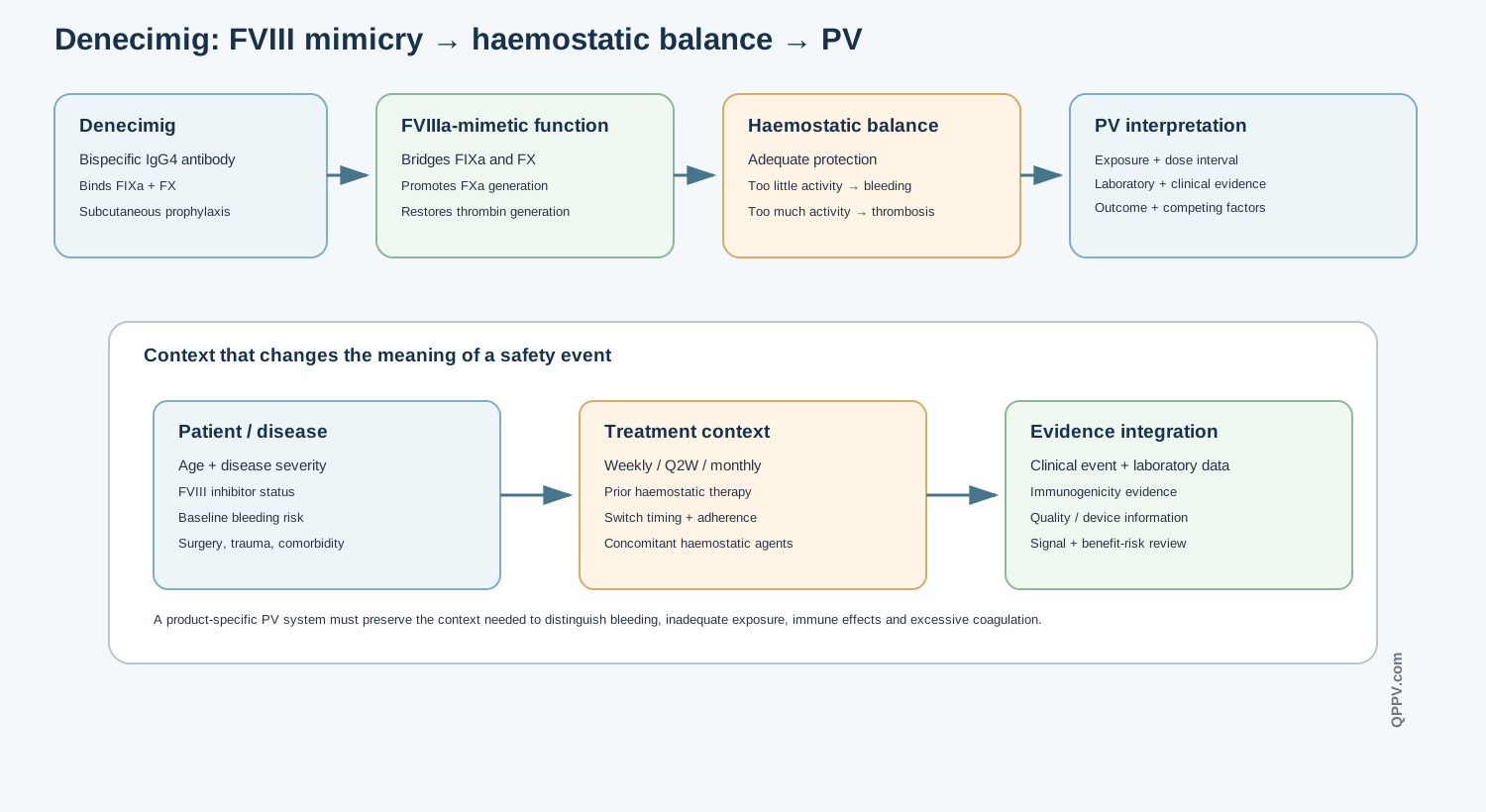
Figure 1. Denecimig mechanism and pharmacovigilance architecture. The figure links the FVIII-mimetic mechanism with the two principal clinical outcomes that require continuing surveillance—bleeding control and excessive coagulation—and shows how immunogenicity, treatment switching and administration context affect interpretation. It is an explanatory pharmacovigilance model, not a representation of a regulatory decision pathway.