Denosumab: From RANKL Biology to Indication-Specific Benefit, Safety and Product Pharmacovigilance
- Denosumab: From RANKL Biology to Indication-Specific Benefit, Safety and Product Pharmacovigilance
- Multidimensional classification
- The pathway in more detail
- Why the same mechanism has several indications
- Indication maps: disease, alternatives and the place of denosumab
- Development history and present role
- Safety explained through the mechanism
- Product Pharmacovigilance
- Official regulatory reference material
- Key takeaways
- References
- Regulatory Note
Denosumab is best understood not as a generic “bone-strengthening injection,” but as a precise interruption of a normal cellular conversation. Bone is living tissue. It is continuously remodelled by osteoclasts, cells that resorb old bone, and osteoblast-lineage cells, which lay down new matrix. This coupling is useful: it repairs microscopic damage and adapts the skeleton to load. Disease arises when resorption persistently exceeds formation, or when tumour- and immune-cell signals make resorption locally destructive.
RANK ligand (RANKL) is one of the essential permissive signals in this system. It binds RANK, a receptor on osteoclast precursors and mature osteoclasts. A receptor is a molecular sensor: ligand binding changes the receptor’s shape or assembly and initiates intracellular signalling. RANKL–RANK signalling recruits and activates osteoclasts. Osteoprotegerin (OPG), a naturally occurring soluble “decoy receptor,” binds RANKL before it reaches RANK. Denosumab is a therapeutic analogue of that interception principle: it is an antagonist because it prevents a signal from activating its receptor; it does not stimulate RANK or destroy osteoclasts directly.
An antibody is a Y-shaped protein made of two heavy and two light chains. Its paired antigen-binding ends (Fab regions) recognise a defined molecular surface; its Fc region determines additional immune interactions and persistence. Denosumab is a fully human IgG2 monoclonal antibody. “Monoclonal” means copies of one selected antibody specificity, not a mixture. It binds soluble and membrane-associated RANKL with high specificity, preventing RANK engagement. The useful analogy is a correctly shaped cap placed over a docking site: the cap does not remove the receptor or the cell, but it prevents the activating signal from docking.
Multidimensional classification
| Axis | Classification | Why it matters |
|---|---|---|
| Molecular format | Fully human IgG2 monoclonal antibody | Protein disposition, injection route, immunogenicity assessment and batch traceability apply |
| Direct target | RANKL (TNFSF11) | RANKL is the ligand; RANK is the receptor on osteoclast-lineage cells |
| Pharmacological behaviour | Neutralising ligand antagonist | Blocks a physiological activation signal rather than replacing bone or directly killing a cell |
| Functional consequence | Potent antiresorptive | Reduces osteoclast formation, function and survival signalling |
| Therapeutic contexts | Fragility-fracture prevention; cancer-related skeletal-event prevention; giant-cell tumour of bone | The target is shared, but disease biology, dose regimen and benefit–risk differ |
| Biological-product considerations | Injectable protein; several authorised presentations and biosimilars | Exact product, dose, date and batch are important in safety reports |
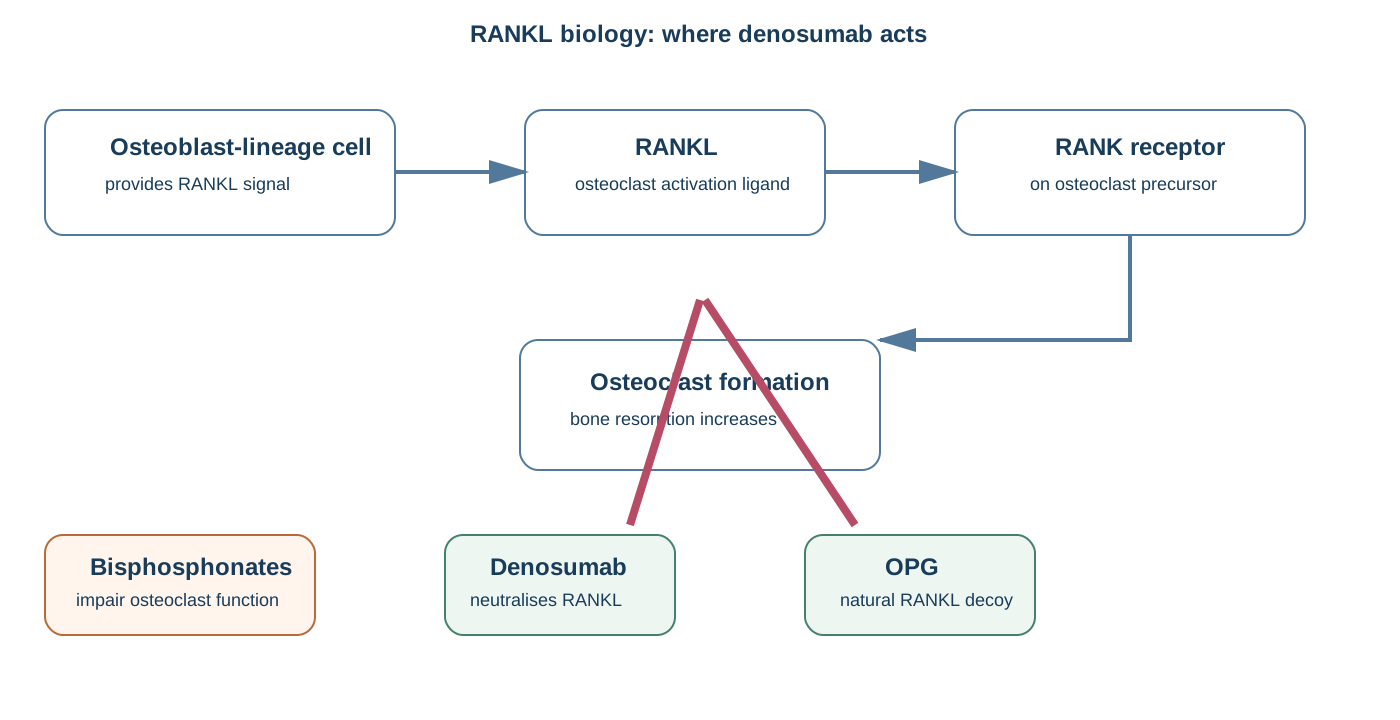
Figure 1. RANKL is the common activating signal for osteoclast-lineage cells. Denosumab neutralises RANKL; other antiresorptive or bone-forming medicines occupy different intervention points. Shared clinical territory does not make mechanisms or safety profiles interchangeable.
The pathway in more detail
When RANKL binds RANK, adaptor proteins are recruited inside the osteoclast precursor. This activates signalling networks including NF-κB, MAP kinases and NFATc1, a transcription factor that turns on the osteoclast differentiation programme. A transcription factor is a protein that changes which genes a cell reads; here, it helps convert a precursor into a multinucleated bone-resorbing cell. The mature osteoclast attaches to bone, acidifies a sealed surface and releases enzymes that dissolve mineral and matrix.
RANKL therefore behaves like an instruction to build and activate the resorption workforce. OPG and denosumab reduce the number and activity of those workers. This is beneficial where osteoclast activity is excessive; it also explains why calcium balance, dental healing, long-bone stress injury and the treatment transition after stopping require attention.
Why the same mechanism has several indications
RANKL is not an “osteoporosis molecule.” It is a normal regulator of osteoclast biology. The clinical question is therefore not merely whether RANKL exists, but why osteoclast-mediated resorption is harmful in a particular tissue and patient.
In osteoporosis, low bone mass and deteriorated bone architecture make ordinary loading more likely to produce a fragility fracture. In people receiving androgen-deprivation therapy or certain cancer therapies, loss of sex-steroid signalling accelerates resorption and reduces bone strength. In malignancy involving bone, tumour–bone interactions can create a destructive cycle in which osteoclast activation contributes to pathological fracture, spinal cord compression, radiation to bone or surgery to bone. In giant-cell tumour of bone, RANKL-rich stromal cells recruit RANK-positive osteoclast-like giant cells; suppressing this recruitment can reduce osteolytic activity, but it does not make every tumour biologically identical or remove the need for specialist local management.
Indication maps: disease, alternatives and the place of denosumab
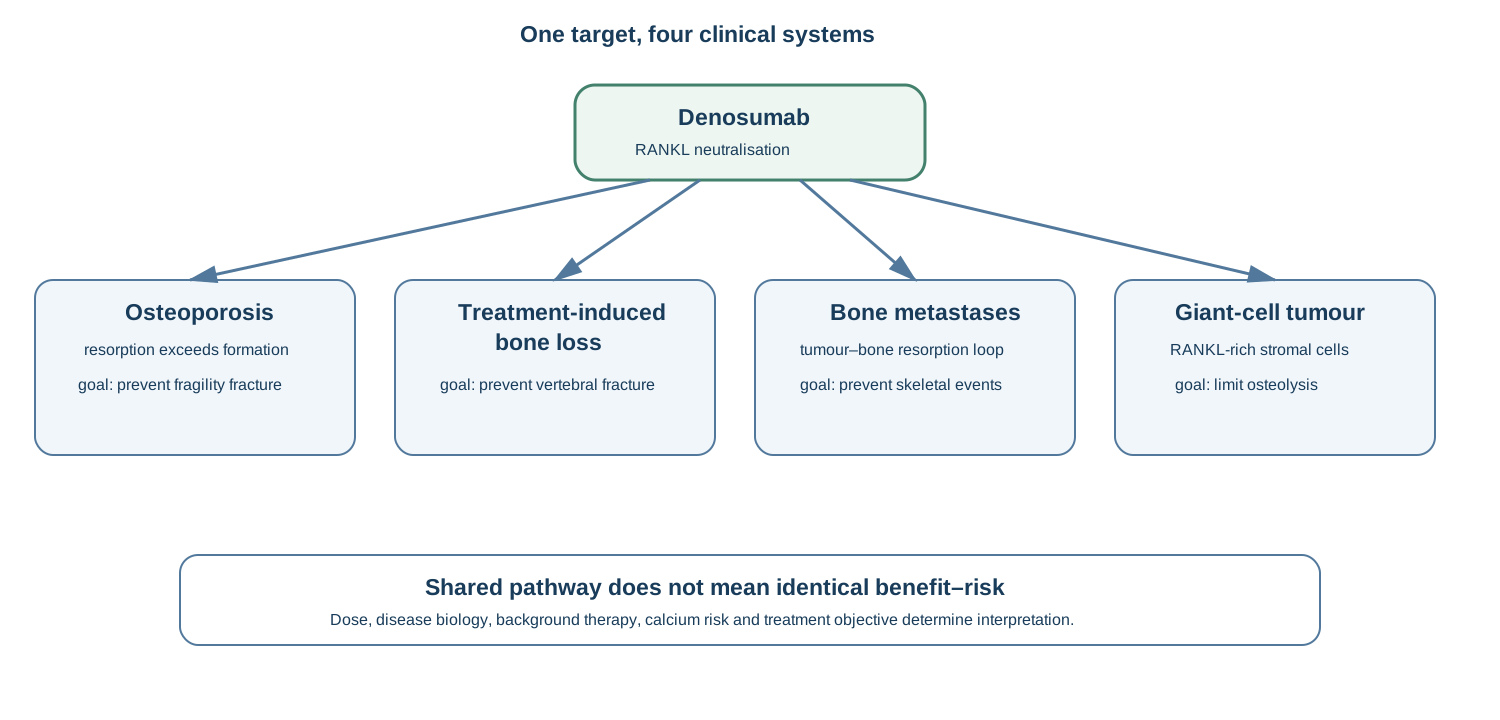
Figure 2. The same RANKL intervention sits in different clinical systems. The map separates the biology and treatment objective of osteoporosis, treatment-induced bone loss, bone metastases and giant-cell tumour of bone.
Osteoporosis and fracture prevention
Bone mineral density is a measurable proxy for bone quantity, not a complete measure of bone strength. Fracture risk also reflects microarchitecture, age, falls, glucocorticoid exposure, prior fracture and coexisting disease. In postmenopausal osteoporosis, declining oestrogen signalling shifts remodelling toward resorption; the result is a net loss of bone. Denosumab reduces the resorptive side of that imbalance.
Its therapeutic neighbours illustrate why a map is more useful than a drug list. Bisphosphonates bind mineralised bone and impair osteoclast function after uptake by the cell; they are antiresorptives but do not neutralise RANKL. Teriparatide and abaloparatide use intermittent parathyroid-hormone-receptor stimulation to favour bone formation. Romosozumab blocks sclerostin, releasing Wnt-related osteoblast signalling and also reducing resorption. Calcium and vitamin D correct prerequisites for mineralisation but do not substitute for disease-specific fracture therapy. Choice and sequencing depend on fracture risk, renal function, prior treatment, adherence feasibility, calcium status and cardiovascular or skeletal safety context.
The pivotal FREEDOM trial compared six-monthly denosumab with placebo in 7,868 women with postmenopausal osteoporosis. At 36 months, new radiographic vertebral fractures occurred in 2.3% versus 7.2%; non-vertebral fracture incidence was 6.5% versus 8.0%, and hip fracture incidence 0.7% versus 1.2%. These trial results established antifracture efficacy, but do not imply that every person with low density needs the same intervention or that a trial placebo comparison resolves today’s sequencing decisions.
Treatment-induced bone loss
Sex steroids normally restrain remodelling. Androgen-deprivation therapy for prostate cancer removes androgen signalling and indirectly accelerates bone loss; comparable risk can arise with other treatment contexts. Here the therapeutic goal is not to treat the tumour with denosumab, but to prevent a predictable skeletal consequence of necessary cancer therapy. In a pivotal placebo-controlled trial in men receiving androgen-deprivation therapy, denosumab reduced new vertebral-fracture risk over 36 months. The disease map must retain this distinction: fracture prevention is the endpoint, not cancer control.
Malignancy involving bone
Bone metastases can create a feedback loop. Tumour cells and the bone microenvironment promote osteoclast activation; resorption releases growth factors from bone matrix, potentially supporting further tumour activity. Denosumab interrupts the RANKL-dependent osteoclast arm of this loop. The clinical objective is prevention of skeletal-related events, not a general claim of direct anti-tumour activity. Bisphosphonates are the principal therapeutic comparator class because they also reduce osteoclast-mediated skeletal complications, but their mechanism, renal considerations and administration differ.
Giant-cell tumour of bone
Giant-cell tumour of bone contains neoplastic stromal cells and numerous osteoclast-like giant cells. RANKL expression by stromal cells helps recruit and activate the giant cells, contributing to osteolysis. Denosumab can therefore change the osteoclast-rich component of disease, especially where surgery is not feasible or would cause severe morbidity. It is not simply an osteoporosis dose used in a rare disease: the objective, regimen, tumour assessment and concerns about local management are different.
Development history and present role
Denosumab was authorised in the EU for the osteoporosis-related presentation in 2010 and for the oncology presentation in 2011. Its development was enabled by the earlier recognition of the RANK/RANKL/OPG triad as a central regulator of osteoclastogenesis. The original clinical rationale was unusually direct: neutralise the ligand required for osteoclast activation, then test whether reduced resorption translates into fewer clinically important skeletal events.
Today it is one antiresorptive option, not an automatic endpoint of a pathway. A good treatment decision anticipates the next decision before the first injection: adherence to the scheduled interval, calcium/vitamin-D adequacy, dental status, renal-risk context, future transition therapy and the consequence of an unplanned interruption.
Safety explained through the mechanism
Denosumab’s adverse-event assessment is clearest when normal RANKL biology and exposure context are kept visible. Suppressing osteoclast activity can lower serum calcium, particularly when calcium reserves or vitamin-D status are inadequate, when renal impairment disturbs mineral metabolism, or when skeletal turnover is high. Severe symptomatic hypocalcaemia is therefore not merely a laboratory abnormality; it can be clinically serious. Calcium should be corrected before treatment and monitoring follows the authorised presentation and patient risk.
Osteonecrosis of the jaw (ONJ) and atypical femoral fracture are uncommon but important antiresorptive safety concerns. Their causation is multifactorial: cumulative antiresorptive exposure, cancer, dental disease or invasive dental procedures, glucocorticoids, infection and other comorbidities can contribute. The appropriate statement is not “denosumab causes every jaw problem” but that the association is established, risk is context-dependent and prevention, dental assessment and prompt evaluation of symptoms are required.
Denosumab does not remain in bone as bisphosphonates do. When its circulating effect wanes or injections are missed, RANKL signalling can resume rapidly. The post-discontinuation rise in bone turnover and the observed occurrence of multiple vertebral fractures in susceptible people explains why stopping requires an active transition plan, commonly to another antiresorptive where clinically appropriate. This is a mechanistic consequence with clinical evidence, not a reason to stop therapy abruptly.
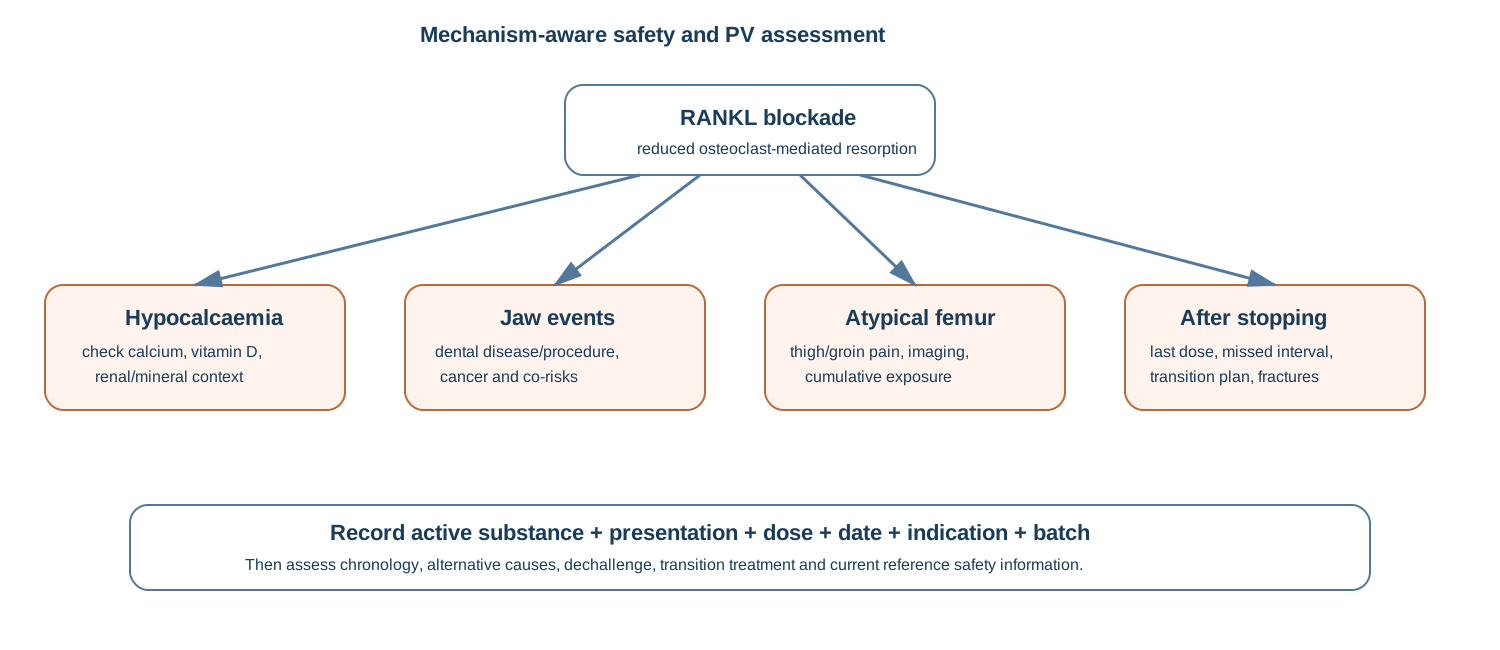
Figure 3. Product pharmacovigilance links target biology to context-specific safety assessment. A safety signal, a labelled adverse reaction and an alternative disease explanation are different evidentiary categories.
| Concern | Evidence status and biological rationale | Product pharmacovigilance action |
|---|---|---|
| Hypocalcaemia | Labelled important risk; reduced bone resorption reduces calcium release from bone | Record baseline/serial calcium as appropriate, vitamin-D/calcium support, renal function and symptoms |
| ONJ | Labelled association; risk increases with oncology context, dental disease/procedures and cumulative antiresorptive exposure | Record dose/presentation, dental history, co-medication, infection, procedure timing and outcome |
| Atypical femoral fracture | Labelled association with long-term antiresorptive exposure | Assess thigh/groin pain, imaging, bilateral symptoms and competing skeletal disease |
| Multiple vertebral fractures after discontinuation | Labelled warning in the osteoporosis presentation; rebound resorption is biologically plausible and clinically observed | Capture last dose, missed interval, prior vertebral fracture, transition treatment and fracture timing |
| Hypersensitivity, cellulitis/infection and musculoskeletal symptoms | Labelled adverse reactions; causality is case-specific | Document onset, dechallenge, alternative causes and exact product/batch |
Product Pharmacovigilance
An individual case safety report should identify denosumab by active substance and then record the precise authorised product/presentation, strength, dose, injection date, indication, batch where available and whether another denosumab-containing product was given. Different presentations must not be co-administered simply because they contain the same active substance; their dose and indication context differ.
Case assessment requires a disease-aware counterfactual: would this event plausibly occur from the patient’s cancer, osteoporosis, renal disease, vitamin-D deficiency, dental infection, chemotherapy, glucocorticoid exposure or procedure even without denosumab? That question does not dismiss a possible reaction; it makes causality reasoning explicit. The chronology should include first dose, cumulative exposure, last dose, delayed or missed injection, calcium measurements, dental events, imaging and management.
The safety history has evolved from controlled-trial observations to post-authorisation risk characterisation and risk minimisation. EU materials include product information, EPAR assessment history, RMP material where publicly available and patient reminder material for ONJ. The current label and reference material, rather than an old review article, govern present-day case expectedness and risk-minimisation advice.
Official regulatory reference material
| Source | Use in assessment |
|---|---|
| EMA product information and EPAR for the osteoporosis-related denosumab presentation | Current EU indications, contraindications, warnings, adverse reactions and procedural history |
| EMA product information, EPAR and public RMP for the oncology denosumab presentation | Cancer/giant-cell-tumour context, RMP safety specification and additional minimisation |
| FDA US Prescribing Information for the osteoporosis and oncology presentations | US indication wording, warnings, adverse reactions and dose-specific safety advice |
| FDA REMS database | Verify whether a REMS applies at the time of assessment; absence must be stated, not assumed |
| EMA PRAC/PSUSA or variation documents | Safety evolution, labelled changes and current regulatory conclusions |
Key takeaways
Denosumab neutralises RANKL; it is a ligand antagonist, not an osteoclast toxin. Its indications share an osteoclast pathway but differ in disease mechanism, treatment objective and risk context. The most clinically important pharmacovigilance insight is continuity: dose timing and a plan for treatment cessation are part of safe use. Product-level safety assessment must remain indication-specific, biologically reasoned and anchored to the current official reference material.
References
- European Medicines Agency. Prolia: EPAR, product information and assessment history. Current product information updated 19 August 2026.
- European Medicines Agency. Xgeva: EPAR, product information, assessment history and risk-management-plan material. Current product information updated 30 June 2026.
- U.S. Food and Drug Administration. Xgeva (denosumab) Prescribing Information. 2025.
- Cummings SR, et al. Denosumab for prevention of fractures in postmenopausal women with osteoporosis. N Engl J Med. 2009;361:756–765.
- Smith MR, et al. Denosumab in men receiving androgen-deprivation therapy for prostate cancer. N Engl J Med. 2009;361:745–755.
- Cummings SR, et al. Vertebral fractures after discontinuation of denosumab: post hoc analysis of FREEDOM and its extension. J Bone Miner Res. 2018;33:190–198.
- El-Masri BM, et al. Mapping RANKL- and OPG-expressing cells in bone tissue. Bone Research. 2024;12:62.
- EMA. Guideline on good pharmacovigilance practices (GVP), Product- or Population-Specific Considerations II: Biological medicinal products.
Regulatory Note
This educational review does not replace the current authorised product information or specialist clinical judgement. Regulatory status, indications, dose schedules, risk-minimisation materials and safety information differ by jurisdiction and presentation and should be verified from the current EMA and FDA sources before use.