Dupilumab: Classification, History, Mechanism of Action, Safety and Pharmacovigilance
- Dupilumab: Classification, History, Mechanism of Action, Safety and Pharmacovigilance
- Multidimensional classification
- Discovery and development history
- Type 2 inflammation: the shared but incomplete framework
- Product characteristics and administration
- Detailed mechanism of action
- Indication-specific clinical meaning
- Eosinophilia and eosinophilic syndromes
- Infections, helminths and vaccination
- Hypersensitivity, arthritis and other important safety questions
- Product-specific pharmacovigilance framework
- Signal detection, governance and inspection perspective
- Practical checklist
- Key takeaways
- References
- Regulatory Note
Dupilumab is a targeted biological medicine for diseases in which type 2 inflammation is clinically important. It blocks interleukin-4 receptor alpha (IL-4Rα), the receptor subunit shared by the type I IL-4 receptor and the type II IL-4/IL-13 receptor complex. This prevents IL-4 and IL-13 signalling, two cytokine pathways that influence IgE class switching, epithelial responses, mucus production, pruritus, eosinophil-related inflammation and tissue remodelling.
The molecule is the same across its indications, but the safety question is not. Conjunctivitis in severe atopic dermatitis, an eosinophilic vasculitic syndrome during oral corticosteroid reduction in asthma, and dysphagia in eosinophilic oesophagitis must not be flattened into an undifferentiated “dupilumab adverse-event rate.” Pharmacovigilance needs to preserve the treated disease, baseline phenotype, co-treatment and therapeutic objective.
Multidimensional classification
| Axis | Dupilumab classification | Significance |
|---|---|---|
| Molecular format | Fully human IgG4 monoclonal antibody | Fc effector activity is limited relative to IgG1 antibodies |
| Target | IL-4 receptor alpha (IL-4Rα) | Shared receptor component for IL-4 and IL-13 signalling pathways |
| Mechanistic class | Cytokine-pathway receptor blocker | Inhibits type 2 cytokine signalling rather than depleting immune cells |
| Functional class | Type 2 inflammation modulator | Effects differ with tissue, disease and inflammatory phenotype |
| Therapeutic class | Immunomodulatory biological medicine | Used in dermatology, respiratory, ENT, gastroenterology and allergy-related contexts |
| Production | Recombinant CHO-cell product | Biological quality attributes, cold chain and batch traceability apply |
| Administration | Subcutaneous pre-filled syringe or pen | Age, weight, indication and presentation determine dose schedule |
| Regulatory status | Dupixent reference product | Indication portfolio and product information continue to evolve |
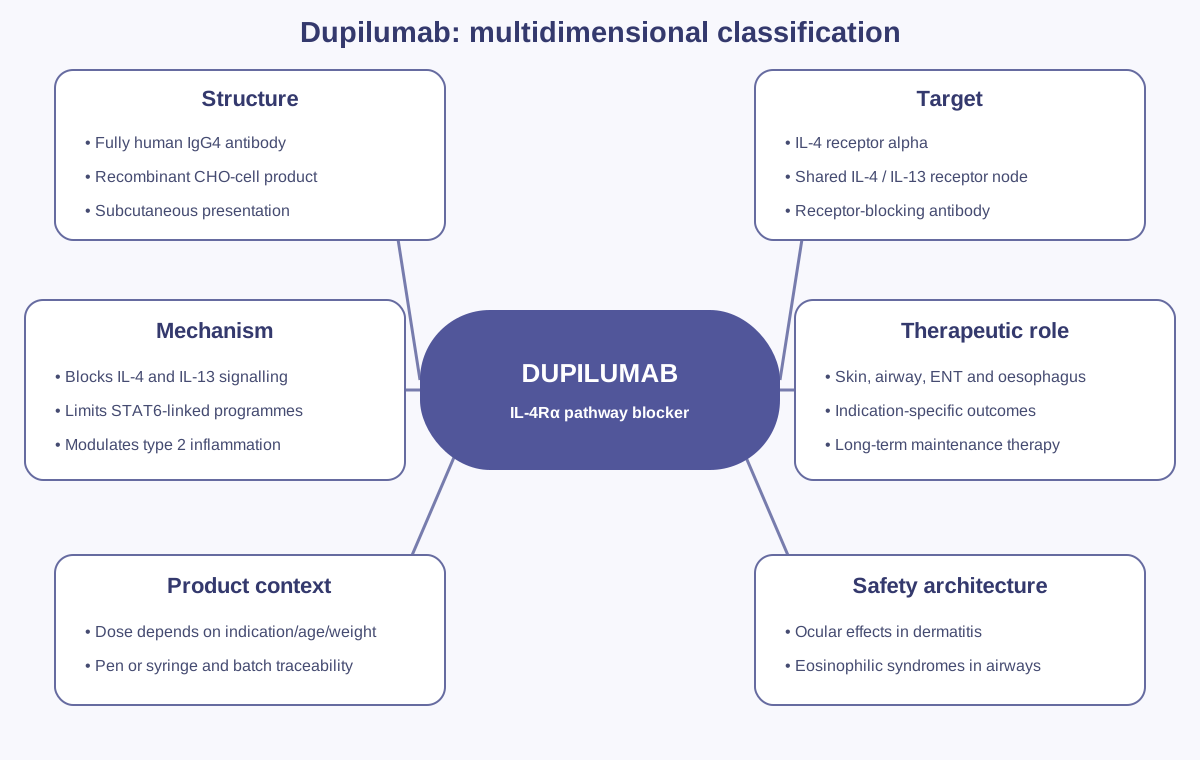
Figure 1. Dupilumab is a receptor-blocking IgG4 antibody whose simultaneous classifications—molecular format, shared target, type 2 pathway mechanism and multi-tissue therapeutic role—explain why safety must be assessed by indication.
Discovery and development history
The identification of IL-4 and IL-13 as central mediators of allergic and type 2 inflammation suggested a therapeutic opportunity beyond broad immunosuppression. IL-4Rα was particularly attractive because it sits at a shared signalling node: blocking it inhibits IL-4 signalling through the type I receptor and both IL-4 and IL-13 signalling through the type II receptor.
Dupilumab was developed as a fully human anti-IL-4Rα antibody. Early trials in atopic dermatitis showed improvement in clinical severity, pruritus and molecular markers of type 2 inflammation. The pivotal SOLO 1 and SOLO 2 studies then demonstrated superiority to placebo in adults with moderate-to-severe atopic dermatitis. The EU authorised Dupixent in September 2017.
Development subsequently expanded into severe asthma with type 2 inflammation, chronic rhinosinusitis with nasal polyps, eosinophilic oesophagitis, prurigo nodularis, chronic obstructive pulmonary disease in a defined eosinophilic population and chronic spontaneous urticaria in defined settings. This expansion is scientifically coherent but not automatically transferable: clinical trials, co-therapies, disease manifestations and risk profiles differ across indications.
Regulatory status should be checked at product level. EU and US labels have different indication wording, age ranges and update histories. A positive CHMP opinion, a national recommendation and an authorised indication are not interchangeable regulatory states.
Type 2 inflammation: the shared but incomplete framework
Type 2 inflammation commonly involves IL-4, IL-13, eosinophils, IgE-related processes, epithelial alarmins and tissue-specific barrier or structural abnormalities. It is a useful therapeutic framework, not a diagnostic label that proves one cytokine is the sole cause of disease in an individual patient.
In atopic dermatitis, IL-4/IL-13 signalling contributes to epidermal barrier dysfunction, itch and inflammatory skin lesions. In asthma and COPD subgroups, type 2 inflammation may contribute to airway hyperresponsiveness, mucus production and exacerbation susceptibility. In chronic rhinosinusitis with nasal polyps it supports polyp-associated inflammation. In eosinophilic oesophagitis, it contributes to oesophageal inflammation and remodelling. Blocking IL-4Rα can improve these processes, but it does not eliminate the need to assess infection, structural disease, allergen exposure, smoking, reflux, adherence or other competing causes of symptoms.
Product characteristics and administration
Dupilumab is administered subcutaneously. Product-specific strengths, loading doses, maintenance intervals, self-injection eligibility and paediatric regimens vary by indication, age and body weight. A report should capture exact presentation, dose, injection date, administration site, storage and training status. “Treatment every two weeks” is not enough to reconstruct exposure in a patient whose approved schedule differs by condition or age.
Detailed mechanism of action
IL-4Rα participates in two receptor configurations. The type I IL-4 receptor combines IL-4Rα with the common gamma chain and is used principally for IL-4 signalling. The type II receptor combines IL-4Rα with IL-13Rα1 and can transmit IL-4 and IL-13 signals. Dupilumab binding to IL-4Rα blocks signalling through both configurations.
Downstream, these cytokine pathways activate Janus kinases and STAT6-dependent transcriptional programmes. The resulting biology is context dependent: B-cell immunoglobulin class switching, epithelial chemokine expression, barrier function, goblet-cell and mucus responses, tissue remodelling and sensory-nerve-associated pruritus pathways can all be influenced. Blocking the shared receptor does not mean that all observed clinical effects are direct effects on a single cell type.
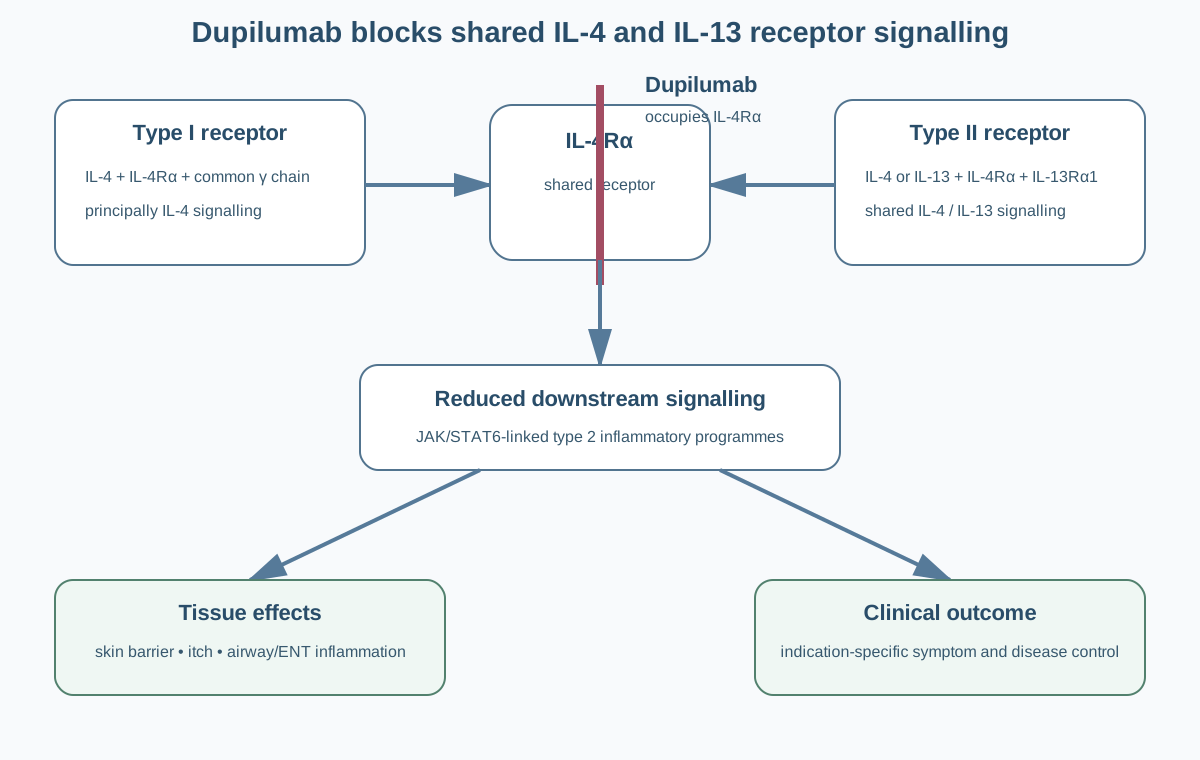
Figure 2. Dupilumab binds IL-4Rα, preventing IL-4 signalling through the type I receptor and IL-4/IL-13 signalling through the type II receptor. The downstream clinical benefit depends on the disease tissue and inflammatory context.
Indication-specific clinical meaning
Atopic dermatitis and prurigo nodularis
In atopic dermatitis, effectiveness should be assessed through skin signs, itch, sleep, infection, topical-treatment use and quality of life, not one severity score alone. Improvement may allow reduction of rescue topical treatment, but disease rebound after missed doses or discontinuation can be confused with a new adverse reaction.
Ocular surface disease is particularly important in dermatitis populations. Conjunctivitis, blepharitis, keratitis, dry eye and related ocular symptoms require phenotype-specific assessment and early ophthalmic evaluation when visual change, significant pain or persistent inflammation occurs. Baseline atopic eye disease, contact lenses, topical ophthalmic medicines and skin severity are relevant competing factors.
Asthma, COPD and chronic rhinosinusitis with nasal polyps
Dupilumab is maintenance therapy; it is not for relief of acute bronchospasm, status asthmaticus or an acute COPD exacerbation. In asthma and COPD, effectiveness assessment includes exacerbations, lung function, symptom control, rescue medication, hospitalisation, blood eosinophils and inhaled-treatment adherence. In chronic rhinosinusitis with nasal polyps, nasal obstruction, smell, systemic corticosteroid exposure and surgery history are relevant.
Systemic corticosteroids must not be reduced abruptly when dupilumab is started. Reduction of corticosteroids can unmask pre-existing disease or alter eosinophil biology. A temporal relationship between dupilumab and symptoms during taper is insufficient to establish causality without clinical assessment.
Eosinophilic oesophagitis and chronic spontaneous urticaria
Eosinophilic oesophagitis assessment should include dysphagia, food impaction, endoscopic and histological data when available, dietary therapy, proton-pump inhibitor use and topical corticosteroid exposure. For chronic spontaneous urticaria, preserve the duration, hives, angioedema, antihistamine response and prior anti-IgE exposure relevant to the authorised setting. These outcomes cannot be inferred from dermatology or respiratory response measures.
Eosinophilia and eosinophilic syndromes
Transient increases in circulating eosinophils can occur after dupilumab initiation, possibly because tissue trafficking is altered while IL-5-mediated marrow production is not directly blocked. Most count changes are not vasculitis. However, in asthma programmes, eosinophilic pneumonia and eosinophilic granulomatosis with polyangiitis (EGPA) have been reported, sometimes in association with reduction of oral corticosteroids.
For a suspected eosinophilic syndrome, obtain serial eosinophil counts, respiratory and systemic symptoms, chest imaging, ANCA where appropriate, neuropathy, rash, renal findings, cardiac assessment, corticosteroid dose history, parasitic exposure and specialist diagnosis. Do not code isolated eosinophilia as EGPA, and do not dismiss vasculitic symptoms as an expected laboratory effect.
Infections, helminths and vaccination
IL-4 and IL-13 contribute to immune responses against helminths. Existing helminth infection should be treated before initiation where clinically relevant. If a patient becomes infected and does not respond to anti-helminth treatment, current product information advises interruption of dupilumab until the infection resolves. This is a targeted precaution, not evidence that dupilumab causes broad immunodeficiency.
Live vaccines should be avoided during treatment according to current product information. Non-live vaccine responses and schedules remain a product- and jurisdiction-specific question. A suspected vaccination failure must consider vaccine type, timing, host factors and exposure risk before being interpreted as an immunogenicity or pharmacodynamic failure of dupilumab.
Hypersensitivity, arthritis and other important safety questions
Hypersensitivity reactions, including rare systemic reactions, require standard biological-medicine case reconstruction: exact product and batch, latency, clinical phenotype, concomitant exposures, treatment, dechallenge and re-exposure. Injection-site reactions should be distinguished from generalised allergic manifestations.
Arthralgia and psoriatic arthritis have been reported. New inflammatory joint symptoms need clinical characterisation, timing, prior psoriasis or joint disease, imaging where available and specialist assessment. A spontaneous report cannot determine whether dupilumab created a new inflammatory phenotype, unmasked pre-existing disease or coincided with another condition.
Paradoxical facial erythema, psoriasiform eruptions and other skin changes have been described in clinical practice. They should be documented by morphology, distribution, biopsy if performed, concomitant topical/systemic therapy and alternative diagnoses such as contact dermatitis, rosacea, infection or topical-treatment withdrawal.
Product-specific pharmacovigilance framework
The core analytical unit is the indication–baseline phenotype–product exposure–organ-specific outcome trajectory:
treated disease and co-therapy → exact product and dose → response and biomarker trajectory → organ-specific event → interruption/rechallenge → outcome
Minimum useful case information includes:
- indication, severity and prior systemic treatment; baseline eye disease, eosinophil count and corticosteroid exposure when relevant;
- brand, batch, strength, syringe or pen, dose, loading regimen, injection dates and storage;
- concomitant topical therapy, inhaled therapy, systemic corticosteroids, immunosuppressants and anti-infectives;
- objective disease measures appropriate to the indication: skin, respiratory, ENT, oesophageal or urticaria outcomes;
- ocular symptoms, examination and ophthalmology findings;
- serial eosinophils, respiratory imaging, systemic features and steroid-taper chronology for suspected eosinophilic syndromes;
- infection work-up, helminth exposure and treatment when relevant;
- dechallenge, rechallenge, switching and clinical outcome.
Apparent lack of efficacy
Lack of effect may reflect an incorrect inflammatory phenotype, insufficient duration, missed administration, an untreated co-driver, inaccurate diagnosis, disease progression or an alternative pathology. It is not automatically a product-quality concern. A meaningful cluster investigation should compare product and batch, storage, administration, indication, baseline phenotype and objective response rather than relying on subjective symptom reports alone.
Product quality and traceability
Dupilumab is a biological medicine supplied in a device. For suspected quality complaints, retain the device, carton, batch, storage history, appearance, injection technique and any residual product according to the applicable process. Device malfunction, temperature excursion and apparent biological non-response are different categories that may overlap but require separate investigation.
Signal detection, governance and inspection perspective
Aggregate safety review should stratify by indication. Atopic dermatitis dominates exposure in many settings and has a different baseline prevalence of conjunctivitis and ocular atopy than asthma or COPD. Eosinophilic events in an airway population cannot be assessed against a pooled denominator dominated by skin disease.
Effective governance connects individual case reports, product-quality complaints, medical information, literature surveillance, periodic benefit–risk evaluation and label monitoring. Medical review should examine patterns: eye symptoms plus dermatitis severity; eosinophilia plus steroid taper and systemic symptoms; infection plus helminth exposure; or arthralgia plus new skin phenotype.
Common analytical failures include:
- recording only “eczema” or “asthma” without severity, phenotype or co-treatment;
- interpreting conjunctivitis without baseline eye disease or ophthalmic assessment;
- calling isolated eosinophilia EGPA;
- attributing steroid-withdrawal symptoms directly to dupilumab;
- pooling every indication in one crude reporting rate;
- losing device, batch and cold-chain information in a suspected quality case.
Practical checklist
- Confirm the authorised indication, baseline phenotype and treatment objective.
- Record product, batch, device, dose and injection chronology.
- For dermatitis, capture baseline ocular history and act promptly on visual symptoms or keratitis concern.
- For airway disease, preserve eosinophils, oral-corticosteroid changes and systemic symptoms.
- Do not use dupilumab for acute bronchospasm or abrupt corticosteroid withdrawal.
- Assess suspected helminth infection and relevant anti-helminth treatment response.
- Preserve indication-specific outcomes rather than one generic “response” field.
- Investigate suspected quality issues with device and storage evidence.
Key takeaways
Dupilumab is a fully human IgG4 antibody that blocks IL-4Rα, the shared receptor component needed for IL-4 and IL-13 signalling. It modulates type 2 inflammation rather than broadly depleting immune cells.
Its multi-indication use requires indication-specific pharmacovigilance. Ocular surface disease is especially relevant in dermatitis, whereas eosinophilic syndromes and corticosteroid reduction require particular care in airway disease.
The most useful case narrative retains baseline phenotype, co-treatment, product/device, serial eosinophils when relevant and organ-specific clinical evidence. Pooled reporting counts cannot answer these causal questions.
References
- European Medicines Agency. Dupixent: EPAR. Product information updated August 2026.
- U.S. Food and Drug Administration. Dupixent prescribing information. 2025.
- Regeneron Pharmaceuticals. Full-year 2025 financial results.
- Simpson EL, Bieber T, Guttman-Yassky E, et al. Two phase 3 trials of dupilumab versus placebo in atopic dermatitis. N Engl J Med. 2016;375:2335–2348.
- Beck LA, Thaçi D, Hamilton JD, et al. Dupilumab treatment in adults with moderate-to-severe atopic dermatitis. N Engl J Med. 2014;371:130–139.
- Wenzel S, Castro M, Corren J, et al. Dupilumab efficacy and safety in adults with uncontrolled persistent asthma despite use of medium-to-high-dose inhaled corticosteroids plus a long-acting beta2 agonist: a randomised double-blind placebo-controlled pivotal phase 2b dose-ranging trial. Lancet. 2016;388:31–44.
- Castro M, Corren J, Pavord ID, et al. Dupilumab efficacy and safety in moderate-to-severe uncontrolled asthma. N Engl J Med. 2018;378:2486–2496.
- Bachert C, Han JK, Desrosiers M, et al. Efficacy and safety of dupilumab in patients with severe chronic rhinosinusitis with nasal polyps. Lancet. 2019;394:1638–1650.
- Dellon ES, Rothenberg ME, Collins MH, et al. Dupilumab in adults and adolescents with eosinophilic oesophagitis. N Engl J Med. 2022;387:2317–2330.
- European Medicines Agency. Guideline on good pharmacovigilance practices: Product- or Population-Specific Considerations II—Biological medicinal products.
Regulatory Note
This is an educational scientific and pharmacovigilance review, not prescribing advice. Dupilumab indications, age ranges, dosing, co-treatment, vaccination precautions and risk-minimisation instructions differ by product information and jurisdiction and may change. Consult current product-specific information. Dupilumab and other type 2 biological medicines must not be treated as interchangeable for prescribing, safety assessment or traceability.