Eculizumab Biosimilar: C5 Complement Blockade, Biosimilarity and Pharmacovigilance
Eculizumab is a humanised monoclonal antibody that binds complement protein C5 and prevents formation of the terminal complement effectors C5a and C5b-9. In paroxysmal nocturnal haemoglobinuria (PNH), this protects susceptible blood cells from complement-mediated intravascular haemolysis. In atypical haemolytic uraemic syndrome (aHUS), it suppresses uncontrolled complement-mediated thrombotic microangiopathy.
An eculizumab biosimilar must be highly similar to the reference biological medicine, with no clinically meaningful differences in quality, safety or efficacy demonstrated through a comparative totality of evidence. It does not establish a new therapeutic mechanism or a separate safety class. Nevertheless, pharmacovigilance cannot stop at the active-substance name. Product identity, batch, jurisdiction, authorised indication, formulation, switching history and risk-minimisation implementation remain material.
Amgen’s product is authorised in the European Union as Bekemv and in the United States as Bkemv (eculizumab-aeeb). The FDA designated Bkemv as interchangeable with US-licensed Soliris for its approved conditions of use. EU biosimilarity and US interchangeability are related but legally distinct concepts; neither should be generalised beyond the jurisdiction that created it.
Table of Contents
- Product identity and multidimensional classification
- Development and regulatory history
- Complement biology
- Mechanism of action
- Disease map
- Paroxysmal nocturnal haemoglobinuria
- Atypical haemolytic uraemic syndrome
- How biosimilarity is established
- Interchangeability and switching
- Safety architecture
- Product pharmacovigilance
- Treatment interruption and transition
- Special situations and formulation-specific considerations
- Inspection and governance perspective
- Practical assessment framework
- Key Takeaways
- References
- Regulatory Note
Product identity and multidimensional classification
| Dimension | Classification |
|---|---|
| Active substance | Eculizumab |
| Modality | Humanised IgG2/4κ monoclonal antibody |
| Target | Complement protein C5 |
| Functional class | Terminal-complement inhibitor |
| Principal disease logic | Prevent complement-mediated cell and endothelial injury |
| Regulatory category | Biosimilar to reference eculizumab |
| EU product context | Bekemv |
| US product context | Bkemv (eculizumab-aeeb), designated interchangeable |
| Route | Intravenous infusion |
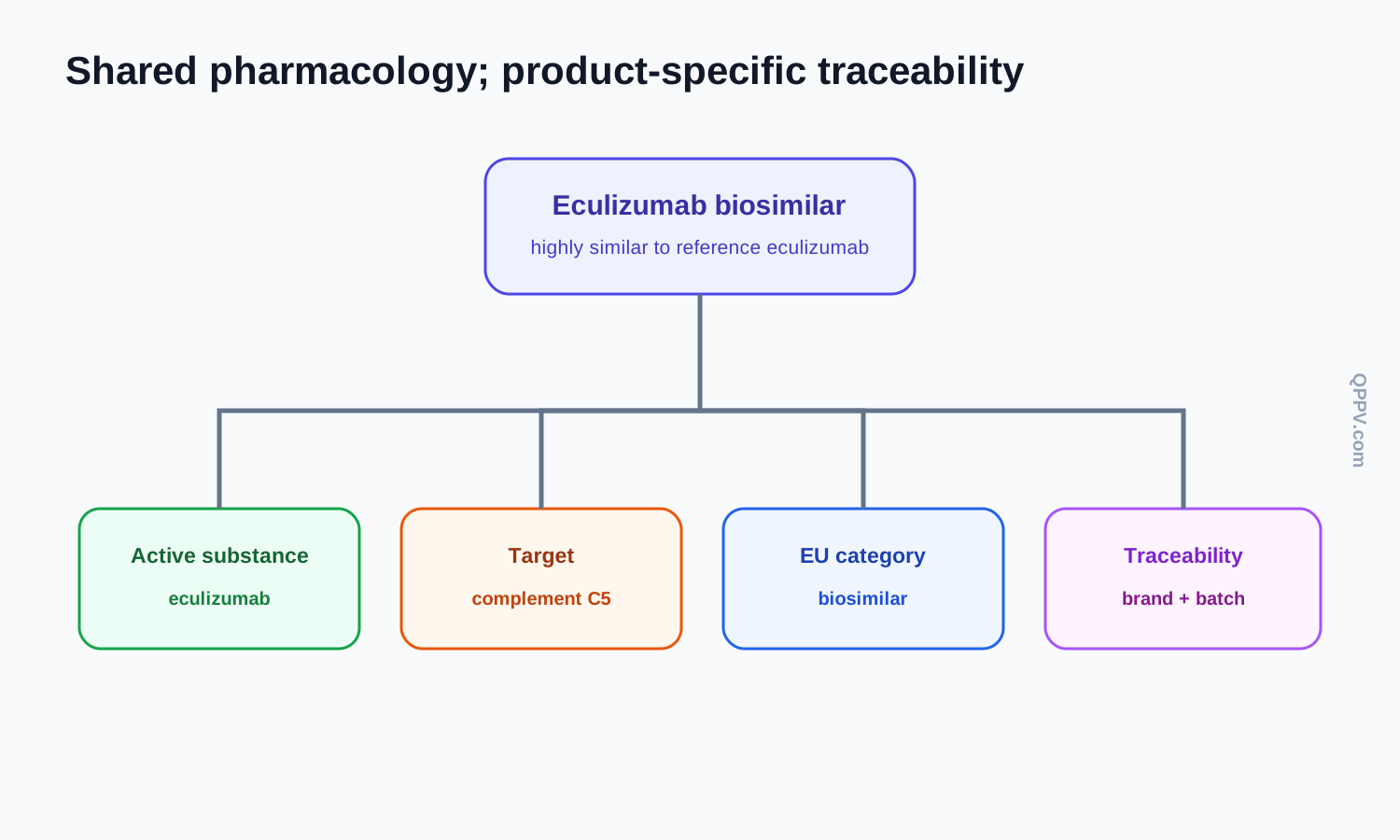
Figure 1. The active substance, mechanism and therapeutic class are shared with reference eculizumab, while biosimilar identity, formulation, jurisdiction and batch remain necessary for traceability.
Development and regulatory history
Reference eculizumab established C5 inhibition as a treatment strategy for complement-mediated rare diseases. Biosimilar development became possible after the reference product’s quality attributes, biological activity, pharmacokinetics and clinical performance could be compared using modern analytical and regulatory methods.
Bekemv received EU marketing authorisation on 19 April 2023 as a biosimilar to Soliris. The current EMA record lists treatment of PNH and aHUS under the authorised conditions in the product information. The FDA approved Bkemv on 28 May 2024 for PNH and aHUS and determined it to be interchangeable with US-licensed Soliris for the approved conditions of use. The US product remains subject to a product-specific risk-management programme because terminal-complement blockade creates a serious meningococcal infection risk.
These decisions do not mean that the EU and US products have identical indication sets to every eculizumab brand in every jurisdiction. Extrapolation of indications in biosimilar authorisation is a scientific and regulatory conclusion based on the total evidence, mechanism and other relevant factors; it is not an assumption that every historical reference-product indication automatically appears on every biosimilar label.
Complement biology
Complement is a protein network of innate immunity. Classical, lectin and alternative pathways converge on cleavage of C3 and then C5. C5 cleavage generates C5a, a potent inflammatory mediator, and C5b, which initiates assembly of the membrane-attack complex C5b-9. This terminal complex can damage or lyse susceptible cells.
Blocking C5 leaves upstream complement activity partly intact but removes a major terminal defence mechanism against encapsulated bacteria, especially Neisseria meningitidis. The therapeutic benefit and principal infectious hazard are therefore two consequences of the same pharmacology.
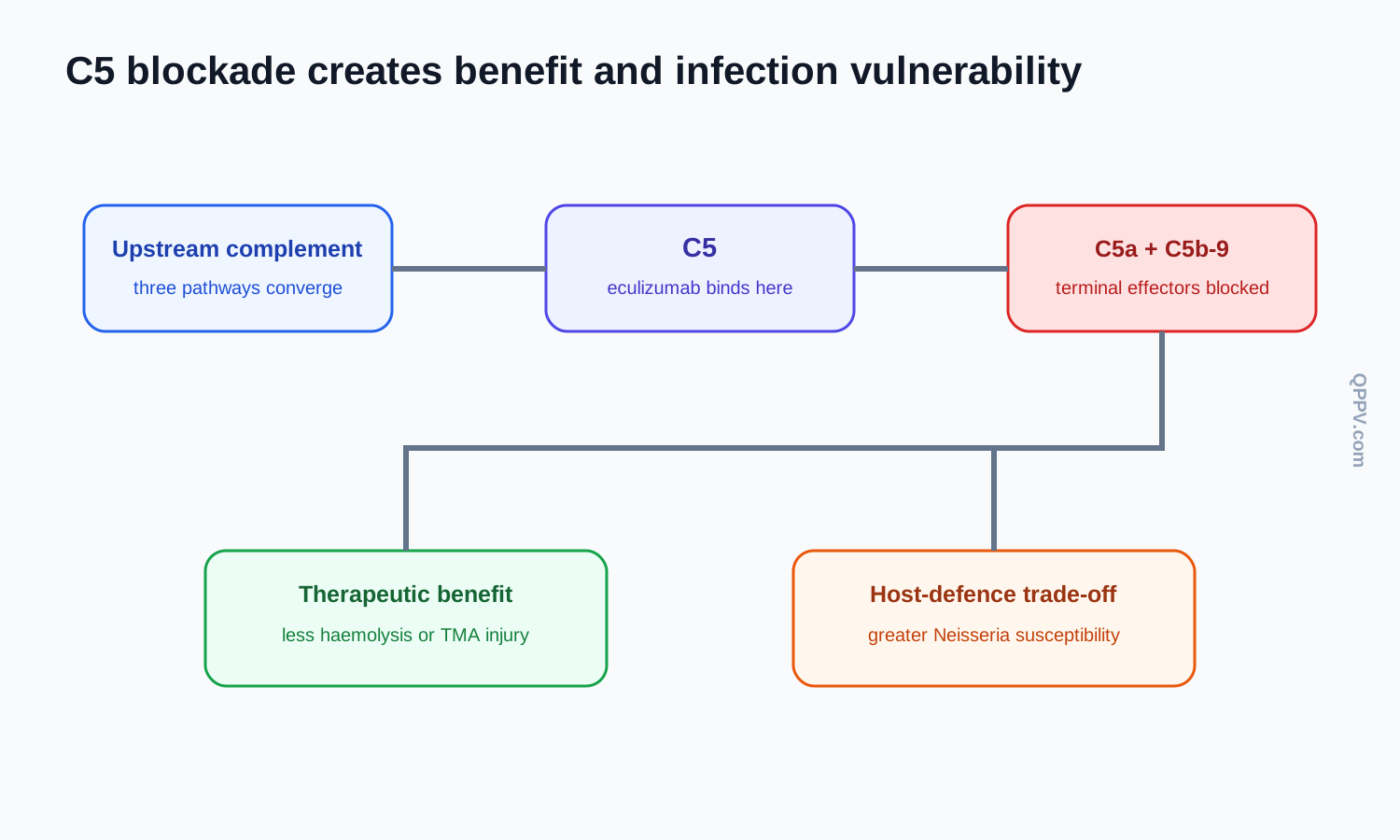
Figure 2. Eculizumab binds C5 and prevents generation of C5a and C5b-9. The same blockade that limits pathological haemolysis or microangiopathy also weakens terminal-complement host defence.
Mechanism of action
Eculizumab binds C5 with high affinity and prevents enzymatic cleavage into C5a and C5b. In PNH, red cells lack adequate surface protection from complement because acquired PIGA mutations in haematopoietic stem cells impair glycosylphosphatidylinositol-anchored proteins including CD55 and CD59. Terminal-complement blockade reduces intravascular haemolysis but does not eliminate the mutant clone or all causes of anaemia and thrombosis.
In aHUS, dysregulation of the alternative complement pathway produces endothelial injury, platelet activation and thrombotic microangiopathy. C5 inhibition suppresses the terminal effector pathway. It does not by itself prove that every case of thrombotic microangiopathy is complement-mediated; diagnostic exclusion of other causes remains important.
The pharmacodynamic effect persists while adequate C5 inhibition is maintained. Breakthrough disease can occur with incomplete exposure, delayed dosing, increased complement activation, treatment interruption or an alternative disease mechanism. This makes dosing chronology and disease biomarkers central to pharmacovigilance.
Disease map
Paroxysmal nocturnal haemoglobinuria
PNH can produce intravascular haemolysis, anaemia, fatigue, dark urine, smooth-muscle symptoms, renal injury and thrombosis. Lactate dehydrogenase, haemoglobin, reticulocytes, bilirubin, transfusion requirement and clinical thrombosis help describe disease activity. Eculizumab reduces terminal-complement haemolysis, but extravascular haemolysis, marrow failure, iron deficiency, infection and other causes may continue to influence haemoglobin.
A report of “lack of effect” should therefore specify what failed: biochemical control of intravascular haemolysis, anaemia improvement, transfusion reduction, symptoms or prevention of thrombosis. These outcomes are related but not interchangeable.
Atypical haemolytic uraemic syndrome
aHUS is a complement-mediated thrombotic microangiopathy characterised by microangiopathic haemolytic anaemia, thrombocytopenia and organ injury, especially renal injury. Platelet count, LDH, haemoglobin, schistocytes, haptoglobin, creatinine, dialysis and organ manifestations provide the clinical trajectory.
Infection, pregnancy, transplantation, surgery and other complement-amplifying conditions may precipitate activity. Shiga-toxin HUS, thrombotic thrombocytopenic purpura, severe hypertension, drug-associated TMA and other conditions require differential diagnosis. A poor response cannot be interpreted without confirming the disease model.
How biosimilarity is established
A biosimilar programme is comparative from the beginning. Extensive analytical studies evaluate primary and higher-order structure, purity, charge and glycan variants, aggregation, C5 binding, inhibition of complement-dependent haemolysis and other critical quality attributes. Functional and non-clinical comparisons address biological activity. Comparative clinical pharmacokinetics, pharmacodynamics, immunogenicity and clinical data then resolve residual uncertainty.
This sequence explains why a biosimilar is not required to repeat the reference product’s entire development programme independently. The objective is not to rediscover that C5 inhibition treats PNH. It is to demonstrate that any observed differences do not translate into clinically meaningful differences.
Minor analytical differences may exist because biological products are manufactured in living systems and even reference products vary within controlled ranges over time. The regulatory question is whether the total evidence supports high similarity and equivalent clinical performance, not literal molecular identity.
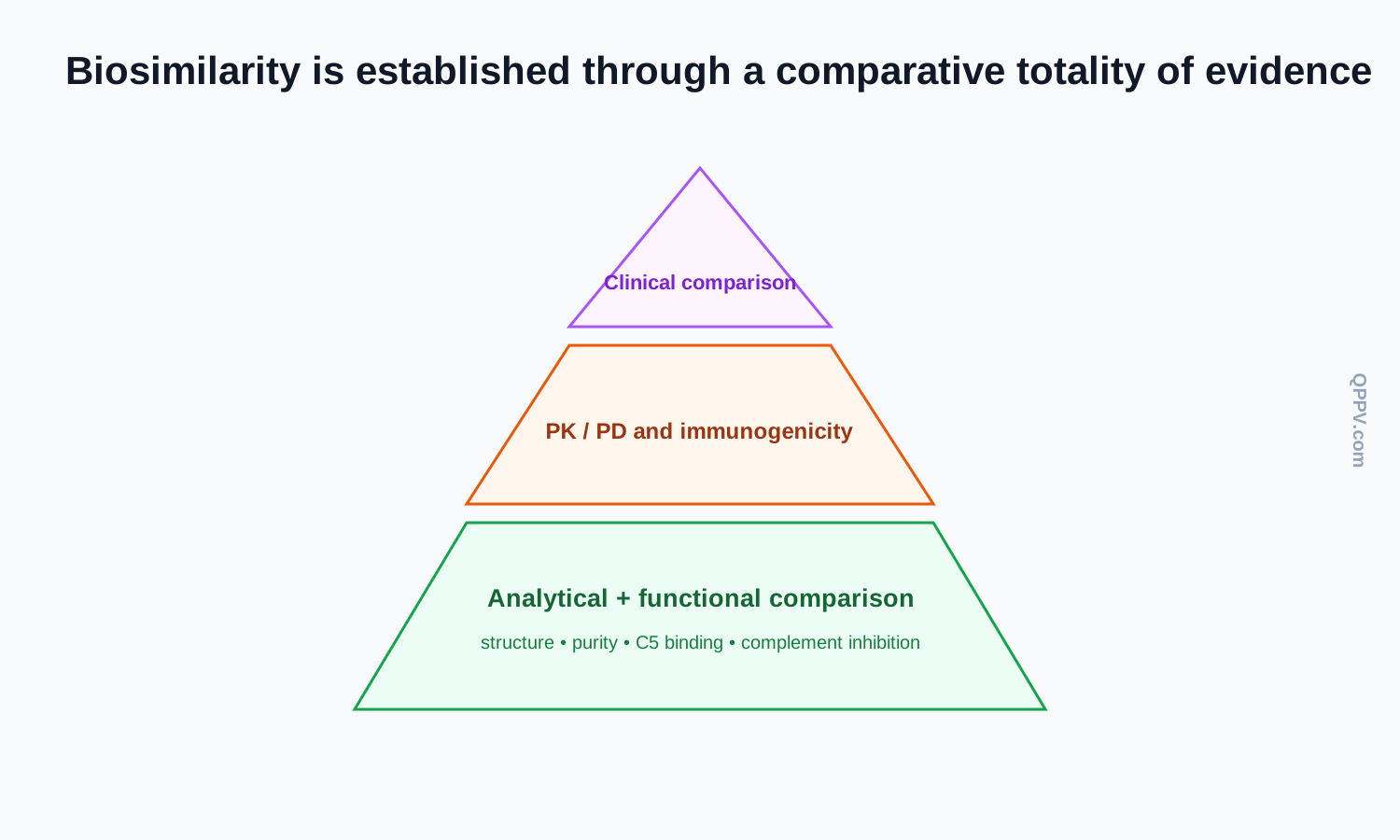
Figure 3. Biosimilar evaluation begins with sensitive analytical and functional comparison, then uses pharmacokinetic, immunogenicity and clinical evidence to resolve residual uncertainty.
Interchangeability and switching
In the European Union, EMA and national authorities establish biosimilarity and authorisation, while decisions about substitution and interchangeability are managed through Member State policy. The term “interchangeable” therefore should not be imported uncritically from US law.
Under US law, an interchangeable biosimilar satisfies additional statutory requirements and may be substituted for the reference product at pharmacy level subject to state law. FDA’s designation of Bkemv as interchangeable with US Soliris is a US regulatory determination. It does not create an EU substitution rule.
Switching pharmacovigilance should record the product before and after the switch, dates, reason, disease control before switching, dosing continuity and event onset. Temporal association after a switch can generate a hypothesis but does not establish a product difference. Nocebo effects, delayed doses, infusion processes, concomitant therapy, disease fluctuation and stimulated reporting may all affect observations.
Safety architecture
Meningococcal and other Neisseria infection
Terminal-complement inhibition markedly increases susceptibility to meningococcal disease. Vaccination reduces but does not eliminate risk. Current product information specifies vaccination and, when treatment cannot be delayed, additional antimicrobial and monitoring arrangements. Exact timing and risk-minimisation requirements are jurisdiction-specific and should not be replaced by a generic rule.
Symptoms may be atypical or progress rapidly. A case requires vaccination type and dates, antimicrobial prophylaxis, organism and serogroup, cultures or molecular testing, presenting syndrome, timing relative to infusion, treatment, intensive-care course and outcome. Other Neisseria infections, including disseminated gonococcal infection, also warrant attention.
Other encapsulated organisms and infection
The mechanism can also increase susceptibility to other encapsulated bacteria. Age, asplenia, prior immunosuppression, renal failure, central lines and concomitant therapy modify risk. An infection report should preserve these factors rather than treating complement blockade as the only possible cause.
Infusion and hypersensitivity reactions
Infusion reactions require onset relative to infusion, rate, dose number, phenotype, intervention, interruption and rechallenge. Product and batch are essential where a presentation-specific or quality pattern is possible.
Immunogenicity
Antidrug antibodies may be detected, but clinical meaning depends on assay, titre, persistence, neutralising activity, exposure and pharmacodynamic control. A positive assay alone does not establish clinical loss of effect or a biosimilar-specific problem.
Product pharmacovigilance
High-quality eculizumab biosimilar pharmacovigilance preserves four linked layers: product traceability, complement-blockade controls, disease activity and treatment continuity.
| Domain | High-value information |
|---|---|
| Product | brand, jurisdiction-specific name, batch, presentation |
| Exposure | dose, infusion dates, switch dates, missed or delayed doses |
| Risk minimisation | vaccination, prophylaxis, patient education or alert materials |
| Disease | PNH or aHUS, baseline activity and diagnostic basis |
| Pharmacodynamics | haemolysis or TMA markers and their trajectory |
| Event | infection phenotype, microbiology, infusion evidence or thrombosis |
| Alternatives | infection trigger, marrow failure, transplant, pregnancy, other TMA cause |
| Outcome | treatment, interruption, rescue, recovery and recurrence |
Spontaneous-report comparisons between products are especially vulnerable to bias because a newly launched biosimilar may experience stimulated reporting and incomplete brand capture. Active-substance aggregation is useful for class risk, while brand-level analysis is necessary for traceability and potential product-specific patterns. Both views are needed.
Treatment interruption and transition
Stopping eculizumab removes protection against uncontrolled complement activity. In PNH, severe haemolysis and thrombosis can recur. In aHUS, thrombotic microangiopathy and renal or other organ injury can recur. Current product information specifies monitoring after discontinuation; the duration and required observations must be taken from the applicable label.
A transition case should reconstruct the last reference-product dose, first biosimilar dose, any gap, dose and infusion schedule, laboratory trajectory and symptoms. Apparent post-switch failure may be a gap-related loss of pharmacodynamic control rather than a comparative product effect.
Breakthrough haemolysis or TMA also requires evaluation of infection, surgery, pregnancy, underexposure, missed dosing and diagnostic uncertainty. When available, complement pharmacodynamic assays can support assessment, but clinical and laboratory trajectories remain essential.
Special situations and formulation-specific considerations
The current EU Bekemv product information identifies sorbitol as an excipient and includes restrictions for patients with hereditary fructose intolerance, with particular concern in infants and children whose diagnosis may not yet be established. This is a product-specific formulation issue, not an inherent consequence of the eculizumab active substance. It illustrates why biosimilars share clinically relevant active-substance safety while still requiring product-specific label review.
Pregnancy can amplify complement activity and is also a setting in which PNH or aHUS may worsen. Reports should capture gestational timing, maternal disease, complement-inhibitor dosing, thrombosis, haemolysis or TMA markers, concomitant anticoagulation, delivery and maternal, fetal and neonatal outcomes.
Paediatric cases require age, weight, dose schedule, vaccination history and hereditary-fructose-intolerance assessment where relevant to the product used. Home infusion, where authorised, adds process variables including storage, preparation, healthcare-professional administration, infusion monitoring and escalation.
Medication errors may involve selection between complement inhibitors, incorrect dosing interval, omitted loading doses, switching without schedule reconciliation or confusion between brand names. The pharmacovigilance narrative should describe the actual exposure rather than only the prescribed regimen.
Inspection and governance perspective
An inspector could test whether the pharmacovigilance and risk-management system can demonstrate:
- reliable brand and batch capture for a biological product;
- identification and urgent handling of meningococcal and other serious infections;
- linkage of cases to vaccination, prophylaxis and educational measures;
- reconciliation of infusion and product-quality complaints;
- recognition of disease recurrence after delayed dosing, switching or discontinuation;
- distinction between EU biosimilarity and US interchangeability;
- product-specific handling of formulation restrictions;
- aggregate analyses that examine both active-substance class risk and brand-level patterns.
Illustrative failure modes include recording only “eculizumab”, assuming vaccination eliminates meningococcal risk, classifying post-switch haemolysis without checking for a dosing gap, applying US interchangeability language to EU substitution, and overlooking a product-specific excipient restriction. These are hypothetical quality risks rather than reported inspection findings.
Practical assessment framework
- Identify the exact product, suffix where applicable, batch and jurisdiction.
- Confirm the authorised indication and diagnostic basis.
- Reconstruct all infusion and switching dates.
- Verify risk-minimisation measures using the applicable product information.
- Define the event clinically and obtain objective evidence.
- Plot disease-specific laboratory markers over time.
- Examine infection, surgery, pregnancy, transplant and other complement-amplifying conditions.
- Determine whether exposure was interrupted or pharmacodynamic control was lost.
- Separate active-substance class questions from product-specific quality or formulation questions.
- Evaluate recurrence, dechallenge, treatment transition and outcome.
Key Takeaways
- Eculizumab biosimilars reproduce the clinically relevant C5-blocking mechanism of reference eculizumab.
- C5 blockade prevents terminal-complement injury but weakens defence against Neisseria, making infection risk minimisation central.
- EU biosimilarity and US interchangeability are distinct regulatory concepts.
- PNH haemolysis and aHUS thrombotic microangiopathy require different disease-specific evidence.
- Vaccination reduces but does not eliminate meningococcal risk.
- Treatment gaps and discontinuation can permit rapid return of complement-mediated disease.
- Active substance, brand, batch, formulation, switching history and jurisdiction all matter.
- Product-specific excipients can create risks not attributable to the active substance itself.
References
- European Medicines Agency. Bekemv: EPAR. EU marketing authorisation issued 19 April 2023; product page and product information updated 15 January 2026. https://www.ema.europa.eu/en/medicines/human/EPAR/bekemv. Accessed 4 September 2026.
- European Medicines Agency. Bekemv: EPAR Product Information (eculizumab). https://www.ema.europa.eu/en/documents/product-information/bekemv-epar-product-information_en.pdf. Accessed 4 September 2026.
- European Medicines Agency. Bekemv: EPAR Public Assessment Report. EMA/114622/2023. https://www.ema.europa.eu/en/medicines/human/EPAR/bekemv. Accessed 4 September 2026.
- U.S. Food and Drug Administration. FDA Approves First Interchangeable Biosimilar for Two Rare Diseases. 28 May 2024. https://www.fda.gov/news-events/press-announcements/fda-approves-first-interchangeable-biosimilar-two-rare-diseases.
- U.S. Food and Drug Administration. Biosimilar Multidisciplinary Evaluation and Review: Bkemv (ABP 959; eculizumab-aeeb), BLA 761333. 2024. https://www.accessdata.fda.gov/drugsatfda_docs/nda/2025/761333Orig1s000MultidisciplineR.pdf.
- U.S. Food and Drug Administration. Purple Book: Bkemv, BLA 761333. https://purplebooksearch.fda.gov/index.cfm?blaNo=761333&event=productdetails. Accessed 4 September 2026.
- European Medicines Agency and Heads of Medicines Agencies. Statement on the scientific rationale supporting interchangeability of biosimilar medicines in the EU. 2022.
- European Medicines Agency. Biosimilar medicines: overview. https://www.ema.europa.eu/en/human-regulatory-overview/biosimilar-medicines-overview.
- Hillmen P, Young NS, Schubert J, et al. The complement inhibitor eculizumab in paroxysmal nocturnal hemoglobinuria. N Engl J Med. 2006;355:1233–1243. doi:10.1056/NEJMoa061648.
- Legendre CM, Licht C, Muus P, et al. Terminal complement inhibitor eculizumab in atypical hemolytic-uremic syndrome. N Engl J Med. 2013;368:2169–2181. doi:10.1056/NEJMoa1208981.
Regulatory Note
This article is an educational pharmacovigilance reference, not prescribing guidance. Indications, vaccination and antimicrobial requirements, contraindications, treatment schedules, substitution rules and monitoring differ by jurisdiction and may change. Consult the current locally applicable product information and risk-management materials. “Interchangeable” is used only for the applicable US regulatory determination and should not be represented as an EU legal designation.