Eculizumab: Classification, History, Mechanism of Action, Safety and Pharmacovigilance
Eculizumab is a humanised monoclonal antibody directed against complement component C5. It established terminal-complement inhibition as a therapeutic strategy in human disease and is now used across several disorders in which complement contributes to tissue injury. The target is the same in each indication, but the disease biology is not. In paroxysmal nocturnal haemoglobinuria (PNH), terminal complement lyses vulnerable red cells; in atypical haemolytic uraemic syndrome (aHUS), complement dysregulation contributes to thrombotic microangiopathy; in anti-acetylcholine-receptor-positive generalised myasthenia gravis (gMG), complement damages the neuromuscular junction; and in aquaporin-4-antibody-positive neuromyelitis optica spectrum disorder (NMOSD), complement participates in inflammatory astrocyte injury.
That combination of a stable molecular mechanism and very different disease phenotypes is central to pharmacovigilance. A report of treatment failure cannot be assessed with a single generic template: breakthrough haemolysis, recurrent thrombotic microangiopathy, worsening bulbar weakness and an NMOSD relapse are clinically different expressions of inadequate disease control. By contrast, susceptibility to invasive meningococcal disease is a shared consequence of C5 blockade regardless of indication.
- Eculizumab: Classification, History, Mechanism of Action, Safety and Pharmacovigilance
- Multidimensional classification
- Complement biology and the C5 checkpoint
- Development and regulatory history
- How the same C5 blockade acts in four diseases
- Safety architecture
- Treatment failure and breakthrough disease
- Pregnancy, paediatrics and treatment transitions
- Pharmacovigilance case assessment
- Signal detection and aggregate review
- Potential failure modes
- Inspection and governance perspective
- Practical checklist
- Key Takeaways
- References
- Regulatory Note
Multidimensional classification
| Classification axis | Eculizumab classification | Pharmacovigilance significance |
|---|---|---|
| Molecular format | Humanised monoclonal antibody with IgG2/IgG4-derived constant-region features | Full-length systemic biological; exact product and batch remain relevant |
| Target | Complement component C5 | Prevents C5 cleavage into C5a and C5b |
| Functional class | Terminal-complement inhibitor | Suppresses formation of C5a and the C5b-9 membrane-attack complex |
| Principal disease settings | PNH, aHUS, AChR-antibody-positive refractory gMG and AQP4-antibody-positive relapsing NMOSD in the EU | One target requires four disease-specific surveillance frameworks |
| Route | Intravenous infusion | Dose chronology, missed infusions and infusion reactions matter in case assessment |
| Defining mechanistic risk | Serious meningococcal infection | Vaccination and other risk-minimisation measures reduce but do not eliminate susceptibility |
| Lifecycle position | First-in-class long-term C5 inhibitor | Provides the reference biology for later long-acting and biosimilar C5 products |
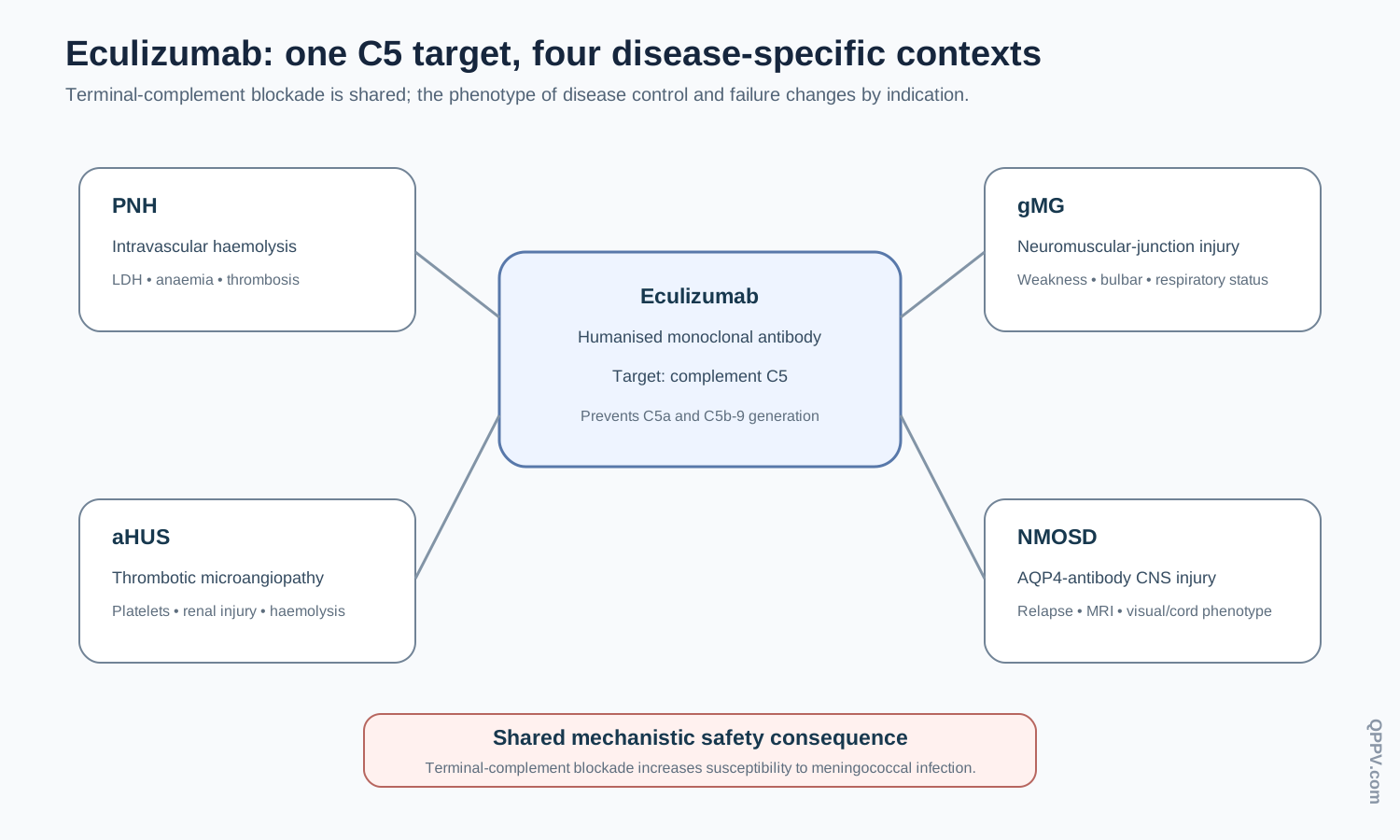
Figure 1. Eculizumab is best classified simultaneously by molecular format, C5 target, terminal-complement mechanism and four disease contexts. The shared mechanism produces a common infection risk but different manifestations of loss of efficacy.
Complement biology and the C5 checkpoint
Complement is a network of soluble and cell-surface proteins that forms part of innate immunity. The classical, lectin and alternative pathways are triggered differently but converge on activation of C3 and then C5. C5 cleavage generates C5a, a potent inflammatory mediator, and C5b, which initiates assembly of the membrane-attack complex C5b-9.
This point in the cascade behaves like a late common junction. Blocking C5 leaves substantial upstream complement activity intact while suppressing major terminal inflammatory and lytic effects. That is therapeutically useful when terminal complement causes disease, but it also weakens an important defence against Neisseria, especially Neisseria meningitidis.
Eculizumab binds C5 with high affinity and prevents its enzymatic cleavage. The antibody therefore does not remove the upstream cause of PNH, aHUS, gMG or NMOSD. It interrupts a downstream effector pathway shared by these diseases.
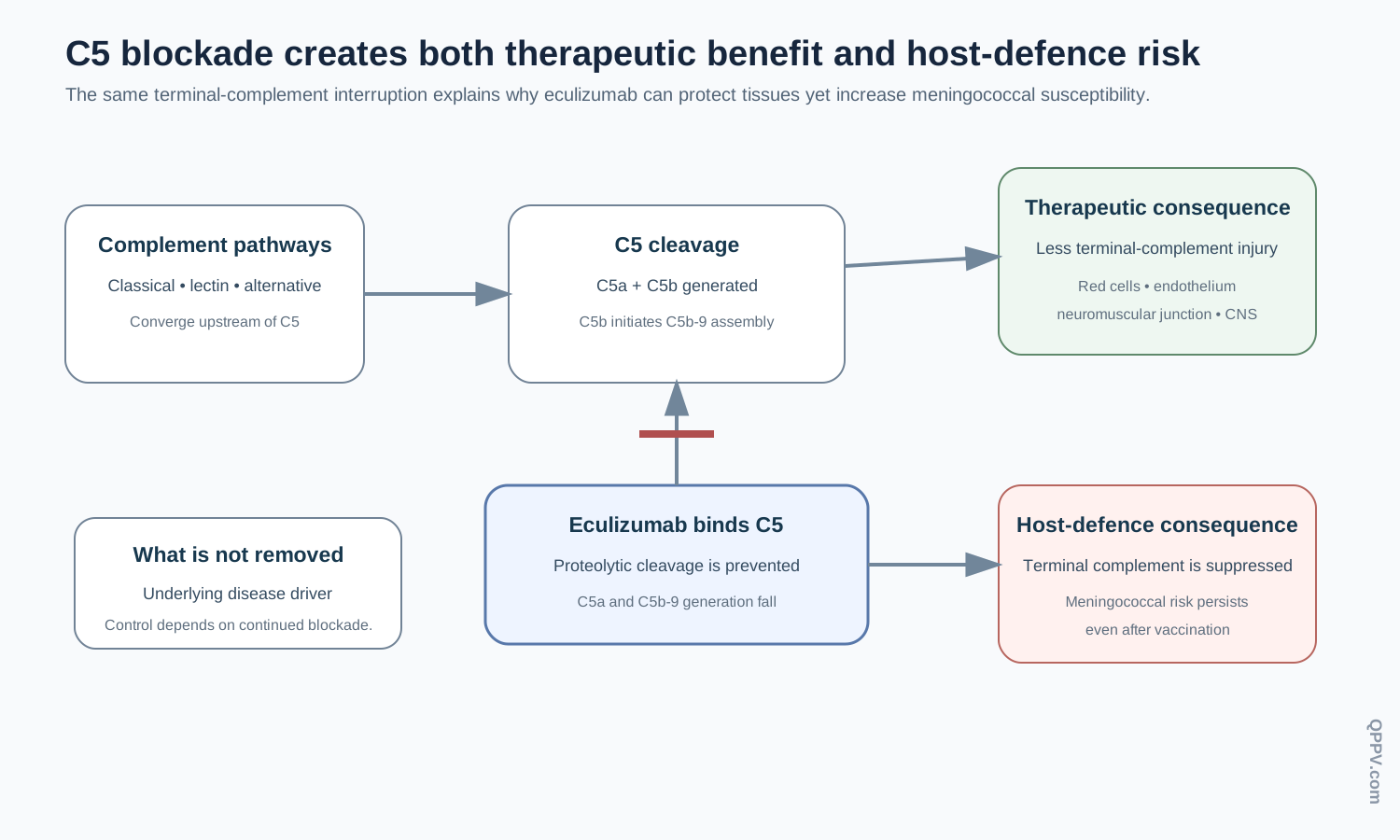
Figure 2. Complement pathways converge on C5. Eculizumab blocks formation of C5a and C5b-9, reducing pathological terminal-complement injury while simultaneously weakening a host-defence mechanism important against meningococci.
Development and regulatory history
Eculizumab was first authorised in the European Union in June 2007 for PNH after an accelerated assessment. The pivotal PNH programme demonstrated that terminal-complement blockade could reduce intravascular haemolysis and transfusion requirements. Its authorised use later expanded to aHUS and then to selected antibody-positive neurological diseases as the role of complement in those conditions became clinically actionable.
Current EU product information lists treatment of PNH and aHUS in adults and children, refractory AChR-antibody-positive gMG in adults, and AQP4-antibody-positive NMOSD in adults with relapsing disease. The product therefore illustrates indication expansion based not on superficial disease similarity but on a common downstream effector mechanism supported by disease-specific clinical evidence.
The parent molecule should be distinguished from two related but separate topics. First, newer long-acting C5 inhibitors use molecular engineering to alter exposure and dosing intervals while preserving C5 blockade. Second, eculizumab biosimilars reproduce the reference molecule's clinically relevant attributes under biosimilar regulatory frameworks. Those topics merit separate treatment because pharmacokinetics, formulation, switching and regulatory status introduce additional questions beyond the parent molecule's original biology.
How the same C5 blockade acts in four diseases
The therapeutic value of eculizumab becomes clearer when the diseases are separated by the tissue that terminal complement injures and the evidence used to recognise loss of control.
Paroxysmal nocturnal haemoglobinuria
PNH is an acquired clonal haematopoietic disorder caused by somatic PIGA mutations. Affected blood cells cannot anchor several glycosylphosphatidylinositol-linked surface proteins normally. Loss of the complement regulators CD55 and CD59 leaves red cells unusually vulnerable to complement-mediated destruction.
Eculizumab prevents terminal-complement-mediated intravascular haemolysis. It does not eliminate the PNH clone, restore PIGA function or remove all causes of anaemia. Consequently, haemoglobin, lactate dehydrogenase, reticulocytes, bilirubin, transfusion requirement and thrombotic events must be interpreted together. Breakthrough haemolysis may follow inadequate exposure, delayed dosing or a strong complement-amplifying event such as infection, but anaemia can also arise from marrow failure, bleeding, iron deficiency or extravascular mechanisms.
Atypical haemolytic uraemic syndrome
aHUS is a thrombotic microangiopathy in which dysregulated alternative-pathway complement activity can damage endothelium and drive platelet consumption, microangiopathic haemolysis and organ injury, particularly renal injury. C5 inhibition suppresses the downstream effector pathway but does not make every thrombotic microangiopathy complement-mediated.
A suspected recurrence therefore requires platelet count, haemoglobin, haemolysis markers, renal function, blood pressure and organ findings, together with assessment of competing causes such as infection, pregnancy-associated disorders, transplantation, severe hypertension and other secondary thrombotic microangiopathies. The diagnostic framework matters as much as the drug chronology.
Generalised myasthenia gravis
In AChR-antibody-positive gMG, pathogenic antibodies bind the postsynaptic acetylcholine receptor and can activate complement at the neuromuscular junction. Terminal-complement injury reduces the efficiency with which nerve impulses are converted into muscle contraction. C5 blockade interrupts this downstream injury but does not remove the autoantibody-producing immune process.
For pharmacovigilance, deterioration should be described anatomically and functionally: ocular symptoms, limb weakness, bulbar dysfunction, respiratory compromise, validated disease scores where available, precipitating infection, concomitant immunosuppression and rescue therapy all help distinguish fluctuation from clinically important loss of control.
Neuromyelitis optica spectrum disorder
In AQP4-antibody-positive NMOSD, pathogenic immunoglobulin binds aquaporin-4 on astrocytes. Complement activation contributes to inflammatory tissue injury, particularly in optic nerves and spinal cord. Eculizumab reduces relapse risk by interrupting the terminal effector pathway.
A suspected breakthrough event requires more than the term “relapse”. The case should capture neurological localisation, visual change, spinal symptoms, examination, MRI findings, AQP4-antibody status, infection, steroid or plasma-exchange treatment and final diagnostic confirmation. Pseudo-relapse or symptoms from established damage should not automatically be classified as pharmacological failure.
Safety architecture
Meningococcal and other susceptible infections
The most important product-specific safety principle follows directly from mechanism: terminal-complement inhibition increases susceptibility to serious meningococcal infection. Current regulatory materials require meningococcal risk minimisation, including vaccination according to applicable recommendations; where treatment must begin urgently, local product information specifies additional measures. Vaccination does not abolish risk because complement blockade remains active even in vaccinated patients.
Case assessment should capture vaccination type and dates, antimicrobial prophylaxis where applicable, presenting symptoms, microbiology, serogroup, time from last infusion, hospital course and outcome. A patient may present atypically, and rapidly progressive sepsis or meningitis requires urgent clinical management independent of pharmacovigilance causality assessment.
Other infections deserve clinical evaluation, particularly infections with Neisseria species and other encapsulated organisms, but they should not all be assumed to have the same strength of causal association as meningococcal disease.
Infusion reactions and hypersensitivity
Eculizumab is administered intravenously. Acute events should therefore be reconstructed against infusion start, rate, interruption, treatment and resolution. Fever, rash, dyspnoea, chest symptoms or blood-pressure changes may represent an infusion reaction, hypersensitivity, infection or the underlying disease. Product information governs whether an infusion should be slowed, interrupted or discontinued.
Disease recurrence after interruption or discontinuation
Stopping C5 inhibition can remove pharmacological protection while the underlying disease mechanism persists. The clinical consequence is indication-specific. In PNH, severe haemolysis and thrombosis may recur; in aHUS, thrombotic microangiopathy may reappear; in gMG, weakness can worsen; and in NMOSD, a new inflammatory relapse can occur.
This makes the last effective dose a high-value pharmacovigilance variable. A case that records only “eculizumab discontinued” without the final infusion date, reason for stopping, subsequent therapy and disease trajectory loses the information needed to interpret recurrence.
Treatment failure and breakthrough disease
Lack of efficacy is not a single event type for eculizumab. It can reflect inadequate exposure, true pharmacodynamic failure, a complement-amplifying condition, an alternative disease mechanism, diagnostic error or progression unrelated to terminal complement.
A useful framework is:
| Question | Evidence to obtain |
|---|---|
| Was exposure adequate? | Exact dose, body weight where relevant, infusion dates, delayed or missed doses, transition history |
| Was terminal-complement disease active? | Disease-specific clinical and laboratory markers |
| Was there a trigger? | Infection, surgery, pregnancy, transplantation or other acute physiological stress |
| Is the event mechanistically compatible? | Haemolysis/TMA/neuromuscular deterioration/NMOSD relapse phenotype |
| Could another process explain it? | Bone-marrow failure, secondary TMA, infection, medication effect, structural neurological disease |
| Was a product problem suspected? | Product identity, batch, storage/preparation, infusion details and quality complaint |
Rare C5 sequence variants that reduce eculizumab binding have been described and can provide a biological explanation for inadequate response in selected patients. Such a possibility should be treated as a specific scientific hypothesis requiring appropriate evidence, not as the default explanation for breakthrough disease.
Pregnancy, paediatrics and treatment transitions
Pregnancy is particularly important because complement activity and disease behaviour can change during gestation. PNH and complement-mediated thrombotic microangiopathy can themselves threaten maternal and fetal health. Pregnancy reports should therefore capture gestational timing, disease activity before conception, all eculizumab doses, anticoagulation where relevant, maternal complications, delivery and neonatal outcome rather than treating exposure as an isolated special-situation code.
Paediatric surveillance requires age, weight, indication, dosing schedule, vaccination status and infection history. Because paediatric use spans rare diseases with very different baseline risks, age alone is insufficient context.
Transitions to long-acting C5 inhibitors or biosimilar eculizumab products require exact last-dose/first-dose chronology. A disease flare after a transition should first be reconstructed for exposure gaps and disease triggers before attributing failure to product switching.
Pharmacovigilance case assessment
A high-quality eculizumab case should preserve both the shared C5-inhibition context and the indication-specific disease phenotype. The minimum useful chronology normally includes the exact product, dose, infusion dates, indication, vaccination history, relevant concomitant therapy, onset of the event, objective investigations, treatment interruption or continuation and outcome.
For meningococcal or other serious infection, microbiological confirmation and vaccination history are central. For apparent treatment failure, the decisive evidence is different: PNH requires haemolysis and thrombosis context; aHUS requires a thrombotic-microangiopathy reconstruction; gMG requires functional neuromuscular deterioration; NMOSD requires a clinically credible inflammatory relapse.
Biological-product traceability should capture brand and batch where available. This is particularly important in a market where reference eculizumab, biosimilars and other C5 inhibitors can coexist.
Signal detection and aggregate review
Aggregate analyses should not pool all disease deterioration under a generic “lack of efficacy” category. A signal review that combines PNH breakthrough haemolysis with NMOSD relapse and gMG worsening may be numerically convenient but clinically opaque. Indication-stratified analyses preserve the evidence needed to identify changes in effectiveness or treatment-use patterns.
Meningococcal cases should be reviewed across indications because the risk is mechanistically shared. Useful stratifiers include age, vaccination status, antimicrobial prophylaxis where applicable, organism and serogroup, time from vaccination, time from last dose and outcome. Vaccinated cases are not paradoxical; residual risk is expected under terminal-complement inhibition.
Treatment-interruption analyses should distinguish planned discontinuation, delayed administration, access problems, medication error, adverse-event-driven interruption and transition to another complement inhibitor. These categories can produce similar exposure gaps but have different preventability and governance implications.
Potential failure modes
The following are illustrative scenarios rather than published inspection findings:
- A meningococcal sepsis case is recorded without vaccination dates, microbiology or the most recent infusion date.
- A PNH patient with falling haemoglobin is classified as loss of efficacy without LDH, transfusion history or assessment of marrow failure and bleeding.
- Recurrent thrombocytopenia and renal injury are coded as aHUS recurrence without evaluating another cause of thrombotic microangiopathy.
- Worsening dyspnoea in gMG is entered as disease progression without documenting bulbar or respiratory weakness, infection and rescue treatment.
- An NMOSD “relapse” is accepted without localisation, MRI or specialist diagnostic assessment.
- A flare after switching products is attributed to the new product without reconstructing the dosing interval between products.
- Vaccination is treated as eliminating meningococcal risk rather than reducing it.
Inspection and governance perspective
A reviewer assessing an eculizumab pharmacovigilance system could test whether serious infections are recognised and followed up promptly; whether risk-minimisation evidence is traceable; whether biological product and batch are captured; whether treatment failures retain disease-specific clinical evidence; and whether interruptions, switches and discontinuations are reconstructed accurately.
The governance challenge is longitudinal. Eculizumab is used in rare diseases that may require prolonged treatment, while the surrounding therapeutic landscape now includes long-acting C5 inhibitors and biosimilars. Controlled documents, case-processing guidance and aggregate analyses therefore need to distinguish active-substance class risk from product-specific questions without fragmenting clinically related evidence.
Practical checklist
For an eculizumab case or aggregate review, confirm:
- exact product, batch and jurisdiction;
- authorised indication and diagnostic basis;
- complete infusion chronology and any missed or delayed doses;
- meningococcal vaccination and other applicable risk-minimisation measures;
- microbiology for serious infection;
- disease-specific markers of activity or relapse;
- infection, surgery, pregnancy and other complement-amplifying conditions;
- concomitant immunosuppressive, anticoagulant or rescue therapy;
- treatment interruption, discontinuation or switching chronology;
- product-quality or preparation issues where suspected;
- outcome and subsequent complement-inhibitor treatment.
Key Takeaways
Eculizumab is the foundational therapeutic C5-blocking monoclonal antibody. Its mechanism is constant, but the meaning of clinical deterioration depends on whether terminal complement is driving red-cell lysis, thrombotic microangiopathy, neuromuscular-junction injury or AQP4-antibody-mediated CNS inflammation.
The defining shared safety consequence is susceptibility to serious meningococcal infection. Vaccination and other locally required risk-minimisation measures are essential but do not abolish risk. Pharmacovigilance therefore requires both mechanism-based infection surveillance and disease-specific assessment of treatment failure, interruption and discontinuation.
References
- European Medicines Agency. Soliris: EPAR. EU marketing authorisation issued 20 June 2007; current product information updated 18 July 2025. https://www.ema.europa.eu/en/medicines/human/EPAR/soliris. Accessed 15 September 2026.
- European Medicines Agency. Soliris: EPAR Product Information (eculizumab). https://www.ema.europa.eu/en/documents/product-information/soliris-epar-product-information_en.pdf. Accessed 15 September 2026.
- U.S. Food and Drug Administration. Soliris (eculizumab) prescribing information. 2025 label. https://www.accessdata.fda.gov/drugsatfda_docs/label/2025/125166s448,761108s038lbl.pdf.
- Hillmen P, Young NS, Schubert J, et al. The complement inhibitor eculizumab in paroxysmal nocturnal hemoglobinuria. N Engl J Med. 2006;355:1233-1243. doi:10.1056/NEJMoa061648.
- Legendre CM, Licht C, Muus P, et al. Terminal complement inhibitor eculizumab in atypical hemolytic-uremic syndrome. N Engl J Med. 2013;368:2169-2181. doi:10.1056/NEJMoa1208981.
- Howard JF Jr, Utsugisawa K, Benatar M, et al. Safety and efficacy of eculizumab in anti-acetylcholine receptor antibody-positive refractory generalised myasthenia gravis (REGAIN). Lancet Neurol. 2017;16:976-986.
- Pittock SJ, Berthele A, Fujihara K, et al. Eculizumab in aquaporin-4-positive neuromyelitis optica spectrum disorder. N Engl J Med. 2019;381:614-625. doi:10.1056/NEJMoa1900866.
- European Medicines Agency. Soliris Risk Management Plan. Current EMA record updated June 2025. https://www.ema.europa.eu/en/medicines/human/EPAR/soliris.
Regulatory Note
This article is an educational pharmacovigilance reference and not prescribing guidance. Authorised indications, vaccination requirements, antimicrobial measures, dosing, treatment-interruption monitoring and risk-management obligations vary by jurisdiction and can change. Current local product information and applicable risk-minimisation materials take precedence. The article addresses the parent eculizumab molecule; biosimilar regulatory concepts and product-specific formulation issues are covered separately.