Efalizumab: Mechanism, EU Withdrawal and Pharmacovigilance
Efalizumab was withdrawn from the EU after safety concerns, including progressive multifocal leukoencephalopathy, changed its benefit–risk balance.
- Efalizumab: Mechanism, EU Withdrawal and Pharmacovigilance
1. Efalizumab and its EU authorisation history
Efalizumab is a humanised monoclonal antibody directed against CD11a, the alpha subunit of lymphocyte function-associated antigen 1 (LFA-1). The EU authorised Raptiva in September 2004 for adults with moderate-to-severe chronic plaque psoriasis who had failed, could not use or did not tolerate other systemic therapies, including ciclosporin, methotrexate and PUVA.[1]
In February 2009, EMA's CHMP recommended suspension after concluding that the medicine's benefit in psoriasis was modest in the context of serious safety concerns, including progressive multifocal leukoencephalopathy (PML). A Commission decision withdrew the EU marketing authorisation on 9 June 2009.[1,2] This was a safety-related regulatory action and should not be conflated with a holder-requested commercial discontinuation.
The medicine is no longer authorised in the EU. Historical cases remain relevant for pharmacovigilance, literature review and benefit–risk learning. They must be assessed against the label and regulatory context in force at the time, not a current treatment framework.
2. CD11a blockade and infection context
CD11a is part of LFA-1, an adhesion molecule involved in interactions between leukocytes and other cells, including processes that support immune-cell activation and movement into tissues. Efalizumab's blockade of this pathway reduced psoriasis inflammation but also affected immune surveillance. PML is a rare, often severe brain infection associated with JC virus reactivation in people with impaired immune function. The mechanism provides biological context, but it does not diagnose PML or prove causation in a specific case.
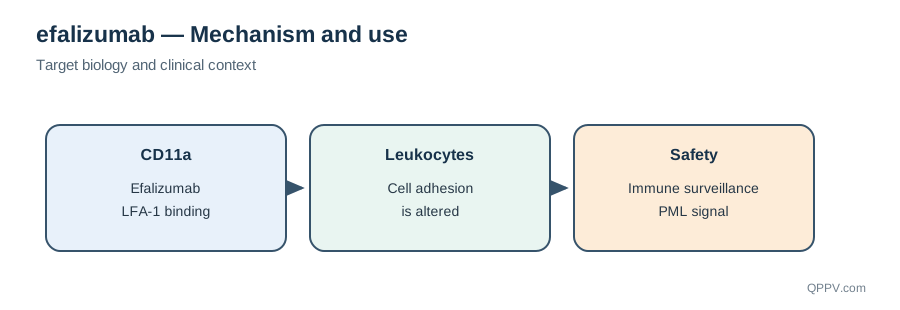
Figure 1. CD11a/LFA-1 blockade alters leukocyte interactions; the schematic gives context for the historical PML signal but does not establish individual causality.
2.1 The benefit–risk question
EMA's review considered both the modest benefit in psoriasis and reports of serious adverse effects. A pharmacovigilance evaluation should preserve that balance: the event pattern, severity, alternatives, treatment benefit and available options all contribute to a regulatory benefit–risk assessment. A single report does not reproduce the population-level regulatory conclusion.
3. Safety signal and clinical assessment
3.1 Progressive multifocal leukoencephalopathy
PML became the central serious safety concern leading to suspension and withdrawal. In a historical suspected case, document progressive neurological symptoms, onset, examination, MRI findings, cerebrospinal-fluid JC-virus testing or other diagnostic evidence, treatment, outcome and any residual disability. Record the patient's immune status, prior and concomitant immunosuppressants, previous biologics, infections and treatment duration.
Distinguish confirmed PML from suspected PML, other opportunistic infection, psoriasis-related comorbidity, cerebrovascular disease and other neurological diagnoses. Retain the diagnostic certainty assigned by treating specialists and the basis for it.
3.2 Other serious infections and immune effects
The safety review considered serious infections alongside PML. For suspected infection, capture site, organism, diagnostic method, severity, immune status, concomitant immunosuppressants, treatment and outcome. Do not treat every infection during exposure as proof of product causality; equally, do not omit a serious infection because the product was later withdrawn.
4. Exposure reconstruction and follow-up
A robust historical report should include:
- Product identity, dose, route, batch/lot if available, treatment start/stop and last dose.
- Psoriasis severity, previous systemic therapies and relevant treatment history.
- Neurological or infectious event onset, clinical findings, investigations and diagnostic certainty.
- For suspected PML: MRI, cerebrospinal-fluid testing, JC-virus evidence, specialist assessment and follow-up.
- Concomitant or previous immunosuppressants, immune status and alternative diagnoses.
- Management, outcome, sequelae and source of each key fact.
Use the historical product information and regulatory communications applicable to the exposure period. Seriousness, expectedness and causality are separate assessments. Regulatory conclusions about a product's population-level benefit–risk do not automatically determine causality in each individual case.
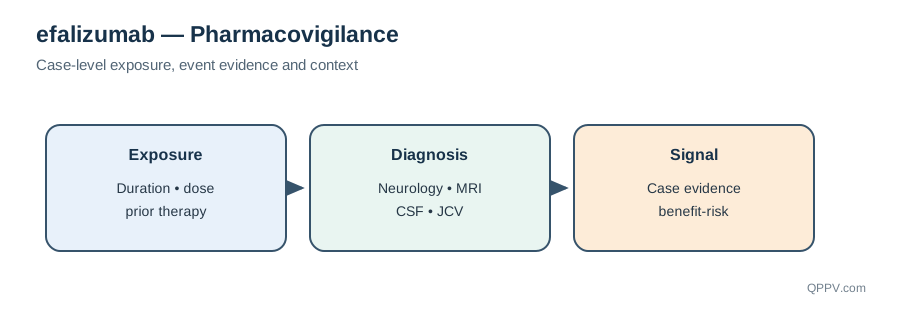
Figure 2. Signal evaluation joins individual diagnostic evidence and immune context with the population-level benefit–risk record.
5. Signal management and governance
The Raptiva history shows how post-authorisation safety reports can trigger reassessment when serious events change the balance of expected benefit and risk. A defensible signal record captures the case series, diagnostic certainty, timing, biological plausibility, alternative causes, exposure, treatment benefit and uncertainty. The regulatory sequence—CHMP recommendation, Commission decision and withdrawal—should be documented accurately and separately from each ICSR's assessment.
Spontaneous reports do not establish incidence on their own. Aggregate assessment should consider exposed population, treatment duration, co-medication, immune status and reporting patterns. Inspection-ready records should trace intake through medical review, follow-up, coding, regulatory submission, signal evaluation and communication of the final decision.
Common failures include coding a suspected PML case as confirmed without diagnostic support, omitting prior immunosuppression, attributing every infection to efalizumab, and describing the 2009 action as commercial when EMA identified safety concerns and an unfavourable benefit–risk conclusion.
6. Key takeaways
Efalizumab blocked CD11a/LFA-1 and was used for selected adults with moderate-to-severe plaque psoriasis. EMA recommended suspension in 2009 because modest benefit no longer outweighed serious risks, including PML, and the Commission withdrew the authorisation on 9 June 2009. Historical case assessment requires neurological or infectious diagnostic evidence, treatment chronology, immune context and clear separation between individual causality and the population-level benefit–risk decision.
References
- European Medicines Agency. Raptiva: European Public Assessment Report. Historical EU indication, authorisation, CHMP opinion and withdrawal record. Accessed 24 September 2026.
- European Medicines Agency. EMA recommends suspension of Raptiva because of PML and other safety concerns. CHMP benefit–risk rationale. Accessed 24 September 2026.
- European Medicines Agency. EU-wide recall of Raptiva to be initiated. Historical recall and regulatory communication.
- European Medicines Agency. GVP Module VI: Collection, management and submission of reports of suspected adverse reactions. Apply the current module and addenda.
- European Medicines Agency. GVP Module IX: Signal management. Apply the current module and addenda.
- European Commission. Commission Implementing Regulation (EU) No 520/2012. EU pharmacovigilance requirements, as amended.
Regulatory Note
This article concerns efalizumab's historical EU-authorised use and 2009 withdrawal. Raptiva is no longer authorised in the EU. The educational discussion does not replace historical product information, applicable legislation, current regulatory guidance or clinical judgement.