Elotuzumab: Classification, History, Mechanism of Action, Safety and Pharmacovigilance
- Elotuzumab: Classification, History, Mechanism of Action, Safety and Pharmacovigilance
- Multidimensional classification
- Development and regulatory role
- Clinical use and treatment-context map
- Safety profile through mechanism and regimen
- Pharmacokinetic and pharmacodynamic considerations
- Pharmacovigilance case assessment
- Signal detection and aggregate review
- Periodic benefit-risk evaluation
- Risk management and operational controls
- Potential failure modes
- Inspection and governance perspective
- Practical checklist
- Key Takeaways
- References
- Regulatory Note
Elotuzumab is a humanised immunoglobulin G1 (IgG1) monoclonal antibody directed against signalling lymphocytic activation molecule family member 7 (SLAMF7), also known as CS1. SLAMF7 is expressed strongly on malignant plasma cells and is also present on natural killer (NK) cells and other immune-cell populations. Elotuzumab uses this distribution to support immune-mediated recognition and killing of myeloma cells.
The antibody is used in combination regimens rather than as a pharmacologically independent intervention. Its clinical effect depends on target expression, the activity of NK cells, Fc-receptor interactions and the accompanying immunomodulatory medicine and dexamethasone. Pharmacovigilance must therefore distinguish elotuzumab-related infusion and immune effects from cytopenia, infection, thrombosis and other risks contributed by the complete myeloma regimen.
Multidimensional classification
| Classification axis | Elotuzumab | Pharmacovigilance significance |
|---|---|---|
| Molecular class | Humanised IgG1 monoclonal antibody | Biological product with product-specific quality attributes |
| Target | SLAMF7/CS1 on plasma cells and NK cells | Links malignant-cell recognition with immune effector biology |
| Functional class | Immune-mediated antimyeloma antibody | Activity depends partly on host immune effector function |
| Main effector pathway | Antibody-dependent cellular cytotoxicity and NK-cell activation | Infection, immune reserve and combination therapy influence interpretation |
| Clinical use | Combination treatment for multiple myeloma | Attribution requires complete regimen and treatment line |
| Administration | Intravenous infusion with premedication | Infusion chronology is central to acute-reaction cases |
| Product category | Biological medicinal product | Batch and preparation information support traceability |
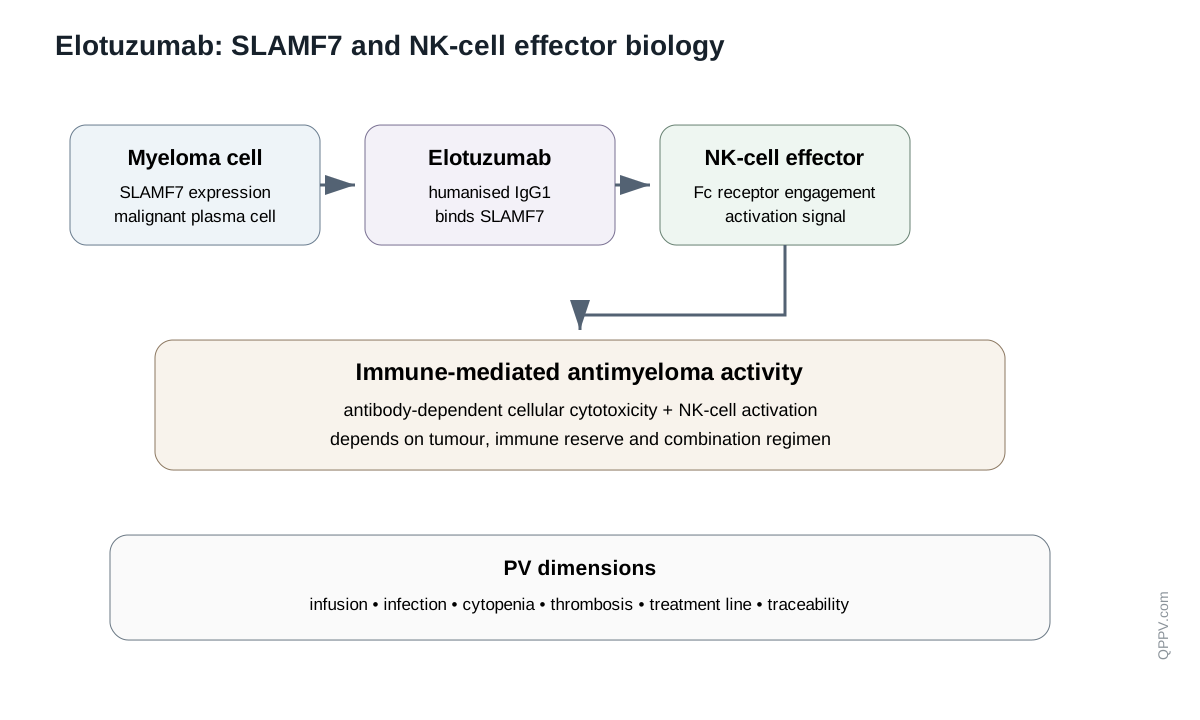
Figure 1. Elotuzumab connects SLAMF7 target recognition with NK-cell effector function. The same target is present on malignant plasma cells and NK cells, making treatment context important.
SLAMF7 as a target
SLAMF7 is a cell-surface molecule expressed on plasma cells, including malignant myeloma cells, and on NK cells. Elotuzumab binds SLAMF7 on the myeloma cell and can engage Fc gamma receptors on effector cells. Binding to SLAMF7 on NK cells can also provide activating signals. The resulting biology is not simply a receptor-blocking mechanism; it is an immune-mediated cell-recognition and effector process.
The strength of the clinical effect depends on target density, immune-cell number and function, Fc-receptor biology, prior therapy and the accompanying regimen. A patient with profound lymphopenia or advanced disease may have a different pharmacological context from a patient with preserved NK-cell activity.
Why the IgG1 framework matters
IgG1 antibodies are capable of engaging Fc gamma receptors and supporting antibody-dependent cellular cytotoxicity. For elotuzumab, Fc-mediated interaction with NK cells is central to the therapeutic concept. This differs from an IgG4 checkpoint antibody whose purpose is primarily to block receptor signalling without intentionally depleting target cells.
The distinction does not predict every adverse event. Infusion reactions, infection and cytopenias still depend on dose, premedication, disease, concomitant medicines and host susceptibility. It does, however, provide a rational basis for preserving immune-cell status and regimen information in the PV record.
Development and regulatory role
Elotuzumab was developed for multiple myeloma and authorised for use in defined combination settings. Current European product information describes combination use with lenalidomide and dexamethasone and with pomalidomide and dexamethasone in selected adult patients with relapsed or refractory disease. The exact treatment line and eligibility conditions must be taken from the current regional label.
The distinction between these regimens is clinically meaningful. Lenalidomide and pomalidomide have related but non-identical treatment histories and safety profiles. Dexamethasone contributes immunosuppression, metabolic effects and symptom modification. Previous proteasome inhibitors, alkylators, transplantation and cellular therapies can alter baseline risk.
A product-specific PV assessment should never treat “multiple myeloma” as a sufficient treatment context. Disease stage, prior lines, response status, marrow reserve, renal function, concomitant medicines and transplant history all influence event interpretation.
Clinical use and treatment-context map
Elotuzumab is administered by intravenous infusion within a multi-medicine regimen. The full treatment record should identify the active substances, schedule, premedication, treatment line, recent therapies and disease status.
Combination with lenalidomide and dexamethasone
Lenalidomide can contribute to cytopenia, infection and thromboembolic risk. Dexamethasone may reduce inflammatory symptoms while increasing susceptibility to infection and altering glucose control. An infection or thrombosis during the combination should therefore be evaluated across all three medicines and the myeloma itself.
Combination with pomalidomide and dexamethasone
Pomalidomide is used in patients with more heavily pretreated disease in the authorised setting. Such patients may have lower marrow reserve, renal impairment, prior infections and cumulative treatment effects. The same adverse event may consequently carry a different baseline probability from an event in a less heavily treated population.
Disease and treatment response
Myeloma can cause anaemia, thrombocytopenia, renal dysfunction, bone pain, infection and hypercalcaemia. Disease progression can mimic or contribute to many reported events. The case record should preserve disease markers, marrow findings, renal function and response assessment when these are relevant to causality.
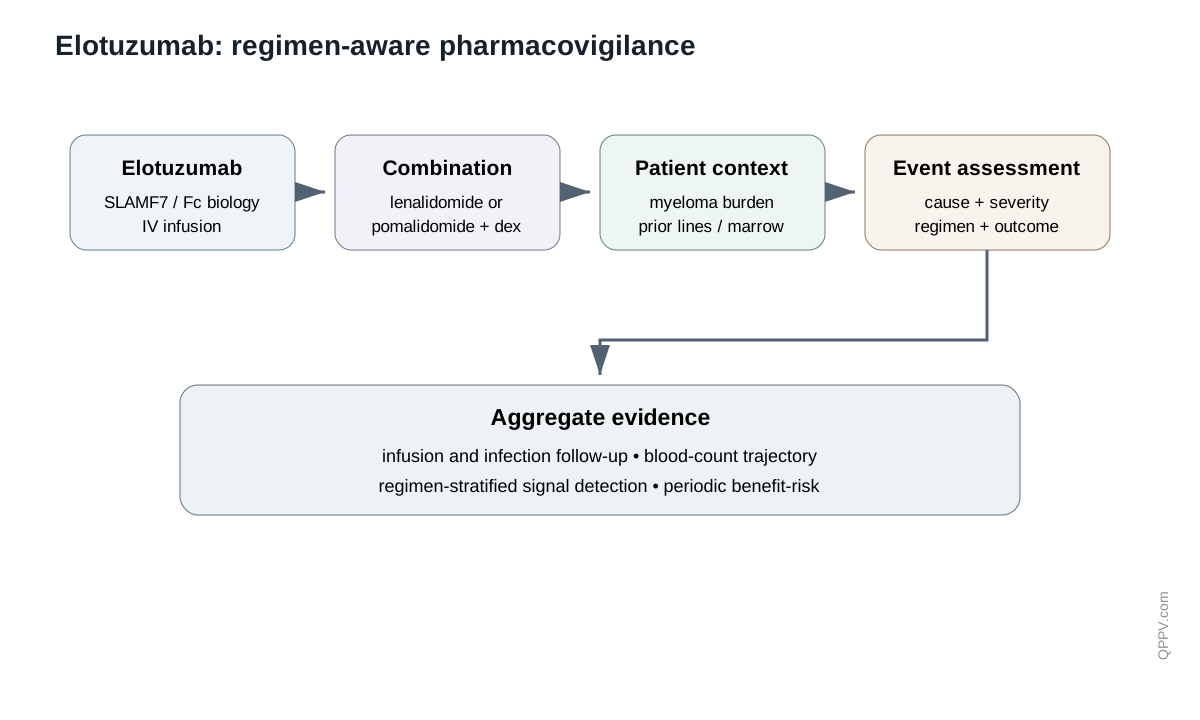
Figure 2. Elotuzumab safety assessment links the antibody, immune effector status and immunomodulatory combination with myeloma-related competing explanations.
Safety profile through mechanism and regimen
Infusion-related reactions
Infusion-related reactions may include fever, chills, hypertension or hypotension, hypersensitivity symptoms, dyspnoea, rash and other acute manifestations. The exact infusion number, rate, premedication, onset, vital signs, interruption, treatment and outcome are high-value information.
A reaction occurring during elotuzumab infusion may be confused with infection, pulmonary disease, anxiety or a reaction to another medicine administered at the same visit. Administration order should be recorded. Rechallenge information is particularly useful but should not be inferred when it is absent.
Infections
Myeloma, corticosteroids, immunomodulatory medicines, lymphopenia, neutropenia and previous therapies can all increase infection risk. The PV case should include site, organism, microbiology, severity, hospitalisation, antimicrobial therapy, neutrophil count, lymphocyte count and outcome where available.
Viral reactivation and opportunistic infection may be clinically important in heavily treated patients. The assessment should consider antiviral prophylaxis, vaccination history where relevant and the patient's cumulative immune suppression.
Cytopenias and marrow effects
Anaemia, neutropenia and thrombocytopenia may arise from marrow infiltration, treatment, infection or renal disease. A longitudinal blood-count profile is more informative than a single nadir. Capture baseline values, timing relative to each treatment component, growth-factor support, transfusion, infection and recovery.
Thromboembolic and metabolic context
Lenalidomide and pomalidomide regimens require attention to thromboembolic events and prophylaxis. A thrombosis case should include risk factors, prophylaxis, disease activity, immobilisation and all medicines. Hyperglycaemia, insomnia, mood changes and other effects may be influenced by dexamethasone and should not be assigned automatically to elotuzumab.
Laboratory and response interpretation
Myeloma response is monitored with paraprotein, free light chains, marrow and imaging measures. Some tests may be affected by therapeutic antibody interference or by the complexity of the regimen. The clinical laboratory's interpretation and the assay method should be retained when an apparent response, progression or lack of efficacy forms part of the case.
Pharmacokinetic and pharmacodynamic considerations
Elotuzumab exposure is influenced by target expression and immune-cell interactions. The clinical effect is not determined solely by serum concentration. NK-cell number and function, tumour burden, prior therapies and concomitant immunomodulators influence the pharmacodynamic environment.
This is why exposure and outcome analyses should preserve treatment line and combination. A pooled analysis that combines early and late myeloma treatment may conceal effect modification by marrow reserve, immune status and disease burden.
Pharmacovigilance case assessment
Elotuzumab cases should be assessed using the antibody, the combination regimen, the treatment line and the patient's myeloma status as connected dimensions.
Event-specific follow-up priorities
| Event or concern | High-value follow-up information |
|---|---|
| Infusion reaction | Infusion number, rate, premedication, sequence of medicines, vital signs, treatment, interruption and outcome |
| Serious infection | Site, pathogen, cultures/PCR, neutrophils, lymphocytes, corticosteroids, prophylaxis and hospital course |
| Cytopenia | Baseline and serial counts, marrow disease, renal function, all myelosuppressive medicines, transfusion or growth factor |
| Thrombosis | Site, imaging, prophylaxis, immobility, disease activity, concomitant medicines and outcome |
| Hypersensitivity | Timing, symptoms, objective signs, treatment, differential diagnosis and rechallenge |
| Lack of efficacy | Treatment line, disease markers, adherence, administration, assay context and product traceability |
| Product-quality concern | Product, batch, storage, preparation, infusion system and associated cases |
Signal detection and aggregate review
Aggregate analyses should stratify by lenalidomide or pomalidomide regimen, dexamethasone exposure, treatment line, prior transplantation or cellular therapy, disease status and relevant immune or marrow measures. Infection and cytopenia rates are especially vulnerable to confounding by indication and treatment history.
Potential signals may involve infusion-reaction clustering, unusual infection pathogens, delayed cytopenia, thromboembolism despite prophylaxis, unexpected assay interference or a change in the severity of a known risk. These are evaluation questions, not confirmed causal conclusions.
Periodic benefit-risk evaluation
The benefit-risk assessment should connect response and survival evidence with the authorised treatment setting. The clinical value of elotuzumab may differ between patients with earlier relapse and those with heavily pretreated refractory disease. The risk evaluation should include infusion reactions, infection, cytopenia, thrombosis in the combination context, hypersensitivity, medication errors and product-quality concerns.
The report should explain how the analysis handled regimen attribution. A safety conclusion that says “elotuzumab increases infection” without accounting for dexamethasone, immunomodulatory treatment and disease burden is incomplete.
Risk management and operational controls
Current regional product information establishes the regulatory baseline. Recommended operational controls include:
- structured capture of the complete regimen and treatment line;
- infusion-specific follow-up;
- longitudinal blood counts and renal function;
- pathogen and prophylaxis fields for serious infection;
- thrombosis and prophylaxis documentation;
- laboratory-assay context for apparent lack of efficacy;
- reconciliation with quality complaints and product-batch records;
- stratified signal and periodic analyses.
Potential failure modes
The following are illustrative scenarios, not published inspection findings:
- An infusion reaction lacks premedication, infusion rate and administration sequence.
- Infection is attributed to elotuzumab without documenting dexamethasone or immunomodulatory treatment.
- Cytopenia is evaluated from a single laboratory result without marrow or disease context.
- Thrombosis analysis ignores prophylaxis and treatment line.
- A lack-of-efficacy case does not retain the assay or response data.
- Aggregate data combine lenalidomide and pomalidomide regimens without explanation.
- A quality cluster cannot be assessed because batch and preparation fields are missing.
Inspection and governance perspective
An inspector would look for evidence that the PV system can distinguish antibody-related events from risks arising from multiple myeloma and the combination regimen. Relevant evidence includes targeted follow-up, case narratives, treatment-line fields, blood-count and infection analyses, signal reports, periodic reports, reconciliation records and escalation decisions.
The effectiveness test is whether the system produces interpretable evidence. A procedure that requests “concomitant therapy” is insufficient if the database cannot identify the immunomodulatory medicine, dexamethasone exposure or prophylaxis.
Practical checklist
Confirm:
- exact product, dose, batch, presentation and infusion chronology;
- lenalidomide or pomalidomide and dexamethasone exposure;
- treatment line, disease status, marrow reserve and renal function;
- prior transplantation, cellular therapy and cumulative immunosuppression;
- infection pathogen, prophylaxis and outcome;
- longitudinal blood counts for cytopenia;
- thrombosis risk and prophylaxis;
- assay and response information for lack of efficacy;
- appropriate regimen-stratified aggregate analyses.
Key Takeaways
Elotuzumab is a humanised IgG1 anti-SLAMF7 antibody whose activity depends on immune effector mechanisms, including NK-cell activation and antibody-dependent cellular cytotoxicity.
Its pharmacovigilance profile cannot be separated from multiple myeloma, treatment line, dexamethasone and the immunomodulatory combination. Infusion reactions, infection, cytopenia, thrombosis and apparent lack of efficacy require regimen-aware assessment.
References
- European Medicines Agency. Empliciti (elotuzumab): EPAR and current product information. https://www.ema.europa.eu/en/medicines/human/EPAR/empliciti
- Lonial S, Dimopoulos M, Palumbo A, et al. Elotuzumab therapy for relapsed or refractory multiple myeloma. N Engl J Med. 2015;373:621–631. doi:10.1056/NEJMoa1505654.
- European Medicines Agency. GVP Module I: Pharmacovigilance systems and their quality systems. https://www.ema.europa.eu/en/human-regulatory-overview/research-development/pharmacovigilance-research-and-development/good-pharmacovigilance-practices
- European Medicines Agency. GVP Module V: Risk management systems. https://www.ema.europa.eu/en/documents/scientific-guideline/guideline-good-pharmacovigilance-practices-module-v-risk-management-systems-rev-2_en.pdf
- European Medicines Agency. GVP Module IX: Signal management. https://www.ema.europa.eu/en/documents/scientific-guideline/guideline-good-pharmacovigilance-practices-gvp-module-ix-signal-management-rev-1_en.pdf
Regulatory Note
Authorised indications, combination requirements, dosing, premedication and warnings vary by jurisdiction and may change. This article explains scientific and pharmacovigilance principles and does not replace current product information. Current EMA product information was checked in September 2026.