Emicizumab: Classification, History, Mechanism of Action, Safety and Pharmacovigilance
- Emicizumab: Classification, History, Mechanism of Action, Safety and Pharmacovigilance
- Multidimensional classification
- Haemophilia A and the role of factor VIII
- Molecular engineering and mechanism
- Development and regulatory history
- Clinical use and exposure context
- Major safety domains
- Surgery, trauma and rescue haemostasis
- Product identification and medication error
- Pharmacovigilance case assessment
- Signal detection and aggregate review
- Risk management and operational controls
- Potential failure modes
- Inspection and governance perspective
- Practical checklist
- Key Takeaways
- References
- Regulatory Note
Emicizumab is a bispecific monoclonal antibody used for prophylaxis of bleeding in haemophilia A. Unlike factor VIII replacement, it is not a factor VIII molecule and does not reproduce every biochemical property of factor VIII. Its therapeutic operation is more specific: one binding arm recognises activated factor IX (FIXa), the other recognises factor X (FX), and the antibody brings the two proteins into a spatial relationship that permits FIXa to activate FX more efficiently. In this way emicizumab supplies part of the cofactor function normally provided by activated factor VIII.
That distinction is fundamental for pharmacovigilance. Emicizumab is not neutralised by factor VIII inhibitors, but it can interact clinically with bypassing therapies used in inhibitor patients. It also changes the interpretation of coagulation laboratory tests, especially activated partial thromboplastin time (aPTT)-based assays. A laboratory value that appears reassuring can therefore be profoundly misleading if the assay is not compatible with emicizumab exposure.
Multidimensional classification
| Classification axis | Emicizumab classification | Scientific or PV significance |
|---|---|---|
| Molecular class | Humanised bispecific monoclonal antibody | Two distinct binding specificities permit a synthetic cofactor-like function |
| Targets | FIXa and FX | Recreates productive proximity between enzyme and substrate |
| Functional mechanism | FVIIIa cofactor mimicry | Improves thrombin generation without replacing FVIII itself |
| Therapeutic class | Non-factor haemophilia prophylaxis | Distinguishes it from plasma-derived or recombinant FVIII replacement |
| Patient context | Haemophilia A with or without FVIII inhibitors | Inhibitor status changes concomitant haemostatic treatment and case interpretation |
| Route | Subcutaneous | Enables long-term prophylaxis outside intravenous factor-replacement schedules |
| PV-critical interaction | Activated prothrombin complex concentrate (aPCC) | Excess procoagulant activity has been associated with thrombosis and thrombotic microangiopathy |
| Laboratory effect | Interference with intrinsic-pathway clotting assays | aPTT and related one-stage FVIII assays may not reflect true haemostatic status |
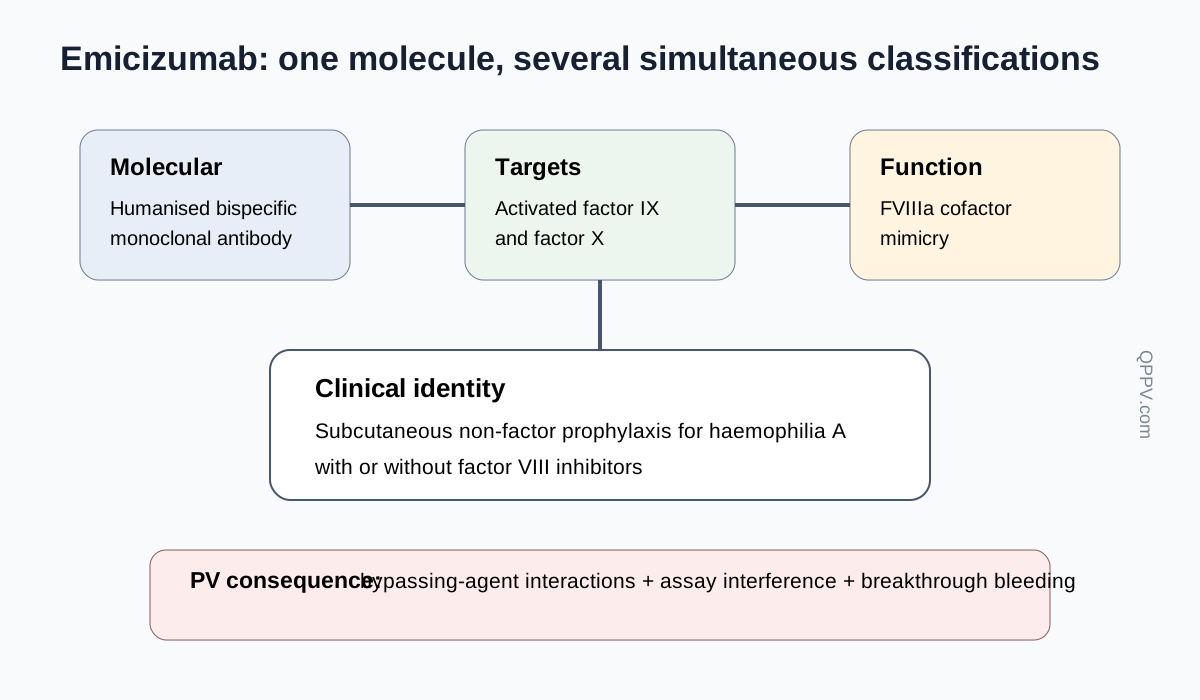
Figure 1. Emicizumab is simultaneously a bispecific antibody, a coagulation cofactor mimic and a non-factor haemophilia therapy. These dimensions explain why its major PV issues arise from haemostatic interactions and assay interpretation rather than from conventional factor-replacement pharmacology.
Haemophilia A and the role of factor VIII
Haemophilia A results from congenital deficiency or dysfunction of coagulation factor VIII. Factor VIII circulates largely bound to von Willebrand factor and becomes activated during coagulation. Activated factor VIII acts as a cofactor for FIXa on phospholipid surfaces, greatly accelerating conversion of FX to FXa. FXa then contributes to thrombin generation, fibrin formation and clot stabilisation.
The key word is cofactor. FVIIIa is not itself the protease that cleaves FX. Instead, it organises the reaction so that FIXa can work efficiently. Emicizumab exploits that architecture: it does not need to reproduce the entire FVIII protein to restore useful haemostatic activity.
Why inhibitors changed the therapeutic landscape
Some patients develop neutralising antibodies against therapeutic factor VIII. These inhibitors reduce or abolish the effectiveness of infused FVIII and historically created a major treatment problem. Bypassing agents can generate thrombin without requiring normal FVIII function, but their pharmacology and safety differ from factor replacement.
Because emicizumab is structurally unrelated to FVIII and binds FIXa and FX rather than FVIII epitopes, conventional FVIII inhibitors do not neutralise its activity. This made cofactor mimicry particularly valuable for patients with inhibitors and later for prophylaxis in patients without inhibitors.
Molecular engineering and mechanism
A conventional monospecific IgG has two antigen-binding arms directed to the same target. Emicizumab instead has two different antigen-binding specificities. Productive bispecific assembly required engineering so that the intended heavy and light chains pair correctly and the final molecule retains suitable stability, pharmacokinetics and manufacturability.
The resulting antibody binds FIXa and FX with affinities selected to support catalytic encounter without permanently locking the coagulation proteins together. This matters because physiological coagulation remains spatially and kinetically regulated. Emicizumab therefore increases the efficiency of a key reaction but does not create a continuously active protease complex independent of the rest of haemostasis.
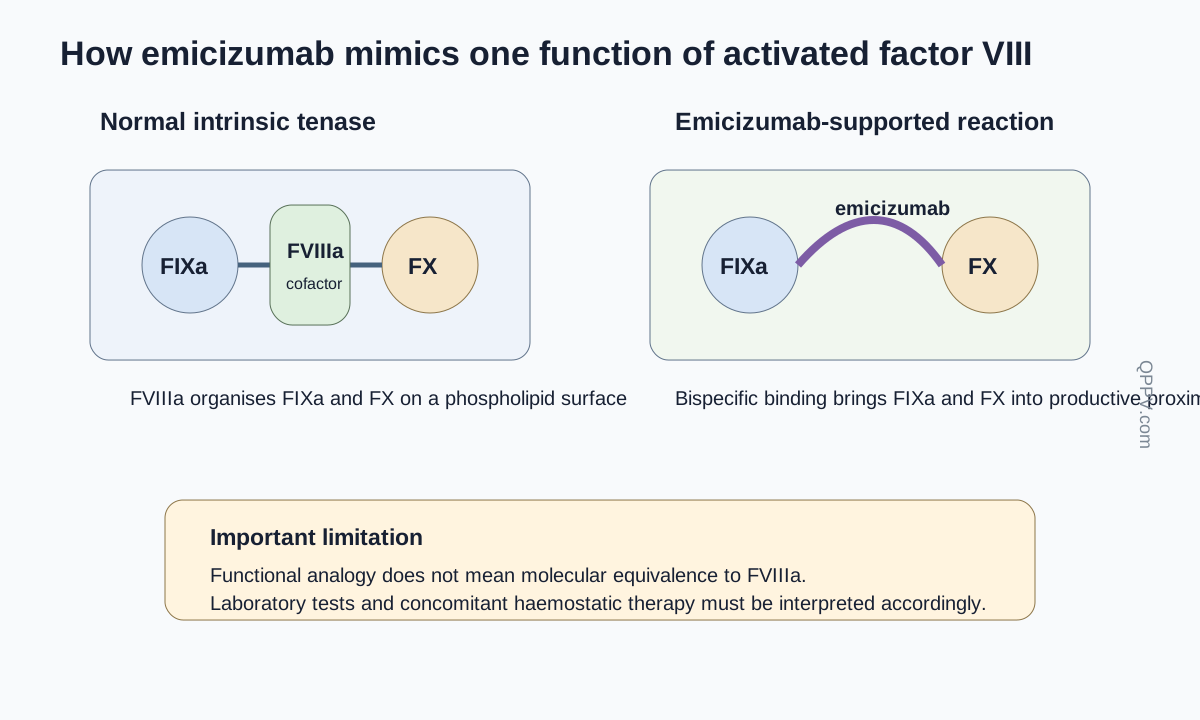
Figure 2. In normal intrinsic tenase, FVIIIa positions FIXa and FX on a phospholipid surface. Emicizumab provides an alternative bridge between FIXa and FX. The mechanism is functionally analogous rather than molecularly identical to FVIIIa.
Development and regulatory history
The development of emicizumab followed a long search for non-factor approaches that could improve prophylaxis, remain active in patients with FVIII inhibitors and reduce the burden of frequent intravenous treatment. Early clinical development established sustained subcutaneous exposure and a reduction in bleeding frequency in inhibitor populations, followed by studies in patients without inhibitors and across paediatric age groups.
The European Union authorised emicizumab in 2018, initially for haemophilia A with FVIII inhibitors. The indication subsequently expanded to patients without inhibitors, including severe disease and moderate haemophilia A with a severe bleeding phenotype. Current EU product information should be checked for the exact authorised population and dosing schedules.
Clinical use and exposure context
Emicizumab is given subcutaneously for routine prophylaxis. After a loading phase, maintenance can be given at different intervals using weight-based regimens specified in current product information. The long exposure interval and home-administration context change the safety-information pathway: missed doses, incorrect concentration selection, injection-volume errors and concomitant haemostatic treatment may be more important to reconstruct than a single infusion reaction.
Breakthrough bleeding does not mean immediate treatment failure
Patients receiving emicizumab can still bleed. Trauma, surgery, severe baseline phenotype, individual pharmacokinetics and treatment adherence remain relevant. A breakthrough bleed should therefore prompt assessment of site, severity, precipitating event, dose history, body weight, inhibitor status and rescue treatment. Recurrent unexpected bleeding raises additional questions about adherence, dosing error, anti-drug antibodies or an alternative haemostatic disorder.
Major safety domains
Thrombosis and thrombotic microangiopathy
The most distinctive serious safety issue emerged when emicizumab was used with high cumulative exposure to activated prothrombin complex concentrate. Thrombotic events and thrombotic microangiopathy were observed in this setting. The mechanistic concern is excessive generation of procoagulant activity when two haemostatic interventions that bypass normal FVIII regulation are combined.
For PV assessment, a report of thrombosis during emicizumab treatment is incomplete without the exact bypassing-agent exposure: product, dose, cumulative dose, timing and duration. The phenotype should also be characterised. Macrovascular thrombosis and thrombotic microangiopathy are not interchangeable diagnoses.
Laboratory assay interference
Emicizumab shortens aPTT because it bridges FIXa and FX without requiring the activation steps that normally influence aPTT. Consequently, aPTT can normalise or become very short even when the patient's haemostatic state cannot be interpreted as normal FVIII physiology. One-stage FVIII activity assays based on aPTT can markedly overestimate apparent FVIII activity.
Chromogenic assays require reagent-level interpretation. Assays using human coagulation factors can be affected by emicizumab, whereas appropriately designed assays using bovine FIXa and FX can be used to measure endogenous or infused FVIII activity because emicizumab does not bridge the bovine factors effectively. Laboratories and safety reviewers must therefore know not only the reported result but the assay methodology.
Anti-drug antibodies and loss of efficacy
Anti-emicizumab antibodies can occur, and neutralising or exposure-reducing antibodies have rarely been associated with loss of efficacy. Recurrent bleeding after an initially effective period should not be coded simply as disease progression. Dose history, adherence, pharmacokinetic data where available and anti-drug-antibody evaluation may be needed.
Injection-site and hypersensitivity reactions
Subcutaneous administration can cause local pain, erythema or pruritus. These events are usually straightforward, but serious systemic hypersensitivity requires the usual chronology, phenotype, treatment and rechallenge information. Product concentration and administration technique are useful in recurrent local reactions.
Surgery, trauma and rescue haemostasis
Procedures create a special PV context because background emicizumab remains present while additional haemostatic agents may be required. The safety question becomes a treatment-system question: what procedure occurred, what was the bleeding risk, what adjunctive factor or bypassing therapy was used, and what coagulation assays were relied upon?
In patients without inhibitors, FVIII replacement can still be used where clinically appropriate. In inhibitor patients, bypassing treatment may be required. Exact management is governed by current specialist guidance and product information; a PV article should not convert local treatment protocols into universal rules.
Product identification and medication error
Multiple vial strengths and weight-based dosing create potential preparation errors. Case processing should retain prescribed dose, actual dose, concentration, volume, body weight, schedule and who administered the injection. When a bleed follows a suspected dosing error, the error and clinical consequence should be separately coded and medically linked.
Pharmacovigilance case assessment
Emicizumab cases should be reconstructed as a haemostatic timeline. The reviewer needs the underlying haemophilia severity, inhibitor status, emicizumab dose history, breakthrough-bleeding chronology, rescue treatment and laboratory methodology. A single adverse-event term rarely captures enough information to distinguish insufficient prophylaxis, medication error, trauma, concomitant haemostatic treatment or a new safety problem.
Event-specific follow-up priorities
| Event | High-value follow-up information |
|---|---|
| Thrombosis | Site, imaging, onset, aPCC/rFVIIa exposure, cumulative bypassing-agent dose, other thrombotic risk factors, outcome |
| Thrombotic microangiopathy | Platelets, haemoglobin/haemolysis markers, renal function, blood pressure, schistocytes, aPCC exposure, treatment and recovery |
| Breakthrough bleeding | Bleeding site/severity, trauma/procedure, dose adherence, body weight, inhibitor status, rescue treatment |
| Suspected loss of efficacy | Prior control, dose history, administration accuracy, anti-drug-antibody testing where available, bleeding pattern |
| Laboratory anomaly | Exact assay, reagent/platform, timing from emicizumab and FVIII exposure, clinical purpose of the test |
| Medication error | Intended/actual dose, vial strength, volume, schedule, body weight, administrator, clinical consequence |
Signal detection and aggregate review
Aggregate analyses should keep inhibitor and non-inhibitor populations distinct because rescue treatment differs materially. Thrombosis and TMA require explicit assessment of concomitant bypassing agents. Breakthrough bleeding should be stratified by adherence, age, dosing interval and trauma or procedural context where possible.
Laboratory-event coding deserves separate review. Reports of “high FVIII,” “normal aPTT” or unexpected assay results can represent expected interference rather than a biological adverse effect. Conversely, assay misunderstanding can create a patient-safety event if it drives inappropriate treatment.
Risk management and operational controls
Current EU risk-minimisation measures include educational materials addressing thrombotic/TMA risk, concomitant bypassing therapy and laboratory-test interference. Operational PV practice should ensure that relevant cases are linked to those known risk mechanisms and that laboratories or treating centres can be contacted for assay details when interpretation depends on methodology.
Useful controls include structured follow-up for thrombosis/TMA, a haemophilia-specific concomitant-treatment field, explicit capture of inhibitor status, medication-error checks for vial strength and dose interval, and medical-review prompts when aPTT-based assays appear in a case.
Potential failure modes
The following are illustrative scenarios, not published inspection findings:
- A thrombosis case is assessed without collecting concomitant aPCC exposure.
- A normal aPTT is interpreted as evidence of normal intrinsic coagulation.
- Apparent FVIII activity is accepted without identifying an emicizumab-sensitive one-stage assay.
- Recurrent breakthrough bleeding is coded as lack of efficacy without checking missed doses or anti-drug antibodies.
- A dosing error is recorded without body weight or vial concentration.
- A surgical case does not preserve the sequence of emicizumab, FVIII and bypassing treatment.
Inspection and governance perspective
An inspector evaluating emicizumab pharmacovigilance could reasonably examine whether the system recognises the product's non-factor mechanism and translates it into case quality, signal analysis and risk-minimisation effectiveness. Evidence may include targeted follow-up forms, coding conventions, training for assay interference, bypassing-agent reconciliation, medication-error trending and documentation showing how TMA and thrombosis cases are medically distinguished.
The central governance test is whether the system can prevent a laboratory or concomitant-treatment misunderstanding from becoming an incorrect safety conclusion or treatment decision.
Practical checklist
For an emicizumab case or aggregate review, confirm:
- haemophilia A severity and FVIII inhibitor status;
- exact emicizumab dose, schedule, body weight and adherence;
- breakthrough-bleeding details and precipitating factors;
- all concomitant FVIII or bypassing-agent exposure;
- cumulative aPCC exposure for thrombotic/TMA events;
- assay methodology for coagulation results;
- anti-drug-antibody or pharmacokinetic evaluation when loss of efficacy is suspected;
- medication-error and administration details;
- product and batch information when relevant to quality or traceability.
Key Takeaways
Emicizumab is a bispecific antibody that mimics one critical cofactor function of FVIIIa by bringing FIXa and FX together. It works in patients with FVIII inhibitors because it is not a FVIII replacement protein. Its most distinctive PV challenges arise from the interaction between haemostatic therapies and from laboratory tests that no longer behave as they do in untreated haemophilia A.
High-quality pharmacovigilance therefore requires a haemostatic timeline rather than an isolated suspect-product record: inhibitor status, bypassing treatment, breakthrough bleeding, assay methodology, dose accuracy and anti-drug-antibody evaluation all matter.
References
- European Medicines Agency. Emicizumab (Hemlibra): EPAR and current product information. https://www.ema.europa.eu/en/medicines/human/EPAR/hemlibra
- Oldenburg J, Mahlangu JN, Kim B, et al. Emicizumab prophylaxis in hemophilia A with inhibitors. N Engl J Med. 2017;377:809-818. doi:10.1056/NEJMoa1703068.
- Mahlangu J, Oldenburg J, Paz-Priel I, et al. Emicizumab prophylaxis in patients who have hemophilia A without inhibitors. N Engl J Med. 2018;379:811-822. doi:10.1056/NEJMoa1803550.
- Kitazawa T, Igawa T, Sampei Z, et al. A bispecific antibody to factors IXa and X restores factor VIII hemostatic activity in a hemophilia A model. Nat Med. 2012;18:1570-1574. doi:10.1038/nm.2942.
Regulatory Note
Authorised populations, dosing schedules, bypassing-agent precautions, laboratory recommendations and risk-minimisation materials may change. This article explains the scientific and pharmacovigilance framework and does not replace current regional product information or specialist haemophilia guidance. Regulatory information was checked against current EMA material available in September 2026.