Ensartinib (Gevalka): ALK Inhibition, Clinical Development and Pharmacovigilance in ALK-Positive NSCLC
Ensartinib is an oral tyrosine-kinase inhibitor developed for cancers driven by anaplastic lymphoma kinase (ALK). It was originally developed as X-396 and is now authorised in the United States as Ensacove for adults with ALK-positive locally advanced or metastatic non-small cell lung cancer (NSCLC) who have not previously received an ALK inhibitor. In September 2026, the European Medicines Agency's Committee for Medicinal Products for Human Use (CHMP) adopted a positive opinion for Gevalka, with a proposed European indication that also includes adults previously treated with crizotinib.[1,2]
That regulatory chronology matters. The September 2026 CHMP opinion is not the beginning of ensartinib's safety history. FDA approved Ensacove on 18 December 2024, and the development programme extends much further back through first-in-human studies, a Chinese crizotinib-resistant programme and the global randomised eXALT3 trial.[2-5] Pharmacovigilance therefore begins with a substantial clinical-development dataset and continues across jurisdictions whose authorised populations are not identical.
Ensartinib also illustrates a broader issue in targeted oncology: a medicine can be highly selective for a molecularly defined tumour while producing clinically important effects in several organ systems. The current US prescribing information identifies interstitial lung disease (ILD)/pneumonitis, hepatotoxicity, dermatologic reactions, bradycardia, hyperglycaemia, visual disturbances, increased creatine phosphokinase (CPK), hyperuricaemia and embryo-fetal toxicity among the important labelled risks and precautions.[6] The European CHMP opinion identifies rash, liver-function-test abnormalities, pruritus and nausea as the most common adverse effects, while the full EU product information remains dependent on completion of the authorisation process.[1]
This article follows the product from its scientific rationale through clinical development and regulatory milestones, then examines how its known risks should be interpreted and monitored in routine pharmacovigilance. It distinguishes established labelled information from questions that require continued post-authorisation evidence.
- Ensartinib (Gevalka): ALK Inhibition, Clinical Development and Pharmacovigilance in ALK-Positive NSCLC
- ALK-Positive NSCLC and the Rationale for Targeted Inhibition
- From X-396 to Ensartinib
- Development in Crizotinib-Resistant Disease
- eXALT3 and the First-Line Evidence
- Regulatory Milestones and Differences Between Jurisdictions
- The Current Safety Profile
- Other Clinically Important Risks and Monitoring Domains
- Drug Interactions, Exposure and the Interpretation of Safety Cases
- CNS Disease and Treatment Sequencing
- Resistance as a Pharmacovigilance and Benefit-Risk Question
- Practical Pharmacovigilance Implementation
- Special Populations and Clinical Context
- Evidence Integration Across Regions
- Inspection and Governance Perspective
- Potential Failure Modes
- A Learning Example
- Practical Checklist
- Key Takeaways
- References
- Regulatory Note
ALK-Positive NSCLC and the Rationale for Targeted Inhibition
ALK rearrangements create oncogenic fusion proteins in a subset of NSCLC. The fusion partner can vary, but the resulting abnormal ALK signalling can drive tumour-cell survival and proliferation. Once an ALK rearrangement has been established, inhibiting the kinase provides a mechanistically targeted treatment rather than relying only on non-specific cytotoxic therapy.
Crizotinib demonstrated the clinical value of ALK inhibition, but resistance and central nervous system (CNS) progression created a need for later-generation inhibitors. Development therefore shifted toward agents capable of inhibiting clinically relevant resistant ALK variants and achieving meaningful intracranial activity. Ensartinib was developed within this setting.[3-5]
This biology affects pharmacovigilance in two ways. First, treatment is conditional on correct biomarker identification: apparent lack of effect may reflect tumour biology, resistance, adherence, exposure, or an incorrect or incomplete molecular classification. Second, patients may remain on targeted therapy for prolonged periods. Safety surveillance must therefore detect both early toxicities, such as rash, and adverse effects that may emerge or accumulate after months of treatment.
From X-396 to Ensartinib
Ensartinib was developed under the name X-396 by Xcovery. The early programme investigated a kinase inhibitor with activity against ALK and other kinases, with the principal clinical development focus becoming ALK-positive NSCLC.[3,4] The development strategy addressed both patients who had not received an ALK inhibitor and patients whose disease had progressed after crizotinib.
The first-in-human phase I/II study evaluated doses from 25 to 250 mg once daily. The maximum tolerated dose was not reached, but 225 mg once daily was selected for further development because rash became more frequent at 250 mg without evidence of greater antitumour activity. In the published study, common treatment-related toxicities included rash, nausea, pruritus, vomiting and fatigue. Responses were seen in ALK-positive disease, including intracranial responses.[4]
This dose-selection history is clinically informative. The recommended dose was not simply the highest dose that could be administered. It reflected a balance between activity and tolerability, with dermatologic toxicity already visible as an exposure-limiting practical concern. That signal persisted into later development and is now a prominent part of the labelled safety profile.
Development in Crizotinib-Resistant Disease
A multicentre phase II study in China enrolled patients with ALK-positive stage IIIB or IV NSCLC whose disease had progressed on crizotinib. Ensartinib 225 mg once daily produced clinically meaningful systemic and intracranial responses; 62% of the efficacy population had brain metastases. The most common treatment-related adverse events were rash and elevations of alanine and aspartate aminotransferases.[5]
The study established two themes that remained important later. First, ensartinib had activity after a first-generation ALK inhibitor, including in CNS disease. Second, the characteristic safety pattern was already recognisable: skin reactions and liver-enzyme abnormalities were common and required active management rather than passive observation.
These data also help explain the broader population recommended by CHMP in 2026. The proposed Gevalka indication covers both ALK-inhibitor-naïve advanced disease and disease previously treated with crizotinib.[1] By contrast, the current US indication is limited to patients who have not previously received an ALK inhibitor.[2,6]
eXALT3 and the First-Line Evidence
The global phase III eXALT3 trial randomised 290 patients with ALK-positive advanced NSCLC to ensartinib or crizotinib. In the intent-to-treat population, median progression-free survival was 25.8 months with ensartinib and 12.7 months with crizotinib, corresponding to a hazard ratio of 0.51 in the published primary analysis. Intracranial activity was also greater with ensartinib, and CNS progression was less frequent among patients without brain metastases at baseline.[7]
The trial established the evidence base for first-line use, but its comparator is important when interpreting the result. eXALT3 demonstrates superiority to crizotinib; it does not by itself establish superiority to every later-generation ALK inhibitor. A pharmacovigilance or benefit-risk assessment should therefore avoid turning a positive active-controlled trial into a broader comparative claim that the trial did not test.
The safety findings reinforced the earlier profile. In the published trial, treatment-related rash occurred in approximately two thirds of ensartinib-treated patients, and elevations in ALT and AST were also common. Grade 3 rash was managed through treatment interruption and dose reduction.[7] These are not merely trial tolerability observations: rash and hepatotoxicity subsequently became explicit elements of the US prescribing information.[6]
Regulatory Milestones and Differences Between Jurisdictions
The product's regulatory history should be read as a sequence rather than as a single approval event.
| Milestone | Regulatory significance | Pharmacovigilance relevance |
|---|---|---|
| Early phase I/II development | Established 225 mg once-daily dose and initial safety pattern | Rash and pruritus became prominent tolerability signals |
| Chinese crizotinib-resistant programme | Demonstrated activity after crizotinib, including CNS disease | Added experience in a previously treated population |
| eXALT3 | Randomised evidence versus crizotinib in first-line advanced ALK-positive NSCLC | Defined comparative efficacy and a larger controlled safety dataset |
| US approval, 18 December 2024 | Ensacove authorised for ALK-inhibitor-naïve locally advanced/metastatic disease | US label formalised monitoring and dose-modification requirements |
| CHMP positive opinion, 17 September 2026 | Gevalka recommended for EU authorisation | Proposed EU scope includes both ALK-inhibitor-naïve and post-crizotinib disease |
At the time of the September 2026 CHMP opinion, the European Commission decision and final EU product information had not yet been published on EMA's Gevalka page.[1] It would therefore be incorrect to describe proposed European product-information details as final authorised requirements. Until the European authorisation and SmPC are available, the CHMP opinion supports the indication and high-level benefit-risk conclusions, while the US label provides the most mature public regulator-approved prescribing detail for the product.[1,6]
This distinction is especially important for a pharmacovigilance reference article. Regulatory status, authorised indication and risk-minimisation instructions can differ by jurisdiction and over time. Case assessment, expectedness and local regulatory reporting must use the applicable current reference information rather than a composite global label constructed from different regions.
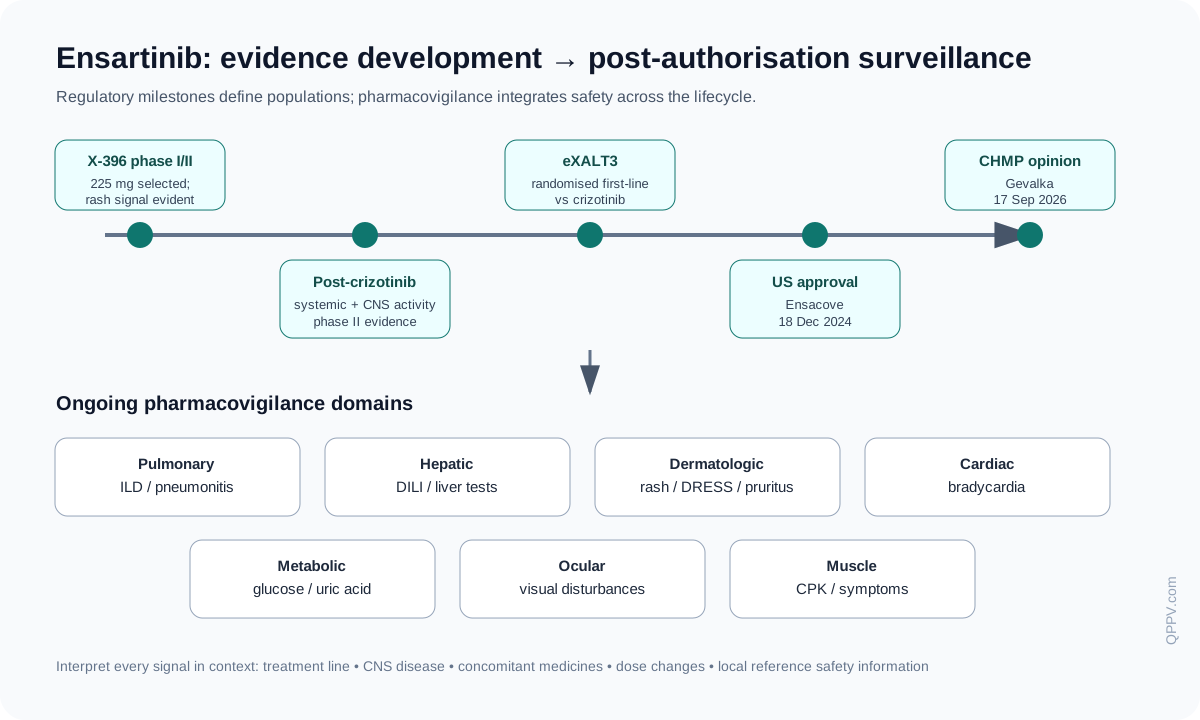
Figure 1. Ensartinib's evidence base developed from dose-finding and post-crizotinib studies through eXALT3, US approval and the 2026 European CHMP opinion. Post-authorisation surveillance must integrate exposure, treatment sequence and organ-specific safety signals rather than treating approval as the end of evidence generation.
The Current Safety Profile
The US prescribing information provides a pooled safety population of 458 adults with ALK-positive NSCLC who received ensartinib 225 mg once daily across four studies. Sixty-three percent were exposed for at least six months and 47% for more than one year.[6] That duration is useful for interpreting common and intermediate-term adverse reactions, but it does not eliminate the need for longer-term surveillance.
Interstitial Lung Disease and Pneumonitis
ILD/pneumonitis is a clinically important risk because respiratory symptoms can be confused with infection, tumour progression, pulmonary embolism or other consequences of advanced lung cancer. In the pooled US safety population, ILD/pneumonitis occurred in 5% of patients, including grade 3 and grade 4 events. The US label requires permanent discontinuation for ILD/pneumonitis.[6]
For case assessment, the useful evidence extends beyond the adverse-event term. Time to onset, imaging, oxygen requirement, infectious work-up, concomitant thoracic radiotherapy, prior lung disease, competing causes, response to drug withdrawal and corticosteroid treatment, and rechallenge information where it exists all affect medical interpretation.
Hepatotoxicity
Ensartinib can cause hepatotoxicity, including drug-induced liver injury. Liver-enzyme abnormalities were common in development and are among the most common effects highlighted in the CHMP opinion.[1,5-7] The US label requires liver-function testing before treatment and monitoring during therapy, with interruption, dose reduction or permanent discontinuation according to severity.[6]
A pharmacovigilance case should distinguish isolated enzyme elevations from clinically significant hepatic injury. ALT, AST, alkaline phosphatase and bilirubin values, their timing and upper limits of normal, symptoms, viral and structural causes, alcohol exposure, other hepatotoxic medicines and the course after dose modification are central to causality assessment. Potential Hy's-law patterns require particularly careful evaluation.
Dermatologic Adverse Reactions
Dermatologic toxicity is one of the defining tolerability features of ensartinib. In the pooled US safety population, dermatologic adverse reactions occurred in 80%, with rash reported in 72%; grade 3 rash occurred in 12%. The label also recognises pruritus, photosensitivity and drug reaction with eosinophilia and systemic symptoms (DRESS).[6]
The high frequency of rash means that pharmacovigilance should not focus only on counts. Severity, morphology, systemic involvement, mucosal involvement, eosinophilia, organ dysfunction, treatment interruption, corticosteroid use and outcome determine whether a report represents expected manageable rash or a clinically important severe cutaneous or systemic reaction.
Other Clinically Important Risks and Monitoring Domains
The remaining labelled risks show why targeted therapy still requires broad clinical surveillance.
Bradycardia. The US pooled safety population recorded bradycardia in 6% of patients, with events reported as grade 1 or 2. Concomitant medicines that reduce heart rate can complicate attribution. A useful case therefore captures baseline heart rate, symptoms, ECG findings, interacting medicines, dose changes and recovery.[6]
Hyperglycaemia. Increased blood glucose was observed in 44% of patients with laboratory data in the pooled population, including grade 3 abnormalities. Baseline fasting glucose and periodic monitoring are required in the US label. Diabetes history, corticosteroid exposure, infection and other metabolic stressors should be considered in individual cases.[6]
Visual disturbances. Visual effects including blurred vision, diplopia, photopsia, floaters and reduced visual acuity are labelled. New or worsening symptoms warrant ophthalmological assessment. Pharmacovigilance follow-up should obtain the ophthalmic diagnosis rather than coding all visual complaints as interchangeable events.[6]
CPK elevation and muscle symptoms. Increased CPK occurred in 43% of the subset with laboratory data available in the pooled analysis. The label advises patients to report unexplained muscle pain, tenderness or weakness and recommends CPK monitoring. Cases should document exercise, trauma, statins and other myotoxic medicines, renal function and evidence of clinically significant muscle injury.[6]
Hyperuricaemia. Hyperuricaemia is also a labelled precaution. Interpretation should distinguish an isolated laboratory change from symptomatic gout, renal consequences or tumour-lysis-related metabolic disturbance.[6]
Embryo-fetal toxicity. As with many kinase inhibitors, reproductive risk requires prevention rather than waiting for post-marketing cases to define harm. Pregnancy exposures nevertheless require careful follow-up because they can contribute important human outcome information while respecting applicable privacy and reporting requirements.[6]
Drug Interactions, Exposure and the Interpretation of Safety Cases
Ensartinib is not used in isolation from the patient's wider oncology regimen and comorbid treatment. Exposure can be affected by interacting medicines, and concomitant drugs can also reproduce or amplify labelled adverse effects. A bradycardia case, for example, is materially different if the patient is receiving another heart-rate-lowering drug. A liver-injury case requires review of other hepatotoxic agents and disease-related causes.
For PV operations, medication history should therefore be treated as part of the causal model rather than as an administrative field. The assessment should capture dose, interruptions, reductions, adherence, start and stop dates, relevant concomitant medicines and the temporal relation between changes in treatment and changes in the event.
This is particularly important when apparent lack of efficacy is reported. Progressive ALK-positive NSCLC can reflect primary resistance, acquired resistance, inadequate exposure, poor adherence or disease in a sanctuary site. A report of progression is clinically important, but the pharmacovigilance interpretation depends on the molecular and treatment context.
CNS Disease and Treatment Sequencing
Brain metastases are common and clinically consequential in ALK-positive NSCLC. Both the crizotinib-resistant phase II study and eXALT3 demonstrated intracranial activity with ensartinib.[5,7] CNS outcomes therefore belong in the benefit side of benefit-risk assessment, not merely in efficacy tables detached from safety.
Treatment sequencing complicates post-marketing interpretation. A patient receiving ensartinib after prior ALK-directed therapy may carry resistance mutations, residual toxicities and a different prognosis from a treatment-naïve patient. This is especially relevant because the proposed European indication includes prior-crizotinib use while the US indication is ALK-inhibitor-naïve.[1,6]
PV datasets should retain prior ALK-inhibitor history where available. Pooling all exposed patients without treatment-line context can obscure clinically meaningful differences in both outcomes and adverse-event susceptibility.
Resistance as a Pharmacovigilance and Benefit-Risk Question
Acquired resistance is expected in targeted oncology and is not, by itself, evidence that a medicine is unsafe. Nevertheless, patterns of resistance influence real-world effectiveness, treatment duration and subsequent therapy. Molecular data at progression can therefore be relevant to aggregate benefit-risk evaluation even when they do not constitute an adverse reaction.
An experienced safety team should separate three questions:
- Is there an individual adverse event requiring case processing and medical assessment?
- Is there evidence of lack of therapeutic effect or unexpectedly early progression that merits product-level review?
- Is a changing resistance pattern altering the population in which the product retains a favourable benefit-risk balance?
Keeping these questions distinct prevents inappropriate conversion of every progression event into a safety signal while still allowing emerging effectiveness concerns to be recognised.
Practical Pharmacovigilance Implementation
A product-specific surveillance framework for ensartinib should combine routine ICSR management with aggregate review of clinically coherent event groupings.
| Surveillance domain | Information that materially improves assessment | Aggregate question |
|---|---|---|
| ILD/pneumonitis | Imaging, infection work-up, oxygen need, radiotherapy, dechallenge | Is frequency, severity or phenotype changing with wider use? |
| Hepatotoxicity | Serial ALT/AST/ALP/bilirubin, competing causes, concomitant drugs | Are severe DILI patterns or new risk factors emerging? |
| Dermatologic reactions | Morphology, body surface area, mucosa, eosinophilia, systemic organs | Are severe immune-mediated phenotypes occurring beyond expected rash? |
| Bradycardia | Heart rate, ECG, symptoms, interacting medicines | Are clinically significant or interaction-related cases emerging? |
| Hyperglycaemia | Baseline diabetes status, glucose values, steroids, treatment | Does risk concentrate in identifiable patient groups? |
| Visual events | Ophthalmic diagnosis and objective findings | Is there a reproducible ocular phenotype? |
| CPK/muscle events | CPK trend, symptoms, renal function, exercise and myotoxic drugs | Are biochemical elevations translating into clinically significant myopathy? |
| Lack of effect/progression | ALK test, treatment line, adherence, resistance data, CNS status | Are outcomes inconsistent with the established benefit-risk profile? |
The purpose of such a framework is not to create new regulatory obligations. It is a recommended operational approach for making routine pharmacovigilance data medically interpretable.
Special Populations and Clinical Context
The US label advises avoidance in severe hepatic impairment and includes reproductive and lactation precautions.[6] These instructions should not be generalised into unsupported claims about populations not adequately studied. Post-authorisation evidence can gradually improve understanding of tolerability in older adults, patients with organ dysfunction, patients receiving complex polypharmacy and populations under-represented in trials.
Age alone is also an incomplete risk descriptor. Frailty, cardiovascular disease, diabetes, hepatic reserve, pulmonary comorbidity and concomitant therapy can each interact with labelled risks. Aggregate analyses should therefore avoid crude subgroup comparisons when exposure numbers are small or confounding is substantial.
Evidence Integration Across Regions
Ensartinib's international development creates a useful example of why global pharmacovigilance needs structured regulatory intelligence. The same active substance can have different brand names, applicants, authorised populations and reference safety documents across territories. Safety data, however, should still be evaluated across the global product experience where legally and scientifically appropriate.
The central safety system therefore needs to distinguish the global safety profile from local expectedness and reporting rules. A serious event may contribute to global signal evaluation even if its regulatory reporting status differs between jurisdictions. Conversely, a local label difference should not be interpreted automatically as a biological difference in the medicine.
As Gevalka proceeds from CHMP opinion to a European Commission decision and final product information, the EU reference documents should be incorporated into the safety system through controlled change management. The final SmPC may refine frequencies, monitoring language, contraindications, interactions or risk-minimisation wording beyond what is visible in the CHMP opinion.
Inspection and Governance Perspective
For an established pharmacovigilance system, an inspector would be less interested in whether the organisation can recite the list of labelled risks than in whether the system reliably detects, evaluates and acts on relevant evidence.
For ensartinib, traceability could be tested by selecting a serious hepatic, pulmonary or dermatologic case and following it from initial receipt through follow-up, coding, medical assessment, expectedness, submission where applicable, signal tracking and aggregate inclusion. The inspector could then examine whether product information changes were implemented consistently in case-processing conventions, medical-review guidance, training and aggregate surveillance.
A second line of enquiry could examine treatment-line information. If European use includes post-crizotinib patients while the US population is ALK-inhibitor-naïve, the organisation should be able to explain how prior therapy is captured and considered when reviewing lack of effect, CNS progression or safety patterns. This is an illustrative inspection scenario, not a report of an actual inspection finding.
Governance should also connect safety and regulatory functions. A new local label, a change in indication, or a newly characterised adverse reaction can affect expectedness, reference safety information, risk-management documentation, medical-information responses and training. Evidence that these changes were implemented through a controlled process is more informative than a policy statement alone.
Potential Failure Modes
Several failure patterns are foreseeable and should be treated as hypothetical control weaknesses rather than asserted regulatory findings:
- treating all rash reports as equivalent and failing to identify systemic or severe cutaneous phenotypes;
- accepting "liver enzymes increased" without obtaining serial laboratory values and bilirubin;
- coding respiratory deterioration as disease progression without adequate follow-up for ILD/pneumonitis;
- failing to capture prior ALK-inhibitor exposure when assessing effectiveness or safety;
- using the US label as the expectedness reference for a jurisdiction whose authorised product information differs;
- overlooking concomitant medicines when evaluating bradycardia, hepatic injury or muscle toxicity;
- failing to update case-processing and aggregate-review tools after a product-information change.
These failures share a common mechanism: loss of clinical or regulatory context. Good product pharmacovigilance preserves that context from the individual case through aggregate evaluation.
A Learning Example
Consider a hypothetical patient receiving ensartinib who develops cough and increasing dyspnoea six weeks after treatment initiation. A chest scan shows new bilateral ground-glass opacities. If the initial report is entered only as "dyspnoea" and no follow-up is performed, the case may never contribute meaningfully to surveillance for ILD/pneumonitis.
A clinically useful follow-up would seek imaging interpretation, infectious investigations, oxygen requirement, prior thoracic radiotherapy, pulmonary history, concomitant medicines, whether ensartinib was stopped, treatment given and subsequent course. The safety team can then assess whether the event fits the labelled pulmonary risk and whether it adds anything new in severity, latency, risk factors or outcome.
The lesson is not that every respiratory event is drug-induced ILD. It is that the pharmacovigilance system must collect enough discriminating evidence to decide.
Practical Checklist
For routine ensartinib pharmacovigilance, a product team should be able to demonstrate that:
- current local indications and reference safety information are controlled by jurisdiction;
- prior ALK-inhibitor exposure and treatment line are captured when relevant;
- pulmonary cases are followed for evidence that distinguishes ILD/pneumonitis from competing causes;
- hepatic cases obtain serial laboratory values and information needed for DILI assessment;
- severe or atypical skin reactions receive targeted follow-up;
- bradycardia, hyperglycaemia, visual events, CPK elevations and hyperuricaemia are reviewed with appropriate clinical context;
- drug interactions, dose interruptions and dose reductions are available for medical assessment;
- CNS progression and resistance information can contribute to aggregate benefit-risk evaluation;
- regulatory changes are propagated to case-processing, signal, aggregate and training materials;
- post-authorisation evidence is reviewed for changes in frequency, severity, phenotype, risk factors or reversibility.
Key Takeaways
Ensartinib is a later-generation ALK inhibitor whose development progressed from X-396 dose-finding through activity in crizotinib-resistant disease and the randomised eXALT3 first-line trial. FDA approved Ensacove in December 2024 for ALK-inhibitor-naïve locally advanced or metastatic ALK-positive NSCLC; CHMP recommended Gevalka in September 2026 for a broader European population that includes patients previously treated with crizotinib.[1,2]
Its safety profile is characterised particularly by dermatologic reactions and liver-test abnormalities, with additional clinically important risks including ILD/pneumonitis, bradycardia, hyperglycaemia, visual disturbances, CPK elevation, hyperuricaemia and embryo-fetal toxicity in the current US label.[6] Effective pharmacovigilance therefore depends on targeted follow-up and clinical context, not simply adverse-event counting.
The product's continuing lifecycle also demonstrates why regulatory status must be time-stamped. A CHMP positive opinion is not the same as an EU marketing authorisation, and the final EU SmPC should become the authoritative European product-information source once granted and published.
References
- European Medicines Agency. Gevalka (ensartinib): EPAR — summary of positive opinion. CHMP opinion adopted 17 September 2026. EMA/CHMP/205829/2026. https://www.ema.europa.eu/en/medicines/human/EPAR/gevalka
- US Food and Drug Administration. Drug Trials Snapshot: ENSACOVE (ensartinib). Approval date 18 December 2024. https://www.fda.gov/drugs/drug-approvals-and-databases/drug-trial-snapshot-ensacove
- Xcovery. Ensartinib research programme. https://xcovery.com/our-research/ensartinib/
- Horn L, Infante JR, Reckamp KL, et al. Ensartinib (X-396) in ALK-positive non-small cell lung cancer: results from a first-in-human phase I/II, multicenter study. Clinical Cancer Research. 2018;24(12):2771-2779. doi:10.1158/1078-0432.CCR-17-2398.
- Yang Y, Zhou J, Zhou J, et al. Efficacy, safety, and biomarker analysis of ensartinib in crizotinib-resistant, ALK-positive non-small-cell lung cancer: a multicentre, phase 2 trial. Lancet Respiratory Medicine. 2020;8(1):45-53. doi:10.1016/S2213-2600(19)30252-8.
- DailyMed. ENSACOVE (ensartinib) capsules — US Prescribing Information. Revised February 2026. https://dailymed.nlm.nih.gov/dailymed/lookup.cfm?setid=1e1b2f79-678a-472a-b924-66909c8a4b2e
- Horn L, Wang Z, Wu G, et al. Ensartinib vs crizotinib for patients with anaplastic lymphoma kinase-positive non-small cell lung cancer: a randomized clinical trial. JAMA Oncology. 2021;7(11):1617-1625. doi:10.1001/jamaoncol.2021.3523.
Regulatory Note
This article describes the regulatory and scientific position verified through 7 October 2026. In the United States, ensartinib is approved as Ensacove for adults with ALK-positive locally advanced or metastatic NSCLC who have not previously received an ALK inhibitor. On 17 September 2026, CHMP adopted a positive opinion recommending EU authorisation of Gevalka for ALK-positive advanced NSCLC in both ALK-inhibitor-naïve adults and adults previously treated with crizotinib. At the time of this review, EMA described Gevalka as pending the European Commission decision and the final EU SmPC had not yet been published. Local current product information and applicable pharmacovigilance requirements should always be checked before clinical or regulatory use.