Epcoritamab: Mechanism, Clinical Safety and Pharmacovigilance
Epcoritamab is a bispecific monoclonal antibody that binds CD3 on T cells and CD20 on B cells. By bringing the two cell types into proximity, it can promote T-cell-mediated killing of CD20-expressing B cells. This mechanism is therapeutically useful in B-cell malignancies, but it also creates a distinctive safety profile. Immune-cell activation can produce acute inflammatory toxicity, while sustained B-cell depletion can contribute to infection risk. The treatment setting adds further complexity because patients may have heavily pretreated disease, low immune reserve and concurrent or recent anticancer therapy.
A pharmacovigilance assessment must therefore connect each event to the treatment phase and the biological response being observed. Fever after a dose could reflect cytokine release syndrome (CRS), infection, tumour-related inflammation or another cause. Neurological change requires timely characterisation rather than being absorbed into a general “immune toxicity” category. Longitudinal surveillance must also consider infections, cytopenias and consequences of B-cell depletion.
- Epcoritamab: Mechanism, Clinical Safety and Pharmacovigilance
- Purpose and Treatment Context
- How CD3-by-CD20 Engagement Shapes Safety
- Regulatory and Risk-Minimisation Context
- Safety Domains and Case Assessment
- Distinguishing Drug Effects From Disease and Co-treatment
- Signal Detection and Aggregate Review
- Practical Pharmacovigilance Implementation
- Potential Failure Modes
- Inspection and Governance Perspective
- Practical QPPV Checklist
- Key Takeaways
- References
- Regulatory Note
Purpose and Treatment Context
Epcoritamab is authorised in the EU for defined adult lymphoma populations. The current European Medicines Agency (EMA) product information specifies the applicable indications, treatment schedule, precautions and risk-minimisation instructions; these may change as new indications or evidence are assessed.[1,2] The PV system should use the product information current for the patient’s market and exposure date rather than rely on a static class description.
The product is administered by subcutaneous injection using a staged dose-escalation approach. Step-up dosing, premedication and observation instructions are part of the risk-control framework in the product information. In pharmacovigilance records, they also define important context: the treatment cycle, the step-up or full-dose stage, the interval since the last injection and any interruption or re-escalation can all affect interpretation of an acute event.
The patient’s lymphoma, prior therapies, immune status and co-medications remain relevant throughout assessment. A safety narrative that records only the antibody and the reported event may be insufficient to distinguish a pharmacological effect from infection, malignancy-related complications or concomitant treatment toxicity.
How CD3-by-CD20 Engagement Shapes Safety
Epcoritamab binds CD3 on T cells and CD20 on B cells. The resulting cellular proximity supports T-cell activation and target-cell killing. This differs from an antibody that merely blocks a soluble mediator or receptor: epcoritamab is designed to recruit effector cells directly to malignant B cells. The intended antitumour action and the potential for systemic immune activation are therefore linked to the same pharmacological mechanism.
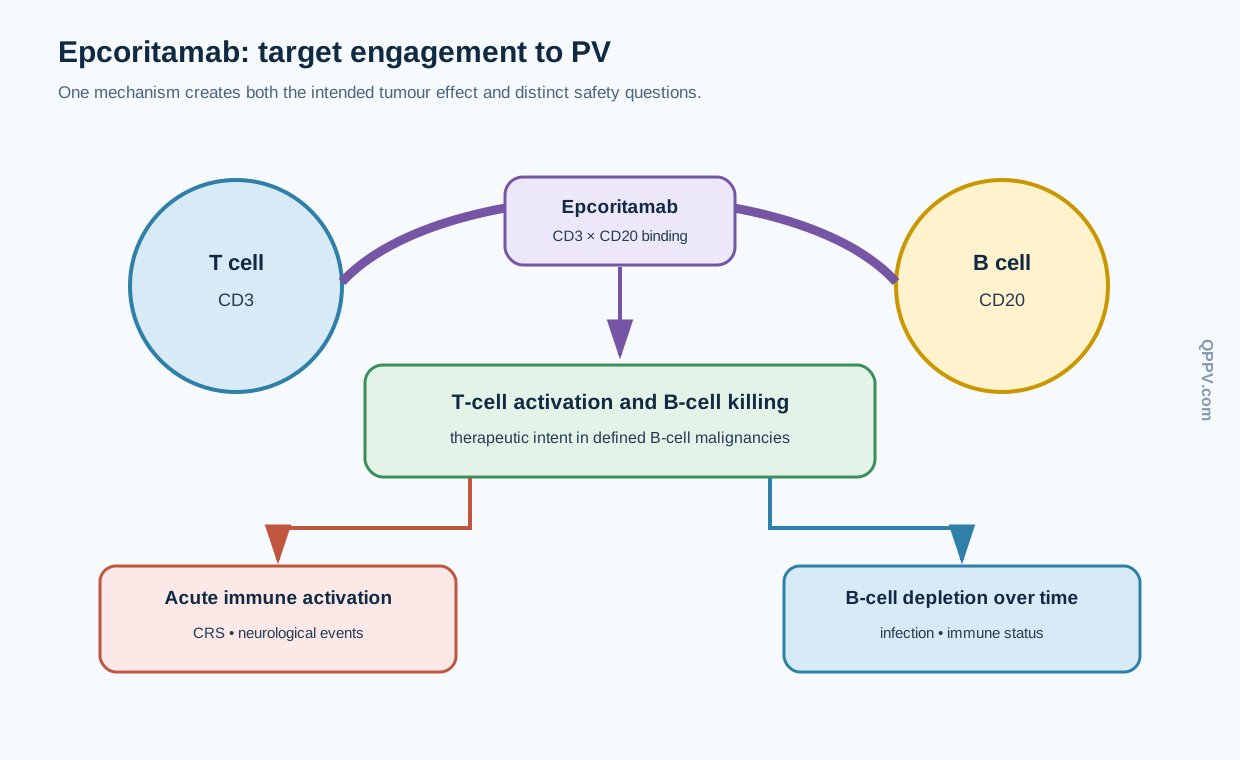
Figure 1. Epcoritamab links CD3-positive T cells with CD20-positive B cells. T-cell activation supports tumour-cell killing and can also produce acute inflammatory toxicity; depletion of B cells changes infection risk over time.
CRS is a clinically important expression of immune activation. Its assessment depends on the event phenotype, severity and timing relative to dosing, not on fever alone. Immune effector cell-associated neurotoxicity syndrome (ICANS) or other neurological events require a separate neurological description and clinical assessment. Neurological symptoms can occur in a complex oncology setting, so a PV record should not infer ICANS solely from confusion or headache without a documented medical evaluation.
B-cell depletion can contribute to infection susceptibility, and treatment may also be associated with cytopenias or tumour lysis concerns. These outcomes have different mechanisms, time courses and follow-up needs. Treating them as one general “immune-mediated” safety domain would impair case assessment and could obscure patterns that are important for signal detection.
Regulatory and Risk-Minimisation Context
The EMA product information provides the current EU terms for dose escalation, monitoring, treatment interruption and adverse reactions. These product-specific directions should be distinguished from broader professional guidelines and local institutional protocols. The exact management delivered in a case should be recorded; pharmacovigilance reporting should not retrospectively convert a clinical choice into a universal requirement.[1,2]
Where an educational measure, monitoring instruction or patient information is specified in regulatory materials, the PV system should preserve the connection between the risk being addressed and the measure intended to reduce it. Evidence that a document was distributed is not, by itself, evidence that the control was effective. Evaluation should consider whether relevant cases were recognised, escalated and medically reviewed in a timely and consistent way.
Safety Domains and Case Assessment
Epcoritamab safety should be analysed across acute immune activation, neurological events, B-cell depletion and the wider oncology context. A useful follow-up strategy asks which facts would change seriousness, causality, expectedness, signal interpretation or traceability.
| Safety domain | Product-specific information to preserve |
|---|---|
| Suspected CRS | Dose and treatment step, onset relative to injection, fever, oxygenation, blood pressure, organ findings, severity grade and management |
| Neurological event | Exact symptoms, onset and duration, focused examination, cognition and level of consciousness, investigations, severity grade and treatment |
| Infection | Site, microbiology, immune status, neutrophil and immunoglobulin information where available, treatment and outcome |
| Cytopenia or tumour lysis | Laboratory trend, baseline values, disease burden, timing, clinical consequences and treatment |
| Oncology context | Lymphoma subtype, burden and progression, prior therapies, concomitant medicines, infection history and relevant comorbidity |
| Exposure traceability | Exact product, dose, treatment step, injection date, cycle, interruption or re-escalation and batch where available |
These elements are not a checklist to apply identically to every report. A localized injection-site reaction does not require the same follow-up as suspected CRS or encephalopathy. The principle is to target questions to the clinical event and the information needed for a medically reasoned conclusion.
For possible CRS, the case reconstruction should establish whether systemic inflammation followed dosing, what objective physiological changes occurred, how the event was graded and what treatment was provided. Fever alone is not enough to define CRS. Infection, lymphoma-associated fever, transfusion reactions and other treatments may be competing or coexisting explanations. They should be considered without delaying urgent clinical care.
For a neurological event, describe the symptoms in clinical terms rather than relying only on a reporter’s label. Confusion, speech disturbance, somnolence, seizure or focal findings have different differential diagnoses. Document neurological assessment and investigations where available, and record the clinician’s conclusion. CRS and neurological toxicity can overlap in time, but one should not be inferred from the other.
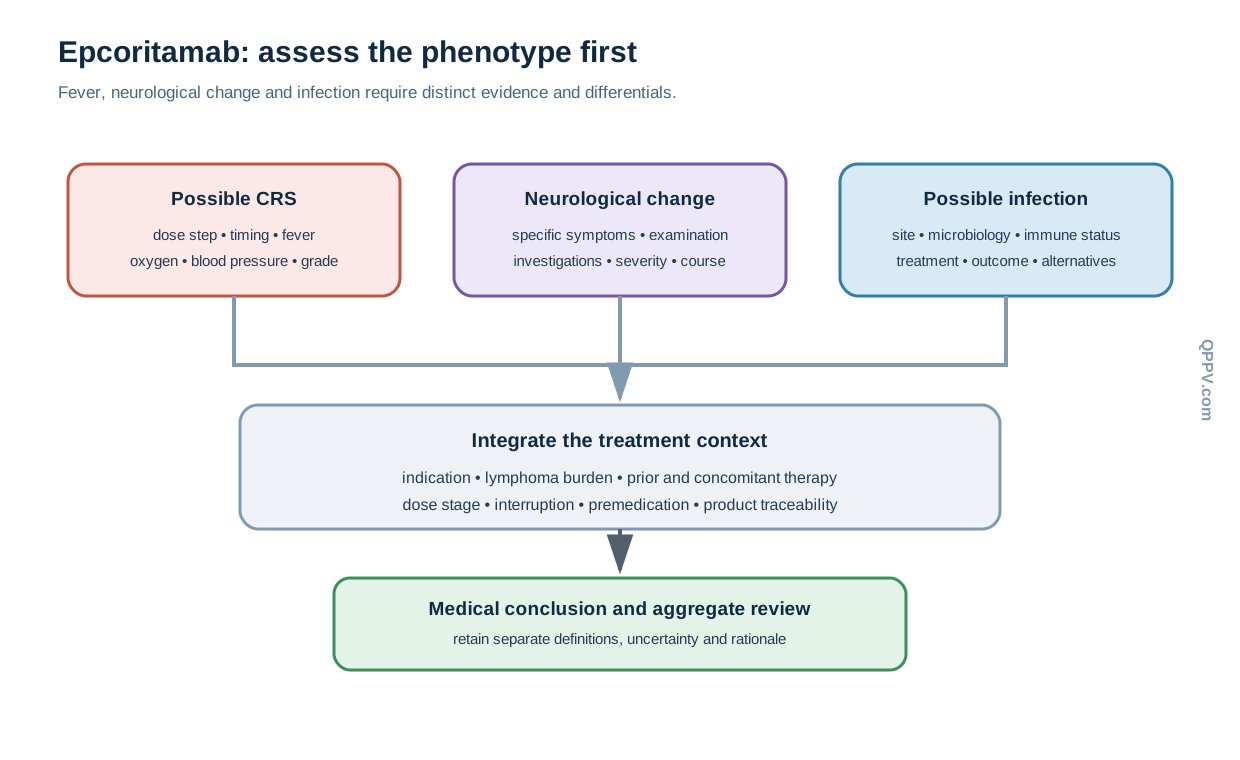
Figure 2. The case narrative separates acute immune activation, neurological change and infection, then integrates timing, objective findings, treatment and competing explanations.
Distinguishing Drug Effects From Disease and Co-treatment
Patients with relapsed or refractory lymphoma may have infections, marrow suppression, organ impairment or rapidly changing disease. Prior anti-CD20 treatment, chemotherapy, corticosteroids, stem-cell transplant history and other immunosuppressive therapies can alter both susceptibility and event presentation. The assessment should reconstruct the actual timeline and avoid assigning an event to the most recently administered medicine without examining alternatives.
An infection occurring during treatment may be biologically plausible in the setting of B-cell depletion, but this does not establish causality in an individual case. Similarly, cytopenias may arise from the malignancy, marrow involvement, prior therapy, concomitant medicine, epcoritamab or more than one factor. Baseline and serial laboratory values, clinical course, interventions and outcome help the reviewer determine what can be supported.
Dechallenge can be informative when treatment is withheld and the event changes, but cancer treatment interruptions are often accompanied by other interventions. Improvement after antibiotics, corticosteroids, oxygen or other supportive care may have multiple explanations. Rechallenge is interpreted only when it occurs as part of clinical care and should not be encouraged to strengthen a pharmacovigilance conclusion.
Signal Detection and Aggregate Review
Aggregate review should retain event-specific case definitions and the treatment stage relevant to the risk. For CRS, stratify or otherwise examine treatment step, time to onset, severity, recurrence and management. For neurological events, retain phenotype and documented grade. For infections, consider infection type, immune status, treatment exposure and duration. Pooling all these events under a single preferred-term group can hide meaningful differences.
Spontaneous reports alone do not provide an incidence estimate. Reporting patterns may change with awareness, monitoring intensity, disease indication or use of the product in different treatment settings. Aggregate assessment should integrate case narratives, clinical-trial and post-authorisation evidence, current product information and any available information on risk-minimisation measures. The strength and limitations of each evidence source should be stated explicitly.[3,4]
Practical Pharmacovigilance Implementation
A practical system should make treatment-step information available at intake and medical review. Relevant structured fields may include lymphoma indication, cycle and dose stage, injection date, treatment interruption, premedication, observed monitoring, concomitant treatment and event-specific findings. If a patient’s caregiver or another clinician reports an event, follow-up should seek the source records that establish the clinical phenotype, while respecting applicable privacy and local procedures.
Recommended operational controls include an event-specific CRS follow-up aid; a separate neurological-event pathway; a consistent method for capturing infections and immune-status evidence; medical review by personnel with access to oncology expertise; and aggregate reports that preserve treatment stage and indication. These are recommended controls unless a particular element is mandated by applicable legislation or product information. The control should support clinical assessment rather than create an administrative task that does not improve the evidence.
Potential Failure Modes
The following are illustrative failure modes, not published inspection findings:
- Fever is coded as CRS without documenting the criteria, physiological changes or competing causes considered.
- A neurological symptom is recorded without describing the actual deficit, examination or outcome.
- Infection is attributed to treatment without considering disease-related or co-treatment immunosuppression.
- Dose-escalation stage and interval from injection are absent from the case narrative.
- Cytopenias are assessed without baseline and serial counts or the concurrent regimen.
- Follow-up requests are sent but returned information is not incorporated into medical review.
- Aggregate review combines CRS, neurological events, infections and cytopenias into one broad category.
- A risk-minimisation activity is reported as effective solely because educational material was distributed.
Corrective action should establish why the information was missed, whether the issue affects other cases, and how effectiveness will be assessed. A procedure revision without evidence of changed case quality may not resolve the underlying weakness.
Inspection and Governance Perspective
Inspection readiness depends on traceability from the original report through follow-up, medical assessment, signal evaluation and governance decision. Evidence may include case-processing procedures, event-specific grading guidance, medical-review records, signal outputs, periodic reports, training records, reconciliation with quality information and documented decisions about risk-minimisation measures.
The governing question is whether the system can recognise and evaluate the safety domains that matter for this product. It should be possible to show that acute inflammatory events are not reduced to fever codes, neurological reports retain clinical detail, infections are interpreted against immune and treatment context, and uncertainty is communicated to decision-makers. Examples of deficiencies should be presented as potential process failures unless they correspond to a published inspection finding.
Practical QPPV Checklist
- Confirm the applicable current EU or other regional product information and authorised indication.
- Record the exact dose, treatment step, injection date, cycle, interruption or re-escalation and batch where available.
- For suspected CRS, capture onset, fever, oxygenation, blood pressure, organ findings, severity grade and management.
- For neurological events, document the actual phenotype, examination, investigations, severity, management and outcome.
- Assess infections against disease status, immune reserve, prior treatment, concomitant therapy and available laboratory evidence.
- Review cytopenias and tumour-lysis reports against baseline values, disease burden, timing and concurrent treatment.
- Preserve the evidence behind seriousness, causality and expectedness conclusions.
- Keep event categories and treatment stages distinct in aggregate review.
- Link case-level learning to signal review and risk-minimisation governance.
- State limitations where information is missing or the clinical diagnosis is uncertain.
Key Takeaways
Epcoritamab directly recruits T cells to CD20-positive B cells. The pharmacology that supports tumour-cell killing also makes acute immune activation and its neurological manifestations important for surveillance, while B-cell depletion shapes longer-term infection assessment. Product-specific pharmacovigilance depends on precise treatment-step chronology, a clinically described event, objective evidence and a considered differential diagnosis.
A report is useful when it preserves these distinctions through medical review and aggregate evaluation. CRS, neurological toxicity, infection and cytopenia should remain separately interpretable even when they occur in the same patient or treatment period.
References
- European Medicines Agency: epcoritamab EPAR.
- European Medicines Agency: current epcoritamab product information.
- European Medicines Agency: Good pharmacovigilance practices.
- ICH E2C(R2): Periodic benefit-risk evaluation report guideline.
Regulatory Note
This article is an educational pharmacovigilance reference. It does not replace current regulator-approved product information, applicable legislation, local clinical protocols or clinical judgment. Indications, step-up schedules, monitoring and precautions may differ across jurisdictions and can change over time. Use the product information applicable to the patient’s market and exposure date.