Epoetin Alfa: Classification, History, Mechanism of Action, Safety and Pharmacovigilance
- Epoetin Alfa: Classification, History, Mechanism of Action, Safety and Pharmacovigilance
Epoetin alfa is a recombinant form of human erythropoietin, the kidney-derived hormone that coordinates red-cell production with tissue oxygen need. Its introduction transformed anaemia management in chronic kidney disease and reduced dependence on transfusion in selected settings. It also taught an important pharmacological lesson: correcting a laboratory value toward the healthy population range is not necessarily safer than correcting enough to meet the patient’s clinical need.
Epoetin alfa is not “synthetic blood.” It stimulates surviving erythroid progenitors and therefore requires marrow capacity, iron, folate, vitamin B12 and control of competing inflammation, infection, blood loss or haemolysis. Excessive dose escalation in hyporesponsive patients can increase exposure without solving the limiting cause.
Multidimensional classification
| Axis | Epoetin alfa classification | Significance |
|---|---|---|
| Molecular class | Recombinant human erythropoietin glycoprotein | Same 165-amino-acid sequence as endogenous mature human EPO |
| Glycoform class | Epoetin alfa isoform/glycan distribution | Glycosylation affects stability, clearance and product comparability |
| Production | Recombinant CHO-cell biological | Process and formulation are integral to quality and immunogenicity |
| Target | Erythropoietin receptor on erythroid progenitors | Promotes survival, proliferation and differentiation |
| Mechanistic class | EPOR agonist; erythropoiesis-stimulating agent | Pharmacological response is delayed and iron-dependent |
| Therapeutic class | Antianaemic preparation | Used in defined renal, chemotherapy, surgical and other product-specific settings |
| Route/device | Intravenous or subcutaneous prefilled-syringe presentations | Route, syringe components, handling and cold chain influence risk |
| Regulatory category | Eprex/Erypo reference product in Europe; epoetin alfa biosimilars | Brand, batch and device traceability are essential |
| Safety-control class | Haemoglobin-response-guided biological | Rate and magnitude of rise affect vascular risk |
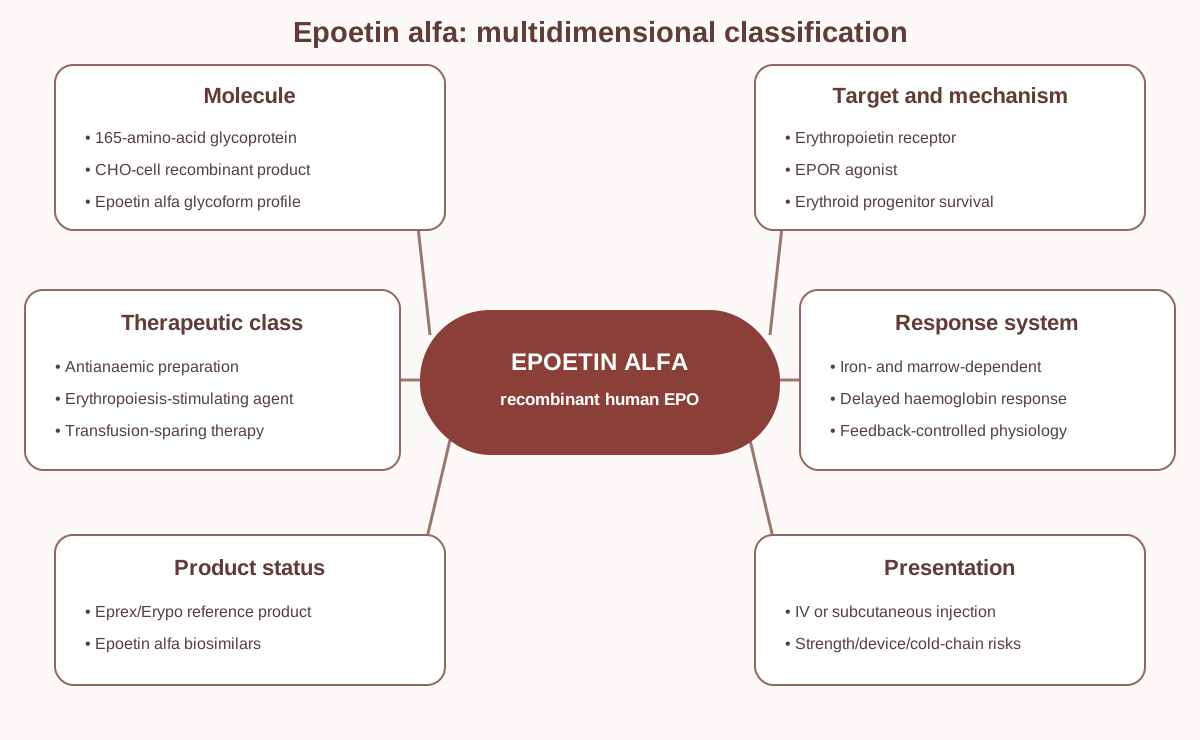
Figure 1. Epoetin alfa is simultaneously a recombinant hormone, glycoprotein biological, EPOR agonist, erythropoiesis-stimulating agent and device-associated injectable product. Its glycan and presentation characteristics distinguish product identity even though its amino-acid sequence matches endogenous EPO.
Discovery and development history
The physiological concept of a circulating erythropoietic factor emerged from experiments showing that hypoxia stimulated red-cell production through a humoral signal. Erythropoietin was later purified from human urine, enabling sequence characterisation and molecular cloning. Cloning of the human EPO gene in the 1980s permitted recombinant expression in mammalian cells and production at therapeutic scale.
Amgen's Epogen is part of this originator history. FDA's biological-product record lists epoetin alfa under BLA 103234, with initial US licensure in 1989 and Epogen/Procrit presentations. That US product identity should not be projected onto other jurisdictions, where epoetin alfa brands, marketing-authorisation holders, formulations and indications differ. For pharmacovigilance, “epoetin alfa” identifies the active substance; the brand, manufacturer, formulation, route and batch identify the administered biological product.
Recombinant human erythropoietin entered clinical use in the late 1980s. It markedly reduced transfusion requirements in dialysis patients, avoiding iron overload, transfusion reactions and some sensitisation and infection risks. Indications expanded to selected chemotherapy-associated anaemia and perioperative blood-conservation settings. Epoetin alfa products are not globally identical in brand, formulation or authorised indication; the product-specific SmPC controls use.
The PRCA safety episode
From the late 1990s, a marked increase in antibody-mediated pure red-cell aplasia was recognised, predominantly in chronic kidney-disease patients receiving subcutaneous Eprex outside the United States. Neutralising antibodies reacted with both administered epoetin and endogenous erythropoietin, causing profound reticulocytopenic anaemia.
Investigation implicated a multifactorial interaction involving a human-serum-albumin-free formulation, subcutaneous exposure, product handling and uncoated rubber syringe stoppers, with leachates and aggregation proposed as contributors. Regulatory route restrictions, coated stoppers, handling improvements and surveillance were followed by a major decline in cases. The episode remains a canonical example of how formulation, container closure, route, cold chain and immune biology can combine to create a serious safety signal.
Biosimilars
Epoetin alfa was among the earliest complex therapeutic proteins to enter the EU biosimilar framework. Products such as Binocrit and Abseamed were authorised after comparative quality, pharmacokinetic, pharmacodynamic and clinical evaluation against Eprex/Erypo. Epoetin zeta is a distinct INN used by some products that reference Eprex/Erypo; it should not be silently recoded as epoetin alfa.
Erythropoietin physiology
Renal interstitial cells sense tissue oxygen through hypoxia-inducible-factor regulation. Hypoxia increases EPO transcription and secretion. Circulating EPO reaches marrow erythroid progenitors, where it prevents programmed cell death and supports proliferation and maturation. As oxygen-carrying capacity rises, the hypoxic stimulus falls, forming a feedback loop.
Chronic kidney disease reduces endogenous EPO production and creates inflammation, iron restriction, shortened red-cell survival and blood loss. Cancer and chemotherapy cause different mixtures of marrow suppression, inflammation, bleeding, nutritional deficiency and renal impairment. The indication is therefore a causal model of anaemia, not simply a haemoglobin threshold.
Detailed mechanism of action
Epoetin alfa binds the erythropoietin receptor (EPOR), a preformed receptor complex on colony-forming-unit erythroid and proerythroblast-lineage cells. Ligand binding changes receptor geometry and activates the associated tyrosine kinase JAK2. JAK2 phosphorylates receptor sites that recruit STAT5 and other signalling proteins.
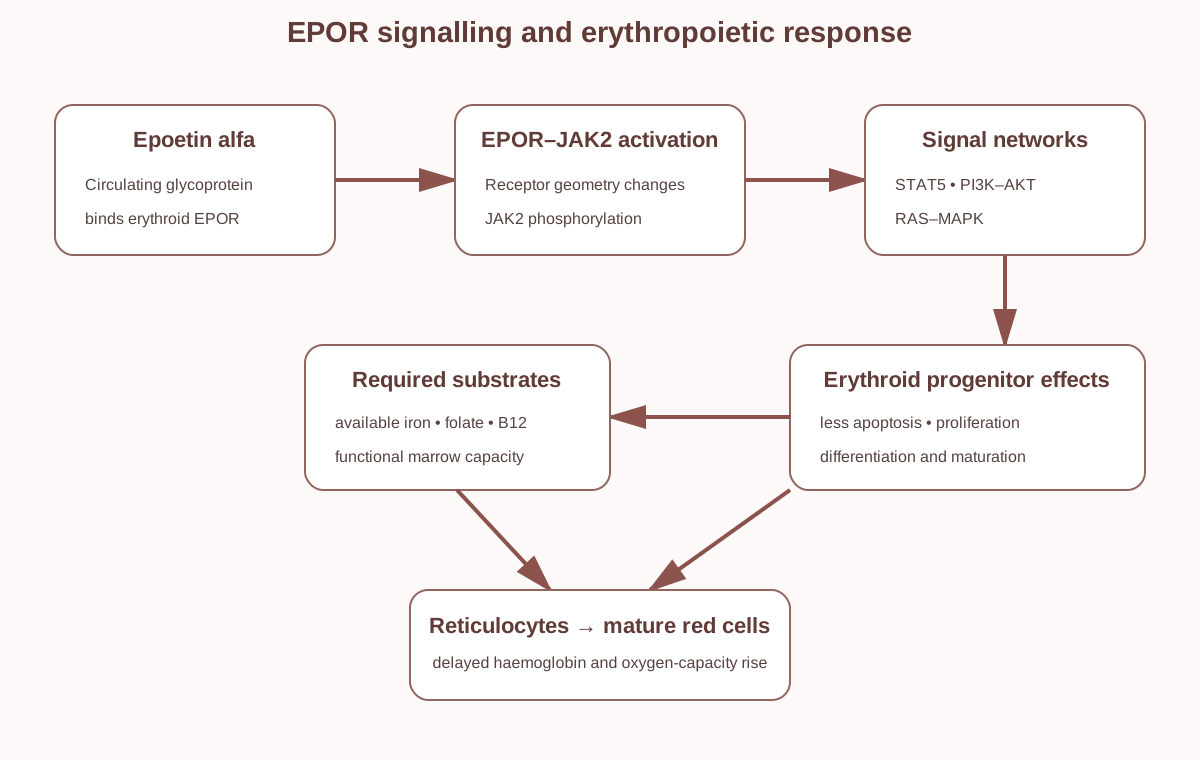
Figure 2. Epoetin alfa activates EPOR–JAK2 signalling in erythroid progenitors. STAT5, PI3K–AKT and MAPK pathways support survival, proliferation and differentiation. Effective red-cell production additionally requires iron and other substrates; haemoglobin rise is delayed and feeds back on oxygen demand.
STAT5 dimerises and enters the nucleus, regulating survival genes including BCL2L1. PI3K–AKT and RAS–MAPK pathways contribute to survival and proliferation. The net effect is reduced apoptosis of erythroid precursors, expansion of the erythroid compartment, increased reticulocyte release and later increased haemoglobin.
The drug does not immediately increase oxygen-carrying capacity. Reticulocyte and haemoglobin responses take time. Dose changes made faster than the biological response can create overshoot.
Iron dependence and hyporesponsiveness
Each new red cell requires haemoglobin iron. Erythropoietic stimulation can rapidly exceed available iron delivery even when total stores appear adequate. Inflammation increases hepcidin, reducing intestinal iron absorption and trapping iron in macrophages. Functional iron deficiency can therefore limit response.
Other causes of hyporesponsiveness include infection, inflammation, blood loss, inadequate dialysis, hyperparathyroidism, aluminium toxicity, haemolysis, nutrient deficiency, marrow disease, malignancy and anti-EPO antibodies. Escalating epoetin without identifying the cause increases exposure and vascular risk.
Clinical-use architecture
European epoetin alfa products are used in product-defined settings that may include symptomatic anaemia of chronic renal failure, reduction of transfusion requirements during selected chemotherapy, autologous predonation or major elective orthopaedic surgery, and anaemia in defined lower-risk myelodysplastic syndromes. Route and dose algorithms differ.
Treatment aims are not identical across indications. In kidney disease the objective is relief of anaemia and reduction of transfusion while avoiding excessive haemoglobin targets. In cancer, intent of treatment, expected chemotherapy duration, thrombosis risk and potential effects on tumour outcome are central. In surgery, timing, baseline haemoglobin and thromboprophylaxis matter.
Major safety risks
Cardiovascular and thrombotic risk
Higher haemoglobin targets, rapid rises and high ESA exposure have been associated with increased hypertension, stroke, myocardial infarction, vascular-access thrombosis, venous thromboembolism and death in relevant populations. Mechanisms may include increased blood viscosity, vascular tone, platelet activation and effects of the underlying disease.
PV assessment requires baseline and serial haemoglobin, target, rate of rise, dose changes, blood pressure, dialysis access, thrombosis prophylaxis, cardiovascular history, cancer status and competing thrombotic risks. A final dose alone is insufficient.
Hypertension and hypertensive complications
Blood pressure can rise, particularly early in correction or when haemoglobin increases rapidly. Uncontrolled hypertension is a contraindication in current product information. Hypertensive crisis, encephalopathy and seizures require urgent assessment. Reports should include actual serial measurements, antihypertensive adherence, volume status and renal function.
Tumour progression and survival
Clinical trials in some cancer settings found worse survival or tumour outcomes when ESAs were used outside appropriately restricted contexts or to target higher haemoglobin. EPOR biology in tumours has been debated, but clinical safety restrictions rest on outcome evidence rather than a need to prove one tumour-cell mechanism. Product information limits use by cancer setting and treatment intent.
Pure red-cell aplasia
Antibody-mediated PRCA should be suspected when haemoglobin falls or transfusion need increases despite treatment, accompanied by very low reticulocytes and preserved white-cell and platelet production. Bone marrow shows marked erythroid hypoplasia. Neutralising anti-EPO antibodies can inhibit all erythropoietin products and endogenous EPO.
All erythropoietic therapy must be stopped when antibody-mediated PRCA is suspected and managed according to product information and specialist guidance; simply switching epoetin products risks worsening the immune response. Case investigation requires product, batch, route, storage, syringe presentation, exposure history, reticulocytes, marrow, antibody assay and transfusion course.
Severe cutaneous reactions, seizures and other events
Severe cutaneous adverse reactions, including Stevens–Johnson syndrome and toxic epidermal necrolysis, have been reported with epoetins. Rash morphology, mucosal involvement, biopsy, latency and co-medication are essential. Seizures may occur in association with hypertensive encephalopathy or other patient factors. Influenza-like symptoms, injection-site reactions and hypersensitivity also occur.
Medication and device errors
Prefilled syringes span many strengths. Errors include confusion between IU and mL, wrong strength, decimal or frequency mistakes, incomplete syringe dose, route errors and inappropriate substitution. Needle-guard activation, latex or component status, storage and handling are product-specific. Dose must not be inferred from colour or syringe size.
Pharmacovigilance architecture
Epoetin safety is a trajectory: cause of anaemia → product and dose → iron and marrow capacity → reticulocyte/haemoglobin response → blood pressure and vascular outcome. The analysis fails if only the adverse event and most recent dose are retained.
Cases should capture brand, batch, syringe strength, route, storage and dates; indication and treatment intent; serial haemoglobin and reticulocytes; iron indices and supplementation; dose history; blood pressure; renal/dialysis status; chemotherapy and thrombosis risks; and response after interruption.
For loss of efficacy, separate underdosing or error, iron restriction, inflammation, bleeding, haemolysis, dialysis problems, marrow disease and antibody-mediated PRCA. Product-quality investigation is appropriate for clusters or evidence of handling defects, but an isolated poor response is not automatically a quality defect.
Biosimilar switching and traceability
Authorised biosimilars are expected to have no clinically meaningful differences from their reference product, but product and batch identification remain necessary. Switching histories matter for delayed immunogenic events. Spontaneous reporting differences may reflect market share, indication, route or notoriety and cannot establish comparative incidence.
Inspection and governance
An effective system demonstrates product-specific dosing controls, serial haemoglobin and blood-pressure data, evaluation of hyporesponsiveness before escalation, PRCA follow-up, device and cold-chain traceability, and stratification by indication. Oncology assessment must include treatment intent and full regimen; renal assessment must include dialysis access and iron status.
Common failures include recording “haemoglobin increased” without values/dates, omitting route in PRCA, switching to another ESA before antibody assessment, confusing epoetin alfa with epoetin zeta, and analysing thrombosis without the achieved haemoglobin or rate of rise.
Practical checklist
- Confirm the causal indication for anaemia and the product-specific authorised setting.
- Record brand, INN, batch, strength, route, dose, frequency and device.
- Trend haemoglobin, reticulocytes, iron status and blood pressure.
- Investigate hyporesponsiveness before dose escalation.
- Capture target haemoglobin and rate of rise, not only the latest value.
- For thrombosis, document dialysis access, cancer, surgery and prophylaxis.
- For suspected PRCA, stop erythropoietic therapy and obtain specialised investigation.
- Preserve cold-chain, handling and container-closure information for clusters.
Key takeaways
Epoetin alfa is a recombinant human EPO glycoprotein and EPOR agonist. EPOR–JAK2–STAT5, PI3K–AKT and MAPK signalling preserve and expand erythroid progenitors; iron availability and the cause of anaemia determine response.
Safety depends on response, not dose alone. High targets, rapid haemoglobin rise and persistent escalation in hyporesponsive patients can increase cardiovascular and thrombotic harm.
Antibody-mediated PRCA is rare but crucial: neutralising antibodies can block endogenous EPO and all related products. The historical Eprex episode demonstrates that formulation, route, container closure and handling can interact to create immunogenicity.
References
- Electronic Medicines Compendium. Eprex 40,000 IU/mL SmPC. Updated November 2025.
- European Medicines Agency. Binocrit: EPAR.
- European Medicines Agency. Abseamed: EPAR.
- Lin FK, Suggs S, Lin CH, et al. Cloning and expression of the human erythropoietin gene. Proc Natl Acad Sci USA. 1985;82:7580–7584.
- Jelkmann W. Molecular biology of erythropoietin. Intern Med. 2004;43:649–659.
- Richmond TD, Chohan M, Barber DL. Turning cells red: signal transduction mediated by erythropoietin. Trends Cell Biol. 2005;15:146–155.
- Besarab A, Bolton WK, Browne JK, et al. The effects of normal as compared with low hematocrit values in hemodialysis patients. N Engl J Med. 1998;339:584–590.
- Singh AK, Szczech L, Tang KL, et al. Correction of anemia with epoetin alfa in chronic kidney disease. N Engl J Med. 2006;355:2085–2098.
- Bohlius J, Schmidlin K, Brillant C, et al. Recombinant human erythropoiesis-stimulating agents and mortality in patients with cancer. Lancet. 2009;373:1532–1542.
- Casadevall N, Nataf J, Viron B, et al. Pure red-cell aplasia and antierythropoietin antibodies. N Engl J Med. 2002;346:469–475.
- Bennett CL, Cournoyer D, Carson KR, et al. Long-term outcome of individuals with pure red-cell aplasia and antierythropoietin antibodies. Blood. 2005;106:3343–3347.
- McKoy JM, Stonecash RE, Cournoyer D, et al. Epoetin-associated pure red cell aplasia. Transfusion. 2008;48:1754–1762.
- European Medicines Agency. Guideline on immunogenicity assessment of therapeutic proteins. EMEA/CHMP/BMWP/14327/2006 Rev 1.
-
European Medicines Agency. Guideline on similar biological medicinal products. CHMP/437/04 Rev 1.
-
U.S. Food and Drug Administration. Purple Book: Epogen/Procrit (epoetin alfa), BLA 103234. Original US licensure 1 June 1989. https://purplebooksearch.fda.gov/. Accessed 4 September 2026.
- U.S. Food and Drug Administration. Epogen (epoetin alfa) Prescribing Information. Current US product information. https://www.accessdata.fda.gov/drugsatfda_docs/label/. Accessed 4 September 2026.
Regulatory Note
This is an educational scientific and pharmacovigilance review, not prescribing advice. Epoetin indications, routes, haemoglobin thresholds, dose-adjustment algorithms, contraindications and risk-minimisation instructions differ by product and jurisdiction and may change. Consult current product-specific information. Epoetin alfa, epoetin zeta, epoetin beta, darbepoetin and other ESAs must not be treated as the same product for prescribing or traceability.