Erenumab is a fully human monoclonal antibody used for migraine prevention. It was the first approved therapy designed specifically to block the calcitonin gene-related peptide (CGRP) pathway by binding the CGRP receptor rather than CGRP itself. That distinction is pharmacologically meaningful: ligand-targeting antibodies remove circulating CGRP, whereas erenumab prevents CGRP from activating its canonical receptor.
Migraine is not simply a vascular headache. It is a complex neurological disorder involving trigeminovascular signalling, altered sensory processing, brainstem and hypothalamic networks, and release of neuropeptides including CGRP. Erenumab is therefore a useful product for teaching how a mechanistic target can emerge from disease biology and then generate a safety profile that extends beyond the organ in which the disease is experienced.
Table of Contents
- Product identity and classification
- Development history
- Migraine biology
- The trigeminovascular system
- Why CGRP matters
- Mechanism of action
- Receptor blockade versus ligand blockade
- Clinical positioning
- Safety profile and mechanism-informed interpretation
- Constipation and serious complications
- Hypertension
- Raynauds phenomenon
- Hypersensitivity and injection reactions
- Product pharmacovigilance
- Case assessment
- Device and self-administration issues
- Pregnancy and long-term exposure
- Aggregate interpretation
- Practical assessment framework
- Key Takeaways
- References
- Regulatory Note
Product identity and classification
Erenumab is marketed as Aimovig. It is administered subcutaneously, commonly using a prefilled autoinjector or syringe.
| Dimension | Classification |
|---|---|
| Modality | Fully human monoclonal antibody |
| Target | Canonical CGRP receptor |
| Functional class | Receptor-blocking preventive therapy |
| Therapeutic area | Migraine prevention |
| Administration | Long-acting subcutaneous self-injection |
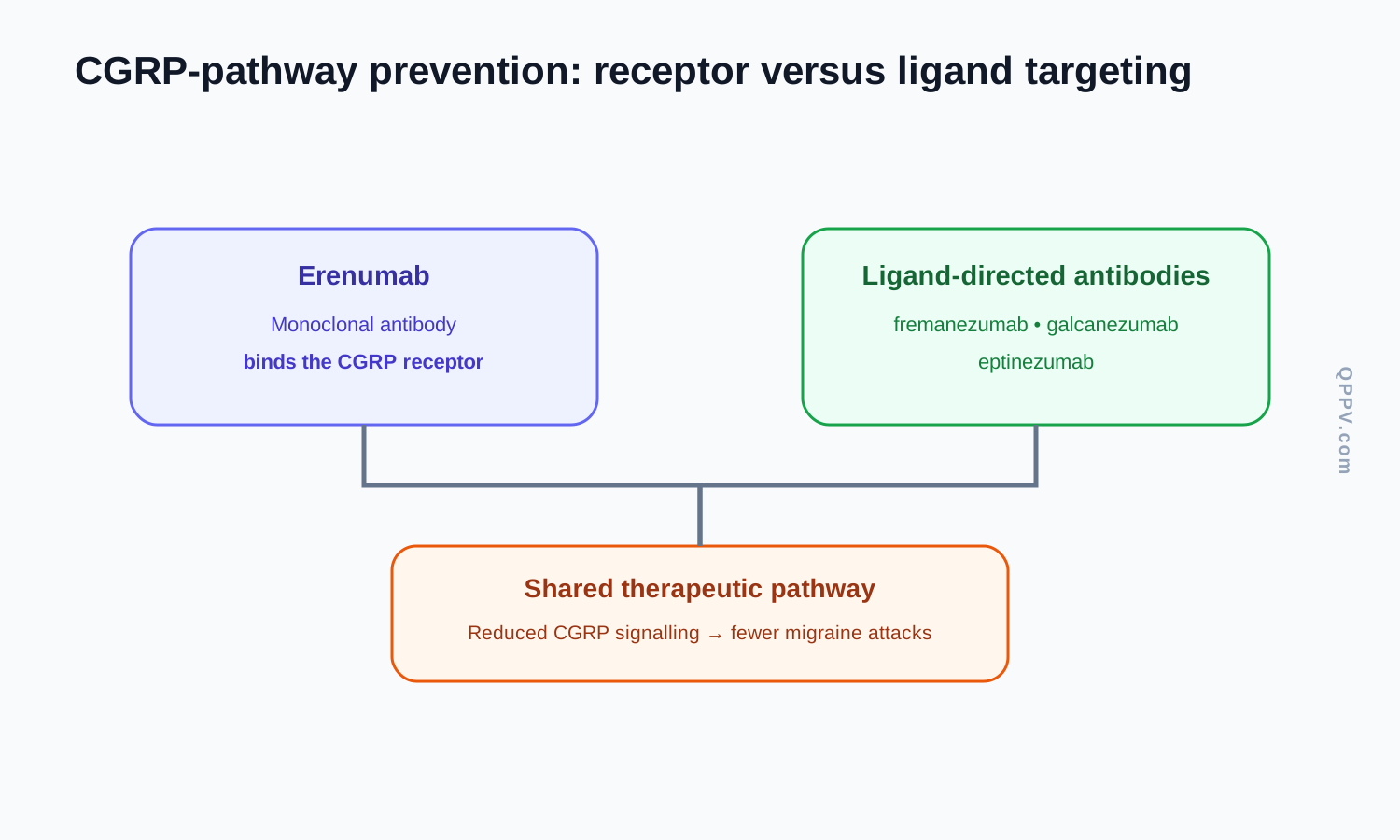
Figure 1. Erenumab is distinguished from several other CGRP-pathway monoclonal antibodies by targeting the receptor rather than the CGRP ligand.
Development history
CGRP concentrations were found to rise during migraine attacks, and infusion of CGRP could provoke migraine-like headache in susceptible people. Small-molecule CGRP antagonists provided early proof that the pathway was therapeutically relevant, but antibody technology allowed prolonged pathway inhibition with infrequent dosing.
Erenumab was developed as a receptor-directed antibody and became the first CGRP-pathway monoclonal antibody approved for migraine prevention in 2018. Its development marked a shift from repurposing drugs from cardiovascular, neurological or psychiatric medicine toward treatments designed around migraine pathophysiology itself.
Postmarketing experience subsequently changed the practical safety profile. The current US label includes warnings for serious constipation complications, new or worsening hypertension and new or worsening Raynaud's phenomenon, in addition to hypersensitivity. These risks are important examples of how broad clinical use can reveal events not fully characterised during pre-authorisation trials.
Migraine biology
The trigeminovascular system
The trigeminal nerve supplies sensation to the meninges and cranial vasculature. During migraine, activation of trigeminal afferents and central pathways can lead to release of neuropeptides, altered nociceptive transmission and sensitisation. Symptoms such as photophobia, phonophobia, nausea and cutaneous allodynia reflect the fact that migraine is a distributed neurological state rather than an isolated painful blood vessel.
Why CGRP matters
CGRP is a potent neuropeptide expressed in sensory neurons. It can promote vasodilation and participates in nociceptive signalling and neurogenic communication within the trigeminovascular system. Its canonical receptor is a heteromeric complex that includes the calcitonin receptor-like receptor and receptor activity-modifying protein 1.
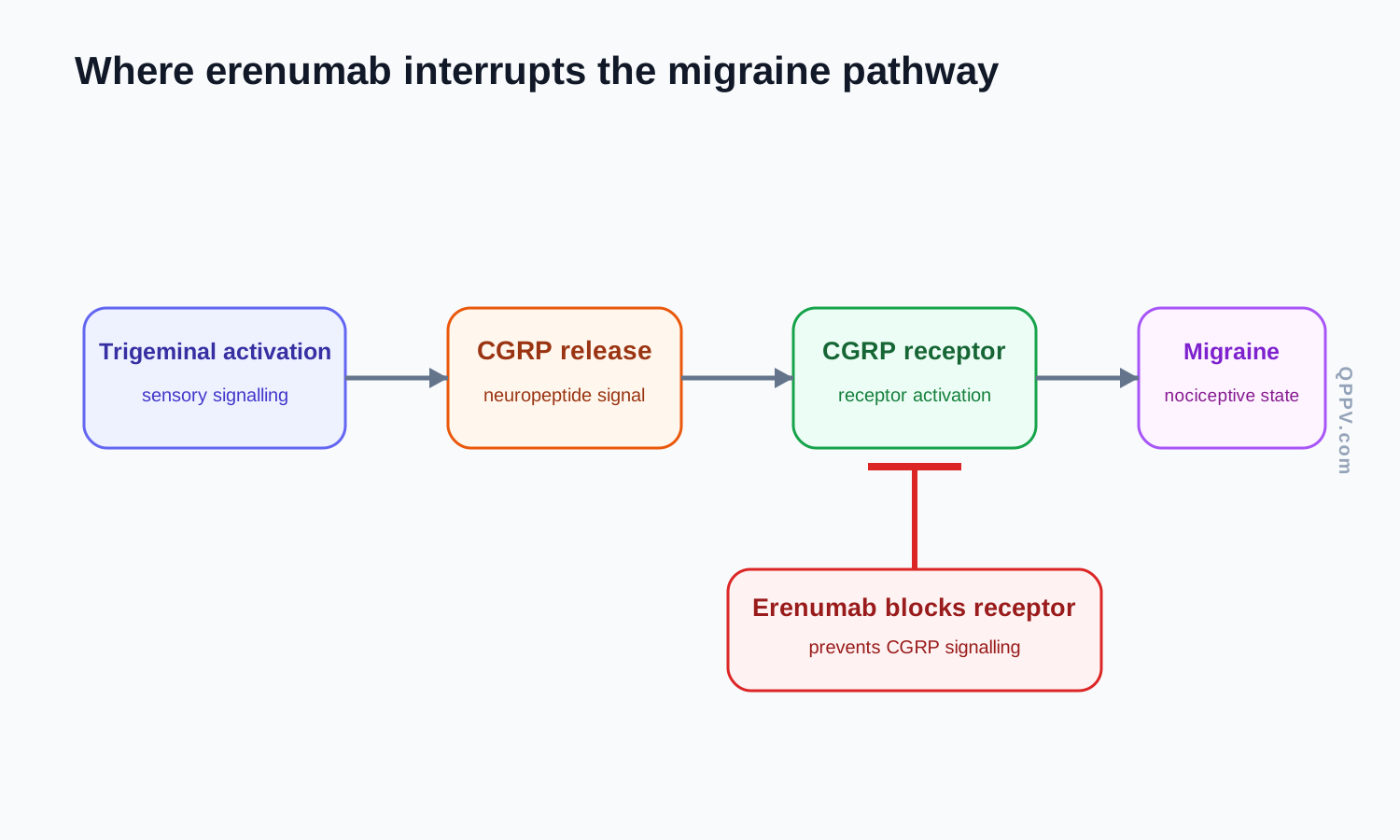
Figure 2. Trigeminal activation can release CGRP, which binds the CGRP receptor on relevant cells and contributes to nociceptive and vascular signalling. Erenumab blocks the receptor and prevents this signalling step.
Mechanism of action
Erenumab binds the CGRP receptor with high affinity and prevents CGRP-mediated receptor activation. Because the antibody remains largely outside the central nervous system, its therapeutic effect demonstrates that important migraine biology can be modified through peripheral and trigeminovascular mechanisms.
Receptor blockade versus ligand blockade
The distinction between receptor and ligand targeting matters conceptually. Erenumab blocks access to the receptor. Fremanezumab, galcanezumab and eptinezumab bind the CGRP ligand. Both strategies inhibit the same pathway but they are not molecularly identical.
This distinction is useful in pharmacovigilance when considering possible class effects. A safety event occurring across both receptor- and ligand-directed products may support a pathway-level mechanism. An event concentrated in one product may instead reflect target architecture, product properties, exposure, device or reporting differences.
Clinical positioning
Erenumab is a preventive treatment, not an acute migraine abortive. It is given at regular intervals to reduce future attack frequency and burden. In the EU, Aimovig is authorised for prevention in adults with at least four migraine days per month. The current US label similarly positions it as preventive treatment of migraine in adults.
Preventive success should not be judged from a single injection or isolated headache. Useful longitudinal outcomes include monthly migraine days, acute-medication use, disability, attack severity and persistence of benefit. This matters for pharmacovigilance reports coded as lack of efficacy: without baseline attack frequency and adequate exposure duration, the report may be clinically uninterpretable.
Safety profile and mechanism-informed interpretation
Constipation and serious complications
Constipation is one of the most characteristic erenumab adverse reactions and became more prominent after broad postmarketing use. The current US label warns that constipation with serious complications can occur, including cases requiring hospitalisation or surgery.
CGRP contributes to gastrointestinal sensory and motor physiology. Inhibiting the pathway can therefore plausibly reduce propulsive activity in susceptible patients. However, a case assessment must still consider opioids, anticholinergic medicines, dehydration, immobility, gastrointestinal disease and baseline constipation.
High-value follow-up includes bowel frequency before and after treatment, abdominal pain or distension, vomiting, imaging, obstruction or ileus diagnosis, treatment required, hospitalisation and response after erenumab discontinuation.
Hypertension
The current US label also warns of new-onset hypertension and worsening of pre-existing hypertension. CGRP is a potent vasodilatory peptide, so loss of a compensatory vasodilator signal provides biological plausibility, particularly in patients with vascular risk factors.
The correct interpretation is not that CGRP blockade inevitably causes hypertension. Many treated patients never develop it, and hypertension is common in the general population. A useful report includes baseline blood pressure, time from dose to elevation, repeated measurements, antihypertensive therapy, concomitant medicines and cardiovascular comorbidity.
Raynaud's phenomenon
Raynaud's phenomenon was added to the US warning profile after postmarketing reports of new or worsening peripheral vasospastic symptoms. Again, the mechanistic link is coherent because CGRP participates in peripheral vasodilation.
A high-quality case should describe colour changes, pain or numbness, affected digits, cold exposure, tissue injury, pre-existing Raynaud's disease, autoimmune disorders, smoking, vasoconstrictive medicines and outcome after stopping or continuing erenumab.
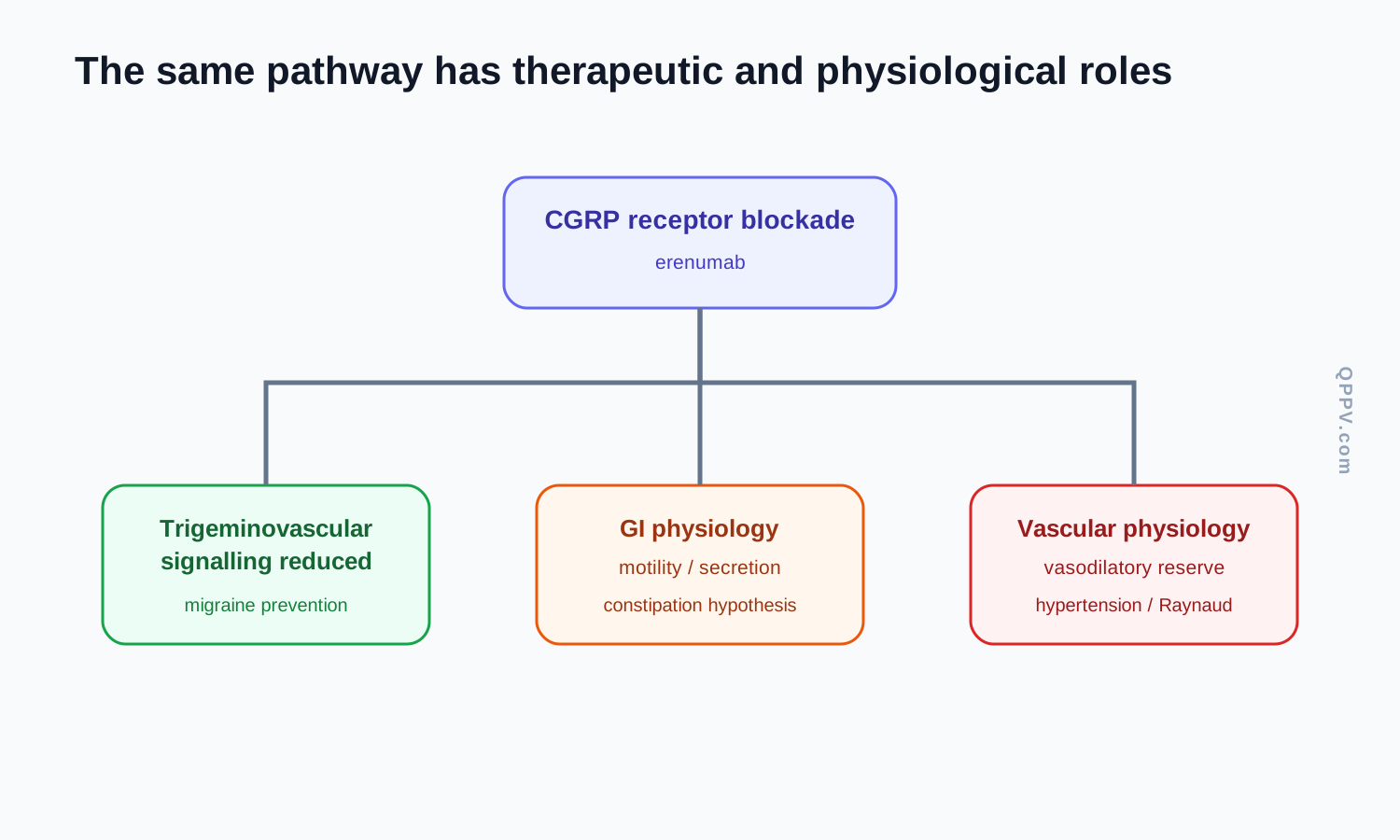
Figure 3. CGRP-receptor blockade is therapeutically useful in migraine but also removes a physiological signalling pathway involved in gastrointestinal motility and vascular tone. These relationships create plausible hypotheses for constipation, hypertension and Raynaud's phenomenon without proving causality in an individual report.
Hypersensitivity and injection reactions
Serious hypersensitivity reactions, including anaphylaxis and angioedema, have been reported. Importantly, onset can occur within hours but may also be delayed for more than a week. Follow-up therefore should not assume that a reaction is unrelated simply because it was not immediate.
Local injection-site reactions are more common and should be distinguished from systemic hypersensitivity. Device adhesive, skin preparation and injection technique may contribute to local findings.
Product pharmacovigilance
Case assessment
A useful erenumab case record captures:
| Domain | High-value information |
|---|---|
| Exposure | Dose, date, 70 or 140 mg regimen, device, lot if available |
| Migraine history | Baseline monthly migraine days, aura status, prior preventive therapies |
| Event | Clinical syndrome, onset, severity, investigations, treatment and outcome |
| Vascular context | Baseline blood pressure, Raynaud's history, smoking, vascular disease |
| GI context | Baseline bowel pattern, constipating medicines, abdominal disease |
| Alternatives | Other new medicines, infection, dehydration, endocrine or vascular causes |
| Follow-up | Subsequent dose, dechallenge, recurrence, treatment response |
Device and self-administration issues
Self-injection introduces operational failure modes that do not necessarily reflect pharmacological failure. Reports may involve incomplete injection, leakage, autoinjector malfunction, storage outside recommended conditions, premature device removal or injection into an inappropriate site.
When migraine worsens after a suspected failed injection, the assessor should first establish whether the intended dose was actually delivered. Device complaints, medication errors and adverse events may coexist in the same report and should remain linked.
Pregnancy and long-term exposure
Migraine prevalence is high among women of reproductive age, so pregnancy exposure is an important special situation. Monoclonal-antibody placental transfer changes over gestation, particularly later in pregnancy. Pregnancy reports should capture timing of exposure, estimated due date, other migraine therapies and pregnancy outcome in accordance with applicable PV procedures.
Because CGRP has physiological vascular roles, pregnancy surveillance is particularly valuable even when individual reports cannot establish causality.
Aggregate interpretation
Postmarketing risk detection for erenumab demonstrates why spontaneous reports remain important after large randomised trials. Aggregate review should stratify serious constipation by concomitant constipating medicines, hypertension by baseline vascular risk, and Raynaud's reports by pre-existing disease and vasoconstrictor exposure.
Comparisons with ligand-directed CGRP antibodies can help distinguish pathway-level from product-specific hypotheses, but reporting rates alone cannot establish comparative incidence because product uptake and reporting behaviour differ.
Practical assessment framework
- Confirm preventive exposure. Record dose, date, device and whether the full injection was delivered.
- Define the event precisely. Constipation, ileus, hypertension, Raynaud's phenomenon, hypersensitivity and migraine worsening require different follow-up.
- Reconstruct baseline risk. Pre-existing bowel, vascular and allergic history often changes interpretation.
- Map chronology. Compare onset with the most recent and previous doses; delayed hypersensitivity is possible.
- Assess concomitant medicines. Opioids, anticholinergics, stimulants, vasoconstrictors and acute migraine drugs may matter.
- Use mechanism proportionately. CGRP physiology supports hypotheses but does not establish causality alone.
- Separate device failure from lack of efficacy. Incomplete delivery can mimic pharmacological failure.
- Preserve longitudinal migraine outcomes. Baseline and follow-up monthly migraine days are more informative than a single attack.
- Consider class versus product pattern. Compare with other CGRP-pathway medicines when evaluating aggregate signals.
Illustrative scenario: severe constipation after treatment initiation
A patient with mild baseline constipation starts erenumab 140 mg monthly. Two weeks after the second dose, bowel movements cease for six days and the patient is admitted with abdominal distension. The medication list includes a recently started opioid for back pain.
A strong assessment does not choose between erenumab and the opioid prematurely. It records the baseline bowel pattern, both exposure timelines, imaging findings, management, dechallenge and subsequent course. The known erenumab risk increases plausibility, while the opioid provides an important cofactor.
Illustrative scenario: blood-pressure elevation
A patient without diagnosed hypertension records repeated home readings around 165/100 mmHg beginning several days after an injection. Before treatment, clinic readings were around 125/80 mmHg. No new stimulant or decongestant use is identified. Blood pressure normalises after treatment is withheld.
The chronology, objective baseline and dechallenge information make the report substantially more informative than a verbatim term of “high blood pressure”.
Illustrative scenario: worsening migraine after autoinjector problem
A patient removes the autoinjector immediately after activation because of pain and reports fluid on the skin. Migraine frequency rises over the following month. The first PV question is whether the dose was fully delivered; disease worsening cannot be interpreted as pharmacological lack of effect until administration is reconstructed.
Key Takeaways
- Erenumab prevents migraine by blocking the canonical CGRP receptor rather than binding the CGRP ligand.
- CGRP participates in trigeminovascular nociception but also in gastrointestinal and vascular physiology.
- Serious constipation complications, new or worsening hypertension and Raynaud's phenomenon are important current US postmarketing warnings.
- Mechanistic plausibility should guide follow-up, not replace individual causality assessment.
- Delayed hypersensitivity can occur, so timing beyond the injection day does not exclude a relationship.
- Self-administration creates device and medication-error scenarios that can mimic lack of efficacy.
- Longitudinal migraine outcomes are essential when assessing treatment failure.
References
- U.S. Food and Drug Administration. AIMOVIG (erenumab-aooe) Prescribing Information. Revised March 2025. https://www.accessdata.fda.gov/drugsatfda_docs/label/2025/761077s026lbl.pdf
- European Medicines Agency. Aimovig (erenumab) EPAR and product information. https://www.ema.europa.eu/en/medicines/human/EPAR/aimovig
- Goadsby PJ, Reuter U, Hallström Y, et al. A controlled trial of erenumab for episodic migraine. N Engl J Med. 2017;377:2123-2132.
- Tepper S, Ashina M, Reuter U, et al. Safety and efficacy of erenumab for preventive treatment of chronic migraine. Lancet Neurol. 2017;16:425-434.
- Edvinsson L, Haanes KA, Warfvinge K, Krause DN. CGRP as the target of new migraine therapies. Nat Rev Neurol. 2018;14:338-350.
Regulatory Note
This article is an educational pharmacovigilance reference and does not replace current prescribing information or clinical guidance. Approved dosing, warnings and device presentations may change. US and EU product information should be checked separately because wording and risk communication can differ. For patient care, case processing and signal decisions, use the current jurisdiction-specific label and applicable PV requirements.