Evolocumab: PCSK9 Biology, LDL-Receptor Recycling, Cardiovascular Benefit and Product Pharmacovigilance
- Evolocumab: PCSK9 Biology, LDL-Receptor Recycling, Cardiovascular Benefit and Product Pharmacovigilance
- Multidimensional classification
- Why statins and PCSK9 interact
- Development logic
- Indication-specific therapeutic position
- From protein structure to clinical effect
- Safety, evidence evolution and Product Pharmacovigilance
- Product Pharmacovigilance
- Official regulatory reference material
- Key takeaways
- References
- Regulatory Note
Evolocumab is a monoclonal antibody used to lower low-density-lipoprotein cholesterol (LDL-C) in defined high-risk settings. It is not best described simply as a “cholesterol injection.” Its therapeutic purpose follows from a receptor-recycling system in the liver.
LDL particles carry cholesterol through blood. Cholesterol is indispensable for cell membranes, steroid hormones and bile-acid production, but excess circulating LDL contributes to atherosclerosis: lipoproteins enter and are retained in the arterial wall, prompting inflammation and plaque formation. The liver is the principal clearing organ. Hepatocytes display LDL receptors (LDLRs), molecular docking-and-uptake systems that bind LDL, internalise it and normally return to the cell surface for repeated use.
PCSK9 is a circulating protein that binds the LDL receptor. When PCSK9 accompanies a receptor into the cell, it directs the receptor towards lysosomal degradation rather than recycling. A lysosome is the cell’s controlled dismantling compartment. Fewer recycled receptors means fewer hepatic “collection points” for LDL and therefore higher plasma LDL-C.
Evolocumab is a fully human IgG2 monoclonal antibody that binds PCSK9. It is a neutralising antagonist: it blocks PCSK9’s interaction with LDLR; it does not activate LDLR, replace cholesterol, or destroy hepatocytes. The useful analogy is a reusable loading bay. LDLR is the loading bay, PCSK9 is a disposal label that sends the bay for destruction after one use, and evolocumab prevents that label being attached. More loading bays return to the hepatocyte surface and more LDL is cleared.
Multidimensional classification
| Axis | Classification | Significance |
|---|---|---|
| Molecular format | Fully human IgG2 monoclonal antibody | A targeted injectable biological; exact presentation, dose and batch matter in case documentation |
| Direct target | PCSK9 | PCSK9 promotes lysosomal degradation of hepatic LDL receptors |
| Pharmacological action | Extracellular PCSK9 neutralisation | Preserves LDL-receptor recycling rather than inhibiting cholesterol synthesis |
| Functional consequence | Increased hepatic LDLR availability and LDL-C clearance | Produces marked LDL-C lowering, including on background statin therapy |
| Clinical role | Add-on or alternative lipid-lowering therapy in authorised high-risk contexts | Indication, inherited phenotype and background therapy determine use |
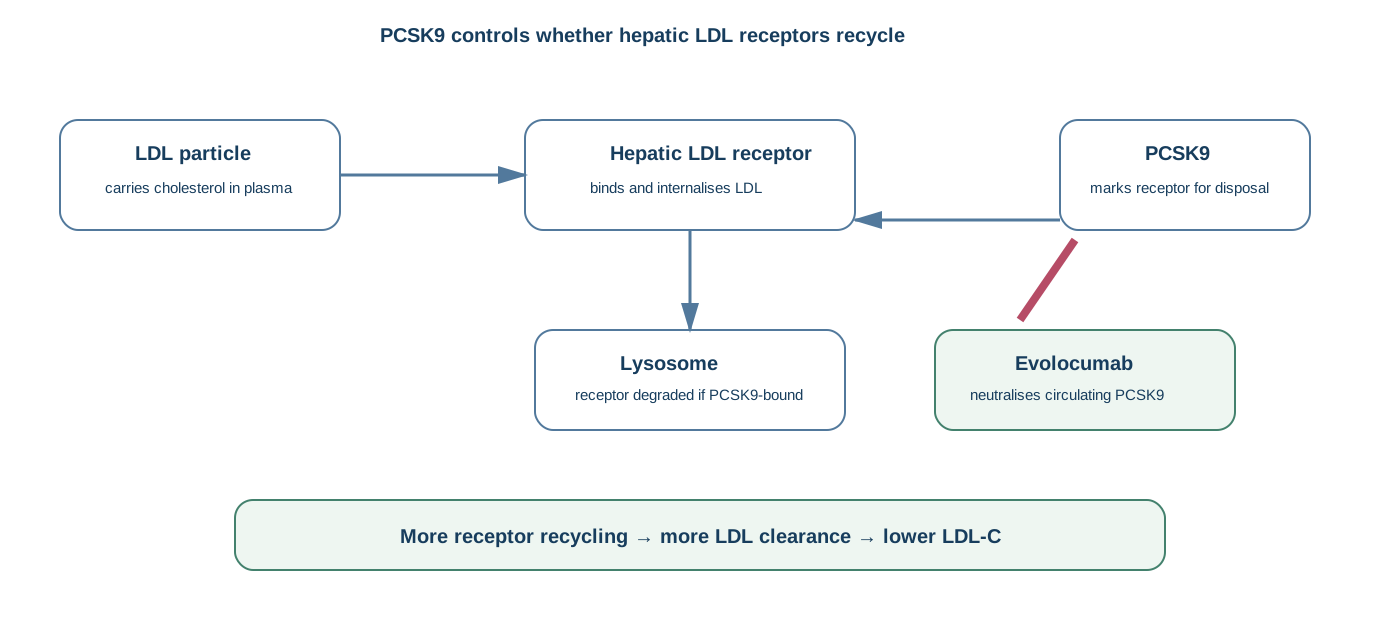
Figure 1. Evolocumab acts outside the hepatocyte to neutralise PCSK9. Statins, ezetimibe and inclisiran lower LDL-C at different points; shared outcome goals do not make their mechanisms or evidence interchangeable.
Why statins and PCSK9 interact
Statins inhibit hepatic cholesterol synthesis. The cell responds by increasing LDLR expression, which is why statins lower LDL-C. They can also increase PCSK9 expression, creating a counter-regulatory brake on receptor recycling. Evolocumab removes that brake. This is why the combination is mechanistically coherent, while also explaining why treatment should not be framed as a substitute for every aspect of cardiovascular prevention: smoking, blood pressure, diabetes, diet, activity and antithrombotic decisions remain separate risk pathways.
Development logic
Human genetic observations linked PCSK9 loss-of-function variants with lower LDL-C and lower coronary risk. That causal chain made PCSK9 an attractive target: block a protein that reduces LDL receptors, restore receptor recycling, lower LDL-C, then test whether that biochemical effect reduces clinical events. The cardiovascular-outcomes question mattered because a biomarker reduction, however large, is not automatically proof of patient benefit.
Indication-specific therapeutic position
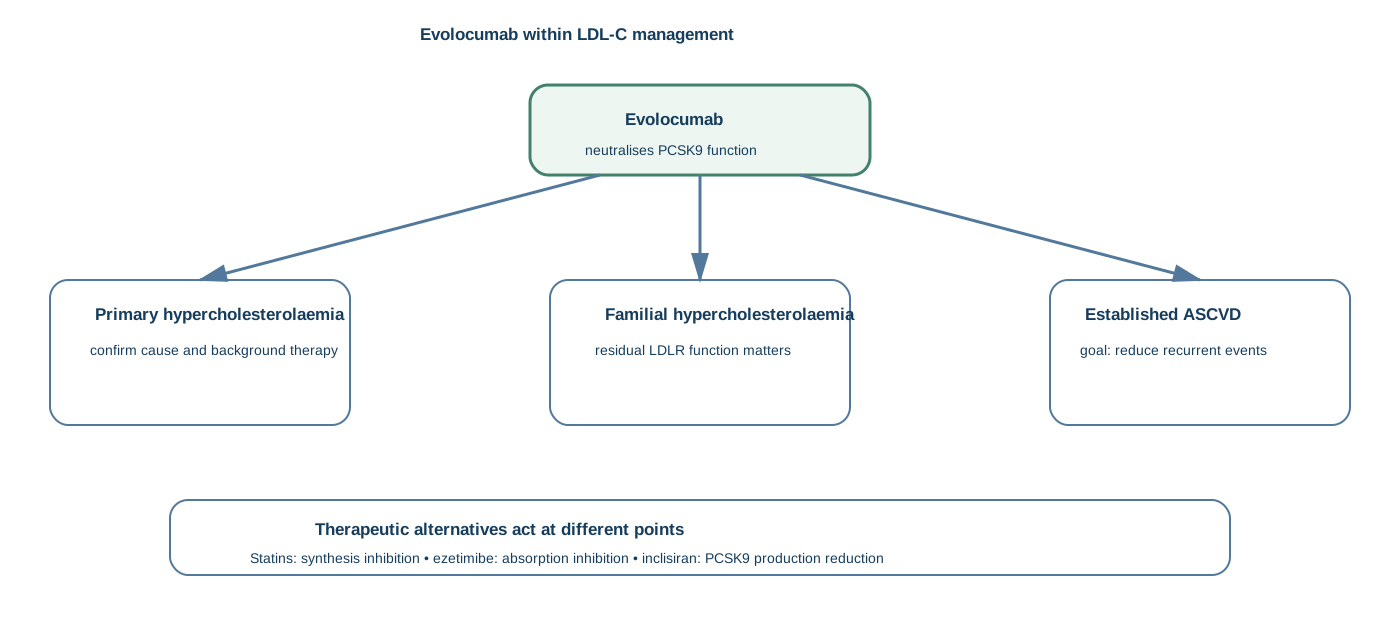
Figure 2. Evolocumab is positioned by the reason LDL-C remains high: inherited LDL-receptor-pathway disease, inadequate response/intolerance to other lipid-lowering medicines, or residual risk in established atherosclerotic cardiovascular disease.
Primary hypercholesterolaemia and mixed dyslipidaemia
Hypercholesterolaemia is a laboratory phenotype, not one disease. It may reflect polygenic susceptibility, diet, diabetes, hypothyroidism, nephrotic syndrome, drugs or an inherited defect. Before attributing persistent LDL-C elevation to insufficient treatment, secondary causes, adherence and the actual treatment regimen need assessment.
Statins are usually foundational because they reduce endogenous cholesterol synthesis and have extensive outcome evidence. Ezetimibe reduces intestinal cholesterol absorption. Bempedoic acid acts upstream of HMG-CoA reductase in the liver. Evolocumab neutralises circulating PCSK9. Inclisiran reduces hepatic production of PCSK9 through RNA interference; it targets the same regulatory system but is not an antibody and has a different dosing and evidence profile. A therapeutic-position map prevents a false conclusion that these medicines are interchangeable merely because all lower LDL-C.
Familial hypercholesterolaemia
Familial hypercholesterolaemia (FH) is an inherited disorder of LDL clearance, often involving LDLR, APOB or PCSK9-pathway variants. In heterozygous FH, residual LDLR function commonly remains and PCSK9 inhibition can substantially augment receptor availability. In homozygous FH, response varies with the underlying molecular defect; a receptor-negative phenotype may have less capacity for an LDLR-dependent intervention to amplify. This is a first-principles reason that genotype and phenotype influence expected benefit.
Established atherosclerotic cardiovascular disease
In secondary prevention, the target is not a laboratory number alone but reduction of recurrent infarction, stroke and revascularisation risk. In FOURIER, 27,564 statin-treated participants with established atherosclerotic cardiovascular disease received evolocumab or placebo. At 48 weeks, LDL-C was reduced by 59% relative to placebo; the primary composite outcome occurred in 9.8% versus 11.3% and the key secondary composite of cardiovascular death, myocardial infarction or stroke in 5.9% versus 7.4% over a median 2.2 years. The trial therefore connected PCSK9 neutralisation to cardiovascular-outcomes benefit in its studied population. It did not establish a mortality reduction in that follow-up period, and its population and background treatment should not be silently generalised to every person with raised LDL-C.
From protein structure to clinical effect
The Fab regions of evolocumab recognise PCSK9 and prevent PCSK9 binding to LDLR. Its IgG2 Fc region contributes to persistence as an antibody scaffold, but the intended therapeutic action is ligand neutralisation, not Fc-mediated killing. The drug is given subcutaneously. Its pharmacokinetics are nonlinear because target binding itself contributes to clearance; its effective half-life is approximately 11–17 days. LDL-C lowering follows the time course of PCSK9 suppression and returns toward baseline as drug effect wanes.
The clinical implication is simple but important: an unexpectedly high LDL-C result can reflect missed administration, inadequate adherence to concomitant therapy, a secondary cause, assay/context issues or inadequate biological response. It should not be automatically classified as product failure without reconstructing exposure and disease context.
Safety, evidence evolution and Product Pharmacovigilance
The safety profile must be interpreted against both a biological product and a chronic-prevention context. Injection-site reactions are a direct route-and-product consideration and were more frequent with evolocumab than placebo in FOURIER. Hypersensitivity reactions, including serious reactions, require standard assessment of timing, symptoms, treatment and alternative triggers. Immunogenicity is assessed for therapeutic proteins, but detecting binding antibodies does not itself establish loss of effect or a clinical reaction.
Early concern that very low LDL-C or PCSK9 inhibition might cause neurocognitive harm required focused evaluation. FOURIER did not show a significant excess of neurocognitive events, and subsequent evidence has refined rather than eliminated the need for routine signal surveillance. The correct pharmacovigilance position is neither “theoretical concern proves causality” nor “absence of a signal in one trial ends surveillance.” It is to use the current official reference safety information, a well-documented case narrative and cumulative evidence.
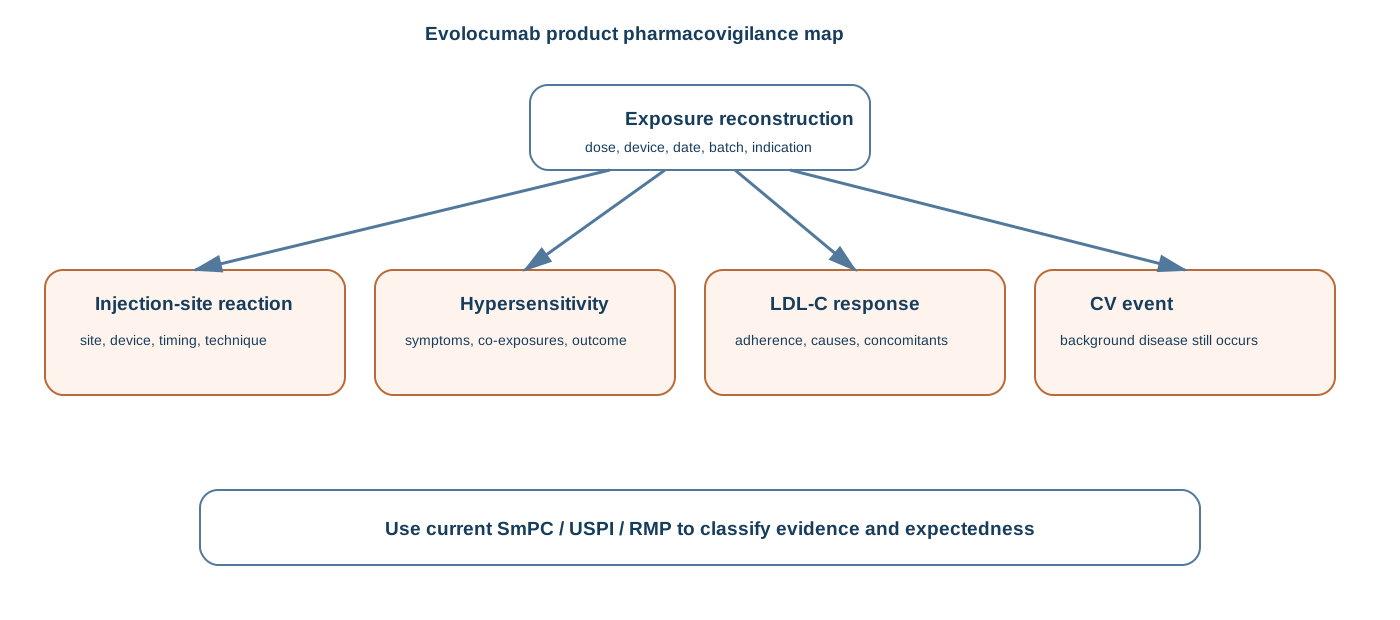
Figure 3. Evolocumab case assessment connects antibody exposure and PCSK9 biology with route-related reactions, clinical-event context and the distinction between a safety signal and an established labelled risk.
| Concern | Evidence and interpretation | Product Pharmacovigilance focus |
|---|---|---|
| Injection-site reaction | Labelled adverse reaction; assess local timing and presentation/device context | Exact dose, device, injection site, technique, onset, treatment and outcome |
| Hypersensitivity | Labelled risk; causal assessment is event-specific | Symptoms, timing, co-exposures, re-exposure, emergency treatment and outcome |
| Apparent inadequate LDL-C response | Not an adverse reaction by default | Dosing dates, concomitant treatment, adherence, baseline phenotype, secondary causes and laboratory context |
| Neurocognitive event | Requires current-label check and structured causality assessment | Baseline history, onset, dechallenge/rechallenge, competing vascular/neurological causes and serial evidence |
| Cardiovascular event during treatment | Expected background disease can occur despite risk reduction | Event phenotype, baseline risk, LDL trajectory, concomitant prevention and exposure reconstruction |
Product Pharmacovigilance
For a suspected reaction, record evolocumab by active substance, then capture the exact product, strength, device, dose, injection date, batch where available, indication, LDL-C history and all concomitant lipid-lowering medicines. A cardiovascular event is not automatically a lack-of-efficacy report: prevention lowers probability, not to zero. Its assessment needs baseline atherosclerotic burden, prior events, blood pressure, diabetes, smoking, antithrombotic therapy, statin/ezetimibe exposure and event adjudication details where available.
The reference-material set should be checked at the time of assessment: current EMA SmPC and EPAR, the EMA public RMP summary, current US Prescribing Information and the FDA REMS database. A REMS is not presumed; its presence or absence should be verified. The RMP identifies how important risks and missing information are managed; it should not be replaced by an unsourced “class effect” list.
Official regulatory reference material
| Source | Assessment use |
|---|---|
| EMA EPAR and current product information for evolocumab | EU indications, dose schedules, contraindications, warnings and adverse reactions |
| EMA public RMP summary | Important risks, missing information and risk-minimisation framework |
| FDA US Prescribing Information | US indication wording, safety information and administration instructions |
| FDA REMS database | Confirm whether a REMS applies at the date of assessment |
| EMA post-authorisation and PRAC/variation documents | Regulatory safety evolution and current conclusions |
Key takeaways
Evolocumab neutralises PCSK9, preserving hepatic LDL-receptor recycling and increasing LDL clearance. Its biological action is distinct from statin synthesis inhibition, ezetimibe absorption inhibition and inclisiran-mediated reduction of PCSK9 production. Its value lies in indication-specific LDL-C reduction and, in studied secondary-prevention populations, cardiovascular-outcomes benefit. Product pharmacovigilance must distinguish exposure problems, background vascular events, labelled reactions and unresolved signals.
References
- European Medicines Agency. Repatha: EPAR, current product information and assessment history.
- European Medicines Agency. Repatha: Summary of the Risk Management Plan.
- U.S. Food and Drug Administration. Repatha (evolocumab) US Prescribing Information. Current version.
- Sabatine MS, et al. Evolocumab and clinical outcomes in patients with cardiovascular disease. N Engl J Med. 2017;376:1713–1722.
- Gibbs JP, et al. Clinical pharmacokinetics and pharmacodynamics of evolocumab. Clin Pharmacokinet. 2018;57:769–779.
- Current and emerging PCSK9-directed therapies to reduce LDL-C and ASCVD risk. Pharmacotherapy. 2024.
Regulatory Note
This educational review does not replace current authorised product information, lipid-specialist assessment or cardiovascular-risk management. Indications, dosing, reimbursement and product information differ by jurisdiction and should be verified from current EMA and FDA sources.