Fidanacogene Elaparvovec: AAV Gene Therapy for Haemophilia B and Pharmacovigilance
Fidanacogene elaparvovec is an adeno-associated virus (AAV)-based gene therapy developed for adults with haemophilia B. Unlike recombinant factor IX replacement, which supplies the missing protein repeatedly, gene therapy delivers genetic instructions intended to make hepatocytes produce factor IX over a prolonged period after a single intravenous administration.
That difference changes the pharmacovigilance model fundamentally. Exposure is brief, but the biological consequence may persist for years. A conventional adverse-event chronology therefore needs to be extended into a longitudinal record of liver health, factor IX activity, bleeding phenotype, use of exogenous factor IX and thrombotic events.
- Fidanacogene Elaparvovec: AAV Gene Therapy for Haemophilia B and Pharmacovigilance
- Classification and Molecular Design
- Haemophilia B and the Therapeutic Rationale
- Regulatory and Lifecycle Context
- How the Gene Therapy Works
- Patient Selection and Pre-treatment Evidence
- Major Safety and Pharmacovigilance Domains
- Special Situations
- Practical Pharmacovigilance Implementation
- Potential Failure Modes and Inspection Questions
- Governance
- Key Takeaways
- References
- Regulatory Note
Classification and Molecular Design
Fidanacogene elaparvovec is a recombinant AAV vector carrying a functional factor IX expression cassette. The vector is engineered to deliver the transgene predominantly to hepatocytes, the liver cells that normally synthesise many coagulation proteins.
The product should therefore be classified simultaneously as a gene therapy, an AAV-vector medicinal product and a haemostasis-modifying biological medicine. Those dimensions matter because each predicts a different surveillance problem: vector immunity affects eligibility and transduction, liver biology affects expression and inflammation, and factor IX activity affects bleeding and thrombosis.
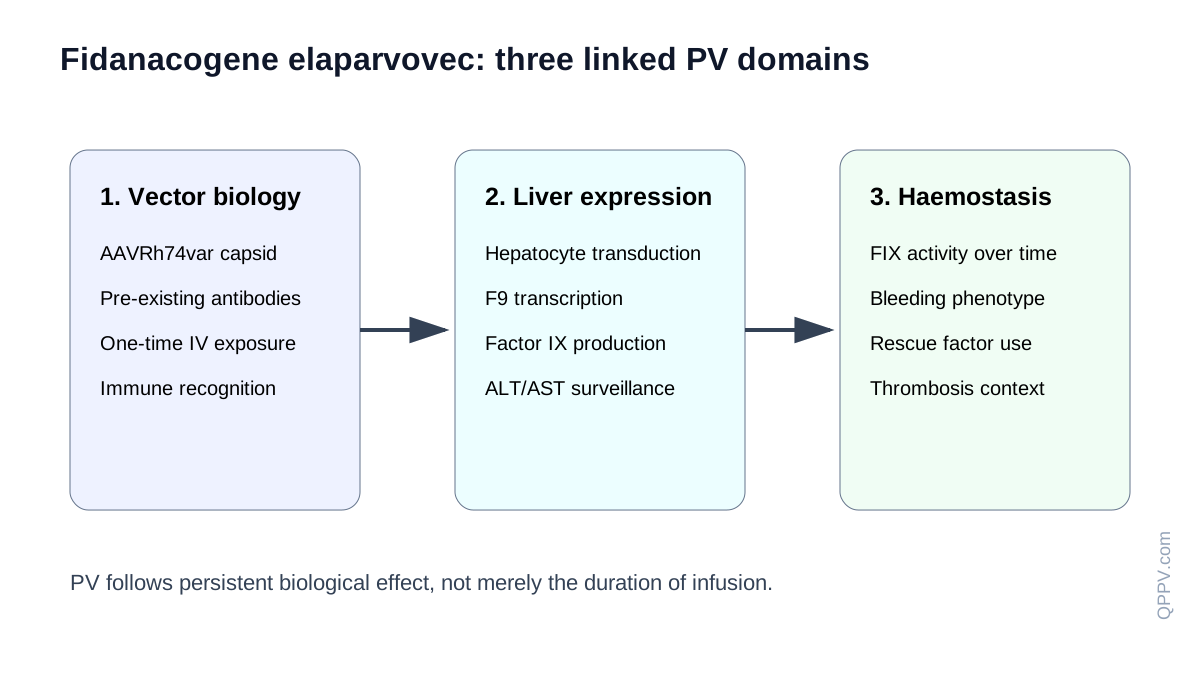
Figure 1. The pharmacovigilance model combines vector biology, liver-directed transgene expression and downstream haemostatic outcomes rather than treating the infusion as the end of exposure assessment.
Haemophilia B and the Therapeutic Rationale
Haemophilia B results from pathogenic variants in the F9 gene that reduce or abolish functional coagulation factor IX. Factor IX is a vitamin-K-dependent serine protease that participates in the intrinsic tenase complex and supports generation of factor Xa and, downstream, thrombin.
Regular factor IX prophylaxis bypasses the genetic defect by replacing the missing protein. Gene therapy attempts to move one step upstream: instead of repeatedly supplying factor IX, it introduces a functional F9 sequence so the patient's own hepatocytes become a continuing source of factor IX.
High-activity factor IX expression
The transgene encodes a high-activity factor IX variant so clinically useful activity can be achieved at lower quantities of expressed protein. This is pharmacologically efficient, but it also means PV must consider excessive activity and thrombosis rather than assuming that more expression is always beneficial.
Regulatory and Lifecycle Context
The therapy was authorised in the United States in 2024 for selected adults with moderate to severe haemophilia B who met bleeding-history criteria and lacked neutralising antibodies to the AAVRh74var capsid by an approved test.
In the European Union, conditional marketing authorisation was granted in July 2024 and withdrawn in May 2025 at the marketing authorisation holder's request for commercial reasons. The product had not been marketed in the EU. Development and commercialisation were subsequently terminated in 2025.
This history is instructive. Regulatory authorisation, commercial availability and ongoing development are separate concepts. A withdrawn authorisation for commercial reasons must not be described as a regulatory safety withdrawal unless evidence supports that conclusion.
How the Gene Therapy Works
After intravenous administration, the AAV capsid carries the vector genome to hepatocytes. The vector genome remains predominantly episomal rather than integrating deliberately into chromosomal DNA. Hepatocytes then transcribe and translate the introduced F9 sequence, releasing factor IX into the circulation.
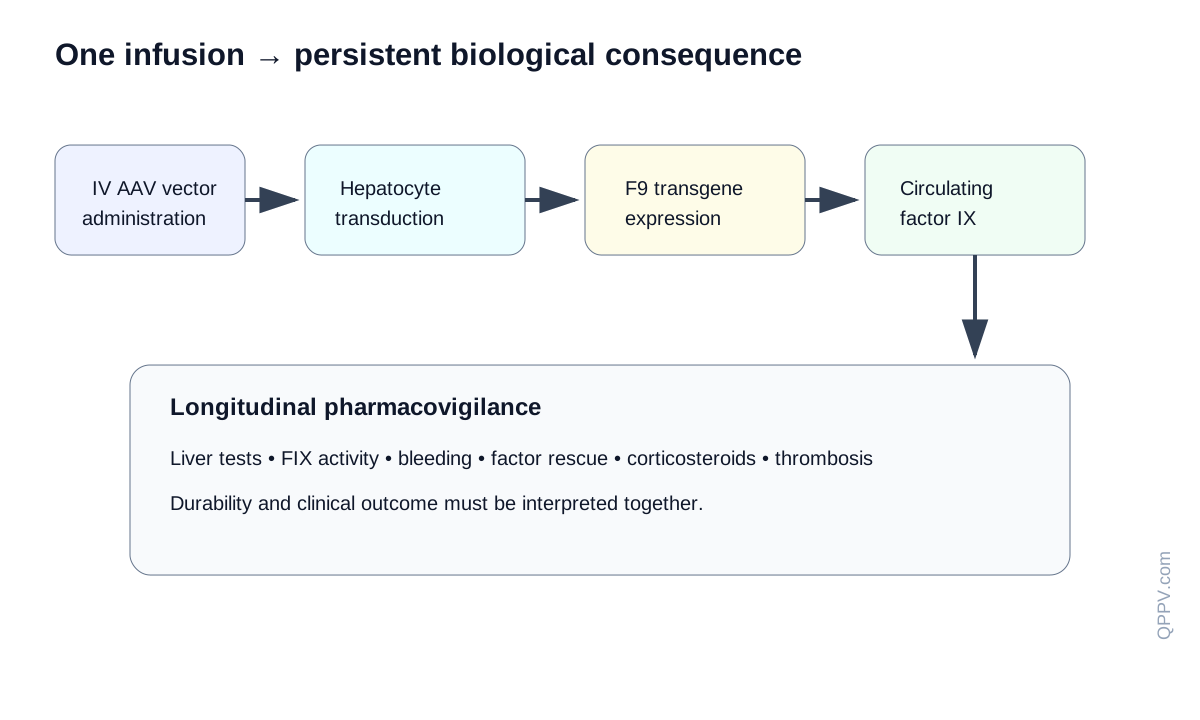
Figure 2. AAV-mediated delivery links a one-time infusion to hepatocyte transduction, factor IX production and years of downstream clinical surveillance.
The key conceptual point is that vector exposure and therapeutic effect occur on different timescales. The capsid is encountered early, while factor IX expression and clinical benefit may continue long after the infusion. Safety assessment therefore cannot be organised only around infusion-day events.
Patient Selection and Pre-treatment Evidence
Eligibility is unusually important because pre-existing neutralising antibodies to the vector capsid can reduce effective hepatocyte transduction. For the U.S.-licensed product, absence of neutralising antibodies to AAVRh74var using the specified approved test is part of the authorised patient-selection framework.
Baseline assessment should also characterise the haemophilia phenotype, previous factor IX exposure, inhibitor history, bleeding frequency, factor use, liver status and concomitant medicines. These variables become the comparator for every post-treatment interpretation.
Major Safety and Pharmacovigilance Domains
Hepatic injury and transaminase elevations
AAV vectors administered systemically have a clinically important relationship with the liver because hepatocytes are the therapeutic target. Elevations in aminotransferases can reflect immune-mediated injury to transduced hepatocytes and may coincide with loss of factor IX expression.
A useful PV case therefore records alanine aminotransferase and aspartate aminotransferase values, bilirubin where relevant, timing, symptoms, corticosteroid treatment, alternative hepatic causes and contemporaneous factor IX activity. A report of 'elevated liver enzymes' without these details loses the mechanism that links toxicity and efficacy.
Loss or variability of factor IX expression
Declining factor IX activity is not automatically an adverse reaction, but it may represent reduced durability, immune-mediated loss of transduced cells, assay variability or another clinical change. Longitudinal assessment should connect laboratory trends with bleeding events and resumption of exogenous factor IX.
Bleeding after gene therapy
A post-treatment bleed must be interpreted against the patient's factor IX activity, trauma or surgery, prior bleeding phenotype and any factor IX rescue treatment. The relevant question is not simply whether bleeding occurred, but whether haemostatic protection was lower than expected for the measured biological response.
Thrombosis and excessive factor IX activity
The therapeutic objective is to move factor IX activity toward a haemostatically useful range, not to maximise it without limit. Thrombotic events require assessment of factor IX activity, other prothrombotic risk factors, surgery, immobility, malignancy and concomitant procoagulant treatment.
Infusion and hypersensitivity reactions
Acute reactions remain relevant even though the long-term PV burden is dominated by gene expression. Timing relative to infusion, clinical phenotype, treatment and outcome should be captured precisely.
Special Situations
Surgery and trauma
Gene therapy does not remove the need for haemostasis planning. Before surgery, actual factor IX activity and the possibility of supplementary factor concentrate should be considered. PV follow-up should document perioperative factor use and bleeding outcome.
Subsequent factor IX treatment
Resumption of factor IX concentrate may signal inadequate expression, major haemostatic challenge or changing clinical circumstances. It should therefore be treated as useful effectiveness and exposure information rather than merely a concomitant medication.
Practical Pharmacovigilance Implementation
A high-quality case should reconstruct the treatment as a longitudinal biological intervention. At minimum, useful follow-up includes treatment date and dose, vector-antibody eligibility result, baseline liver status, factor IX activity over time, bleeding events, exogenous factor IX use, hepatic events and treatment, thrombotic events, and relevant procedures or concomitant medicines.
For aggregate review, the most informative displays are longitudinal rather than purely event-count based. Factor IX trajectories, liver-test trajectories, bleed rates, rescue-factor use and corticosteroid exposure should be examined together because they describe different parts of the same treatment system.
Potential Failure Modes and Inspection Questions
Illustrative failure modes include treating the administration date as the end of exposure follow-up; recording transaminase elevation without factor IX activity; failing to distinguish lack of durability from an acute adverse reaction; and describing the EU commercial withdrawal as a safety withdrawal.
An inspector could reasonably ask how the pharmacovigilance system preserves long-term traceability for a one-time gene therapy, how liver laboratory data are connected to changes in factor expression, how follow-up continues when routine factor prophylaxis has stopped, and how historical regulatory status is represented accurately after commercial discontinuation.
Governance
Gene therapy requires interfaces between pharmacovigilance, medical affairs, clinical teams, product quality, regulatory affairs and long-term follow-up activities. Governance should make explicit who reviews emerging durability data, hepatic safety, thrombotic outcomes and changes in regulatory status.
The principle is broader than this product: when a biological intervention has brief administration but persistent consequences, pharmacovigilance governance must follow the biological effect rather than the duration of dosing.
Key Takeaways
Fidanacogene elaparvovec uses an AAV vector to deliver a high-activity factor IX transgene to hepatocytes. Its safety model combines vector immunity, liver biology and haemostatic outcomes.
Its most important PV distinction is temporal: one administration can generate years of biological exposure. Factor IX activity, bleeding, hepatic events, steroid treatment, thrombosis and rescue-factor use therefore belong in one longitudinal assessment.
The product also illustrates the difference between authorisation status and commercial status. The EU authorisation was withdrawn for commercial reasons in 2025; that fact must not be converted into an unsupported safety narrative.
References
- U.S. Food and Drug Administration. Fidanacogene elaparvovec-dzkt: licensed cellular and gene therapy product information and approval history. Current FDA product page accessed September 2026.
- European Medicines Agency. Beqvez (previously Durveqtix): EPAR, including withdrawal of the EU marketing authorisation on 15 May 2025 for commercial reasons.
- European Medicines Agency. Product information and public assessment documentation for fidanacogene elaparvovec.
- Pipe SW, Leebeek FWG, Recht M, et al. Gene therapy with fidanacogene elaparvovec in adults with haemophilia B. Phase 3 BENEGENE-2 programme publications and regulatory assessments.
- Current authorised prescribing information should be used for jurisdiction-specific eligibility, laboratory monitoring and clinical management.
Regulatory Note
Regulatory status is jurisdiction- and time-specific. As of September 2026, FDA continues to list fidanacogene elaparvovec-dzkt as a licensed gene-therapy product in the United States. The European Commission withdrew the EU marketing authorisation on 15 May 2025 at the holder's request for commercial reasons; the product had not been marketed in the EU. This article describes pharmacovigilance principles and does not replace current prescribing information or local clinical guidance.