Filgrastim: Classification, History, Mechanism of Action, Safety and Pharmacovigilance
- Filgrastim: Classification, History, Mechanism of Action, Safety and Pharmacovigilance
- Multidimensional classification
- Discovery and development history
- Molecular design and endogenous comparator
- G-CSF receptor signalling
- Pharmacokinetics and response dynamics
- Established clinical-use domains
- Predictable and common adverse effects
- Serious and uncommon safety syndromes
- Risk differs by exposed population
- Pregnancy, lactation and paediatrics
- Biosimilars, quality and traceability
- Product-specific pharmacovigilance framework
- Signal detection and governance
- Practical checklist
- Key takeaways
- References
- Regulatory Note
Filgrastim is recombinant human granulocyte colony-stimulating factor (G-CSF), a lineage-biased haematopoietic growth factor used to shorten or prevent clinically important neutropenia and to mobilise peripheral-blood progenitor cells. It does not directly kill microorganisms or malignant cells. Instead, it amplifies and accelerates a physiological granulopoietic programme: committed precursors survive, proliferate and mature; marrow transit is shortened; and mature neutrophils enter the circulation with enhanced functional activity.
This apparently focused mechanism produces several distinct benefit–risk settings. A short course after cytotoxic chemotherapy is different from years of exposure in severe chronic neutropenia, and administration to a healthy stem-cell donor is different again. The same absolute neutrophil count (ANC) can therefore have different clinical meaning depending on the indication, timing, marrow reserve, infection status and recent chemotherapy.
Multidimensional classification
| Axis | Filgrastim classification | Why it matters |
|---|---|---|
| Biological class | Recombinant human G-CSF | Replaces or supplements an endogenous cytokine signal |
| Molecular structure | 175-amino-acid, non-glycosylated protein with an additional N-terminal methionine | Differs from endogenous human G-CSF and mammalian-cell-derived glycosylated products |
| Production platform | Recombinant Escherichia coli | Determines the absence of glycosylation and relevant manufacturing controls |
| Target | G-CSF receptor (G-CSFR/CSF3R) | Expressed predominantly along the neutrophil lineage, with context-dependent expression elsewhere |
| Mechanistic class | Receptor agonist; haematopoietic growth factor | Activates JAK/STAT, RAS/MAPK and PI3K/AKT signalling networks |
| Functional class | Granulopoietic stimulant and progenitor-cell mobilising agent | Increases circulating neutrophils and can mobilise CD34-positive cells |
| Pharmacokinetic class | Short-acting G-CSF | Usually requires repeated dosing; clearance changes with neutrophil mass |
| Therapeutic class | Immunostimulant, ATC L03AA02 | Used across oncology, transplantation, chronic neutropenia and selected HIV-associated neutropenia settings |
| Product status | Neupogen reference product with multiple authorised biosimilars | Brand and batch traceability remain necessary |
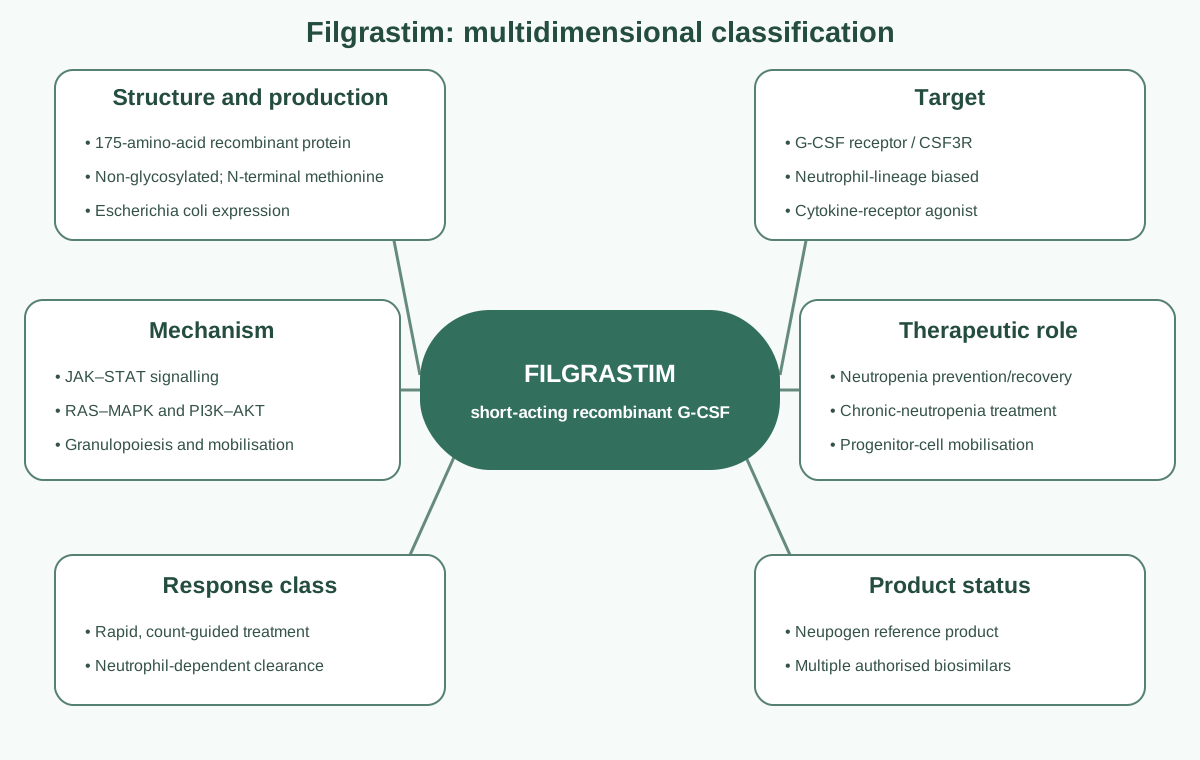
Figure 1. Filgrastim is simultaneously a recombinant cytokine, a G-CSFR agonist, a short-acting granulopoietic medicine and a progenitor-cell mobilisation agent. These overlapping classifications explain why safety surveillance must be stratified by treatment purpose and duration.
Filgrastim must be distinguished from pegfilgrastim, a pegylated long-acting form, and from lenograstim, a glycosylated recombinant G-CSF produced in mammalian cells. They share receptor pharmacology but are not interchangeable descriptions of one product.
Discovery and development history
Colony-stimulating activity was recognised through experiments showing that soluble factors could support formation of discrete haematopoietic cell colonies. Purification, cloning and expression of human G-CSF in the mid-1980s converted this biological observation into a reproducible therapeutic protein. Early clinical studies then showed that recombinant G-CSF could accelerate neutrophil recovery after myelosuppressive chemotherapy.
Amgen's Neupogen is the reference filgrastim product in the United States and underlies the historical development described here. The Amgen portfolio entry is therefore not a separate biosimilar substance: it is the originator/reference-product context for filgrastim. This distinction matters when mapping company portfolios and when interpreting reports that contain only an active-substance name.
Filgrastim was developed as the bacterial-expression product initially known as recombinant methionyl human G-CSF. Neupogen received its initial United States approval in 1991. Its use expanded from chemotherapy-associated neutropenia into bone-marrow transplantation, peripheral-blood progenitor-cell mobilisation and severe chronic neutropenia. European reference-product use likewise dates from the early 1990s, although Neupogen was authorised through national procedures rather than a modern centralised EPAR.
The product also became an important test case for biosimilar regulation. EU-authorised filgrastim biosimilars include products such as Zarzio, Filgrastim Hexal, Nivestim and Accofil. Their approvals were based on a totality-of-evidence demonstration of high similarity to the reference medicine, not on independent repetition of every historical efficacy trial. This expanded access while reinforcing the need to identify the actual product and batch in safety reports.
Molecular design and endogenous comparator
Endogenous human G-CSF is a glycoprotein cytokine. Filgrastim has the same amino-acid sequence as the principal human G-CSF form except for an added N-terminal methionine and is not glycosylated because it is produced in E. coli. These differences do not change its intended receptor agonism, but they are defining quality attributes rather than incidental manufacturing details.
The medicine is supplied in product-specific concentrations and devices for subcutaneous injection and, in authorised settings, intravenous infusion. Dose, route, dilution, compatibility and timing relative to chemotherapy must follow the applicable product information. Confusing micrograms, million units, syringe strengths or a short-acting with a long-acting G-CSF is a preventable medication risk.
G-CSF receptor signalling
G-CSFR is a class I cytokine receptor encoded by CSF3R. Filgrastim binding promotes receptor rearrangement and activation of receptor-associated Janus kinases. Phosphorylated receptor complexes recruit signalling proteins and initiate several interacting pathways rather than one linear cascade.
- JAK–STAT signalling, especially STAT3 and STAT5, regulates survival, proliferation, differentiation and feedback genes.
- RAS–RAF–MEK–ERK signalling contributes to proliferation and maturation.
- PI3K–AKT signalling supports survival, metabolism and cellular function.
- Negative regulators, receptor internalisation and degradation restrain the response.
The outcome depends on developmental context. In myeloid precursors, signalling expands and differentiates the neutrophil lineage and shortens maturation time. In mature neutrophils, G-CSF can increase phagocytic and microbicidal functions. It also alters marrow–blood trafficking. Mobilisation of haematopoietic progenitor cells reflects remodelling of marrow retention signals and the stromal niche; it is not simply “overproduction” of stem cells.
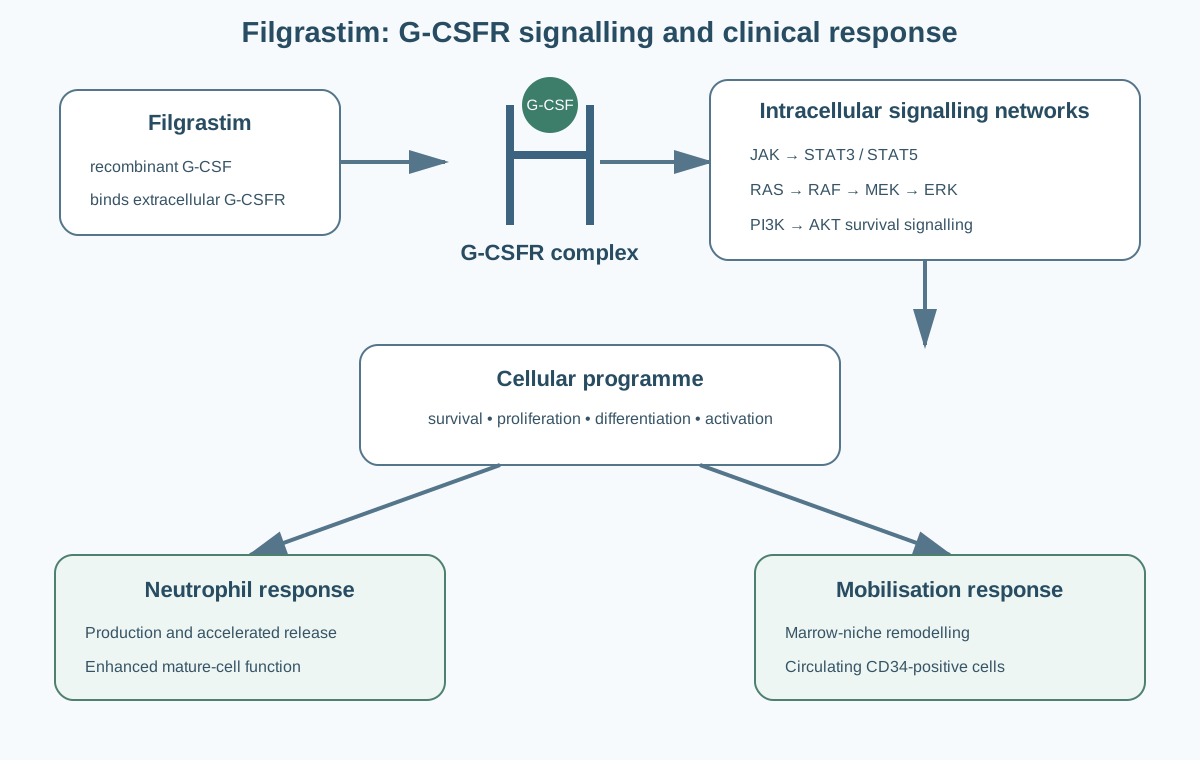
Figure 2. Filgrastim activates several G-CSFR-associated signalling networks. The clinically observed ANC reflects marrow production, accelerated release, redistribution and neutrophil-dependent clearance; receptor activation also contributes indirectly to progenitor-cell mobilisation.
Pharmacokinetics and response dynamics
After subcutaneous administration, filgrastim is absorbed into the systemic circulation and eliminated through renal and neutrophil-mediated pathways. As neutrophil numbers recover, receptor-mediated clearance increases. This nonlinear relationship helps explain why exposure and apparent half-life vary with marrow state and ANC.
The ANC commonly rises within a day, but an early transient increase can reflect release of mature cells before the later nadir caused by chemotherapy. Treatment decisions therefore rely on serial counts in relation to the chemotherapy cycle, not a single post-dose value. After discontinuation, circulating neutrophils generally fall over several days as the pharmacological stimulus ends.
The therapeutic objective is not indiscriminate leukocytosis. It is to reduce the depth or duration of clinically consequential neutropenia, support recovery, or produce an adequate mobilisation yield. Dose adjustment and stopping rules are indication- and product-specific.
Established clinical-use domains
Cytotoxic chemotherapy and transplantation
In patients receiving established myelosuppressive chemotherapy, filgrastim reduces the duration of neutropenia and the incidence of febrile neutropenia in authorised settings. It is also used after myeloablative therapy and transplantation to accelerate neutrophil recovery. Administration too close to cytotoxic chemotherapy is avoided according to product instructions because rapidly dividing myeloid cells may be more sensitive to treatment.
The benefit is regimen- and patient-dependent. Baseline marrow reserve, age, disease, previous treatment, chemotherapy intensity and prior febrile neutropenia influence the need for prophylaxis. Filgrastim should not be interpreted as a substitute for antimicrobial assessment or treatment when fever occurs.
Peripheral-blood progenitor-cell mobilisation
Filgrastim can mobilise autologous or allogeneic progenitor cells from marrow into peripheral blood for leukapheresis. Counts and collection yield guide the procedure. Healthy donors require independent eligibility assessment, informed consent and monitoring because they receive no direct therapeutic benefit.
Severe chronic neutropenia
Long-term therapy can increase neutrophils and reduce infection-related events in severe congenital, cyclic or idiopathic neutropenia. Diagnosis matters: congenital neutropenia carries an underlying risk of myelodysplastic syndrome (MDS) and acute myeloid leukaemia (AML), whereas acquired autoimmune or idiopathic disease has a different natural history. Marrow morphology, cytogenetics and molecular findings are therefore part of longitudinal care when clinically indicated.
An association between higher filgrastim requirements and clonal evolution has been observed in congenital neutropenia cohorts, but this does not by itself prove that filgrastim causes transformation. Disease genotype, severe marrow stress and treatment exposure are interrelated. Pharmacovigilance should preserve dose intensity, duration, response and clonal data rather than forcing a binary attribution.
Advanced HIV-associated neutropenia
EU product information includes persistent neutropenia in advanced HIV infection when other management options are inappropriate. Evaluation should still address causative medicines, infection, nutritional deficiency and marrow disease. The indication is correction of neutropenia and reduction of bacterial-infection risk, not treatment of HIV itself.
Predictable and common adverse effects
Bone and musculoskeletal pain are characteristic pharmacodynamic adverse effects, particularly during rapid marrow expansion or progenitor-cell mobilisation. Headache, fever and injection-site reactions may occur. Leukocytosis is usually laboratory-detected and is managed through indication-specific monitoring and dose interruption rules.
Thrombocytopenia can occur and may be difficult to separate from chemotherapy, transplantation or underlying marrow disease. Splenomegaly is especially relevant during sustained use and mobilisation. Causality assessment should compare serial blood counts, spleen findings, dose timing and concomitant treatments rather than relying on temporal association alone.
Serious and uncommon safety syndromes
Several rare reactions demand rapid recognition because delay can be dangerous:
| Syndrome | Clinical clue | Immediate PV/clinical data priorities |
|---|---|---|
| Splenic rupture | Left upper abdominal or shoulder-tip pain, hypotension, falling haemoglobin | Dose dates, mobilisation status, spleen imaging, operative findings |
| ARDS or pulmonary toxicity | Fever, infiltrates, hypoxaemia or respiratory distress during neutrophil recovery | Imaging, oxygenation, infection work-up, fluid status, chemotherapy |
| Capillary leak syndrome | Hypotension, hypoalbuminaemia, haemoconcentration and oedema | Serial pressure, albumin/haematocrit, organ support, alternative causes |
| Serious hypersensitivity | Anaphylaxis or systemic allergic features | Product/device, excipients, route, latency, treatment and rechallenge |
| Glomerulonephritis | Haematuria, proteinuria, oedema or renal impairment | Urinalysis, renal function, biopsy if performed, response to interruption |
| Aortitis | Persistent fever, abdominal/back pain, raised inflammatory markers | Imaging, cultures, autoimmune evaluation and dechallenge |
| Sickle-cell crisis | Pain crisis or acute chest syndrome in a person with sickle-cell disease or trait | Genotype/status, counts, hydration, hypoxia and competing triggers |
Cutaneous small-vessel vasculitis and Sweet syndrome have also been reported. These entities require clinical characterisation; coding an undifferentiated “rash” loses information important to signal assessment.
Risk differs by exposed population
Patients with malignancy
Events occur against a background of chemotherapy, infection, transfusion, corticosteroids and progressive cancer. Febrile neutropenia despite prophylaxis is not automatically lack of efficacy: regimen risk, adherence, timing, dose, marrow infiltration and intercurrent infection must be assessed. Reports of MDS or AML after cancer therapy require detailed prior chemotherapy and radiotherapy exposure because therapy-related myeloid neoplasms have powerful competing causes.
Product information cautions that G-CSF can stimulate myeloid cells in vitro and that safety in myelodysplastic syndrome and chronic myeloid leukaemia requires particular consideration. Filgrastim is supportive therapy; it does not establish the diagnosis or safety of continuing a potentially leukemic myeloid process.
Severe chronic neutropenia
Long exposure makes cumulative dose, changing dose requirement, spleen size, bone density, cytopenias and marrow surveillance relevant. Transformation should be analysed against the subtype and genotype of neutropenia. A rising dose requirement or falling response can be clinically meaningful even before a report is coded as lack of efficacy.
Healthy donors
Short-term donor reactions are usually bone pain, headache and transient laboratory changes, but splenic rupture, thrombosis, serious pulmonary events and severe allergy are recognised rare concerns. Donor follow-up datasets have not demonstrated a clear excess of haematological malignancy attributable to short-course filgrastim, although continued surveillance remains appropriate because healthy donors have no therapeutic benefit and very rare delayed outcomes require large cohorts and long observation.
Pregnancy, lactation and paediatrics
Pregnancy exposure requires product-specific assessment. Placental transfer and reproductive findings cannot be inferred solely from the fact that filgrastim resembles an endogenous cytokine. Reports should capture gestational timing, indication, dose, maternal disease and chemotherapy, pregnancy outcome and neonatal blood counts where available.
Paediatric experience includes chemotherapy-associated neutropenia and severe chronic neutropenia, but the underlying disease spectrum differs from adults. Growth, splenomegaly, bone health, cytogenetics and long-term exposure are particularly relevant in congenital disorders. Dose must be calculated and verified against the product-specific instructions.
Biosimilars, quality and traceability
An authorised filgrastim biosimilar has demonstrated high similarity to the reference medicine in quality characteristics, biological activity, pharmacokinetics and the required clinical evidence. Biosimilarity is not established by merely sharing the INN. Conversely, spontaneous-report counts cannot establish comparative safety because exposure, market share, indications, reporting behaviour and follow-up differ.
Every case should record brand, batch, strength, device, route and country when obtainable. This is particularly important after switching and for hypersensitivity, apparent lack of effect, clusters or suspected product-quality problems. Cold-chain deviation, freezing, agitation, dilution and administration-device issues should be investigated when plausible, but a clinical event should not be reclassified as a quality defect without evidence.
Product-specific pharmacovigilance framework
The core analytical unit is the treatment–count–event trajectory:
indication and baseline marrow state → product, dose and timing → serial ANC and other counts → clinical outcome → interruption/rechallenge → longer-term outcome
Minimum useful case information includes:
- exact filgrastim product, batch, concentration, device, route and dose dates;
- indication, chemotherapy or transplant schedule, and prophylactic versus therapeutic intent;
- baseline and serial ANC, total leukocyte and platelet counts with dates;
- infection, fever, cultures, antimicrobial treatment and hospitalisation;
- marrow disease, previous cytotoxic exposure and concomitant medicines;
- imaging, pathology and laboratory evidence for the reported syndrome;
- action taken, dechallenge, rechallenge and outcome.
For mobilisation, add donor/patient status, weight-based dose, leukapheresis dates, CD34-positive yield and spleen or thrombotic findings. For severe chronic neutropenia, add diagnostic subtype, genotype if known, longitudinal dose requirement, marrow/cytogenetic data and duration of follow-up.
Signal detection and governance
Aggregate analysis should be stratified by indication and exposure pattern. Pooling one-day donor exposure with years of congenital-neutropenia treatment obscures both denominators and biological context. Serious syndromes may be detected through a combination of coded terms—for example fever plus back pain plus inflammatory imaging in aortitis—so medical review should complement preferred-term counts.
An effective pharmacovigilance system links individual-case review, literature surveillance, product-quality investigation, medical information, risk management and periodic benefit–risk evaluation. It also verifies whether current product information adequately supports recognition and management of rare risks.
Common analytical failures include:
- treating neutrophil recovery as instantaneous or interpreting one ANC without the chemotherapy timeline;
- recording only “G-CSF” and losing product and batch identity;
- attributing MDS/AML to filgrastim without congenital-disease or prior cytotoxic history;
- coding abdominal pain without evaluating splenic rupture or aortitis;
- combining donors, oncology patients and chronic-neutropenia patients in one crude reporting rate;
- treating every febrile-neutropenia event as product ineffectiveness.
Practical checklist
- Confirm the indication, treatment objective and authorised product instructions.
- Verify microgram or unit expression, weight-based calculation, device and route.
- Place each dose and blood count on the chemotherapy, transplant or mobilisation timeline.
- Investigate fever clinically even when filgrastim prophylaxis was used.
- Escalate left upper abdominal/shoulder pain, respiratory distress, shock physiology or suspected aortitis promptly.
- Preserve brand and batch traceability, especially after switching.
- Separate underlying congenital-neutropenia transformation risk from treatment attribution.
- Follow healthy donors according to applicable donor standards and capture delayed serious outcomes.
Key takeaways
Filgrastim is a short-acting, non-glycosylated recombinant G-CSF produced in E. coli. It activates G-CSFR-associated JAK/STAT, RAS/MAPK and PI3K/AKT networks to expand and mature neutrophil precursors, enhance mature neutrophil function and support progenitor-cell mobilisation.
Its safety cannot be interpreted without indication and time. Bone pain and count changes reflect expected pharmacology; splenic rupture, ARDS, capillary leak, glomerulonephritis, serious hypersensitivity, sickle-cell crisis and aortitis are uncommon but clinically important risks.
Long-term clonal evolution in severe congenital neutropenia and long-term safety in healthy donors require careful, population-specific interpretation. High-quality pharmacovigilance preserves the product, batch, exposure pattern, serial counts, disease biology and competing treatments.
References
- Electronic Medicines Compendium. Neupogen Singleject 30 MU/0.5 mL: Summary of Product Characteristics.
- U.S. Food and Drug Administration. Neupogen (filgrastim) Prescribing Information. 2025.
- European Medicines Agency. Zarzio: EPAR.
- European Medicines Agency. Nivestim: EPAR.
- European Medicines Agency. Accofil: EPAR.
- European Medicines Agency. Filgrastim Hexal: EPAR.
- Nagata S, Tsuchiya M, Asano S, et al. Molecular cloning and expression of cDNA for human granulocyte colony-stimulating factor. Nature. 1986;319:415–418.
- Souza LM, Boone TC, Gabrilove J, et al. Recombinant human granulocyte colony-stimulating factor: effects on normal and leukemic myeloid cells. Science. 1986;232:61–65.
- Welte K, Gabrilove J, Bronchud MH, Platzer E, Morstyn G. Filgrastim (r-metHuG-CSF): the first 10 years. Blood. 1996;88:1907–1929.
- Panopoulos AD, Watowich SS. Granulocyte colony-stimulating factor: molecular mechanisms of action during steady state and emergency hematopoiesis. Cytokine. 2008;42:277–288.
- Dale DC, Bolyard AA, Marrero T, et al. Long-term outcomes for patients with severe chronic neutropenia treated with granulocyte colony-stimulating factor. Blood Advances. 2022;6:3861–3869.
- Rosenberg PS, Zeidler C, Bolyard AA, et al. Stable long-term risk of leukaemia in patients with severe congenital neutropenia maintained on G-CSF therapy. Br J Haematol. 2010;150:196–199.
- Stefanski HE, et al. Long-term outcomes of peripheral blood stem cell unrelated donors mobilized with filgrastim. Blood Advances. 2024;8:4189–4194.
- European Medicines Agency. Guideline on similar biological medicinal products. CHMP/437/04 Rev 1.
-
European Medicines Agency. Guideline on good pharmacovigilance practices, Product- or Population-Specific Considerations II: Biological medicinal products.
-
U.S. Food and Drug Administration. Purple Book: Neupogen (filgrastim). Current US biological-product record. https://purplebooksearch.fda.gov/. Accessed 4 September 2026.
- U.S. Food and Drug Administration. Neupogen (filgrastim): orphan designation and approval records. Includes Amgen-sponsored indication history. https://www.accessdata.fda.gov/scripts/opdlisting/. Accessed 4 September 2026.
Regulatory Note
This article is an educational scientific and pharmacovigilance review, not prescribing or donor-selection advice. Indications, timing relative to chemotherapy, dosing, routes, count-based adjustments, contraindications and risk-minimisation instructions differ by product and jurisdiction and may change. Consult current product-specific information and applicable transplant or donor standards. Filgrastim, pegfilgrastim, lenograstim and other G-CSF products must not be treated as identical for prescribing, administration or traceability.