Fremanezumab: Mechanism, Clinical Safety and Pharmacovigilance
Fremanezumab is a monoclonal antibody that binds calcitonin gene-related peptide (CGRP), a signalling molecule involved in migraine. By preventing CGRP from binding to its targets, treatment can reduce migraine frequency. The treatment is preventive rather than an acute rescue medicine, and it is administered by subcutaneous injection on a monthly or quarterly schedule.
This clinical role shapes pharmacovigilance. Migraine frequency fluctuates, patients often use acute medicines and other preventive therapies, and a reported event may occur well after an injection. A credible assessment must establish the patient’s baseline pattern, exposure interval, co-treatment and the event’s own clinical features. It must also distinguish a biologically plausible concern from a risk established in current product information or clinical evidence.
- Fremanezumab: Mechanism, Clinical Safety and Pharmacovigilance
- Purpose and Clinical Context
- CGRP Blockade and Its Interpretive Limits
- Regulatory Context and Regional Labelling
- Safety Assessment and Follow-up
- Causality, Exposure Duration and Competing Explanations
- Signal Detection and Benefit-Risk Review
- Practical Pharmacovigilance Implementation
- Potential Failure Modes
- Inspection and Governance Perspective
- Practical QPPV Checklist
- Key Takeaways
- References
- Regulatory Note
Purpose and Clinical Context
The EU indication is migraine prevention in adults with at least four migraine days per month. The current product information describes either monthly or quarterly administration and permits self-injection after appropriate training.[1,2] Exact dose, interval, presentation and injection date should be captured because the dosing schedule determines the temporal context of a suspected adverse event.
Fremanezumab is used in a condition with episodic attacks and variable baseline burden. Headache days, migraine days, aura, attack severity, associated symptoms, rescue treatment and functional impact provide a clinical baseline against which change can be judged. Without this information, a change in headache pattern can be difficult to separate from natural variability, medication overuse, a new diagnosis or another treatment effect.
The product should be identified precisely as a biological medicinal product, including name and batch where available. The EU product information explicitly emphasises traceability for biological medicines.[2] This is useful not only for case processing but also for identifying a potential product-quality, storage or administration question.
CGRP Blockade and Its Interpretive Limits
CGRP contributes to the development of migraine. Fremanezumab binds CGRP and limits its ability to bind to cellular targets, reducing signalling involved in migraine. The mechanism provides a rationale for preventive efficacy, but it does not establish that every vascular, neurological or headache-related event is caused by treatment.
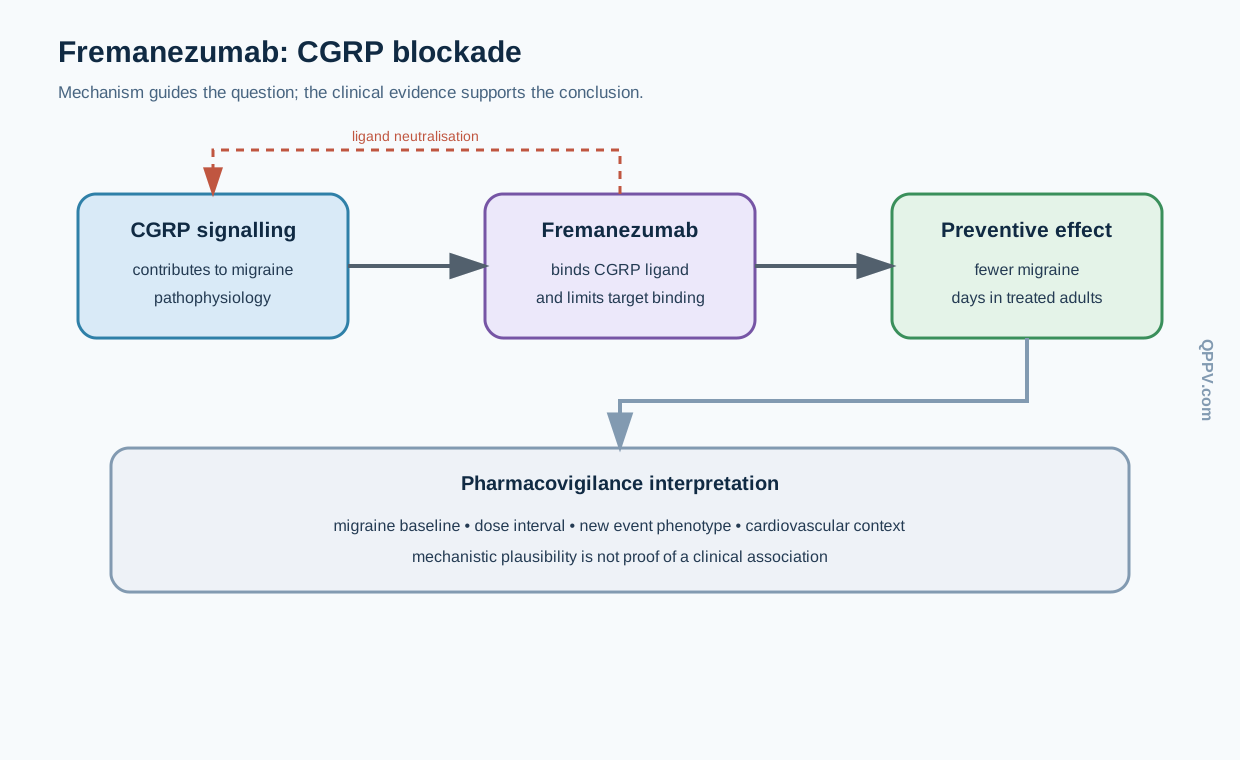
Figure 1. Fremanezumab binds CGRP and reduces signalling involved in migraine. Mechanistic plausibility can guide surveillance questions, but clinical evidence is needed to establish the meaning of a reported event.
The current EU product information identifies injection-site reactions as common and describes hypersensitivity reactions, including rare anaphylactic reactions. It notes that serious hypersensitivity can occur within 24 hours or, less commonly, later.[2] This timing matters for follow-up: absence of symptoms immediately after administration does not exclude a delayed reaction, while a late event still requires clinical assessment and consideration of other causes.
CGRP is vasoactive, so cardiovascular history may be scientifically relevant when evaluating an event. The EU product information notes that patients with certain major cardiovascular diseases were excluded from clinical studies and that safety data in those patients are therefore unavailable.[2] This is an evidence limitation. It does not, by itself, demonstrate cardiovascular harm or establish a contraindication beyond the current product information. PV narratives should preserve that distinction between mechanism-based concern, data gaps and supported safety findings.
Regulatory Context and Regional Labelling
The current EMA product information defines the EU indication, dosing options, contraindications, traceability requirements and known risks. Regional labels may not be identical. Where a case arises outside the EU, the product information applicable to that market and exposure date governs local interpretation; a warning in one region should not be silently presented as a universal EU requirement.
Fremanezumab’s preventive role also changes how dechallenge is interpreted. A single missed dose may not create an immediate off-treatment state, and migraine activity can vary independently of medication exposure. The assessment should consider the actual dosing interval, timing of the event and the disease’s prior course before attributing improvement or recurrence to treatment interruption.
Safety Assessment and Follow-up
Injection-site reactions and hypersensitivity are distinct clinical domains. Injection-site pain, erythema, induration or pruritus should be described by location, severity, onset, duration, treatment and outcome. For possible systemic hypersensitivity, document the symptom sequence, timing after the injection, skin or mucosal findings, respiratory or circulatory involvement, treatment, recurrence and any decision to continue or discontinue treatment. A report should not be reduced to “allergy” without the evidence needed to distinguish a local reaction from a systemic event.
| Assessment question | Information that can change the conclusion |
|---|---|
| Migraine baseline | Migraine days, attack pattern, aura, severity, functional effect and recent change |
| Preventive exposure | Dose, monthly or quarterly interval, injection date, interruptions, adherence and presentation |
| Acute treatment | Rescue medicines, dose and timing, medication-overuse context and response |
| Injection-site event | Site, morphology, onset, duration, severity, management and outcome |
| Hypersensitivity | Time from injection, symptoms, objective findings, treatment, recurrence and disposition |
| Cardiovascular or neurological event | Diagnostic evidence, event phenotype, baseline disease, risk factors, co-medications and alternatives |
| Traceability | Exact product, batch where available, self-administration details and any product complaint |
Follow-up should be adapted to the reported event. A local injection reaction does not require a full cardiovascular work-up. A vascular or neurological event should be described with enough clinical detail to support diagnosis and to distinguish it from migraine-associated symptoms, acute vascular disease, other medicines or comorbid conditions.
The patient’s migraine history matters particularly when a new headache is reported. Establish whether the phenotype resembles prior attacks or differs in onset, duration, associated neurological symptoms or severity. A new pattern may warrant clinical investigation independently of suspected drug causality. Pharmacovigilance should preserve the diagnosis and work-up rather than infer a specific vascular event from a symptom label.
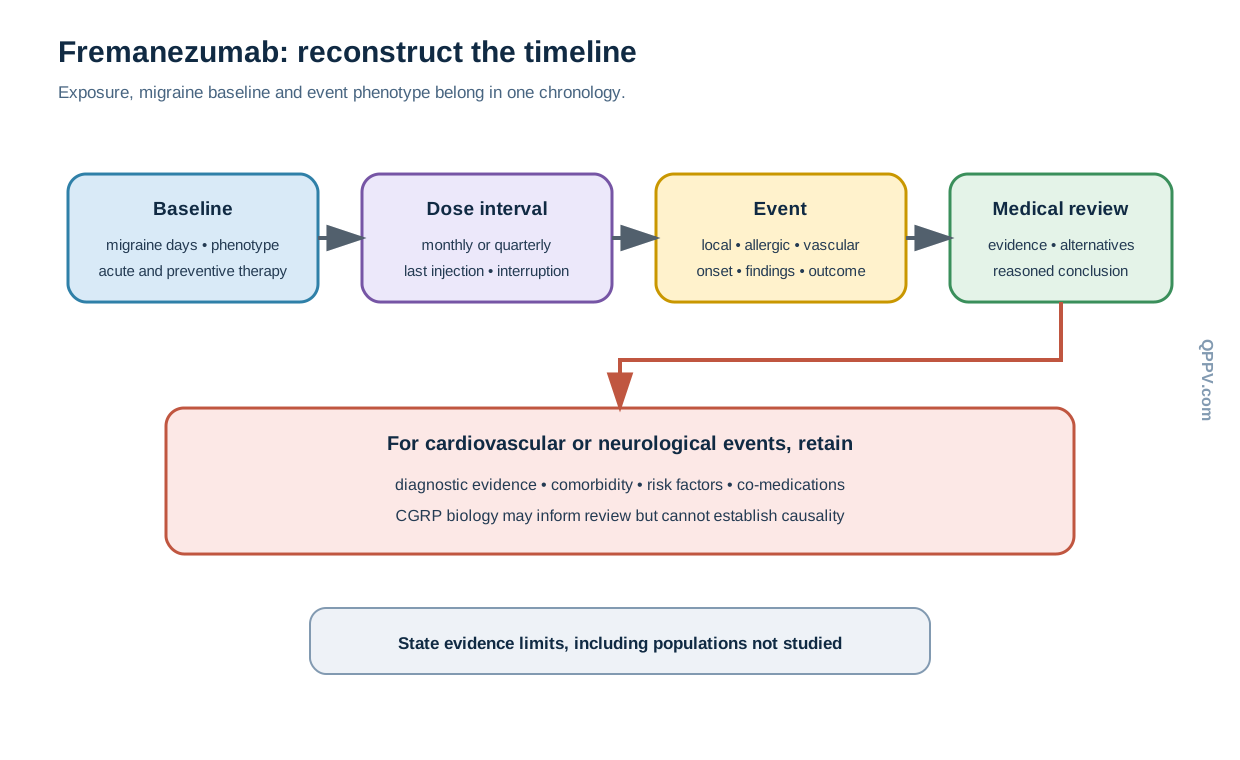
Figure 2. Interpretation connects the dose interval and migraine baseline with the reported phenotype, objective evidence, concurrent medicines and patient risk factors.
Causality, Exposure Duration and Competing Explanations
Subcutaneous antibody exposure persists beyond the injection itself. Accordingly, a short treatment interruption should not be treated as immediate pharmacological dechallenge. The relevant chronology includes the last administered dose, the scheduled interval, the date treatment was stopped or delayed, and the timing of any improvement or recurrence. Disease variability, changes in acute medicines and regression to the mean may complicate apparent treatment-response relationships.
For a cardiovascular event, capture diagnostic criteria and objective findings, as well as hypertension history, vascular risk factors, smoking status where relevant, concurrent medicines, dehydration or acute illness and the migraine context. The fact that CGRP has physiological vascular actions can support a reason to examine the event carefully; it cannot replace evidence of a clinical association.
Clinical-trial exclusions also matter when evaluating external validity. If a patient’s major cardiovascular condition was not represented in pivotal trials, the report may provide useful post-authorisation experience, but a single case cannot quantify risk. Aggregate review should identify whether similar medically confirmed events recur in a plausible pattern and should state the uncertainty associated with limited exposure or small numbers.
Signal Detection and Benefit-Risk Review
Aggregate review should preserve the dosing schedule, migraine phenotype, baseline cardiovascular status and use of acute or other preventive medicines where these factors are relevant. Separate injection-site reactions from systemic hypersensitivity and from medically confirmed cardiovascular or neurological events. A broad headache group may combine the underlying indication with potentially new adverse-event phenotypes; a clear case definition is needed before counts are interpreted.
Spontaneous reporting cannot establish event incidence without a suitable denominator and defined exposure. Reporting stimulation, increased awareness and changes in migraine treatment practice may alter the volume and composition of reports. Signal assessment should integrate the clinical narratives, current regional product information, trial evidence and post-authorisation data. The resulting benefit-risk conclusion should make clear what is supported, what remains uncertain and what additional evidence would materially change the assessment.[3,4]
Practical Pharmacovigilance Implementation
A useful intake process should distinguish preventive exposure from acute migraine treatment and record the administered dose and schedule. For self-injected products, patient or caregiver reports may be the only initial source of exact injection timing. Follow-up should confirm the presentation, storage and administration details where relevant, and record product batch information when available.
Recommended operational controls include a targeted hypersensitivity follow-up aid; a structured way to capture monthly versus quarterly administration; case review criteria for newly reported cardiovascular or neurological events; and aggregate outputs that distinguish common local reactions from medically confirmed systemic events. These are recommended practices unless a specific requirement applies. Controls should support clinical reasoning and traceability without implying that the EU product information establishes risks it does not list.
Potential Failure Modes
The following are illustrative failure modes, not published inspection findings:
- A migraine attack is coded as an adverse event without establishing whether it differs from baseline.
- The dose schedule and date of the last injection are missing.
- A delayed hypersensitivity reaction is excluded because it did not occur immediately after injection.
- A local injection-site reaction and a systemic allergic event are grouped together.
- A cardiovascular event is attributed to CGRP blockade based on mechanism alone, without diagnostic evidence.
- A patient with major cardiovascular disease is treated as represented by trial populations despite the label’s stated evidence limitation.
- Improvement after withholding treatment is interpreted as definitive dechallenge without considering persistent exposure or migraine variability.
- A suspected batch or administration issue is not linked to the quality system.
Review should identify whether the failure reflects incomplete intake, unclear medical-review criteria, inadequate access to source records or a limitation in the safety database. Corrective actions should target the cause and be evaluated against subsequent cases.
Inspection and Governance Perspective
Inspection evidence may include case-processing instructions, follow-up templates, medical-review records, product and batch dictionaries, signal evaluations, periodic safety reports and governance decisions. Reviewers may ask whether the system distinguishes a known labelled risk from a hypothesis, whether cardiovascular case narratives contain enough diagnostic detail, and whether regional product information is kept current.
Risk-minimisation effectiveness should be evaluated against the intended outcome. Training or distribution of product information may be process evidence, but it does not alone demonstrate improved recognition, assessment or reporting. Where a safety concern is being monitored because evidence is limited, governance records should show the rationale, evidence reviewed, remaining uncertainty and conditions for reassessment.
Practical QPPV Checklist
- Confirm the indication, region and product information applicable to the exposure.
- Record product, presentation, batch where available, dose, injection date and monthly or quarterly schedule.
- Establish the patient’s migraine baseline and whether the reported headache represents a new phenotype.
- Capture acute and preventive concomitant medicines and their timing.
- For local reactions, document site, morphology, severity, onset and outcome.
- For hypersensitivity, capture timing, systemic features, treatment and subsequent dosing decision.
- For cardiovascular or neurological events, preserve diagnostic evidence, risk factors and alternatives.
- Interpret dechallenge against the dosing interval and persistent exposure.
- Maintain separate case definitions for clinically distinct event groups.
- State the limits of available evidence when patients differ from clinical-trial populations.
Key Takeaways
Fremanezumab blocks CGRP signalling involved in migraine prevention. The pharmacovigilance task is to connect that mechanism with a well-described clinical event and exposure chronology, not to treat all headache or vascular events as drug-related. Monthly or quarterly dosing, migraine variability, self-administration and possible delayed hypersensitivity all affect the quality of case reconstruction.
The EU product information’s limited safety evidence in certain major cardiovascular disease populations should be presented as a limitation, not as proof of harm. Preserving that distinction supports transparent medical review and proportionate benefit-risk evaluation.
References
- European Medicines Agency: fremanezumab EPAR.
- European Medicines Agency: current fremanezumab product information.
- European Medicines Agency: Good pharmacovigilance practices.
- ICH E2C(R2): Periodic benefit-risk evaluation report guideline.
Regulatory Note
This article is an educational pharmacovigilance reference. It does not replace current regulator-approved product information, applicable legislation or clinical judgment. Dosing, contraindications and warnings may differ across jurisdictions and can change over time. Consult the product information applicable to the actual exposure and market.