Gefurulimab (Klygefa): Dual-Binding C5 Nanobody Development and Pharmacovigilance in Generalised Myasthenia Gravis
Gefurulimab is a humanised dual-binding VHH antibody designed to inhibit complement component C5 while simultaneously binding serum albumin. Developed as ALXN1720, the molecule combines a C5-binding single-domain antibody with an albumin-binding domain that prolongs systemic exposure. This architecture supports once-weekly subcutaneous administration rather than the intravenous dosing used by some earlier terminal-complement inhibitors.[1,2]
On 17 September 2026, the European Medicines Agency's Committee for Medicinal Products for Human Use (CHMP) adopted a positive opinion recommending Klygefa for use as add-on to standard therapy in adults with anti-acetylcholine-receptor (AChR) antibody-positive generalised myasthenia gravis (gMG).[1] At the time of this article, the European Commission decision and final EU Summary of Product Characteristics (SmPC) had not yet been published. The distinction is important: a positive CHMP opinion is a major regulatory milestone, but it is not itself the final European marketing authorisation.
Gefurulimab is pharmacovigilance-relevant for more than its novelty as a VHH-based biologic. Blocking C5 suppresses the terminal complement pathway, which is therapeutically useful in AChR-antibody-positive gMG but also interferes with an important defence against invasive Neisseria infection. Its intended self-administration introduces device, injection and adherence considerations. Its pivotal controlled trial lasted 26 weeks, so uncommon infection phenotypes, longer-term immunogenicity, pregnancy outcomes and safety during broad real-world exposure remain important post-authorisation evidence domains.[1,3]
This article follows gefurulimab from its molecular design and early clinical development through the PREVAIL phase III programme and 2026 European regulatory opinion, then connects mechanism, clinical evidence and administration design to the pharmacovigilance controls needed as exposure expands.
- Gefurulimab (Klygefa): Dual-Binding C5 Nanobody Development and Pharmacovigilance in Generalised Myasthenia Gravis
- Generalised Myasthenia Gravis and the Role of Complement
- From Conventional Antibodies to a Dual-Binding VHH
- Early Clinical Development
- PREVAIL: Phase III Evidence in AChR-Antibody-Positive gMG
- The 2026 European Regulatory Milestone
- Terminal-Complement Blockade and Serious Infection Risk
- Myasthenic Worsening: Disease, Infection or Treatment Failure?
- Immunogenicity and Loss of Pharmacodynamic Effect
- Self-Administration and the Drug-Device Interface
- Injection-Site and Hypersensitivity Events
- Pregnancy, Lactation and Other Evidence Gaps
- Practical Pharmacovigilance Framework
- Long-Term Evidence and the Meaning of "No Meningococcal Infections"
- Relationship to Other C5 Inhibitors
- Inspection and Governance Perspective
- Potential Failure Modes
- Learning Example
- Practical Checklist
- Key Takeaways
- References
- Regulatory Note
Generalised Myasthenia Gravis and the Role of Complement
Myasthenia gravis is an autoimmune disorder of neuromuscular transmission. In many patients with generalised disease, pathogenic IgG autoantibodies target the acetylcholine receptor at the postsynaptic neuromuscular junction. These antibodies can impair signalling through several mechanisms, including receptor cross-linking and internalisation, direct interference with receptor function and activation of the classical complement pathway.
Complement activation is especially relevant to C5-directed therapy. Upstream activation ultimately leads to cleavage of C5 into C5a and C5b. C5b participates in assembly of the terminal complement complex, while C5a has potent inflammatory activity. At the neuromuscular junction, complement-mediated injury contributes to structural damage and impaired transmission.
Blocking C5 therefore intervenes downstream in the complement cascade without directly eliminating the pathogenic autoantibody. This explains both the therapeutic rationale and an important limitation: treatment can reduce complement-mediated injury, but it does not remove every mechanism capable of contributing to myasthenic weakness. Clinical deterioration still requires assessment for infection, inadequate disease control, medication effects, treatment interruption and other triggers.
From Conventional Antibodies to a Dual-Binding VHH
Gefurulimab was engineered as a compact bispecific VHH molecule. VHH domains are single-domain antigen-binding fragments derived from heavy-chain-only antibodies. In the gefurulimab programme, C5-binding and human-serum-albumin-binding VHHs were isolated from llama immune libraries and humanised.[2]
The final molecule places an albumin-binding VHH and a C5-binding VHH in tandem through a flexible linker. The C5-binding domain recognises the macroglobulin 4 and 5 regions of C5 and is proposed to prevent productive interaction with the C5 convertase. The albumin-binding domain provides half-life extension. Preclinical characterisation showed simultaneous binding to C5 and albumin and potent inhibition of terminal complement activity initiated through the classical, lectin and alternative pathways.[2]
This is not merely a formulation detail. The architecture connects molecular design to the eventual treatment model: high-concentration formulation, subcutaneous delivery and weekly dosing. For pharmacovigilance, the same design means that safety assessment must consider both the biological consequences of sustained terminal-complement inhibition and the practical consequences of repeated self-injection.
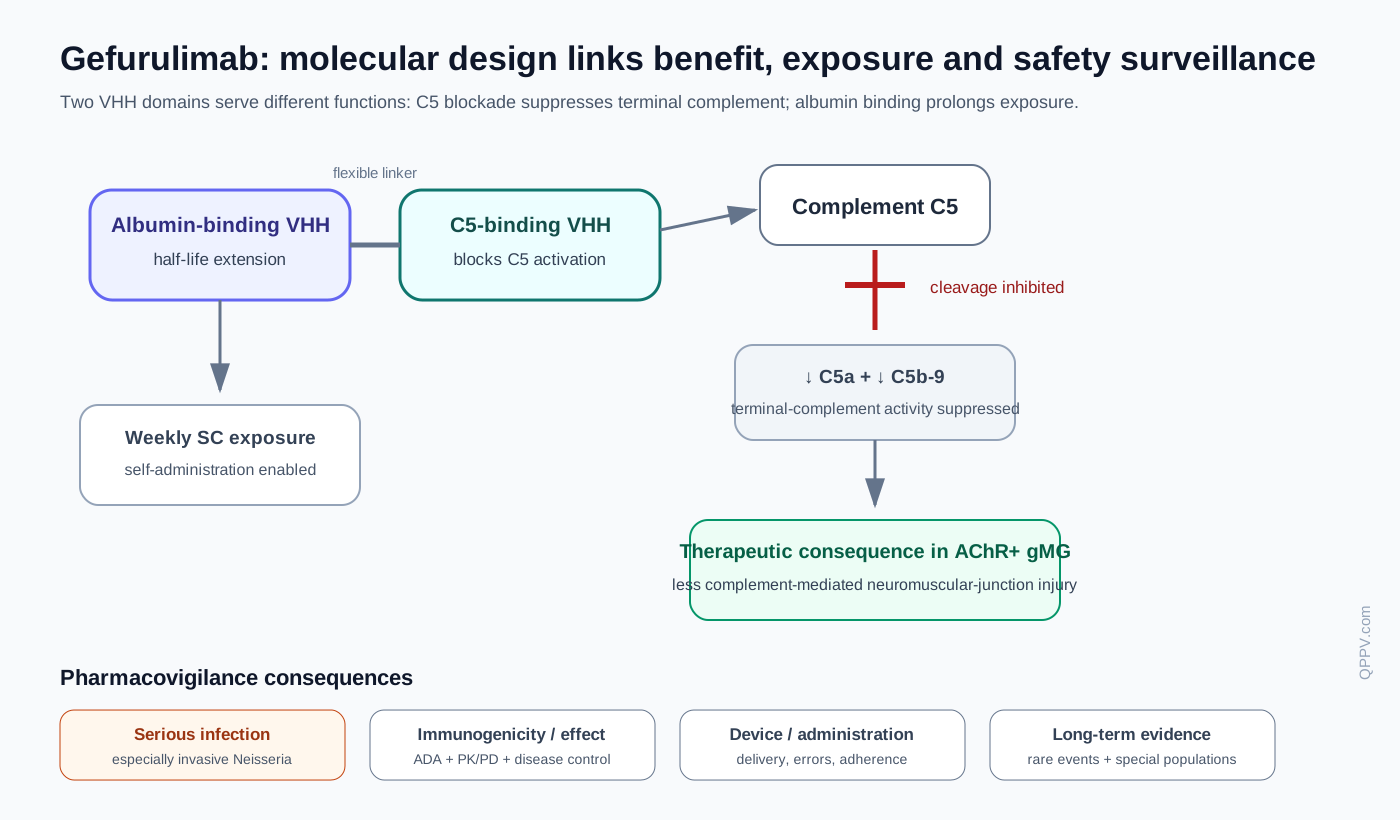
Figure 1. Gefurulimab combines a C5-binding VHH with an albumin-binding VHH. C5 blockade suppresses terminal-complement activation at the neuromuscular junction, while albumin binding supports prolonged exposure and weekly subcutaneous dosing. The same mechanism links therapeutic benefit to infection surveillance, and the delivery model adds administration- and device-related safety considerations.
Early Clinical Development
The first-in-human programme evaluated ALXN1720 in healthy volunteers. In a phase I randomised, placebo-controlled ascending-dose study, 97 participants received subcutaneous or intravenous dosing. Single subcutaneous doses of at least 100 mg and extended multiple dosing produced complete terminal-complement inhibition as measured by serum free C5 below the prespecified pharmacodynamic threshold. All reported adverse events were mild and no serious adverse events occurred in the study.[4]
Treatment-emergent anti-drug antibodies were detected at low titre in 9 of 73 participants who received subcutaneous ALXN1720; the investigators reported no apparent effect on pharmacokinetics or safety in that dataset.[4] This early result is reassuring but should not be overinterpreted. Immunogenicity can change with longer exposure, larger populations, disease-related immune differences and different concomitant therapies.
The phase I programme also anticipated the mechanistic infection risk. Healthy volunteers were required to receive quadrivalent meningococcal conjugate and serogroup B meningococcal vaccination before exposure.[4] That design choice illustrates a fundamental principle of complement-inhibitor development: infection risk management begins before a meningococcal case occurs because the biological susceptibility is predictable from the mechanism.
PREVAIL: Phase III Evidence in AChR-Antibody-Positive gMG
PREVAIL was a global phase III, double-blind, placebo-controlled trial conducted at 113 sites in 20 countries. It randomised 260 adults with AChR-antibody-positive gMG to gefurulimab or placebo for 26 weeks, followed by an open-label phase for eligible participants.[3]
The primary endpoint was change from baseline in the Myasthenia Gravis Activities of Daily Living (MG-ADL) score at week 26. The key secondary endpoint was change in Quantitative Myasthenia Gravis (QMG) score. Gefurulimab produced statistically significant improvement in both measures. The least-squares mean MG-ADL change was -4.2 with gefurulimab and -2.6 with placebo, a treatment difference of -1.6 points. QMG changed by -4.5 and -2.4 respectively, a difference of -2.1 points.[3]
The trial is useful pharmacovigilance context because benefit appeared early and was sustained through the controlled period. When lack of effect or worsening weakness is reported after authorisation, the case should therefore preserve timing, adherence, dosing, concomitant gMG therapy, infection status and other potential precipitants rather than reducing the report to a generic "drug ineffective" term.
The overall incidence of adverse events in PREVAIL was similar between treatment groups. Common treatment-emergent events with gefurulimab included injection-site reactions, headache, back pain and nasopharyngitis. No meningococcal infections were reported during the controlled trial.[3] Absence of meningococcal disease in 131 gefurulimab-treated patients over 26 controlled weeks does not establish absence of risk under broader or longer exposure; the mechanistic susceptibility created by terminal-complement blockade remains clinically relevant.
The 2026 European Regulatory Milestone
CHMP's 17 September 2026 positive opinion recommended Klygefa as add-on to standard therapy for adults with AChR-antibody-positive gMG. EMA describes gefurulimab as an immunosuppressant that binds and blocks C5, preventing cleavage into C5a and C5b, while albumin binding extends half-life and enables weekly dosing.[1]
The opinion identifies injection-site reactions, back pain, arthralgia, muscle spasms, myalgia, nausea and vomiting among the most common adverse effects.[1] These high-level statements should not be converted into final EU label frequencies or risk-management instructions before the European Commission decision and final product information are published.
For a global pharmacovigilance system, this creates a controlled transitional state. The CHMP opinion establishes the regulator's positive benefit-risk conclusion and proposed indication, but expectedness, local reporting rules and risk-minimisation instructions must use the legally applicable reference documents once authorisation is granted.
| Evidence or regulatory stage | What it established | PV implication |
|---|---|---|
| Molecular/preclinical programme | C5 inhibition plus albumin-mediated half-life extension | Mechanistic infection risk and prolonged complement suppression are predictable |
| Phase I healthy-volunteer programme | SC exposure, complement inhibition, early immunogenicity and tolerability | Established pharmacodynamic effect and informed preventive infection controls |
| PREVAIL, 26-week randomised phase | Efficacy and controlled safety in 260 adults with AChR-Ab+ gMG | Defines common events but has limited power for uncommon or long-latency risks |
| Open-label extension | Longer exposure and sustained disease-control evidence | Extends duration but remains selected clinical-trial exposure |
| CHMP positive opinion, September 2026 | Positive EU benefit-risk recommendation | Final EU SmPC/RMP details remain dependent on completion of authorisation |
Terminal-Complement Blockade and Serious Infection Risk
The most important safety concept follows directly from the mechanism. Terminal complement is critical for defence against Neisseria meningitidis. Pharmacological C5 blockade can therefore create profound susceptibility to invasive meningococcal infection even when patients have been vaccinated.
The appropriate pharmacovigilance question is not simply whether "infection" occurred. A useful case captures organism, anatomical site, culture or molecular confirmation, serogroup where available, vaccination history, prophylactic antibiotics where applicable, timing relative to gefurulimab dosing, complement-inhibitor exposure, clinical severity, intensive-care requirement and outcome.
Vaccination reduces preventable risk but cannot be assumed to eliminate it. The precise vaccination and prophylaxis requirements for Klygefa in the EU should be taken from the final authorised SmPC and risk-management materials when available. Until then, requirements established for other C5 inhibitors should not be copied across and presented as if they were already Klygefa-specific regulatory conditions.
The same principle applies beyond meningococcus. Sustained terminal-complement inhibition can alter susceptibility to other infections, and aggregate surveillance should remain capable of identifying unexpected organism patterns or unusually severe infections. Mechanistic plausibility can justify focused surveillance without implying that every infection is caused by the medicine.
Myasthenic Worsening: Disease, Infection or Treatment Failure?
gMG itself can produce fluctuating weakness, bulbar dysfunction and respiratory compromise. Infection can exacerbate myasthenia. Treatment interruption or inadequate complement inhibition could theoretically contribute to loss of disease control. These overlapping pathways make post-marketing case assessment particularly dependent on chronology.
A report of "myasthenic crisis" should therefore seek respiratory support requirements, infection evidence, last gefurulimab dose, missed doses, concomitant immunosuppression, rescue therapy, MG-ADL or comparable clinical information where available, and outcome. The purpose is not to force every worsening episode into a single causal category but to preserve enough information to distinguish disease fluctuation from a treatment-related pattern.
Immunogenicity and Loss of Pharmacodynamic Effect
Gefurulimab is a humanised biologic and can generate anti-drug antibodies. Early healthy-volunteer data found low-titre treatment-emergent antibodies without an apparent pharmacokinetic or safety effect, but the clinical relevance of immunogenicity requires continued evaluation over longer exposure.[4]
The most informative post-authorisation cases would connect antibody findings, where clinically available, with drug exposure, free-C5 or other pharmacodynamic measures, disease control and hypersensitivity. An isolated positive anti-drug-antibody result is not equivalent to neutralisation or clinical loss of effect.
This distinction is especially important because reduced efficacy in gMG has many competing explanations. A credible immunogenicity signal would require a coherent pattern linking antibody development to altered exposure or complement inhibition and to clinically meaningful change, rather than a collection of unrelated progression reports.
Self-Administration and the Drug-Device Interface
Gefurulimab's compact VHH architecture was developed in part to support low-volume subcutaneous administration. Klygefa is expected to be available as a 300 mg solution for injection in a pre-filled pen or pre-filled syringe.[1] Device and administration performance are therefore part of the product's real-world safety system.
A dedicated phase I study compared gefurulimab delivered by autoinjector and pre-filled syringe with needle-safety device in 175 healthy adults. Pharmacokinetic exposure was comparable between devices, with no meaningful differences across abdomen, thigh and upper-arm injection sites; most treatment-emergent adverse events were mild and none led to discontinuation.[5]
Bioequivalent exposure under controlled study conditions does not eliminate use-related risk. Post-authorisation surveillance should distinguish product adverse reactions from incomplete dose delivery, device malfunction, incorrect injection technique, wrong dosing interval, storage problems and intentional or accidental non-adherence.
For device-associated reports, useful information includes device presentation, lot where available, injection site, whether the full dose appeared to be delivered, device indicators, leakage, needle problems, user training, corrective action and whether a replacement dose was given. Product-quality and device investigations should remain linked to the associated safety case without collapsing the two records into one process.
Injection-Site and Hypersensitivity Events
Injection-site reactions were among the common events observed in PREVAIL.[3] In routine PV, local pain, erythema or swelling should be distinguished from systemic hypersensitivity and from infection at the injection site.
Repeated weekly administration also creates a longitudinal question: whether local reactions diminish, persist or worsen over time, and whether they contribute to missed doses or discontinuation. Aggregate review should therefore consider tolerability and treatment persistence together rather than treating each mild injection-site reaction as an isolated event.
For suspected hypersensitivity, the case should capture timing after injection, skin and mucosal findings, respiratory or cardiovascular involvement, treatment required, prior doses and outcome. If immunogenicity testing is performed, those data may help interpretation but should not substitute for the clinical phenotype.
Pregnancy, Lactation and Other Evidence Gaps
The pivotal PREVAIL population cannot answer every question relevant to future use. Pregnancy exposures, breastfeeding, severe organ dysfunction, unusual concomitant immunosuppression and very long treatment duration will remain comparatively sparse when a medicine first enters practice.
Pregnancy pharmacovigilance should therefore focus on prospective follow-up where possible, maternal disease control, timing and duration of exposure, concomitant therapies, pregnancy outcome and infant outcome. Reports should not infer teratogenicity or safety from small numbers.
Paediatric development is also relevant to the lifecycle. A phase III pharmacokinetic, pharmacodynamic, safety and efficacy study in paediatric AChR-positive gMG was ongoing in 2026.[6] Adult authorisation should not be extrapolated into paediatric safety claims before adequate evidence and regulatory review.
Practical Pharmacovigilance Framework
Gefurulimab surveillance should combine routine ICSR processing with mechanism-based aggregate review.
| Surveillance domain | High-value case information | Aggregate question |
|---|---|---|
| Meningococcal/invasive infection | Organism, serogroup, vaccination, prophylaxis, dose timing, severity, outcome | Are infections occurring despite preventive measures, and is a pattern emerging? |
| Other serious infections | Organism/site, immune status, concomitant immunosuppression, outcome | Is terminal-complement blockade associated with an unexpected infection phenotype? |
| Myasthenic worsening/lack of effect | Dose adherence, infection, concomitant therapy, rescue treatment, clinical severity | Are there reproducible patterns of loss of disease control? |
| Immunogenicity | ADA/neutralising data, PK/PD where available, clinical response | Is antibody formation affecting exposure, complement inhibition or effectiveness? |
| Injection-site/hypersensitivity | Timing, morphology, systemic features, treatment, recurrence | Are repeated-dose reactions changing in severity or causing discontinuation? |
| Device/administration | Presentation, lot, device behaviour, technique, delivered dose | Are use errors or device problems producing underexposure or harm? |
| Pregnancy | Exposure timing, maternal disease, concomitant therapy, outcome | Does accumulating human experience suggest a reproducible maternal or fetal pattern? |
This framework is recommended operational practice, not a statement of additional legal reporting requirements. Local pharmacovigilance obligations remain those applicable to the authorised product and jurisdiction.
Long-Term Evidence and the Meaning of "No Meningococcal Infections"
By late September 2026, sponsor-reported open-label-extension data described sustained clinical improvement through 52 weeks and no meningococcal infections in the reported PREVAIL follow-up.[7] These observations add exposure duration, but they do not neutralise the biological infection risk of C5 blockade.
This is an important evidence-interpretation lesson. A rare but serious adverse outcome can be strongly mechanistically plausible while remaining absent from a clinical programme of limited size. The correct conclusion is that no cases were observed in the reported dataset—not that the risk has been disproved.
Post-authorisation surveillance increases both patient numbers and diversity of exposure. It will include different vaccination histories, comorbidities, concomitant immunosuppression, adherence patterns and healthcare systems. That broader exposure is precisely why serious-infection surveillance remains necessary after a favourable trial safety profile.
Relationship to Other C5 Inhibitors
Gefurulimab enters a therapeutic area in which C5 inhibition is already clinically established. Existing experience with eculizumab and other terminal-complement inhibitors provides biological context for infection risk, but product-specific pharmacovigilance should not assume that all safety characteristics are interchangeable.
Molecular format, target epitope, pharmacokinetics, administration route, dosing interval, indication, concomitant treatment and patient characteristics can alter observed safety patterns. Gefurulimab's albumin-binding VHH architecture and weekly self-administration are particularly relevant differences.
Class knowledge should therefore guide hypotheses and targeted follow-up, while product-specific evidence determines the emerging safety profile. This prevents two opposite errors: ignoring a known mechanistic class risk because the new molecule is structurally different, or assuming every adverse effect reported with another C5 inhibitor automatically applies to gefurulimab.
Inspection and Governance Perspective
An inspector evaluating gefurulimab pharmacovigilance could trace whether predictable mechanistic risks have been converted into effective operational controls. Once final EU product information and risk-management measures are authorised, the organisation should be able to show how they were incorporated into case-processing conventions, medical follow-up, signal surveillance, training and relevant patient or healthcare-professional materials.
A serious meningococcal infection would be a particularly informative trace case. The inspection could examine initial receipt, seriousness and causality assessment, microbiological and vaccination follow-up, expedited reporting where applicable, signal/aggregate inclusion and escalation. The question would not be whether the organisation can state that C5 blockade increases susceptibility, but whether the system collected and acted on the evidence needed to evaluate the actual case.
Self-administration creates another governance interface. Device complaints, incomplete doses and administration errors may enter through product-quality, medical-information or patient-support channels rather than conventional safety intake. Reconciliation and transfer controls should ensure that associated adverse events or lack-of-effect information reaches pharmacovigilance. This is an illustrative inspection scenario, not a report of an actual finding.
Potential Failure Modes
Potential control weaknesses include:
- treating vaccination as proof that invasive meningococcal disease cannot occur;
- recording "infection" without obtaining organism, site, severity and microbiological evidence;
- failing to connect myasthenic worsening with missed doses, infection or device problems;
- treating all anti-drug-antibody results as clinically neutralising;
- losing device-malfunction or incomplete-dose information in a product-quality workflow;
- failing to distinguish common local injection reactions from systemic hypersensitivity;
- copying risk-minimisation instructions from another C5 inhibitor before Klygefa-specific authorised requirements are available;
- interpreting absence of a rare event in PREVAIL as evidence that the mechanistic risk does not exist.
The common failure is loss of context. Gefurulimab safety is best understood when mechanism, preventive measures, exposure, administration and clinical outcome remain linked.
Learning Example
Consider a hypothetical vaccinated patient receiving weekly gefurulimab who develops fever, severe headache and rapidly progressive systemic illness. A report that records only "sepsis" loses the central pharmacovigilance question.
Targeted follow-up should seek blood or cerebrospinal-fluid microbiology, meningococcal serogroup if identified, vaccination dates and vaccine types, antimicrobial prophylaxis where relevant, timing of the last gefurulimab dose, concomitant immunosuppression, intensive-care treatment and outcome. Vaccination history is essential context but should not be used to dismiss meningococcal disease before microbiological assessment.
If meningococcal infection is confirmed, the case contributes not only to routine adverse-event reporting but to evaluation of breakthrough disease under terminal-complement blockade and the effectiveness of preventive measures.
Practical Checklist
A gefurulimab product-safety team should be able to demonstrate that:
- regulatory status is accurately distinguished between CHMP opinion and final EU authorisation;
- final Klygefa SmPC/RMP requirements are incorporated promptly once authorised;
- serious infection follow-up captures organism, vaccination, prophylaxis and clinical outcome;
- myasthenic worsening is assessed in the context of infection, adherence, dosing and concomitant therapy;
- immunogenicity findings are interpreted with PK, PD and clinical evidence where available;
- device complaints and administration errors are reconciled with pharmacovigilance;
- injection-site events are distinguished from systemic hypersensitivity;
- pregnancy and other sparse-population exposures receive structured follow-up;
- aggregate surveillance considers exposure duration and preventive-measure effectiveness;
- class experience informs, but does not replace, product-specific signal evaluation.
Key Takeaways
Gefurulimab was engineered as a dual-binding VHH antibody that combines potent C5 inhibition with serum-albumin binding for half-life extension. The design supports once-weekly subcutaneous administration and connects molecular engineering directly to the intended treatment experience.[1,2]
PREVAIL demonstrated statistically significant improvement in functional and clinical gMG measures over 26 weeks in adults with AChR-antibody-positive disease, with similar overall adverse-event incidence between gefurulimab and placebo and no meningococcal infections observed in the controlled trial.[3] CHMP adopted a positive opinion for Klygefa on 17 September 2026, but the final European Commission authorisation and EU SmPC were still pending at the time of review.[1]
The central pharmacovigilance issue is the consequence of sustained terminal-complement inhibition. Infection prevention and surveillance remain necessary even when clinical trials report no meningococcal cases. At the same time, weekly self-administration makes device performance, dosing errors and adherence part of the safety architecture.
The post-authorisation task is therefore not simply to count common adverse events. It is to determine whether expanding real-world evidence changes understanding of serious infection, immunogenicity, disease control, administration reliability, special populations or long-term benefit-risk.
References
- European Medicines Agency. Klygefa (gefurulimab): EPAR — summary of positive opinion. CHMP opinion adopted 17 September 2026. https://www.ema.europa.eu/en/medicines/human/EPAR/klygefa
- Jindal S, Pedersen DV, Gera N, et al. Characterization of the bispecific VHH antibody gefurulimab (ALXN1720) targeting complement component 5, and designed for low volume subcutaneous administration. Molecular Immunology. 2024;165:29-41. doi:10.1016/j.molimm.2023.12.004.
- Gwathmey KG, Saccà F, Howard JF Jr, et al. Efficacy and Safety of Gefurulimab in Generalized Myasthenia Gravis: The PREVAIL Phase 3 Randomized Clinical Trial. JAMA Neurology. 2026;83(9):841-850. doi:10.1001/jamaneurol.2026.2333.
- Ortiz S, McEneny A, Amancha P, et al. Safety, tolerability, pharmacokinetics, pharmacodynamics and immunogenicity of subcutaneous and intravenous ALXN1720 in healthy volunteers: a phase 1, randomized, double-blind, placebo-controlled, single and multiple ascending dose study. Neurology. 2023;100(17 Suppl 2):3726. doi:10.1212/WNL.0000000000203482.
- McEneny A, Cong X, Yee M, Amancha P, Easton A, Tong O. Phase 1 Study Evaluating Gefurulimab Pharmacokinetics and Safety Following Delivery Via Autoinjector or Prefilled Syringe With Needle Safety Device in Healthy Adults. Clinical Therapeutics. 2026;48(10):1030-1036. doi:10.1016/j.clinthera.2026.06.001.
- Clinical Trials Information System. ALXN1720-MG-302: PK, PD, Safety, and Efficacy Study of Gefurulimab in Pediatric Patients with AChR+ Generalized Myasthenia Gravis. EU CT 2024-515157-17-00. Ongoing in 2026.
- Alexion, AstraZeneca Rare Disease. Long-term PREVAIL data in adults with generalised myasthenia gravis. Presented at AANEM Annual Meeting/MGFA Scientific Session, September-October 2026.
Regulatory Note
This article reflects the regulatory and scientific position verified through 8 October 2026. CHMP adopted a positive opinion for Klygefa (gefurulimab) on 17 September 2026 for use as add-on to standard therapy in adults with AChR-antibody-positive generalised myasthenia gravis. At the time of review, EMA listed the application as pending the European Commission decision and the final EU SmPC had not yet been published. Product-specific vaccination, antimicrobial prophylaxis, contraindication, monitoring and risk-minimisation requirements should therefore be taken from the final authorised product information and applicable local guidance once available, rather than inferred from requirements for other C5 inhibitors.