Gemtuzumab Ozogamicin: Classification, Mechanism, AML Use and Pharmacovigilance
Gemtuzumab ozogamicin is a CD33-directed antibody-drug conjugate (ADC) used in acute myeloid leukaemia (AML). It couples an anti-CD33 monoclonal antibody to a calicheamicin derivative. Binding to CD33 promotes internalisation; intracellular processing releases the cytotoxic payload, which damages DNA and kills the target cell.
The molecule is historically important because its benefit-risk profile changed with dose and treatment strategy. Earlier experience showed that the same highly potent ADC could become difficult to tolerate when exposure and treatment context were unfavourable. Subsequent development of fractionated dosing and better-defined patient selection demonstrated why an ADC cannot be evaluated independently of its regimen.
- Gemtuzumab Ozogamicin: Classification, Mechanism, AML Use and Pharmacovigilance
- Classification and Molecular Design
- Clinical and Regulatory Context
- Why Fractionated Exposure Matters
- Safety Profile in the AML Treatment Context
- Practical Pharmacovigilance Assessment
- Aggregate Review and Signal Detection
- Risk Controls and Practical Implementation
- Illustrative Failure Modes
- Inspection and Governance Considerations
- Practical Checklist
- Key Takeaways
- References
- Regulatory Note
Classification and Molecular Design
CD33 is expressed on many myeloid precursor cells and AML blasts. It is also present on normal myeloid lineage cells, so targeting is not tumour-exclusive. This helps explain why marrow toxicity is intrinsic to treatment rather than simply a consequence of concomitant chemotherapy.
Antibody and target
The antibody component binds CD33 and facilitates cellular uptake. The therapeutic concept is targeted delivery rather than functional blockade of CD33 signalling.
Cytotoxic payload
The calicheamicin derivative damages DNA after intracellular release. Potent payload activity allows selective delivery but creates risks when exposure reaches normal tissues or when target expression includes normal haematopoietic cells.
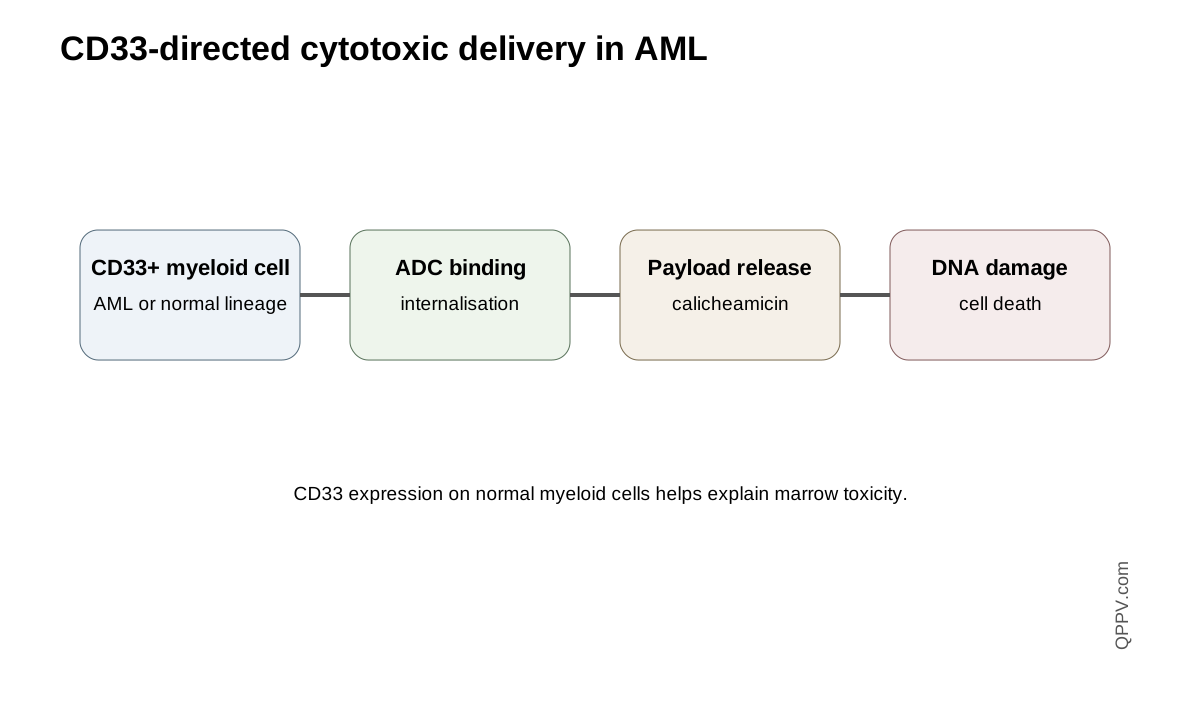
Figure 1. Gemtuzumab ozogamicin binds CD33-positive myeloid cells, is internalised and releases a calicheamicin payload that produces DNA damage. Normal myeloid CD33 expression contributes to marrow toxicity.
Clinical and Regulatory Context
In the European Union, gemtuzumab ozogamicin is authorised in combination with daunorubicin and cytarabine for selected patients aged 15 years and older with newly diagnosed CD33-positive AML, excluding acute promyelocytic leukaemia. Regional indications and schedules differ, so current product information must be used for formal assessment.
The treatment context is materially different from relapsed ALL treated with inotuzumab ozogamicin. Patients may receive the ADC as part of intensive induction and consolidation therapy. Consequently, neutropenia, thrombocytopenia, infection and hepatic toxicity often arise in a multi-drug setting where attribution requires the full regimen timeline.
Why Fractionated Exposure Matters
For potent ADCs, total dose is only one dimension of exposure. The size and spacing of individual doses can influence peak toxicity and the opportunity for normal tissue recovery. The modern treatment strategy for gemtuzumab ozogamicin illustrates how regimen design can change benefit-risk without changing the molecule itself.
For PV, the exact dose, day within the chemotherapy cycle and accompanying agents should therefore be captured. A report that records only “gemtuzumab ozogamicin received” is usually insufficient for serious marrow or hepatic events.
Safety Profile in the AML Treatment Context
Hepatic sinusoidal obstruction syndrome
Hepatic sinusoidal obstruction syndrome/veno-occlusive disease (SOS/VOD) is a recognised serious risk. As with other calicheamicin ADCs, liver toxicity must be assessed against baseline hepatic disease, cumulative ADC exposure, previous transplantation and subsequent transplant conditioning where relevant.
The PV case should capture bilirubin and transaminase trends, hepatomegaly, ascites, weight gain, fluid retention, diagnostic assessment, other hepatotoxic medicines, transplant history and outcome.
Myelosuppression and prolonged cytopenias
AML begins with abnormal marrow function, and intensive chemotherapy further suppresses normal haematopoiesis. Gemtuzumab ozogamicin adds CD33-directed toxicity to this background. Neutropenia and thrombocytopenia therefore require a trajectory-based assessment.
For thrombocytopenia, the clinically meaningful outcome may be haemorrhage rather than the laboratory abnormality itself. Reports should link platelet count, transfusion support, bleeding site and severity.
Infection
Serious infections may arise during neutropenia. Useful follow-up includes neutrophil nadir, microbiology, antimicrobial prophylaxis, sepsis or organ dysfunction, timing within the chemotherapy cycle and whether treatment was delayed.
Infusion-related reactions
Infusion reactions can include fever, chills, hypotension, dyspnoea and other systemic symptoms. Their timing during administration differentiates them from later febrile neutropenia or infection.
Tumour lysis syndrome
Rapid cytoreduction can precipitate tumour lysis syndrome. Baseline leukocyte burden, uric acid, renal function, prophylaxis and biochemical findings should be recorded.
Practical Pharmacovigilance Assessment
A useful case should preserve the AML-regimen context:
| Dimension | Data needed |
|---|---|
| Disease | AML subtype, CD33 status, baseline marrow counts, disease burden |
| ADC | Exact dose, fractionated schedule, cycle and day |
| Combination therapy | Daunorubicin, cytarabine and other relevant agents |
| Marrow toxicity | Nadir, duration, transfusion, infection, bleeding |
| Hepatic toxicity | Liver tests, SOS/VOD features, transplant history |
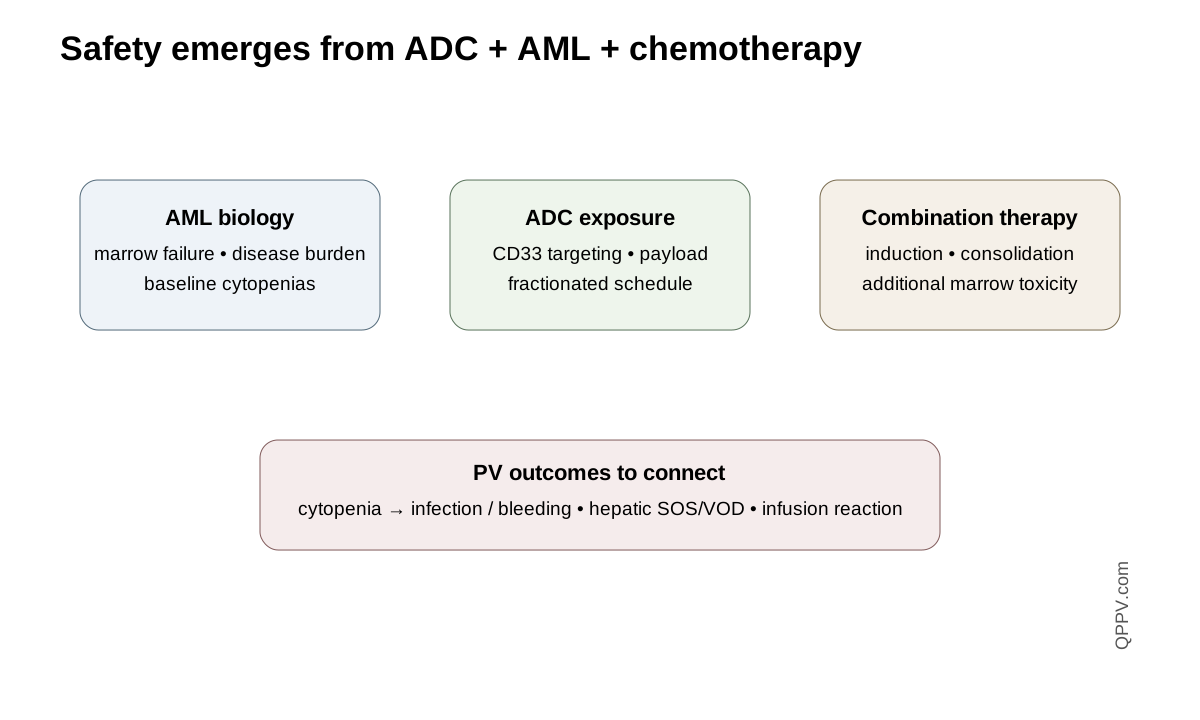
Figure 2. Safety assessment should integrate the ADC with AML biology and combination chemotherapy. Cytopenia, infection and bleeding are linked outcomes rather than independent adverse-event lists.
Aggregate Review and Signal Detection
Signal analyses should distinguish events occurring during induction, consolidation and later transplant pathways. Serious bleeding should be evaluated with platelet trajectories, while fatal infections should be interpreted with neutrophil duration and concurrent chemotherapy.
For hepatic events, syndrome-level review is preferable to fragmented term counting. Ascites, bilirubin elevation, hepatomegaly and weight gain may together represent SOS/VOD even when individual reports use different terms.
Risk Controls and Practical Implementation
Current regional product information governs patient selection, fractionated dosing, premedication, monitoring and dose modification. Because severe events often arise during combination chemotherapy, PV processes should record the complete regimen and not isolate the ADC from its treatment context.
Recommended operational practice includes linking laboratory data, transfusion history and infection episodes to each chemotherapy cycle. This makes it possible to distinguish expected marrow suppression from unexpectedly prolonged or severe toxicity.
Illustrative Failure Modes
The following are hypothetical examples.
Bleeding detached from thrombocytopenia. A fatal intracranial haemorrhage and profound thrombocytopenia are processed as unrelated events, obscuring the clinically important causal chain.
Fever labelled as infusion reaction despite delayed onset. Fever occurring several days after dosing during profound neutropenia is classified as an administration reaction without microbiological follow-up.
SOS/VOD fragmented across terms. Ascites, bilirubin increase and hepatomegaly are coded separately and never medically reviewed as a syndrome.
Inspection and Governance Considerations
An inspector could examine whether serious hepatic events are reviewed for SOS/VOD, whether bleeding is linked to platelet trends, whether infection cases contain neutrophil information and whether aggregate analyses preserve induction versus consolidation context.
The central governance question is whether the safety system can reconstruct who received what regimen, at what point in AML treatment, with what marrow and hepatic state.
Practical Checklist
- Confirm AML subtype and CD33-positive disease context.
- Capture exact ADC dose, cycle and fractionated schedule.
- Record all major concomitant chemotherapy.
- Link neutropenia to infection and thrombocytopenia to bleeding.
- Capture transfusion and growth-factor support.
- Review suspected hepatic events for SOS/VOD features.
- Record prior/subsequent HSCT where relevant.
- Distinguish infusion reactions from later infectious fever.
- Assess tumour lysis against disease burden and prophylaxis.
Key Takeaways
Gemtuzumab ozogamicin is a CD33-directed calicheamicin ADC whose benefit-risk profile depends strongly on dose architecture and AML regimen context. The molecule cannot be assessed as though it were an isolated antibody exposure.
For PV, marrow suppression, infection and haemorrhage should be analysed as connected clinical sequences, while hepatic events require active recognition of SOS/VOD. Fractionated dosing is a reminder that the schedule itself is part of the medicinal product's safety architecture.
References
- European Medicines Agency. Mylotarg (gemtuzumab ozogamicin): EPAR and product information. https://www.ema.europa.eu/en/medicines/human/EPAR/mylotarg
- U.S. Food and Drug Administration. Gemtuzumab ozogamicin current prescribing information and regulatory history, Drugs@FDA.
- Castaigne S, et al. Effect of gemtuzumab ozogamicin on survival of adult patients with de-novo acute myeloid leukaemia. Lancet. 2012.
- Contemporary AML and transplant literature on calicheamicin ADC-associated hepatotoxicity and marrow toxicity, interpreted with current regional product information.
Regulatory Note
Approved populations, combinations and dosing schedules differ across jurisdictions and may change. Current regional product information should govern clinical use and formal regulatory assessment.