Golimumab: Classification, History, Mechanism of Action, Safety and Pharmacovigilance
- Golimumab: Classification, History, Mechanism of Action, Safety and Pharmacovigilance
- Multidimensional classification
- TNF as a therapeutic target
- Molecular mechanism of action
- Development and regulatory history
- Clinical use and treatment context
- Major safety domains
- Immunogenicity and loss of response
- Paediatric and special-population considerations
- Pharmacovigilance case assessment
- Signal detection and aggregate review
- Periodic benefit-risk evaluation
- Risk management and operational controls
- Potential failure modes
- Inspection and governance perspective
- Practical checklist
- Key Takeaways
- References
- Regulatory Note
Golimumab is a fully human monoclonal antibody against tumour necrosis factor alpha (TNF-alpha), a cytokine that coordinates several inflammatory processes. It belongs to the TNF-inhibitor family but is not interchangeable, scientifically or regulatorily, with every other TNF-directed biological. Molecular format, route, dose regimen, authorised indication and clinical evidence all determine how the same target is used in practice.
For pharmacovigilance, the central problem is therefore two-level assessment. Some hazards arise from TNF blockade as a class mechanism, particularly serious infection and tuberculosis. Others depend on the treated disease, concomitant methotrexate or corticosteroids, paediatric versus adult use, subcutaneous versus intravenous exposure in regions where both are authorised, and the patient's previous biological-treatment history.
Multidimensional classification
| Classification axis | Golimumab classification | Scientific or PV significance |
|---|---|---|
| Molecular class | Fully human IgG1 kappa monoclonal antibody | Full antibody format with Fc region and prolonged systemic exposure |
| Target | TNF-alpha | Neutralises a central inflammatory cytokine rather than a cell lineage |
| Target forms | Soluble and transmembrane TNF | Helps explain similarities with other anti-TNF antibodies and differences from receptor-fusion approaches |
| Therapeutic class | TNF inhibitor | Creates class-relevant infection, tuberculosis and immune-suppression questions |
| Major disease settings | Inflammatory arthritis, axial spondyloarthritis, ulcerative colitis and selected juvenile indications | Baseline risks and concomitant therapies differ substantially |
| Administration | Subcutaneous in the EU; intravenous golimumab is also authorised in the United States for selected rheumatologic indications | Route and formulation must be preserved in exposure records |
| PV-critical domains | Serious infection, TB, hepatitis B reactivation, malignancy surveillance, heart failure, demyelination, cytopenias, hypersensitivity and medication-use errors | Requires both class-level and product-specific evaluation |
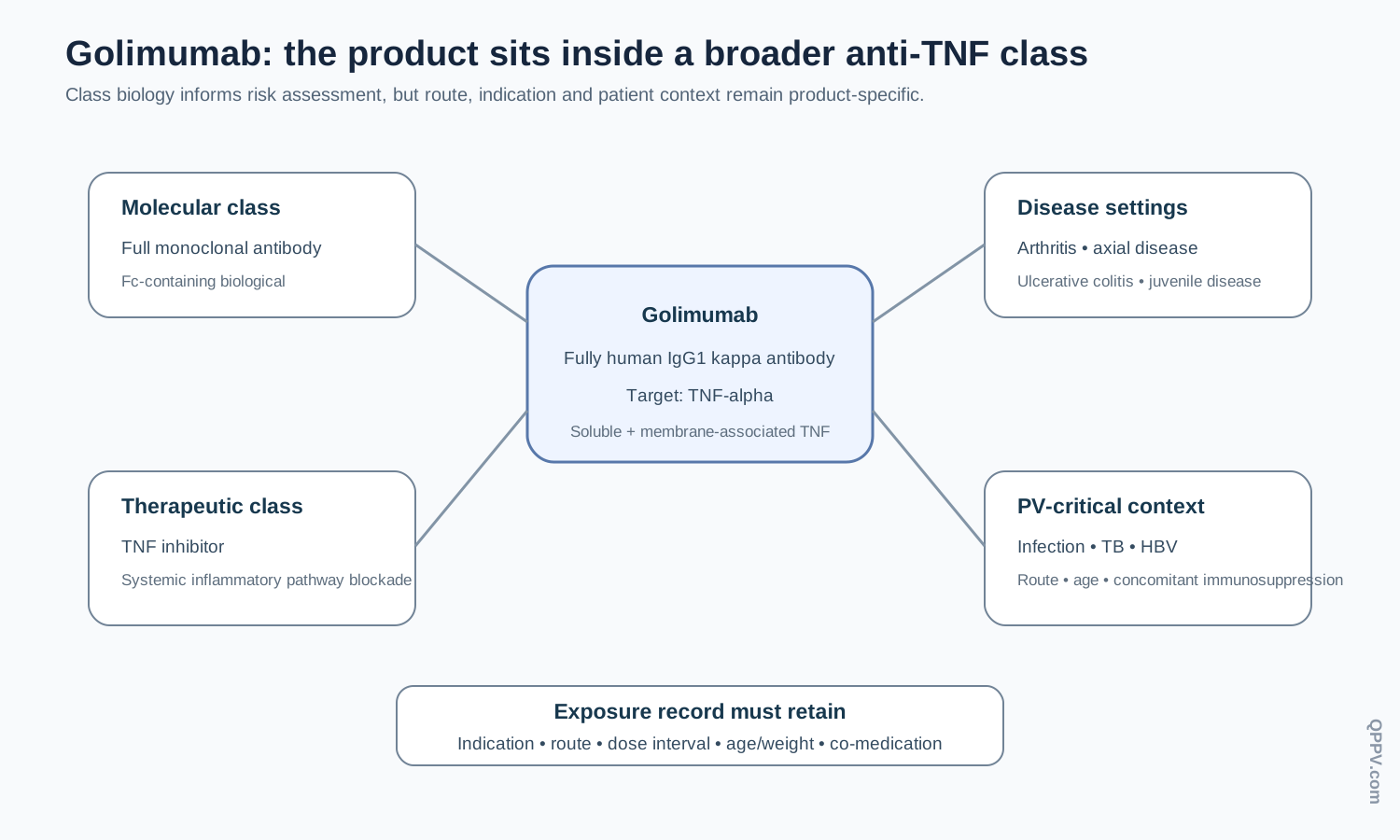
Figure 1. Golimumab is a fully human anti-TNF monoclonal antibody. Its safety profile is shaped by the shared biology of TNF blockade, while indication, route, age and concomitant immunosuppression determine the clinical context in which those risks are expressed.
TNF as a therapeutic target
TNF is produced by activated immune cells and acts through TNF receptors on many cell types. It promotes endothelial activation, leukocyte recruitment, inflammatory gene expression and amplification of cytokine networks. Persistent TNF signalling contributes to synovial inflammation in rheumatoid and psoriatic arthritis, entheseal and axial inflammation in spondyloarthritis, and mucosal inflammation in ulcerative colitis.
Because TNF has physiological roles in host defence and immune organisation, blocking it is not equivalent to selectively suppressing only pathological inflammation. The same pathway that contributes to disease control also participates in granuloma maintenance and defence against intracellular pathogens. This mechanistic trade-off is central to anti-TNF pharmacovigilance.
Molecular mechanism of action
Golimumab binds TNF-alpha and prevents productive interaction with TNF receptors. By neutralising both soluble and membrane-associated TNF, it reduces downstream inflammatory signalling. The immediate molecular event is ligand binding; the clinical consequence emerges from dampening a wider TNF-dependent inflammatory network.
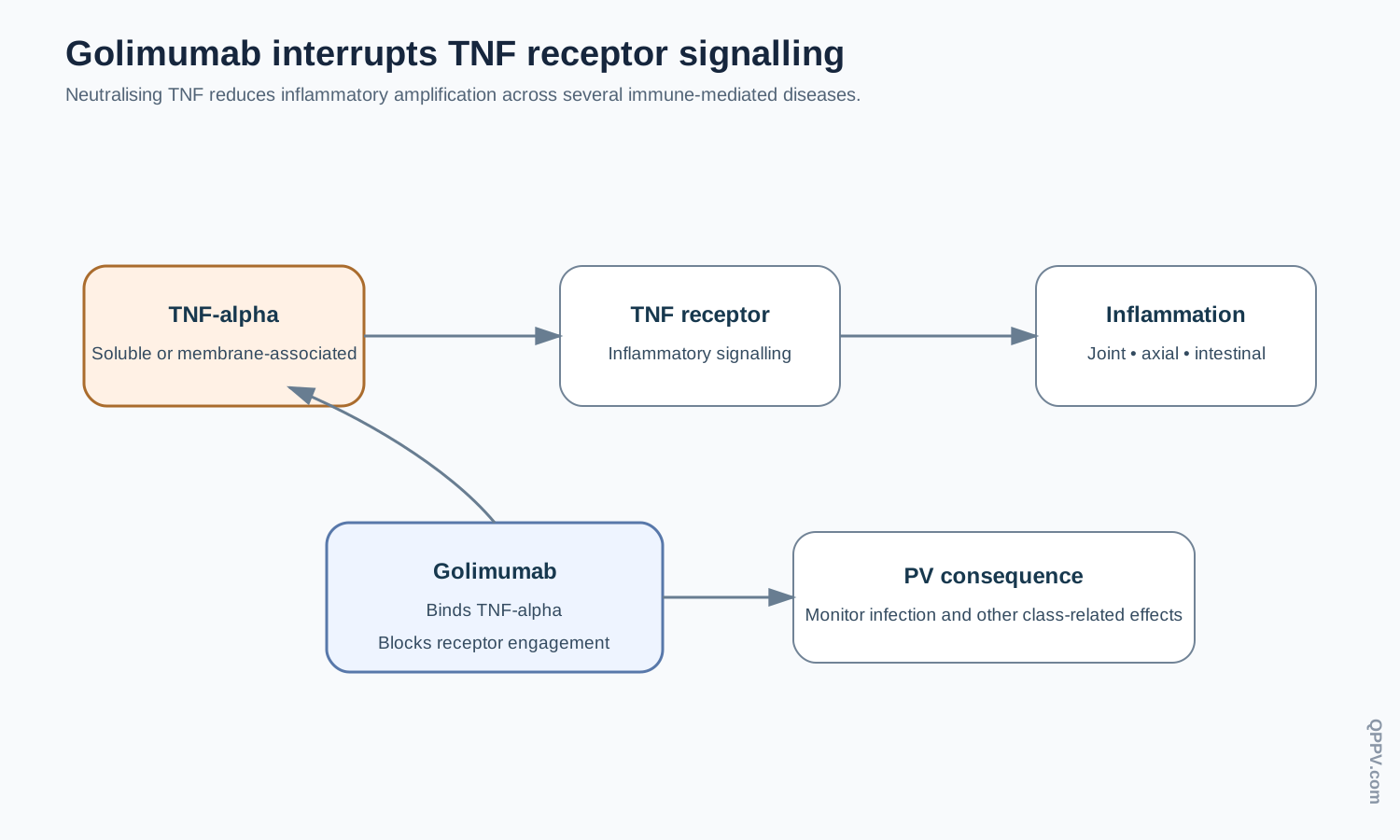
Figure 2. Golimumab binds TNF-alpha before TNF can activate its receptors. Reduced receptor signalling lowers inflammatory amplification, but the same interruption can weaken TNF-dependent host defence, which is why infection and tuberculosis remain mechanistically coherent safety concerns.
Why the anti-TNF class is not one product
Adalimumab, infliximab and golimumab are full monoclonal antibodies, whereas other TNF-directed treatments use different molecular formats. Even among full antibodies, differences in dosing, immunogenicity, route and trial evidence influence authorised uses and exposure patterns. A class signal may therefore be relevant to golimumab without proving that its magnitude is identical to every other TNF inhibitor.
The QPPV.com infliximab and TNF-receptor-fusion-protein articles provide the broader class context; this article focuses on what must remain product-specific for golimumab.
Development and regulatory history
Golimumab was developed as a human anti-TNF antibody suitable for infrequent maintenance dosing. Its early rheumatoid-arthritis programme included the GO-FORWARD study in patients with active disease despite methotrexate. Subsequent programmes established efficacy across psoriatic arthritis, ankylosing spondylitis and ulcerative colitis.
The European Union authorised golimumab in 2009 and its indication set subsequently expanded across inflammatory rheumatic disease, juvenile disease and ulcerative colitis. Current EMA product information was updated in January 2026.
In the United States, subcutaneous and intravenous golimumab presentations have distinct indication sets. The U.S. subcutaneous product received pediatric ulcerative-colitis labeling in October 2025 for patients meeting the labelled weight criterion. Pharmacovigilance systems should therefore retain jurisdiction, route and indication rather than assuming that one global golimumab label exists.
Clinical use and treatment context
Golimumab is used across diseases with different inflammatory biology, background treatment and baseline event rates. In rheumatoid arthritis, methotrexate is often part of the treatment context. In ulcerative colitis, corticosteroid exposure, malnutrition, active mucosal inflammation and prior biological therapy may materially alter infection risk. In paediatric disease, age, weight, vaccination and developmental context become relevant.
The route can also matter. Subcutaneous administration creates self-injection and device-use questions, whereas intravenous administration in jurisdictions where it is authorised creates infusion-centre and infusion-reaction considerations. Exposure should therefore be reconstructed at the level of actual presentation, route and dose sequence.
Major safety domains
Serious infection and opportunistic infection
Serious infection is a central anti-TNF risk. TNF participates in recruitment and activation of immune cells and in containment of certain intracellular pathogens. A serious infection after golimumab should therefore prompt assessment of organism, site, hospitalization, baseline comorbidity, concomitant corticosteroids or other immunosuppressants, previous biological therapy and temporal relation to the latest dose.
Spontaneous-report counts should not be converted into incidence. Patients receiving anti-TNF therapy often have inflammatory disease and concomitant treatment that independently increase infection susceptibility.
Tuberculosis
TNF is important in the formation and maintenance of granulomatous responses. Tuberculosis can therefore reactivate when TNF signalling is suppressed. Current product information requires appropriate evaluation for tuberculosis before treatment and continued vigilance during therapy.
A report of a positive screening test is not the same as active tuberculosis. PV records should distinguish latent infection, active disease, exposure history, prophylactic treatment, microbiological confirmation and imaging findings.
Hepatitis B reactivation
Anti-TNF treatment can permit reactivation of hepatitis B in susceptible patients. A useful case includes baseline HBsAg and anti-HBc status where known, HBV DNA, liver tests, antiviral prophylaxis or treatment, concomitant immunosuppression and clinical outcome. Elevation of transaminases alone is not sufficient to diagnose reactivation.
Malignancy surveillance
Long-term immune modulation creates an important malignancy-surveillance question, especially because inflammatory diseases themselves and previous immunosuppressants can alter baseline cancer risk. Individual cases should preserve tumour type, latency, prior thiopurine or other immunosuppressant exposure, age and duration of anti-TNF therapy. Aggregate interpretation requires denominator and comparator awareness.
Heart failure
TNF inhibitors require caution in patients with heart failure because worsening heart failure has been reported with the class. Dyspnoea or oedema should not be attributed automatically: disease activity, infection, anaemia, renal disease and other cardiovascular causes must be considered. Objective cardiac assessment is valuable when available.
Demyelinating and neurological events
New or worsening demyelinating disorders are class-relevant concerns. Reports should capture neurological phenotype, MRI findings, cerebrospinal-fluid results where available, prior demyelinating disease and alternative diagnoses. Nonspecific paraesthesia should not be upgraded to demyelination without supporting evidence.
Cytopenias and haematological abnormalities
Leukopenia, neutropenia, thrombocytopenia or pancytopenia may occur in patients receiving immune-modifying therapy, but rheumatoid disease, inflammatory bowel disease, methotrexate and other medicines also create competing explanations. Serial counts, marrow evaluation where performed and concomitant medicines are central to causality assessment.
Hypersensitivity and administration reactions
Subcutaneous injection-site reactions and systemic hypersensitivity should be distinguished. Intravenous administration, where used, introduces a separate infusion-reaction phenotype. Timing, dose number, symptoms, intervention and recurrence on rechallenge are more informative than the generic term “allergic reaction.”
Immunogenicity and loss of response
Anti-drug antibodies can alter exposure or treatment response. Concomitant methotrexate can influence immunogenicity in rheumatoid-arthritis treatment. A report of loss of efficacy should therefore include adherence, route, dose interval, concomitant therapy, objective disease activity and anti-drug antibody or drug-concentration data if clinically obtained.
In ulcerative colitis, worsening symptoms should also be separated from infection, irritable bowel symptoms, nonadherence and structural complications. Stool frequency alone is not sufficient to establish pharmacological failure.
Paediatric and special-population considerations
Paediatric ulcerative colitis and juvenile arthritis require accurate weight, age, vaccination status and growth context. Medication errors may arise when weight thresholds determine presentation or dose. Live-vaccine questions and infection surveillance should follow current regional product information.
Pregnancy exposures require disease-specific assessment because uncontrolled inflammatory disease itself may affect pregnancy outcome. Treatment timing, co-medication, trimester and neonatal outcome should be documented rather than inferring risk from class membership alone.
Pharmacovigilance case assessment
Golimumab cases should be reconstructed around indication, route, concomitant immunosuppression and infection history. These variables often explain more than the event term itself.
Event-specific follow-up priorities
| Event or issue | High-value follow-up information |
|---|---|
| Serious infection | Site, organism, severity, hospitalization, corticosteroids/MTX, recent dose, outcome |
| Tuberculosis | Baseline screen, latent/active status, exposure history, prophylaxis, microbiology/imaging, outcome |
| HBV reactivation | Baseline serology, HBV DNA, liver tests, antiviral therapy, concomitant immunosuppression |
| Malignancy | Tumour type, latency, age, inflammatory-disease duration, prior immunosuppressants, cumulative exposure |
| Heart failure | Baseline cardiac history, imaging/EF if available, oedema/dyspnoea phenotype, competing causes |
| Neurological event | Clinical syndrome, MRI/CSF, prior demyelination, alternative diagnosis, outcome |
| Cytopenia | Serial blood counts, marrow findings if performed, concomitant medicines, infection, recovery after interruption |
| Loss of efficacy | Indication, adherence, interval, route, objective disease activity, immunogenicity/drug level if available |
| Administration error | Presentation, route, dose, weight where relevant, device technique, actual exposure, clinical consequence |
Signal detection and aggregate review
Golimumab signal detection should use the anti-TNF class as a biological framework without assuming identical quantitative risk across products. Serious infection, tuberculosis, demyelination and heart-failure terms may warrant class-informed retrieval, while product-specific analyses should preserve indication, age, route and concomitant therapy.
Ulcerative-colitis populations should not be pooled uncritically with rheumatology populations. Corticosteroid use, intestinal inflammation, hospitalisation and nutritional status can change infection and thrombosis backgrounds. Paediatric data likewise require separate age-appropriate review.
Periodic benefit-risk evaluation
Periodic review should integrate sustained control of inflammatory disease with serious infections, tuberculosis, malignancy observations, neurological events, cardiac events, cytopenias, hypersensitivity, immunogenicity and administration problems. The analysis should distinguish newly emerging evidence from long-established anti-TNF class risks.
Regional label differences matter. A route or paediatric indication authorised in one jurisdiction may not have the same status elsewhere. Exposure estimates and case-series interpretation should therefore be tied to local product use rather than to the INN alone.
Risk management and operational controls
Current product information governs tuberculosis screening, infection precautions, vaccination, contraindications and management of other class-related risks. Useful operational controls include reliable baseline TB documentation, targeted HBV follow-up, indication/route capture, age and weight fields for paediatric reports, and structured medical review of serious infection and neurological events.
For subcutaneous products, device and self-administration information should be retained. For intravenous use where authorised, infusion-centre records can provide exact administration chronology and reaction management.
Potential failure modes
The following are illustrative scenarios, not published inspection findings:
- A positive TB screening test is coded as active tuberculosis without diagnostic confirmation.
- Infection rates from ulcerative colitis and rheumatoid arthritis are compared without accounting for corticosteroid exposure or disease severity.
- A neurological symptom is labelled demyelination without imaging or specialist diagnosis.
- Loss of efficacy is assessed without adherence, dose interval or immunogenicity context.
- A paediatric medication error is reviewed without patient weight or presentation strength.
- Intravenous and subcutaneous exposures are pooled although their administration context differs.
Inspection and governance perspective
An inspector assessing golimumab pharmacovigilance could examine whether anti-TNF class risks are translated into product-specific case follow-up, whether baseline TB and HBV information can be retrieved, whether serious infections are medically characterised, and whether route, indication and paediatric status remain visible in aggregate analyses.
The effectiveness question is whether the organisation can use class knowledge as a starting framework without allowing class labelling to substitute for evidence about the individual product and patient.
Practical checklist
For a golimumab case or aggregate analysis, confirm:
- indication and disease severity;
- age and weight when relevant;
- exact presentation and route;
- dose interval and latest administration date;
- concomitant corticosteroids, methotrexate or other immune-modifying therapy;
- baseline TB and HBV status for relevant events;
- organism and site for serious infection;
- objective neurological or cardiac evidence where relevant;
- serial blood counts for cytopenias;
- adherence and immunogenicity context for loss of response;
- product and batch for biological traceability.
Key Takeaways
Golimumab is a fully human IgG1 monoclonal antibody that neutralises TNF-alpha. Its clinical breadth comes from the central role of TNF across inflammatory arthritis, axial disease and ulcerative colitis, but the same biology also explains the need for rigorous surveillance of serious infection, tuberculosis and other anti-TNF class risks.
Good pharmacovigilance does not treat “anti-TNF” as a complete causal explanation. It preserves indication, route, age, concomitant immunosuppression and objective clinical evidence so that class biology and product-specific evidence can be interpreted together.
References
- European Medicines Agency. Golimumab (Simponi): EPAR and current product information. Product information updated 30 January 2026. https://www.ema.europa.eu/en/medicines/human/EPAR/simponi
- U.S. Food and Drug Administration. Golimumab (Simponi) Prescribing Information. Revised 2025. https://www.accessdata.fda.gov/drugsatfda_docs/label/2025/125289s158lbl.pdf
- Keystone EC, Genovese MC, Klareskog L, et al. Golimumab in patients with active rheumatoid arthritis despite methotrexate therapy: the GO-FORWARD study. Ann Rheum Dis. 2009;68:789-796. doi:10.1136/ard.2008.099010.
- Sandborn WJ, Feagan BG, Marano C, et al. Subcutaneous golimumab maintains clinical response in patients with moderate-to-severe ulcerative colitis. Gastroenterology. 2014;146:96-109.e1. doi:10.1053/j.gastro.2013.06.010.
- U.S. Food and Drug Administration. Orphan Drug Designations and Approvals: golimumab for pediatric ulcerative colitis. Marketing approval 7 October 2025. https://www.accessdata.fda.gov/scripts/opdlisting/oopd/detailedIndex.cfm?cfgridkey=365112
Regulatory Note
Authorised indications, paediatric age or weight criteria, routes, dosing regimens and safety wording differ by jurisdiction and can change. This article explains the scientific and pharmacovigilance framework and does not replace current regional product information or specialist rheumatology, gastroenterology or paediatric guidance. Regulatory information was checked against EMA and FDA material current in September 2026.