Guselkumab: Classification, History, Mechanism of Action, Safety and Pharmacovigilance
- Guselkumab: Classification, History, Mechanism of Action, Safety and Pharmacovigilance
- Multidimensional classification
- IL-23 biology
- Mechanism of action
- Development and regulatory history
- Clinical use and treatment-phase context
- Major safety domains
- Immunogenicity
- Indication map and comparative interpretation
- Pharmacovigilance case assessment
- Signal detection and aggregate review
- Periodic benefit-risk evaluation
- Risk management and operational controls
- Potential failure modes
- Inspection and governance perspective
- Practical checklist
- Key Takeaways
- References
- Regulatory Note
Guselkumab is a monoclonal antibody that selectively binds the p19 subunit of interleukin-23 (IL-23). That apparently narrow molecular target sits upstream of a broad inflammatory network. IL-23 supports the expansion and persistence of IL-23-responsive immune-cell populations that can produce IL-17 and other mediators important in psoriasis, psoriatic arthritis and inflammatory bowel disease. Blocking p19 therefore modifies a common inflammatory axis while leaving the related cytokine IL-12 intact.
The distinction between p19 and p40 is the key conceptual entry point. IL-23 is composed of p19 and p40 subunits, while IL-12 contains p35 and the same p40 subunit. An antibody directed against p40 can therefore inhibit signalling from both IL-12 and IL-23. Guselkumab binds p19, which is unique to IL-23, and is consequently classified as a selective IL-23 inhibitor. This molecular distinction is important when comparing mechanism, authorised indications and safety experience with ustekinumab or other cytokine-targeting biologicals.
Multidimensional classification
| Classification axis | Guselkumab classification | Scientific or PV significance |
|---|---|---|
| Molecular class | Human monoclonal antibody | Biological medicinal product requiring traceability and immunogenicity awareness |
| Target | IL-23 p19 subunit | Selective IL-23 blockade rather than combined IL-12/23 p40 inhibition |
| Functional class | Soluble-cytokine neutralising antibody | Does not primarily work by depleting a target cell population |
| Immunological pathway | IL-23-responsive inflammatory network, including IL-17-producing cells | Connects skin, joint and intestinal inflammatory disease |
| EU disease settings | Plaque psoriasis, psoriatic arthritis, ulcerative colitis and Crohn’s disease | Background risks and dosing context differ substantially by indication |
| Administration | Subcutaneous maintenance; intravenous or subcutaneous induction options in inflammatory bowel disease according to current product information | Route and treatment phase must be retained in exposure assessment |
| PV priorities | Infection, TB context, hypersensitivity, hepatic abnormalities in relevant settings, administration errors and traceability | These risks require clinical context rather than class-label attribution alone |
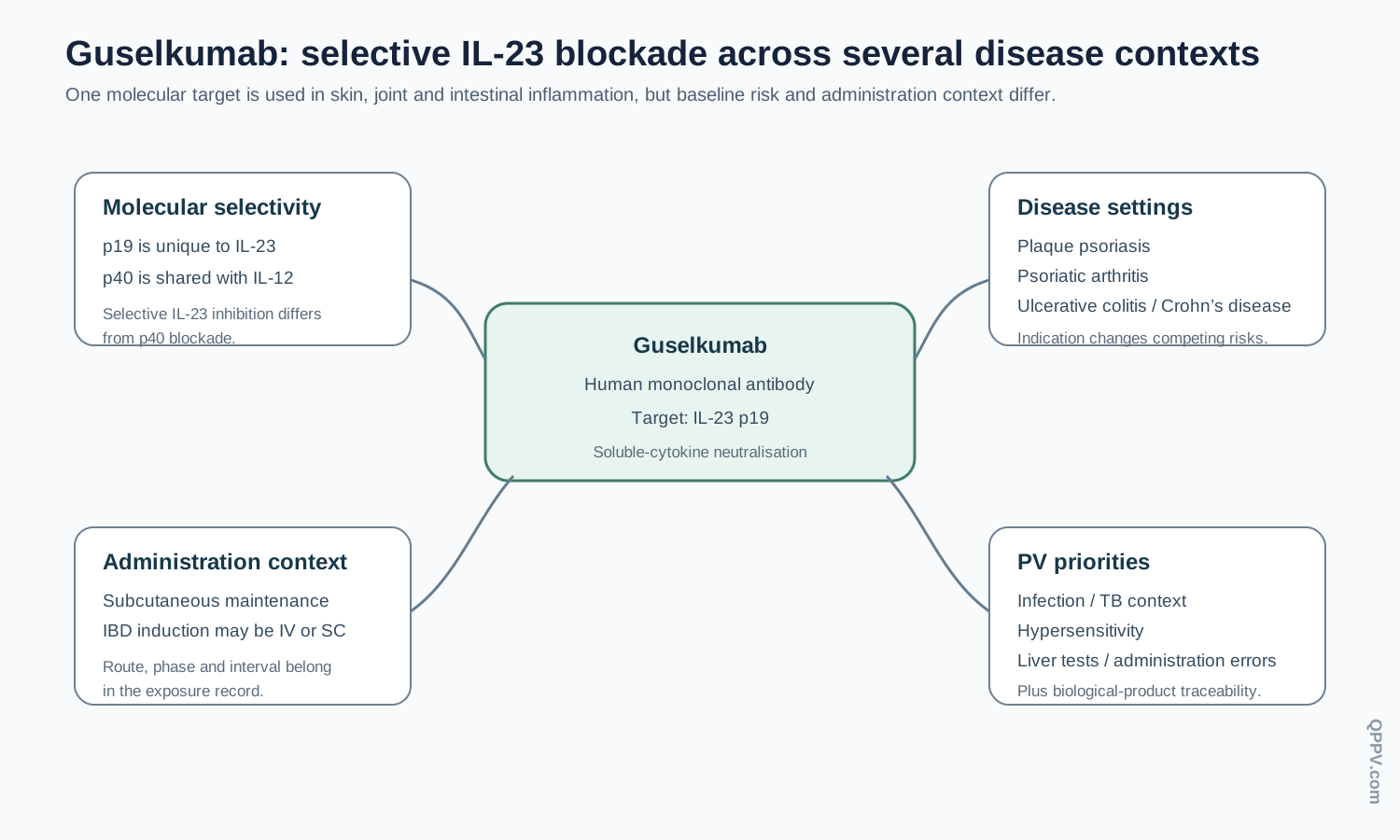
Figure 1. Guselkumab can be classified simultaneously by molecular target, inflammatory pathway, disease setting and administration phase. Pharmacovigilance depends on preserving those dimensions rather than treating every exposure as equivalent.
IL-23 biology
IL-23 is a heterodimeric cytokine produced predominantly by antigen-presenting cells and other innate immune populations under inflammatory conditions. Its p19 subunit pairs with p40 to create the functional cytokine. IL-23 does not act as a simple on/off switch for one T-cell subset; rather, it supports survival, expansion and pathogenic function of several IL-23-responsive cell populations, including cells capable of producing IL-17A, IL-17F, IL-22 and other inflammatory mediators.
In psoriasis, this pathway contributes to keratinocyte activation and the self-amplifying inflammatory circuit that produces plaque formation. In psoriatic arthritis, related inflammatory biology operates in joints, entheses and skin. In ulcerative colitis and Crohn’s disease, IL-23-responsive immune networks contribute to chronic intestinal inflammation, but the tissue environment and competing disease complications differ substantially from dermatology.
Why selective p19 blockade matters
Because p19 is unique to IL-23, guselkumab suppresses IL-23 signalling without directly blocking IL-12 through the shared p40 subunit. This does not mean that all downstream IL-23-dependent immune effects are isolated from other cytokine networks. Cytokines interact extensively, and clinical response or adverse events cannot usually be assigned to one downstream mediator. The scientifically useful distinction is at the level of the antibody’s direct target.
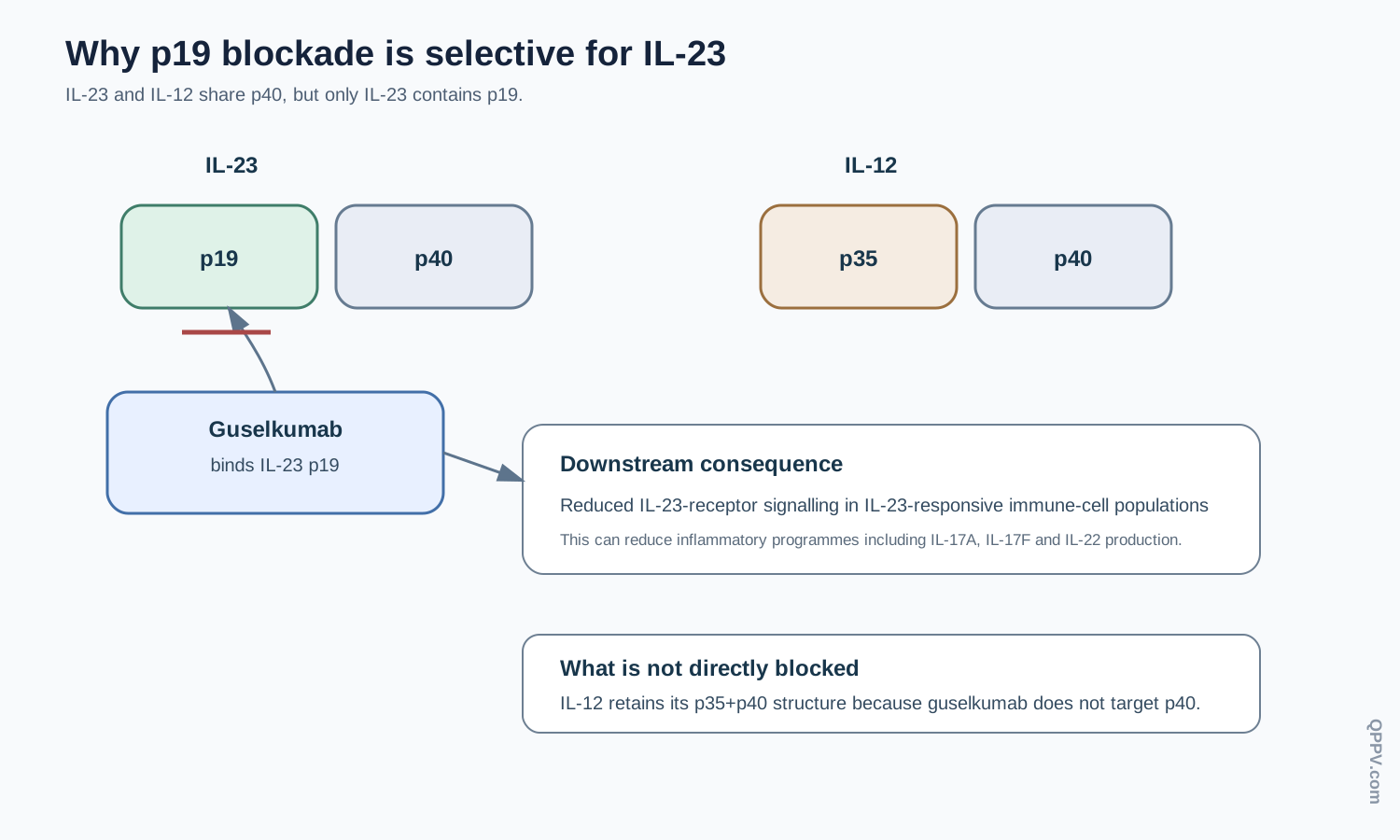
Figure 2. IL-23 consists of p19 and p40, whereas IL-12 consists of p35 and p40. Guselkumab binds p19 and therefore selectively blocks IL-23 rather than the shared p40 subunit.
Mechanism of action
Guselkumab binds IL-23 and prevents the cytokine from effectively engaging its receptor complex. The downstream consequence is reduced IL-23-dependent signalling and attenuation of inflammatory programmes supported by IL-23-responsive cells. Clinical and translational studies in psoriasis have shown reductions in IL-17-family and related inflammatory biomarkers after treatment, consistent with the upstream position of IL-23 in this network.
The antibody is therefore best described as a pathway-modifying cytokine neutraliser. It does not directly kill IL-17-producing cells, does not inhibit intracellular kinases and does not neutralise TNF. These distinctions help explain why IL-23 inhibitors can share indications with TNF inhibitors or IL-17 inhibitors while retaining different safety profiles and different indication maps.
Development and regulatory history
Clinical development first established efficacy in moderate-to-severe plaque psoriasis, where selective IL-23 blockade produced high rates of skin clearance in phase III studies. The EU authorised guselkumab in 2017 for adult plaque psoriasis. Development subsequently expanded into psoriatic arthritis and then inflammatory bowel disease, with authorisation for ulcerative colitis and Crohn’s disease. Current EU information also includes paediatric plaque psoriasis from 6 years of age in appropriate candidates for systemic therapy.
This progression is pharmacovigilance-relevant because the exposed population changed from predominantly dermatology patients to patients with inflammatory joint disease, chronic intestinal inflammation and paediatric psoriasis. A stable molecule can therefore acquire a changing observed safety profile simply because disease severity, concomitant medication, infection susceptibility, nutritional status and routes of administration differ across populations.
Clinical use and treatment-phase context
Guselkumab exposure cannot be reduced to a single dosing pattern because current use differs by disease. Plaque psoriasis and psoriatic arthritis are managed with subcutaneous regimens, while ulcerative colitis and Crohn’s disease include induction and maintenance phases with route and interval choices defined in current product information. In inflammatory bowel disease, intravenous or subcutaneous induction may be used according to the authorised regimen, followed by subcutaneous maintenance.
For pharmacovigilance, this means that indication, treatment phase, route and interval should be retained. An acute reaction during induction, an infection after months of maintenance and a liver-test abnormality during a more intensive schedule are not interchangeable observations.
Major safety domains
Infection
Selective IL-23 blockade alters immune signalling rather than causing broad cytotoxic immunosuppression, but clinically important infections remain a core safety consideration. Upper respiratory infections are among the commonly observed adverse reactions, while serious infection requires individual assessment of site, organism, severity and competing risk factors.
The background context varies markedly. A patient with plaque psoriasis may have relatively little systemic disease burden. A patient with Crohn’s disease may have malnutrition, abscess history, prior corticosteroids, previous biologics or recent surgery. A patient with psoriatic arthritis may be receiving methotrexate or other immunomodulatory treatment. Signal analyses should therefore stratify by indication and concomitant immunosuppression.
Tuberculosis context
Current EU product information requires evaluation for tuberculosis before treatment and continued clinical vigilance for active disease. This is a risk-management precaution associated with immune-modifying therapy and should not be interpreted as evidence that every positive TB test is caused by guselkumab. For suspected active tuberculosis during treatment, valuable case data include baseline screening, previous latent or active infection, prophylactic treatment if applicable, exposure history, microbiological or imaging evidence and concomitant immunosuppression.
Hypersensitivity
Serious hypersensitivity reactions, including anaphylaxis, have been reported post-authorisation. Importantly, product information notes that some serious reactions occurred days after treatment rather than immediately at administration. A useful case therefore records latency carefully and does not restrict hypersensitivity surveillance to the injection visit.
Phenotype matters. Urticaria, dyspnoea, hypotension, angioedema and delayed systemic symptoms should not be collapsed into an undifferentiated term when clinical detail is available. Recurrence after re-exposure, treatment and outcome add substantial causality information.
Hepatic laboratory abnormalities
Liver-enzyme elevations have been observed in clinical development, and current product information includes particular recommendations around liver enzymes in some psoriatic-arthritis dosing contexts. In inflammatory bowel disease, underlying inflammation, nutritional abnormalities, concomitant medicines and pre-existing hepatobiliary disease can also affect liver tests.
The correct PV question is therefore not simply whether alanine aminotransferase increased after treatment. Assessment should include baseline values, peak value, bilirubin and alkaline phosphatase, timing, symptoms, concomitant hepatotoxic medicines, alcohol or metabolic liver disease where relevant, viral investigations if performed and dechallenge/rechallenge information.
Injection-site and administration issues
Subcutaneous administration introduces practical issues such as local reactions, incomplete injection, device malfunction, wrong interval and use of an incorrect presentation. In inflammatory bowel disease, the coexistence of induction and maintenance presentations increases the importance of capturing route, strength and treatment phase.
A medication-error report should distinguish an actual dosing error from a near miss and document whether the patient received an incorrect dose, whether treatment timing was altered and whether any clinical consequence followed.
Immunogenicity
Anti-drug antibodies can develop against therapeutic monoclonal antibodies. Their clinical relevance depends on titre, persistence, assay characteristics and association with altered exposure, loss of efficacy or hypersensitivity. A positive assay result alone is not equivalent to a clinically meaningful immunogenicity problem.
For suspected immune-mediated loss of response, the case should preserve disease activity, dosing adherence, drug concentration if measured, anti-drug-antibody result, prior treatment history and alternative explanations for worsening disease.
Indication map and comparative interpretation
The overlap between guselkumab indications and those of TNF inhibitors, IL-17 inhibitors, p40 blockade and other p19 inhibitors can tempt superficial class comparisons. Mechanistically, however, these products interrupt different points in the inflammatory network. The fact that two medicines treat psoriasis does not imply equivalent effects in Crohn’s disease, and the fact that two antibodies target IL-23 biology does not make their complete authorised indications identical.
This is especially important when reviewing spontaneous reports. A higher number of intestinal adverse-event reports for one class may partly reflect the underlying indication mix rather than a molecule-specific hazard. Exposure denominators and disease context are essential before inferring comparative risk.
Pharmacovigilance case assessment
Guselkumab cases should be reconstructed around the treated indication, treatment phase, route and concurrent immune-modifying therapy. Those variables determine both the baseline risk and the meaning of a reported event. Fever during induction for Crohn’s disease, for example, has a different differential diagnosis from an upper respiratory infection in an otherwise stable psoriasis patient on long-term maintenance.
Event-specific follow-up priorities
| Event or issue | High-value follow-up information |
|---|---|
| Serious infection | Site, organism, imaging/microbiology, severity, concomitant immunosuppression, recent surgery, outcome |
| Suspected TB | Baseline screening, latent/active history, exposure, microbiology/imaging, prior prophylaxis, concomitant therapy |
| Hypersensitivity | Latency, phenotype, treatment, recurrence, route, device/presentation, outcome |
| Liver-test abnormality | Baseline and peak ALT/AST, bilirubin, alkaline phosphatase, symptoms, concomitant medicines, competing liver disease |
| Injection or device issue | Presentation, route, administration technique, incomplete dose, device findings, actual exposure, clinical consequence |
| Loss of efficacy | Indication, disease measures, adherence, interval, anti-drug antibodies/drug level if available, prior biological therapy |
| Paediatric exposure | Age, weight, indication, presentation, caregiver administration, dosing chronology, growth/development context where relevant |
Signal detection and aggregate review
Aggregate safety analyses should separate dermatology, rheumatology and inflammatory-bowel-disease populations. Infection reporting in these groups is influenced by disease activity, prior immunosuppression, corticosteroid exposure and concomitant therapy. Paediatric psoriasis should likewise remain identifiable rather than being absorbed into an adult dataset without age-specific review.
Hypersensitivity retrieval should include delayed reactions, because restricting analyses to events occurring during or immediately after injection can miss clinically relevant cases. Liver-safety analyses should preserve dosing regimen and indication, and should use medically coherent groupings rather than treating every isolated enzyme elevation as equivalent to clinically important liver injury.
Periodic benefit-risk evaluation
Periodic evaluation should integrate sustained disease control with serious infections, tuberculosis observations, hypersensitivity, hepatic findings, immunogenicity, administration errors and changing use across indications. Expansion into inflammatory bowel disease broadens the benefit-risk context because avoiding uncontrolled intestinal inflammation may prevent hospitalisation, corticosteroid exposure and surgery, while the treated population may simultaneously have higher baseline infection and nutritional risks.
Risk management and operational controls
Current product information governs screening, contraindications, administration, monitoring and management. Useful operational controls include consistent capture of indication and route, documentation of baseline TB status, medically targeted follow-up of serious infection and hypersensitivity, appropriate review of clinically significant liver abnormalities, and reliable biological-product/batch traceability.
Because several strengths and treatment phases may coexist, medication-error surveillance should look for wrong presentation, wrong route, wrong interval, incomplete self-injection and confusion between induction and maintenance. These are product-use questions rather than evidence of intrinsic molecular toxicity.
Potential failure modes
The following are illustrative scenarios, not published inspection findings:
- Infection cases from psoriasis and Crohn’s disease are pooled without accounting for different baseline risks.
- A delayed hypersensitivity reaction is missed because surveillance looks only at same-day injection reactions.
- Liver-enzyme elevation is attributed to the antibody without baseline tests or concomitant medicines.
- A positive TB test is coded as active tuberculosis without clinical or microbiological confirmation.
- A maintenance dosing error is recorded without the presentation, route or treatment phase.
- Loss of efficacy is assessed without adherence, interval history or objective disease activity.
Inspection and governance perspective
An inspector assessing guselkumab pharmacovigilance could examine whether safety data remain stratifiable by indication and age, whether serious infection and hypersensitivity cases receive adequate medical follow-up, whether TB precautions are implemented and documented, and whether the organisation can trace the exact biological product and batch. The effectiveness question is whether a multi-indication biological is managed as one molecule with several clinical contexts rather than as one homogeneous exposure population.
Practical checklist
For a guselkumab case or aggregate analysis, confirm:
- indication and disease activity;
- age group and relevant baseline comorbidity;
- induction versus maintenance phase;
- intravenous or subcutaneous route where applicable;
- dose interval and actual administration chronology;
- concomitant corticosteroids, methotrexate or other immune-modifying therapy;
- infection site and microbiology for serious infection;
- baseline TB status for tuberculosis-related reports;
- objective liver tests for hepatic events;
- product, presentation, device and batch for administration problems.
Key Takeaways
Guselkumab selectively targets the p19 subunit of IL-23. That differentiates it mechanistically from antibodies against the shared IL-12/23 p40 subunit and places it upstream of several IL-23-responsive inflammatory pathways relevant to skin, joints and intestine.
Its pharmacovigilance is shaped less by a single dramatic class toxicity than by context: infection susceptibility, tuberculosis precautions, delayed hypersensitivity, liver-test abnormalities in relevant settings, immunogenicity, multiple indications and several administration phases. Preserving those dimensions is necessary for meaningful signal assessment.
References
- European Medicines Agency. Guselkumab: EPAR and current product information. Product information updated 23 March 2026. https://www.ema.europa.eu/en/medicines/human/EPAR/tremfya
- Blauvelt A, Papp KA, Griffiths CEM, et al. Efficacy and safety of guselkumab compared with adalimumab for continuous treatment of moderate-to-severe psoriasis: VOYAGE 1. J Am Acad Dermatol. 2017;76:405-417. doi:10.1016/j.jaad.2016.11.041.
- Daniele SG, Eldirany SA, Damiani G, Ho M, Bunick CG. Structural basis for p19 targeting by anti-IL-23 biologics: correlations with short- and long-term efficacy in psoriasis. JID Innov. 2024;4:100261. doi:10.1016/j.xjidi.2024.100261.
- European Medicines Agency. Guselkumab product information: warnings on infection, tuberculosis, hypersensitivity and hepatic transaminases. https://www.ema.europa.eu/en/documents/product-information/tremfya-epar-product-information_en.pdf
Regulatory Note
Authorised indications, paediatric age ranges, induction and maintenance regimens, presentations, warnings and monitoring recommendations can change. This article explains the scientific and pharmacovigilance framework and does not replace current regional product information or specialist dermatology, rheumatology or gastroenterology guidance. Regulatory information was checked against EMA material current in September 2026.