Human Normal Immunoglobulin (IVIG): Classification, Mechanism, Safety and Pharmacovigilance
Human normal immunoglobulin for intravenous administration (IVIG) is a plasma-derived biological composed predominantly of immunoglobulin G collected from large numbers of human donors. It is unusual among medicines because the same broad molecular material can serve two different therapeutic purposes: replacing antibody function in immunodeficiency and modifying immune activity at higher immunomodulatory doses.
That dual role changes pharmacovigilance. A reaction cannot be interpreted from the active substance name alone. Dose per kilogram, infusion rate, indication, renal and thrombotic risk, blood group, concomitant disease, exact product, excipients and batch may all alter the clinical picture.
- Human Normal Immunoglobulin (IVIG): Classification, Mechanism, Safety and Pharmacovigilance
- Classification and Biological Origin
- How IVIG Works
- Regulatory and Product Context
- Safety Profile as a Function of Product, Patient and Infusion
- Manufacturing, Infectious Risk and Traceability
- Product-Specific Case Assessment
- Indication and Dose Matter
- Aggregate Surveillance and Signal Interpretation
- Illustrative Failure Modes
- Inspection and Governance Considerations
- Practical Checklist
- Key Takeaways
- References
- Regulatory Note
Classification and Biological Origin
IVIG is a human plasma-derived immunoglobulin preparation, not a recombinant monoclonal antibody. It contains a broad polyclonal repertoire of IgG antibodies reflecting immune experience across the donor population. Manufacturing processes concentrate and purify IgG while incorporating donor screening, testing and pathogen-reduction or removal steps appropriate to the product.
Why polyclonality matters
A monoclonal antibody recognises one defined target. IVIG contains a very large population of antibodies with many specificities. This permits broad replacement of humoral immunity, but also means that immunomodulatory effects arise from interacting mechanisms rather than one receptor-ligand pair.
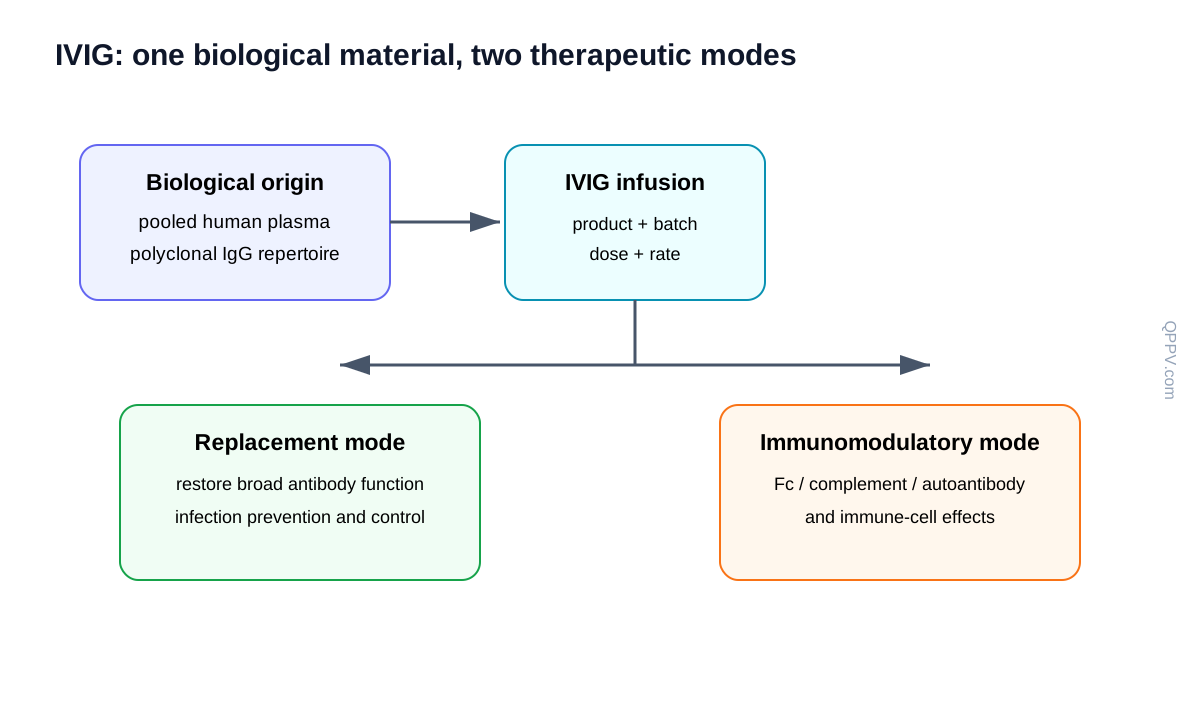
Figure 1. IVIG is a pooled polyclonal IgG biological whose therapeutic role changes with clinical context: physiological antibody replacement at one end and high-dose immunomodulation at the other.
How IVIG Works
Replacement therapy
In primary or secondary antibody deficiency, IVIG raises circulating IgG and supplies antibodies capable of recognising pathogens and supporting opsonisation and other Fc-dependent immune functions. Clinical effectiveness is therefore linked to infection history and trough exposure, not simply to one post-infusion concentration.
Immunomodulatory therapy
At immunomodulatory doses, several mechanisms may contribute simultaneously. These include saturation or modulation of Fc receptors, effects on complement, neutralisation of autoantibodies or inflammatory mediators, anti-idiotypic interactions and changes in B-cell, T-cell and innate immune signalling. The relative importance varies by disease and remains incompletely reducible to a single mechanism.
This mechanistic plurality is important for PV: a thrombotic event, haemolysis or aseptic meningitis is not explained by the same pathway that produces benefit in immune thrombocytopenia or inflammatory neuropathy.
Regulatory and Product Context
European guidance provides a core SmPC framework for IVIG, while individual authorised products retain product-specific concentrations, stabilisers, indications, infusion rates and warnings. The current EMA core SmPC guideline for IVIG is Revision 6. Product information must therefore be consulted rather than assuming that all IVIG preparations are interchangeable at operational level.
In the United States, immune globulin intravenous (human) products are licensed biologicals. Current products include different concentrations and labelled indications; product identity is essential for both clinical use and adverse-event assessment.
Safety Profile as a Function of Product, Patient and Infusion
Infusion-related reactions
Headache, flushing, chills, fever, nausea, blood-pressure changes and other infusion-associated symptoms commonly occur during or soon after administration. Assessment should capture the infusion rate at onset, recent rate escalation, first exposure or product switch, premedication, hydration, temporary interruption and response to restarting at a slower rate. A report stating only “reaction during IVIG” loses information needed to distinguish rate-related intolerance from hypersensitivity or another acute syndrome.
Thromboembolic events and hyperviscosity
Arterial and venous thromboses are recognised serious risks with IVIG. Risk interpretation should include age, immobilisation, cardiovascular disease, prior thrombosis, hypercoagulable states, high dose, rapid administration, dehydration and disorders associated with increased serum viscosity. A temporal association after infusion is important but does not remove substantial background risk in many treated populations.
Haemolysis
IVIG can contain anti-A and anti-B isoagglutinins. Clinically significant haemolysis is particularly important after high cumulative doses and in susceptible non-O blood groups. Useful follow-up includes ABO group, haemoglobin before and after treatment, bilirubin, LDH, haptoglobin, direct antiglobulin testing when available, cumulative dose, timing and transfusion requirement. Batch information is especially valuable because isoagglutinin content is a manufacturing and product-quality consideration as well as a patient factor.
Renal impairment
Acute kidney injury has been associated with IVIG. Risk is influenced by baseline renal disease, diabetes, age, volume status, concomitant nephrotoxins and product formulation. Historical concern has been particularly strong for sucrose-containing preparations; this should not be generalised to every IVIG product. Case assessment should identify the exact formulation and stabiliser, creatinine trend, urine findings, fluid status, infusion rate and other nephrotoxic exposures.
Aseptic meningitis and neurological symptoms
Severe headache with meningism after IVIG requires distinction from ordinary infusion-associated headache, infection and other neurological disease. High-dose exposure and close temporal onset may support the syndrome, but CSF findings, imaging, fever, neck stiffness, treatment and recovery are needed for a useful case assessment.
Pulmonary reactions
Transfusion-related acute lung injury (TRALI) and other acute respiratory syndromes are important differentials when hypoxaemia or pulmonary infiltrates develop temporally after infusion. Case quality depends on chest imaging, oxygenation, cardiac assessment, fluid balance and chronology rather than the term “dyspnoea”.
Manufacturing, Infectious Risk and Traceability
IVIG is manufactured from human plasma, so viral and other pathogen safety begins before the finished product reaches the patient. Donor selection, donation testing, plasma-pool controls and validated manufacturing steps reduce transmission risk. Regulatory language appropriately avoids describing plasma-derived products as having zero theoretical infectious risk.
For pharmacovigilance, suspected transmission requires an unusually high level of traceability: product name, batch, dose dates, pathogen, diagnostic evidence, pre-treatment status, other blood or plasma exposures and investigation of potentially linked cases. The PV, quality and manufacturing systems must interface rather than assess such a report in isolation.
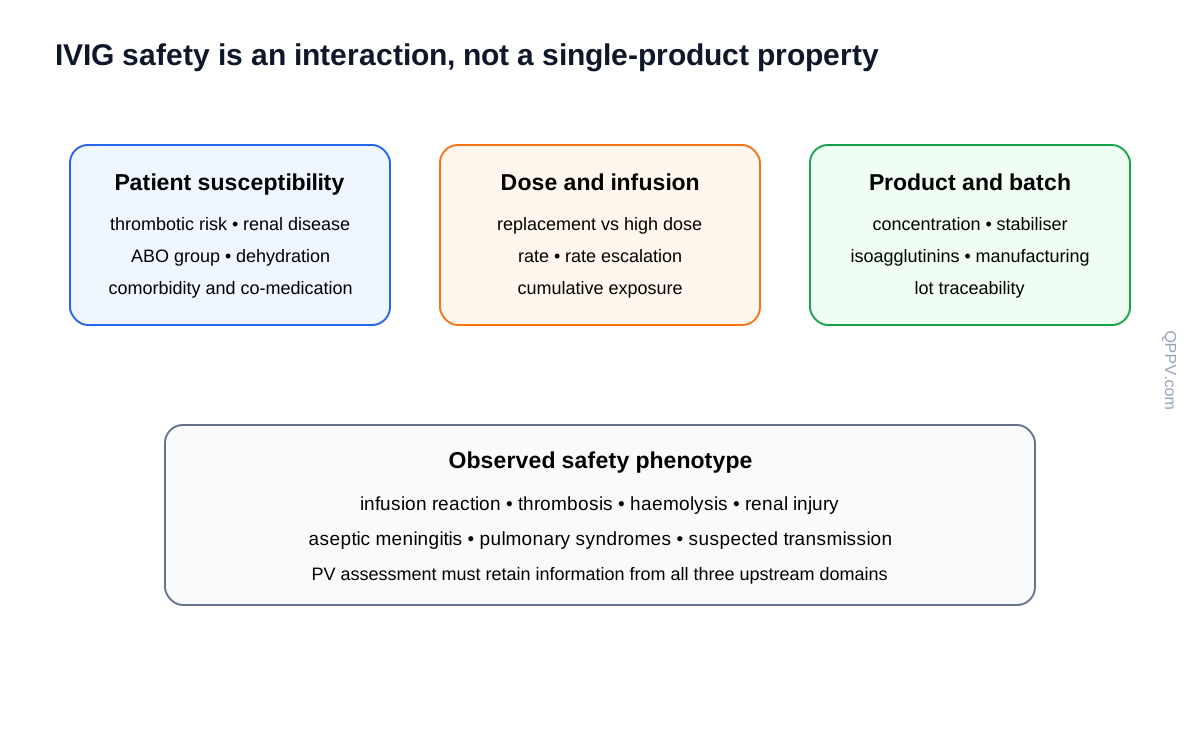
Figure 2. IVIG safety emerges from three interacting domains: patient susceptibility, dose and infusion conditions, and product/batch characteristics.
Product-Specific Case Assessment
| Event | Information that materially changes assessment |
|---|---|
| Infusion reaction | Product/batch, rate, rate changes, dose, premedication, first dose/switch, dechallenge/rechallenge |
| Thrombosis | Site, timing, dose, rate, hydration, immobility, vascular and hypercoagulable risk |
| Haemolysis | ABO group, cumulative dose, Hb/LDH/bilirubin/haptoglobin, DAT, transfusion, batch |
| Renal injury | Baseline renal function, formulation/stabiliser, hydration, nephrotoxins, creatinine course |
| Aseptic meningitis | Dose, onset, meningism, CSF, imaging, infection exclusion, recovery |
| Suspected transmission | Pathogen confirmation, pre-exposure status, batch, other plasma/blood exposures |
Indication and Dose Matter
Replacement treatment and immunomodulatory treatment may expose patients to very different doses and background risks. Aggregate analysis should therefore stratify by indication and dose where possible. Combining a low-dose replacement population with high-dose autoimmune treatment can obscure a clinically meaningful exposure-response pattern.
Aggregate Surveillance and Signal Interpretation
IVIG aggregate review should preserve the dimensions that can explain heterogeneity: product, batch, concentration, stabiliser, indication, dose, infusion rate and patient risk factors. A single active-substance total is often too coarse. For example, haemolysis may cluster by high-dose immunomodulatory use and blood group; renal events may depend partly on formulation and comorbidity; infusion reactions may change after a device, presentation or infusion-protocol change.
Batch-level clustering deserves particular attention because IVIG is a pooled plasma-derived biological. A temporal cluster does not establish a manufacturing defect, but loss of lot information can make a potentially important quality signal impossible to investigate.
Illustrative Failure Modes
These examples are hypothetical operational scenarios rather than reported inspection findings.
- Haemolysis cases are reviewed without ABO group or cumulative dose.
- Thrombotic events are counted without separating high-dose immunomodulation from replacement therapy.
- Renal-failure reports omit the exact formulation and stabiliser, leading reviewers to generalise a formulation-specific risk across the class.
- Infusion reactions are coded without infusion rate or recent rate escalation.
- A suspected pathogen transmission is processed only as an ICSR and is not reconciled with quality and batch-investigation systems.
- Product switching is documented only as “IVIG,” preventing brand and batch traceability.
Inspection and Governance Considerations
An effective PV system should be able to demonstrate how IVIG cases move between safety, quality, medical and manufacturing functions when needed. Inspectors could examine whether batch information is actively sought, whether haemolysis and thrombosis analyses retain clinically relevant denominators, and whether suspected transmission or product-quality cases are reconciled across systems.
Recommended practice includes structured follow-up for infusion rate, indication, dose, ABO group where relevant, renal and thrombotic risk factors, and batch identity. These fields are not additional statutory seriousness criteria; they improve the scientific usefulness of the safety record.
Practical Checklist
- Identify exact IVIG product, concentration and batch.
- Record indication and whether use is replacement or immunomodulatory.
- Reconstruct dose, cumulative dose and infusion rate.
- Capture first exposure, switch and prior tolerance.
- For thrombosis, document baseline vascular and hyperviscosity risk.
- For haemolysis, obtain ABO group and objective laboratory evidence.
- For renal events, obtain baseline function, formulation/stabiliser, hydration and nephrotoxins.
- For severe headache, distinguish routine headache from aseptic meningitis.
- For respiratory events, document imaging, oxygenation and cardiac/fluid assessment.
- Escalate suspected transmission or quality clusters through the relevant quality/manufacturing interface.
Key Takeaways
IVIG is not one pharmacologically simple IgG medicine. It is a family of pooled plasma-derived polyclonal products used across very different dose and disease contexts. Its safety profile therefore reflects the interaction of patient susceptibility, infusion conditions and product/batch characteristics.
The most valuable pharmacovigilance records preserve indication + dose + rate + product + batch. Without those elements, thrombosis, haemolysis, renal injury, infusion reactions and potential quality signals become difficult to interpret.
References
- European Medicines Agency. Guideline on core SmPC for human normal immunoglobulin for intravenous administration (IVIg), Revision 6; legally effective 1 January 2022. https://www.ema.europa.eu/en/core-summary-product-characteristics-human-normal-immunoglobulin-intravenous-administration-ivig-scientific-guideline
- European Medicines Agency. Privigen: EPAR and product information, updated 24 June 2026. https://www.ema.europa.eu/en/medicines/human/EPAR/privigen
- U.S. Food and Drug Administration. Immune Globulins — licensed products. https://www.fda.gov/vaccines-blood-biologics/approved-blood-products/immune-globulins
- U.S. Food and Drug Administration. OCTAGAM — Immune Globulin Intravenous (Human), current product page and package-insert links. https://www.fda.gov/vaccines-blood-biologics/approved-blood-products/octagam
Regulatory Note
IVIG products differ in concentration, excipients/stabilisers, manufacturing process, authorised indications, infusion instructions and risk statements. This article describes common biological and pharmacovigilance principles; current product-specific information in the applicable jurisdiction remains controlling. Recommended follow-up and governance practices are distinguished from legal reporting requirements.