Hydrocodone: Discovery, Development, Safety and Pharmacovigilance
Hydrocodone is a semisynthetic opioid analgesic whose modern pharmacovigilance history cannot be separated from the history of prescribing, formulation design and opioid-related harm. It is not one interchangeable product. Immediate-release hydrocodone is widely encountered in combination with acetaminophen; single-entity extended-release (ER) hydrocodone products were subsequently developed for a different, restricted clinical setting. Antitussive combinations constitute another regulatory and safety context. The active substance is shared, but the co-ingredients, release characteristics, indications, administration instructions and evidence base are not. [1–4]
The central clinical tension is straightforward: agonism at the mu-opioid receptor can reduce pain, yet the same pharmacology can suppress ventilation, cause dependence and contribute to overdose. These risks interact with dose, exposure duration, co-prescribed sedatives, organ function, access and use patterns. A credible safety assessment must distinguish a medication error from an adverse reaction, physiological dependence from opioid use disorder, and evidence of analgesia in selected trial participants from proof of durable benefit during indefinite treatment. [1,2,5]
- Hydrocodone: Discovery, Development, Safety and Pharmacovigilance
- Discovery and the first century of development
- Pharmacological identity and clinical purpose
- Mechanism, disposition and formulation-dependent exposure
- Clinical development: what the trials actually demonstrate
- Safety profile: pharmacology, formulation and context
- Product-specific listedness and expectedness: dated US assessment
- Medication errors, product quality and preventable harm
- Pharmacovigilance: from a reported event to a defensible decision
- Key Takeaways
- References
- Regulatory Note
Discovery and the first century of development
From morphine chemistry to hydrocodone
Hydrocodone emerged from early twentieth-century efforts to modify naturally occurring opiate structures. Carl Mannich and Helene Löwenheim reported new reduction products of codeine in a 1920 paper in Archiv der Pharmazie. FDA's later scientific review identifies their German synthesis as the origin of hydrocodone. This historical identification is supported by the original bibliographic record, not by an assumption that modern manufacturers invented the molecule. The substance, also known historically as dihydrocodeinone, belongs to the morphinan family. Its development preceded modern receptor pharmacology, randomized trials and today's pharmacovigilance systems. [3,6]
Early pharmaceutical development used hydrocodone in analgesic and antitussive contexts. The US Hysingla ER prescribing information records 1943 as the initial US approval year for hydrocodone; this does not mean that the Hysingla formulation existed then. The date in the modern label refers to the substance's US approval history, whereas the Hysingla product itself was approved in 2014. Keeping substance history separate from product history prevents an apparently small but consequential error in regulatory timelines. [1,7]
The original commercial history involved multiple firms, brands and later generic manufacturers. It would be misleading to identify a single modern company as the inventor or to assign all hydrocodone revenue to any one manufacturer. The article therefore describes business milestones only where product-specific evidence supports them.
Combination analgesics and the acetaminophen problem
Hydrocodone became especially familiar in US outpatient care as an immediate-release combination analgesic, commonly paired with acetaminophen. This combination joins two different pharmacological mechanisms and two distinct serious-toxicity profiles. Hydrocodone creates opioid-related respiratory and dependence risks; acetaminophen adds dose-dependent hepatotoxicity, including risk from simultaneous use of other acetaminophen-containing medicines. A serious liver event after a combination product should not automatically be attributed to hydrocodone, just as a respiratory arrest should not automatically be attributed to acetaminophen. [3,5]
This history also explains why the US prescription-volume ranking used to select this INN is not a count of single-entity hydrocodone prescriptions. Product records and combination prescribing cannot be decomposed into independent molecule-level prescription totals without an explicit method. Nor does high utilization alone demonstrate favourable benefit–risk or a particular incidence of harm.
In 2007, FDA announced enforcement action concerning unapproved hydrocodone-containing antitussive products, highlighting unreviewed efficacy, look-alike/sound-alike product names, formulation changes and medication errors. The action illustrates why the existence of a long-used active substance is not a substitute for approval of a specific formulation and indication. [8]
The single-entity extended-release era
In October 2013 FDA approved Zohydro ER, a single-entity extended-release hydrocodone product developed by Zogenix. The decision generated controversy because ER opioid exposure and diversion risks were already important public-health concerns. In November 2014 FDA approved Purdue Pharma's Hysingla ER, a once-daily hydrocodone bitartrate tablet incorporating physicochemical abuse-deterrent properties. The product was intended to make certain forms of manipulation more difficult, not to prevent oral misuse, addiction or overdose. Its initial developer and the Knoa Pharma LLC packager identified on the May 2026 DailyMed label are different lifecycle facts; the current label does not, by itself, document the full chain of corporate transfers. [1,7]
Hydrocodone-only ER development avoided acetaminophen co-exposure but did not remove opioid toxicity. It also introduced formulation-specific hazards: prolonged exposure after a dosing error, potentially dangerous release after tablet manipulation, and for Hysingla ER a hydrogel-related risk of dysphagia or esophageal obstruction. A product without acetaminophen is not therefore a generally safer substitute for a short-acting combination; the products have different indications and exposure patterns. [1]
Regulatory responses to population-level harm
A US Drug Enforcement Administration final rule moved hydrocodone combination products from Schedule III to Schedule II, effective 6 October 2014. Single-entity hydrocodone was already Schedule II. Scheduling is a controlled-substance regulatory decision, not an estimate of individual causality or the frequency of adverse reactions. [9]
FDA restricted prescription opioid cough and cold products containing hydrocodone or codeine to adults aged 18 years and older in 2018, finding the paediatric risks outweighed the benefits. In December 2023 it implemented class-wide opioid analgesic labelling changes, including emphasis on increasing overdose risk at higher doses and opioid-induced hyperalgesia. On 31 July 2025 FDA required further updates based partly on long-term observational studies: clearer limits on ER/LA indications, persistent risks over time, the dangers of rapid tapering, interactions with gabapentinoids and other depressants, and newly described toxic leukoencephalopathy and opioid-induced esophageal dysfunction. [4,10,11]
The Hysingla ER DailyMed label updated 29 May 2026, with major changes dated December 2025, reflects this evolving framework. These are not proof that all newly emphasized risks were newly discovered in 2025. A change in regulatory communication may follow accumulation of evidence, improved risk characterization or an altered benefit–risk judgement. [1,4]
Pharmacological identity and clinical purpose
Hydrocodone is a centrally acting mu-opioid receptor agonist. Its intended analgesic effect is modulation of nociceptive transmission and pain perception, not reversal of the underlying pathology. Activation of opioid receptors in brainstem respiratory networks contributes to respiratory depression; effects on enteric neurons slow gastrointestinal transit; neuroadaptation during repeated exposure produces tolerance and physical dependence. The same receptor system thus explains both benefit and several major hazards. [1]
Hydrocodone is neither a non-opioid analgesic nor a direct acetaminophen prodrug. It is not equivalent to hydromorphone, although hydromorphone is a minor active metabolite formed through CYP2D6. CYP3A4 produces norhydrocodone, an important metabolic pathway. Variation in enzyme activity and interacting medicines can change exposure, but a CYP2D6 genotype alone does not reliably predict the total clinical effect of a particular hydrocodone formulation. [1]
The clinical purpose depends on the product. Immediate-release combination tablets may be used for pain severe enough to require an opioid when alternatives are inadequate. The 2026 Hysingla ER indication is narrower: severe and persistent pain requiring an opioid that cannot be adequately managed with alternatives, including immediate-release opioids. It is not an as-needed rescue analgesic. This distinction should govern interpretation of clinical trials, prescribing errors, comparative safety and postmarketing signals. [1,4]
Mechanism, disposition and formulation-dependent exposure
Mu-opioid signalling links analgesia and toxicity
Mu-opioid receptors are G-protein-coupled receptors that inhibit neuronal excitability and neurotransmitter release through Gi/o-linked signalling. In pain pathways, this reduces nociceptive transmission; in respiratory control networks, the same receptor family reduces ventilatory responsiveness to carbon dioxide. Opioid-induced respiratory depression can therefore occur without a separate toxic metabolite or an allergic mechanism. Risk is especially consequential when exposure rises faster than expected or sedatives are co-administered. [1]
Constipation reflects peripheral enteric opioid-receptor effects and may persist despite tolerance to some central effects. Nausea, vomiting, somnolence, dizziness, pruritus and urinary retention have overlapping central and peripheral mechanisms. Endocrine effects can emerge with longer exposure; the US label discusses androgen deficiency and possible reduced fertility but explicitly cautions that the causal role in clinical hypogonadism is difficult to isolate from comorbid factors. [1]
Metabolic routes and interacting drugs
Hydrocodone undergoes hepatic metabolism, with CYP3A4-mediated N-demethylation to norhydrocodone and CYP2D6-mediated O-demethylation to hydromorphone. The parent compound remains pharmacologically active. A CYP3A4 inhibitor can increase parent-drug exposure; stopping an enzyme inducer can produce the same directional change as induction wanes. Conversely, adding an inducer or removing an inhibitor can lower exposure and precipitate inadequate analgesia or withdrawal in a physically dependent patient. [1]
This interaction is a time-dependent medication safety problem. A clinician may correctly identify an interaction at the start of co-prescribing but miss its reversal when the second drug is stopped. In an ICSR, record the exact start and stop dates of both medicines, not just a static concomitant-drug list. CYP2D6 effects require more cautious interpretation because formation of an active metabolite and parent-drug clearance change together; an isolated metabolite concentration does not establish clinical causation. [1]
Central nervous system depressants create a second, pharmacodynamic interaction pathway. Benzodiazepines, alcohol, other opioids and gabapentinoids can increase sedation and respiratory-depression risk without necessarily increasing measured hydrocodone concentration. A negative CYP-interaction screen therefore does not make such combinations safe. The May 2026 Hysingla label's boxed warning explicitly covers benzodiazepines and other CNS depressants. [1,4]
Why release design matters
Immediate-release tablets and ER products differ in the time course of absorption, peak exposure, duration and instructions for use. Hysingla ER is intended to be swallowed intact, one tablet at a time with sufficient water. Its formulation can form a viscous hydrogel when exposed to liquid. This characteristic contributes to its manipulation-resistant design but also underlies the product-specific warnings about choking, dysphagia and esophageal obstruction. The label reports 11 swallowing-difficulty events among 2,476 subjects in studies using specific administration instructions; this is a product-exposure observation, not a general rate for all hydrocodone preparations. [1]
Abuse-deterrent does not mean abuse-proof. Formulation studies may show reduced ease of manipulation or reduced drug liking under particular experimental conditions. They cannot by themselves establish reduced real-world overdose mortality, elimination of oral misuse or improved population benefit–risk. In PV, a suspected manipulation event requires documentation of product, presentation, route, quantity, source, intent if reported and observed clinical outcome, without treating the mechanism as established solely from a positive toxicology test. [1,7]
Clinical development: what the trials actually demonstrate
Hysingla ER's enriched-enrolment randomized-withdrawal trial
The pivotal Hysingla ER chronic low-back-pain programme used an enriched-enrolment randomized-withdrawal design. 905 participants entered open-label titration, and 588 who achieved an acceptable response and tolerability were randomized: 296 continued hydrocodone ER and 292 received placebo, with blinded tapering in the placebo arm. At week 12 the active group had a statistically favourable pain-intensity result; the published analysis reports a treatment difference of approximately 0.53 points on an 11-point scale with p = 0.0016. [1,12]
The result supports analgesic efficacy in the selected, titration-responsive population over the randomized interval. It does not mean that 65% of all patients with chronic back pain will achieve a durable response, or that the modest between-arm difference predicts individual benefit. Patients who did not tolerate or benefit from the open-label phase were not represented equally in the randomized comparison. Rescue analgesia and the placebo-arm taper also matter when interpreting changes in pain and withdrawal symptoms. [12]
The same trial reported adverse events consistent with opioid pharmacology, including nausea and constipation. The USPI's section 6.1 table separates events during the open-label titration phase from events after randomization; these denominators and periods must not be combined into a single incidence estimate. In the double-blind comparison, nausea was reported in 8% on Hysingla ER versus 5% on placebo, and vomiting in 6% versus 3%. Trial rates should not be compared directly with rates in a different opioid study. [1]
Another ER programme is not interchangeable evidence
A separate phase 3 study of a twice-daily hydrocodone ER formulation using CIMA abuse-deterrence technology enrolled 625 patients in titration and randomized 371 (191 active, 180 placebo). Its primary worst-pain-intensity endpoint favoured hydrocodone ER at 12 weeks, but the intervention, release technology, dosing schedule and study population were not the same as Hysingla ER. It is evidence for a specific development programme, not direct comparative evidence that one formulation is superior to another. [13]
A further randomized study of a hydrocodone ER product in chronic osteoarthritis or low-back pain randomized 294 participants (146 active and 148 placebo). As with the other enriched trials, selection before randomization limits generalizability to unselected patients. These studies establish short-term analgesic activity in their studied conditions; they cannot independently settle long-term addiction, overdose, functional recovery or all-cause mortality outcomes. [14]
The important evidence gap: long-term effectiveness and harm
Pain-intensity improvement in a 12-week selected trial is not equivalent to sustained improvement in function, quality of life or ability to work over years. Opioid tolerance, changing underlying disease, psychiatric comorbidity, exposure escalation, discontinuation and selection bias complicate long-term evaluation. In July 2025 FDA specifically cited observational postmarketing studies that quantified misuse, abuse, addiction and overdose risks during long-term opioid therapy, while identifying a separate prospective randomized study intended to address efficacy–risk questions. This is a regulatory response to evidence limitations, not a claim that the observational studies prove individual causation. [4]
The CDC's 2022 guideline recommends individualized consideration of nonopioid therapies, functional goals, follow-up, risk mitigation and patient-centred tapering where appropriate. It is clinical guidance, not a hydrocodone marketing authorization or a binding one-size-fits-all dose threshold. The guideline explicitly opposes abrupt discontinuation and inflexible policies that abandon patients already receiving opioids. [5]
Translating the evidence into product-level PV
A case of inadequate analgesia after switching from an IR combination to an ER tablet cannot be assessed by comparing milligrams alone. The prescribed indication, release design, dosing interval, prior opioid exposure, other medicines, actual administration, pain diagnosis and functional outcomes all matter. Similarly, an overdose after a switch is not automatically proof of a manufacturing defect. An adequate report separates prescribed regimen, actual exposure, pharmacological interactions, medication error and possible nonmedical use, while avoiding unsupported assumptions about intent.
Clinical evidence for hydrocodone in antitussive combinations must be assessed separately. The 2018 paediatric cough-product restriction cannot be transferred mechanically into the age indications of every hydrocodone analgesic; conversely, an analgesic label must not be used to justify an unapproved paediatric cough indication. [10]
Safety profile: pharmacology, formulation and context
Respiratory depression and overdose
Respiratory depression is the most urgent serious opioid toxicity. It may be preceded by excessive sedation, slow or irregular breathing and impaired arousal, but serious harm can occur without a reliably observed prodrome. The Hysingla ER boxed warning identifies potentially fatal respiratory depression, accidental ingestion, additive CNS-depressant effects and CYP3A4 interactions. Exposure may be particularly hazardous during initiation, dose escalation, after loss of opioid tolerance, or when a strong interacting medicine is introduced or withdrawn. [1]
A suspected overdose case needs an event timeline: prescribed and actually taken product, number and strength of units, route, time of last known well state, respiratory findings, toxicology limitations, rescue interventions, clinical course and concurrent substances. A response to an opioid antagonist supports an opioid-mediated component but does not identify the exact substance or exclude another contributor. Severe poisoning requires emergency management according to local clinical protocols; an article about PV must not substitute a simplified dose-based algorithm for emergency care.
Dependence, withdrawal, addiction and misuse are not synonyms
Tolerance is reduced response after repeated exposure; physical dependence is a physiological adaptation that can cause withdrawal on abrupt reduction. Neither alone establishes opioid use disorder. Addiction/opioid use disorder involves a clinical pattern of impaired control and harmful use assessed against diagnostic criteria. Misuse describes use other than prescribed, whereas abuse has context-specific definitions in the label and study instruments. These concepts may overlap in an individual case but should not be collapsed into a single MedDRA term. [1,4]
The May 2026 Hysingla label now includes long-term observational evidence. Across selected prospective cohorts, approximately 1–6% newly met criteria for moderate-to-severe opioid use disorder over 12 months; estimates of abuse and misuse were approximately 9% and 22%, respectively, using specified instruments. A separate retrospective cohort estimated five-year cumulative opioid-involved overdose or overdose-related death at approximately 1.5–4% across sites. These are cohort-level estimates for Schedule II opioid analgesics, not hydrocodone-specific incidence, and the label notes substantial selection and follow-up limitations. They must not be inserted into a Hysingla-specific case narrative as a probability of causation. [1]
Rapid or abrupt discontinuation in a physically dependent person can produce withdrawal, uncontrolled pain and serious psychological consequences. Both the updated label and CDC guidance emphasise individualized, supported changes rather than reflexive discontinuation after every safety concern. A medically serious acute toxicity may require urgent action, but it should not be confused with a blanket policy for stable patients. [1,5]
Other clinically important adverse effects
Constipation, nausea, vomiting, somnolence, dizziness and fatigue are common during opioid treatment. Persistent constipation can impair function and may require clinical management. Hypotension, falls, urinary retention and confusion can be especially consequential in older adults or patients with frailty and comorbidity. Hysingla ER additionally warns about QTc prolongation and esophageal obstruction; these are product-label details that must not be generalized without checking another hydrocodone formulation's own information. [1]
The 2026 US label's section 6.2 records postmarketing reports of serotonin syndrome with serotonergic drugs, adrenal insufficiency, anaphylaxis, androgen deficiency, hyperalgesia/allodynia, hypoglycaemia and opioid-induced esophageal dysfunction. The label explicitly cautions that voluntary-report frequencies and causal relationships cannot generally be established from those reports. Serotonin syndrome should be assessed clinically against the full serotonergic regimen and diagnostic alternatives, not inferred merely because an antidepressant and hydrocodone were co-reported. [1]
Opioid-induced hyperalgesia deserves particular attention: worsening pain despite increased opioid exposure may reflect disease progression, tolerance, withdrawal between doses, a new injury or paradoxical pain sensitization. The term is not synonymous with inadequate analgesia. The assessment should record distribution and character of pain, temporal relationship to changes in exposure, examination and alternative causes. [1,11]
Pregnancy, neonatal exposure and special populations
Long-term opioid exposure during pregnancy can lead to neonatal opioid withdrawal syndrome. Pregnancy outcomes also require assessment of maternal disease, other drugs, gestational timing and neonatal management. Hysingla ER is not established as safe in paediatric patients; its hydrogel properties raise an additional swallowing hazard. The 2018 restriction on prescription hydrocodone-containing cough medicines for children reflects a separate indication-specific benefit–risk decision. [1,10]
In moderate-to-severe renal impairment or severe hepatic impairment, hydrocodone exposure can be higher; the Hysingla label therefore provides product-specific precautions and dosing adjustments. A PV reviewer should record renal/hepatic status at the time of exposure and relevant changes rather than assuming a stable baseline. Age alone does not explain an event, but age-related comorbidity, interacting medicines and frailty may change vulnerability. [1]
Product-specific listedness and expectedness: dated US assessment
Comparator: Hysingla ER (hydrocodone bitartrate) single-entity extended-release oral tablets, Knoa Pharma LLC US DailyMed label, updated 29 May 2026, version 17; major changes dated December 2025. Assessment accessed 30 October 2026. Sections 4, 5, 6.1, 6.2, 7 and 8 were reviewed. This is not a label for hydrocodone/acetaminophen IR tablets, a cough product or a different ER formulation. [1]
| Safety concept | US Hysingla ER label location and status | PV interpretation |
|---|---|---|
| Nausea, vomiting, constipation, dizziness, somnolence | Section 6.1, clinical-trial reactions | Explicitly listed; trial frequencies are study- and period-specific |
| Respiratory depression and overdose | Boxed warning; 5.2, serious reactions referenced in 6 | Major labelled hazard; do not confuse the warning with a trial-incidence estimate |
| Addiction, abuse and misuse | Boxed warning, 5.1, observational evidence in 6.2 | Explicit label coverage; assess distinct reported behaviours and diagnostic definitions |
| Neonatal opioid withdrawal | Boxed warning and 5.4, cross-referenced in 6 | Listed risk with pregnancy-specific exposure history |
| Serotonin syndrome, adrenal insufficiency | 6.2 postmarketing | Explicitly listed; spontaneous-report frequency is not established |
| Hyperalgesia/allodynia | 5.7 and 6.2 | Listed, but worsening pain alone does not confirm this diagnosis |
| Hypoglycaemia | 6.2 | Listed as reported with opioids; assess diabetes, fasting and other causes |
| Esophageal obstruction, dysphagia, choking | 5.13, less-common trial reactions in 6.1 | Product-formulation-specific concern, not a class-wide tablet rate |
| Opioid-induced esophageal dysfunction | 5.14 and 6.2 | Distinct from mechanical obstruction of a Hysingla tablet |
| QTc prolongation | 5.11 precaution | Explicit warning; do not describe it as a tabulated common section-6.1 reaction |
| Significant respiratory depression, acute severe asthma in specified circumstances, GI obstruction, hypersensitivity | Section 4 contraindications | Contraindication status is not the same as an ADR frequency |
Why the US immediate-release combination label is different
A second verified US comparator is SpecGx LLC hydrocodone bitartrate/acetaminophen immediate-release tablets, DailyMed updated 20 April 2026. Its label describes opioid respiratory and dependence risks but also a separate acetaminophen hepatotoxicity warning, including acute liver failure and danger from multiple acetaminophen-containing products. Hysingla ER is a single-entity tablet and therefore does not carry this co-ingredient exposure; instead its label describes ER-specific administration and hydrogel swallowing hazards. Both product types contain hydrocodone, but their listed risks are not identical and their event rates cannot be pooled without a defined comparison. [1,3]
EU comparison limitation: No current, authoritative EU or Member State SmPC for an equivalent hydrocodone-only Hysingla ER presentation was verified in this review. EMA's centrally authorised medicines catalogue is not a complete register of nationally authorised medicines. Consequently this article makes no EU section-4.8 listedness or frequency claim, and it does not label a reaction “EU-unlisted” merely because no comparable document was found. If a nationally authorised product is identified, its exact country, formulation, version and SmPC must be assessed independently. [15]
Interpretation boundary: Public USPI listedness is not company-core listedness and is not automatically the reference safety information (RSI) used to determine clinical-trial expectedness. Nor does listing establish individual causality, seriousness, regulatory reportability or a uniform global label obligation. For an actual case, document the named product, exact revision, verbatim event, medically equivalent label term, source section and assessor rationale. Do not transfer Hysingla's section 6.1 rates or swallowing warning to every hydrocodone product.
Medication errors, product quality and preventable harm
Hydrocodone medication errors often cross organizational boundaries. Examples include confusion between IR and ER formulations, accidental duplicate administration, selection of the wrong combination strength, co-prescribing with another acetaminophen-containing product, misunderstanding of as-needed versus scheduled treatment, and unsafe storage or disposal leading to accidental ingestion. Some events are near misses; others involve overdose, liver injury, withdrawal or lack of effect. The medication-error term and the resulting clinical event should be documented separately.
A complaint that an ER tablet was difficult to swallow is not automatically a manufacturing defect; the product's known hydrogel behaviour, administration instructions, swallowing disorder and batch-specific evidence must be assessed. Conversely, a suspect broken tablet, unusual appearance or packaging discrepancy should be routed to product quality while any associated clinical event enters the PV process. Parallel investigations should reconcile case and batch identifiers without losing the reporter's original description.
For combination products, assess acetaminophen exposure from all products and do not infer that a hydrocodone-only formulation contains acetaminophen. For abuse-deterrent formulations, neither a reported manipulation attempt nor a laboratory resistance result proves that misuse was prevented or that an overdose was impossible. [1,7]
Pharmacovigilance: from a reported event to a defensible decision
Hydrocodone surveillance must operate at two levels. Individual case assessment asks what happened to a particular patient and whether a specific medicinal product plausibly contributed. Aggregate evaluation asks whether reports, exposure data, clinical studies and external evidence suggest a change in the known benefit–risk profile. Neither level can be reduced to a count of overdose reports. [1,4,5]
A two-track assessment of opioid harm
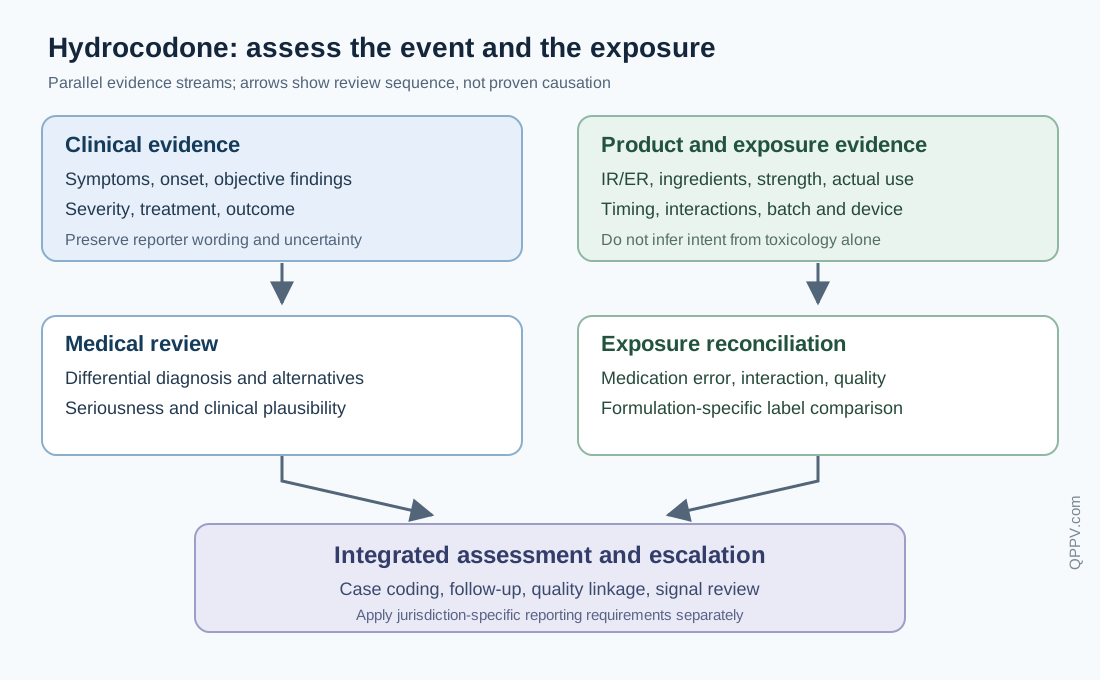
Figure 1. An illustrative case-assessment workflow. Clinical severity and alternative causes are assessed in parallel with product, formulation, interaction and error evidence; the tracks converge before case coding, follow-up and signal escalation. This is a decision aid, not a substitute for applicable reporting rules.
An intake record should capture the four minimum ICSR elements under the applicable jurisdictional framework and preserve the original reporter's words. For a hydrocodone event, high-value additional data include the exact active ingredients, trade name, formulation, strength, batch if available, prescribed and actual use, exposure dates, route, concurrent depressants, recent CYP3A4 inducer/inhibitor changes, renal/hepatic status, prior opioid tolerance, symptom chronology, clinical intervention and outcome. Capture the source and uncertainty of every fact.
For suspected overdose, establish the clinical phenotype and objective findings before inferring intention. A report of “took too much” might describe an accidental double dose, prescribing or dispensing error, deliberate nonmedical use, intentional self-harm or an uncertain event. The distinction matters for case coding, medical follow-up and risk minimisation; it should not be guessed from demographic characteristics or a toxicology result. In an acetaminophen combination, record the co-ingredient exposure and hepatic investigations independently.
Four illustrative case assessments
Respiratory depression after an antibiotic. A patient receiving stable hydrocodone develops profound somnolence after starting a CYP3A4-inhibiting antimicrobial. Obtain exact agent, dose and start time, hydrocodone presentation, other sedatives, organ function and respiratory findings. A pharmacokinetic interaction is plausible, but concurrent infection, hypoxia and additional drugs may contribute. Record the suspect reaction and interaction, assess seriousness, and escalate promptly according to local safety procedures. [1]
Withdrawal after an inducer is introduced. A patient with physical dependence reports worsening pain, sweating and gastrointestinal symptoms after a new enzyme-inducing drug. The temporal association may reflect reduced hydrocodone exposure rather than manufacturing failure. Verify dispensing, adherence, clinical changes and the interacting medicine's timeline. A later discontinuation of that inducer can reverse the exposure change and create a different hazard. [1]
Swallowing difficulty with an ER tablet. A patient reports that a tablet lodged in the throat. Record product identity, whether the tablet was altered, water intake, swallowing history, imaging/endoscopy if performed, treatment and outcome. The Hysingla hydrogel mechanism is relevant, but it does not establish a batch defect. Quality and PV teams should reconcile any returned-product examination and the clinical event. [1]
Suspected acetaminophen liver injury. A patient using hydrocodone/acetaminophen plus an over-the-counter cold medicine develops acute hepatic injury. Reconstruct every acetaminophen source and timing, alternative liver diagnoses, biochemical course and clinical management. Avoid assigning a combination-associated event solely to hydrocodone; the co-ingredient and cumulative exposure are essential to a credible assessment. [3,5]
Signal detection and denominator discipline
Spontaneous reports are useful for detecting unusual patterns but cannot provide incidence without reliable exposure and ascertainment data. An increase in reports may follow publicity, changed prescribing, stimulated reporting, coding practices or a real change in risk. Opioid events also have multiple potential contributors: illicitly manufactured substances, co-use of alcohol or sedatives, misidentified products and pre-existing illness. De-duplication, product identification and careful source classification are therefore especially important.
Stratify analyses by IR combination versus single-entity ER, formulation and manufacturer, exposure duration, setting, concomitant depressants, patient age, renal/hepatic function and route where data permit. Do not pool all hydrocodone formulations into a single denominator while assigning a product-specific event to Hysingla ER. The FDA's 2025 long-term observational estimates illustrate both the value of active epidemiology and the importance of eligibility criteria, loss to follow-up and outcome definitions. [1,4]
Risk minimisation and effectiveness
In the United States, the Opioid Analgesic REMS provides a framework for education and patient information. Label warnings, medication guides, clinical review, overdose-reversal-agent access, secure storage, avoidance of interacting depressants and supported treatment reassessment can form part of risk minimisation. The precise legal responsibilities differ by participant and jurisdiction; a professional recommendation should not be described as an unconditional statutory obligation. [1,4]
Measure outcomes rather than simply counting distributed materials. Potential indicators include wrong-formulation dispensing, accidental paediatric exposure, documented interaction reconciliation, preventable duplicate opioid therapy, overdose reversal, medically attended constipation or swallowing events, and recurrence after corrective action. Interpret changes against prescribing volume, case capture and local context. A fall in reported events after an educational campaign does not by itself prove that harm declined.
Inspection-ready governance requires traceability: the case source, clinical assessment, exact label version, regulatory obligations, duplicate decisions, medical review, signal discussion, quality reconciliation, risk-minimisation decisions and follow-up effectiveness. When a concern crosses several products or companies, collaboration and class-wide evidence may be appropriate, but product-specific conclusions still need supporting data.
Key Takeaways
Hydrocodone's discovery-to-current history shows why one INN does not mean one formulation or one safety profile. Its opioid agonism produces analgesia and serious dose- and context-dependent harms. Short-term enriched trials demonstrate efficacy in selected chronic-pain populations but do not establish indefinite benefit. The 2025–2026 US labelling framework incorporates long-term observational risk estimates while preserving important methodological limitations. Hysingla ER's hydrogel swallowing risk and ER administration instructions cannot be projected onto IR combinations. Every case requires exact product identification, a chronology of exposure and interacting drugs, and separation of reported facts, clinical interpretation, public listedness, RSI expectedness and regulatory reporting decisions.
References
- DailyMed, US National Library of Medicine. Hysingla ER (hydrocodone bitartrate) extended-release tablets, Knoa Pharma LLC; label updated 29 May 2026, version 17; sections 1–14, including 4, 5, 6.1, 6.2, 7 and 12. Accessed 30 October 2026. https://dailymed.nlm.nih.gov/dailymed/lookup.cfm?setid=b7d23ac2-e776-9f62-3290-c64c2d6eb353&version=17
- US Food and Drug Administration. Vantrela ER (hydrocodone bitartrate) NDA 207975, nonclinical review, 2017; historical chemistry, substance history and opioid pharmacology. https://www.accessdata.fda.gov/drugsatfda_docs/nda/2017/207975Orig1s000SumR.pdf
- DailyMed, US National Library of Medicine. Hydrocodone bitartrate and acetaminophen immediate-release tablets, SpecGx LLC, label updated 20 April 2026; opioid warnings and acetaminophen hepatotoxicity. Accessed 30 October 2026. https://dailymed.nlm.nih.gov/dailymed/lookup.cfm?setid=73c1059b-0c7d-42ef-9827-f018858fc447
- US Food and Drug Administration. FDA is requiring opioid pain medicine manufacturers to update prescribing information regarding long-term use. Drug Safety Communication, 31 July 2025. https://www.fda.gov/drugs/drug-safety-communications/fda-requiring-opioid-pain-medicine-manufacturers-update-prescribing-information-regarding-long-term
- Dowell D et al. CDC Clinical Practice Guideline for Prescribing Opioids for Pain—United States, 2022. MMWR Recomm Rep. 2022;71(3):1–95. https://www.cdc.gov/mmwr/volumes/71/rr/rr7103a1.htm
- Mannich C, Löwenheim H. Über zwei neue Reduktionsprodukte des Kodeins. Archiv der Pharmazie. 1920;258:295–316. Bibliographic attribution independently recorded by Neue Deutsche Biographie. https://www.deutsche-biographie.de/sfz57824.html
- Purdue Pharma LP. FDA approval of Hysingla ER, 20 November 2014, company announcement; historical formulation and original sponsor, not independent evidence of reduced real-world abuse. https://www.prnewswire.com/news-releases/purdue-pharma-lp-receives-fda-approval-for-hysingla-er-hydrocodone-bitartrate-extended-release-tablets-cii-a-once-daily-opioid-analgesic-formulated-with-abuse-deterrent-properties-283379331.html
- US Food and Drug Administration. Questions and Answers About FDA's Enforcement Action Regarding Unapproved Hydrocodone Drug Products, 2007. https://www.fda.gov/drugs/unapproved-drugs/questions-and-answers-about-fdas-enforcement-action-regarding-unapproved-hydrocodone-drug-products
- US Drug Enforcement Administration. Rescheduling of Hydrocodone Combination Products from Schedule III to Schedule II, final rule, Federal Register, 22 August 2014; effective 6 October 2014. https://www.govinfo.gov/content/pkg/FR-2014-08-22/pdf/2014-19922.pdf
- US Food and Drug Administration. Prescription opioid cough and cold medicines restricted to adults aged 18 years and older. Drug Safety Communication, 11 January 2018. https://www.fda.gov/media/110565/download
- US Food and Drug Administration. FDA approves safety labeling changes for opioid pain medicines. 15 December 2023. https://www.fda.gov/drugs/drug-alerts-and-statements/fda-approves-safety-labeling-changes-opioid-pain-medicines
- Wen W et al. A multicenter, randomized, double-blind, placebo-controlled trial of once-daily hydrocodone ER in chronic low back pain. Expert Opin Pharmacother. 2015. https://www.tandfonline.com/doi/full/10.1517/14656566.2015.1060221
- Hale ME et al. Efficacy and safety of a hydrocodone extended-release tablet with abuse-deterrence technology in chronic low back pain. J Opioid Manag. 2015;11:507–518. doi:10.5055/jom.2015.0304. https://pubmed.ncbi.nlm.nih.gov/26728648/
- Study of hydrocodone ER with abuse-deterrence technology in chronic low-back or osteoarthritis pain. Pain Ther. 2015. Full report and denominators. https://pmc.ncbi.nlm.nih.gov/articles/PMC4576898/
- European Medicines Agency. Medicines finder and national authorisation scope; centralised register does not cover every nationally authorised medicinal product. Accessed 30 October 2026. https://www.ema.europa.eu/en/medicines
Regulatory Note
This article is an educational pharmacovigilance reference, not an instruction to prescribe, change opioid doses, taper or manage overdose without clinical supervision. Opioid analgesic and antitussive indications, product status, strength, formulation, warnings, contraindications, scheduling and reporting obligations differ by jurisdiction and can change. Verify the exact current authorised product information and local law for the medicine actually used. Public-label listedness, clinical-trial RSI expectedness, case seriousness, causality and reporting obligations are separate determinations. The absence of a verified EU comparator in this review is not evidence that no national hydrocodone product exists.