Iberdomide (Zenbexus): CELMoD Development, Accelerated Approval and Pharmacovigilance
Iberdomide is an oral cereblon E3 ligase modulator (CELMoD) developed for multiple myeloma. On 13 August 2026, the U.S. Food and Drug Administration granted accelerated approval to iberdomide, marketed as Zenbexus, in combination with daratumumab and hyaluronidase-fihj and dexamethasone for adults with multiple myeloma who have received at least one prior line of therapy including a proteasome inhibitor and an immunomodulatory agent.[1,2]
The approval is pharmacovigilance-relevant for two reasons. First, iberdomide represents a new therapeutic class built on deliberate manipulation of the cereblon protein-degradation machinery rather than conventional receptor or enzyme inhibition. Secondly, the approval is accelerated: the clinical benefit underlying the approval remains subject to a post-marketing confirmatory trial. The safety system therefore has to operate in parallel with continuing efficacy verification rather than treating authorisation as the end of evidence generation.[1,3]
The U.S. prescribing information identifies serious venous and arterial thromboembolism, neutropenia, infections and second primary malignancies as important risks. Because iberdomide can cause fetal harm, the product is also subject to a Risk Evaluation and Mitigation Strategy (REMS) controlling prescribing, dispensing and patient participation.[4,5] These controls sit alongside routine pharmacovigilance activities such as individual case processing, signal detection, periodic reporting and benefit-risk evaluation.
This article follows iberdomide from the scientific discovery of cereblon-dependent molecular-glue pharmacology through development and the EXCALIBER-RRMM programme, then examines the accelerated approval, clinical safety profile, REMS, post-marketing requirements and the governance questions that follow the first approval of a CELMoD.
- Iberdomide (Zenbexus): CELMoD Development, Accelerated Approval and Pharmacovigilance
- Multiple Myeloma and the Need for New Mechanisms
- Cereblon and the Molecular-Glue Concept
- Discovery and Development Strategy
- Early Clinical Evidence
- EXCALIBER-RRMM
- FDA Approval and Accelerated-Approval Framework
- Pharmacological and Exposure Considerations
- Serious Thromboembolism
- Neutropenia and Infection
- Second Primary Malignancies
- Embryo-Fetal Toxicity and the ZENBEXUS REMS
- Figure: Iberdomide Evidence and Control Architecture
- Serious Adverse Reactions in the Approval Population
- Individual Case Safety Reports
- Signal Detection in a New Drug Class
- Periodic Benefit-Risk Evaluation
- Accelerated Approval and Post-Marketing Evidence
- REMS Effectiveness and Pharmacovigilance
- Special Situations
- Inspection and Governance Perspective
- Common Failure Modes
- QPPV Oversight
- Current Pharmacovigilance Questions
- Practical Pharmacovigilance Checklist
- Key Takeaways
- References
- Regulatory Note
Multiple Myeloma and the Need for New Mechanisms
Multiple myeloma is a malignant plasma-cell disorder in which treatment commonly involves combinations of agents with different mechanisms. Despite major advances in proteasome inhibitors, immunomodulatory drugs, anti-CD38 antibodies and cellular therapies, disease frequently relapses and becomes progressively difficult to treat.
The history of immunomodulatory drugs provides the scientific bridge to iberdomide. Lenalidomide and pomalidomide were initially understood largely through their immunomodulatory and anti-myeloma effects. Work in the early 2010s established cereblon as a direct molecular target and connected immunomodulatory drug activity with targeted protein degradation.[6–8]
That discovery changed the drug-development problem. Instead of asking only whether a compound could inhibit a cancer-associated protein, researchers could ask whether a small molecule could alter the substrate-recognition properties of an E3 ubiquitin ligase and thereby cause selective degradation of proteins required for malignant-cell survival.
Iberdomide emerged from this strategy. It was designed as a next-generation cereblon modulator with stronger and more differentiated degradation and immune-modulatory properties than earlier IMiD medicines. Its development therefore belongs to the broader transition from immunomodulation to targeted protein degradation.
Cereblon and the Molecular-Glue Concept
Cereblon is a substrate receptor within the CRL4^CRBN E3 ubiquitin ligase complex. When a suitable ligand binds cereblon, the resulting complex can alter which proteins are recruited for ubiquitination and subsequent degradation by the proteasome.
This mechanism differs from classical pharmacology. A conventional inhibitor usually occupies a functional site on a protein and blocks an existing activity. A molecular glue can instead change the interaction landscape of a protein-complex, causing a new protein-protein interaction and thereby redirecting cellular degradation machinery.[6,9]
CELMoD agents are designed around this principle. Bristol Myers Squibb describes them as molecules that alter cereblon's protein-binding properties to promote interaction with and degradation of disease-causing proteins.[9] In multiple myeloma, degradation of transcription factors such as Ikaros and Aiolos contributes to direct anti-myeloma activity and immune effects.[7,8]
The pharmacovigilance consequence is that mechanism matters when interpreting both efficacy and safety. A molecule that deliberately changes protein degradation may affect multiple downstream biological processes. Therefore, a mature safety evaluation should not assume that adverse effects will be limited to one conventional target-organ system.
Discovery and Development Strategy
Bristol Myers Squibb built on the scientific foundation established with IMiD medicines and cereblon biology to develop a new generation of CELMoDs. Iberdomide was investigated as an orally administered compound intended to retain cereblon-mediated anti-myeloma activity while increasing potency and improving activity in disease settings where earlier immunomodulatory drugs had become less effective.[9,10]
Early clinical development examined iberdomide both as monotherapy and in combinations. The development strategy was consistent with the biology of multiple myeloma: a CELMoD could provide a distinct anti-myeloma mechanism while being combined with established agents such as dexamethasone, proteasome inhibitors and anti-CD38 antibodies.
This combination strategy is also important for pharmacovigilance. Once iberdomide is used with several active medicines, attribution of an individual adverse event becomes more complex. The safety system needs accurate exposure dates, dose changes and concomitant therapy information rather than simply identifying iberdomide as the suspect product.
Early Clinical Evidence
Early studies demonstrated that iberdomide had anti-myeloma activity in heavily pretreated patients, including patients whose disease had become refractory to lenalidomide and pomalidomide. The clinical rationale for continuing development was therefore not simply that iberdomide belonged to the same pharmacological family as earlier IMiDs, but that it could retain or restore activity after resistance to those agents.
Subsequent studies evaluated combinations designed to exploit complementary mechanisms. The most important regulatory pathway for the first approval became EXCALIBER-RRMM, a phase 3 programme in patients with relapsed or refractory multiple myeloma after one or two prior lines of therapy.[1,4]
The transition from early single-agent studies to combination development also changes the safety denominator. A serious adverse event observed during combination treatment may arise from the regimen as a whole. Consequently, the iberdomide safety profile must be interpreted against both its own clinical-trial experience and the known safety characteristics of the combination partners.
EXCALIBER-RRMM
EXCALIBER-RRMM was a two-stage, randomized, multicentre, open-label phase 3 study. In stage 1, patients were assigned to different iberdomide dose levels in combination with daratumumab and hyaluronidase-fihj and dexamethasone (IberDd), or to daratumumab and hyaluronidase-fihj, bortezomib and dexamethasone (DVd). Stage 2 compared the selected 1-mg iberdomide regimen with DVd.[1,4]
A total of 939 patients were randomized across the two stages. For the primary minimal-residual-disease analysis, 420 patients were included in the 1-mg iberdomide and DVd groups.[1] The FDA approval was supported by a doubling of MRD-negative complete-response rates in the relevant comparison: 41% with IberDd versus 21% with DVd.[2]
The regulatory significance of this result is not that MRD negativity alone established long-term clinical benefit. Rather, it provided the efficacy evidence supporting an accelerated approval while the confirmatory programme continues. The distinction is central to post-authorisation pharmacovigilance because the benefit-risk assessment remains linked to additional evidence generation.
FDA Approval and Accelerated-Approval Framework
FDA granted accelerated approval on 13 August 2026. The approved regimen is iberdomide with daratumumab and hyaluronidase-fihj and dexamethasone for adults with multiple myeloma who have received at least one prior line including a proteasome inhibitor and an immunomodulatory agent.[1]
Accelerated approval is a statutory pathway that allows approval of certain serious-condition medicines on the basis of evidence supporting an effect on a surrogate endpoint reasonably likely to predict clinical benefit, subject to post-approval confirmation of benefit.[3]
For iberdomide, FDA required Bristol Myers Squibb to complete a randomized controlled trial comparing iberdomide plus daratumumab/hyaluronidase-fihj and dexamethasone against daratumumab/hyaluronidase-fihj, dexamethasone and bortezomib. The required trial has a primary endpoint of progression-free survival, with overall survival and overall response rate among the secondary endpoints, and the FDA's accelerated-approval listing gives a May 2028 completion date.[3]
This creates two linked evidence streams. The first concerns whether iberdomide's clinical benefit is confirmed. The second concerns whether safety remains acceptable as exposure expands beyond the pre-approval population. Pharmacovigilance must support both.
Pharmacological and Exposure Considerations
Iberdomide is administered orally and its clinical use is defined by combination treatment. The recommended dose in the approved regimen is 1 mg once daily on days 1 through 21 of each 28-day cycle.[4]
The intermittent schedule creates a recurring exposure pattern rather than continuous daily treatment. Case assessment should therefore preserve treatment-cycle information, interruptions and dose reductions. A report stating only that the patient “was taking iberdomide” may be insufficient for understanding latency or exposure at the time of an adverse event.
The combination with daratumumab and hyaluronidase-fihj and dexamethasone also means that safety assessment must retain the complete regimen. In practice, a patient may have received several previous lines and may have substantial cumulative disease- and treatment-related risks. Attribution therefore depends on chronology, phenotype and alternative explanations rather than on the presence of iberdomide alone.
Serious Thromboembolism
The U.S. label contains a warning for serious venous and arterial thromboembolism.[4] The clinical concern includes deep-vein thrombosis, pulmonary embolism and arterial thrombotic events.
Thromboembolism is a particularly important risk domain in multiple myeloma because the underlying malignancy, immobility, previous therapies and concomitant corticosteroids can all influence baseline thrombotic risk. A pharmacovigilance case must therefore capture the event phenotype, timing, relevant risk factors, antithrombotic treatment and outcome.
The distinction between venous and arterial events should be preserved during case processing. A pulmonary embolism and an arterial myocardial infarction may both fall under a broad “thromboembolism” concept but have different clinical implications and potentially different contributing factors.
The label also provides recommendations concerning thromboprophylaxis. For pharmacovigilance purposes, information about whether prophylaxis was prescribed and whether it was taken can be valuable when evaluating a serious event.
Neutropenia and Infection
Neutropenia is a major toxicity of iberdomide. The FDA label identifies neutropenia and febrile neutropenia among clinically significant adverse reactions and provides dose-modification recommendations for hematologic toxicity.[4]
This creates a causal chain that can appear in a single patient: iberdomide exposure may produce neutropenia; neutropenia may increase susceptibility to infection; infection may lead to hospitalization or sepsis. The safety database should preserve these relationships rather than processing each event as an unrelated preferred term.
The clinical-trial experience illustrates the seriousness of this domain. In the FDA's primary safety population, serious adverse reactions occurred in 58.3% of iberdomide-treated patients. Serious events occurring in at least 2% included pneumonia, upper respiratory tract infection, neutropenia, febrile neutropenia, COVID-19 and sepsis.[4]
This high serious-event burden must not be interpreted as evidence that iberdomide caused every serious event. Patients with relapsed or refractory multiple myeloma are medically complex, and combination treatment introduces additional causes. It does, however, establish why careful medical review and complete case information are essential.
Second Primary Malignancies
Second primary malignancies are another important identified safety concern in the U.S. label.[4] The concept is distinct from progression of multiple myeloma. A new malignant neoplasm occurring during treatment should be evaluated as a potential second primary malignancy rather than being assumed to represent disease progression.
In the primary safety analysis, second primary malignancy was reported as a serious adverse reaction in 5.9% of iberdomide-treated patients.[4] Interpretation requires awareness of the underlying population, prior treatment exposure and duration of follow-up.
For signal management, cases should be characterized by tumour type, latency, prior therapies, concurrent immunosuppression and outcome. Longitudinal follow-up is especially important because a second primary malignancy may not be fully characterized at the time of the initial report.
Embryo-Fetal Toxicity and the ZENBEXUS REMS
Iberdomide can cause fetal harm and is contraindicated during pregnancy. Because the molecule is related mechanistically to immunomodulatory agents with established teratogenic risk, pregnancy prevention is a central element of the product's risk-control strategy.[4,5]
FDA required a ZENBEXUS REMS. Before receiving treatment, patients must participate in the REMS and comply with its safe-use conditions. Prescribers must be certified, pharmacies must be certified, and the program includes patient education and enrollment requirements.[5]
The REMS illustrates an important distinction between pharmacovigilance and risk minimisation. Pharmacovigilance identifies and evaluates pregnancy exposures, fetal outcomes and other safety information. The REMS is a controlled risk-minimisation system designed to prevent or reduce exposure in pregnancy. The two systems must therefore be connected without being treated as the same process.
Pregnancy reports require particularly careful follow-up. The relevant information includes maternal exposure dates, dose and cycle, pregnancy timing, contraception where appropriate, paternal exposure where relevant to the applicable product information, pregnancy outcome and congenital or developmental findings.
Figure: Iberdomide Evidence and Control Architecture
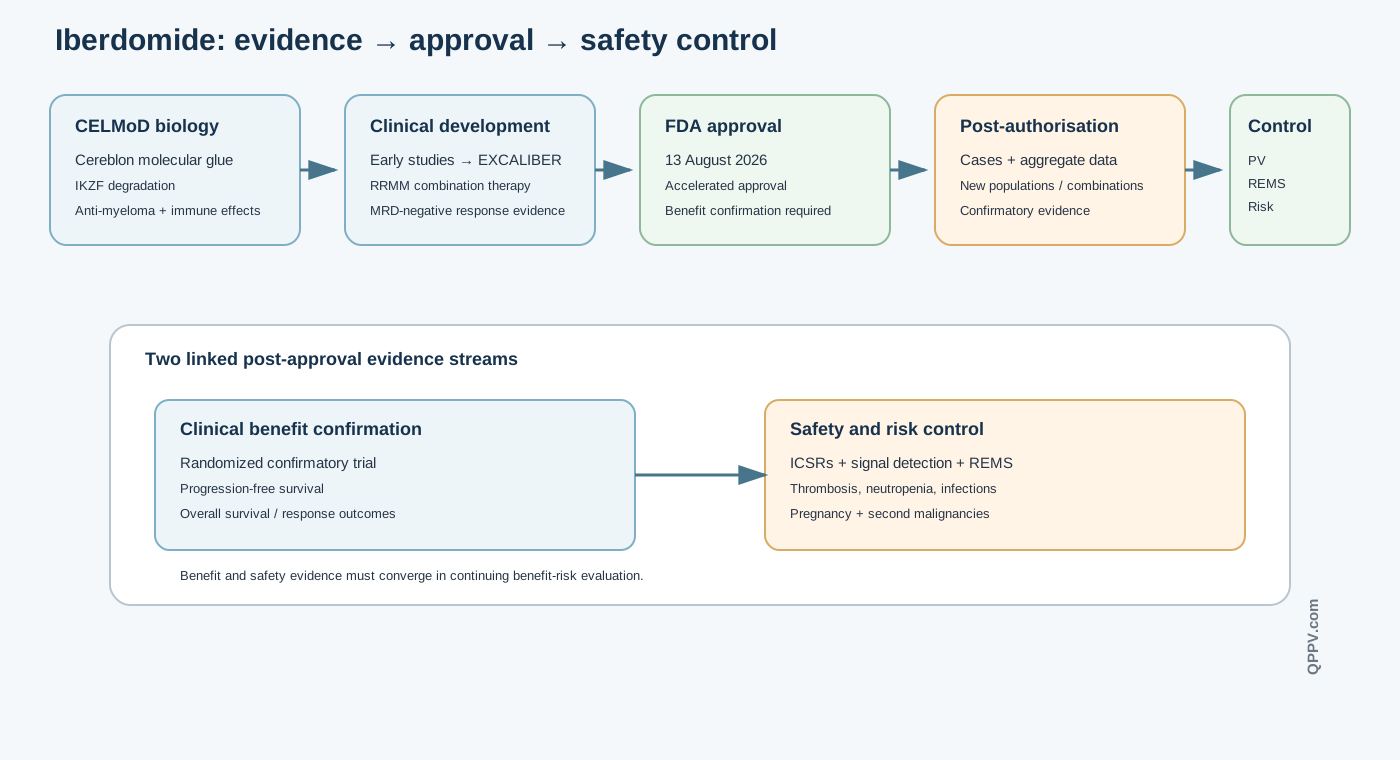
Figure 1. Iberdomide's first approval links four evidence and control layers: CELMoD mechanism and clinical development, accelerated approval based on EXCALIBER-RRMM evidence, ongoing post-marketing confirmation and pharmacovigilance, and the ZENBEXUS REMS and other safety controls.
Serious Adverse Reactions in the Approval Population
The FDA label reports serious adverse reactions in 58.3% of patients receiving iberdomide in the primary safety analysis. Fatal adverse reactions occurred in 10 patients (4.9%). Sepsis was the only fatal drug reaction occurring in more than one patient.[4]
These figures need careful interpretation. The safety population consisted of patients with relapsed or refractory multiple myeloma receiving combination treatment, and the label itself notes that adverse-reaction frequencies from clinical trials cannot necessarily be compared across studies. The numbers should therefore be used to understand the observed safety burden in the approval population rather than to generate an unqualified comparative claim.
Permanent discontinuation because of an adverse reaction occurred in 7.8% of patients; neutropenia was the most frequent adverse reaction leading to permanent discontinuation.[4]
For pharmacovigilance governance, this provides a useful baseline against which post-marketing reports can be evaluated. As exposure expands, the organisation should distinguish expected manifestations of the established safety profile from changes in severity, frequency, latency or phenotype that might indicate a new signal.
Individual Case Safety Reports
The first post-authorisation control is high-quality case capture. An iberdomide case should establish the patient, reporter, suspect exposure and event with enough detail to support medical assessment and regulatory reporting.
For serious cases, the minimum useful chronology includes the date iberdomide was started, cycle and dose, interruptions or reductions, concomitant anti-myeloma therapy, previous lines of treatment, onset of the event, diagnostic findings, treatment, outcome and relevant medical history.
For neutropenia and infection, laboratory values and the temporal relationship between neutrophil decline and infection are particularly valuable. For thrombosis, the anatomical event, diagnostic method, treatment and outcome should be captured. For pregnancy exposure, gestational timing and pregnancy outcome are essential.
Because iberdomide is approved in combination, the case should not be artificially simplified to a single suspect drug. The pharmacovigilance assessment should document the reasoning used to distinguish iberdomide-related risk from disease-related events and effects of concomitant medicines.
Signal Detection in a New Drug Class
The first approval of a new pharmacological class creates a broad signal-detection responsibility. Some risks will already be anticipated from mechanism and related compounds; others may only become apparent after larger and more diverse exposure.
For iberdomide, signal detection should therefore maintain established risk areas—thromboembolism, neutropenia, infections, second primary malignancies and pregnancy exposure—while remaining open to unexpected patterns.
Disproportionality analysis can support hypothesis generation, but it cannot replace clinical review. A signal involving pneumonia, for example, must be interpreted in the context of multiple myeloma, corticosteroid use, previous therapies and neutropenia. Similarly, a thromboembolic signal needs assessment against the baseline thrombotic risk of the disease and treatment setting.
The new-class context also makes class-effect reasoning important. Experience with lenalidomide, pomalidomide and other CELMoDs can inform biological plausibility and risk hypotheses, but evidence from one medicine should not automatically be treated as evidence of the same magnitude for another. Class information is a source of hypotheses; product-specific evidence determines the product's safety profile.
Periodic Benefit-Risk Evaluation
Accelerated approval does not reduce the importance of periodic benefit-risk evaluation. It increases the need to keep efficacy and safety evidence connected because the regulatory status depends on continuing evidence generation.
For iberdomide, periodic evaluation should integrate individual cases, aggregate safety analyses, exposure estimates, ongoing clinical trials, post-marketing data, REMS experience and the evolving efficacy evidence from confirmatory development.
A useful governance question is whether the emerging real-world population resembles the approval population. If iberdomide is increasingly used in patients with different prior therapies, comorbidities or treatment combinations, the observed safety profile may change even if the underlying pharmacology does not.
Exposure estimates are therefore important. Raw case counts alone cannot determine whether a reporting pattern reflects increased risk or simply increased use. The denominator may be estimated from commercial distribution, prescription or treatment data as appropriate to the pharmacovigilance system.
Accelerated Approval and Post-Marketing Evidence
FDA's approval letter makes completion of the confirmatory trial a formal postmarketing requirement. Failure to verify clinical benefit, or failure to conduct the required trial with due diligence, can lead to withdrawal of accelerated approval under the applicable statutory framework.[3]
This creates an unusual governance interface: pharmacovigilance and clinical development must remain tightly connected. A safety finding that changes the feasibility of the confirmatory study may affect the overall benefit-risk assessment. Conversely, a change in efficacy evidence can alter how much safety risk is acceptable.
The confirmatory trial is therefore not merely a separate clinical-development obligation. Its results become part of the medicine's continuing regulatory evidence base.
For the QPPV, this means maintaining visibility of relevant development milestones and safety findings without taking ownership of responsibilities that belong to clinical development or regulatory affairs. Effective governance depends on clear interfaces and escalation pathways.
REMS Effectiveness and Pharmacovigilance
The ZENBEXUS REMS creates another evidence stream. FDA requires annual REMS assessments, and the REMS contains prescriber, pharmacy and patient requirements intended to mitigate fetal risk.[5,11]
A mature pharmacovigilance system should be able to reconcile pregnancy-related cases with REMS information where legally and operationally appropriate. A pregnancy exposure can reveal a failure of prevention, but it can also occur despite correct use of controls. The case should therefore distinguish exposure circumstances from assumptions about non-compliance.
Effectiveness evaluation should consider whether the REMS is reaching intended participants, whether required safe-use conditions are being followed, whether pregnancy exposures occur, and whether those exposures lead to adverse outcomes. These measures are different from simply counting adverse-event reports.
The REMS therefore should be viewed as part of a broader safety-control system in which pharmacovigilance provides evidence about residual risk and the effectiveness of prevention measures.
Special Situations
Renal or hepatic impairment may alter clinical management and should be recorded when present. A patient with substantial organ dysfunction may have a different exposure or susceptibility profile from the trial population.
Prior exposure to lenalidomide or pomalidomide is also highly relevant. Iberdomide was developed in part for populations with prior immunomodulatory-agent treatment, so previous therapy is not incidental background information. It is part of the clinical context in which both efficacy and safety are interpreted.
Combination changes are another important special situation. Adding or stopping daratumumab, dexamethasone, a proteasome inhibitor or another therapy around the time of an adverse event can materially change causality assessment.
Finally, a treatment interruption for neutropenia or infection should be followed longitudinally. The outcome after dose modification may provide evidence about the relationship between exposure and the event and may also reveal whether the risk-control strategy is functioning as intended.
Inspection and Governance Perspective
An inspection of iberdomide pharmacovigilance would be expected to focus on traceability between the approved safety profile, individual cases, cumulative evaluation and risk controls. The following are illustrative inspection questions, not claims about actual inspection findings.
| Area | Illustrative question | Evidence expected |
|---|---|---|
| Case processing | Can serious iberdomide cases be traced to their source and complete chronology? | Source documents, case versions, audit trail |
| Combination therapy | How are concomitant anti-myeloma medicines incorporated into causality assessment? | Medical review and treatment timelines |
| Thrombosis | How are venous and arterial events distinguished and followed? | Case narratives, diagnostic evidence, outcomes |
| Hematology | How are neutropenia and infection relationships assessed? | Laboratory trends and follow-up |
| Pregnancy | How are pregnancy exposures linked to outcome follow-up and REMS processes? | Pregnancy case records and follow-up |
| Signal management | How are class effects distinguished from product-specific signals? | Signal assessments and rationale |
| REMS | How is REMS experience incorporated into benefit-risk evaluation? | REMS assessments and safety analyses |
| Accelerated approval | How are confirmatory-trial safety findings integrated into the PV system? | Trial safety outputs and governance records |
| QPPV oversight | How does the QPPV know that risk controls remain effective? | Oversight, metrics, CAPA and management review |
The central inspection concept is evidence continuity. A company should be able to demonstrate how a serious case becomes part of cumulative evidence, how cumulative evidence informs regulatory conclusions, and how those conclusions alter operational controls when necessary.
Common Failure Modes
A common failure is to treat all serious adverse events in this population as evidence of iberdomide toxicity. The opposite failure is to attribute every event to multiple myeloma or background therapy. Both approaches bypass medical assessment.
Another failure is incomplete combination-treatment chronology. Without knowing when daratumumab, dexamethasone and other anti-myeloma therapies were started, stopped or modified, causality assessment becomes substantially weaker.
Pregnancy exposure presents another failure mode if pharmacovigilance and REMS records operate as disconnected systems. A pregnancy case may be processed correctly as an ICSR while the organisation still fails to understand why the preventive control did not prevent exposure.
For accelerated approval, a further failure would be treating the approval as a completed evidence story. The confirmatory requirement is part of the regulatory framework. Safety governance should remain connected to the efficacy evidence needed to confirm clinical benefit.
Finally, a new-class product can create excessive reliance on class experience. Prior IMiD and CELMoD knowledge is useful for hypothesis generation, but the iberdomide safety profile must remain evidence-based and product-specific.
QPPV Oversight
The QPPV should ensure that iberdomide's pharmacovigilance system reflects both the established risks at approval and the uncertainty inherent in a newly authorised product with accelerated approval.
Oversight should include the quality and timeliness of serious case processing, the completeness of combination-treatment information, the visibility of thromboembolic and hematologic events, pregnancy-exposure follow-up, signal-detection performance, PSUR or equivalent aggregate evaluation, REMS interfaces and the incorporation of emerging clinical-trial evidence.
The QPPV should also ensure that safety information is not trapped inside individual organisational functions. Clinical development may hold important trial data, regulatory affairs may hold approval commitments, medical information may receive safety reports, and the REMS organisation may hold effectiveness information. Governance needs defined interfaces so that relevant information reaches the pharmacovigilance system.
Current Pharmacovigilance Questions
Iberdomide enters the post-authorisation period with several questions already defined by its regulatory context. The first is whether the confirmatory programme verifies the clinical benefit underlying accelerated approval. The second is whether the known risks remain adequately characterised as real-world exposure expands.
The third concerns risk minimisation. The ZENBEXUS REMS provides a controlled mechanism for reducing fetal exposure, but its effectiveness must be evaluated over time. The fourth concerns whether additional risks emerge when iberdomide is used in populations or combinations not fully represented in the pre-approval evidence.
The fifth is whether safety findings alter the overall benefit-risk balance. A serious risk does not automatically make a medicine unacceptable; assessment depends on frequency, severity, preventability, clinical benefit, alternatives and the quality of available evidence.
Practical Pharmacovigilance Checklist
For iberdomide, a product-specific operational framework can include:
- confirm the current indication, regimen and jurisdiction;
- capture treatment cycle, dose, interruptions and reductions;
- document all concomitant anti-myeloma therapies and changes;
- distinguish venous from arterial thromboembolic events;
- capture neutrophil counts and infection chronology;
- investigate serious infections and outcomes;
- identify and follow second primary malignancies;
- recognise pregnancy exposure as a high-priority follow-up situation;
- coordinate pharmacovigilance information with applicable REMS processes;
- assess alternative causes and background disease factors;
- retain complete prior-treatment history;
- evaluate emerging signals against both product-specific and class evidence;
- integrate confirmatory-trial safety information into aggregate evaluation;
- track regulatory commitments associated with accelerated approval;
- verify that identified risks and controls remain reflected in controlled PV processes.
This is an operational aid, not a substitute for applicable legislation, GVP requirements, the current U.S. prescribing information, REMS documents or local regulatory procedures.
Key Takeaways
Iberdomide illustrates the transition from classical immunomodulatory treatment to targeted protein degradation. By modifying cereblon's substrate-recognition behaviour, CELMoDs use the cell's own ubiquitin-proteasome machinery to remove selected proteins. This mechanism provided the scientific basis for developing iberdomide as a next-generation multiple-myeloma treatment.
Its 13 August 2026 FDA accelerated approval establishes a second important lesson. Authorisation does not end evidence generation when approval rests on a surrogate endpoint reasonably likely to predict clinical benefit. The confirmatory programme is part of the continuing regulatory evidence base.
The safety architecture is equally important. Serious thromboembolism, neutropenia, infections and second primary malignancies form important clinical risk domains, while fetal toxicity is addressed through the ZENBEXUS REMS. Pharmacovigilance must connect these controls with high-quality case information, cumulative assessment and effectiveness evaluation.
For the QPPV, iberdomide therefore represents a governance problem as much as a case-processing problem. The system must integrate a new mechanism, combination therapy, serious established risks, pregnancy prevention, REMS data and accelerated-approval commitments while remaining open to unexpected post-marketing findings.
The central principle is evidence continuity: from mechanism to trial, from trial to approval, from approval to individual cases, and from individual cases back to cumulative benefit-risk assessment and risk control.
References
- U.S. Food and Drug Administration. FDA grants accelerated approval to iberdomide with daratumumab and hyaluronidase-fihj and dexamethasone for multiple myeloma. 13 August 2026.
- U.S. Food and Drug Administration. Novel Drug Approvals for 2026: Zenbexus (iberdomide). Approval 13 August 2026.
- U.S. Food and Drug Administration. Zenbexus approval letter and accelerated-approval postmarketing requirement, NDA 221075. 13 August 2026.
- U.S. Food and Drug Administration. ZENBEXUS (iberdomide) Prescribing Information. NDA 221075, approved August 2026.
- U.S. Food and Drug Administration. ZENBEXUS REMS. Approved August 2026.
- Ito T, et al. Identification of a primary target of thalidomide teratogenicity. Science. 2010;327:1345–1350.
- Krönke J, et al. Lenalidomide causes selective degradation of IKZF1 and IKZF3 in multiple myeloma cells. Science. 2014;343:301–305.
- Lu G, et al. The myeloma drug lenalidomide promotes the cereblon-dependent destruction of Ikaros proteins. Science. 2014;343:305–309.
- Bristol Myers Squibb. Path to a protein degrader: molecular glues and CELMoD agents. Corporate scientific resource.
- Bristol Myers Squibb. ZENBEXUS / iberdomide development and EXCALIBER-RRMM materials. 2026.
- U.S. Food and Drug Administration. ZENBEXUS REMS assessment requirements and REMS review documents. 2026.
Regulatory Note
This article is an educational pharmacovigilance reference, not legal advice or a substitute for current legislation, GVP guidance, product information, REMS requirements or local regulatory procedures. Regulatory status and product information can change. Operational decisions should use the current authoritative source applicable to the product, indication and jurisdiction.