Ibritumomab Tiuxetan: Classification, Radioimmunotherapy, EU History and Pharmacovigilance
Ibritumomab tiuxetan is a radiolabelled anti-CD20 product whose antibody, isotope and preparation each form part of the exposure record.
- Ibritumomab Tiuxetan: Classification, Radioimmunotherapy, EU History and Pharmacovigilance
1. Ibritumomab tiuxetan and the Zevalin lifecycle
Ibritumomab tiuxetan is a murine IgG1 monoclonal antibody directed against CD20 on B lymphocytes. It is conjugated to tiuxetan, a chelator that permits radiolabelling. The Zevalin kit was used to prepare either yttrium-90-labelled ibritumomab tiuxetan for therapy or indium-111-labelled material for imaging and dosimetry, following the applicable product information.[2]
The EU marketing authorisation was granted in January 2004 and ceased to be valid on 4 January 2024 under the sunset clause. EMA records that marketing in the EU had stopped in May 2020 and the authorisation holder did not obtain an exemption.[1,3] The lapse is a regulatory lifecycle event linked to non-marketing, not a conclusion that the benefit–risk balance was newly judged unfavourable. Zevalin is no longer authorised in the EU.
Historical cases should be tied to the actual preparation, isotope, activity, administration date and treatment context. The distinction between an imaging/dosimetry preparation and the therapeutic radiolabel is essential: they are not interchangeable exposures.
2. Antibody-directed radioimmunotherapy
The antibody targets CD20-positive B cells, while the therapeutic yttrium-90 isotope delivers beta radiation to targeted and nearby cells. The treatment combines antigen binding and radiation exposure. The indium-111 radiolabel was used in the kit workflow to assess biodistribution and suitability before therapeutic administration according to the label.
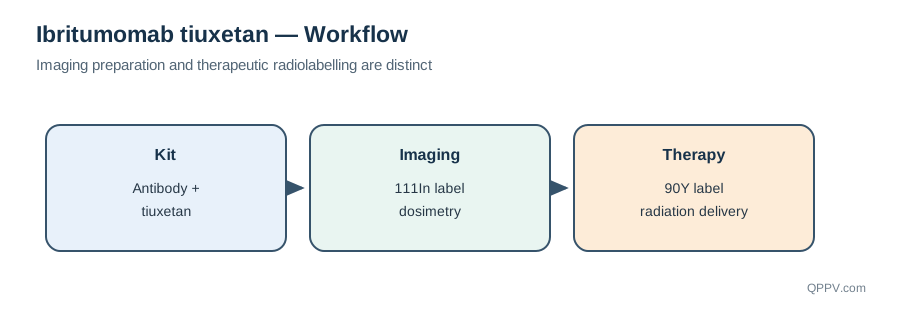
Figure 1. The kit workflow distinguishes antibody-chelator preparation, indium-111 imaging/dosimetry and yttrium-90 therapeutic administration. Follow the historical product information for exact preparation and eligibility.
2.1 Historical indication and treatment sequence
The historical EU indication covered adults with specified CD20-positive follicular non-Hodgkin lymphoma settings, including consolidation after response to induction treatment and treatment of relapsed or refractory disease after rituximab, as set out in the contemporaneous product information. A rituximab pre-treatment and a staged radiopharmaceutical process formed part of the labelled regimen.[2] Do not generalise this into current lymphoma treatment advice: the EU authorisation has lapsed.
3. Safety profile and radiation-specific assessment
3.1 Prolonged cytopenias and marrow reserve
Prolonged and severe cytopenias, particularly neutropenia and thrombocytopenia, are central risks of radioimmunotherapy.[2] Bone-marrow involvement, previous chemotherapy, prior radiotherapy, baseline blood counts and marrow reserve influence the clinical context. Reports should include serial counts, nadirs, duration, infection or bleeding, transfusions, growth-factor support, treatment and recovery.
Infections occurring during prolonged neutropenia require the organism and site, investigations, antimicrobial treatment and outcome where available. Haematologic malignancy and previous therapies are plausible competing contributors; the case review should preserve them rather than attributing every cytopenia to a single exposure.
3.2 Infusion, hypersensitivity and late outcomes
Infusion reactions and hypersensitivity may occur with antibody administration. Capture the exact component and infusion stage, premedication, onset, observations, intervention and outcome. Secondary malignancies and other late complications require careful assessment of latency, prior and subsequent therapies, radiation exposure, disease history and diagnostic evidence. A late event should not be automatically assigned to ibritumomab tiuxetan because it followed treatment.
Radiation safety and dose reconstruction are distinct from clinical causality. Where relevant, record isotope, administered activity, preparation details, residual activity, administration time and any preparation or administration deviation as documented by the radiopharmacy and treating service.
4. Product-specific case information and traceability
A useful report should identify:
- Product and kit details, batch/lot, isotope, administered activity, route and dates.
- Whether the exposure was indium-111 imaging/dosimetry or yttrium-90 therapy.
- Lymphoma subtype, CD20 status, prior rituximab and other treatments, marrow involvement and baseline counts.
- Preparation, radiolabelling and administration records where available.
- Cytopenia timeline, infection, bleeding, transfusions, interventions and outcome.
- Infusion reaction chronology, premedication, observations and management.
- Relevant radiation exposure, prior or subsequent radiotherapy and long-term follow-up for late events.
Biological-product traceability and radiopharmaceutical preparation records complement one another: the antibody's identity alone does not fully characterise the administered radiolabelled product. Preserve the chain from kit component through radiolabelling, quality checks, release and administration where records are available. Follow local radiation-protection procedures and applicable legislation; this article does not set dosimetry or clinical eligibility criteria.
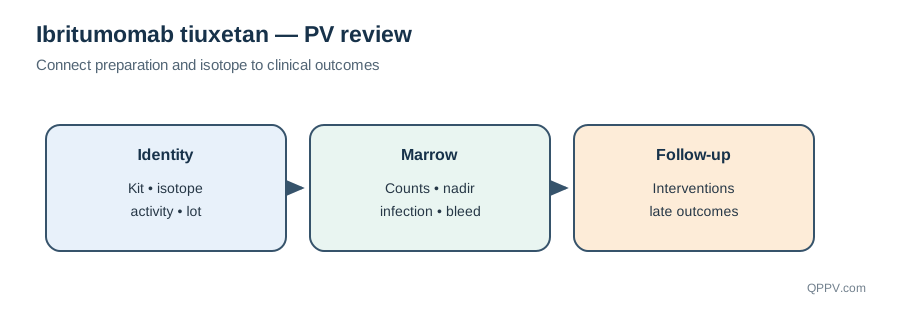
Figure 2. Case assessment links the biological product and isotope to marrow effects, administration evidence and later clinical outcomes.
5. Aggregate review and governance
Aggregate review should stratify by therapeutic versus imaging exposure, isotope, activity, treatment sequence, prior therapy, marrow status and time since administration. Cytopenias should be reviewed by onset, nadir, duration and clinical consequences. Late-event review requires appropriate latency and treatment-history context.
Spontaneous reports cannot supply a reliable incidence denominator. Where available, integrate clinical-trial, follow-up and other structured data, document limitations and assess competing causes. Keep the product's lapsed EU status and the relevant historic label visible in any regulatory assessment.
Inspection-ready records should allow reconstruction of the product kit and radiolabel, preparation checks, patient eligibility assessment under the historical label, administration, case processing, follow-up and aggregate conclusions. Common failures include omission of isotope or activity, conflation of diagnostic imaging and therapy, missing prior-treatment history, and treating the sunset-clause lapse as a safety withdrawal.
6. Key takeaways
Ibritumomab tiuxetan combines a murine anti-CD20 antibody with a chelator and a therapeutic or imaging radiolabel. Product identity, isotope, activity and radiopharmacy preparation are therefore core exposure data. Prolonged cytopenias and infections are key safety concerns, with infusion and late effects requiring contextual review.
Zevalin's EU authorisation lapsed on 4 January 2024 after non-marketing since May 2020. Historical exposure and safety assessments should use the product information applicable at the time and should not mistake this lifecycle event for a new safety-based withdrawal.
References
- European Medicines Agency. Zevalin: European Public Assessment Report. EU authorisation history and lapse on 4 January 2024. Accessed 23 September 2026.
- European Medicines Agency. Zevalin: product information. Historical indication, preparation, administration, warnings and adverse reactions. Accessed 23 September 2026.
- European Medicines Agency. Public statement on cessation of validity of Zevalin's marketing authorisation. Sunset-clause context and marketing history.
- European Medicines Agency. GVP: Product- or Population-Specific Considerations II—Biological medicinal products. Product identification and traceability considerations.
- European Medicines Agency. GVP Module VI: Collection, management and submission of reports of suspected adverse reactions. Current module and addenda.
- European Commission. Commission Implementing Regulation (EU) No 520/2012. EU pharmacovigilance requirements, as amended.
Regulatory Note
This article concerns the historical EU-authorised use of ibritumomab tiuxetan. Zevalin's marketing authorisation ceased to be valid on 4 January 2024 under the sunset clause following non-marketing in the EU. The archived product information is relevant to historical cases and is not a current EU authorisation or treatment recommendation.